

P0700 on 2011-2017 Chrysler 200: Transmission Fault Causes and Fixes
P0700 on a Chrysler 200 means the transmission has a problem. For 2015-2017 models with the 9-speed, it's often a software issue needing a dealer update per TSBs like 21-013-16. For 2011-2014 models with the 6-speed, it's commonly a faulty solenoid pack. You must scan the TCM for the specific underlying code to know the exact cause.
- P0700 is just an alert. The real problem is identified by other codes stored in the Transmission Control Module (TCM).
- You MUST use a scanner that can read transmission codes to diagnose the problem.
- The most likely cause depends heavily on your vehicle's year and which transmission it has (6-speed vs. 9-speed).
- For 2015-2017 models, always check for available software updates before replacing any expensive parts.
- Due to the complexity, especially with the ZF 9-speed transmission, professional diagnosis and repair are strongly recommended.
What's Unique About the 2011-2017 Chrysler 200
The 2011-2017 Chrysler 200 spans two completely different generations with different transmissions, making the cause of a P0700 code highly dependent on the year. The first generation (2011-2014) primarily used the 62TE 6-speed automatic, which is prone to solenoid pack failures. The second generation (2015-2017) introduced the ZF 9-speed automatic (948TE), which was plagued by software glitches, valve body problems, and numerous recalls. For the 9-speed, a P0700 is very frequently related to a needed software update to correct harsh shifting, which the dealer performs based on specific Technical Service Bulletins (TSBs).
Generation note: Yes, this range covers two generations. The 1st gen (2011-2014) used a 4-speed or 6-speed (62TE) automatic. The 2nd gen (2015-2017) used a new ZF 9-speed (948TE) automatic. The causes and fixes are very different between them. The 9-speed is particularly known for shifting problems that can trigger a P0700 code, many of which were addressed by a series of factory software updates.
Symptoms You May Notice
- Check Engine Light is on
- Harsh or erratic shifting
- Delayed gear engagement
- Vehicle stuck in 'limp mode' (often 2nd or 3rd gear)
- Transmission warning light may be illuminated
- Stalling or poor acceleration
- Vehicle unexpectedly shifts into neutral
- Replacing the entire transmission without first checking for software updates on 2015-2017 models.
- Replacing individual sensors when the actual cause is a faulty solenoid pack or valve body.
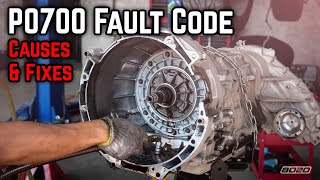
- Assuming the P0700 code itself points to a problem, rather than using it as a signal to scan the TCM for the real codes. 🎬 Watch: Understanding the P0700 code and how to diagnose it properly.
- Clearing the codes by disconnecting the battery without first reading the specific TCM codes, which erases valuable diagnostic information.
Most Likely Causes
- TCM/PCM Software Update Needed (2015-2017 ZF 9-Speed) 🔴 High Probability The ZF 9-speed transmission had numerous drivability issues from the factory, which Chrysler addressed with a series of software updates to improve shift logic and correct fault detection. TSBs were released to fix issues like erratic shifts and garage shifts (Park to Drive/Reverse).
How to confirm: A Chrysler dealer or a well-equipped independent shop can check the current software version against the latest available version for the vehicle's VIN. Check for related TSBs like 21-013-16 Rev. B or 21-018-14 Rev. B. These TSBs often involve reprogramming the TCM and performing a 'Quick Learn' procedure.
Typical fix: Reprogramming the Transmission Control Module (TCM) and/or Powertrain Control Module (PCM) with the latest software. This must be done with a dealership-level scan tool (wiTECH).
Est. part cost: $0-$250 - Faulty Transmission Solenoid Pack (2011-2014 62TE) 🔴 High Probability The 62TE transmission is widely known for solenoid pack failures. The solenoids control fluid flow to engage different gears, and when they fail, it causes shifting problems and triggers fault codes. This is a common failure point across many Chrysler/Dodge/Jeep vehicles using this transmission.
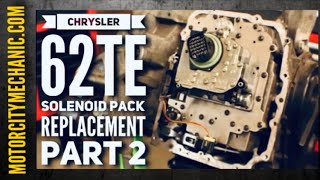
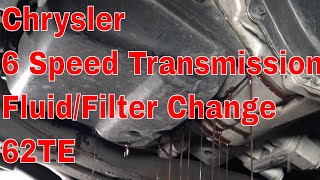
How to confirm: Scan the TCM for specific solenoid circuit codes (e.g., P0750, P0755). A technician may also perform electrical tests on the solenoid pack. The part is accessed by removing the transmission pan. 🎬 See this walkthrough on replacing the 62TE transmission solenoid pack.
Typical fix: Replace the transmission solenoid pack. This is typically accessed by removing the transmission pan.
Est. part cost: $150-$350 - Low or Degraded Transmission Fluid 🟡 Medium Probability Both the 62TE and ZF 9-speed are sensitive to fluid level and condition. The 9-speed requires a very specific and expensive fluid (Mopar ZF 8&9 Speed ATF). Using the wrong fluid can cause significant issues. While marketed as 'lifetime' fluid in the US, many experts recommend fluid changes.
How to confirm: Check the transmission fluid level and condition. On the 62TE, there is a dipstick. The ZF 9-speed is a sealed unit and requires a specific, more complex procedure to check the level. Fluid should be reddish and not smell burnt.
Typical fix: Perform a transmission fluid and filter change using the correct OEM-specified fluid. Top-off if low and inspect for leaks.
Est. part cost: $50-$200 - Faulty Valve Body (2015-2017 ZF 9-Speed) 🟡 Medium Probability The complex mechatronic unit (valve body and TCM combined) on the ZF 9-speed is a common failure point, leading to harsh shifts, delayed engagement, and fault codes. Problems often persist after software updates have been attempted.
How to confirm: Requires advanced diagnostics after scanning for specific valve body or pressure codes. Often diagnosed after software updates fail to resolve the issue. The TCM is physically located on top of the valve body inside the transmission.
Typical fix: Replacement of the entire valve body assembly. This is a complex and expensive repair that requires subsequent programming and learn procedures.
Est. part cost: $800-$1500
Rare But Worth Checking
- Faulty Input/Output Speed Sensors: These sensors provide critical data for shift timing. If one fails, the TCM can become confused, leading to erratic shifting and a P0700 code. This is more common on the 62TE transmission.
- Internal Transmission Wiring Harness Failure: The wiring inside the transmission can become brittle from heat and fluid exposure, leading to shorts or open circuits that affect solenoids and sensors. For the 2015 model year, a recall (NHTSA 15V-470 / FCA R24) was issued for a faulty power distribution center connector that could cause stalling or shifting to neutral.
- Failed Transmission Control Module (TCM): While less common than software glitches or mechanical parts, the TCM itself can fail electronically, requiring replacement and programming. On the 9-speed, the TCM is integrated with the valve body.
- Transmission Pump Failure: Although less frequent, a failed transmission pump can trigger a P0700. As noted in NHTSA ODI #11538712 for a similar Chrysler platform, a diagnosis of P0700 was linked directly to a pump that required replacement.
Diagnosis Steps
- Confirm the P0700 code is present in the Engine Control Module (ECM) with a basic OBD-II scanner.
- Use an advanced scan tool capable of communicating with the Transmission Control Module (TCM).
- Retrieve and document all diagnostic trouble codes stored in the TCM. These are the codes that matter.
- Based on the vehicle year, identify the transmission (62TE for 2011-2014, ZF 9-Speed/948TE for 2015-2017).
- For 2015-2017 models, the first step should be to check for any available TCM/PCM software updates by checking TSBs (e.g., 21-013-16, 21-018-14) or contacting a dealer.
- Check the transmission fluid level and condition. Ensure the correct fluid type is being used (ATF+4 for 62TE, Mopar ZF 8&9 Speed ATF for 948TE).
- Inspect the transmission and wiring harness for any visible damage, leaks, or loose connectors. Pay special attention to the power distribution center connector on 2015 models due to a recall.
- Follow the diagnostic procedures for the specific codes found in the TCM (e.g., testing sensors, solenoids, or wiring).
- If software updates are performed on a 9-speed, ensure the 'Quick Learn' or 'Adaptation Drive Learn' procedure is completed as specified in the relevant TSB.
- If no other codes are present or if software updates do not resolve the issue, further diagnosis of the valve body or internal transmission components may be necessary.
Parts You'll Likely Need
- Transmission Solenoid Pack (62TE)
(OEM #68376696AA (supersedes 5078709AB))— This is the most common failure part on the 6-speed transmission used in 2011-2014 models, responsible for a wide range of shifting issues.
Trusted brands: Mopar, Rostra
OEM price range: $250-$400
Aftermarket price range: $150-$250 - Valve Body Assembly (ZF 9-Speed) — A common failure on the 9-speed transmission in 2015-2017 models, often replaced after software updates fail to fix erratic shifting.
Trusted brands: Mopar, ZF
OEM price range: $1000-$1500
Related Codes That Often Appear With This One
- P0730-P0736 — These codes indicate an incorrect gear ratio, meaning the transmission is slipping or not in the commanded gear. This often points to internal mechanical or hydraulic issues.
- P0740 — Often appearing alongside P0700, this code can indicate a Transmission Control Module or torque converter clutch circuit issue, as described in NHTSA ODI #10662298.
- P0750-P0770 — These codes point to faults in the shift solenoid circuits. This is very common with a failing solenoid pack on the 62TE transmission.
- P0868 — This code indicates low transmission fluid pressure, which could be caused by low fluid, a clogged filter, a failing pump, or a faulty solenoid/valve body.
- P1776 — This code, when paired with P0700, is associated with the vehicle randomly throwing itself into second gear or locking into limp mode (NHTSA ODI #10335662).
- U0401 — Indicates invalid data received from the ECM/PCM. This can occur alongside P0700 when there are communication issues between the engine and transmission controllers.
Technical Service Bulletins (TSBs) & Recalls
- TSB 21-013-16 Rev. B: Details the 'Quick Learn' procedure for the 9-speed transmission, required after certain repairs or to improve shift quality on 2015-2016 models.
- TSB 21-018-14 Rev. B: Involves flashing the TCM with updated software to address various shift quality enhancements on 2014 Jeep Cherokees, which shares the same transmission as the 2015+ Chrysler 200.
- TSB 21-043-15: Supersedes 21-018-14 and provides further software enhancements for the TCM on vehicles with the 3.2L engine and 9-speed transmission.
- RRT 16-002 / TSB 21-002-16: A Rapid Response Transmittal for 2016 models with the 2.4L engine to reprogram the TCM for shift and diagnostic enhancements.
Platform-Specific Known Issues
- 2011-2014 (62TE) Solenoid Pack Failure: Owners of the first-generation Chrysler 200 frequently report transmission issues that are ultimately traced back to a failed solenoid pack. Symptoms include getting stuck in one gear (limp mode) and harsh shifting. Replacement of the solenoid pack is a very common repair for these models.
- 2015-2017 (948TE) Software and Hardware Issues: The second-generation models with the ZF 9-speed are notorious for transmission problems. A large number of owner complaints center on rough 1-2 and 2-3 shifts, sudden lurching, and stalling. Many of these issues were addressed via a series of TCM software updates from Chrysler. If software updates do not resolve the problem, the next most common repair is a complete valve body/TCM assembly replacement.
- 2015 Model Year Electrical Connector Recall (FCA Recall R24): A specific recall (NHTSA 15V-470) was issued for 2015 models due to a faulty electrical connector in the power distribution center. This could cause intermittent power loss, leading to the engine stalling or the transmission shifting into neutral without warning, which could trigger a P0700 code.
Mechanic-Grade Diagnostic Values
- 62TE Shift Solenoid Resistance (most) — expected: 1.6 - 1.8 Ohms. Failure: Reading outside of this range (open or shorted). Test by checking resistance between pin 10 (power) and the respective solenoid pin at the case connector.
- 62TE Line Pressure Solenoid Resistance — expected: 4.8 - 5.1 Ohms. Failure: Reading outside of this range. Test between pin 10 and pin 12 at the case connector.
- 62TE Pressure Switch Resistors — expected: ~300 Ohms. Failure: Significantly different reading. Test between pin 10 and the respective pressure signal pin.
- 948TE Input/Output Speed Sensor Reference Voltage — expected: 9-volt reference from TCM. Failure: No or incorrect voltage from the TCM indicates a wiring or TCM issue.
- 948TE Pressure Transducer Reference Voltage — expected: 5-volt reference from TCM. Failure: No or incorrect voltage from the TCM.
- System Voltage (at battery with engine running) — expected: 13.5 - 14.5 Volts. Failure: Low or high voltage can interfere with TCM operation and cause various electronic faults.
Scan Tool Commands That Help
- wiTECH or capable aftermarket (e.g., Autel): Quick Learn — Required after replacing the transmission, valve body/TCM, or clearing adaptation memory cells. It is also a primary step to remedy shift quality concerns on both the 62TE and 948TE transmissions.
- wiTECH or capable aftermarket: Reset Adaptive Values — Used on the 9-speed transmission before performing the 'Quick Learn' procedure to clear old clutch adaptation values from memory.
- wiTECH: Adaptation Drive Learn — A more extensive procedure for the 9-speed transmission, sometimes required by TSBs, where a technician performs a specific, lengthy test drive to ensure the transmission is shifting correctly after a software update or repair.
Wiring & Ground Locations
- Transmission Case Connector (62TE) — On the outside of the 6-speed transmission housing.. This is the primary point for testing the resistance of all internal solenoids and sensors without removing the transmission pan, using a multimeter and a pinout chart.
- Battery Ground Strap (2015+) — Connects from the battery negative terminal to the side of the transmission.. Early versions of this ground strap were prone to corrosion and failure, leading to a poor ground for the entire powertrain. This can cause numerous seemingly unrelated electrical issues, including TCM communication errors and fault codes.
- TCM Ground (2015+ 9-speed) — Ground G904A is located in the engine bay. The TCM itself is located in the left rear of the engine compartment.. A poor ground connection for the Transmission Control Module can cause erratic behavior, communication faults, and trigger a P0700 code.
Real Owner Repair Stories
- Reddit user on r/MechanicAdvice (2017 Dodge Grand Caravan (uses 62TE transmission, same as 2011-2014 Chrysler 200)) — Clunky, jerky shifting between R/N/D. Initially threw P0758 (Shift Solenoid B).
❌ Tried (didn't work) Transmission fluid & filter change., Replacing only the Torque Converter Clutch (TCC) solenoid.
✅ What actually fixed it Replacing the entire solenoid pack fixed the initial shifting issues and cleared the P0758 code. However, new codes P0735 (Incorrect Gear Ratio - Gear 5) and P0868 (Trans Fluid Pressure Low) appeared afterward. Topping off the transmission fluid to the correct level resolved these subsequent codes and fixed the new symptoms of high RPMs and failure to shift into 5th gear. - NHTSA ODI #11705503 — An owner reported sudden Auto-Park engagement, hard shifting, and loss of gear engagement with code P0700 present. The issue reportedly began following an A/C compressor failure, creating a safety risk of sudden deceleration.
- NHTSA ODI #11252363 — A report describes a vehicle that would turn over but act as if it had no fuel; an OBD2 scanner detected P0700 along with P0340, P2066, and P0461, indicating multiple sensor circuit issues.
OEM Part Supersession History
5078709AB→68376696AA— Updated design for the 62TE solenoid pack to improve reliability.
Heads up: While 68376696AA is the recommended replacement, some vendors warn that remanufactured units using this part number may have issues with pressure sensors and suggest using them only for the solenoids themselves.68376696AA→68371508AB— Further revision of the 62TE solenoid pack.
Model Year Variations Within This Range
- 2011-2014: These models use the 62TE 6-speed automatic. P0700 is most commonly caused by a failed solenoid pack, which can be diagnosed with resistance tests at the case connector.
- 2015-2017: These models use the ZF 948TE 9-speed automatic. P0700 is frequently caused by software issues requiring a dealer reflash (TSB), a faulty valve body/TCM unit, or electrical issues like a bad ground strap.
- 2012-2013: Technical Service Bulletin 21-013-12 was released specifically for these model years (with the 3.6L engine) to reprogram the PCM for improved transmission shift quality.
Diagnostic Flowchart
Other Known Issues on This Vehicle
Issues unrelated to this code that are worth knowing about as an owner of this generation:
- Excessive Oil Consumption (2.4L Tigershark Engine) 🔴 High — Common on 2015-2017 models with the 2.4L engine. Can manifest as early as 30,000-60,000 miles. Owners report consuming a quart of oil in as little as 1,000 miles. (Ref: Subject of a class-action lawsuit. FCA issued software updates to address the issue, but owner complaints persist.)
- Engine Stalling While Driving 🔴 High — Primarily affects 2015 models. Can happen intermittently without warning. (Ref: Recall NHTSA 15V-470 / FCA R24 was issued to replace a faulty power distribution center electrical connector that was the root cause.)
- Random Active Head Restraint (AHR) Deployment 🟠 Medium — Reported across 2011-2017 models. The plastic bracket holding the AHR can become brittle and break, causing the headrest to deploy without a collision. (Ref: Subject of many owner complaints and a class-action lawsuit. Not a formal recall for all years.)
- HVAC Blend Door / Actuator Failure 🟡 Low — Common across both generations. Presents as a clicking or clacking noise from the dashboard, often accompanied by an inability to control air temperature or direction on one side of the vehicle.
- Totally Integrated Power Module (TIPM) Failure 🟠 Medium — More common on the first generation (2011-2014). A faulty TIPM can cause a wide range of bizarre electrical issues, including no-start conditions, fuel pump issues, and random horn/light activation. (Ref: Subject of widespread complaints across many Chrysler/Dodge/Jeep vehicles of this era.)
Used vs. New Parts: Buying Guide for This Vehicle
When a used part is the smart pick: A complete used transmission assembly from a low-mileage, verified-running donor vehicle can be a cost-effective alternative to a full rebuild, especially for the 9-speed 948TE where individual component replacement is complex and expensive.
Donor-vehicle mileage cap: roughly under 80000 miles for the part to have meaningful remaining life.
What to inspect on the donor part:
- Check the color and smell of the transmission fluid from the donor vehicle. Dark, burnt-smelling fluid is a major red flag.
- If possible, get a vehicle history report for the donor car to check for reported accidents or maintenance history.
- Inspect the transmission case for cracks, damage, or signs of major leaks around seals and the pan.
OEM-only on this vehicle (don't cheap out):
- Valve Body / Mechatronic Unit (ZF 9-Speed): Due to the integration of the TCM and the need for precise software programming, using a new OEM part is highly recommended to avoid compatibility and performance issues.
- Transmission Control Module (TCM): For both transmission types, a new or professionally remanufactured and programmed OEM module is the safest bet to ensure proper function and communication.
Aftermarket brands forum-validated for this vehicle:
- Rostra (for 62TE Solenoid Pack): Often cited as a reliable aftermarket alternative to the Mopar part.
Brands owners have reported issues with on this vehicle:
- Unbranded/white-box solenoid packs: There are reports of cheap, non-OEM solenoid packs for the 62TE failing quickly or having faulty pressure sensors out of the box.
Real Owner Stories
Aggregated from forums and TSBs cited above. Mileages and costs reflect what owners reported in those sources.
2015 Chrysler 200
Symptoms: Rough 1-2 and 2-3 shifts, sudden lurching, and stalling.
What fixed it: TCM software updates from Chrysler; if software fails, a complete valve body/TCM assembly replacement is required.
Source hint: vehicle_specific_issues: 2015-2017 (948TE) Software and Hardware Issues
2011-2014 Chrysler 200 (62TE)
Symptoms: Getting stuck in one gear (limp mode) and harsh shifting.
What fixed it: Replacement of the transmission solenoid pack.
Source hint: vehicle_specific_issues: 2011-2014 (62TE) Solenoid Pack Failure
2015 Chrysler 200
Symptoms: Intermittent power loss, engine stalling, or the transmission shifting into neutral without warning.
What fixed it: Repair of the electrical connector in the power distribution center per NHTSA 15V-470 (FCA Recall R24).
Source hint: vehicle_specific_issues: 2015 Model Year Electrical Connector Recall (FCA Recall R24)
2015 Chrysler 200
Symptoms: P0700 code and car not starting on the first turn.
What fixed it: Diagnosis of specific TCM codes (owner was cautioned that disconnecting the battery only erases necessary diagnostic data).
Source hint: Chrysler Forum - P0700 Code and car not starting on first turn
Chrysler Pacifica (Similar Platform)
Symptoms: Check engine light stayed on with codes P0700 and P0740.
What fixed it: As described in NHTSA ODI #10662298, the owner determined the codes indicated a likely failure of the Transmission Control Module (TCM).
Chrysler 300M (Similar Platform)
Symptoms: Engine RPM remained over 4000 after letting off the gas; vehicle randomly threw itself into second gear or limp mode.
What fixed it: Diagnosis revealed codes P0700 and P1776 (NHTSA ODI #10335662).
Related OBD-II Codes
Frequently Asked Questions
My 2015 Chrysler 200 is stalling and shifting into neutral unexpectedly; is there a known fix?
Which TSB addresses the harsh 1-2 and 2-3 shifts on my 2015 Chrysler 200 with the 9-speed transmission?
I have a 2012 Chrysler 200 that keeps going into 'limp mode.' What is the most likely cause?
Can I use standard ATF+4 fluid in my 2016 Chrysler 200's 9-speed transmission?
Does TSB 21-002-16 apply to my 2016 Chrysler 200 with the 2.4L engine?
Should I disconnect the battery to clear the P0700 code on my Chrysler 200?
Helpful Videos

Used OEM Parts in Stock


New Aftermarket Parts Available


The information in this article is provided for general reference and educational purposes only. Vehicle specifications, procedures, and part compatibility can vary by production date, trim level, and region. Always consult your vehicle's factory service manual and verify part numbers before purchasing or performing repairs. Safety-critical components such as airbags, seat belts, and braking systems should be installed by a qualified professional.
- Chrysler 200:
- 🎬 Helpful Videos
- 🛍️ Shop This Part
- What's Unique About the 2011-2017 Chrysler 200
- Symptoms You May Notice
- Most Likely Causes
- Rare But Worth Checking
- Diagnosis Steps
- Parts You'll Likely Need
- Related Codes That Often Appear With This One
- Technical Service Bulletins (TSBs) & Recalls
- Platform-Specific Known Issues
- Mechanic-Grade Diagnostic Values
- Scan Tool Commands That Help
- Wiring & Ground Locations
- Real Owner Repair Stories
- OEM Part Supersession History
- Model Year Variations Within This Range
- Diagnostic Flowchart
- Other Known Issues on This Vehicle
- Used vs. New Parts: Buying Guide for This Vehicle
- Real Owner Stories
- 2015 Chrysler 200
- 2011-2014 Chrysler 200 (62TE)
- 2015 Chrysler 200
- 2015 Chrysler 200
- Chrysler Pacifica (Similar Platform)
- Chrysler 300M (Similar Platform)
- Related OBD-II Codes
- Frequently Asked Questions
- 🎟️ Get 5% Off