

P0700 on 2009-2016 Chevrolet Cruze: Transmission Control System Fault Causes and Fixes
The P0700 code on a 2009-2016 Chevrolet Cruze indicates a general fault in the transmission control system. It's an informational code set by the Transmission Control Module (TCM) that requests the check engine light to turn on. The most common underlying issues are a failing TCM, faulty shift solenoids, or low/dirty transmission fluid. A proper diagnosis requires a scanner capable of reading transmission-specific codes, as P0700 is a gateway code pointing to other stored faults.
- P0700 is a general alert from your Cruze's transmission; the real problem is identified by other codes that a mechanic needs to read.
- Do not ignore this code. Driving with a P0700 can lead to severe transmission damage and leave you stranded.
- The most likely cause on a 2009-2016 Cruze is a failed Transmission Control Module (TCM), which is a complex and relatively expensive repair.
- Always start diagnosis by checking the transmission fluid level and condition, as it's the simplest and cheapest potential fix.
- This is not a beginner-friendly DIY repair. Professional diagnosis and service are strongly recommended due to the complexity of the transmission.
What's Unique About the 2009-2016 Chevrolet Cruze

The first generation Chevrolet Cruze (2009-2016), equipped with the GM 6T30/6T40 automatic transmission, is particularly susceptible to transmission issues. The P0700 code is a common precursor to diagnosing them. While the code itself is generic, on the Cruze it frequently points towards problems with the internal Transmission Control Module (TCM), which is integrated with the valve body inside the transmission. This integrated unit is often called a TEHCM (Transmission Electro-Hydraulic Control Module). Its placement inside the transmission makes it prone to issues from heat and contaminated fluid, and makes replacement a more involved and costly job than on vehicles with an externally mounted TCM.
Generation note: The 2009-2016 year range covers the first generation of the Chevrolet Cruze. A second generation was introduced in 2016 for the North American market. This guide specifically applies to the first-generation models equipped with the 6-speed automatic 6T30/6T40/6T45 transmissions.
Symptoms You May Notice

- Check Engine Light is on
- Harsh or erratic shifting.
- Vehicle enters 'limp mode' (may get stuck in one or two gears).
- Delayed engagement when shifting into Drive or Reverse.
- Slipping out of gear while driving.
- Decreased fuel economy.
- Vehicle stalling when coming to a stop or during shifts.
- Flashing 'D' indicator on the instrument cluster.
- Replacing only the Engine Control Module (ECM) without checking for transmission-specific codes.
- Clearing the code and assuming the problem is fixed without a proper test drive to see if it returns. The fault may require specific conditions to be detected again.
- Replacing individual solenoids when the root cause is a failing TCM or a cracked wave plate causing debris contamination.
Most Likely Causes

- Faulty Transmission Control Module (TCM/TEHCM) 🔴 High Probability The TCM is located inside the transmission on the valve body, making it susceptible to heat and contamination from transmission fluid. It's a widely known failure point on this platform, leading to communication and internal processing errors.
How to confirm: A professional scan tool will show a loss of communication with the TCM (e.g., U0101) 🎬 Watch: Diagnosing a Cruze in limp mode with U0101 codes. or specific internal fault codes like P0601 (Internal Control Module Memory Check Sum Error) pointing to the module itself. In many cases, the TCM simply stops responding.
Typical fix: Replace the Transmission Control Module/Valve Body Assembly (TEHCM). This is located inside the transmission pan. The new module must be programmed to the vehicle's VIN using specialized software. Some specialists offer a service to repair the original module by cloning the data to a new unit without needing on-vehicle programming.
Est. part cost: $300-$700 - Low or Dirty Transmission Fluid 🟡 Medium Probability The transmission is a sealed unit without a traditional dipstick, which can discourage regular fluid level checks and lead to issues going unnoticed. Degraded fluid loses its hydraulic properties and can cause components to overheat or stick.
How to confirm: The vehicle must be lifted and level to check the fluid level via the check/fill plug on the side of the transmission case. 🎬 See how to properly check and top off your fluid. The fluid should be bright red and clear; if it is dark, brown, has a burnt smell, or contains metal particles, it is degraded and needs to be changed.
Typical fix: Perform a transmission fluid drain and fill. A complete fluid flush may be recommended if the fluid is very dirty. Use only the correct specification fluid, which is DEXRON-VI.
Est. part cost: $50-$150 - Failed Shift Solenoids 🟡 Medium Probability
How to confirm: A scan tool will retrieve specific solenoid-related trouble codes (e.g., P0751, P0752, etc.) alongside the P0700. Solenoids can also be tested for resistance with a multimeter or functionally cycled with a capable scan tool to check for sticking.
Typical fix: Replace the faulty shift solenoid or the entire solenoid pack. This is located on the valve body inside the transmission and requires removing the transmission pan. After replacement, a 'fast learn' or calibration procedure may be required.
Est. part cost: $100-$300 - Damaged Wiring or Connectors ⚪ Low Probability
How to confirm: Visually inspect the main transmission wiring harness and the connector at the transmission case (X175) for any signs of damage, corrosion, or loose pins. Test for continuity and voltage at the connector pins using a multimeter and wiring diagram.
Typical fix: Repair or replace the damaged section of the wiring harness or the entire connector. Pay close attention to the main connector seal to prevent moisture intrusion.
Est. part cost: $20-$200
Rare But Worth Checking
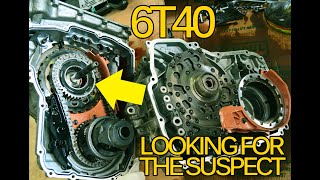
- Internal Mechanical Transmission Failure: If the transmission fluid contains a significant amount of metal shavings, it indicates a serious internal mechanical problem like a broken 3-5-R wave plate, a known issue 🎬 Watch: How a broken wavy plate causes internal transmission failure. in 6T40 transmissions. In this case, the P0700 is a symptom of a much larger issue requiring a transmission rebuild or replacement.
- Failed Input/Output Speed Sensors: Though less common than TCM or solenoid failure, a faulty transmission speed sensor can provide erratic readings, causing harsh shifting, limp mode, and triggering a P0700. This will typically be accompanied by specific speed sensor codes like P0716.
Diagnosis Steps

- Connect an OBD-II scanner capable of reading transmission codes to the vehicle's diagnostic port.
- Record all stored codes, not just the P0700. Pay close attention to any other P07xx, U-series, or P06xx codes.
- Record the freeze frame data for each code to understand the conditions when the fault occurred.
- Check the transmission fluid level and condition. This requires lifting the vehicle and opening the check plug on the side of the transmission. The fluid should be at the correct level and be bright red and translucent.
- If the fluid is low, top it off with DEXRON-VI and check for leaks. If the fluid is dark, burnt, or contains metal particles, a fluid change is necessary, and internal damage is likely.
- Inspect the transmission wiring harness and the main round connector on the case for any visible damage, corrosion, or loose connections.
- If codes point to specific solenoids (P0750-P0798), test solenoid resistance or use the scan tool's functional tests to cycle them.
- If communication with the TCM is not possible (U0101) or if codes like P0601 are present, the TCM/TEHCM is the most likely culprit.
Parts You'll Likely Need
- Transmission Control Module (TCM/TEHCM)
(OEM #24256700, 24265789, 24287420 (Gen 2, check specific VIN))— This is a very common failure point on the first-generation Cruze, often causing the P0700 code along with other specific TCM faults like P0601 or U0101.
Trusted brands: ACDelco (OEM), Dorman (Remanufactured)
OEM price range: $400-$600
Aftermarket price range: $250-$450 - Transmission Shift Solenoid Kit — Solenoids control the flow of fluid to change gears and can fail electrically or become stuck from debris, triggering specific fault codes alongside P0700.
Trusted brands: ACDelco, Bosch
OEM price range: $150-$250
Aftermarket price range: $80-$150 - DEXRON-VI Automatic Transmission Fluid — Low or degraded fluid is a common cause of shifting problems and can lead to component failure. This specific fluid type is required for the 6T30/6T40 transmission.
Trusted brands: ACDelco, Valvoline, Castrol
OEM price range: $10-$15 per quart
Aftermarket price range: $8-$12 per quart
Related Codes That Often Appear With This One
- P0601 — This code indicates an internal memory checksum error within a control module. When seen with P0700, it strongly suggests the Transmission Control Module (TCM) itself has failed and needs replacement or repair.
- U0101 — This code means 'Lost Communication with TCM'. If this code is present along with P0700, it's a very strong indicator that the TCM has failed, has lost power/ground, or there is a major wiring issue between it and the rest of the vehicle.
- P07xx — P0700 is a general code. It will almost always be accompanied by other P07xx codes (like P0751 for a shift solenoid, P0741 for a torque converter clutch circuit, or P0716 for an input speed sensor) that specify the actual fault.
Technical Service Bulletins (TSBs) & Recalls
- PI0321A: Addresses harsh up/down shifts and recommends a TCM reflash for early models.
- PIP4990C: Discusses diagnostic trouble code U0101 (Lost Communication with TCM) being set, which is a common partner to P0700 when the TCM fails.
- PI0670A: Relates to DTC P0776 and slipping or no reverse/3rd/5th gear, pointing towards potential TEHCM issues or internal clutch problems in 2012 models.
- pass2_corrections: The TSBs cited in Pass 1 (14371B, 14448, 17296) were found to be largely unrelated to the primary causes of P0700 on this specific platform and have been replaced with more relevant bulletins.
Platform-Specific Known Issues
- Broken 3-5-R Wave Plate: The 6T40/6T45 transmission is known for a failure of the 3-5-Reverse clutch wave plate. It can break into pieces, sending metal debris throughout the transmission, which clogs solenoids and the valve body, leading to P0700 and other codes. Symptoms include no reverse and/or no 3rd/5th gear. This requires a full transmission rebuild.
- TEHCM Internal Failure: The integrated Transmission Electro-Hydraulic Control Module (TEHCM) is a known high-failure item. Heat and vibration cause internal solder joints to fail or the processor to malfunction, leading to codes P0601 and U0101. This is the most frequent cause of P0700 when accompanied by those codes.
Mechanic-Grade Diagnostic Values
- Pressure Control (PC) Solenoid Resistance — expected: 3-5 Ohms. Failure: Readings outside this range indicate a faulty solenoid.
- On/Off Shift Solenoid Resistance — expected: 16-20 Ohms. Failure: Readings outside this range indicate a faulty solenoid.
- TCM Power Fuse (F1 Underhood) — expected: 12V+ on both sides of the fuse.. Failure: 0V on one or both sides indicates a blown fuse or an open circuit in the power feed from the fuse block.
- GMLAN High Speed Serial Data Voltage — expected: Approximately 2.5 volts (square wave DC signal) when back-probed at the DLC or TEHCM connector.. Failure: No voltage or erratic voltage suggests a communication bus issue.
Scan Tool Commands That Help
- GM GDS2: Transmission Service Fast Learn — This procedure must be performed after replacing the TEHCM, valve body, or internal transmission components. It allows the new TCM to learn the individual clutch characteristics and adaptive values in the service bay without extensive driving.
- GM GDS2 / Tech2Win: Solenoid Functional Test — To diagnose a specific solenoid-related code (e.g., P0751). The tool can command individual solenoids ON and OFF to verify their mechanical function. This can be paired with a special test plate and air pressure to check for leaks or sticking valves with the valve body removed.
Wiring & Ground Locations
- X175 — The main 14-pin or 20-pin round connector where the engine wiring harness connects to the transmission internal harness, located on the transmission case.. This is the single point of failure for all power, ground, and data communication to the TCM/TEHCM. Corrosion, moisture intrusion, or bent pins at this connector will cause communication loss (U0101) and trigger a P0700.
- G110 — On the top rear of the engine (for 2.0L models). Other key grounds are located on the engine block near the starter or on the chassis frame rail near the battery.. A poor ground connection for the TCM or ECM can cause erratic behavior, communication codes, and incorrect sensor readings, leading to a P0700 code.
- Underhood Fuse Block Connector X3, Pin 37 — One of the large multi-pin connectors on the underside of the underhood fuse block.. This specific pin was identified in a real-world repair as the power feed to the TCM. A bent pin at this location caused an open circuit, leading to a U0101 and P0700. This highlights that the fault can be far from the transmission itself.
Real Owner Repair Stories
- YouTube channel 'Pine Hollow Auto Diagnostics' (2014 Chevrolet Cruze) — Multiple warning lights (Service Power Steering, Stabilitrak, Traction Control), vehicle in limp mode, no communication with TCM.
❌ Tried (didn't work) Initial visual inspection under the hood., Checking the TCM fuse (F1), which was found to be good., Testing for power and ground at the X175 transmission connector, which revealed no power.
✅ What actually fixed it A bent pin (terminal 37) was found in the X3 connector under the underhood fuse block. The pin, which supplied power to the TCM, was not making contact. Straightening the pin and reseating the connector restored communication and resolved all codes. - Reddit user in r/cruze (2014 Cruze 2LT, 102k miles) — While driving in stop-and-go traffic, the car would rev but not accelerate in 3rd gear. Later, the reverse gear also failed.
❌ Tried (didn't work) The user was in the process of diagnosis when the final failure occurred.
✅ What actually fixed it The symptoms (loss of 3rd and Reverse gears) are classic signs of a broken 3-5-R wave plate, a well-documented mechanical failure inside the 6T40 transmission. The fix is a complete transmission rebuild or replacement. - NHTSA ODI #11154190 — An owner reported that the reverse gear would not engage and they had to limp the car in Drive to a service center. The vehicle was diagnosed with a P0700 TCM issue and eventually would no longer move forward.
- NHTSA ODI #11241791 — A driver experienced a loss of reverse and was restricted to only 1st and 2nd gear while driving forward. A diagnostic report identified codes P0776 and P0700.
- NHTSA ODI #11222256 — An owner reported the check engine light turning on followed by the transmission failing to shift correctly and the RPMs increasing significantly, with code P0700 present.
Documented NHTSA Reports
- NHTSA ODI #11387224: A vehicle was diagnosed by an independent mechanic with code P0700 and a failed transmission after the check engine light illuminated.
OEM Part Supersession History
24256700 (Gen 1 TEHCM)→Multiple, including 24265789, 24287420 (Gen 2 TEHCM)— Design update. Gen 2 TEHCMs (starting around 2012) eliminated the five pressure switches that were a common failure point on Gen 1 units.
Heads up: Gen 1 and Gen 2 TEHCMs are not directly interchangeable without programming and potential wiring changes. The solenoid locations and operation for PCS2 and PCS5 are different between generations. Installing the wrong generation TEHCM can result in incorrect temperature readings and multiple solenoid codes.
Model Year Variations Within This Range
- 2009-2011 (approx.): These models use the 'Gen 1' 6T40 TEHCM, which includes five pressure switches mounted on the module. These switches are a known failure point and repair kits are available for them.
- 2012-2016 (approx.): These models use the 'Gen 2' 6T40 TEHCM, which does not have pressure switches. The design was updated to improve reliability. The operation and location of Pressure Control Solenoids 2 and 5 also differ from Gen 1.
Diagnostic Flowchart
Used vs. New Parts: Buying Guide for This Vehicle
When a used part is the smart pick: A used TEHCM from a junkyard is generally NOT a good choice for a DIY repair. Unlike other modules, it cannot be simply swapped in. The module is programmed with the donor vehicle's VIN and security information. Installing it will result in a no-start condition and communication errors.
Donor-vehicle mileage cap: roughly under 70000 miles for the part to have meaningful remaining life.
What to inspect on the donor part:
- Verify the donor vehicle's year to ensure you are getting the correct generation (Gen 1 vs Gen 2) of TEHCM.
- Inspect the main connector pins on the used TEHCM for any signs of corrosion or damage.
- If possible, get the VIN of the donor car to aid in any potential programming efforts.
OEM-only on this vehicle (don't cheap out):
- Transmission Control Module (TEHCM): While remanufactured units are available, they must be from a reputable source like ACDelco or Dorman that guarantees proper testing and function. The critical step is programming.
Aftermarket brands forum-validated for this vehicle:
- Dorman (Remanufactured TEHCM)
- Sonnax (TEHCM repair components and remanufactured units)
Brands owners have reported issues with on this vehicle:
- Unknown, no-name TEHCMs from online marketplaces without a warranty or a clear programming/cloning path should be avoided due to the high likelihood of programming issues and premature failure.
Real Owner Stories
Aggregated from forums and TSBs cited above. Mileages and costs reflect what owners reported in those sources.
2012 Chevrolet Cruze
Symptoms: Diagnosed with a bad Transmission Control Module (TCM).
What fixed it: A dealership quoted a repair that required replacing the valve body along with the TCM.
Cost: $1800-$1800
Source hint: Reddit r/MechanicAdvice
2011 Chevrolet Cruze
Symptoms: Intermittently getting codes P0700 and P0601.
What fixed it: Resetting the battery provided a temporary fix, which is a classic symptom of a failing TCM.
Source hint: Reddit r/MechanicAdvice
2011 Chevrolet Cruze
Symptoms: Transmission problem with codes P0700, P07BF, and P0716.
What fixed it: Replacing the speed sensors did not resolve the issue, as the problem returned, indicating a more complex fault.
Source hint: cruzetalk.com thread titled '2011 Cruze transmission problem'
2010 Chevrolet Cruze
Symptoms: Check Engine Light with code P0700.
What fixed it: Replacing the TCM did not fix the issue. It was later understood that P0700 is an informational code and the other specific transmission codes needed to be diagnosed first.
Source hint: chevroletforum.com post titled 'Problem : code p0700 TCM CRUZE 2010'
Related OBD-II Codes
Frequently Asked Questions
My Cruze doesn't have a transmission dipstick. How do I check the fluid level and condition?
I have a P0700 code and my car has no reverse gear. What's the most likely cause?
Is it common for the Transmission Control Module (TCM) to fail on the 2009-2016 Cruze?
My scanner shows code U0101 along with P0700. What does that mean?
Can the TCM be repaired, or do I have to buy a new one from the dealer?
My mechanic mentioned TSB PI0670A for my 2012 Cruze. What issue does it address?
Helpful Videos

We Have This Part in Stock


The information in this article is provided for general reference and educational purposes only. Vehicle specifications, procedures, and part compatibility can vary by production date, trim level, and region. Always consult your vehicle's factory service manual and verify part numbers before purchasing or performing repairs. Safety-critical components such as airbags, seat belts, and braking systems should be installed by a qualified professional.
- Chevrolet Cruze:
- 🎬 Helpful Videos
- 🛍️ Shop This Part
- What's Unique About the 2009-2016 Chevrolet Cruze
- Symptoms You May Notice
- Most Likely Causes
- Rare But Worth Checking
- Diagnosis Steps
- Parts You'll Likely Need
- Related Codes That Often Appear With This One
- Technical Service Bulletins (TSBs) & Recalls
- Platform-Specific Known Issues
- Mechanic-Grade Diagnostic Values
- Scan Tool Commands That Help
- Wiring & Ground Locations
- Real Owner Repair Stories
- Documented NHTSA Reports
- OEM Part Supersession History
- Model Year Variations Within This Range
- Diagnostic Flowchart
- Used vs. New Parts: Buying Guide for This Vehicle
- Real Owner Stories
- 2012 Chevrolet Cruze
- 2011 Chevrolet Cruze
- 2011 Chevrolet Cruze
- 2010 Chevrolet Cruze
- Related OBD-II Codes
- Frequently Asked Questions
- 🎟️ Get 5% Off