

OBD-II Code P0601: Internal Control Module Memory Check Sum Error
The Ultimate 2026 Guide to Meaning, Causes, and Fixes
- P0601 signals a critical, often permanent internal memory failure within the Powertrain Control Module (PCM) or Transmission Control Module (TCM).
- Stop driving immediately; this fault causes unpredictable engine stalling, erratic transmission shifting, or sudden no-start conditions at any speed.
- Replacing and professionally programming the faulty control module to your vehicle's VIN resolves this code in over 90% of cases.
- Always verify battery voltage exceeds 12.6V and PCM ground voltage drop is under 0.1V before spending $800+ on a replacement module.
- Use a full-system scanner to pinpoint the exact failing module, as GM vehicles frequently store P0601 in the Transmission Control Module rather than the engine computer.
What Does P0601 Mean?

P0601 means your vehicle's main computer, typically the Powertrain Control Module (PCM), failed an internal self-test. The PCM runs a continuous mathematical calculation called a 'checksum' to verify its memory integrity. This code appears when the calculated result does not match the expected value, indicating corrupted software or a failed internal hardware component.
Technical definition: The SAE/OBD-II definition for P0601 is "Internal Control Module Memory Check Sum Error". This diagnostic trouble code sets when a primary control module (PCM, ECM, or TCM) performs a routine integrity check and the calculated checksum value mismatches the stored value, signaling a fatal memory error.
Can I Drive With P0601?
No — Do Not Drive. Do not drive the vehicle. This code indicates a critical main computer failure, causing the engine to stall at any speed, enter limp mode, or fail to start without warning. Continuing to drive poses a severe safety risk to you and others.
Common Causes

- Powertrain Control Module (PCM) Internal Hardware Failure (Very Common) — In over 80% of cases, P0601 means the PCM itself has permanently failed due to age, heat cycles, vibration, or internal short-circuits.
- Low Battery Voltage or Unstable Power Supply (Common) — A weak battery, faulty alternator, or corroded terminals cause voltage drops that corrupt the PCM's memory during startup or shutdown. The computer requires a steady 12.6V+ to operate reliably.
- Poor Ground Connections (Common) — Corroded or broken ground straps for the engine, chassis, or PCM create electrical interference and voltage irregularities, triggering memory errors.
- Corrupted PCM Software (Tuning or Reflashing) (Less Common) — An interrupted dealership software update or a poorly written aftermarket performance tune corrupts the PCM's memory, causing checksum mismatches.
- Water Intrusion or Physical Damage (Rare) — Water leaking onto the PCM connectors causes short circuits and corrosion on the circuit board. This is a known defect on specific Ford trucks with cowl leaks.
- Voltage Spikes from Improper Jump-Starting (Rare) — Connecting jumper cables incorrectly sends a damaging voltage spike through the electrical system, instantly frying the PCM's sensitive internal memory.
Symptoms

- Check Engine Light is On — The PCM detects the internal fault and illuminates the light. The code usually cannot be cleared with a scanner.
- Engine Stalls or Enters Limp Mode — The engine shuts down unexpectedly while driving or forces the vehicle into a low-power 'Limp Mode' to protect the powertrain from erratic computer commands.
- Engine Will Not Start — The vehicle cranks but fails to start because the corrupted PCM cannot control ignition timing or fuel injection.
- Transmission Shifting Problems — If the code originates in the Transmission Control Module (TCM), the vehicle experiences harsh shifting or gets stuck in a single gear.
- ABS and Traction Control Lights On — The PCM's failure disrupts the CAN bus network, triggering warning lights for secondary systems like ABS and StabiliTrak.
- Failure to Pass Emissions Test (also visible on scanner) — An active P0601 code prevents OBD-II readiness monitors from running, resulting in an automatic emissions inspection failure.
Diagnostic Flowchart
Tap your situation to follow the diagnostic path that matches what you're seeing on this code.
Common Fixes & Costs
- Replace Powertrain Control Module (PCM/ECM/TCM)
— Parts: $500-$1,200, Labor: $150-$300, ~2.5 hr book time
(Professional)
2006 Dodge Ram 1500 (5.7L): OEM Mopar: P56029208AI (Alt: Cardone 79-series) - Repair PCM Power or Ground Circuits — Parts: $5-$50, Labor: $100-$300, ~2.0 hr book time (Intermediate)
- Replace Battery — Parts: $150-$350, Labor: $25-$50, ~0.5 hr book time (DIY)
- Reprogram (Reflash) the Control Module — Parts: $0, Labor: $150-$250, ~1.5 hr book time (Professional)
- Replace Alternator — Parts: $300-$700, Labor: $150-$300, ~2.0 hr book time (Intermediate)
DIY vs Professional
- PCM/ECM Replacement — Beginner:
- Battery Replacement — Beginner:
- Wiring/Ground Repair — Beginner:
Used vs. New Parts: Buying Guide
When a used part is worth it: Buying a used (junkyard) PCM never makes sense for P0601. It is locked to the donor car's VIN and anti-theft system and will cause a no-start condition.
Donor quality checklist:
- Only purchase professionally remanufactured units from reputable suppliers (e.g., Cardone, Flagship One) or new OEM units.
- Avoid 'as-is' parts from eBay or junkyards.
Decision logic:
- If The fault is confirmed internal to the PCM. → Buy a new OEM or high-quality remanufactured PCM. Do not buy a used junkyard unit.
- If Budget is tight. → A remanufactured PCM costs 30-50% less than new OEM and includes a warranty.
Warranty tradeoff: Used: No warranty, guaranteed no-start. Remanufactured: 1-year to lifetime warranty. New OEM: 1-year warranty.
Worst-case if a used part fails: $300-$500 wasted on a used part and diagnostic labor before buying the correct remanufactured unit.
What Happens If You Wait — Timeline
- Immediately: Code P0601 stores and the Check Engine Light illuminates. The vehicle may run normally, but catastrophic stalling is possible at any second. (MPG impact: 0-5%% · Added cost: $0, but the safety risk is extreme.)
- 0-1 week of continued driving: Uncommanded engine stalling increases dramatically. The vehicle shuts off in traffic. Intermittent no-start conditions and limp mode become frequent. (MPG impact: 5-15%% · Added cost: $200-$500 for towing and emergency diagnostic fees.)
- 1-4 weeks of continued driving: Erratic transmission shifting causes harsh engagement, accelerating wear on internal clutches. The faulty module sends erratic voltage signals, damaging sensors. (MPG impact: 10-20%% · Added cost: $500-$3,500 for potential transmission rebuilds or sensor replacements.)
- Anytime: Total failure. The vehicle will not start. The internal checksum error is a permanent fault. The car is disabled until the module is replaced. (MPG impact: 100% (vehicle is inoperable)% · Added cost: Full cost of the primary repair ($800-$2,000+) plus towing.)
Cost of Not Fixing It
- Immediately: Vehicle stalls at highway speeds, creating a severe safety hazard. (Added cost: $200-$500 for towing.)
- 0-1 month: Erratic computer commands cause harsh shifting, destroying transmission clutches. (Added cost: $1,800-$3,500 for transmission replacement.)
- Anytime: Guaranteed failure of state emissions inspections. (Added cost: Fines and inability to register the vehicle.)
Diagnosis Steps

- Read Codes by Module
Use a full-system OBD-II scanner to confirm P0601. Critically, determine WHICH module set the code (ECM vs. TCM). On GM vehicles, TSB #PIP4653E notes the TCM is a frequent source. Replacing the ECM when the TCM is at fault wastes over $1,000.
Tools: Professional OBD-II Scanner (e.g., Autel, Launch) (Beginner) - Perform Battery and Charging System Test
Test battery voltage (must be >12.6V engine off). Start the engine and test alternator output (must be stable between 13.5V and 14.5V). Load test the battery; a weak battery causes this code under load even with good static voltage.
Tools: Multimeter, carbon pile battery tester (Beginner) - Perform PCM Power and Ground Voltage Drop Test
With the key on, back-probe the PCM's main power and ground pins. Measure the voltage drop between the battery positive post and the PCM power pin (must be <0.2V). Measure between the battery negative post and the PCM ground pin (must be <0.1V). Higher readings indicate hidden resistance causing the P0601.
Tools: Digital multimeter, wiring diagram, back-probe kit (Professional) - Perform a Hard Reset
Disconnect both battery cables and hold them together for 60 seconds to drain all module capacitors. Reconnect the battery. If P0601 returns immediately upon key-on, it confirms a hard, non-recoverable hardware fault.
Tools: Wrench set (Beginner) - Inspect PCM, Connectors, and Harness
Visually inspect the PCM and connectors for physical damage, bent pins, or water intrusion. Wiggle the harness with the engine running; if the engine stalls, repair the wiring harness.
Tools: Flashlight, basic hand tools (Intermediate) - Check 5-Volt Reference Circuit
A shorted sensor pulls down the PCM's 5-volt reference circuit, mimicking internal failure. With key on, engine off, check the 5V reference at the TPS or MAP sensor. If voltage is below 4.8V, unplug sensors one by one until voltage returns to 5.0V to identify the shorted component.
Tools: Digital multimeter, wiring diagram (Professional) - Attempt to Reflash the PCM
If all external checks pass, have a dealer or qualified shop reflash the module with the latest manufacturer software. If the reflash fails or the code returns instantly, the hardware is dead.
Tools: Professional scan tool with J2534 pass-thru device (Professional) - Replace and Program the Control Module
If steps 1-7 confirm the module is receiving proper power/ground but still fails the checksum, replace it. The new module must be programmed to the vehicle's specific VIN and immobilizer system to start the engine.
Tools: Wrench set, new control module, J2534 programming tool (Professional)
When This Code Triggers (Freeze-Frame Conditions)
- Condition: Key-On, Engine-Off (The checksum self-test runs immediately when the ignition turns on. A failure here sets the code instantly before cranking.)
- Engine Coolant Temp: 35-80°F (The code frequently triggers during a cold start, where low ignition voltage during cranking corrupts the memory check.)
- RPM: 0 or 700-1200 (The fault logs either at 0 RPM during the key-on self-test or at idle speed immediately after starting.)
- Ignition Voltage: < 11.5V (Freeze frame data often reveals a momentary low voltage condition during cranking, which corrupts the PCM's memory read/write process.)
Related Codes
- P0606 — P0601 is a corrupted memory error; P0606 is a failed central processor. Both require PCM replacement.
- P0602 — P0602 indicates a programming error (e.g., missing VIN), whereas P0601 indicates the memory hardware holding the program failed.
- P0603 — P0603 is an error in volatile Keep Alive Memory (KAM), often caused by a dead battery. P0601 is a permanent failure of core memory.
- P0700 — P0700 means the TCM has a fault. Seeing P0700 with P0601 confirms the P0601 is inside the transmission computer, not the engine computer.
Climate & Environmental Factors
- Engine Bay Heat Cycles: Years of heating and cooling fracture microscopic solder joints on the PCM circuit board, causing open circuits and memory errors.
- High Humidity / Water Intrusion: Accelerates corrosion on exposed connectors. Cowl leaks directly short-circuit the PCM board.
- Extreme Cold: Strains the battery, causing low voltage during cold starts that corrupts the PCM boot sequence.
How to Talk to a Mechanic About This Code
Say this: "I have a P0601 Internal Control Module Memory Check Sum Error. Authorize one hour of diagnostic time to test the battery, charging system, and perform voltage drop tests on the module's main power and ground wires."
Directs the mechanic to perform necessary electrical checks first, preventing them from immediately quoting a $1,000 module replacement for a bad ground wire.
Avoid saying:
- 'My check engine light is on, can you look at it?'
- 'The internet says I need a new computer.'
- 'Just fix it, whatever it takes.'
Questions to ask before authorizing the repair:
- What were the voltage readings for the battery and alternator?
- Did the voltage drop test on the PCM's power and ground circuits measure below 0.2V and 0.1V?
- Did you confirm which specific module—the ECM or the TCM—stored the P0601 code?
- Does the quoted price include programming the new module to my vehicle's VIN?
- What is the warranty on the replacement module?
Where to Take It: Dealer vs Independent vs Chain
- Dealer:
Best for: Vehicles under the 8-year/80,000-mile federal emissions warranty., Complex issues requiring manufacturer software updates (VW/Audi)., Guaranteed correct part programming.
Downsides: Highest labor rates., Unwilling to install customer-supplied remanufactured parts. (Typical cost: +50% vs. baseline) - Independent Shop:
A strong choice if the shop is well-vetted and capable of module programming.
Best for: Out-of-warranty vehicles., Shops with strong electrical diagnostic reputations.
Downsides: Must verify they have J2534 pass-thru devices to program new modules. (Typical cost: +0% vs. baseline) - Chain Shop:
AVOID. They cannot handle the required electrical testing and module programming.
Best for: Simple battery replacements.
Downsides: Lack specialized tools for module programming., Inexperienced with complex electrical diagnostics. (Typical cost: -10% vs. baseline)
When to Walk Away From the Repair
If the estimated repair cost ($800-$1,500) exceeds 50% of your car's private-party value, consider selling or scrapping the vehicle.
- Car worth $2500, fix is $1500: Walk away. The repair is 60% of the car's value.
- Car worth $10000, fix is $1200: Fix it. The repair is 12% of the car's value.
- Car worth $4000, fix is $1800: Borderline. Depends on overall vehicle condition and recent maintenance.
What Scan Tool You Need for This Code

Minimum: A scanner that reads codes from ALL vehicle modules (ECM, TCM, ABS). A basic engine-only reader misses P0601 codes stored in the transmission computer.
A $20 scanner cannot differentiate between an engine or transmission computer fault, leading to expensive misdiagnosis. It also cannot program the new module.
Budget: BlueDriver Pro (~$120) — Scans all modules to identify the exact source of P0601. Provides live data to monitor module voltage.
Mid-range: Foxwell NT680 Pro (~$250) — Offers full-system diagnostics and bidirectional controls to actively test components.
Professional: Autel MaxiSys MS906Pro (~$1200) — Includes J2534 pass-thru programming capability, essential for programming the new PCM to the vehicle's VIN.
Rent vs buy: Rent a basic scanner to confirm the code. DIY repair is not recommended because programming requires a $1,000+ pro scanner.
How to Clear the Code After You Fix It
- Install the new PCM and program it to the vehicle's VIN using a J2534 tool.
- Reconnect the battery (negative terminal last).
- Use a professional scanner to clear P0601 and perform any required throttle body relearn procedures.
- Perform a complete OBD-II drive cycle to set readiness monitors.
Drive cycle (~30 minutes): Cold start and idle for 3 minutes. Drive in stop-and-go traffic. Drive at a steady 55 mph for 10 minutes. Allow the vehicle to cool down completely.
Readiness monitors affected: All monitors reset to 'Not Ready' after PCM replacement., Catalyst (CAT), Evaporative System (EVAP), Oxygen Sensor (O2S)
Before emissions retest: drive at least 100 miles to fully set monitors.
Watch out for:
- Clearing the code without replacing the faulty PCM results in the code returning instantly.
- Failing to program the new PCM's immobilizer system results in a crank-no-start condition.
Will This Fail Emissions / State Inspection?
Yes — this code typically fails an OBD-II emissions inspection.
- California: Automatic failure. The active MIL and incomplete readiness monitors prevent passing.
- New York: Automatic failure. NYS DMV OBD-II scans reject vehicles with active P0601 codes.
- Texas: Automatic failure in emissions-testing counties.
Most Commonly Affected Vehicles
- Dodge / Ram Ram 1500/2500, Caravan, Charger (2004-2012) — Notorious for high rates of internal PCM hardware failure triggering P0601.
- Chrysler Town & Country, 300, PT Cruiser (2001-2010) — Shares powertrains with Dodge; experiences frequent internal PCM failures.
- Jeep Grand Cherokee, Liberty, Wrangler (2004-2011) — Prone to internal PCM failures exacerbated by engine bay heat soak.
- Chevrolet / GMC Silverado, Tahoe, Equinox (2007-2018) — P0601 frequently sets in the TCM rather than the ECM. Verify the failing module before replacement.
- Cadillac CTS, Escalade, SRX (2008-2015) — GM TSB #PIP4653E warns P0601 stores in the TCM on these models.
- Ford F-150, Explorer, Focus (2003-2009) — Water intrusion into the cowl-mounted PCM connector is a primary cause.
- Volkswagen / Audi Golf, Jetta, A4 (2.0T) (2006-2009) — A known software defect triggers P0601. Dealer ECU reflashes often resolve it without hardware replacement.
- Subaru Impreza, Forester, Outback (2005-2012) — Often related to poor power or ground connections to the ECM.
- Honda / Acura Accord, Civic, TL (2003-2008) — Triggered by true internal PCM failure or a faulty PGM-FI main relay.
Manufacturer-Specific Notes
- Chrysler/Dodge/Jeep: P0601 almost exclusively means the PCM is dead. Check for 8-year/80,000-mile federal emissions warranty coverage before paying.
- General Motors: P0601 frequently sets in the Transmission Control Module (TCM). Replacing the ECM is a common, expensive misdiagnosis.
- Ford: Cowl water leaks destroy the PCM. Always check for wet connectors before installing a new module.
- Volkswagen/Audi: On 2006-2009 2.0T engines, P0601 is a known software bug fixed by a dealer reflash, not a hardware replacement.
Real Owner Stories
2011 Chevrolet Silverado 1500 - Stalling and 'Service Stabilitrac'
Vehicle stalled intermittently, displaying 'Reduced Power' and 'Service Stabilitrac' messages, accompanied by code P0601.
What they tried:
- Initial diagnosis pointed to a failed Engine Control Module (ECM).
Outcome: A technician discovered broken ground wires near the driver's side motor mount. Wiggling the cable reset the P0601 code. Extending and re-grounding the wires to a solid bracket bolt completely resolved all symptoms without replacing the ECM.
Lesson: Never condemn a control module without performing a thorough voltage drop test on all power and ground circuits. A bad ground perfectly mimics a failed module.
2001 Dodge Ram 1500 5.9L - Persistent P0601 After Replacements
Check Engine Light on with P0601. Truck exhibited erratic shifting and unstable idle.
What they tried:
- Owner installed four different remanufactured PCMs under warranty; all threw the P0601 code immediately or caused a no-start.
Outcome: The owner cycled through multiple faulty remanufactured PCMs from cheap suppliers. The final fix was sourcing a high-quality remanufactured unit from a reputable brand (Cardone).
Lesson: For Chrysler/Dodge vehicles, P0601 almost always means a bad PCM. However, the quality of cheap remanufactured parts is notoriously poor. Buy from reputable suppliers with strong warranties.
2013 Chevrolet Equinox - P0601 and P0700 Highway Failure
Car lost power and entered limp mode on the interstate. Scanner showed P0700 (TCM Fault Request) and P0601.
What they tried:
- A general shop cleared the codes, but suspected an internal transmission failure.
Outcome: The combination of P0700 and P0601 points directly to the Transmission Control Module (TCM). The P0700 is the ECM reporting a TCM problem. The actual P0601 fault originated in the TCM, requiring TCM replacement.
Lesson: On GM vehicles, P0700 alongside P0601 means the fault is in the TCM, not the ECM. Replacing the engine computer is a costly misdiagnosis.
How to Prevent This Code From Triggering
- Maintain a Healthy Battery and Charging System (Annually) — Stable power is critical for PCM longevity. Low voltage or alternator spikes corrupt memory and damage internal components.
- Inspect and Clean Key Ground Connections (Every 30,000 miles or 3 years) — Corrosion on ground straps forces the PCM to find unstable ground paths, introducing electrical noise that causes memory errors.
- Use Extreme Caution When Jump-Starting (As needed) — Reversing polarity or connecting the final ground directly to the battery negative creates voltage spikes that instantly destroy the PCM.
- Clear Cowl Drains to Prevent Water Intrusion (Bi-annually) — Prevents water from pooling and leaking onto the PCM connectors, which causes direct short circuits on the circuit board.
Frequently Asked Questions
What is the most common misdiagnosis for P0601?
Replacing the PCM without testing the battery, alternator, and ground circuits. On GM vehicles, replacing the ECM when the fault is actually in the TCM is another costly mistake.
Can I just clear the P0601 code?
No. The code returns immediately upon the next key cycle because it indicates a permanent hardware or software fault.
My car drives fine with P0601. Can I ignore it?
Never ignore P0601. The compromised computer will eventually fail completely, causing sudden stalling at highway speeds.
Can I replace the PCM myself with a junkyard part?
No. A junkyard PCM is locked to the donor car's VIN and immobilizer. Your car will not start until a new or remanufactured module is professionally programmed to your vehicle.
Can a bad ground cause P0601?
Yes. A high-resistance ground connection creates electrical noise that corrupts the PCM's self-check, mimicking an internal failure. A proper resistance test must show less than 0.1 ohms on the ground circuit.
I got P0601 after changing my battery. What happened?
Ensure the new battery is fully charged (>12.6V), as low voltage corrupts the PCM boot sequence. If a hard reset doesn't clear the code, a voltage spike during the swap likely fried the module.
Is a P0601 repair covered by warranty?
The PCM is covered under the U.S. federal emissions warranty for 8 years or 80,000 miles. Always check with a dealership before paying out of pocket.
What's the difference between reflashing and replacing the PCM?
Reflashing overwrites the software with an update, fixing corruption. Replacing installs new physical hardware. Reflashing is cheaper but only works if the hardware isn't permanently damaged.
Key Takeaways
- P0601 signals a critical, often permanent internal memory failure within the Powertrain Control Module (PCM) or Transmission Control Module (TCM).
- Stop driving immediately; this fault causes unpredictable engine stalling, erratic transmission shifting, or sudden no-start conditions at any speed.
- Replacing and professionally programming the faulty control module to your vehicle's VIN resolves this code in over 90% of cases.
- Always verify battery voltage exceeds 12.6V and PCM ground voltage drop is under 0.1V before spending $800+ on a replacement module.
- Use a full-system scanner to pinpoint the exact failing module, as GM vehicles frequently store P0601 in the Transmission Control Module rather than the engine computer.
Helpful Videos
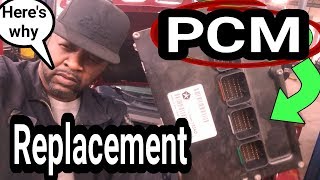
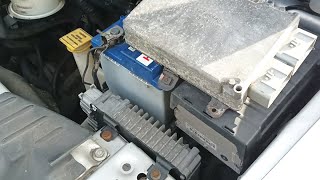
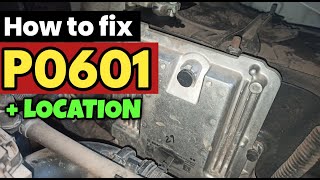

The information in this article is provided for general reference and educational purposes only. Vehicle specifications, procedures, and part compatibility can vary by production date, trim level, and region. Always consult your vehicle's factory service manual and verify part numbers before purchasing or performing repairs. Safety-critical components such as airbags, seat belts, and braking systems should be installed by a qualified professional.
- 🎬 Helpful Videos
- What Does P0601 Mean?
- Can I Drive With P0601?
- Common Causes
- Symptoms
- Diagnostic Flowchart
- Common Fixes & Costs
- DIY vs Professional
- Used vs. New Parts: Buying Guide
- What Happens If You Wait — Timeline
- Cost of Not Fixing It
- Diagnosis Steps
- When This Code Triggers (Freeze-Frame Conditions)
- Related Codes
- Climate & Environmental Factors
- How to Talk to a Mechanic About This Code
- Where to Take It: Dealer vs Independent vs Chain
- When to Walk Away From the Repair
- What Scan Tool You Need for This Code
- How to Clear the Code After You Fix It
- Will This Fail Emissions / State Inspection?
- Most Commonly Affected Vehicles
- Manufacturer-Specific Notes
- Real Owner Stories
- 2011 Chevrolet Silverado 1500 - Stalling and 'Service Stabilitrac'
- 2001 Dodge Ram 1500 5.9L - Persistent P0601 After Replacements
- 2013 Chevrolet Equinox - P0601 and P0700 Highway Failure
- How to Prevent This Code From Triggering
- Frequently Asked Questions
- What is the most common misdiagnosis for P0601?
- Can I just clear the P0601 code?
- My car drives fine with P0601. Can I ignore it?
- Can I replace the PCM myself with a junkyard part?
- Can a bad ground cause P0601?
- I got P0601 after changing my battery. What happened?
- Is a P0601 repair covered by warranty?
- What's the difference between reflashing and replacing the PCM?
- Key Takeaways
- 🎟️ Get 5% Off