

P0606 on 2005-2010 Scion tC 2.4L: ECM Fault or a Bad Oxygen Sensor?
On a 2005-2010 Scion tC, code P0606 is almost always caused by a failing upstream Air/Fuel Ratio (A/F) sensor, not a bad Engine Control Module (ECM). Before considering a costly ECM replacement, plan to replace the A/F sensor for approximately $70-$150 for an aftermarket part or $150-$250 for an OEM Denso part. This is a 2/5 DIY difficulty job.
- Do not immediately replace the ECM for a P0606 code on a 2005-2010 Scion tC.
- The most probable cause is a faulty upstream Air/Fuel Ratio sensor.
- If other codes are present, especially for oxygen sensors (like P0138) or EVAP, diagnose and fix them first.
- Always check simple, cheap items first: ensure the gas cap is tight and in good condition.
- Replacing the A/F sensor is a manageable DIY job that requires a special O2 sensor socket.
What's Unique About the 2005-2010 Scion tC
The 2AZ-FE engine platform is well-known for setting a P0606 code when the actual problem is a faulty Air/Fuel Ratio (A/F) sensor or a downstream oxygen (O2) sensor. An intermittent failure in the sensor's heater circuit can send an unexpected voltage spike or signal dropout to the ECM, which flags it as an internal processor fault. Mechanics and owners who follow the generic diagnostic path for P0606 often mistakenly replace the expensive ECM when the true, much cheaper, cause is a bad sensor.
Symptoms You May Notice
- Check Engine Light is on
- VSC and/or TRAC lights may also illuminate
- Decreased fuel economy
- Rough or unstable idle
- Engine stalling unexpectedly
- Poor acceleration or sluggish performance
- In some cases, no noticeable symptoms other than the Check Engine Light
- Replacing the Engine Control Module (ECM) without first testing the air/fuel ratio and oxygen sensors. This is an expensive and often unnecessary repair for this specific code on a Scion tC.
Most Likely Causes
- Failing Upstream Air/Fuel Ratio Sensor (Bank 1 Sensor 1) 🔴 High Probability This is a widely documented issue on Toyota/Scion platforms where a failing A/F sensor heater circuit sends erratic voltage, falsely triggering the P0606 code. The ECM sees a momentary, illogical signal and flags itself as faulty.
How to confirm: Use a scan tool to monitor live data for the Bank 1 Sensor 1 voltage. Look for readings that are stuck, slow to respond, or show erratic spikes. 🎬 See this guide on how to test for bad sensors. Wiggling the sensor's wiring harness may also induce a fault. A professional technician would analyze the freeze-frame data, which often shows the A/F heater circuit resistance jumping to thousands of Ohms for only a few frames when the code sets.
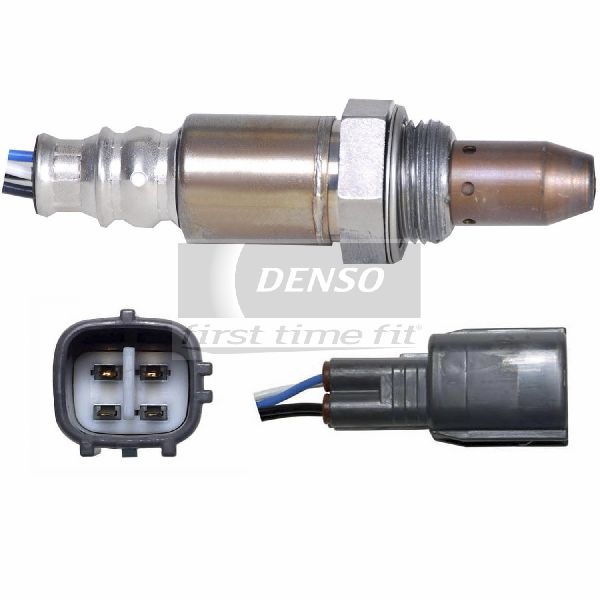
Typical fix: Replace the upstream Air/Fuel Ratio sensor located in the exhaust manifold before the catalytic converter. Use of the OEM supplier part (Denso) is highly recommended.
Est. part cost: $70-$250 - Failing Downstream Oxygen Sensor (Bank 1 Sensor 2) 🟡 Medium Probability Similar to the upstream sensor, a fault in the downstream sensor can also trigger P0606, often in conjunction with code P0138 (O2 Sensor Circuit High Voltage). A short or open in the sensor's heater circuit is a common trigger.
How to confirm: Check for other O2 sensor-related codes, especially P0138. Monitor Bank 1 Sensor 2 live data; the voltage should be relatively stable (e.g., above 0.5V) on a warm, running engine. If it's fluctuating wildly, stuck high, or stuck low, the sensor is likely faulty.
Typical fix: Replace the downstream oxygen sensor located after the catalytic converter. 🎬 Watch: Step-by-step downstream oxygen sensor replacement for your Scion.
Est. part cost: $50-$150 - Loose or Faulty Gas Cap ⚪ Low Probability A user on YouTube reported that a bad gas cap seal caused P0606 along with EVAP codes P0441 and P0455. While this is an edge case, an EVAP system leak can cause voltage fluctuations that may confuse the ECM, and it's a very simple and cheap item to check.
How to confirm: Inspect the gas cap for cracks and ensure the rubber seal is intact and pliable. Make sure it clicks when tightened. If other EVAP codes (P0441, P0455, P0456) are present, this becomes a more likely cause.
Typical fix: Tighten or replace the gas cap with an OEM part.
Est. part cost: $15-$30
Rare But Worth Checking
- Poor ECM Power or Ground Connection: Before condemning the ECM, always check that its power and ground circuits are clean, tight, and free of corrosion. A bad ground can cause countless electrical gremlins, including a false P0606 code.
- Damaged Sensor Wiring: Inspect the wiring harness leading to the A/F and O2 sensors for any signs of melting, chafing, or corrosion that could cause a short or open circuit. Wiggling the harness while monitoring live data can help identify intermittent issues.
- Charging System Fault: An alternator that is failing may overcharge or undercharge the system, creating unstable voltage that can trigger a P0606 code. Check the battery voltage with the engine running; it should be stable, typically between 13.5 and 14.5 volts.
- Failed Engine Control Module (ECM): This is the least likely cause on this platform. This should only be considered after all sensor and wiring-related possibilities have been thoroughly ruled out.
Diagnosis Steps
- Check for other stored trouble codes. If any codes for A/F sensors (P0138), O2 sensors, or the EVAP system (P0441, P0455) are present, diagnose them first as they are the likely root cause.
- Inspect the gas cap. Ensure it is tight and the seal is in good condition. If it's old or cracked, replace it, preferably with an OEM part.
- Visually inspect the wiring and connectors for both the upstream A/F sensor and the downstream O2 sensor. Look for any signs of damage, melting on the exhaust, or corrosion. Pay close attention to the harness where it might rub or get stretched.
- Check the charging system. With the engine running, use a multimeter to verify the battery voltage is stable and within the 13.5V-14.5V range.
- Inspect the main ground connections to the engine and chassis to ensure they are clean and tight.
- Using a scan tool, analyze the freeze-frame data for the P0606 code. Look for anomalies in the A/F sensor or O2 sensor data streams at the exact moment the fault was recorded. This is a key professional diagnostic step.
- Observe the live data for the upstream A/F sensor (Bank 1 Sensor 1). It should fluctuate rapidly. If it's stuck, slow, or shows sudden, illogical spikes, it is likely faulty.
- Observe the live data for the downstream O2 sensor (Bank 1 Sensor 2). With the engine warm and at a steady RPM, the voltage should be relatively stable. If it's erratic or stuck, it may be faulty.
- If a sensor is suspected, replace it. The upstream A/F sensor is the most common culprit.
- If all sensors and wiring check out perfectly and the code persists after clearing, the ECM may be at fault. This is the final step and least likely cause.
Parts You'll Likely Need
- Upstream Air/Fuel Ratio Sensor
(OEM #89467-28010)— This is the most common cause of a P0606 code on the Scion tC, as a fault in its internal heater can trick the ECM into thinking it has failed.
Trusted brands: Denso (OEM Supplier), NGK/NTK
OEM price range: $150-$250
Aftermarket price range: $70-$150 - Engine Control Module (ECM)
(OEM #89661-21460)— This is the 'last resort' part to replace if all other diagnostic steps fail. A replacement requires programming to the car's VIN and immobilizer.
Trusted brands: OEM (Toyota), Remanufactured (various)
OEM price range: $800-$1000
Aftermarket price range: $250-$450 (Remanufactured)
Related Codes That Often Appear With This One
- P0138 — This code indicates 'O2 Sensor Circuit High Voltage (Bank 1 Sensor 2)'. Its presence strongly suggests the P0606 is being triggered by a fault in the downstream oxygen sensor system.
- P0441, P0455, P0456 — These are EVAP system codes. If they appear with P0606, it could point to a simple issue like a loose or faulty gas cap causing system-wide voltage irregularities.
Technical Service Bulletins (TSBs) & Recalls
- EG042-07 (September 20, 2007): While this TSB is for a 2005-2007 Corolla/Matrix with a 1ZZ-FE engine, it is highly relevant. It addresses P0606 and other codes and explicitly instructs technicians to verify external circuits (lighting, sensors, wiring) BEFORE condemning the ECM. This reinforces the diagnostic principle that P0606 on a Toyota is often caused by an external problem.
Platform-Specific Known Issues
- Real-World Repair Story: A user on the Reddit community r/SciontC reported getting a P0606 code along with a downstream oxygen sensor code. After clearing the codes, only the O2 sensor code returned. The user later confirmed the fix: 'My issues was that the downstream oxygen sensor was defective. These cars are notorious for a P0606 because caused by the B1S2 oxygen sensor.' This is a direct owner account of the sensor causing the ghost code.
Mechanic-Grade Diagnostic Values
- Upstream A/F Sensor Heater Resistance — expected: 1.8 to 3.4 Ω at 20°C (68°F). Failure: An open circuit or a resistance of many thousands of Ohms, which may only appear for a few frames in the freeze-frame data when the P0606 code is set.
- Upstream A/F Sensor Heater Current (Live Data) — expected: 0.9 to 9.9 A. Failure: Current reading is outside the specified range, indicating a fault in the heater or its circuit.
- ECM Power Supply Voltage at ECM Connector — expected: Should be identical to battery voltage (approx. 12.4-12.6V KOEO, 13.5-14.5V engine running).. Failure: Any voltage drop between the battery terminal and the ECM connector indicates high resistance in the power or ground wiring.
Hidden / Shadow Codes Worth Checking
- N/A (Analysis of Freeze Frame Data): On Toyota systems, the 'hidden' data for P0606 is not a separate code but found within the standard freeze frame data. The key is to look for a momentary, illogical reading from an external sensor that occurred in the 1-2 data frames right as the P0606 was triggered. Most commonly, the A/F sensor heater resistance will spike to thousands of Ohms for an instant, tricking the ECM into flagging itself. (see via Professional scan tool (like Toyota Techstream) capable of displaying detailed freeze frame data.)
Scan Tool Commands That Help
- Toyota Techstream: Active Test: A/F Sensor Heater — To manually command the A/F sensor heater on and off to verify its operation and monitor the current draw, helping to isolate a faulty heater element without having to remove the sensor.
- Toyota Techstream: Data List > A/F Heater Current (B1 S1) — To monitor the live current of the A/F sensor heater. A reading outside the normal range (e.g., 0.9-9.9A) confirms a problem with the heater circuit.
- Paperclip / Jumper Wire: Immobilizer Reset (ECU Swap) — This is not for diagnosis, but is a critical procedure if the ECM is replaced. After installing a replacement (used or new) ECM, the immobilizer must be reset to recognize the new module. This procedure involves jumping specific pins in the OBD-II port and following a sequence of steps to allow the car to start.
Wiring & Ground Locations
- ECM Location — Behind the glove box on the passenger side of the dashboard.. Physical access is required to inspect connectors for corrosion or damage, and to test power/ground pins directly at the module.
- Primary ECM Ground — On the left side of the cylinder head.. A poor engine ground is a common cause of floating voltages and electrical noise that can trigger false processor faults. This is a critical point to check for cleanliness and tightness before condemning the ECM.
Real Owner Repair Stories
- Reddit user on r/SciontC (Scion tC (year not specified)) — P0606 code along with a downstream oxygen sensor code (likely P0138).
❌ Tried (didn't work) Clearing the codes resulted in only the O2 sensor code returning initially.
✅ What actually fixed it Replacing the downstream oxygen sensor (Bank 1 Sensor 2) resolved all codes, including the P0606. The user noted this is a notorious issue. - ScionLife.com user 'XIEmperorIX' (2007-2010 Scion tC (inferred from post date)) — P0606 code appeared after driving in heavy rain and hitting a puddle. No noticeable drivability problems.
❌ Tried (didn't work) Clearing the code with a ScanGauge II was only temporary; the code would return.
✅ What actually fixed it The code went away on its own after a few days and did not return. The owner suspected a component got wet and the problem resolved itself once it dried out, pointing to a moisture-sensitive short in the wiring for an external sensor like the O2 sensor.
When the Usual Fixes Don't Work
- While the most common fix is replacing the upstream A/F sensor, if that fails to resolve the code, do not immediately assume the ECM is bad. Evidence from owner forums suggests the next most likely culprit is an intermittent short in the sensor's wiring harness, particularly the downstream O2 sensor which is exposed to the elements. One owner reported the code only appeared after heavy rain and resolved itself after drying out, strongly indicating a wiring issue rather than a faulty sensor or ECM.
OEM Part Supersession History
89661-21520→89661-21521— Standard part revision by the manufacturer.
Heads up: These part numbers are for 2008-2010 Scion tC models with an automatic transmission. While the newer part is likely backward compatible, it is always safest to match the original part number from the vehicle's ECM.89661-21390→89661-21391— Standard part revision by the manufacturer.
Heads up: Applies to earlier models in the generation. The existence of multiple base numbers and revisions highlights the importance of matching the part number exactly when sourcing a replacement.Denso 234-9041 (A/F Sensor)→Denso 234-9049— OEM supplier part update.
Heads up: For some Toyota/Scion applications, parts distributors note to 'Sellout and Reorder 234-9049' when 234-9041 is requested. This suggests 234-9049 is the newer or preferred replacement. Verify fitment for the specific vehicle.
Model Year Variations Within This Range
- 2005-2007 vs. 2008-2010: The ECM part numbers are different for pre-facelift (2005-2007) and post-facelift (2008-2010) models, especially for the automatic transmission. For example, 2006 models often use P/N 89661-21460, while 2008-2010 automatic models use 89661-21520 or its successor, 89661-21521. This is critical when sourcing a replacement ECM.
Diagnostic Flowchart
Real Owner Stories
Aggregated from forums and TSBs cited above. Mileages and costs reflect what owners reported in those sources.
2006 Scion tC
Symptoms: Multiple codes including P0606, P0441, P0455, P0456, and a cylinder 4 misfire. Car runs bad, motor sounds like it's 'puffing', shuttering, and a bad smell after being run with no oil.
What fixed it: Not resolved in the thread. A commenter suggested the ECM is failing its self-check, but also noted the issues could be from mechanical damage due to running without oil. Replaced spark plug for cylinder 4 misfire, but it did not fix the rough running.
Source hint: reddit.com - "2006 Scion tC running rough and codes.."
Scion tC
Symptoms: Received a P0606 code along with a downstream oxygen sensor code. After clearing the codes, only the O2 sensor code returned.
What fixed it: Replaced the defective downstream oxygen sensor (B1S2).
Source hint: Reddit r/SciontC
Toyota (2AZ-FE platform)
Symptoms: P0606 code triggered. Wiggling the rear O2 sensor wire caused the voltage to glitch, confirming the fault.
What fixed it: Replaced the faulty rear O2 sensor instead of the ECM.
Source hint: iATN (International Automotive Technicians Network) - 'Toyota P0606 - Don't replace the ECM' (May 1, 2015)
Related OBD-II Codes
Frequently Asked Questions
Does TSB EG042-07 apply to my 2005-2010 Scion tC?
Why is my Scion tC throwing a P0606 code along with P0138?
Should I replace the ECM on my Scion tC if P0606 is the only code?
What brand of Air/Fuel Ratio sensor should I use for my 2.4L 2AZ-FE?
Can a loose gas cap really cause a P0606 code on my tC?
Are other Toyota vehicles with the 2.4L engine prone to this false P0606 issue?
Helpful Videos
Used OEM Parts in Stock


New Aftermarket Parts Available


The information in this article is provided for general reference and educational purposes only. Vehicle specifications, procedures, and part compatibility can vary by production date, trim level, and region. Always consult your vehicle's factory service manual and verify part numbers before purchasing or performing repairs. Safety-critical components such as airbags, seat belts, and braking systems should be installed by a qualified professional.
- Scion tC:
- 🎬 Helpful Videos
- 🛍️ Shop This Part
- What's Unique About the 2005-2010 Scion tC
- Symptoms You May Notice
- Most Likely Causes
- Rare But Worth Checking
- Diagnosis Steps
- Parts You'll Likely Need
- Related Codes That Often Appear With This One
- Technical Service Bulletins (TSBs) & Recalls
- Platform-Specific Known Issues
- Mechanic-Grade Diagnostic Values
- Hidden / Shadow Codes Worth Checking
- Scan Tool Commands That Help
- Wiring & Ground Locations
- Real Owner Repair Stories
- When the Usual Fixes Don't Work
- OEM Part Supersession History
- Model Year Variations Within This Range
- Diagnostic Flowchart
- Real Owner Stories
- 2006 Scion tC
- Scion tC
- Toyota (2AZ-FE platform)
- Related OBD-II Codes
- Frequently Asked Questions
- 🎟️ Get 5% Off