

OBD-II Code P0138: Oxygen Sensor Signal Too High (Bank 1, Sensor 2)
The Ultimate Guide to What P0138 Means, Why It Triggers, and How to Fix It for Good
- A failed downstream oxygen sensor (Bank 1, Sensor 2) causes over 70% of P0138 codes.
- Inspect the O2 sensor wiring harness for melted or chafed wires before buying parts, as a short-to-power perfectly mimics a dead sensor.
- Driving with an active P0138 code for more than a few months risks overheating the catalytic converter, turning a $150 repair into a $1,500 replacement.
- Always diagnose upstream codes like P0172 (System Too Rich) first, because unburned fuel from a rich engine forces the downstream sensor to read high.
What Does P0138 Mean?

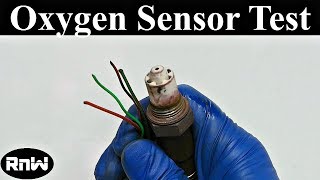
The P0138 code means the Powertrain Control Module (PCM) detects a sustained high voltage signal from the downstream oxygen sensor (Bank 1, Sensor 2). This sensor sits after the catalytic converter to monitor its efficiency. A constant high voltage signal (over 0.9V) indicates oxygen depletion in the exhaust. 🎬 Watch: How to test an oxygen sensor and understand its operation. This points directly to a rich fuel mixture, a dead sensor, or a shorted wire.
Technical definition: O2 Sensor Circuit High Voltage (Bank 1, Sensor 2). The PCM sets this code when the downstream oxygen sensor voltage remains above 0.9V for more than 10 seconds. The sensor's primary function is monitoring catalytic converter efficiency.
Can I Drive With P0138?
Yes, But With Caution. You can drive with P0138, but schedule a repair within a few weeks. Ignoring it causes poor fuel economy, higher emissions, and failed inspections. Critically, driving for several hundred miles with a rich condition overheats the catalytic converter, turning a minor sensor issue into a $1,500 replacement.
Common Causes

- Faulty downstream oxygen (O2) sensor (Very Common) — The sensor's internal components fail from age, heat degradation, or carbon fouling, causing it to send a continuous high voltage signal or stop responding entirely.
- Wiring or connector short-to-power (Common) — The sensor's wiring harness is exposed to extreme heat and road debris. Melted or chafed wires create a short-to-power, sending a constant 12V or 5V reference signal to the PCM, mimicking a rich condition.
- Rich running condition (Common) — Leaking fuel injectors, a faulty fuel pressure regulator, or a failing mass airflow (MAF) sensor force the engine to run rich. This excess unburned fuel consumes all available oxygen in the catalytic converter, causing the downstream sensor to read high voltage.
- Exhaust leaks (Less Common) — Leaks in the exhaust manifold or pipes before the O2 sensor draw in outside air, confusing the PCM's fuel trim calculations and forcing a rich condition that triggers P0138.
- Failing catalytic converter (Rare) — A chemically dead catalytic converter fails to process exhaust gases correctly, altering downstream oxygen levels. This usually triggers a P0420 code first, but occasionally sets P0138.
Symptoms
- Check Engine Light is on — The light activates immediately after the PCM logs the P0138 fault during two consecutive drive cycles.
- Strong exhaust odor — A rich fuel condition pushes unburned fuel through the exhaust, creating a noticeable smell of raw gasoline or rotten eggs.
- Failed emissions test — Because the downstream O2 sensor monitors emissions compliance, an active P0138 code results in an automatic state inspection failure.
- Rough idling or engine hesitation — An underlying rich condition or a shorted sensor circuit disrupts engine stability, causing a rough idle or hesitation upon acceleration.
- Poor fuel economy (also visible on scanner) — A faulty sensor or a rich running condition forces the PCM to make incorrect fuel adjustments, dropping fuel efficiency by 10% to 20%.
Diagnostic Flowchart

Tap your situation to follow the diagnostic path that matches what you're seeing on this code.
Common Fixes & Costs
- Replace the Bank 1, Sensor 2 oxygen sensor — Parts: $50-$250, Labor: $75-$150, ~1 hr book time (DIY)
- Repair or replace damaged wiring or connectors — Parts: $15-$60, Labor: $120-$250, ~1.5 hr book time (Intermediate)
- Fix upstream fuel system issues (e.g., replace leaking fuel injector) — Parts: $70-$300 per injector, Labor: $200-$400, ~2.5 hr book time (Professional)
- Repair exhaust system leaks — Parts: $25-$120, Labor: $100-$300, ~2 hr book time (Intermediate)
Used vs. New Parts: Buying Guide
When a used part is worth it: Never buy a used oxygen sensor; they are wear items with a finite lifespan. For a related, expensive repair like a catalytic converter, a used OEM part from a low-mileage donor vehicle is a cost-effective option.
Donor-vehicle mileage cap: roughly under 80000 miles for the part to have meaningful remaining life.
Donor quality checklist:
- Verify the donor vehicle was not scrapped due to engine fires or severe front-end collisions that crush exhaust components.
- Avoid parts from rust-belt regions to minimize thread corrosion.
- Match the part number exactly; universal parts fail to meet specific PCM resistance requirements.
Decision logic:
- If The part is an oxygen sensor → Always buy new. The savings on a used sensor are negligible compared to the risk of premature failure and repeat labor costs.
- If The part is a catalytic converter and the vehicle has over 150,000 miles → A used OEM part from a donor with under 80,000 miles is a reasonable choice if on a tight budget.
- If The vehicle is in a state with strict emissions (e.g., California) → Buy new CARB-compliant aftermarket or OEM parts. Installing a used catalytic converter is illegal in California.
Warranty tradeoff: Used parts carry a 30-day warranty at best. New aftermarket sensors offer a 1-year warranty, while new OEM parts provide the highest reliability.
Worst-case if a used part fails: $300-$500 if a faulty used catalytic converter is installed, requiring repeat labor and another replacement.
What Happens If You Wait — Timeline

- 0-2 weeks: Code P0138 is stored and the Check Engine Light is on. No other symptoms are likely noticeable to the driver. (MPG impact: 0-5%% · Added cost: $0)
- 2 weeks - 3 months: A noticeable drop in fuel economy occurs. The vehicle exhibits a slight rough idle, and a faint smell of gasoline is present at the exhaust. (MPG impact: 5-15%% · Added cost: $40-$120 in wasted fuel)
- 3-8 months: If caused by a rich condition, the catalytic converter's internal substrate gets coated with soot and begins to overheat, triggering a P0420 code. (MPG impact: 10-20%% · Added cost: $800-$2,500 (catalytic converter replacement is now required))
- 8+ months: Severe catalytic converter clogging occurs. The engine runs very rough, stalls, and has significantly reduced power. Unburned fuel dilutes engine oil, causing internal engine wear. (MPG impact: 20-30%% · Added cost: $2,500+ (includes catalytic converter, O2 sensors, and possible engine damage))
Cost of Not Fixing It
- 0-1 month: Noticeable decrease in fuel economy (10-15% drop), rough idle, and an automatic emissions test failure. (Added cost: $20-$60 per month in extra fuel costs.)
- 1-6 months: A persistent rich condition overheats and melts the catalytic converter's internal honeycomb structure, destroying the unit. (Added cost: $800-$2,500 for catalytic converter replacement.)
- 6+ months: Severe catalytic converter clogging causes extreme exhaust backpressure, leading to engine stalling, blown exhaust gaskets, and potential internal engine damage. (Added cost: $2,500+ for multiple component failures.)
Diagnosis Steps

- Scan for Codes & Review Freeze Frame Data
Use an OBD-II scanner to confirm P0138 is active. Check for codes like P0172 (Rich Condition) or P0137 (Low Voltage). Document the freeze frame data to see engine RPM, load, and temperature when the fault triggered.
Tools: OBD-II Scanner (Beginner) - Analyze Live Sensor Data
Observe the voltage of the Bank 1, Sensor 2 O2 sensor (PID: O2S12) with the engine warm and idling. A healthy downstream sensor fluctuates slightly between 0.5V and 0.8V. A voltage stuck above 0.9V confirms the fault.
Tools: OBD-II Scanner with Live Data (Intermediate) - Visually Inspect Sensor and Wiring Harness
Inspect the Bank 1, Sensor 2 O2 sensor and its wiring. Look for frayed wires, melted insulation from exhaust contact, and green corrosion inside the connector pins.
Tools: Flashlight, Safety Glasses (Beginner) - Check the Circuit for Shorts
Disconnect the sensor. Turn the key on (engine off). Use a multimeter to probe the signal wire at the harness connector. You should see a reference voltage of ~0.45V. Reading 5V or 12V means the signal wire is shorted to power in the harness.
Tools: Multimeter, Vehicle-Specific Wiring Diagram (Advanced) - Test the Sensor's Heater Circuit
With the sensor disconnected, measure the resistance (Ohms) between the two heater circuit pins on the sensor itself. Compare this to the manufacturer's specification (typically 4-20 Ohms). Infinite resistance (OL) confirms a dead sensor.
Tools: Multimeter, Vehicle-Specific Wiring Diagram (Intermediate) - [PRO TIP] Perform a Forced Rich/Lean Test
Introduce a vacuum leak to force a lean condition; the live sensor voltage must drop toward 0.1V. Add unlit propane to the intake to force a rich condition; the voltage must rise toward 0.9V. A sensor stuck high during both tests is internally shorted and requires replacement.
Tools: Propane Torch (unlit), Vacuum Source, OBD-II Scanner (Advanced) - Investigate Rich Condition Triggers
If the sensor responds to forced tests but idles high, the engine is running rich. Check fuel pressure (typically 45-60 PSI) and inspect fuel injectors for leaks. This is mandatory if code P0172 is present.
Tools: Fuel Pressure Gauge, Multimeter (Advanced)
When This Code Triggers (Freeze-Frame Conditions)
- Engine Coolant Temp: 180-210°F (Engine at normal operating temperature)
- RPM: 1500-2500 (Steady cruise or light acceleration)
- Engine Load: 20-50% (Sustained driving, not idling or heavy throttle)
- Vehicle Speed: 40-65 mph (Highway or city cruising speed)
Related Codes
- P0137 — 'O2 Sensor Circuit Low Voltage'. This is the direct opposite of P0138. Seeing both codes intermittently points to a wiring harness chafing against the chassis, shorting to both power and ground.
- P0420 — 'Catalyst System Efficiency Below Threshold'. The PCM uses Sensor 2 to test the catalytic converter. Always fix P0138 first, as a faulty sensor causes a false P0420 code.
- P0172 — 'System Too Rich (Bank 1)'. If P0172 is present, P0138 is a symptom, not the root cause. Excess unburned fuel from a leaking injector forces both sensors to read high voltage.
- P0136 — 'O2 Sensor Circuit Malfunction'. A general fault code for the same sensor. You see P0136 if the sensor signal is erratic but doesn't meet the specific 'stuck high for 10 seconds' criteria required for P0138.
Climate & Environmental Factors
- Cold Climates / Road Salt: Regions using road salt see a much higher incidence of P0138. Salt spray accelerates corrosion of the O2 sensor body, connector pins, and wiring harness, creating the short circuits that cause high voltage readings.
- High Humidity: Moisture penetrates aging electrical connectors, leading to green corrosion on the O2 sensor harness plug. This causes intermittent short circuits over time.
- High Altitude: Thinner air forces the PCM to adjust fuel trims aggressively. If a MAF sensor is slightly dirty, high altitude exacerbates the rich condition, pushing the system far enough to trigger P0138.
How to Talk to a Mechanic About This Code
Say this: "I have a P0138 code for the Bank 1, Sensor 2 oxygen sensor. I'd like you to check the sensor's live data and wiring harness before recommending a replacement. If you suspect the catalytic converter, please explain what tests led you to that conclusion."
This directs the technician to perform a proper electrical diagnosis rather than just replacing the most obvious part, saving you money and preventing a misdiagnosis.
Avoid saying:
- My check engine light is on, can you just fix it?
- I think I need a new oxygen sensor.
- Just do whatever you think is best.
Questions to ask before authorizing the repair:
- Did you observe the sensor's voltage on a scan tool? Was it stuck high?
- Did you test the wiring harness for a short to power?
- If you are recommending a catalytic converter, what was the result of the catalyst monitor test (Mode $06)?
- What is the warranty on the parts and labor for this repair?
Where to Take It: Dealer vs Independent vs Chain
- Dealer:
Best for: Vehicles under warranty or with an active recall., Repairs known to have manufacturer-specific TSBs or require PCM updates (like on some Toyotas)., Complex electrical issues where factory diagnostic tools are mandatory.
Downsides: Significantly higher labor rates and parts costs., May recommend replacing an entire exhaust assembly when a smaller component is the cause. (Typical cost: +40% vs. baseline) - Independent Shop:
Best fit for most situations. A competent independent shop easily diagnoses and repairs the common causes of P0138 (bad sensor, wiring issue) for a reasonable price.
Best for: Out-of-warranty vehicles where cost is a major factor., Common diagnostic codes like P0138., Building a long-term relationship with a mechanic who knows your vehicle's history.
Downsides: Quality and expertise vary widely; look for ASE certifications and good reviews., May lack the latest manufacturer-specific tools for brand new models. (Typical cost: +0% vs. baseline) - Chain Shop:
Use with caution. Acceptable if you have already diagnosed a bad sensor yourself and just need it replaced. AVOID for initial diagnosis, as they may incorrectly upsell you to a new catalytic converter.
Best for: Simple, straightforward parts replacement like an easily accessible O2 sensor., Convenience and standardized pricing.
Downsides: High pressure to upsell services; technicians may be less experienced and work on commission., Less equipped for in-depth electrical diagnosis; often resort to parts-swapping. (Typical cost: -10% vs. baseline)
When to Walk Away From the Repair
If the repair cost exceeds 50% of the car's private-party value, seriously consider selling the vehicle.
- Car worth $4000, fix is $2000: Borderline. The repair is 50% of the car's value. Get a second opinion before authorizing, and consider if other major repairs are looming.
- Car worth $12000, fix is $1800: Fix it. The repair cost is only 15% of the vehicle's value and is well below the threshold.
- Car worth $2500, fix is $1500: Walk away. The repair is 60% of the car's value. It is not economically sensible.
What Scan Tool You Need for This Code
Minimum: A scanner that reads and clears codes, and displays live data streams with graphing capability. This is essential to watch the O2 sensor's voltage in real-time.
A $20 code reader only displays the P0138 code. It cannot show if the sensor voltage is stuck high or responding. You need live data to avoid blindly replacing parts.
Budget: BlueDriver Pro or FOXWELL NT301 (~$70-120) — Both connect to your phone (BlueDriver) or have a built-in screen (Foxwell) to display and graph live O2 sensor voltage. This is the minimum needed to confirm if the sensor is 'stuck' high.
Mid-range: Autel MaxiCOM MK808S or KINGBOLEN K7 (~$350-500) — These tablet-style scanners offer bidirectional controls. This allows you to command certain vehicle functions to test circuits, which is useful for advanced wiring diagnostics.
Professional: Autel MaxiSys or Launch X431 Series (~$800-1500) — Provides full, OEM-level diagnostic functions, including advanced coding and programming. This is overkill for a simple P0138 but is what a professional shop uses to diagnose complex PCM faults.
Rent vs buy: Auto parts stores read codes for free, but do not rent out scanners that show live data. If you plan on doing your own repairs, buying a budget pick like a BlueDriver is a mandatory investment.
How to Clear the Code After You Fix It
- Use an OBD-II scan tool to clear the P0138 code.
- Reconnect the battery if it was disconnected for the repair.
- Perform a complete OBD-II drive cycle to allow readiness monitors to run.
Drive cycle (~30 minutes): A drive cycle requires a cold start, 5-10 minutes of stop-and-go city driving, followed by 10-15 minutes of steady highway cruising at 55-65 mph. This allows the PCM to run its O2 and Catalyst self-tests.
Readiness monitors affected: Catalyst Monitor, Oxygen Sensor Monitor, Oxygen Sensor Heater Monitor
Before emissions retest: drive at least 100 miles to fully set monitors.
Watch out for:
- Clearing the code without fixing the root cause guarantees the code returns.
- Disconnecting the battery clears the code but resets all readiness monitors to 'Not Ready', causing an automatic emissions test failure.
- Failing to drive at steady highway speeds prevents the Catalyst Monitor from running.
Will This Fail Emissions / State Inspection?
Yes — this code typically fails an OBD-II emissions inspection.
- California: An illuminated Check Engine Light is an automatic failure. All required readiness monitors must be 'Ready'. It is illegal for shops to install a used catalytic converter.
- New York: The NYS DMV inspection includes an OBD-II scan. A P0138 code causes an immediate failure of the emissions portion of the test.
- Texas: In counties requiring emissions testing, an active P0138 code and illuminated Check Engine Light result in an automatic test failure.
Most Commonly Affected Vehicles
- Jeep Grand Cherokee, Liberty, Wrangler (1999-2010) — Extremely common. Often caused by wiring damage from off-roading. On XJ/TJ models, check for the harness chafing against the transmission tunnel or rear driveshaft.
- Honda Accord, Civic, CR-V (2001-2011) — Frequently caused by a failed downstream O2 sensor. Before replacing the sensor, always check for a blown O2 sensor fuse in the under-hood fuse box.
- Ford F-150, Explorer, Focus (2004-2012) — Typically points to a failed O2 sensor. Also inspect for exhaust manifold leaks, which alter air/fuel ratios and contribute to the code.
- Chevrolet / GMC Silverado, Tahoe, Sierra (2002-2013) — Often caused by a faulty oxygen sensor or severe corrosion in the wiring harness connector due to chassis exposure.
- Nissan Altima, Sentra, Rogue (2007-2015) — Nissan PCMs are notoriously sensitive to aftermarket sensors. Using an OEM or exact-fit NTK/NGK brand sensor is mandatory to prevent the code from returning.
- Toyota RAV4, Camry (2009-2012) — A Technical Service Bulletin (TSB-0151-18) exists for the 2AR-FE engine, where the official fix is a PCM software update to correct air-fuel ratio sensor logic.
- Hyundai / Kia Sonata, Optima, Santa Fe, Sorento (2011-2018) — Vehicles with the 2.4L GDI engine commonly experience premature downstream oxygen sensor failures.
- Subaru Outback, Forester, Impreza (2005-2014) — Subarus require high-quality OE-style sensors (like Denso) to ensure proper communication with the ECU and prevent recurring codes.
Manufacturer-Specific Notes
- Nissan: Nissan vehicles reject cheap aftermarket oxygen sensors. Using non-OE suppliers results in the P0138 code returning immediately. Always use an OEM or NTK sensor.
- Chrysler/Jeep/Dodge: A P0138 code is frequently triggered by a pinhole exhaust leak at the manifold flange. A thorough inspection for soot marks around exhaust joints is critical before replacing the sensor.
- Toyota: TSB T-SB-0151-18: Some 2009-2012 RAV4 and 2010-2011 Camry vehicles set a false P0138 code due to incorrect sensor response logic. The fix requires a dealer PCM software update, not a new sensor.
- Honda: Before replacing the O2 sensor, inspect the dedicated O2 sensor fuse in the under-hood fuse box. A blown fuse disables the sensor's internal heater, triggering P0138.
Real Owner Stories
2012 Honda CR-V with P0138 & P0139
Check Engine Light came on. Scan revealed P0138 (High Voltage) and P0139 (Slow Response) for Bank 1, Sensor 2.
What they tried:
- Monitored live data and saw B1S2 voltage was stuck high, even when forcing rich/lean conditions with propane and a vacuum leak.
- Visually inspected wiring harness and connector pins, which appeared normal.
- Tested the signal circuit with a multimeter and confirmed no shorts.
Outcome: Based on the tests, the sensor itself was confirmed internally shorted. Replaced the Bank 1, Sensor 2 O2 sensor, cleared the codes, and the issue was resolved.
Lesson: A sensor that is 'stuck' and won't respond to forced rich/lean conditions is a definitive sign of a failed sensor, ruling out wiring or fuel system issues.
2003 Ram 1500 4.7L with 65K miles
Bought the truck with a P0138 code. After some driving, a P0172 (System Too Rich) code also appeared.
What they tried:
- Replaced both O2 sensors.
- Replaced the MAP sensor.
- Replaced the catalytic converter.
Outcome: The codes remained after replacing $800 in parts. The underlying cause was a rich condition caused by a faulty aftermarket cold air intake, not a bad sensor.
Lesson: When P0138 is paired with P0172 (System Rich), do not replace the O2 sensor first. Diagnose the cause of the rich condition before replacing exhaust parts.
Lexus GX with P0138
CEL, VSC, and VSC TRAC lights all came on. Code was P0138.
What they tried:
- Replaced spark plugs, air filter, and both downstream O2 sensors, but the code persisted.
Outcome: The owner discovered that on this specific Lexus, a failing upstream Air/Fuel sensor triggers a code for the downstream sensor. Replacing the upstream sensor solved the problem.
Lesson: On some vehicles, a failing upstream sensor skews the fuel trim enough to cause a downstream sensor code. Always check live data for both sensors.
2007 Suzuki SX4 with 158K miles
Started with a P0420 (Catalyst Efficiency) code. The owner tried an O2 sensor spacer (defouler) on the downstream sensor to trick the computer.
What they tried:
- Installed a spacer on the downstream O2 sensor.
Outcome: The P0420 code went away, but was immediately replaced by a P0138 code after 20 miles.
Lesson: Using an O2 sensor spacer to bypass a P0420 code pulls the sensor out of the exhaust stream. It reads too little oxygen, which the computer interprets as a rich condition, triggering P0138.
How to Prevent This Code From Triggering
- Use Top Tier certified gasoline (Every fill-up) — Higher levels of detergents prevent fuel injector deposits, which lead to incomplete combustion and a rich condition that overloads the O2 sensor.
- Replace engine air filter regularly (Every 15,000-30,000 miles) — A clogged air filter restricts airflow, causing the engine to run rich. This excess fuel fouls O2 sensors and damages the catalytic converter.
- Avoid extended idling (Daily habit) — Prolonged idling leads to incomplete fuel combustion, causing carbon buildup on sensors and allowing water to condense in the exhaust, accelerating corrosion.
- Perform periodic fuel system cleaning (Every 5,000 miles) — Using a quality fuel system cleaner with Polyetheramine (PEA) removes carbon deposits from injectors, ensuring a proper fuel spray pattern and preventing a rich mixture.
- Change spark plugs at recommended intervals (Every 60,000-100,000 miles) — Worn spark plugs cause misfires, sending unburned fuel into the exhaust. This fouls the O2 sensor and overheats the catalytic converter.
Frequently Asked Questions
What does 'Bank 1, Sensor 2' mean?
'Bank 1' is the side of the engine containing cylinder #1. 'Sensor 2' refers to the downstream oxygen sensor located in the exhaust pipe after the catalytic converter.
What are the most common misdiagnosis mistakes for P0138?
The biggest mistake is replacing the O2 sensor without checking the wiring harness for melted wires. Another error is replacing the catalytic converter when P0420 appears alongside P0138; the sensor fault must be fixed first.
Can I clean an oxygen sensor to fix this code?
Cleaning an O2 sensor is ineffective and risks damaging the delicate sensing element. Contamination penetrates the porous ceramic, making surface cleaning useless. Replacement is the only reliable fix.
How much does it cost to fix code P0138?
A DIY oxygen sensor replacement costs $50-$250 for the part. Professional replacement ranges from $125 to $400. Fixing a root cause like a leaking fuel injector costs $400 or more.
What happens if I don't fix the P0138 code?
You will experience poor fuel mileage and fail state emissions tests. Long-term, the persistent rich fuel condition melts the catalytic converter, resulting in a $1,500+ repair.
Should I replace the upstream and downstream O2 sensors at the same time?
It is not required; you only need to replace the failed downstream sensor. However, if your vehicle has over 100,000 miles, replacing them in pairs is wise preventative maintenance.
How long does it take to replace a downstream O2 sensor?
For a DIYer with an O2 sensor socket, it takes 30-60 minutes. If the sensor is seized due to heavy exhaust rust, it takes significantly longer and requires an acetylene torch to remove.
Is it okay to just clear the code?
Clearing the code with a scanner only turns the light off temporarily. It does not solve the underlying electrical or mechanical problem. The Check Engine Light returns as soon as the PCM runs its next diagnostic test.
Key Takeaways
- A failed downstream oxygen sensor (Bank 1, Sensor 2) causes over 70% of P0138 codes.
- Inspect the O2 sensor wiring harness for melted or chafed wires before buying parts, as a short-to-power perfectly mimics a dead sensor.
- Driving with an active P0138 code for more than a few months risks overheating the catalytic converter, turning a $150 repair into a $1,500 replacement.
- Always diagnose upstream codes like P0172 (System Too Rich) first, because unburned fuel from a rich engine forces the downstream sensor to read high.
Helpful Videos
![Bad O2 Sensor Symptoms Downstream & Upstream [Oxygen Sensor Failure and Causes] How to fix & Replace](https://img.youtube.com/vi/b-xxdBlikSA/mqdefault.jpg)

The information in this article is provided for general reference and educational purposes only. Vehicle specifications, procedures, and part compatibility can vary by production date, trim level, and region. Always consult your vehicle's factory service manual and verify part numbers before purchasing or performing repairs. Safety-critical components such as airbags, seat belts, and braking systems should be installed by a qualified professional.
- 🎬 Helpful Videos
- What Does P0138 Mean?
- Can I Drive With P0138?
- Common Causes
- Symptoms
- Diagnostic Flowchart
- Common Fixes & Costs
- Used vs. New Parts: Buying Guide
- What Happens If You Wait — Timeline
- Cost of Not Fixing It
- Diagnosis Steps
- When This Code Triggers (Freeze-Frame Conditions)
- Related Codes
- Climate & Environmental Factors
- How to Talk to a Mechanic About This Code
- Where to Take It: Dealer vs Independent vs Chain
- When to Walk Away From the Repair
- What Scan Tool You Need for This Code
- How to Clear the Code After You Fix It
- Will This Fail Emissions / State Inspection?
- Most Commonly Affected Vehicles
- Manufacturer-Specific Notes
- Real Owner Stories
- 2012 Honda CR-V with P0138 & P0139
- 2003 Ram 1500 4.7L with 65K miles
- Lexus GX with P0138
- 2007 Suzuki SX4 with 158K miles
- How to Prevent This Code From Triggering
- Frequently Asked Questions
- What does 'Bank 1, Sensor 2' mean?
- What are the most common misdiagnosis mistakes for P0138?
- Can I clean an oxygen sensor to fix this code?
- How much does it cost to fix code P0138?
- What happens if I don't fix the P0138 code?
- Should I replace the upstream and downstream O2 sensors at the same time?
- How long does it take to replace a downstream O2 sensor?
- Is it okay to just clear the code?
- Key Takeaways
- 🎟️ Get 5% Off