

P0521 on 2005-2010 Pontiac G6 3.6L V6: Oil Pressure Sensor Causes and Fixes
On a Pontiac G6 with the 3.6L V6, code P0521 is most often caused by a faulty engine oil pressure sensor. It's a cheap part (~$25-$50) but difficult to access. However, this code can also be a symptom of low oil level or, more seriously, worn timing chains, a known issue on this engine. Always verify actual oil pressure with a mechanical gauge before replacing parts. Critically, a small filter screen under the sensor is also a common failure point and should be replaced at the same time.
- P0521 on a 3.6L G6 is most likely a bad oil pressure sensor, but you MUST rule out actual low oil pressure first.
- The single most important diagnostic step is to test the engine's oil pressure with a mechanical gauge.
- This engine has a known, serious issue with timing chain stretching, which is related to oil pressure. Be aware that this code could be a symptom of that larger problem.
- Replacing the sensor is difficult for a DIYer because it requires removing the starter motor for access.
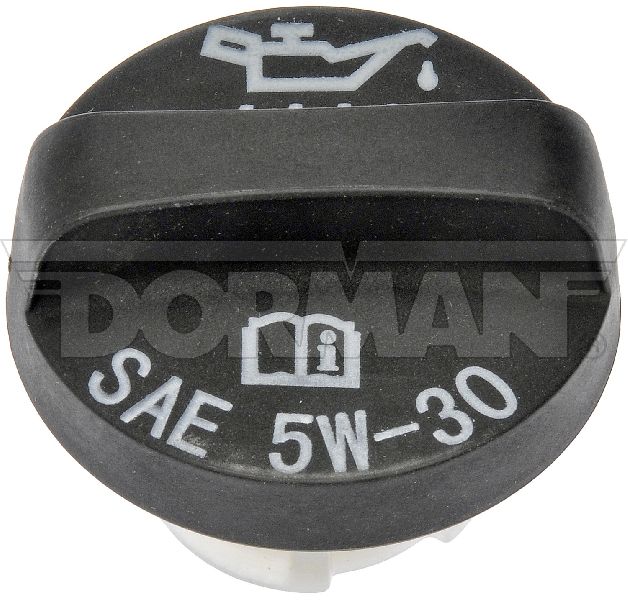
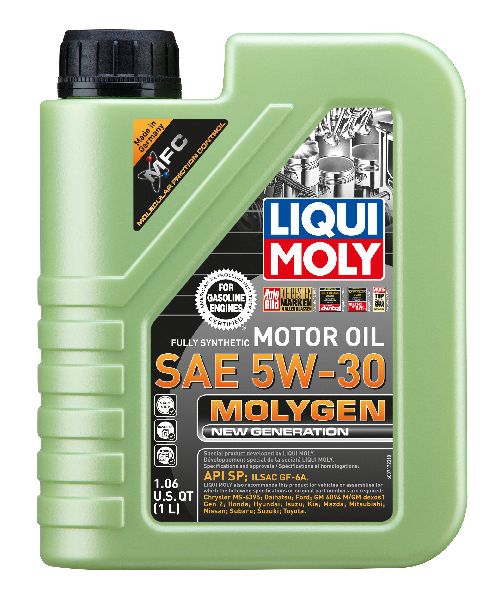
- Always use the specified 5W-30 oil and a high-quality, OEM-spec oil filter to prevent lubrication problems.
What's Unique About the 2005-2010 Pontiac G6
The 3.6L V6 engine (RPO code LY7) used in the Pontiac G6 is notorious for premature timing chain wear. This is a critical factor because the timing chain tensioners are hydraulically operated, relying on engine oil pressure to function correctly. Therefore, a P0521 code on this specific vehicle should be treated with extra caution, as it could be an early indicator of a failing oil pump or the beginning of a significant timing chain issue. GM issued multiple service bulletins regarding this, such as TSB 12-06-01-009G, and even a Special Coverage Program (11340C) that extended the warranty to 10 years/120,000 miles for this specific failure. Debris from failing timing chain guides can also clog oil passages, leading to pressure issues.
Symptoms You May Notice
- Check Engine Light illuminated.
- Oil pressure warning light on the dashboard (can be steady or flickering).
- Oil pressure gauge reading zero, maxed out, or fluctuating erratically.
- Engine running rough or making ticking/rattling noises, especially on startup.
- Replacing the oil pump without first confirming low pressure with a mechanical gauge.
- Replacing the oil pressure sensor but failing to replace the small, clogged filter screen underneath it, leading to the code returning.
- Replacing camshaft or crankshaft sensors when timing-related codes appear alongside P0521, without first suspecting the more common timing chain issue on this engine.
Most Likely Causes
- Faulty Engine Oil Pressure Sensor and/or Clogged Screen 🔴 High Probability The sensor is a common failure item across many GM vehicles with this engine. It can fail internally, sending incorrect voltage signals, or leak oil into the electrical connector. Critically, a small, replaceable filter screen located in the block directly beneath the sensor is prone to clogging with sludge, which also causes false readings. GM TSB PIP4786C specifically addresses this screen clogging issue.
How to confirm: After confirming good oil pressure with a mechanical gauge, inspect the sensor's electrical connector for oil contamination. If oil is present, the sensor is bad. Regardless, the sensor and the screen beneath it should be replaced together as a best practice.
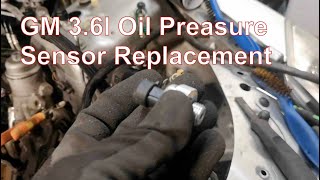
Typical fix: Replace the engine oil pressure sensor and the small filter screen underneath it. On the 3.6L V6, this is a labor-intensive job as the sensor is located behind the starter motor, which must be removed for access. 🎬 See this walkthrough for replacing the 3.6L oil pressure sensor.
Est. part cost: $35-$70 (for sensor and screen) - Incorrect Oil Level or Type 🟡 Medium Probability The 3.6L V6 is sensitive to oil level and quality. An overly optimistic Oil Life Monitor (OLM) system sometimes led owners to extend oil change intervals, contributing to sludge and wear. GM also issued TSB 10-06-01-003B warning that some aftermarket oil filters do not meet specifications and can cause oil pressure problems, an issue echoed on platform-mate vehicles.
How to confirm: Check the oil dipstick. The oil level should be full and the oil should be relatively clean. Verify that the correct viscosity oil (5W-30) and a quality oil filter (e.g., ACDelco PF61E) are being used.
Typical fix: Perform an oil and filter change using a high-quality filter and the manufacturer-specified 5W-30 synthetic-blend or full synthetic oil.
Est. part cost: $40-$80 - Stretched Timing Chains ⚪ Low Probability This is a well-documented, widespread defect on the 3.6L LY7 engine, leading to GM issuing Special Coverage 11340C. While it more commonly sets timing correlation codes (P0016, P0017, P0018), the underlying issues of oil pressure loss to the tensioners or debris from guides clogging passages can contribute to a P0521 code.
How to confirm: This is a complex diagnosis. A key indicator is hearing a rattling noise on startup. A technician would use a scan tool to check for timing correlation codes alongside P0521. The definitive test is a physical inspection of the chains for slack, which is a labor-intensive job.
Typical fix: Replace all three timing chains, the tensioners, guides, and associated sprockets using the official GM kit (TSB 12-06-01-009G). This is a major repair costing thousands of dollars.
Est. part cost: $300-$600
Rare But Worth Checking
- Failing Oil Pump or Worn Engine Bearings: This is the most serious potential cause. If a mechanical gauge confirms consistently low oil pressure across all RPMs and the timing components are intact, it may point to a worn oil pump or excessive clearances in the main/rod bearings, indicating a worn-out engine.
- Wiring or Connector Damage: The wiring harness leading to the oil pressure sensor can become damaged from heat or chafing. The connector pins can also corrode. This should be inspected when accessing the sensor.
Diagnosis Steps
- Check the engine oil level and condition on the dipstick. Top up or change if low or dirty.
- Connect an OBD-II scanner and check for any other stored trouble codes to see if P0521 is part of a larger problem (like timing codes P0016, P0017, etc.).
- CRITICAL STEP: Connect a mechanical oil pressure gauge in place of the sensor. Start the engine and verify the actual oil pressure. 🎬 Watch: How to test engine oil pressure like a professional. At minimum, it should be around 10-15 PSI at idle and increase with RPM.
- If oil pressure on the mechanical gauge is NORMAL: The issue is electrical. Inspect the oil pressure sensor's connector for oil saturation. If oil is present, the sensor is leaking internally. Plan to replace both the sensor and the small filter screen underneath it.
- If oil pressure on the mechanical gauge is LOW: The problem is mechanical. Do not drive the vehicle. This could be a failing oil pump, clogged oil pickup tube (potentially with timing chain guide debris), or a symptom of severe timing chain wear. Further professional diagnosis is required.
- To replace the sensor, disconnect the battery, safely raise the vehicle, and remove the starter motor to gain access. Use a 1-1/16 inch (27mm) deep well oil pressure switch socket to remove the sensor. Use a pick or small screwdriver to carefully extract the old filter screen from the engine block before installing the new one.
Parts You'll Likely Need
- Engine Oil Pressure Sensor / Switch
(OEM #12677836)— This is the most common failure point for code P0521. It either fails electrically or leaks oil into its own connector, causing faulty readings.
Trusted brands: ACDelco (D1846A), Delphi, Standard Motor Products (SMP PS308)
OEM price range: $40-$60
Aftermarket price range: $25-$45 - Oil Pressure Sensor Filter Screen
(OEM #12585328)— This small screen, located under the sensor, frequently clogs with sludge and debris, causing false pressure readings. It is a critical part to replace along with the sensor, as noted in GM TSB PIP4786C for this engine family.
Trusted brands: ACDelco, Dorman
OEM price range: $5-$15
Aftermarket price range: $3-$10 - Engine Oil and Filter — Low, old, or incorrect oil, along with a poor-quality filter, can cause this code. Using a quality filter is especially important on this engine per GM service bulletins.
Trusted brands: ACDelco PF61E (Filter), Mobil 1, Pennzoil
OEM price range: $10-$15 (Filter only)
Aftermarket price range: $40-$80 (Oil and filter kit)
Related Codes That Often Appear With This One
- P0520 — This code indicates a general fault in the oil pressure sensor circuit and often appears with P0521.
- P0522 / P0523 — These codes indicate the sensor circuit voltage is specifically too low (P0522) or too high (P0523), pointing directly to a sensor or wiring failure.
- P0008, P0016, P0017, P0018 — These are camshaft/crankshaft position correlation codes. On the 3.6L V6, they are strong indicators of stretched timing chains, an issue directly linked to oil pressure and engine health.
Technical Service Bulletins (TSBs) & Recalls
- TSB #10-06-01-003B: Advises against using certain aftermarket oil filters that can cause oil pressure issues.
- TSB #12-06-01-009G: Provides information and service kits for repairing the prematurely worn timing chains on the High Feature V6 engine.
- TSB #11340C: Details the Special Coverage Program that extended the warranty for timing chain failure to 10 years or 120,000 miles.
- TSB #PIP4786C: A GM bulletin noting that the filter screen under the oil pressure sensor can become clogged on 3.6L engines, causing false readings.
Platform-Specific Known Issues
- Premature Timing Chain Wear: The 3.6L V6 is known for stretched timing chains, often requiring replacement between 70,000 and 120,000 miles. GM issued TSB 12-06-01-009G and Special Coverage 11340C for this widespread problem. Low oil pressure is a related symptom.
- Oil Filter Sensitivity: GM issued TSB 10-06-01-003B warning that some aftermarket oil filters can cause internal failure and lead to low oil pressure conditions and potential engine damage.
- Clogged Oil Pressure Sensor Screen: Per GM TSB PIP4786C, the small filter screen directly underneath the oil pressure sensor is a common point of failure. It gets clogged with sludge, causing false P0521 readings even if the sensor itself is good. It should always be replaced with the sensor.
Mechanic-Grade Diagnostic Values
- Mechanical Oil Pressure (Minimum @ Hot Idle) — expected: 69 kPa (10 psi). Failure: Pressure below this value indicates a mechanical lubrication issue, not a sensor fault.
- Mechanical Oil Pressure (Minimum @ 2,000 RPM) — expected: 138 kPa (20 psi). Failure: Pressure below this value under load confirms a mechanical lubrication issue.
- EOP Sensor 5V Reference Circuit Voltage — expected: 4.8V to 5.2V (Gray wire to ground). Failure: Voltage outside this range indicates a wiring or ECM problem.
- EOP Sensor Signal Circuit Voltage (Engine Running) — expected: Approximately 1.0V to 4.0V. Failure: Voltage is stuck, or does not change with engine RPM.
- EOP Sensor Low Reference Circuit Resistance to Ground — expected: Less than 1.0 ohm. Failure: Resistance greater than 1.0 ohm indicates a poor ground connection.
Scan Tool Commands That Help
- Tech2 / GDS2: Engine Oil Pressure (EOP) Sensor Parameter — Use this to monitor the voltage and pressure reading being sent by the sensor to the ECM in real-time. Comparing this data to a mechanical gauge is the definitive test to determine if the fault is with the sensor/circuit or a true mechanical pressure problem.
Wiring & Ground Locations
- G105 — On the left rear side of the engine compartment, on an engine/transmission stud, below the upper coolant hose.. This is a critical ground point shared by the Engine Control Module (ECM), Transmission Control Module (TCM), and the Park/Neutral Position (PNP) switch. A poor connection here can cause erratic sensor readings and multiple seemingly unrelated fault codes.
- G106 — On the front of the engine, at a transmission stud, near the PNP switch for the 3.6L engine.. This is another primary engine ground. A loose or corroded connection here can affect the reference voltage for various sensors, including the oil pressure sensor.
- EOP Sensor Connector — On the lower left center of the engine, behind the starter motor.. This 3-wire connector provides the 5V reference, ground, and signal return for the sensor. It is prone to oil contamination from a leaking sensor, which can corrupt the signal. The pins are: Pin 1 (Low Reference/Ground), Pin 2 (5V Reference), Pin 3 (Signal).
Real Owner Repair Stories
- GRRRR8.net Pontiac G8 Forum (2009 Pontiac G8 GT (V8, but same code logic)) — Recurring P0521 code, especially when cruising at low speeds with AFM engaged.
❌ Tried (didn't work) Replaced oil pressure sensor, Replaced lifter filter (screen), Replaced oil pan relief valve, Replaced oil pan, Replaced the PCM
✅ What actually fixed it The dealer replaced the oil pump. This resolved the issue after five previous failed repair attempts, suggesting an intermittent mechanical pump failure was the root cause. - Reddit r/ChevyTrucks (Chevy Truck with similar GM engine design) — P0521 code returned 100 miles after replacing the sensor.
❌ Tried (didn't work) Replacing the oil pressure sensor with an aftermarket part., Clearing codes without a full battery disconnect cycle.
✅ What actually fixed it The issue was resolved by switching to a high-quality Mobil 1 oil filter (M1-113A) and ensuring the correct oil level. Another user in the same thread fixed their issue by replacing a faulty aftermarket sensor with a genuine OEM sensor.
OEM Part Supersession History
12559780, 12562230, 12569323, 12573107, 12614969, 12616646→12677836 (ACDelco D1846A)— Standard part evolution for improved reliability and materials.
Heads up: Using an older part number is not recommended. The latest revision, 12677836, is the correct service part. Some owners report that non-OEM sensors can cause the code to return, making the ACDelco part a safer choice.N/A→12585328— This is the standard service part number for the oil pressure sensor screen.
Diagnostic Flowchart
Other Known Issues on This Vehicle
Issues unrelated to this code that are worth knowing about as an owner of this generation:
- Electric Power Steering (EPS) Failure 🔴 High — Very common, typically occurs between 70,000 and 100,000 miles. Can be intermittent at first, with a 'Power Steering' message on the radio display. (Ref: Recalls 14V153000 and 15V064000 were issued for loss of steering assist. Owners report the recall has expired for many vehicles.)
- Premature Timing Chain Wear 🔴 High — Extremely common on the 3.6L LY7 engine, often requiring replacement between 70,000 and 120,000 miles. Symptoms include startup rattle and codes P0008, P0016, P0017. (Ref: GM Special Coverage 11340C extended the warranty to 10 years/120k miles for this issue. TSB 12-06-01-009G provides service details.)
- Body Control Module (BCM) Connector Corrosion 🟠 Medium — A known issue where the main connector on the BCM (located in the passenger footwell) develops a poor connection, causing bizarre electrical issues like non-working tail lights.
- Transmission Problems 🟠 Medium — Owners report issues like delayed gear changes, jerking, and grinding noises. (Ref: Recalls 14V224000 and 12V460000 were issued for powertrain issues related to shift cables and brake/transmission interlock.)
- Front Wheel Hub Bearing Failure 🟡 Low — A common wear item that fails, causing a helicopter or airplane-like noise that changes pitch when turning.
Used vs. New Parts: Buying Guide for This Vehicle
When a used part is the smart pick: For this specific repair, obtaining used parts is not recommended. The primary failure components are a low-cost electronic sensor and a small filter screen that are known wear-and-tear items.
What to inspect on the donor part:
- Not applicable as used parts are not advised.
OEM-only on this vehicle (don't cheap out):
- Engine Oil Pressure Sensor
- Oil Pressure Sensor Filter Screen
Aftermarket brands forum-validated for this vehicle:
- ACDelco (OEM)
- Delphi
- Standard Motor Products (SMP)
Brands owners have reported issues with on this vehicle:
- Unbranded, 'white-box' sensors from online marketplaces have a higher reported failure rate or can be out of spec, causing the code to return.
Real Owner Stories
Aggregated from forums and TSBs cited above. Mileages and costs reflect what owners reported in those sources.
2005-2010 Pontiac G6 3.6L V6 — ~95000 miles
Symptoms: The 3.6L V6 experienced stretched timing chains, which is a widespread defect on the LY7 engine. Symptoms included rattling noises on startup and low oil pressure symptoms.
What fixed it: Replacement of all three timing chains, tensioners, guides, and associated sprockets using the official GM kit (TSB 12-06-01-009G).
Source hint: TSB #12-06-01-009G and vehicle_specific_issues: Premature Timing Chain Wear
2008 Pontiac G6
Symptoms: Jerking and erratic behavior of the electric power steering.
What fixed it: The torque sensor and motor controller were identified as the culprits, addressed in a GM recall.
Source hint: BobIsTheOilGuy Forums: 2008 Pontiac G6 Steering problem
2009 Pontiac G6
Symptoms: Power Steering warning on the radio display and difficulty turning.
What fixed it: Replacement of the torque sensor as covered under the recall and special coverage policy.
Source hint: Reddit: r/MechanicAdvice - 2009 Pontiac G6 Power Steering Warning
Related OBD-II Codes
Frequently Asked Questions
Is there a specific TSB for the 3.6L V6 regarding the oil pressure sensor screen?
Does the 2005-2010 Pontiac G6 3.6L have a known issue with timing chains that could cause oil pressure codes?
Can using a non-OEM oil filter cause a P0521 code on my G6?
Where is the oil pressure sensor located on the 3.6L V6 engine?
What is the specific oil viscosity and filter recommended for the 3.6L V6 to avoid pressure issues?
Is there an extended warranty for the timing chain issues on the Pontiac G6?
Helpful Videos

We Have This Part in Stock



The information in this article is provided for general reference and educational purposes only. Vehicle specifications, procedures, and part compatibility can vary by production date, trim level, and region. Always consult your vehicle's factory service manual and verify part numbers before purchasing or performing repairs. Safety-critical components such as airbags, seat belts, and braking systems should be installed by a qualified professional.
- Pontiac G6:
- 🎬 Helpful Videos
- 🛍️ Shop This Part
- What's Unique About the 2005-2010 Pontiac G6
- Symptoms You May Notice
- Most Likely Causes
- Rare But Worth Checking
- Diagnosis Steps
- Parts You'll Likely Need
- Related Codes That Often Appear With This One
- Technical Service Bulletins (TSBs) & Recalls
- Platform-Specific Known Issues
- Mechanic-Grade Diagnostic Values
- Scan Tool Commands That Help
- Wiring & Ground Locations
- Real Owner Repair Stories
- OEM Part Supersession History
- Diagnostic Flowchart
- Other Known Issues on This Vehicle
- Used vs. New Parts: Buying Guide for This Vehicle
- Real Owner Stories
- 2005-2010 Pontiac G6 3.6L V6 — ~95000 miles
- 2008 Pontiac G6
- 2009 Pontiac G6
- Related OBD-II Codes
- Frequently Asked Questions
- 🎟️ Get 5% Off