

P0496 on 2006-2010 Hummer H3: EVAP High Purge Flow Causes and Fixes
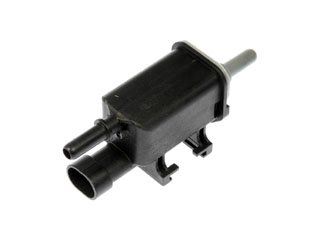
On a 2006-2010 Hummer H3, code P0496 is almost always caused by a faulty vapor canister purge valve located in the engine bay. The most common symptom is difficulty starting the engine right after getting gas. Replacing the valve is a straightforward DIY fix, with the part costing between $20 and $60. The most common OEM part number is 12597567, which is often superseded by ACDelco part 214-1680.
- P0496 on a Hummer H3 almost always means the vapor canister purge valve is stuck open.
- The most telling symptom is the engine struggling to start right after you put gas in it.
- Don't confuse the purge valve (in the engine bay) with the vent valve (at the rear of the truck). P0496 points to the purge valve.
- You can confirm the failure in minutes by starting the engine and checking for vacuum at the valve's outlet port with your finger.
- The part is located in a difficult spot on 5-cylinder models (requiring wheel removal) but is very easy to access on V8 models.
What's Unique About the 2006-2010 Hummer H3

The Hummer H3, sharing its GMT355 platform with the Chevrolet Colorado and GMC Canyon, has a well-documented issue with the vapor canister purge valve failing. This failure leads to a very specific and common owner complaint: the engine cranks for a long time or fails to start immediately after refueling. This happens because the stuck-open valve allows raw fuel vapor to be sucked into the intake manifold while the fuel tank is being filled, effectively flooding the engine. While many GM vehicles can get this code, the 'hard start after fill-up' symptom is a hallmark of this problem on the H3 and its platform mates.
Symptoms You May Notice
- Difficulty starting the engine immediately after refueling (most common symptom)
- Rough or erratic idle, especially after starting
- Check Engine Light is on
- Slight decrease in fuel economy
- Slow or sluggish acceleration
- Engine may stall after starting, particularly after refueling
- Replacing the gas cap. A loose or faulty gas cap typically causes a large leak code (like P0455), not a high flow code like P0496.
- Replacing the EVAP Vent Solenoid. This part is located at the rear of the vehicle near the charcoal canister and is a common failure item, but it typically causes code P0449 (Vent Control Circuit), not P0496. It is often the cause of difficulty filling the fuel tank.
Most Likely Causes

- Faulty Vapor Canister Purge Valve/Solenoid 🔴 High Probability This is a very common failure item on this GM platform. The internal valve mechanism can get stuck open due to age, wear, or fuel contaminants, allowing un-commanded vacuum flow.
How to confirm: With the engine running, disconnect the electrical connector and the EVAP line from the purge valve. Place your finger over the valve's inlet port. If you feel suction (your glove may get sucked into the port), the valve is stuck open and is faulty. A properly working valve should be closed with no vacuum passing through when unpowered. Alternatively, with the valve removed from the vehicle, you should not be able to blow through it.
Typical fix: Replace the vapor canister purge valve. This is a simple repair involving one or two bolts and disconnecting two hoses and an electrical connector. Be careful with the plastic line clips, as they can become brittle.
Est. part cost: $20-$60
Rare But Worth Checking
- Faulty Fuel Tank Pressure (FTP) Sensor: A malfunctioning FTP sensor could incorrectly report vacuum in the system, leading the computer to set code P0496. This is much less common than a failed purge valve, and may be suspected if replacing the purge valve does not resolve the code.
- Leaking EVAP Hoses: A crack or break in the EVAP lines between the purge solenoid and the charcoal canister could potentially cause flow issues, though this is less likely to cause the specific 'high flow' condition of P0496. A smoke test is the best way to identify such leaks.
- Poor Electrical Connection to Purge Valve: A user on HummerForums.com suggested that a poor electrical connection could be the issue, and cleaning the contacts might resolve it before replacing the part. However, given the low cost of the part, most owners opt for replacement.
Diagnosis Steps

- Verify the most common symptom: Check if the vehicle is difficult to start specifically after refueling. If so, the purge valve is highly suspect.
- Inspect the gas cap to ensure it is tight and the seal is intact, though this is an unlikely cause for this specific code.
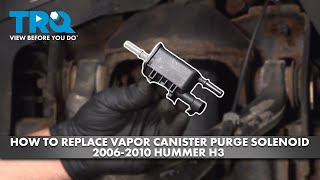
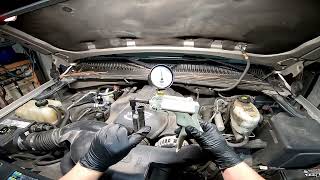
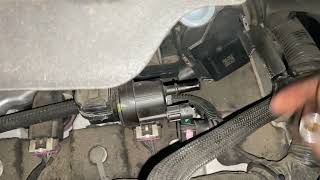
- Locate the vapor canister purge valve. On 5-cylinder models, it's on the driver's side of the engine, accessed by removing the wheel and inner fender liner. 🎬 Watch: Step-by-step guide to replacing the purge valve on an H3. On V8 models, it's on top of the engine under the plastic cover. 🎬 Watch: How to fix the purge valve on V8 models.
- Perform a vacuum test: Start the engine. Disconnect the electrical plug from the purge valve. Disconnect the vapor line running from the valve towards the charcoal canister at the rear of the vehicle.
- Check for vacuum at the valve's port where the line was just removed. If you feel suction with your finger or a glove gets pulled toward the port, the valve is internally stuck open and must be replaced. There should be NO vacuum when the valve is unplugged.
- If no vacuum is present, the issue may be more complex. Consider a faulty Fuel Tank Pressure (FTP) sensor or a wiring issue.
- If the code persists after replacing the purge valve, a smoke test of the entire EVAP system may be necessary to find any hairline cracks or leaks in the hoses.
Parts You'll Likely Need

- Vapor Canister Purge Valve / Solenoid
(OEM #12597567)— This is the component that fails in over 90% of P0496 cases on the Hummer H3, getting stuck open and causing the un-commanded vapor flow.
Trusted brands: ACDelco (GM OE), Standard Motor Products (SMP), Dorman
OEM price range: $35-$75
Aftermarket price range: $20-$50
Related Codes That Often Appear With This One
- P0449 — P0449 points to the EVAP Vent Valve circuit. It's common for both the purge and vent valves on the H3 to fail around the same time due to age. One may be replaced, only for the other to fail and set a different code shortly after.
- P0172 / P0175 — These codes indicate a 'System Too Rich' condition. A stuck-open purge valve allows un-metered fuel vapor into the engine, which can create a rich fuel mixture and trigger these codes alongside P0496.
- P0442 — This code for a small EVAP leak can sometimes accompany P0496 if the purge valve is not sealing correctly or if there are other small leaks in the system.
Technical Service Bulletins (TSBs) & Recalls
- TSB 09-06-04-028D: While not issued specifically for the H3, this GM Technical Service Bulletin addresses problems with moisture and debris entering the EVAP system on other trucks and SUVs. This can cause corrosion and failure of EVAP components, a condition that H3 owners may also experience due to the similar system design.
Platform-Specific Known Issues
- Inconvenient Part Location on 5-Cylinder Models: The location of the purge valve on 3.5L and 3.7L I5 models is on the side of the engine block, requiring removal of the driver's side front wheel and fender liner for access, making the job more time-consuming than on the V8 models.
- Real-World Repair Story: A user on HummerForums.com reported that even after a dealer replaced the EVAP Purge Solenoid Valve and cleaned the fuel system, their 2006 H3 still stumbled and stalled after refueling. They had to rev the engine to around 3,000 RPM to 'clear the flood' and smooth it out, indicating the engine was being overwhelmed with vapor. This highlights how severe the flooding symptom can be.
- Aftermarket Part Reliability: A Reddit user on r/StupidCarQuestions reported that after replacing the purge valve on their 2016 Colorado (a platform mate) and fixing the P0496 code, the same code and symptoms returned a few months later, suggesting the replacement part itself had failed. This indicates that while aftermarket parts are cheaper, OEM parts may offer better longevity.
Mechanic-Grade Diagnostic Values
- EVAP System Vacuum with Purge Commanded Off — expected: Near 0 inches of H2O (water).. Failure: The PCM will set code P0496 if it detects a vacuum of more than 10 inches of H2O when the purge valve is supposed to be closed.
- Purge Valve Solenoid Coil Resistance — expected: Approximately 15-30 Ohms.. Failure: A reading of infinite resistance (open circuit) or zero resistance (short circuit) indicates a failed solenoid coil.
- Purge Valve Power Connector — expected: One pin should show battery voltage (12V) with the key on. The other pin is the ground-side control from the ECM.. Failure: Absence of 12V power points to a wiring or fuse issue upstream of the valve.
Scan Tool Commands That Help
- Tech2 / GDS2 or equivalent professional scan tool: EVAP Purge/Seal or Purge Solenoid Activation Test — This bidirectional command allows the technician to manually command the purge solenoid open and closed while the engine is running. You should hear an audible click from the valve, and with the output line disconnected, you can verify if it opens and seals on command, confirming if the valve is sticking mechanically.
Wiring & Ground Locations
- EVAP Canister Vent Solenoid Control — At the Engine Control Module (ECM) connector, Pin 22, White wire (Circuit 1310).. While this is for the vent solenoid, not the purge solenoid, a fault in this circuit can cause wider EVAP system issues. Knowing the pin location is critical for advanced electrical diagnosis if replacing parts doesn't solve the problem.
- Fuel Tank Pressure (FTP) Sensor Signal — At the Engine Control Module (ECM) connector, Pin 24, Dark Green wire (Circuit 890).. The ECM uses the FTP sensor to detect the unwanted vacuum that triggers P0496. Testing this circuit is the next step if the purge valve is confirmed to be working correctly.
- G102 / G103 / G104 — Various locations on the lower left side of the engine block, near the starter.. These are primary engine block grounds. A poor ground connection at these points can cause erratic behavior in sensors and solenoids controlled by the ECM, including the EVAP purge solenoid.
- G100 — In the engine compartment, mounted to the left front inner fender, behind the battery.. This is a major chassis ground point. Verifying it is clean and tight is a fundamental step in any electrical diagnosis.
Real Owner Repair Stories
- HummerForums.com user 'h3family' (Hummer H3 (year not specified, but I5 engine implied by repair method)) — Check Engine Light with code P0455 (Large Leak, but same part involved) and a high idle.
❌ Tried (didn't work) Replacing the gas cap based on initial advice for P0455.
✅ What actually fixed it Replacing the vapor canister purge valve fixed the high idle and cleared the code. The user provided a detailed guide on accessing the valve by removing the driver's side front wheel and inner fender liner, a crucial tip for I5 models. - HummerForums.com user 'bureau13' (Hummer H3 (year not specified)) — Check Engine Light with codes P0449 and P0496.
✅ What actually fixed it The user confirmed that replacing the rear vent valve fixed the P0449 code, and replacing the front purge valve (in the engine bay) fixed the P0496 code. This highlights the importance of correctly identifying which valve corresponds to which code.
"I Checked Everything" — The Actual Cause
- A smoke test is designed to find physical leaks in the EVAP system where fuel vapor could escape to the atmosphere (codes like P0442 or P0455). Code P0496, however, is for 'flow during a non-purge condition,' which means vapor is flowing into the engine intake when it shouldn't be. The 'leak' is internal, through the stuck-open purge valve. Therefore, a smoke test on a vehicle with only a P0496 code will almost always come back clean, as there is no external leak. The clean smoke test, combined with the code, strongly reinforces the diagnosis of a faulty purge valve.
When the Usual Fixes Don't Work
- While replacing the purge valve is the definitive fix for the code, it may not instantly resolve all symptoms. As noted in a forum thread, an engine can continue to stumble or have a hard start immediately after the repair, especially after refueling. This is because the intake manifold and charcoal canister may be saturated with excess fuel and vapor from the previously stuck-open valve. It can take some driving for the ECM to readjust fuel trims and for the excess vapor to be burned off. A user had to rev their engine to 'clear the flood' after the repair, highlighting this residual effect.
OEM Part Supersession History
12597567 (GM)→214-1680 (ACDelco)— Standard part number update and branding.12597567→Multiple alternate GM numbers including 12570469, 12581349, 12591985, 12597341, 12606684.— This part is used across a vast range of GM vehicles, leading to numerous revisions and alternate numbers over the years.
Heads up: While most are interchangeable, it is always best to verify fitment with the vehicle's VIN, as minor bracket or connector differences can exist between applications.12597567 / 214-1680→Dorman 911-032, Standard Motor Products CP471, Airtex 2M1077.— Aftermarket equivalents for the OEM part.
Model Year Variations Within This Range
- 2009 vs 2010: The description for the location of ground G102 on 5.3L V8 models is slightly different. For 2009, it is listed as 'on lower left side of engine block, rearward of g103'. For 2010, it is more specifically 'on engine block, below left cylinder head'. The physical location is likely the same, but the service manual description was refined.
Diagnostic Flowchart
Used vs. New Parts: Buying Guide for This Vehicle
When a used part is the smart pick: For this specific part, a used part from a salvage yard is not recommended. The failure rate is high, and the part is inexpensive to buy new. The risk of getting a part that has already failed or is near the end of its service life is significant.
What to inspect on the donor part:
- Not applicable as new purchase is strongly advised.
OEM-only on this vehicle (don't cheap out):
- No parts for this specific P0496 repair are strictly 'OEM-only'.
Aftermarket brands forum-validated for this vehicle:
- ACDelco (Original Equipment)
- Standard Motor Products (SMP)
Brands owners have reported issues with on this vehicle:
- While many users have success with Dorman, some forum and Reddit anecdotes report premature failure of the cheapest available aftermarket purge valves. For peace of mind, spending slightly more on a brand with a stronger reputation for reliability like ACDelco or SMP is often recommended by forum veterans.
Real Owner Stories
Aggregated from forums and TSBs cited above. Mileages and costs reflect what owners reported in those sources.
Hummer H3
Symptoms: Check Engine Light with code P0496 and possibly a longer crank time when starting.
What fixed it: Replaced the purge valve. The owner also replaced the rear vent valve to fix a separate P0449 code.
Source hint: HummerForums.com - 'Changed vapor canister purge valve' (2020-01-30)
Hummer H3
Symptoms: Check Engine Light with code P0496.
What fixed it: Replaced the 14-year-old original purge valve in about 10 minutes.
Cost: $25
Source hint: HummerForums.com - 'Changed vapor canister purge valve' (2020-01-30)
2006 Hummer H3
Symptoms: Even after a dealer replaced the EVAP Purge Solenoid Valve, the vehicle still stumbled and stalled after refueling. The owner had to rev the engine to 3,000 RPM to 'clear the flood' and get it to run smoothly.
What fixed it: The story highlights the severity of the 'engine flooding' symptom that can persist even immediately after the repair, as excess vapor needs to be cleared from the intake.
Source hint: vehicle_specific_issues: Real-World Repair Story from HummerForums.com
2016 Chevrolet Colorado (Platform Mate)
Symptoms: The P0496 code and original symptoms returned a few months after the initial repair.
What fixed it: The initial fix was replacing the purge valve, but the story suggests the aftermarket replacement part itself failed prematurely, indicating OEM parts may be more reliable.
Source hint: vehicle_specific_issues: Aftermarket Part Reliability from Reddit r/StupidCarQuestions
Related OBD-II Codes
Frequently Asked Questions
Where is the vapor canister purge valve located on my Hummer H3?
What is the most common and specific symptom of a P0496 code on this vehicle?
How can I test the purge valve myself to confirm it's bad?
Is it difficult to replace the purge valve on the 5-cylinder H3?
Should I buy a cheaper aftermarket purge valve or an OEM part?
I replaced the purge valve, but the P0496 code came back. What's next?
Helpful Videos

Used OEM Parts in Stock

New Aftermarket Parts Available


The information in this article is provided for general reference and educational purposes only. Vehicle specifications, procedures, and part compatibility can vary by production date, trim level, and region. Always consult your vehicle's factory service manual and verify part numbers before purchasing or performing repairs. Safety-critical components such as airbags, seat belts, and braking systems should be installed by a qualified professional.
- Hummer H3:
- 🎬 Helpful Videos
- 🛍️ Shop This Part
- What's Unique About the 2006-2010 Hummer H3
- Symptoms You May Notice
- Most Likely Causes
- Rare But Worth Checking
- Diagnosis Steps
- Parts You'll Likely Need
- Related Codes That Often Appear With This One
- Technical Service Bulletins (TSBs) & Recalls
- Platform-Specific Known Issues
- Mechanic-Grade Diagnostic Values
- Scan Tool Commands That Help
- Wiring & Ground Locations
- Real Owner Repair Stories
- "I Checked Everything" — The Actual Cause
- When the Usual Fixes Don't Work
- OEM Part Supersession History
- Model Year Variations Within This Range
- Diagnostic Flowchart
- Used vs. New Parts: Buying Guide for This Vehicle
- Real Owner Stories
- Hummer H3
- Hummer H3
- 2006 Hummer H3
- 2016 Chevrolet Colorado (Platform Mate)
- Related OBD-II Codes
- Frequently Asked Questions
- 🎟️ Get 5% Off