

P0480 on 2008-2016 Chrysler Town & Country: Cooling Fan Circuit Fixes
For a 2008-2016 Town & Country, code P0480 is most often caused by a failed cooling fan relay (2008-2010) or control module (2011-2016). This is a very common failure and replacing this part, which costs between $25 and $80, usually resolves the issue. The connector to the part is also a frequent failure point.
- P0480 on your Town & Country almost always means the cooling fan isn't working correctly due to an electrical fault.
- The most likely cause is a bad cooling fan relay (on 2008-2010 models) or fan control module (on 2011-2016 models). This part is a known weak point.
- Before buying parts, always check the J19 (60A) and J12 (30A) fuses in the fuse box under the hood.
- Do not drive in heavy traffic or let the van idle for long periods, as the engine will overheat without a functioning fan.
- Replacing the fan relay/module is a manageable DIY job that can save you hundreds of dollars compared to a shop repair.
What's Unique About the 2008-2016 Chrysler Town & Country

On these Chrysler minivans, the P0480 code is notoriously common and almost always points to a failure of the external fan relay or control module, rather than the fan motor itself. Depending on the model year, this component is either a relay bolted to the frame behind the driver-side headlight (2008-2010) or a control module/resistor mounted directly on the fan shroud (2011-2016). Another known Chrysler-specific issue is the Totally Integrated Power Module (TIPM), which can also cause this code by failing to send power to the relay, though it's a less frequent culprit than the fan relay/module itself.
Symptoms You May Notice
- Engine overheating, especially at idle or in slow traffic.
- Air conditioning (A/C) blows warm air when the vehicle is stopped.
- Check Engine Light is on.
- Cooling fan does not turn on when the engine is hot or when the A/C is activated.
- Cooling fan runs continuously, even when the engine is off, potentially draining the battery.
- A burning smell from the front of the vehicle if the relay connector is melting.
- Replacing the coolant temperature sensor. While a faulty sensor can cause cooling issues, it typically sets its own specific trouble codes (like P0117 or P0118) and is not a common cause for P0480.
Most Likely Causes

- Faulty Cooling Fan Relay / Control Module 🔴 High Probability This is a very common failure point on the RT platform. The relay/module handles high electrical current and is exposed to harsh conditions under the hood, leading to internal failure or corrosion. The connector is also a known weak point.
How to confirm: For 2008-2010 models, the relay is located behind the driver's headlight, often riveted to the frame. For 2011-2016 models, the module is mounted on the fan shroud. Visually inspect the connector for melting, black marks, or corrosion. A capable scan tool can command the fan on; if it doesn't run despite the command, and power/ground are present at the module, the module is likely bad. Given the low cost, replacement is a common diagnostic step.
Typical fix: Replace the cooling fan relay or control module. The original relay on 2008-2010 models is often riveted on, requiring the rivet to be drilled out and the new part secured with a self-tapping screw or bolt.
Est. part cost: $25-$80 - Damaged Wiring or Connector 🟡 Medium Probability The connector for the fan relay/module is located in the front of the vehicle and is susceptible to moisture and road salt, leading to corrosion. High resistance from a poor connection can cause the connector to overheat and melt.
How to confirm: Unplug the connector from the fan relay/module and inspect the terminals for green/white corrosion, black marks, or melted plastic. Check for broken wires near the connector. One owner on Chrysler Forum found a broken wire was the root cause, not the relay itself.
Typical fix: If the damage is severe, the connector pigtail will need to be cut out and a new one spliced in. Replacement pigtails are often included with new relays/modules.
Est. part cost: $15-$30 - Failed Cooling Fan Assembly ⚪ Low Probability The electric fan motor can wear out over time, developing dead spots or seizing completely. A failing motor can draw excessive current, which in turn damages the fan relay/module and blows fuses. A recall on the related Dodge Grand Caravan (NHTSA 19V-818) was issued for fan motors seizing and creating a fire risk.
How to confirm: With the vehicle off, try to spin the fan blades by hand; they should move freely. You can also test the motor by applying 12V power directly to its terminals. If it doesn't spin, the motor has failed.
Typical fix: Replace the entire cooling fan assembly. Aftermarket modules are available separately, but OEM replacements often come as a complete fan and shroud assembly.
Est. part cost: $150-$350 - Blown Fuse(s) ⚪ Low Probability A fuse will typically only blow if another component, like a seizing fan motor or shorted wire, is drawing too much current.
How to confirm: Check the main fuse box (TIPM) under the hood. Inspect the large cartridge fuse for the cooling fan (often labeled J19, a 60-amp fuse) and any related smaller fuses. A user on Chrysler Forum found their issue was simply a missing fuse.
Typical fix: Replace the blown fuse. If the new fuse blows immediately, it confirms a short circuit or a failing component like the fan motor that needs to be addressed.
Est. part cost: $5-$15
Rare But Worth Checking
- Faulty Totally Integrated Power Module (TIPM): The TIPM is the main fuse box and computer that controls most of the vehicle's electronics. Internal failures can cause a P0480 code, often intermittently, by failing to send the control signal or power to the fan relay. If you've replaced the fan and relay/module and the problem persists, or if you have other strange electrical issues (like stalling or no-start), the TIPM is a suspect.
Diagnosis Steps

- Read the code with an OBD-II scanner to confirm P0480 is present.
- Check for low coolant levels. While not a direct cause of the code, it can cause overheating symptoms.
- Inspect the fuses in the under-hood fuse box (TIPM), specifically the large 60A cartridge fuse for the fan (J19). Replace if blown.
- Start the engine and turn the A/C on to its maximum setting. This should command the cooling fan to turn on. Listen and look to see if the fan is running.
- If the fan is not running, turn off the vehicle. Locate the cooling fan relay (2008-2010 models, behind driver headlight) or control module (2011-2016 models, on fan shroud).
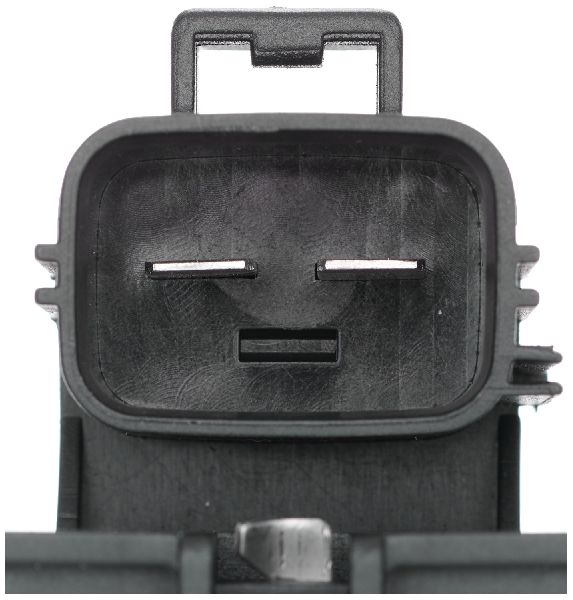
- Carefully unplug and inspect the electrical connector at the relay/module for any signs of melting, corrosion, or damage. This is a very common failure point.
- If the connector looks good, the most common failure is the relay/module itself. Replacing it is often the quickest path to a fix. Dorman part 902-310 is a common replacement that includes a new pigtail.
- If a new relay/module does not solve the problem, test the fan motor directly by carefully applying 12V power and a ground to its terminals. If it fails to spin, the fan assembly is bad.
- If the fan motor works when powered directly, use a multimeter to check for 12V power at the relay/module connector to ensure power is being supplied from the TIPM. Also check for a good ground connection.
Parts You'll Likely Need
- Cooling Fan Relay / Control Module
(OEM #4868332AE (Relay, 2008-2010), 5058674AD (Module, 2011+))— This is the most frequent point of failure for the P0480 code on this vehicle.
Trusted brands: Dorman (p/n 921-300), Standard Motor Products, Mopar
OEM price range: $40-$100
Aftermarket price range: $25-$80 - Radiator Cooling Fan Assembly
(OEM #5005144AG (Full Cooling Module))— This is the next most likely part to fail, either from a worn-out motor or if the integrated control module (on 2011+ models) fails and is not sold separately. A seizing fan motor can also cause the relay/module to fail repeatedly.
Trusted brands: Mopar, TYC, Four Seasons
OEM price range: $300-$450
Aftermarket price range: $150-$250 - Cooling Fan Relay Connector Pigtail — The original connector often melts or corrodes due to high resistance and needs to be replaced. Many aftermarket relays include a new pigtail in the kit.
Trusted brands: Dorman, Standard Motor Products
OEM price range: $20-$40
Aftermarket price range: $15-$30
Platform-Specific Known Issues
- The cooling fan relay on 2008-2010 models is often attached to the vehicle's frame with a rivet, which must be drilled out for replacement. A new screw is typically used for reinstallation.
- The platform-mate Dodge Grand Caravan had a recall (NHTSA 19V-818, MFR #VB2) for seized cooling fans that could overload the control module and potentially cause a fire. While not specific to the Town & Country, it highlights a known issue with the system's design that affects both vehicles.
- On 2011+ models with the 3.6L engine, the fan control module is mounted directly to the fan shroud, making it more susceptible to vibration and heat.
- Owners on ChryslerForum.com report that even after replacing the relay, the code can return if the underlying issue is a wiring fault or an intermittent problem with the TIPM.
Mechanic-Grade Diagnostic Values
- Voltage at Fan Motor Connector (commanded ON) — expected: 12V-13.5V (Battery Voltage).. Failure: 0V or significantly less than 12V indicates a power supply or ground issue.
- PCM Control Signal to Fan Module (2011+ models) — expected: Pulse Width Modulated (PWM) signal on the Brown/Violet wire at PCM Connector C2, Pin 29.. Failure: Absence of a PWM signal when the fan is commanded on (e.g., A/C on) points to a PCM or wiring fault.
- Fan Motor Current Draw — expected: 15 to 25 amps for a healthy motor.. Failure: Excessive current draw suggests a failing/seized motor; no current draw indicates an open circuit in the motor or wiring.
- Fan Control Relay Coil Resistance (2008-2010 models) — expected: Typically between 70 to 100 ohms.. Failure: A reading far outside this range indicates a faulty relay coil.
Scan Tool Commands That Help
- wiTECH or equivalent professional scanner: Radiator Fan Actuator Test / Active Test — This command allows a technician to manually command the cooling fan on at various speeds (e.g., 20%, 40%, 60%) to test the functionality of the control module, fan motor, and wiring, bypassing the temperature and A/C inputs. If the fan responds to the command, the issue likely lies with the inputs (like the temp sensor) or the PCM; if it doesn't respond, the fault is in the fan, module, or wiring.
Wiring & Ground Locations

- G101 — Left side of the engine compartment.. This is a primary ground point for components in the engine bay. A poor connection here can cause intermittent and difficult-to-diagnose electrical issues, including problems with the fan control circuit.
- G300 — Base of the left 'B' pillar.. While primarily an interior ground, it can be relevant if there are issues with modules inside the cabin that communicate with the PCM or TIPM regarding fan operation.
- Fan Control Signal Wire (2011+) — Brown/Violet wire running from PCM connector C2, pin 29, to the fan control module.. This is the specific wire that carries the PWM command signal from the PCM to the fan module. Testing for a signal on this wire is a key diagnostic step to determine if the PCM is commanding the fan to turn on.
- Fan Relay Power Supply (2008-2010) — Red with orange stripe wire at the fan relay connector, providing full-time power from the 60A fuse (J19).. This is the main power feed for the fan motor. Verifying battery voltage at this wire confirms the fuse and power supply to the relay are intact.
Real Owner Repair Stories
- Reddit user in r/TownAndCountry (2013 Chrysler Town & Country) — P0480 code clears but returns within 5 minutes. The cooling fan appears to be working correctly, turning on when it's supposed to.
❌ Tried (didn't work) Replacing fuses in the under-hood fuse box.
✅ What actually fixed it The user was advised that since the fan operates but the code persists, the issue is likely in the feedback circuit. The PCM is not 'seeing' the fan run correctly, even though it is. This points towards a fault in the fan control module (part of the fan assembly on 2011+ models) or an intermittent wiring/connector issue between the module and the PCM, rather than a complete failure of the power circuit or motor. - JK-Forum.com user (2015 Jeep Wrangler (with 3.6L Pentastar, same fan control logic)) — P0480 code appeared, engine began to overheat at idle. Confirmed fan was not running at all.
❌ Tried (didn't work) Checked J19 60A fuse (had continuity)., Checked K11 low-radiator-fan relay in TIPM., Attempted to jump the fan directly by applying 12V to the power, ground, and PWM signal wire (fan did not spin).
✅ What actually fixed it The user learned that on the 3.6L Pentastar, the fan control module is integrated into the fan assembly and requires a specific PWM signal, not just 12V, to activate. The final fix was replacing the entire radiator fan assembly, which includes the motor and the integrated control module. This confirmed the internal module had failed.
OEM Part Supersession History
5058674AA, 5058674AC→5058674AD— Part revision and update by the manufacturer.
Heads up: These part numbers apply to the fan control module for 2011-2016 models. The latest version, 5058674AD, replaces the previous versions and is the correct service part.N/A→4868332AE— Standard service part for the fan relay.
Heads up: This is the OEM part number for the separate cooling fan relay used on 2008-2010 models.
Model Year Variations Within This Range

- 2008-2010: Uses a separate, rectangular cooling fan relay (PN 4868332AE) mounted to the frame behind the driver-side headlight. The control logic is a simpler on/off signal from the TIPM/PCM. Diagnosis focuses on testing this external relay and its connector.
- 2011-2016: Uses a solid-state fan control module (PN 5058674AD) mounted directly on the fan shroud. This module receives a Pulse-Width Modulated (PWM) signal from the PCM for variable speed control. The module is integrated with the fan assembly, and often the entire assembly is replaced upon failure.
Diagnostic Flowchart
Other Known Issues on This Vehicle
Issues unrelated to this code that are worth knowing about as an owner of this generation:
- 62TE Automatic Transmission Failures 🔴 High — Common after 75,000 miles. Symptoms include harsh shifting, shuddering, and delayed engagement. (Ref: Multiple TSBs exist for shift quality improvements, but no major recall for the core issues. Solenoid pack and torque converter are common failure points.)
- Totally Integrated Power Module (TIPM) Failure 🔴 High — Widespread across 2008-2014 models. Causes a vast range of erratic electrical problems, including engine stalling, no-start conditions, and fuel pump issues. (Ref: Several recalls (e.g., for fuel pump relays in other FCA vehicles) were issued, but many consider the problem more widespread than the recalls covered.)
- 3.6L Pentastar Oil Filter Housing/Cooler Leaks 🟠 Medium — Very common on 2011-2016 models. The plastic housing cracks or warps from heat, causing significant oil leaks into the engine valley. (Ref: A TSB (09-004-25) exists advising proper diagnosis before replacement, as leaks can also come from the cap O-ring. Aftermarket aluminum housings are a popular permanent fix.)
- Rear Air Conditioning (Evaporator) Line Leaks 🟠 Medium — Common issue where the rear A/C lines or the rear evaporator itself corrode and leak refrigerant, causing the A/C to blow warm. (Ref: No recall, but it is a widely documented failure. The location of the components behind the rear wheel exposes them to road salt and debris.)
- Engine Stalling While Driving 🔴 High — Frequently reported, especially in 2008-2012 models. Often linked to TIPM failure but can be difficult to diagnose. The engine shuts off without warning. (Ref: No single recall covers all instances, though some TIPM-related recalls addressed stalling.)
Used vs. New Parts: Buying Guide for This Vehicle
When a used part is the smart pick: A used cooling fan assembly from a junkyard can be a cost-effective option, especially for the 2011-2016 models where the OEM assembly is expensive. Given that the failure is electronic (the module) rather than purely mechanical wear, a part from a lower-mileage, rear-ended donor vehicle is a reasonable gamble.
Donor-vehicle mileage cap: roughly under 80000 miles for the part to have meaningful remaining life.
What to inspect on the donor part:
- Check the fan blades for any cracks or damage.
- Spin the fan by hand to ensure the motor bearing is smooth and doesn't feel gritty or seized.
- Inspect the electrical connector on the fan shroud for any signs of melting, corrosion, or broken pins.
- If possible, ask for the VIN of the donor vehicle to check for any accident history that might indicate frontal impact damage.
OEM-only on this vehicle (don't cheap out):
- Totally Integrated Power Module (TIPM). If the TIPM is diagnosed as the fault, using a used one is risky as they are prone to failure and may have other hidden issues. A new or professionally remanufactured OEM unit is the recommended path.
Aftermarket brands forum-validated for this vehicle:
- Dorman (specifically part 902-310 for the relay/module kit) is frequently mentioned as a reliable aftermarket solution that often includes a new connector pigtail.
- TYC and Four Seasons are common and generally accepted aftermarket brands for the complete fan assembly.
Real Owner Stories
Aggregated from forums and TSBs cited above. Mileages and costs reflect what owners reported in those sources.
Chrysler Town & Country
Symptoms: The owner had a Check Engine Light for code P0480 and had already considered the relay was the problem.
What fixed it: The root cause was not the relay itself, but a broken wire found at the relay's electrical connector.
Source hint: Chrysler Forum - "CEL P0480 not the relay"
2006 Chrysler Town & Country
Symptoms: The vehicle had trouble code P0480.
What fixed it: Replacing the relay with an aftermarket part did not resolve the issue; the code returned, suggesting a different underlying problem or a potential quality issue with the aftermarket part.
Source hint: Chrysler Forum - "2006 T&C trouble code P0480"
Chrysler Town & Country
Symptoms: The owner was experiencing issues related to the P0480 code, likely a non-functional cooling fan.
What fixed it: The problem was resolved by replacing a missing 60-amp cartridge fuse (J19) in the main fuse box (TIPM).
Source hint: A user report on Chrysler Forum cited in the article's common causes.
Related OBD-II Codes
Frequently Asked Questions
Where is the cooling fan relay located on my 2008-2016 Town & Country?
I'm trying to replace the fan relay on my 2009 van and it's attached with a rivet. Is this correct?
My A/C blows warm at stoplights but the van isn't overheating. Could this still be a P0480 issue?
I heard about a recall for cooling fans on the Dodge Grand Caravan. Does this affect my Town & Country?
I replaced the fan relay/module, but the P0480 code came back. What should I check next?
What is the most common part that fails and causes code P0480 on this van?
Used OEM Parts in Stock

New Aftermarket Parts Available



The information in this article is provided for general reference and educational purposes only. Vehicle specifications, procedures, and part compatibility can vary by production date, trim level, and region. Always consult your vehicle's factory service manual and verify part numbers before purchasing or performing repairs. Safety-critical components such as airbags, seat belts, and braking systems should be installed by a qualified professional.
- Chrysler Town & Country:
- 🛍️ Shop This Part
- What's Unique About the 2008-2016 Chrysler Town & Country
- Symptoms You May Notice
- Most Likely Causes
- Rare But Worth Checking
- Diagnosis Steps
- Parts You'll Likely Need
- Platform-Specific Known Issues
- Mechanic-Grade Diagnostic Values
- Scan Tool Commands That Help
- Wiring & Ground Locations
- Real Owner Repair Stories
- OEM Part Supersession History
- Model Year Variations Within This Range
- Diagnostic Flowchart
- Other Known Issues on This Vehicle
- Used vs. New Parts: Buying Guide for This Vehicle
- Real Owner Stories
- Chrysler Town & Country
- 2006 Chrysler Town & Country
- Chrysler Town & Country
- Related OBD-II Codes
- Frequently Asked Questions
- 🎟️ Get 5% Off