

OBD-II Code P0691: Engine Cooling Fan 1 Control Circuit Low
What P0691 means, why it triggers, and how to fix it
- Code P0691 means your primary cooling fan circuit has low voltage, preventing the fan from activating and creating an immediate overheating risk.
- Stop driving immediately if the temperature gauge hits red; continuing to drive warps the cylinder head, resulting in a $1,200 to $3,500+ repair bill.
- Always test the $20 cooling fan relay and inspect the 40-80 amp main fuse before replacing the $300+ cooling fan assembly.
- Use a bidirectional scan tool to command the fan on; if it activates, the fan motor is good and the fault lies in the control circuit or sensors.
What Does P0691 Mean?

P0691 means the Powertrain Control Module (PCM) detects low voltage in the primary engine cooling fan's electrical circuit. This prevents the fan from turning on, putting your engine at immediate risk of overheating.
Technical definition: The PCM sets this code when the control circuit voltage for the primary electric cooling fan (Fan 1) drops below a specified threshold (typically under 1.0 volt) while commanded on. This indicates a short-to-ground or an open circuit, preventing the PCM from controlling the fan.
Can I Drive With P0691?
Yes, But With Caution. You can drive short distances at highway speeds where airflow cools the engine, but avoid stop-and-go traffic or idling. Driving an overheating engine causes severe damage. A warped cylinder head costs $1,200-$3,500+ to repair. Tow the vehicle immediately if the temperature gauge enters the red.
Common Causes

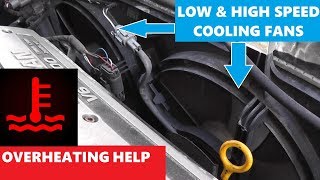
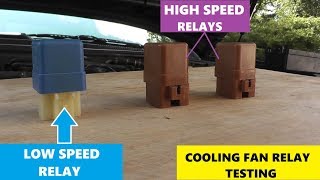
- Faulty Cooling Fan Relay (Very Common) — The relay is an electronic switch that powers the fan. Its internal contacts burn out over time, preventing power delivery to the fan motor. 🎬 Watch: A guide to testing cooling fans, relays, and connections.
- Defective Cooling Fan Motor (Common) — The electric motor fails internally. Worn windings, seized bearings, or internal shorts create an open or shorted circuit, causing the voltage drop.
- Damaged Wiring, Corroded Connectors, or Poor Ground (Common) — Wires break, chafe, or melt from heat and vibration. Connectors near the radiator suffer moisture and salt corrosion, creating high resistance. A loose chassis ground strap produces the exact same voltage drop.
- Blown Fuse (Less Common) — A blown fuse cuts power and causes a low voltage condition. Fuses blow due to an underlying short circuit or a failing fan motor drawing excessive current.
- Failed Fan Control Module (Less Common) — On vehicles with variable-speed fans, a separate control module regulates fan speed. This module fails electronically, sending incorrect voltage on the control circuit.
- Faulty Engine Coolant Temperature (ECT) Sensor (Rare) — A failed ECT sensor sends incorrect temperature data to the PCM. If the PCM doesn't see a high temperature, it won't command the fan on, which diagnostic logic sometimes misinterprets as a circuit fault.
- Faulty Powertrain Control Module (PCM) (Very Rare) — The internal driver circuit within the PCM that controls the fan relay fails. Consider this only after exhaustively testing the wiring, relays, and fan motor.
Symptoms

- Engine Overheating — The dashboard temperature gauge climbs into the red zone during idle, slow traffic, or hot days. This is the most serious symptom.
- Cooling Fan Does Not Run — The cooling fan fails to activate when the engine gets hot or when the air conditioning is turned on.
- A/C Blows Warm Air — The A/C system stops blowing cold air because the condenser requires fan airflow to dissipate heat. The system shuts down the compressor to prevent high-pressure damage.
- Check Engine Light On — The PCM immediately illuminates the Malfunction Indicator Lamp (MIL) when it detects the fault.
- Reduced Engine Power (Limp Mode) — Some vehicles intentionally reduce engine power to prevent severe overheating damage.
Diagnostic Flowchart

Tap your situation to follow the diagnostic path that matches what you're seeing on this code.
Common Fixes & Costs
- Replace Cooling Fan Relay — Parts: $15-$80, Labor: $40-$75, ~0.5 hr book time (DIY)
- Repair Wiring or Connector — Parts: $10-$50, Labor: $150-$350, ~2 hr book time (Intermediate)
- Replace Cooling Fan Assembly (Motor, Blade, and Shroud) — Parts: $100-$550, Labor: $150-$400, ~2.5 hr book time (Intermediate)
- Replace Fan Control Module — Parts: $150-$450, Labor: $100-$250, ~1.5 hr book time (Intermediate)
- Replace Powertrain Control Module (PCM) — Parts: $600-$900, Labor: $200-$300, ~2 hr book time (Professional)
DIY vs Professional
- Replace Cooling Fan Relay — Beginner: True
Tools: None, or a small pair of pliers. - Repair Wiring or Connector — Beginner: False
Tools: Digital Multimeter, wire strippers, wire crimpers, heat gun, soldering iron, vehicle-specific wiring diagram. - Replace Cooling Fan Assembly — Beginner: False
Tools: Socket set, screwdrivers, trim removal tools, drain pan (for radiator fluid). - Replace Fan Control Module — Beginner: True
Tools: Basic hand tools (socket set, screwdrivers). - Replace Powertrain Control Module (PCM) — Beginner: False
Tools: Socket set, specialized programming tools.
Used vs. New Parts: Buying Guide
When a used part is worth it: For an expensive cooling fan assembly, a used part from a low-mileage, accident-damaged vehicle is a cost-effective option. It is not recommended for simple electronic parts like relays.
Donor-vehicle mileage cap: roughly under 70000 miles for the part to have meaningful remaining life.
Donor quality checklist:
- Verify the donor vehicle was not scrapped due to front-end collision damage that impacted the fan.
- Check for corrosion on the electrical connector and signs of excessive wear on the fan blades or shroud.
- Match the part number exactly, as different model years or trim levels have incompatible fan modules or connectors.
Decision logic:
- If The failed part is a simple relay or fuse → Always buy new; the cost is low and a new part ensures reliability.
- If The vehicle is over 10 years old and the budget is tight → A used fan assembly from a reputable salvage yard is a reasonable choice.
- If The fan control module is integrated and known to be a high-failure item → Favor a new aftermarket or OEM part with a longer warranty.
Warranty tradeoff: Used parts typically come with a 30-90 day warranty covering the part only. New aftermarket parts offer a 1-year to limited lifetime warranty, while new OEM parts carry a 1-year warranty.
Worst-case if a used part fails: $250-$500 if a used fan assembly fails after installation, requiring repeat labor costs plus the price of another replacement part.
What Happens If You Wait — Timeline
- 0-1 week: Check Engine Light is on. Fan fails to activate in traffic or with A/C on. Engine temperature gauge spikes during idle but recovers at highway speeds. No permanent damage yet. (MPG impact: 0%% · Added cost: $100-$300 (if a tow is needed))
- 1-4 weeks: First significant overheating event occurs, where the temperature stays in the red for several minutes. This causes plastic cooling system components (like the thermostat housing or radiator end tanks) to warp or crack, leading to coolant leaks. (MPG impact: 0-5% (due to inefficient cooling)% · Added cost: $200-$900 (for replacing failed plastic parts, radiator, or thermostat))
- 1-3 months: Repeated, severe overheating cycles cause the aluminum cylinder head to warp. This compromises the head gasket seal, allowing coolant and oil to mix or combustion gasses to enter the cooling system. (MPG impact: 5-15%% · Added cost: $1,500-$3,500 (for head gasket replacement and head machining))
- 3+ months: Catastrophic failure. A severely warped/cracked head or block, seized pistons from oil breakdown, or snapped connecting rods occur. The engine is a total loss and requires complete replacement. (MPG impact: N/A% · Added cost: $4,000-$8,000+ (for a used or remanufactured engine replacement))
Cost of Not Fixing It
- Immediate (First Overheating Event): Risk of being stranded. Engine enters a reduced power 'limp mode'. In hot weather or traffic, engine temperature spikes into the red zone within minutes. (Added cost: $100-$300 (for a tow truck))
- Weeks to Months: Repeated overheating cycles warp the cylinder head or blow a head gasket, causing coolant and oil to mix. This is a major engine repair. (Added cost: $1,500-$3,500+)
- Several Months: Catastrophic engine damage. A severely warped or cracked cylinder head or engine block requires a complete engine replacement. (Added cost: $4,000-$8,000+)
Diagnosis Steps

- Check Fuses and Relays
Locate the cooling fan fuse and relay. Check for a blown fuse. Swap the fan relay with an identical relay from a non-essential circuit (like the horn) to see if the fan starts working.
Tools: Owner's manual, fuse puller (Beginner) - Perform a Visual Inspection
Inspect the cooling fan, wiring harness, and connectors. Look for melted plastic, frayed wires, or heavy corrosion at the main fan connector and ground points.
Tools: Flashlight (Beginner) - Use a Scan Tool for an Active Test
Use a bidirectional scan tool to command the cooling fan on. If the fan activates, the problem lies with the sensor circuit or PCM logic. If it fails to turn on, the issue is in the motor, relay, or wiring.
Tools: Bidirectional OBD-II Scanner (Intermediate) - Test the Fan Motor Directly
Disconnect the fan motor. Use fused jumper wires to apply 12V power and ground directly from the battery to the motor terminals. If the fan spins, the motor is good; if not, replace the motor.
Tools: Fused Jumper Wires, Basic Hand Tools (Intermediate) - Test the Circuit for Voltage and Ground
With the key on and the fan commanded on, use a multimeter to check for battery voltage (12.6V-14.4V) at the fan connector's power pin. If absent, trace the circuit back to the relay. Check the ground pin for resistance; readings over 2 ohms indicate a bad ground.
Tools: Digital Multimeter, vehicle-specific wiring diagram (Advanced) - [PRO TIP] Analyze Scan Tool Live Data
Monitor the 'Engine Coolant Temperature (ECT)', 'Commanded Fan State', and 'Fan Control Circuit Voltage' PIDs. When the ECT reaches 195-220°F, the commanded state should change to 'On'. The circuit voltage PID should read near battery voltage (12V+). A reading below 1.0V confirms the fault.
Tools: Advanced OBD-II Scanner (Advanced) - [PRO TIP] Test the Fan Motor Resistance
Disconnect the fan motor and measure resistance between its power and ground terminals. A healthy motor shows 1 to 5 ohms. An 'OL' (Over Limit) or 0 ohm reading indicates a direct short, requiring motor replacement.
Tools: Digital Multimeter (Advanced) - [PRO TIP] Test the ECT Sensor Resistance
Disconnect the ECT sensor and measure its resistance. Compare the reading to a temperature/resistance chart. Typical values are ~2,500 ohms at 68°F and ~300 ohms at 176°F. Significant deviation indicates a faulty sensor.
Tools: Digital Multimeter, Temperature/Resistance Chart (Advanced) - Check the PCM Control Signal
If power and ground to the fan relay are good but it isn't activating, check the ground-side switched control signal from the PCM to the relay. A missing signal points to wiring issues or a failed PCM driver.
Tools: Digital Multimeter, vehicle-specific wiring diagram (Advanced) - [PRO TIP] Perform a Voltage Drop Test on the Ground Circuit
Connect the positive multimeter lead to the fan connector's ground pin and the negative lead to the battery's negative terminal. Command the fan on. A reading over 0.5 volts indicates excessive resistance in the ground circuit.
Tools: Digital Multimeter (Advanced) - [PRO TIP] Analyze the Fan Control Module Signal with an Oscilloscope
For variable-speed fans, backprobe the signal wire at the module. You should see a clean square wave (20-300 Hz). A missing waveform points to the PCM or wiring, while a good signal entering a dead module confirms module failure.
Tools: Oscilloscope, vehicle-specific wiring diagram (Professional)
When This Code Triggers (Freeze-Frame Conditions)
- Engine Coolant Temp: 195-220°F (90-104°C) (The engine has reached full operating temperature, and the PCM is attempting to activate the fan to prevent further temperature rise.)
- Vehicle Speed: 0-20 mph (0-32 km/h) (The fault is logged when the vehicle is stationary or in slow-moving traffic, as this is when the fan is most needed due to lack of natural airflow.)
- Engine Load: 20-40% (Occurs under light to moderate load, such as idling in drive or moving slowly in traffic, where heat builds up without the cooling effect of high-speed airflow.)
- A/C System Status: On (The code triggers when the air conditioning is turned on, as the PCM commands the fan to run to cool the A/C condenser, regardless of engine temperature.)
Related Codes
- P0692 — This is the opposite code, 'Fan 1 Control Circuit High'. P0691 indicates low voltage (short to ground or open circuit), while P0692 indicates high voltage (short to power).
- P0480 — This is a generic fault for 'Cooling Fan 1 Control Circuit Malfunction'. P0691 is a specific version of P0480, pinpointing a low voltage condition. Both codes often set simultaneously.
- P0481 — This refers to 'Fan 2 Control Circuit Malfunction'. Seeing P0481 alongside P0691 points to a shared component failure, such as a dual-fan control module or a shared ground circuit.
- P0526 — This means 'Fan Speed Sensor Circuit'. If P0691 prevents the fan from spinning, the PCM detects a mismatch between commanded speed and actual speed, triggering P0526 as a secondary code.
Climate & Environmental Factors
- Hot Climates: In hot weather, the cooling fan runs more frequently and for longer durations. This increased duty cycle places extreme stress on the fan motor, relay, and control module, accelerating failure.
- Cold Climates (Salt Belt): Road salt and moisture infiltrate unprotected wiring connectors, particularly the main fan harness connector at the front of the vehicle. This causes severe corrosion, leading to high resistance and triggering the code.
- High Humidity: Sustained high humidity accelerates corrosion on electrical terminals, ground points, and within relay sockets. Moisture compromises weather pack seals, allowing water intrusion that causes voltage drops.
How to Talk to a Mechanic About This Code
Say this: "I have a P0691 code and the engine is starting to overheat in traffic. I'd like to schedule a diagnostic. Please start by checking the fan relay, fuses, and wiring connectors before quoting a full fan assembly replacement."
This signals that you understand the most common, inexpensive failure points and want a thorough diagnosis, not just the most expensive part replaced. It encourages the technician to test components instead of just replacing them.
Avoid saying:
- 'Just fix whatever's wrong'
- 'My check engine light is on, can you look at it?' (too vague — invites upsell)
- 'The internet said it's the fan motor, just replace that.'
Questions to ask before authorizing the repair:
- Did you test the fan motor by applying 12V power directly to it?
- Did you swap the cooling fan relay with a known-good relay to see if that fixed it?
- Was there voltage present at the fan connector when the fan was commanded on?
- What is the warranty on the recommended parts and labor?
Where to Take It: Dealer vs Independent vs Chain
- Dealer:
Recommended for specific, known module failures (e.g., TIPM) or if the vehicle is under warranty. Otherwise, an independent shop is more cost-effective.
Best for: Vehicles still under warranty, Complex, manufacturer-specific issues like a failed TIPM on a Chrysler/Dodge or an integrated fan control module on a BMW/Audi.
Downsides: Typically the highest labor rates and part costs., More inclined to replace a full assembly rather than perform a wiring repair. (Typical cost: +50% vs. baseline) - Independent Shop:
Best overall fit. A competent independent shop effectively diagnoses and repairs the most common causes of P0691 (relay, wiring, fan motor) at a lower cost than a dealer.
Best for: Out-of-warranty vehicles where cost is a factor., Diagnosing common electrical faults like bad relays, corroded wires, or failed fan motors.
Downsides: Quality and diagnostic skill vary greatly. Vet shops by checking reviews and ASE certifications., Less experience with brand-specific module failures than a dealership. (Typical cost: +0% vs. baseline) - Chain Shop:
Use with caution. Acceptable if you have already diagnosed a simple relay failure, but AVOID for initial diagnosis of an unknown electrical problem, as you risk an inaccurate diagnosis or being oversold a fan assembly.
Best for: Simple, clear-cut repairs like a confirmed bad relay that is easily accessible.
Downsides: Technician skill is highly variable., Less likely to perform in-depth electrical diagnostics; defaults to recommending expensive part replacement. (Typical cost: -10% vs. baseline)
When to Walk Away From the Repair
If the estimated repair cost exceeds 40-50% of the car's private-party value, sell or trade in the vehicle.
- Car worth $4000, fix is $700: Fix it. A $700 repair for a new fan assembly is well below the 50% threshold.
- Car worth $3000, fix is $1500: Walk away. A $1,500 repair for a faulty PCM or TIPM is 50% of the car's value and may not be the last expensive repair.
- Car worth $8000, fix is $1200: Fix it. This is a significant but reasonable repair cost relative to the vehicle's value.
What Scan Tool You Need for This Code
Minimum: A code reader that can display live data PIDs, including Engine Coolant Temperature.
A simple $20 code reader only gives you the P0691 code. It cannot perform an 'active test' to command the fan on, which is the most critical step to quickly determine if the problem is in the control circuit or the fan motor itself.
Budget: BlueDriver Pro or OBDLink MX+ (~$100) — These Bluetooth scanners connect to a smartphone app and provide live data graphing to watch the coolant temperature rise. While they lack full bidirectional control, some offer limited enhanced diagnostics that include a fan test for certain vehicles.
Mid-range: Autel MaxiCOM MK808S or XTOOL D7 (~$300-400) — This is the sweet spot for a DIYer. These tablet-based scanners provide full bidirectional control, allowing you to command the fan on/off directly from the tool. This is the single most important function for diagnosing P0691 efficiently.
Professional: Autel MaxiPRO MP808 / MP900 or Launch X431 Series (~$500-1200) — Offers all the bidirectional capabilities of the midrange tools, plus faster processing, wider vehicle coverage, and advanced features like ECU coding or topology mapping, which are useful for diagnosing complex module-related failures on European vehicles.
How to Clear the Code After You Fix It
- Reconnect the battery if it was disconnected for the repair.
- Use an OBD-II scan tool to formally clear the P0691 trouble code from the PCM's memory.
- Perform a complete drive cycle to allow the vehicle's readiness monitors to run and self-test.
Drive cycle (~20 minutes): Start with a cold engine. Idle for 2-3 minutes with the A/C on. Accelerate to 55 mph and hold a steady speed for 3-5 minutes. Decelerate to 20 mph without using the brakes and then speed back up to 55 mph. Let the vehicle coast to a stop. This process tests various systems and sets readiness monitors.
Readiness monitors affected: Comprehensive Component Monitor, Catalyst Monitor, Oxygen (O2) Sensor Monitor
Before emissions retest: drive at least 50 miles to fully set monitors.
Watch out for:
- Disconnecting the battery clears the code but resets all readiness monitors to 'Not Ready', causing an automatic failure at an emissions test.
- The code returns immediately if the underlying electrical fault (e.g., bad relay, broken wire) has not been properly fixed.
Will This Fail Emissions / State Inspection?
Yes — this code typically fails an OBD-II emissions inspection.
- California: An active Check Engine Light for code P0691 is an automatic failure. After repair, a full drive cycle must be completed to set all readiness monitors before a re-test.
- New York: The NYS DMV inspection includes an OBD-II scan. An illuminated MIL for P0691 results in an immediate test failure.
- Texas: In counties requiring emissions testing, an illuminated Check Engine Light is an automatic failure. You cannot pass the state inspection until the repair is made and the code is cleared.
Most Commonly Affected Vehicles
- Chevrolet Cruze, Silverado, Malibu, Camaro (2009-2018) — Often caused by corrosion in the wiring harness connectors or a faulty fan relay assembly. TSBs 16-NA-123 (Malibu) and PIC6160C (Camaro) point to water intrusion into harnesses.
- Ford Focus, F-150, Fusion, Escape (2008-2018) — Frequently related to a failed cooling fan relay or a bad fan resistor. Customer Satisfaction Program 21N01 was issued for failing high-speed fan relays on some models.
- Chrysler / Dodge / Jeep Various (Grand Caravan, Charger, Wrangler, Town & Country) (2005-2020) — Often linked to an internal failure of the Totally Integrated Power Module (TIPM), which contains non-serviceable fan relays. Look for burnt pins on the underside of the TIPM.
- Volkswagen / Audi Various (A4, Golf, Jetta) (2012-2023) — Issues trace to a failure of the electronic cooling fan control module, which regulates fan speed. These modules are integrated into the larger fan assembly.
- BMW Various (3-Series, 5-Series, X-models) (2010-2020) — These vehicles use high-precision, variable-speed fans. The fault requires replacement of the fan assembly, which includes an integrated control module.
- Honda / Acura Civic, Accord, MDX, CR-V (2006-2018) — Issues are typically traced to a simple and inexpensive cooling fan relay failure in the under-hood fuse box.
- Nissan Altima, Maxima, Rogue (2005-2016) — The fan control relays are integrated into the Intelligent Power Distribution Module (IPDM). Failure of the IPDM causes this code and requires replacement of the entire module.
- Hyundai / Kia Elantra, Sonata, Optima, Sorento (2011-2020) — This code appears due to failures in the fan relay or corrosion at the main fan harness connector.
Manufacturer-Specific Notes
- General Motors (GM): Water intrusion is a common cause. TSB 16-NA-123 (Malibu) and PIC6160C (Camaro) identify water wicking into fan harness connectors, causing corrosion. The fix involves replacing the affected harness section.
- Chrysler / Dodge / Jeep: The fan relay is integrated directly into the TIPM (fuse box). A relay failure requires a complex internal repair by a specialist or a full replacement of the entire module. Check for burnt pins underneath the TIPM.
- Ford: Diagnosis often leads to a failed fan control resistor or relay. On some models, this resistor is mounted on the fan shroud; on others, it is integrated into the fan assembly. Customer Satisfaction Program 21N01 covers failing relays.
- Cadillac: TSB PIP5066 for the 2013 ATS notes that the Cooling Fan Control Module is faulty if it has a date code earlier than 12207 (July 23, 2012), leading to various fan-related codes including P0691.
Real Owner Stories
2015 Ford F-150 with P0691
Check Engine Light came on, and the owner noticed the engine temperature climbing in traffic. The cooling fan was not running.
Outcome: The owner replaced the relay for approximately $40. The repair took about 45 minutes, and the fan began operating correctly, clearing the code and resolving the overheating.
Lesson: Always check the simplest and cheapest components first. A $40 relay presents the same symptoms as a $500 fan assembly, so thorough diagnosis saves significant money.
2017 Chevrolet Cruze with P0691 & P0480
Vehicle was a project car that had previously hit a deer. After repairs, the Check Engine Light was on with codes P0691 and P0480, and the cooling fan would not turn on.
Outcome: After repairing the damaged wiring, the owner replaced the entire fuse block (as the 80A fuse was integrated) with a used unit for about $40. This fixed the short and restored power to the fan circuit.
Lesson: On newer cars, fuses are large, non-traditional, and integrated into a larger block. If a major fuse is blown, always find the underlying short circuit before replacing it, or the new fuse blows immediately.
2009 Jeep Compass with multiple electrical codes
Vehicle was towed to a shop with the MIL, ESP, and other warning lights on. It had multiple codes including P0691, P0480, and various communication errors.
Outcome: The root cause was water intrusion into the TIPM, causing widespread corrosion. The mechanic cleaned the salvageable pins and replaced the corroded relay terminals with parts from a used harness, restoring proper electrical connections.
Lesson: When multiple, seemingly unrelated electrical codes appear at once, the root cause is often a shared power or ground issue, or a major junction point like a fuse box (TIPM) suffering from water damage.
How to Prevent This Code From Triggering
- Clean and Protect Electrical Connectors (Every 2-3 years, or after driving in harsh conditions) — Corrosion is a primary cause of P0691. Periodically disconnect the fan harness connector, clean terminals with an electrical contact cleaner, and apply a thin layer of dielectric grease to the weather seal to block out moisture and road salt.
- Regularly Wash the Undercarriage and Engine Bay (Seasonally, especially in the 'Salt Belt') — Washing away road salt and grime reduces the corrosive elements that attack wiring harnesses, ground straps, and the fan motor itself, preventing premature failure.
- Inspect Cooling System Hoses and Coolant Level (Every oil change) — Low coolant levels from a leak force the fan to run more often and for longer, increasing wear on the motor and relay. Maintaining the cooling system reduces the fan's duty cycle.
- Use Protective Coatings on Exposed Connectors (Once, or as needed) — For connectors in highly exposed areas, using adhesive-lined heat shrink or specialty wax-based sprays provides a long-term seal against water and dirt, preventing circuit degradation.
Frequently Asked Questions
What is the most common misdiagnosis for code P0691?
The most common mistake is replacing the entire cooling fan assembly without proper testing. Technicians and DIYers often assume the motor is bad when the actual problem is a $20 relay or a corroded connector.
Can I just replace the fuse to fix P0691?
Replacing a blown fuse offers a temporary solution, but fuses blow due to underlying short circuits or failing fan motors drawing excessive current. If the new fuse blows immediately, you must diagnose and fix the electrical short.
Why did my engine overheat in traffic but not on the highway?
At highway speeds, natural airflow through the radiator provides sufficient cooling. In stop-and-go traffic or at idle, the engine relies entirely on the electric fan. Because P0691 prevents the fan from working, the engine quickly overheats at low speeds.
Could a bad temperature sensor cause P0691?
A faulty Engine Coolant Temperature (ECT) sensor contributes to the problem by failing to report a hot engine, preventing the PCM from commanding the fan on. While this doesn't directly create a low voltage condition, some systems log P0691 if the fan circuit appears inactive when expected.
Is it expensive to fix code P0691?
Costs range from $55 for a simple relay replacement to $600+ for a full fan assembly. Control modules cost $400-$750 to replace. A faulty PCM is the most expensive repair, often exceeding $1,200.
Can the fan get stuck ON with a P0691 code?
It is highly unusual for a P0691 'Circuit Low' code to cause the fan to stick on. That symptom is almost always associated with P0692 'Circuit High' or a mechanically stuck relay. A low circuit condition implies a lack of power or an open circuit, preventing operation.
What is a fan control module and how is it different from a relay?
A relay is a simple on/off switch, while a fan control module is a complex electronic component used for variable-speed fans. The module receives a Pulse Width Modulated (PWM) signal from the PCM to precisely control fan speed. Modules are standard on modern and luxury vehicles.
Key Takeaways
- Code P0691 means your primary cooling fan circuit has low voltage, preventing the fan from activating and creating an immediate overheating risk.
- Stop driving immediately if the temperature gauge hits red; continuing to drive warps the cylinder head, resulting in a $1,200 to $3,500+ repair bill.
- Always test the $20 cooling fan relay and inspect the 40-80 amp main fuse before replacing the $300+ cooling fan assembly.
- Use a bidirectional scan tool to command the fan on; if it activates, the fan motor is good and the fault lies in the control circuit or sensors.
Helpful Videos


The information in this article is provided for general reference and educational purposes only. Vehicle specifications, procedures, and part compatibility can vary by production date, trim level, and region. Always consult your vehicle's factory service manual and verify part numbers before purchasing or performing repairs. Safety-critical components such as airbags, seat belts, and braking systems should be installed by a qualified professional.
- 🎬 Helpful Videos
- What Does P0691 Mean?
- Can I Drive With P0691?
- Common Causes
- Symptoms
- Diagnostic Flowchart
- Common Fixes & Costs
- DIY vs Professional
- Used vs. New Parts: Buying Guide
- What Happens If You Wait — Timeline
- Cost of Not Fixing It
- Diagnosis Steps
- When This Code Triggers (Freeze-Frame Conditions)
- Related Codes
- Climate & Environmental Factors
- How to Talk to a Mechanic About This Code
- Where to Take It: Dealer vs Independent vs Chain
- When to Walk Away From the Repair
- What Scan Tool You Need for This Code
- How to Clear the Code After You Fix It
- Will This Fail Emissions / State Inspection?
- Most Commonly Affected Vehicles
- Manufacturer-Specific Notes
- Real Owner Stories
- 2015 Ford F-150 with P0691
- 2017 Chevrolet Cruze with P0691 & P0480
- 2009 Jeep Compass with multiple electrical codes
- How to Prevent This Code From Triggering
- Frequently Asked Questions
- What is the most common misdiagnosis for code P0691?
- Can I just replace the fuse to fix P0691?
- Why did my engine overheat in traffic but not on the highway?
- Could a bad temperature sensor cause P0691?
- Is it expensive to fix code P0691?
- Can the fan get stuck ON with a P0691 code?
- What is a fan control module and how is it different from a relay?
- Key Takeaways
- 🎟️ Get 5% Off