

OBD-II Code P0481: Cooling Fan 2 Control Circuit Malfunction
What P0481 means, why it triggers, and how to fix it
- A faulty cooling fan relay causes over 50% of P0481 codes and costs under $80 to replace.
- Driving with a failed secondary fan risks severe engine overheating, leading to $1,500+ head gasket repairs.
- Watch for temperature spikes in stop-and-go traffic and weak A/C performance at idle, as both rely heavily on Fan 2.
- Diagnose the relay instantly at home by swapping it with an identical non-critical relay (like the horn) in your fuse box.
- P0481 is a circuit code, meaning the fan motor itself is often fine; test the wiring, fuses, and control modules before buying a $300 fan assembly.
What Does P0481 Mean?

Your car's Powertrain Control Module (PCM) detected an electrical fault in the secondary cooling fan (Fan 2) circuit. This fan keeps your engine cool during idling, heavy traffic, or A/C use. The PCM commanded Fan 2 to turn on but received incorrect electrical feedback, triggering the code.
Technical definition: The SAE/OBD-II definition is "Cooling Fan 2 Control Circuit Malfunction." The PCM commands the fan relay on by supplying a ground signal. If it does not detect the expected voltage drop on the monitor circuit, it registers a mismatch between the commanded state and actual state, setting P0481.
Can I Drive With P0481?
Yes, But With Caution. Yes, but only for short distances. A failed secondary fan causes rapid engine overheating in traffic or warm weather. This risks catastrophic damage like a warped cylinder head or blown head gasket, costing $1,500 to $5,000+ to repair. If you must drive, monitor the temperature gauge constantly and run the heater on full blast to draw heat away from the engine.
Common Causes

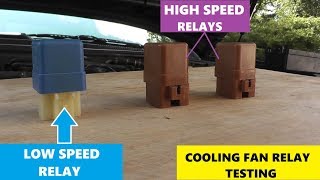
- Faulty Cooling Fan Relay (Very Common) — Relays wear out, stick open, or burn out from high current draw, breaking the fan circuit. This is the most frequent cause of P0481. 🎬 Watch: How to test low and high speed fan relays.
- Blown Fuse (Common) — A blown fuse cuts power to the fan. It always indicates an underlying overcurrent issue, like a short circuit or a failing fan motor.
- Wiring or Connector Issues (Common) — Wires and connectors become damaged, corroded, or frayed, creating open or short circuits. This is common in older vehicles exposed to harsh weather.
- Failed Cooling Fan Motor (Common) — The electric fan motor burns out or fails internally. A failing motor draws excessive amperage, damaging the relay, fuse, or wiring.
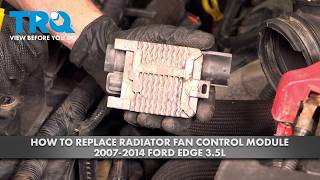
- Faulty Cooling Fan Control Module (Less Common) — Vehicles from Ford, VW, and BMW use dedicated Pulse Width Modulation (PWM) modules to control fan speed. These fail frequently from heat and vibration.
- Faulty Engine Coolant Temperature (ECT) Sensor (Rare) — If the ECT sensor reads cold when the engine is hot, the PCM will not command the fan on. This is a less direct cause of a circuit code.
- Defective A/C Refrigerant Pressure Sensor (Rare) — A faulty A/C pressure sensor sends incorrect signals, disrupting fan control logic when the A/C is active.
- Faulty Powertrain Control Module (PCM) (Very Rare) — The PCM's internal fan relay driver circuit fails rarely. Diagnose this only after exhaustively ruling out wiring and components.
Symptoms

- Engine Overheating — The temperature gauge climbs into the red zone during traffic, low speeds, or idling, where natural airflow is minimal.
- Cooling Fan Not Working — The secondary cooling fan fails to turn on when the engine exceeds 220°F or when the A/C is active.
- A/C Performance is Poor or Inoperative — The air conditioning blows warm air when the vehicle is stopped. The fan must pull air over the condenser to dissipate heat.
- Fan Runs Constantly — The fan stays on constantly, even with a cold engine or off ignition. This indicates a stuck relay and drains the battery.
- Noticeable humming or buzzing from the fan area — A buzzing fuse box indicates a failing relay. A loud humming or grinding from the fan indicates a failing motor bearing.
- Check Engine Light is On (also visible on scanner) — The Malfunction Indicator Lamp (MIL) or Check Engine Light illuminates on your dashboard.
Diagnostic Flowchart
Tap your situation to follow the diagnostic path that matches what you're seeing on this code.
Common Fixes & Costs
- Replace Cooling Fan Relay — Parts: $15-$80, Labor: $38-$90, ~0.5 hr book time (DIY)
- Replace Blown Fuse and Diagnose Overcurrent — Parts: $1-$10, Labor: $50-$150, ~0.8 hr book time (DIY)
- Repair Wiring or Connectors — Parts: $5-$20, Labor: $75-$200, ~1.5 hr book time (Intermediate)
- Replace Cooling Fan Assembly — Parts: $100-$800, Labor: $120-$450, ~2.5 hr book time (Intermediate)
- Replace Cooling Fan Control Module — Parts: $50-$250, Labor: $60-$150, ~1 hr book time (Intermediate)
Used vs. New Parts: Buying Guide
When a used part is worth it: For expensive components like a full cooling fan assembly or a fan control module, a used part from a low-mileage, accident-damaged vehicle is a cost-effective option. It is not recommended for inexpensive parts like relays.
Donor-vehicle mileage cap: roughly under 75000 miles for the part to have meaningful remaining life.
Donor quality checklist:
- Verify the donor vehicle was not scrapped due to engine overheating or electrical issues.
- Inspect the part for physical damage, corrosion, or melted plastic.
- Match the part number exactly, as different years or trim levels use incompatible parts.
Decision logic:
- If The part is a relay or fuse → Always buy new; the cost savings are negligible and the risk of a used part failing is not worth it.
- If The part is a fan assembly or control module and the vehicle is over 10 years old or has high mileage → A tested, used part from a reputable salvage yard is an acceptable budget-friendly choice.
- If The part is a fan assembly or control module and the vehicle is newer or has low mileage → Buy a new OEM or high-quality aftermarket part to ensure longevity and reliability.
Warranty tradeoff: Used parts typically come with a 30-90 day warranty, covering only the part itself, not labor. New aftermarket parts often have a 1-year to limited lifetime warranty. New OEM parts carry a manufacturer's warranty, usually 12 months.
Worst-case if a used part fails: $200-$600 if a used fan assembly or module fails after the warranty period, as you will have to pay for repeat labor and another replacement part.
What Happens If You Wait — Timeline
- 0-1 month: Code P0481 is set. Engine runs slightly hotter in traffic, or A/C performance dips at idle. (MPG impact: 0-1%% · Added cost: $0)
- 1-3 months: Temperature gauge climbs visibly in traffic. Repeated thermal stress weakens hoses and gaskets. (MPG impact: 1-3% (due to poor A/C compressor efficiency and engine running hot)% · Added cost: $50-$150 in wasted fuel and added component stress.)
- 3-6 months: Severe overheating occurs. This warps the cylinder head, causing a head gasket leak, coolant loss, and white exhaust smoke. (MPG impact: 5-15% (due to compression loss and misfires)% · Added cost: $1,500-$2,500 for head gasket and/or cylinder head machining.)
- 6+ months: Catastrophic failure. Coolant mixes with oil, destroying bearings, or extreme heat cracks the engine block. (MPG impact: 20-50% (engine barely running)% · Added cost: $4,000-$8,000+ for a used or remanufactured engine replacement.)
Cost of Not Fixing It
- Immediate (0-1 month): Risk of engine overheating in traffic or hot weather, poor A/C performance, and failed emissions test. (Added cost: Negligible if overheating is avoided.)
- Short Term (1-3 months): Repeated overheating events stress engine components, causing minor coolant leaks from gaskets and hoses due to thermal stress. (Added cost: $100-$400 for hose or minor leak repairs.)
- Long Term (3+ months): Catastrophic engine damage from severe or repeated overheating. This includes a blown head gasket, warped cylinder head, or a cracked engine block. (Added cost: $1,500-$5,000+ for head gasket repair or engine replacement.)
Diagnosis Steps

- Visual Inspection
Open the hood and look at the cooling fan, its wiring, and the fuse/relay box. Check for broken fan blades, melted connectors, loose connections, or frayed wires.
Tools: Flashlight (Beginner) - Check the Fuses
Locate the main fuse box under the hood. Refer to the diagram on the lid to find the cooling fan fuses. Visually inspect the fuse to see if the internal wire is broken. A blown fuse requires investigating for a short circuit.
Tools: Fuse puller (often included), Owner's manual (Beginner) - Test the Cooling Fan Relay
Swap the fan relay with an identical relay from a non-critical circuit (e.g., the horn relay). If the fan starts working and the horn stops, the relay is bad and needs replacement. Ensure part numbers match exactly.
Tools: None (or small flathead screwdriver) (Beginner) - Pro Tip: Use a Scan Tool Actuation Test
A bidirectional scan tool commands the cooling fan relay on and off directly. Attempt to actuate Fan 2. If you hear the relay click but the fan doesn't run, the problem is between the relay and the fan motor. If the relay doesn't click, the issue is the relay or the PCM control circuit.
Tools: Bidirectional OBD-II Scan Tool (Advanced) - Test the Fan Motor Directly
Disconnect the fan's electrical connector. Use fused jumper wires to apply 12V from the battery directly to the fan motor's power and ground terminals. If the fan spins, the motor is good. If it doesn't, the motor has failed.
Tools: Fused jumper wires, Basic hand tools (Intermediate) - Check for Power at the Fan Connector
With the fan unplugged and the engine running, turn the A/C to MAX to command the fan on. Use a multimeter to check for 12 volts at the fan's electrical connector. If you get 12V but the fan wasn't working, the fan motor is bad. If you get no voltage, the problem is upstream.
Tools: Multimeter (Intermediate) - Inspect the Wiring
If you have no voltage at the fan connector, trace the wiring from the fan motor back to the relay and PCM. Look for breaks, corrosion, or loose connections near the hot exhaust or moving parts. Repair damaged sections.
Tools: Multimeter, Wire cutters/strippers, Electrical tape (Advanced) - Pro Tip: Test the Relay Socket Terminals
Remove the fan relay. Use a multimeter to test the socket terminals. You should find constant 12V+ (battery), 12V+ with ignition on, a load wire to the fan, and a ground signal from the PCM. If the PCM ground signal is missing when the fan should be on, the problem is the PCM or its wiring. If all inputs are correct, the relay is faulty.
Tools: Multimeter, Vehicle-specific wiring diagram (Advanced) - Advanced: Check Fan Motor Resistance and Amperage Draw
Disconnect the fan motor. Measure across the motor's terminals with a multimeter set to Ohms. A good motor shows low resistance (under 5 Ohms). An 'OL' reading means an open circuit. Use an amp clamp around the power wire while the fan runs. A reading over 30-40 amps indicates a failing motor drawing excessive current.
Tools: Multimeter with amp clamp (Advanced) - Advanced: Test ECT Sensor Resistance
Disconnect the ECT sensor and measure its resistance with a multimeter. Compare the reading to a temperature/resistance chart for your vehicle. Typical values are 2,500 Ω at 68°F and 250-350 Ω at 176°F. A significant deviation indicates a faulty sensor.
Tools: Multimeter, Temperature/Resistance Chart (Advanced) - Advanced: Analyze Scan Tool Live Data
Monitor live data PIDs. Watch the Engine Coolant Temperature (ECT) PID to ensure it correlates with the dash gauge. Command Fan 2 on and check the 'Fan 2 Command' PID status versus actual fan operation. A mismatch confirms a control circuit issue.
Tools: OBD-II Scan Tool with Live Data (Advanced)
When This Code Triggers (Freeze-Frame Conditions)
- Engine Coolant Temp: 220-235°F (The PCM has commanded the fan on due to high temperature.)
- A/C Status: On (The PCM has commanded the fan on to cool the A/C condenser.)
- Vehicle Speed: 0-15 mph (Low speed or idle, where natural airflow is insufficient.)
- RPM: 650-1200 (Engine is at or near idle speed in traffic.)
Related Codes
- P0480 — Cooling Fan 1 Control Circuit Malfunction. Points to the primary/low-speed fan circuit. The diagnostic process is identical.
- P0482 — Cooling Fan 3 Control Circuit Malfunction. Seen on vehicles with three fans or complex three-speed logic.
- P0483 — Cooling Fan Rationality Check Malfunction. Indicates a logic failure (e.g., fan detected running when commanded off), not a circuit fault.
- P0693 & P0694 — Specific versions of P0481. P0693 means Circuit Low (short to ground). P0694 means Circuit High (short to power or open circuit).
Climate & Environmental Factors
- Hot Climates: Vehicles in hot climates experience P0481 frequently. Cooling components work harder, accelerating wear and failure rates.
- High Humidity / Salt Belt: Moisture and road salt degrade wiring insulation and corrode connector pins, causing high resistance or short circuits.
How to Talk to a Mechanic About This Code
Say this: "I have a P0481 code for the cooling fan 2 circuit and the engine runs hot in traffic. Since a faulty relay is the most common cause, please test the relay and check for power at the fan connector before quoting a full fan assembly replacement."
This signals that you understand the common, inexpensive failure points versus the expensive ones. It guides the shop toward a logical, step-by-step diagnosis, reducing the chance they will immediately recommend replacing the entire, costly fan assembly without proper testing.
Avoid saying:
- 'Just fix whatever's wrong'
- 'My check engine light is on, can you look at it?' (too vague — invites upsell)
- 'Whatever you recommend'
Questions to ask before authorizing the repair:
- If you're recommending a new fan assembly, can you confirm you tested the relay and it's good?
- Did you test the fan motor directly with 12-volt power to confirm it has failed?
- Was there proper voltage at the fan electrical connector when the fan was commanded on?
- What is the warranty on the parts and labor for this repair?
Where to Take It: Dealer vs Independent vs Chain
- Dealer:
A strong choice if a complex electronic module is the confirmed cause, or for newer, in-warranty cars. Otherwise, likely more expensive than necessary.
Best for: Vehicles still under powertrain warranty, Complex, manufacturer-specific module failures (like a Chrysler TIPM or VW fan control module), When a known Technical Service Bulletin (TSB) or software update applies to the fix
Downsides: Highest labor rates (1.5-2x vs. independent shops), May default to replacing a complete assembly (e.g., entire fan shroud with motor and module) rather than a smaller, failed component. (Typical cost: +50% vs. baseline) - Independent Shop:
Best fit for most P0481 scenarios. An experienced independent technician can efficiently diagnose the circuit from the relay to the fan motor, saving you money by replacing only the failed part.
Best for: Out-of-warranty vehicles where cost is a factor, Diagnosing and fixing common electrical faults like relays, wiring, or standard component swaps
Downsides: Quality and diagnostic skill can vary widely. Vet shops by looking for ASE certifications and positive reviews related to electrical diagnostics. (Typical cost: +0% vs. baseline) - Chain Shop:
Use with caution. Acceptable if you have already diagnosed a bad relay yourself and just need it replaced, but avoid them for initial diagnosis of an electrical circuit fault.
Best for: Simple, clear-cut repairs like a visible broken wire or an easily accessible relay.
Downsides: Technician skill is highly variable., High pressure to sell common, high-margin jobs may lead to a recommendation for a full fan assembly replacement regardless of the actual, simpler cause. (Typical cost: -10% vs. baseline)
When to Walk Away From the Repair
If the estimated repair cost exceeds 40-50% of your car's private-party value, pause and consider options.
- Car worth $3500, fix is $1400: Walk away. A $1,400 repair for a fan assembly on a car worth only $3,500 is not a sound investment. The risk of other age-related failures is high.
- Car worth $15000, fix is $800: Fix it. The repair cost is well under the threshold and is critical for the engine's health and longevity.
- Car worth $5000, fix is $200: Fix it. A $200 repair for a relay or wiring issue is a small price to pay to protect a $5,000 asset from catastrophic engine damage.
What Scan Tool You Need for This Code

Minimum: A code reader that can display live data, specifically Engine Coolant Temperature (ECT).
A $20 code reader only confirms the P0481 code exists. It can't show you if the engine is getting hot enough to command the fan on, nor can it test the circuit. For P0481, the most powerful diagnostic feature is bidirectional control, which allows the scanner to command the fan on/off to test the entire circuit instantly.
Budget: Autel MaxiAP AP200 (~$60) — Bluetooth dongle providing full system diagnostics and live data streaming to watch ECT.
Mid-range: Foxwell NT510 Elite / Autel MaxiCOM MK808S (~$180-350) — Offers bidirectional control to actively command the cooling fan on and off, instantly testing the relay, wiring, and motor.
Professional: Autel MaxiCOM MK900BT / Launch X431 Series (~$500-1200) — Full bidirectional control, advanced topology mapping, and coding capabilities for complex modules.
Rent vs buy: You generally cannot rent a bidirectional scanner from auto parts stores; their loaner tools are basic code readers. For P0481, if you want to diagnose it yourself effectively, you'll likely need to buy a mid-range tool with bidirectional capabilities. Consider it an investment that can save you hundreds on a single diagnostic fee.
How to Clear the Code After You Fix It
- Use an OBD-II scan tool to clear the diagnostic trouble codes.
- Disconnecting the battery for 15 minutes can also clear codes but will reset all vehicle memory and readiness monitors.
- Perform a drive cycle to allow the vehicle's readiness monitors to run their self-tests.
Drive cycle (~20 minutes): Start the engine from a cold start and let it idle for 2-3 minutes. Drive in stop-and-go city traffic for about 10 minutes. Drive at a steady highway speed (55-60 mph) for 5-10 minutes. Allow the vehicle to cool down completely. The goal is to operate the vehicle under various conditions to meet the criteria for the readiness monitors.
Readiness monitors affected: Comprehensive Component Monitor, Catalyst Monitor, Oxygen Sensor Monitor
Before emissions retest: drive at least 50 miles to fully set monitors.
Watch out for:
- Clearing the code without fixing the root cause will result in the code returning quickly.
- Taking the car for an emissions test immediately after clearing the code will result in a 'Not Ready' failure because the readiness monitors have not completed their self-checks.
- Not performing a varied enough drive cycle, preventing certain monitors from running.
Will This Fail Emissions / State Inspection?
Yes — this code typically fails an OBD-II emissions inspection.
- California: An active Check Engine Light for code P0481 is an automatic smog check failure. After repairs, a complete drive cycle must be performed to set the readiness monitors before a re-test is possible.
- New York: A vehicle will fail the NYS emissions inspection if the Malfunction Indicator Light (Check Engine Light) is illuminated. The P0481 code must be resolved and cleared for the vehicle to pass.
- Texas: In counties requiring emissions testing, an illuminated Check Engine Light is an automatic failure. After clearing the code, you must drive the vehicle for 50-100 miles to ensure the readiness monitors are set, as Texas allows for only one or two 'Not Ready' monitors depending on vehicle age.
Most Commonly Affected Vehicles
- Jeep Wrangler (JK) (2007-2018) — Triggers P0481 in hot weather with the A/C on. The issue is frequently related to the fan relay or the main fuse box, known as the Totally Integrated Power Module (TIPM), which is prone to internal failures.
- Dodge / Chrysler Grand Caravan, Town & Country, 300 (2005-2020) — These vehicles suffer from burnt relay contacts for the high-speed fan control. The cause is often a failed cooling fan relay/resistor assembly mounted near the radiator support.
- Chevrolet Cruze, Malibu, Equinox (2011-2016) — High under-hood temperatures cause intermittent fan operation. TSB 09-06-03-007A relocates the relays for better cooling.
- Ford Focus, Escape, Fusion (2012-2018) — These models use a separate cooling fan control module mounted directly on the fan shroud. This module fails constantly from heat and vibration.
- Volkswagen Golf, Jetta, Passat, Tiguan (2005-2018) — The cooling fan control module (J293) fails frequently. It is often integrated into the main cooling fan, requiring full assembly replacement.
- BMW 3 Series, 5 Series, X3, X5 (2004-2017) — This code almost always points to a failure of the electric fan assembly. The fan has an integrated electronic control unit that fails much more often than the fan motor itself.
- Hyundai Veracruz, Santa Fe (2007-2012) — A failure in the high-speed fan relay (Fan Relay 2) or its associated wiring is a common trigger for P0481.
Manufacturer-Specific Notes
- Chrysler/Dodge/Jeep: The external fan relay/resistor assembly fails frequently. On older models (like the Jeep JK), the TIPM fuse box fails internally, causing erratic fan behavior.
- General Motors (Chevrolet, GMC): High under-hood temperatures cause intermittent fan operation. TSB 09-06-03-007A relocates the relays for better cooling.
- Ford: The separate cooling fan control module mounted on the fan shroud fails constantly from heat and vibration.
- Volkswagen/Audi: The cooling fan control module (J293) fails frequently. It is often integrated into the main cooling fan, requiring full assembly replacement.
Real Owner Stories
2014 Ram 2500 Cummins at 110K miles
Check Engine Light came on with codes P0480 and P0481. No noticeable symptoms initially.
What they tried:
- Replaced the fan clutch assembly, but the codes returned.
Outcome: A thorough inspection revealed the fan clutch wiring harness had chafed through on a bracket for the A/C compressor lines. Repairing the damaged wires for less than $50 in materials permanently resolved both codes.
Lesson: Always perform a detailed visual inspection of the wiring harness before replacing expensive components.
2010 Jeep Wrangler JK with intermittent P0481
P0481 code appeared intermittently, primarily in hot weather with the A/C on. The fan failed to engage when the engine temp climbed, but worked on restart.
What they tried:
- Replaced the radiator, hoses, thermostat, fan assembly, and high-speed fan relay.
- Replaced the coolant temperature sensor, which worked for about 130 miles before the code returned.
Outcome: The problem was within the Totally Integrated Power Module (TIPM), where the internal relay control circuit fails. The owner installed an external relay bypass kit.
Lesson: On Jeep/Chrysler/Dodge vehicles, intermittent fan issues that aren't solved by replacing the relay or fan point to a faulty TIPM.
2012 Chevy Cruze with fan running constantly
The cooling fan started running constantly, even after the car was shut off, and the Check Engine Light came on. The car was not overheating.
What they tried:
- A shop reset the computer, and the problem disappeared for two days before returning.
Outcome: The issue was a faulty engine coolant temperature sensor. The sensor provided an incorrect reading to the computer, causing the computer to enter a 'fail-safe' mode, which runs the fan continuously to prevent potential overheating. Replacing the sensor resolved the issue.
Lesson: A fan that won't turn off is a symptom of a circuit fault. The PCM's default strategy for a sensor failure is to run the fan constantly to protect the engine.
2000 Pontiac Grand Prix with P0480 & P0481
Both fan circuit codes appeared. The owner tested the fans directly, and they worked. Swapping relays and the computer did not fix the problem.
What they tried:
- Replaced fan assembly and all relays with no success.
- Tested wiring and found no power at the relay control circuit.
Outcome: The owner recalled that years prior, the battery had cracked and leaked acid. The acid seeped into the wiring loom and slowly corroded the copper inside the relay control wires, turning them to green dust. Splicing in new sections of wire fixed the problem completely.
Lesson: Past events like a battery leak or minor accident lead to hidden damage that only appears years later as corrosion finally breaks a circuit.
How to Prevent This Code From Triggering
- Perform a Coolant Flush Every 30,000-50,000 Miles (Every 2-4 years) — Old coolant degrades seals. A flush maintains pH, protecting the system from internal failure that overworks fans.
- Clean Radiator and Condenser Fins Annually (Once per year) — Dirt and bugs block airflow, forcing the fan to work harder and run longer. A gentle spray of water clears debris.
- Inspect and Protect Electrical Connectors (Every 1-2 years or during other maintenance) — Connectors are exposed to moisture. Unplugging them and applying dielectric grease prevents moisture intrusion.
- Visually Inspect Wiring Harnesses (During every oil change) — Vibration chafes insulation over time, causing short circuits. Check harnesses near the fan shroud and A/C lines.
Frequently Asked Questions
What's the difference between Cooling Fan 1 and Cooling Fan 2?
In a two-fan system, Fan 1 is primary and Fan 2 is secondary (high heat or A/C). In a single-fan system, Fan 1 is low-speed and Fan 2 is high-speed. P0481 specifically points to the secondary or high-speed circuit.
Where is the cooling fan 2 relay located?
Cooling fan relays are usually in the main under-hood fuse box. On some Dodge/Chrysler models, it is a separate part mounted on the radiator support. Consult your owner's manual for the exact location.
My fan works, so why do I have a P0481 code?
This code flags a 'Control Circuit Malfunction,' not necessarily a dead fan. The fan might run constantly due to a stuck relay, or work intermittently. The PCM sets the code because the actual electrical state doesn't match the commanded state.
Can a bad thermostat cause P0481?
Not directly. A bad thermostat causes overheating but does not create an electrical circuit fault. However, constant overheating forces the fans to run continuously, which can eventually burn out the relay and trigger P0481.
What are common mistakes when diagnosing P0481?
A frequent mistake is replacing the expensive fan assembly without testing the circuit. Always swap the relay first, as it is the most common and cheapest fix. Another error is replacing a blown fuse without finding the underlying short circuit.
Can I just replace the fuse to fix P0481?
You can replace the fuse, but if it blows again, you have a deeper problem. A blown fuse is a symptom of a short circuit or a failing fan motor drawing too much electricity.
How much does it cost to fix a P0481 code?
A diagnostic check averages $150. A simple relay replacement costs $50 to $170 total. A full cooling fan assembly replacement ranges from $220 to over $1,200 including parts and labor.
Key Takeaways
- A faulty cooling fan relay causes over 50% of P0481 codes and costs under $80 to replace.
- Driving with a failed secondary fan risks severe engine overheating, leading to $1,500+ head gasket repairs.
- Watch for temperature spikes in stop-and-go traffic and weak A/C performance at idle, as both rely heavily on Fan 2.
- Diagnose the relay instantly at home by swapping it with an identical non-critical relay (like the horn) in your fuse box.
- P0481 is a circuit code, meaning the fan motor itself is often fine; test the wiring, fuses, and control modules before buying a $300 fan assembly.
Helpful Videos


The information in this article is provided for general reference and educational purposes only. Vehicle specifications, procedures, and part compatibility can vary by production date, trim level, and region. Always consult your vehicle's factory service manual and verify part numbers before purchasing or performing repairs. Safety-critical components such as airbags, seat belts, and braking systems should be installed by a qualified professional.
- 🎬 Helpful Videos
- What Does P0481 Mean?
- Can I Drive With P0481?
- Common Causes
- Symptoms
- Diagnostic Flowchart
- Common Fixes & Costs
- Used vs. New Parts: Buying Guide
- What Happens If You Wait — Timeline
- Cost of Not Fixing It
- Diagnosis Steps
- When This Code Triggers (Freeze-Frame Conditions)
- Related Codes
- Climate & Environmental Factors
- How to Talk to a Mechanic About This Code
- Where to Take It: Dealer vs Independent vs Chain
- When to Walk Away From the Repair
- What Scan Tool You Need for This Code
- How to Clear the Code After You Fix It
- Will This Fail Emissions / State Inspection?
- Most Commonly Affected Vehicles
- Manufacturer-Specific Notes
- Real Owner Stories
- 2014 Ram 2500 Cummins at 110K miles
- 2010 Jeep Wrangler JK with intermittent P0481
- 2012 Chevy Cruze with fan running constantly
- 2000 Pontiac Grand Prix with P0480 & P0481
- How to Prevent This Code From Triggering
- Frequently Asked Questions
- What's the difference between Cooling Fan 1 and Cooling Fan 2?
- Where is the cooling fan 2 relay located?
- My fan works, so why do I have a P0481 code?
- Can a bad thermostat cause P0481?
- What are common mistakes when diagnosing P0481?
- Can I just replace the fuse to fix P0481?
- How much does it cost to fix a P0481 code?
- Key Takeaways
- 🎟️ Get 5% Off