

P0457 on 2009-2019 Ram 1500: Loose Gas Cap or a Failing EVAP Pump?
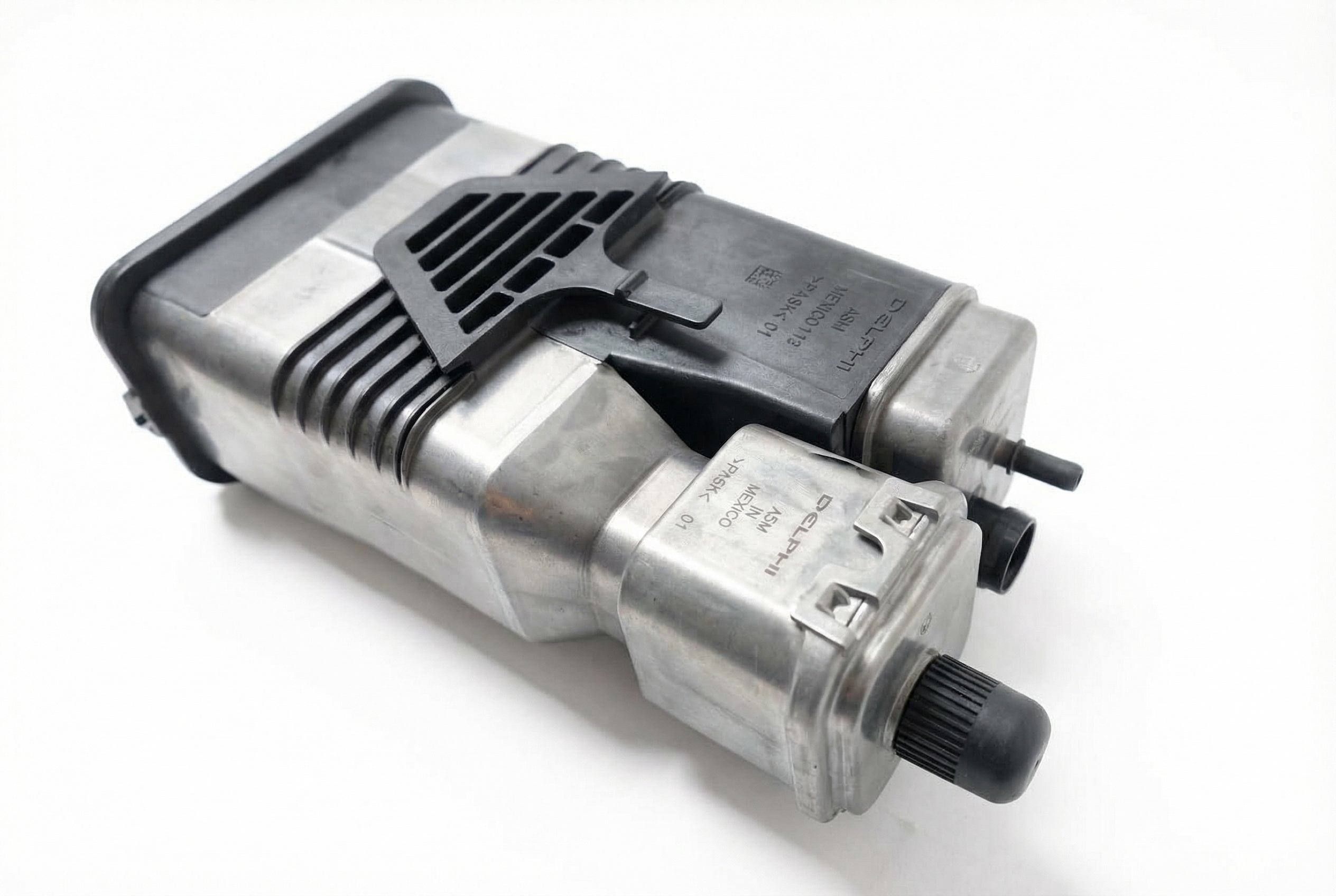
This code means a large EVAP leak, often flagged as a loose gas cap. While you should check the cap first, the most common fix on 2009-2018/Classic models is replacing the Evaporative System Integrity Monitor (ESIM) pump on the charcoal canister, a $30-$60 part that is a frequent failure point. Many owners replace the gas cap, which doesn't solve the issue, before finding the ESIM was the true culprit.
- P0457 specifically points to a loose gas cap, but don't stop there.
- On 4th Gen Ram 1500s (2009-2018/Classic), a failed ESIM/Leak Detection Pump is the most probable cause if a new gas cap doesn't fix the issue.
- Replacing the ESIM is a simple, inexpensive DIY job that takes less than 30 minutes.
- If the gas cap and ESIM replacement don't work, a smoke test is the best way to find the true source of the leak, which could be a cracked hose or rusted filler neck.
What's Unique About the 2009-2019 Ram 1500

On the 4th Generation Ram 1500 (2009-2018 and 2019 "Classic" models), the P0457 code is very frequently caused by a failed Evaporative System Integrity Monitor (ESIM), also called a leak detection pump. This small, inexpensive module is mounted on the charcoal canister and is notorious for failing, perfectly mimicking the symptoms of a loose gas cap. Many owners replace the gas cap multiple times without success, only to find the ESIM was the true culprit all along. This issue is so common that many forum users recommend replacing the ESIM as the second step right after checking the gas cap.
Generation note: This range covers two generations: - 4th Generation (2009-2018 & 2019 'Classic'): The information in this guide is highly specific to this generation, particularly regarding the common failure of the ESIM / leak detection pump. - 5th Generation (2019-present): The all-new 2019 Ram 1500 (DT platform) has a different EVAP system design. While the code's meaning is the same, the specific failure points, like the ESIM, may not be as common as on the 4th gen. However, the underlying EVAP components are still similar across many Stellantis vehicles.
Symptoms You May Notice
- Check Engine Light is on
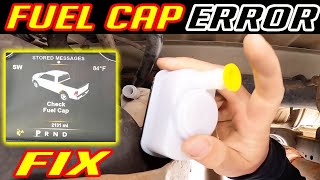
- A "Check Fuel Cap" or "Gascap" message on the instrument cluster
- A faint smell of gasoline, especially around the rear of the truck
- Remote start may be disabled when the Check Engine Light is active
- Failing a state emissions inspection
- Replacing only the gas cap. While it's the first step, many owners buy multiple caps thinking they are defective, when the real problem is the ESIM pump.
- Replacing the ESIM pump when the fuel filler neck is rusted through. In salt-belt states, a corroded filler neck is a strong possibility that should be inspected.
Most Likely Causes


- Failed ESIM / Leak Detection Pump 🔴 High Probability This specific component, used across many Chrysler/Dodge/Ram vehicles of the era, has a high failure rate. It gets stuck or its internal diaphragm fails, causing the system to report a large leak. It is located on the charcoal canister, exposed to the elements under the truck.
How to confirm: After confirming the gas cap is good, this is the next logical part to replace due to its high failure rate and low cost. A definitive but more complex test is to perform a smoke test on the EVAP system; smoke will be seen leaking from the ESIM unit itself if it has failed. Some owners test the old part by attempting to blow through it; if air passes, it has failed.
Typical fix: Replace the ESIM. It is located on the charcoal canister near the fuel tank (passenger side), requires no special tools, and is secured by a quarter-turn twist-lock mechanism. Be sure to remove the old O-ring seal if it sticks to the canister.
Est. part cost: $30-$60 - Loose, Damaged, or Incorrect Gas Cap 🟡 Medium Probability This is the intended trigger for the code. The rubber seal on the cap can dry out and crack over time, or the cap may not have been tightened until it clicked. Using a non-OEM cap can sometimes cause issues.
How to confirm: First, tighten the cap until it clicks several times. Clear the code and drive for a few days. If the code returns, inspect the cap's rubber O-ring for cracks or damage. Trying a new OEM cap is a simple and inexpensive diagnostic step.
Typical fix: Replace the gas cap with a new, high-quality OEM Mopar part. Some owners report that applying a light coat of petroleum jelly to the O-ring can help create a better seal temporarily.
Est. part cost: $15-$35 - Rusted or Damaged Fuel Filler Neck ⚪ Low Probability In regions that use road salt (the "Salt Belt"), the metal filler neck can corrode and develop pinhole leaks or a rough surface where the gas cap seals. This prevents a proper seal and triggers the code.
How to confirm: Visually inspect the entire fuel filler neck for signs of rust, flaking metal, or holes, paying close attention to the lip where the gas cap O-ring makes contact. A smoke test will definitively show leaks from this area.
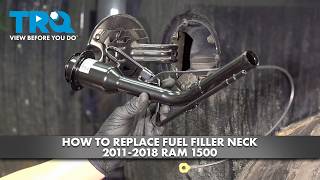
Typical fix: The entire fuel filler neck assembly must be replaced. 🎬 See how to replace a rusted fuel tank filler neck. Some owners have had temporary success by sanding the rust off the sealing surface.
Est. part cost: $100-$250 - Cracked or Disconnected EVAP Hoses ⚪ Low Probability Hoses can become brittle with age and heat cycles. Rodents are also known to chew on these lines, causing a sudden large leak.
How to confirm: Visually inspect all accessible EVAP lines running from the gas tank to the charcoal canister and up to the engine bay. A smoke test is the most effective way to find a hidden leak in a hose.
Typical fix: Replace the damaged section of the hose. In some cases, a specific pre-formed hose assembly must be purchased from the dealer.
Est. part cost: $20-$100
Rare But Worth Checking
- Faulty EVAP Purge Valve/Solenoid: Located under the hood, this valve can get stuck open, creating a constant vacuum leak that the system may interpret incorrectly. It's less common for P0457 but can happen, sometimes triggering other codes alongside it.
- Cracked Charcoal Canister: Physical damage to the canister housing from road debris or improper jacking can cause a large, obvious leak. Sometimes the ESIM is replaced when the actual crack is in the canister body it mounts to.
Diagnosis Steps
- Read the code with an OBD-II scanner to confirm P0457 is present.
- Inspect the gas cap. Ensure it is tight and clicks. Remove it and check the rubber seal for cracks or brittleness. Clean the sealing surfaces on both the cap and the fuel filler neck.
- Clear the codes and drive the vehicle for several days. The EVAP monitor runs under specific conditions (related to fuel level and temperature), so it may take time for the light to return.
- If the code returns, inspect the fuel filler neck for heavy rust or corrosion, especially if you live in an area with road salt.
- If the filler neck is okay, the next most likely culprit is the ESIM / Leak Detection Pump on the charcoal canister (especially on 4th Gen models). Given its high failure rate and low cost, many DIYers choose to replace it as the next step.
- If the problem persists, perform a thorough visual inspection of all EVAP hoses for obvious cracks, rodent damage, or disconnections.
- To find an elusive leak, the most effective method is to have a professional (or use a DIY kit) perform a smoke test. This involves injecting low-pressure smoke into the EVAP system and watching where it escapes. 🎬 Watch a professional smoke test to find elusive EVAP leaks.
Parts You'll Likely Need

- Evaporative System Integrity Monitor (ESIM) / Leak Detection Pump
(OEM #04861962AD (supercedes 4861962AA, 4861962AB, 4861962AC))— This is the most common failure point on 4th generation Ram 1500s that causes the P0457 code after the gas cap has been ruled out.
Trusted brands: Mopar, Dorman (310-219), Standard Motor Products
OEM price range: $50-$80
Aftermarket price range: $25-$50 - Fuel Cap
(OEM #52124512AA (Verify by VIN))— This is the part the code directly points to. A worn seal will prevent the system from holding pressure. It is always the first and cheapest part to check.
Trusted brands: Mopar, Stant
OEM price range: $25-$40
Aftermarket price range: $15-$25
Related Codes That Often Appear With This One
- P0456 — P0456 indicates a 'small' EVAP leak. It's very common to see both P0456 and P0457 together, as a failing ESIM or other leak can be interpreted differently by the PCM during various test cycles.
- P0455 — P0455 indicates a 'large' EVAP leak, without the specific 'fuel cap' trigger. It points to the same set of potential problems and is often caused by the same components.
- P0440 — This is a general EVAP system malfunction code. A user on Reddit reported having P0440, which then became P0457 after replacing the gas cap, pointing towards the ESIM as the next likely culprit.
Technical Service Bulletins (TSBs) & Recalls
- TSB 25-001-21: While not directly for P0457, this TSB addresses EVAP system clogging from dust, which can cause similar symptoms like a check engine light and refueling problems. It recommends an upgraded filter kit for trucks in dusty conditions.
Platform-Specific Known Issues
- The ESIM (Leak Detection Pump) is a known weak point on the 2009-2018/Classic platform and is responsible for a large percentage of P0456 and P0457 codes that aren't fixed by a new gas cap.
- In dusty environments, the EVAP system filter can become clogged, leading to refueling issues and code P0441. TSB 25-001-21 addresses this with an upgraded filter kit, which is a separate issue from the P0457 leak.
Mechanic-Grade Diagnostic Values
- EVAP Purge Solenoid Coil Resistance — expected: 14.5 to 30 ohms. Failure: A reading significantly outside this range, especially an open circuit (infinite resistance) or a short (near zero ohms), indicates a failed solenoid coil. Some sources indicate a wider general range of 12-130 ohms for automotive purge valves, but values for Mopar products tend to be tighter.
- Fuel Tank Pressure (FTP) Sensor Voltage (KOEO) — expected: Approximately 1.5 - 2.5 Volts at atmospheric pressure (gas cap off).. Failure: Voltage that is stuck high (near 5V) or low (near 0V) regardless of pressure indicates a failed sensor or wiring issue. As a slight vacuum is applied, voltage should decrease smoothly.
Scan Tool Commands That Help
- wiTECH (Dealer Tool) or high-end bidirectional scanner (e.g., Autel, Innova 5160): ESIM Forced Test / Small Leak Verification Test (SLVT) — This command forces the PCM to run the EVAP leak test on demand, allowing a technician to confirm if the ESIM is functioning without waiting for a full drive cycle. The scan tool will monitor the ESIM's switch state (Open/Closed); if it fails to close within the specified time (e.g., 40-45 seconds), the ESIM unit is confirmed to be faulty.
- wiTECH or similar bidirectional scanner: EVAP Purge Solenoid Actuation — This command allows the technician to manually open and close the purge solenoid under the hood. While listening for an audible click, this confirms the solenoid is mechanically responding to the PCM's command. This is a crucial step before performing a smoke test to ensure the valve isn't stuck open.
Wiring & Ground Locations
- ESIM Connector — On the charcoal canister, mounted near the top-rear of the fuel tank, often near the center of the truck.. This is the electrical connection for the most commonly failed part for this code. The connector has two pins. The ESIM itself is a switch, not a solenoid, and does not take 12V for testing; it works off system vacuum to open or close an internal switch that the PCM monitors.
- EVAP System Monitor Switch Connector — Listed in service documents as being on the left rear of the chassis for the DS platform (2009+).. This is the official name and location for the ESIM connector in wiring diagrams. A poor connection or corroded pins at this location can mimic a failed ESIM.
- EVAP Purge Solenoid Connector — Under the hood, on the passenger side of the engine.. This connector provides power and control to the purge solenoid. Checking for voltage and ground here is a key diagnostic step if the solenoid is suspected of failing.
Real Owner Repair Stories
- RamForum.com user (2014 Ram 1500 5.7 Hemi) — P0456 and P0457 codes reappearing after clearing.
❌ Tried (didn't work) Replacing the gas cap, Replacing the ESIM / Leak Detection Pump, Replacing the Purge Solenoid
✅ What actually fixed it A smoke test revealed smoke coming from above the fuel tank. Upon inspection, it was found that rodents had chewed through two plastic EVAP lines on top of the tank. The fix required either splicing the lines or replacing the fuel tank assembly, as the lines were considered part of the tank. - YouTube video by BoostedMotorsports (Ram 1500 5.7L Hemi) — P0457 code and "Gas Cap Loose" message on the dash.
❌ Tried (didn't work) Replacing the gas cap with a new Mopar cap., Swapping the under-hood purge solenoid with a known-good spare.
✅ What actually fixed it Replacing the EVAP leak detection pump (ESIM) on the charcoal canister resolved the issue. The video confirms that after several days of driving, the light and code did not return.
"I Checked Everything" — The Actual Cause
- In one forum thread, a user reported having their EVAP lines smoke tested with no leaks found after getting P0456/P0457 codes. The ultimate fix was replacing a faulty ESIM, indicating the ESIM itself failed internally without an external leak visible via smoke.
- Another user reported chasing P0456 after replacing the gas cap and ESIM. The cause turned out to be a faulty fuel level sensor. The PCM uses fuel level as a condition for running the EVAP monitor, and an erratic sensor can cause the test to run incorrectly or trigger a fault. The symptom was the fuel gauge occasionally dropping to empty and returning.
OEM Part Supersession History
4861962AA, 4861962AB, 4861962AC→04861962AD— Standard part evolution and revision by the manufacturer.
Heads up: Part 04861962AD is the current primary replacement for the earlier versions and is backward compatible. Some parts catalogs also show 4891685AA and 4891685AB as being replaced by this part number.
Model Year Variations Within This Range
- 2009-2013: Some parts catalogs note a build date cutoff for the ESIM (part 04861962AD) of September 4, 2013. While the part appears to be the same and is listed as the correct replacement for the entire generation, this suggests there may have been a minor production change. For practical purposes, 04861962AD remains the correct service part for the entire 4th generation.
Diagnostic Flowchart

Other Known Issues on This Vehicle
Issues unrelated to this code that are worth knowing about as an owner of this generation:
- 5.7L HEMI Lifter/Camshaft Failure ('Hemi Tick') 🔴 High — Commonly reported between 80,000 and 120,000 miles. Can be exacerbated by extended idling. A ticking noise, especially when cold, can be an early warning sign.
- Cracked Exhaust Manifolds / Broken Bolts 🟠 Medium — Very common on 5.7L HEMI engines. The dissimilar metals of the iron manifold and aluminum head cause stress, leading to broken bolts and a ticking noise on cold starts that may disappear as the engine warms up. TSBs 09-011-22 and 09-019-23 address this repair procedure. (Ref: TSB 09-011-22, TSB 09-019-23)
- Air Suspension System Failures 🟠 Medium — The optional air suspension system is prone to leaks from the air lines or bags, and compressor or valve block failures, especially in cold weather. Repairs can be expensive, leading many owners to convert to a standard coil spring suspension.
- Third Brake Light Gasket Leak 🟡 Low — The foam gasket for the high-mount third brake light fails over time, allowing water to leak into the cab, potentially staining the headliner and damaging rear electronics.
- Transmission Shifting Issues (545RFE/68RFE) 🟠 Medium — Some earlier 4th generation models with 5 and 6-speed automatic transmissions experienced harsh shifts or getting stuck in gear, often related to the valve body or control module software.
Used vs. New Parts: Buying Guide for This Vehicle
When a used part is the smart pick: For this specific repair, using used parts is generally not recommended. The key failure components (ESIM, gas cap, hoses) are either high-wear, prone to failure with age, or inexpensive to buy new. A used fuel filler neck from a dry, salt-free region could be a viable option if it is significantly cheaper than new and shows no signs of corrosion.
Donor-vehicle mileage cap: roughly under 50000 miles for the part to have meaningful remaining life.
What to inspect on the donor part:
- For a fuel filler neck, inspect for any surface rust, especially on the sealing lip.
- For hoses, ensure they are pliable and show no signs of cracking or swelling.
- Avoid any electronic components like sensors or pumps from a junkyard, as their remaining lifespan is unknown and they are the most common failure points.
OEM-only on this vehicle (don't cheap out):
- Gas Cap: While aftermarket caps exist, many owners and mechanics report that only the OEM Mopar cap provides a reliable, long-term seal. The cost difference is minimal.
- ESIM / Leak Detection Pump: While aftermarket versions from brands like Dorman and Standard Motor Products are widely available and often work, the OEM Mopar part is generally considered the most reliable fix to avoid repeat failures.
Aftermarket brands forum-validated for this vehicle:
- Dorman (for ESIM, part 310-219)
- Standard Motor Products (SMP)
Brands owners have reported issues with on this vehicle:
- No-name, unbranded parts from online marketplaces are a significant gamble and often fail quickly.
Real Owner Stories
Aggregated from forums and TSBs cited above. Mileages and costs reflect what owners reported in those sources.
Ram 1500
Symptoms: A persistent 'Gas Cap Light' and P0456/P0457 codes, even after a new gas cap and purge valve were installed.
What fixed it: Replacing the leak detection pump (ESIM).
Source hint: ramforum.com: A thread titled "Gas Cap Light - Fixed!"
Ram 1500
Symptoms: Owner was in "'Check gas cap' purgatory" where the code would not go away.
What fixed it: A full fuel filler neck replacement due to rust. The owner had previously tried replacing the gas cap and sanding the filler neck, but those fixes did not last.
Source hint: ramforum.com: In a thread titled '"Check gas cap" purgatory'
2010 Ram 1500
Symptoms: Codes P0440 and P0457 along with a 'loose gas cap' light on the dash, which a new Mopar gas cap did not fix.
What fixed it: The community advised that replacing the ESIM was the next logical diagnostic step.
Source hint: Reddit (r/AskMechanics): A 2010 Ram owner with codes P0440 and P0457 asked for advice...
Related OBD-II Codes
Frequently Asked Questions
My Ram is showing a 'Gascap' message and the P0457 code. Is it definitely just the gas cap?
Where is the ESIM / Leak Detection Pump located on my 2014 Ram 1500?
I live in a snowy state. Could rust be causing my P0457 code?
How can I test the ESIM myself before buying a new one?
My remote start stopped working right after the Check Engine Light came on for P0457. Are these related?
Does TSB 25-001-21 for the EVAP system apply to my P0457 leak code?
Helpful Videos

We Have This Part in Stock





The information in this article is provided for general reference and educational purposes only. Vehicle specifications, procedures, and part compatibility can vary by production date, trim level, and region. Always consult your vehicle's factory service manual and verify part numbers before purchasing or performing repairs. Safety-critical components such as airbags, seat belts, and braking systems should be installed by a qualified professional.
- Ram 1500:
- 🎬 Helpful Videos
- 🛍️ Shop This Part
- What's Unique About the 2009-2019 Ram 1500
- Symptoms You May Notice
- Most Likely Causes
- Rare But Worth Checking
- Diagnosis Steps
- Parts You'll Likely Need
- Related Codes That Often Appear With This One
- Technical Service Bulletins (TSBs) & Recalls
- Platform-Specific Known Issues
- Mechanic-Grade Diagnostic Values
- Scan Tool Commands That Help
- Wiring & Ground Locations
- Real Owner Repair Stories
- "I Checked Everything" — The Actual Cause
- OEM Part Supersession History
- Model Year Variations Within This Range
- Diagnostic Flowchart
- Other Known Issues on This Vehicle
- Used vs. New Parts: Buying Guide for This Vehicle
- Real Owner Stories
- Ram 1500
- Ram 1500
- 2010 Ram 1500
- Related OBD-II Codes
- Frequently Asked Questions
- 🎟️ Get 5% Off