

P0452 on 2010-2019 Subaru Outback: EVAP Pressure Sensor Circuit Low Causes and Fixes
This code almost always points to a faulty fuel tank pressure sensor or its wiring. The sensor is located on top of the fuel tank and is difficult to access, making replacement a 4/5 difficulty DIY job. The most common OEM part number is 42084-AJ06A. Expect to pay $75-$150 for the part and $250-$550 for a professional repair.
- P0452 indicates an electrical fault in the fuel tank pressure sensor circuit, not an EVAP leak.
- The most likely cause is a failed fuel tank pressure sensor, part number 42084-AJ06A.
- The second most likely cause is damaged wiring leading to the sensor, often from chafing or rodents.
- The sensor is located on top of the fuel tank and is very difficult to access, which significantly increases the labor time and cost for repair.
- This is a manageable DIY repair for an experienced mechanic with patience and the right tools, but may be frustrating for a novice due to the tight access.
What's Unique About the 2010-2019 Subaru Outback
For the 2010-2019 Outback, the key challenge with a P0452 code is the physical location of the fuel tank pressure sensor. It is mounted on top of the fuel tank, tucked above the rear subframe. While some owners have managed to replace it by reaching over the passenger-side rear suspension, it is a very tight and difficult job that often requires lowering the fuel tank for proper access. This makes a seemingly simple sensor replacement much more labor-intensive than on many other vehicles. Forum users frequently discuss the frustration of this repair, with some opting to cut an access panel in the floor under the rear seat, though this is not a recommended procedure.
Generation note: This guide covers the 4th generation (2010-2014) and 5th generation (2015-2019) Subaru Outback. The cause and primary fix are consistent across both generations, as the fundamental design of the EVAP system's pressure sensing is similar. The main challenge, the difficult-to-access location of the fuel tank pressure sensor, is also common to both generations. The same OEM sensor part number is used across these years.
Symptoms You May Notice
- Check Engine Light is on
- Other warning lights, like traction control or Reverse Automatic Braking (RAB), may illuminate as a secondary effect of the Check Engine Light.
- Inability to pass an emissions test
- A faint fuel smell may be noticeable.
- Slight decrease in fuel efficiency.
- Replacing the charcoal canister or other EVAP valves. This code points to an electrical circuit issue with the pressure sensor, not a system leak or a different component failure.
Most Likely Causes
- Faulty Fuel Tank Pressure Sensor 🔴 High Probability The sensor is an electronic component that can fail internally over time, leading to it sending a lower-than-spec voltage back to the ECM. 🎬 Watch: Understanding how low voltage triggers the P0452 code This is the most common failure point for a P0452 on this platform.
How to confirm: After confirming the wiring is intact (5V reference, good ground, no short on signal wire), the most practical way to confirm is to replace the sensor. A professional can use a scan tool to monitor the sensor's voltage reading in real-time, which should be near 0V with this code present.
Typical fix: Replace the fuel tank pressure sensor. The most commonly cited part is Subaru OEM part number 42084-AJ06A.
Est. part cost: $75-$150 - Wiring or Connector Issue 🟡 Medium Probability The wiring is routed on top of the fuel tank, making it susceptible to damage from rodents or corrosion over time, especially in salt-belt states. A short to ground on the signal wire will cause a P0452 code. Check the harness where it passes over the subframe for potential chafing. Manufacturer documentation, such as TSB Bulletin #07-96-15 for other Subaru models, has noted that a repositioning of the sensor and actuator wiring ground junction point may be necessary if the location is affected by harness changes that trigger P0452.
How to confirm: Visually inspect the wiring harness leading to the sensor for any signs of damage, corrosion, or chewing. Use a multimeter to check for a short to ground on the signal wire and verify 5V reference and ground at the connector. 🎬 See this guide on testing fuel tank pressure sensor signals
Typical fix: Repair the damaged section of the wiring harness or clean/replace the connector.
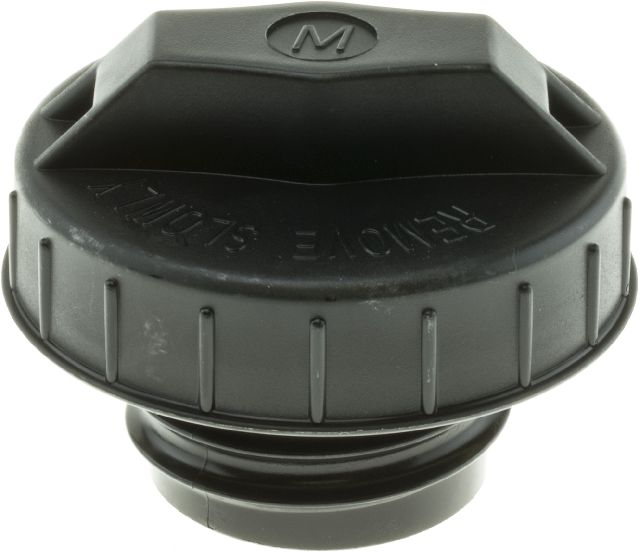
Est. part cost: $5-$50 - Loose or Faulty Gas Cap Very low Probability While a loose gas cap is a common cause for EVAP *leak* codes (like P0457), it is extremely unlikely to cause a 'Circuit Low' fault like P0452. This code points to an electrical issue, not a pressure leak. Some sources mention it as a generic EVAP check, but it should not be the root cause here.
How to confirm: Check that the gas cap is tight and the seal is not cracked or damaged. Tighten it until it clicks at least once. Clearing the code will likely see it return if the gas cap was not the issue.
Typical fix: Tighten or replace the gas cap.
Est. part cost: $15-$30
Rare But Worth Checking
- Faulty Engine Control Module (ECM): This is extremely rare. The ECM should only be considered after all other possibilities, including the sensor and wiring, have been exhaustively tested and ruled out.
Diagnosis Steps
- Verify the P0452 code is present using an OBD-II scanner.
- Check the gas cap. Ensure it is tightened until it clicks and that the seal is in good condition. Clear the code and see if it returns. This is a very low-probability fix but is the easiest first step.
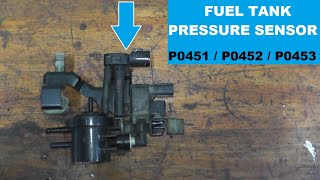
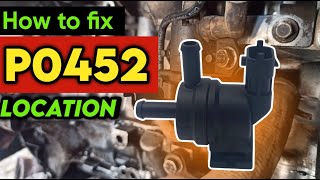
- Locate the fuel tank pressure sensor. It is on the top of the fuel tank, near the fuel pump assembly. Access may be possible by reaching above the passenger-side rear subframe, but it is very difficult.
- Inspect the sensor's electrical connector and nearby wiring for any visible damage, corrosion, or signs of rodent activity. Pay close attention to the harness routing over the subframe.
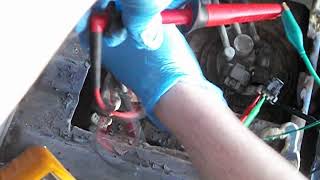
- If access permits, use a multimeter to test the connector with the key on, engine off. You should find a 5-volt reference wire, a ground wire, and a signal wire. Check for 5 volts between the reference and ground pins.
- Check the signal wire for a short to ground. With the sensor disconnected, there should be no continuity between the signal wire and the vehicle's chassis ground.
- If the wiring appears to be intact and tests correctly (good 5V reference and ground), the fuel tank pressure sensor itself is the most likely culprit.
- Replace the fuel tank pressure sensor. This may require lowering the fuel tank to gain adequate access. 🎬 Watch: A walkthrough on testing and replacing the pressure sensor Some DIYers have successfully done this by removing the passenger rear wheel and reaching over the suspension components, but it is a blind, tight job.
- After replacement, clear the code and perform a drive cycle to ensure the fix was successful.
Parts You'll Likely Need
- Fuel Tank Pressure Sensor
(OEM #42084-AJ06A)— This sensor is the most common failure point for a P0452 code, as it fails internally and sends an incorrect low voltage signal.
Trusted brands: Subaru OE, Denso, Bosch, Duralast
OEM price range: $120-$180
Aftermarket price range: $75-$150
Technical Service Bulletins (TSBs) & Recalls
- While no TSBs directly address P0452 for the 2010-2019 Outback, Subaru has issued TSBs for EVAP system diagnostics, such as 'Subaru Tech Tips, August 12, 2022, NHTSA ID: #10219476', which covers general evaporative diagnostics and smoke testing procedures relevant to the system.
- In related manufacturer documentation for other models (TSB Bulletin #07-96-15), Subaru noted that harness changes could set DTC P0452 in error, involving a repositioning of the sensor and actuator wiring ground junction point to a location unaffected by the harness.
Mechanic-Grade Diagnostic Values
- Fuel Tank Pressure Sensor Signal Voltage (Key On, Engine Off, Gas Cap Off) — expected: Approximately 1.5V to 2.5V, representing atmospheric pressure.. Failure: A reading below 0.2V indicates a short or internal sensor failure, triggering P0452.
- Fuel Tank Pressure Sensor Operational Range — expected: 0.5V (high vacuum) to 4.5V (positive pressure).. Failure: Voltage is stuck low (e.g., <0.2V) regardless of actual tank pressure or vacuum applied.
- Wiring Harness Integrity Check (Sensor Unplugged) — expected: Jumping the 5V reference pin to the signal pin at the harness connector should result in a 5V reading on a scan tool.. Failure: If the scan tool still reads 0V or a low value, it indicates an open or short in the signal or reference wire back to the ECM.
Scan Tool Commands That Help
- Subaru Select Monitor (SSM): {Evaporative System Leak Test} — Although P0452 is a circuit code, a technician can run this bidirectional test to command EVAP valves to seal the system and observe the 'Fuel Tank Pressure' PID. If the voltage reading remains stuck at zero during the test, it further confirms the sensor or its circuit is completely unresponsive, as opposed to an intermittent issue.
Wiring & Ground Locations
- R47 — This is the wiring diagram identifier for the fuel tank pressure sensor's electrical connector.. Knowing this identifier helps a technician quickly locate the correct connector and pinout on a factory service manual wiring diagram to perform voltage and continuity tests.
- Sensor Pinout (General) — The 3-pin connector at the sensor on top of the fuel tank.. A technician must identify the three pins: 5V Reference from the ECM, Sensor Ground, and the Signal wire that sends voltage back to the ECM. Testing for 5V between reference and ground confirms the ECM is powering the circuit. Testing the signal wire for a short to ground is a critical step in diagnosing P0452.
Real Owner Repair Stories
- subaruoutback.org forum user (2011 Subaru Outback) — P0452 Check Engine Light.
❌ Tried (didn't work) Checking the gas cap., Clearing the code, which would return promptly.
✅ What actually fixed it The owner replaced the fuel tank pressure sensor (part 42084-AJ06A). They confirmed the extreme difficulty of the repair, having to reach over the rear subframe and suspension components to access the sensor without dropping the fuel tank. The repair was successful and the code did not return. - YouTube - Fixing With Passion (General vehicle, but demonstrates a common issue.) — P0452 code that returns quickly after clearing.
❌ Tried (didn't work) Initially suspecting a bad sensor.
✅ What actually fixed it The actual cause was a corroded wire right at the sensor connector. Cleaning the connector and ensuring a solid connection resolved the 'Circuit Low' condition without needing to replace the sensor itself. This highlights the importance of inspecting the connector and nearby wiring before buying parts. - NHTSA ODI #11650867 — An owner of a similar Subaru model reported experiencing the occasional P0452 check engine light which, when diagnosed by a licensed shop, pointed to a fuel EVAP system issue.
"I Checked Everything" — The Actual Cause
- A smoke test is the incorrect procedure for a P0452 code and will always come back 'clean' (showing no leaks) unless there is a massive, unrelated hole in the system. This code specifically indicates an electrical circuit fault (low voltage), not a pressure leak which codes like P0455 or P0457 indicate. Technicians or DIYers who misinterpret P0452 as a generic EVAP code may waste time performing a smoke test, which cannot detect a short to ground or a failed sensor. The actual cause is always electrical: a bad sensor, a shorted signal wire, a bad ground, or a faulty connector.
Model Year Variations Within This Range
- 2010-2019: There are no significant known variations for the cause or repair of P0452 within this model year range. The fuel tank pressure sensor part number (42084-AJ06A) and its difficult location on top of the fuel tank are consistent across both the 4th (2010-2014) and 5th (2015-2019) generations of the Outback.
Diagnostic Flowchart
Other Known Issues on This Vehicle
Issues unrelated to this code that are worth knowing about as an owner of this generation:
- Excessive Oil Consumption (2.5L Engine) 🔴 High — Common in 2011-2014 models with the FB25 engine. A class-action lawsuit led to warranty extensions (8 years/100,000 miles) and potential short block replacement for vehicles failing an oil consumption test. (Ref: Class Action Lawsuit Settlement, TSBs for oil consumption test.)
- CVT Transmission Failure/Issues 🔴 High — Prevalent enough across 2010-2018 models that Subaru extended the powertrain warranty on the CVT to 10 years/100,000 miles. Symptoms include shuddering, hesitation, and complete failure. (Ref: TSB 16-107-17R (and subsequent revisions) details the warranty extension.)
- Premature Wheel Bearing Failure 🟠 Medium — Common on both front and rear axles, often failing well before 100,000 miles. Symptoms include a grinding or roaring noise that changes with vehicle speed. Some model years had warranty extensions for this issue. (Ref: Various TSBs exist for specific model years; NTN is the OEM bearing manufacturer.)
- Parasitic Battery Drain 🟠 Medium — Widespread issue, particularly on 2015-2019 models, often attributed to the Data Communication Module (DCM) for the Starlink system not shutting down properly. A class-action lawsuit resulted in warranty extensions for the battery and DCM. (Ref: TSB 07-207-22R, TSB 15-317-24.)
- Spontaneously Cracking Windshields 🟡 Low — Numerous owner complaints for 2015-2019 models about windshields cracking without any apparent impact, possibly due to body flex or manufacturing defects. This can be costly if the vehicle has EyeSight, as camera recalibration is required.
Used vs. New Parts: Buying Guide for This Vehicle
When a used part is the smart pick: For this specific repair, using a used part is strongly discouraged. The labor required to access the sensor is significant, often involving lowering the fuel tank. The risk of a used electronic sensor failing prematurely outweighs the small cost savings. A used part should only be considered if it is from a very low-mileage donor vehicle and the cost savings are substantial.
Donor-vehicle mileage cap: roughly under 30000 miles for the part to have meaningful remaining life.
What to inspect on the donor part:
- Verify the part number on the used sensor matches OEM exactly.
- Inspect the plastic housing for any cracks or signs of heat damage.
- Check the electrical connector pins for any corrosion, dirt, or damage.
- Ensure the O-ring or seal is present and not dried out or cracked.
OEM-only on this vehicle (don't cheap out):
- While not strictly 'OEM-only', using a high-quality OEM or reputable OEM-supplier part (like Denso) is highly recommended for the Fuel Tank Pressure Sensor due to the high labor cost of replacement.
Aftermarket brands forum-validated for this vehicle:
- Denso (often the original equipment manufacturer)
- Bosch
- Duralast (from AutoZone)
Brands owners have reported issues with on this vehicle:
- Generic, unbranded sensors from online marketplaces like eBay or Amazon. While inexpensive, they have a high reported failure rate, and the risk of having to repeat this labor-intensive repair is not worth the initial savings.
Real Owner Stories
Aggregated from forums and TSBs cited above. Mileages and costs reflect what owners reported in those sources.
2011 Subaru Outback
Symptoms: Check Engine Light on with code P0452.
What fixed it: The owner confirmed the fix was replacing the fuel tank pressure sensor with part number 42084-AJ06A.
Source hint: subaruoutback.org: 'P0452 Fuel tank pressure sensor circuit low'
2010-2019 Subaru Outback
Symptoms: Check Engine Light on for code P0452 and receiving high dealer repair quotes.
What fixed it: Owners discussed strategies for DIY replacement of the fuel pressure sensor without dropping the fuel tank to avoid high labor costs.
Source hint: subaruoutback.org: 'P0452 Fuel Pressure Sensor'
Related OBD-II Codes
Frequently Asked Questions
My Check Engine Light came on with a P0452 code, but my Reverse Automatic Braking (RAB) light is also on. Are these related?
I tightened my gas cap, but the P0452 code came back. What is the most likely cause on my 2010-2019 Outback?
What is the OEM part number for the Fuel Tank Pressure Sensor that causes code P0452?
Why did my mechanic quote over $600 to fix a simple sensor for code P0452?
Is it possible to replace the fuel tank pressure sensor myself without dropping the tank?
I live in a snowy climate. Could road salt cause a P0452 code on my Outback?
Is there a specific Technical Service Bulletin (TSB) from Subaru for the P0452 code?
Helpful Videos
We Have This Part in Stock


The information in this article is provided for general reference and educational purposes only. Vehicle specifications, procedures, and part compatibility can vary by production date, trim level, and region. Always consult your vehicle's factory service manual and verify part numbers before purchasing or performing repairs. Safety-critical components such as airbags, seat belts, and braking systems should be installed by a qualified professional.
- Subaru Outback:
- 🎬 Helpful Videos
- 🛍️ Shop This Part
- What's Unique About the 2010-2019 Subaru Outback
- Symptoms You May Notice
- Most Likely Causes
- Rare But Worth Checking
- Diagnosis Steps
- Parts You'll Likely Need
- Technical Service Bulletins (TSBs) & Recalls
- Mechanic-Grade Diagnostic Values
- Scan Tool Commands That Help
- Wiring & Ground Locations
- Real Owner Repair Stories
- "I Checked Everything" — The Actual Cause
- Model Year Variations Within This Range
- Diagnostic Flowchart
- Other Known Issues on This Vehicle
- Used vs. New Parts: Buying Guide for This Vehicle
- Real Owner Stories
- 2011 Subaru Outback
- 2010-2019 Subaru Outback
- Related OBD-II Codes
- Frequently Asked Questions
- 🎟️ Get 5% Off