

OBD-II Code P0454: Evaporative Emission System Pressure Sensor/Switch Intermittent
The Ultimate Guide to Diagnosing and Fixing P0454
- Code P0454 triggers when the EVAP system pressure sensor sends an erratic, fluctuating voltage signal to the powertrain control module.
- A loose or damaged gas cap causes 40-50% of P0454 codes, making it the first and cheapest component to check.
- You can safely drive with a P0454 code, but the vehicle will automatically fail state emissions tests until the EVAP monitor resets.
- Never replace the pressure sensor without testing the 5-volt reference and ground circuits with a multimeter, as damaged wiring frequently mimics a dead sensor.
What Does P0454 Mean?
Code P0454 means your car's Powertrain Control Module (PCM) detects an irregular, unstable, or fluctuating signal from the fuel tank pressure sensor. This sensor, also called a Fuel Tank Pressure (FTP) sensor, monitors the Evaporative Emission (EVAP) system to prevent gasoline vapors from escaping into the atmosphere. The 'intermittent' designation means the signal fluctuates unpredictably rather than failing completely.
Technical definition: Evaporative Emission System Pressure Sensor/Switch 'A' Circuit Intermittent. The powertrain control module (PCM) detects an erratic or unstable electrical signal from the EVAP system pressure circuit, distinct from a consistently high (P0453) or low (P0452) reading.
Can I Drive With P0454?
Yes. You can safely continue driving with a P0454 code. It does not affect vehicle performance or cause immediate mechanical damage. However, you will automatically fail an emissions test, and the illuminated Check Engine Light prevents you from being alerted to new, more serious problems. While extremely rare, a significant unaddressed fuel vapor leak theoretically poses a fire risk near an open ignition source.
Common Causes
- Loose or faulty gas cap (Very Common) — A gas cap that is not tightened until it clicks, is damaged, has a worn-out seal, or is an incorrect aftermarket part prevents the EVAP system from holding pressure. This causes erratic sensor readings as the system repeatedly tries and fails its self-test.
- Wiring, connector, or ground issues (Common) — The wiring harness, electrical connector, or ground circuit for the pressure sensor often becomes damaged, corroded, or loose from road debris and moisture. This interrupts the signal between the sensor and the PCM, causing the exact intermittent readings that define this code.
- Faulty EVAP (Fuel Tank) Pressure Sensor (Common) — The sensor itself fails internally due to age, heat cycles, or contamination from fuel additives. This is the primary mechanical cause when the gas cap and wiring are confirmed intact.
- Cracked or disconnected EVAP hoses (Less Common) — Vacuum and vapor lines in the EVAP system crack or disconnect with age. This creates a variable leak that causes the pressure sensor readings to fluctuate unpredictably.
- Faulty purge or vent valve (Less Common) — The EVAP system uses a purge valve and a vent valve to control vapor flow. If one of these valves sticks open or closed intermittently, it causes unexpected pressure changes that the sensor correctly reads, but the PCM flags as a fault.
- Damaged charcoal canister (Rare) — The charcoal canister clogs with charcoal particles or saturates with liquid fuel from repeatedly overfilling the gas tank. A clogged canister causes erratic pressure fluctuations within the system.
- Blown EVAP circuit fuse (Rare) — EVAP system components share electrical circuits. A blown fuse causes a loss of power to the sensor or related parts, leading to intermittent signal dropouts.
- Low Battery Voltage (Very Rare) — A failing battery provides unstable voltage to the entire vehicle, including the FTP sensor. This forces the sensor to send erratic data, triggering a P0454 code alongside other driveability issues.
- Faulty Powertrain Control Module (PCM) (Very Rare) — The PCM itself develops internal driver circuit faults, causing it to misinterpret a perfectly good sensor signal. Consider this only after exhaustively ruling out all other possibilities. 🎬 See how to test the fuel pressure sensor properly.
Symptoms
- Check Engine Light is on — The car's computer turns on the Malfunction Indicator Lamp (MIL) as soon as it logs the P0454 fault. This is often the only symptom.
- Failed emissions test — A vehicle with an active P0454 code automatically fails an emissions inspection because the EVAP system monitor will not read 'Ready'.
- Faint fuel smell — You notice a slight smell of gasoline near the rear of the car because fuel vapors escape the EVAP system instead of routing to the engine.
- Slight decrease in fuel economy — Because unburned fuel vapors escape, you experience a minor, almost unnoticeable drop in miles per gallon (MPG).
- Rough idle or hard starting — If the intermittent fault stems from a sticking purge valve, it creates a vacuum leak that causes a rough idle or difficulty starting the engine after refueling.
- Difficulty refueling — If the fault relates to a blocked vent valve or canister, pressure builds in the tank, causing the gas pump nozzle to shut off repeatedly before the tank is full.
Diagnostic Flowchart
Tap your situation to follow the diagnostic path that matches what you're seeing on this code.
Common Fixes & Costs
- Tighten or Replace Gas Cap — Parts: $15-$40, Labor: $0, ~0.1 hr book time (DIY)
- Repair or Replace Damaged Wiring/Connectors — Parts: $10-$50, Labor: $150-$400, ~2.0 hr book time (Professional)
- Replace EVAP (Fuel Tank) Pressure Sensor — Parts: $50-$150, Labor: $100-$300, ~2.5 hr book time (Intermediate)
- Replace Cracked or Leaking EVAP Hoses — Parts: $20-$100, Labor: $75-$200, ~1.0 hr book time (DIY)
- Replace EVAP Purge or Vent Valve — Parts: $30-$120, Labor: $80-$250, ~1.5 hr book time (Intermediate)
DIY vs Professional
- Tighten or Replace Gas Cap — Beginner:
Tools: New OEM Gas Cap - Replace EVAP Hoses — Beginner:
Tools: Pliers, Screwdriver, Flashlight - Replace EVAP Purge or Vent Valve — Beginner:
Tools: Socket Set, Pliers - Replace EVAP Pressure Sensor — Beginner:
Tools: Socket Set, Fuel Line Disconnect Tools, Floor Jack - Repair Wiring or Connectors — Beginner:
Tools: Multimeter, Wire Strippers, Soldering Iron, Heat Shrink - Perform Smoke Test — Beginner:
Tools: Professional EVAP Smoke Machine
Used vs. New Parts: Buying Guide
When a used part is worth it: Never buy used electronic parts like the Fuel Tank Pressure sensor or purge/vent valves. The savings are minimal compared to the risk of the used part failing quickly. Used parts only make sense for large mechanical assemblies or simple brackets.
Donor-vehicle mileage cap: roughly under 50000 miles for the part to have meaningful remaining life.
Donor quality checklist:
- Verify the donor vehicle's mileage and reason for being scrapped.
- Avoid parts from flood-damaged or rust-belt vehicles due to high risk of corrosion.
- Match the OEM part number exactly; similar-looking sensors have different voltage calibrations.
Decision logic:
- If The part is an electronic sensor or solenoid valve (e.g., FTP sensor, purge valve). → Buy new. The risk of a short lifespan is high, and repeat labor costs negate any savings.
- If The part is a simple mechanical component like a hose or bracket. → Used is acceptable if it is in good physical condition with no cracks or rust.
- If The vehicle is very old and a new part is unavailable. → A tested, guaranteed used part from a reputable salvage yard is the only option.
Warranty tradeoff: Used parts carry a 30-90 day warranty covering only the part. New aftermarket parts offer 1-year to limited lifetime warranties. New OEM parts carry a 1-year/12,000-mile warranty.
Worst-case if a used part fails: $200-$500
What Happens If You Wait — Timeline
- 0-1 month: Check Engine Light illuminates. Code P0454 is stored. No noticeable change in vehicle performance. You automatically fail an emissions test. (MPG impact: 0-1%% · Added cost: $0)
- 1-6 months: A slight fuel smell becomes noticeable after parking. A minor decrease in fuel economy occurs as unburned vapors escape. The CEL remains on, masking new codes. (MPG impact: 1-3%% · Added cost: $20-$60)
- 6-12 months: If the cause is a sticking purge valve, it leads to occasional rough idling or hard starting. Constant cycling causes further wear on related solenoids. (MPG impact: 2-5%% · Added cost: $50-$150)
- 12+ months: A saturated charcoal canister from long-term overfilling fails completely. A long-term vacuum leak from a bad purge valve stresses other engine components. (MPG impact: 3-7%% · Added cost: $300-$800)
Cost of Not Fixing It
- 0-3 months: Guaranteed failure of emissions/smog tests. A minor decrease in fuel economy (1-3%) occurs. The Check Engine Light remains on, masking new, more serious problems. (Added cost: $0)
- 3-12 months: Continued release of fuel vapors. If the cause is a stuck-open purge valve, it creates a persistent rich fuel mixture, causing minor stress on oxygen sensors and the catalytic converter. (Added cost: $200-$600)
- 12+ months: A long-term rich condition from a faulty purge valve contributes to overheating and premature failure of the catalytic converter. Liquid fuel drawn into a charcoal canister destroys the canister. (Added cost: $800-$2500)
Diagnosis Steps
- Check the Gas Cap
Remove the gas cap, inspect the rubber seal for cracks or brittleness, and ensure it is the correct OEM type for your vehicle. Tighten it until you hear it click at least once. Clear the code and drive for a few days to see if it returns.
Tools: None (Beginner) - Scan Codes and Review Live Data
Use an OBD-II scanner to check for related EVAP codes (e.g., P0455, P0456). Observe the Fuel Tank Pressure (FTP) sensor reading on the live data screen with the gas cap removed and engine off. The voltage must be stable (typically 1.5V to 3.3V depending on the manufacturer). If the voltage jumps erratically, you have confirmed the intermittent fault.
Tools: OBD-II Scan Tool (with live data) (Beginner) - Visually Inspect Hoses, Wiring, and Connectors
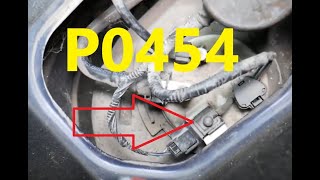
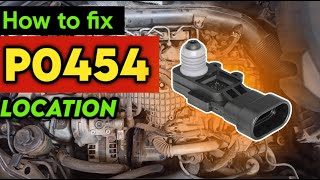
Locate the FTP sensor (often on the fuel tank or charcoal canister). Disconnect its electrical connector and inspect the pins for green/white corrosion or bent pins. Trace the wiring harness looking for frayed insulation. Inspect all visible EVAP rubber hoses for cracks or disconnections.
Tools: Flashlight, Inspection Mirror, Electrical Contact Cleaner (Intermediate) - Test the Sensor's Circuit with a Multimeter
With the sensor unplugged and the key ON (engine OFF), use a digital multimeter to probe the connector. Verify a steady 5-volt reference wire, a ground wire with less than 0.1 Ω of resistance to chassis ground, and a signal wire. A missing 5V reference or high ground resistance proves a wiring or PCM issue, not a bad sensor.
Tools: Digital Multimeter, Vehicle-specific Wiring Diagram (Advanced) - Perform a Smoke Test
Fill the EVAP system with harmless, UV-dyed smoke under low pressure (less than 1 PSI). Smoke escapes from any cracks in hoses, faulty seals, or bad components. This differentiates a true intermittent electrical fault from a physical leak causing intermittent pressure readings.
Tools: EVAP Smoke Machine (Advanced) - Test Purge and Vent Solenoids
Use a bi-directional scan tool to command the purge and vent solenoids open and closed. Listen for a sharp, audible click. Verify with the smoke machine that the valves seal completely when commanded closed. A sticking valve causes the pressure fluctuations that trigger P0454.
Tools: Bi-directional Scan Tool (Professional) - Analyze the Sensor Signal with an Oscilloscope
Back-probe the sensor's signal wire with an oscilloscope to graph the voltage in real-time. A good sensor shows a smooth, stable voltage. A P0454 fault appears as a 'noisy' waveform with sudden voltage spikes or dropouts, definitively proving an internal sensor or wiring failure.
Tools: Oscilloscope, Back-probe Leads (Professional)
When This Code Triggers (Freeze-Frame Conditions)
- Fuel Tank Level: 15-85% (The EVAP monitor will not run on a full or nearly empty tank.)
- Engine Coolant Temp (at startup): 39-86°F (4-30°C) (A 'cold soak' is required; engine temp must be close to ambient air temp.)
- Vehicle Speed: 40-65 mph (The test often runs during steady-state highway cruising.)
- Engine Load: 20-40% (Requires part-throttle, steady driving, not heavy acceleration or deceleration.)
Related Codes
- P0451 — P0451 indicates the sensor's performance is out of its expected range, while P0454 points specifically to an intermittent signal. P0451 shows a stable but incorrect voltage; P0454 shows a wildly jumping voltage.
- P0452 — P0452 indicates a consistently low voltage input (<0.1V). If the intermittent fault in P0454 becomes a permanent short to ground, P0452 triggers.
- P0453 — P0453 indicates a consistently high voltage input (>4.9V). An intermittent short to power triggers both P0453 and P0454 at different times.
- P0455 — P0455 signifies a large leak in the EVAP system. P0454 is an electrical circuit code. If a smoke test reveals a large leak, the root cause is P0455. If there are no leaks but voltage is erratic, the problem is P0454.
Climate & Environmental Factors
- High Humidity / Coastal Areas: Moisture accelerates corrosion on the fuel tank pressure sensor's electrical connector pins and ground connections, leading to intermittent signal faults.
- Cold Climates / Winter: Rubber and plastic EVAP hoses become brittle in extreme cold, leading to cracks that open and close with temperature changes.
- Road Salt Usage (Snow Belt): Road salt corrodes the sensor connector, wiring harnesses, and metal components of the vent/purge valves located underneath the vehicle.
- High Altitude: Changes in barometric pressure affect the EVAP system's self-test. A marginal sensor triggers a code more easily at high altitude due to pressure differentials.
How to Talk to a Mechanic About This Code
Say this: "I have a P0454 code, indicating an intermittent signal from the fuel tank pressure sensor. I'd like to schedule a diagnostic appointment. Please check the sensor's wiring and connector for issues and perform a smoke test to rule out physical leaks before recommending a sensor replacement."
This signals you understand the code is for an electrical circuit and that simply replacing the sensor might not be the fix. It directs the mechanic to perform a logical diagnostic process, reducing unnecessary parts swapping.
Avoid saying:
- 'My check engine light is on.'
- 'I have an EVAP code, just replace the pressure sensor.'
- 'Just fix whatever is wrong.'
Questions to ask before authorizing the repair:
- Did you find a physical leak with the smoke test?
- Did you test the sensor's wiring, ground, and 5-volt reference?
- What did the live data from the sensor look like? Was the voltage erratic?
- What is the warranty on the parts and labor for this repair?
Where to Take It: Dealer vs Independent vs Chain
- Dealer:
Best for: Vehicles still under an emissions warranty., Complex, manufacturer-specific EVAP system designs., If a known Technical Service Bulletin (TSB) exists for the P0454 code on your vehicle.
Downsides: Highest labor rates., May replace an entire assembly (e.g., fuel pump module) rather than diagnosing a simpler wiring fault. (Typical cost: +50% vs. baseline) - Independent Shop:
Best overall fit. A good independent shop with ASE-certified technicians effectively diagnoses and repairs a P0454 code at a better price than a dealer. Vet the shop by asking if they are equipped for EVAP and electrical system diagnostics.
Best for: Out-of-warranty vehicles where cost is a factor., Diagnosing common EVAP issues on popular domestic or Japanese models.
Downsides: Shop quality and diagnostic equipment vary. Ensure they have an EVAP smoke machine and electrical diagnostic experience. (Typical cost: +0% vs. baseline) - Chain Shop:
AVOID for diagnostics. While you can buy a gas cap here, do not authorize further diagnostic work for a P0454 code. The likelihood of an incorrect diagnosis is high.
Best for: Selling you a gas cap, which is the first and easiest thing to try.
Downsides: Technician skill varies dramatically., Often lack the advanced diagnostic tools (smoke machine, oscilloscope) needed for intermittent electrical faults., High pressure to make sales leads to misdiagnosis and unnecessary parts replacement. (Typical cost: -10% vs. baseline)
When to Walk Away From the Repair
If the estimated repair cost for the P0454 code exceeds 40-50% of your car's private-party value, evaluate your options.
- Car worth $3500, fix is $600: Fix it. The repair cost is well below the threshold and is necessary to pass emissions and sell the car.
- Car worth $2000, fix is $1500: Walk away. The repair costs 75% of the car's value. This is a classic 'money pit' scenario.
- Car worth $8000, fix is $1200: Fix it, but get a second opinion. A $1200 bill for an EVAP issue is high and indicates a dealer recommending a full fuel tank drop when a simpler fix exists.
What Scan Tool You Need for This Code
Minimum: A scanner that reads and graphs live data. A basic code reader is not sufficient for diagnosing an intermittent fault like P0454.
A $20 code reader only tells you the code exists. To diagnose P0454, you must see the fuel tank pressure sensor's voltage in real-time to confirm if it is erratic. Without live data, you will waste money replacing good parts.
Budget: BlueDriver Pro (~$120) — Connects to your smartphone and provides excellent live data graphing. You can watch the FTP sensor voltage and wiggle wires to see if the signal drops, which is key for finding intermittent faults.
Mid-range: Foxwell NT809 / XTOOL D7 (~$300-400) — Tablet-style scanners that offer bi-directional control. This allows you to command the purge and vent valves to open and close, letting you test them directly without removal.
Professional: Autel MaxiCOM MK808S / MK906BT (~$500-1200) — Offers full bi-directional control, advanced diagnostics, and OEM-level capabilities. These tools run specific EVAP system self-tests on command, invaluable for tracking down stubborn intermittent problems.
Rent vs buy: Auto parts stores scan codes for free, but their tools lack the live data or bi-directional features needed for a proper P0454 diagnosis. If you plan to DIY, investing in at least a budget pick with live data is essential.
How to Clear the Code After You Fix It
- Use an OBD-II scan tool to erase the fault codes.
- Ensure the fuel tank is between 1/4 and 3/4 full.
- Perform the specific drive cycle for the vehicle's EVAP monitor.
Drive cycle (~30 minutes): Start with a cold engine (sit for 8+ hours). Idle for 2-3 minutes. Drive at a steady speed between 45-65 mph for 10-15 minutes, avoiding sharp turns or large hills. Allow the vehicle to coast down without heavy braking. Park and idle for another 2 minutes. Repeat over 1-2 days.
Readiness monitors affected: Evaporative System (EVAP), Catalyst (CAT), Oxygen Sensor (O2S)
Before emissions retest: drive at least 50 miles to fully set monitors.
Watch out for:
- Disconnecting the battery clears codes but resets all readiness monitors, requiring a full drive cycle for all systems.
- The code returns immediately if the root cause was not repaired.
- Failing to meet drive cycle criteria (e.g., fuel level outside 15-85%, no cold start) prevents the EVAP monitor from running.
Will This Fail Emissions / State Inspection?
Yes — this code typically fails an OBD-II emissions inspection.
- California: An active P0454 code is an automatic test failure. CARB requires the EVAP readiness monitor to be 'Ready', so the vehicle must be repaired and driven through a complete drive cycle.
- New York: The NYVIP3 inspection includes an OBD-II scan. An illuminated Check Engine Light and a P0454 code result in an automatic failure.
- Texas: An emissions test is required for vehicles aged 2-24 years in 17 specific counties. A P0454 code causes the vehicle to fail the OBD-II portion of the inspection.
Most Commonly Affected Vehicles
- Chevrolet / GMC Silverado / Sierra (2007-2013) — Prone to fuel tank pressure sensor issues. TSB #SB-10-06-04-001 notes water enters the sensor's reference port, requiring a redesigned cover.
- Ford F-150 (2004-2010) — Commonly suffers from faulty FTP sensors and cracked purge valve hoses near the engine. Ford updated the sensor in later models.
- Toyota Camry (2010-2015) — Often related to vacuum leaks from cracked EVAP lines. The charcoal canister assembly is a known failure point.
- Nissan Altima / Maxima (2009-2016) — Frequently logs this code due to failures in the EVAP canister vent control valve, which sticks and fails to seal.
- Hyundai / Kia Sonata / Elantra / Optima (2011-2017) — Issues trace back to a faulty purge control valve (PCSV) or a failing fuel tank pressure sensor. The PCSV sticks, causing an intermittent vacuum leak.
- Subaru Outback / Forester (2010-2015) — Highly susceptible to corrosion on the pressure sensor connector or vent valve in regions with heavy road salt usage.
- Volkswagen / Audi Jetta / Passat / A4 (2012-2017) — Prone to this code due to a failing purge valve (N80 valve) rather than the sensor itself.
- Dodge / Chrysler Ram 1500 / Charger / 300 (2008-2016) — Experiences EVAP codes due to failure of the Leak Detection Pump (LDP) assembly, which includes a small pump and reed switch that fails intermittently.
Manufacturer-Specific Notes
- General Motors (Chevrolet, GMC): On many GM trucks, the fuel tank pressure sensor sits on top of the fuel pump module inside the gas tank, requiring a labor-intensive tank drop to replace.
- Ford: Ford vehicles feature a specific on-demand EVAP test procedure initiated with a high-end scan tool (IDS). TSB 19-2346 addresses reprogramming the PCM to correct false P0454 codes on specific models.
- Volkswagen/Audi: These brands experience P0454 frequently due to purge valve (N80) failures. The valve sticks internally, causing pressure fluctuations that the sensor correctly reads as intermittent.
- Nissan: Nissan offers an 'EVAP Emission Warranty Policy Enhancement' for 2003-2017 models, extending the warranty for a clogged EVAP vent tube to 15 years or 150,000 miles.
Real Owner Stories
2008 Suzuki Forenza with existing P0420
After replacing O2 sensors to fix a P0420 code, a new P0454 code appeared. The gas cap was replaced simultaneously because it no longer clicked.
What they tried:
- Replaced gas cap.
Outcome: The P0454 code appeared immediately after replacing the gas cap. The new, better-sealing cap revealed an underlying issue in the EVAP system that the old, leaky cap masked. The next suspected part was the Fuel Tank Pressure Sensor.
Lesson: Fixing one problem (a bad gas cap) often reveals another. A new cap properly pressurizes the system, exposing a pre-existing but previously undetected sensor or hose issue.
Ford Fiesta ST with intermittent CEL
The check engine light for P0454 appeared occasionally. The owner noted the car sputtered after refueling.
What they tried:
- Suspected the common Ford purge valve issue.
Outcome: Forum members confirmed the purge valve on Fords is a known failure point, with the internal gasket dissolving. The owner replaced the entire purge valve assembly, resolving the issue.
Lesson: Check vehicle-specific forums for common failure parts. For models like the Fiesta ST, the purge valve is a more likely culprit for P0454 than the pressure sensor.
Chevy Colorado with P0454
The P0454 code appeared. The owner replaced the gas cap, which did not immediately solve the problem.
What they tried:
- Replaced the gas cap.
Outcome: After replacing the gas cap with the fuel tank half full, the light remained on. After the owner filled the tank completely, the light went off. The fix was the gas cap.
Lesson: The EVAP system runs its self-test under specific conditions, including fuel level. After a repair, it takes a full drive cycle or a change in conditions (like refueling) for the computer to re-run the test.
Ford Fiesta ST with P0442 and P0454 plus fumes in cabin
The owner experienced EVAP codes along with smoke and fumes filling the cabin at highway speeds.
What they tried:
- Initially suspected a standard EVAP harness failure.
Outcome: The owner discovered a loose exhaust clamp allowed hot exhaust gases to blow onto the EVAP line, melting it and causing a significant vapor leak.
Lesson: If you have unusual symptoms like smoke or fumes along with an EVAP code, consider related mechanical damage. Check if recent, unrelated repairs affected nearby components.
How to Prevent This Code From Triggering
- Always tighten the gas cap until it clicks (Every fill-up) — Ensures the EVAP system is properly sealed, the first requirement for the system's self-tests to pass. A loose cap is the most common cause of EVAP codes.
- Avoid 'topping off' the fuel tank (Every fill-up) — Overfilling forces liquid fuel into the charcoal canister and vapor lines. This ruins the canister and causes blockages, leading to pressure sensor faults.
- Periodically inspect visible EVAP hoses (Every 15,000 miles or annually) — Rubber hoses become brittle and crack with age and heat exposure. A visual check catches obvious cracks before they become hard-to-find intermittent leaks.
- Clean sensor connectors in harsh climates (Every 30,000 miles) — In areas with high humidity or road salt, corrosion builds up on electrical connectors. Cleaning them with electrical contact cleaner prevents intermittent signal faults.
Frequently Asked Questions
Can I fix a P0454 code myself?
Yes, in many cases. The most common fix is tightening or replacing the gas cap, which is a simple DIY task. Leave complex diagnostics, like smoke testing or electrical circuit testing, to a professional to avoid misdiagnosis.
What is the most common misdiagnosis for P0454?
A common mistake is immediately replacing the fuel tank pressure sensor without proper diagnostics. Because the code indicates an 'intermittent circuit' fault, the issue is often damaged wiring or a poor ground. Always test the circuit and check for leaks before replacing parts.
How much does it cost to fix a P0454 code?
A shop diagnostic fee typically runs $100 to $180. A new OEM gas cap costs $25-$40, while replacing the fuel tank pressure sensor costs $250 to $550 depending on labor. Wiring repairs generally range from $150 to $400.
Will a P0454 code clear itself?
It might turn off temporarily if the computer misses the intermittent fault for a few drive cycles. However, the underlying issue remains. The light will return until you repair the root cause.
Can overfilling my gas tank cause a P0454 code?
Yes. Repeatedly 'topping off' your fuel tank forces liquid gasoline into the charcoal canister and EVAP lines. This saturates the canister, causing blockages and erratic pressure sensor faults.
My gas cap is new, why do I still have the code?
If a new OEM gas cap doesn't solve the issue, the problem lies elsewhere. Inspect the pressure sensor wiring, check EVAP hoses for cracks using a smoke test, and test the purge and vent valves. Avoid aftermarket gas caps, as they often fail to seal properly.
Can a weak battery cause a P0454 code?
Yes, though it is rare. A failing battery supplies unstable voltage to the vehicle's modules and sensors. This electrical noise causes the FTP sensor to send erratic signals, triggering the code alongside other electrical symptoms.
What is an EVAP smoke machine?
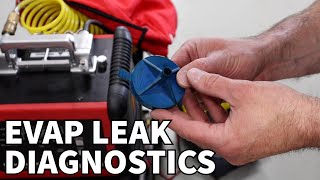
An EVAP smoke machine fills the evaporative emissions system with low-pressure, UV-dyed vapor. Technicians use it to visually locate leaks escaping from cracked hoses, bad seals, or faulty components. It is the fastest, most reliable way to find EVAP leaks.
Key Takeaways
- Code P0454 triggers when the EVAP system pressure sensor sends an erratic, fluctuating voltage signal to the powertrain control module.
- A loose or damaged gas cap causes 40-50% of P0454 codes, making it the first and cheapest component to check.
- You can safely drive with a P0454 code, but the vehicle will automatically fail state emissions tests until the EVAP monitor resets.
- Never replace the pressure sensor without testing the 5-volt reference and ground circuits with a multimeter, as damaged wiring frequently mimics a dead sensor.
Helpful Videos
![How to Fix P0454 Engine Code in 3 Minutes [2 DIY Methods / Only $4.44]](https://img.youtube.com/vi/fqnkH-NVm1w/mqdefault.jpg)


The information in this article is provided for general reference and educational purposes only. Vehicle specifications, procedures, and part compatibility can vary by production date, trim level, and region. Always consult your vehicle's factory service manual and verify part numbers before purchasing or performing repairs. Safety-critical components such as airbags, seat belts, and braking systems should be installed by a qualified professional.
- 🎬 Helpful Videos
- What Does P0454 Mean?
- Can I Drive With P0454?
- Common Causes
- Symptoms
- Diagnostic Flowchart
- Common Fixes & Costs
- DIY vs Professional
- Used vs. New Parts: Buying Guide
- What Happens If You Wait — Timeline
- Cost of Not Fixing It
- Diagnosis Steps
- When This Code Triggers (Freeze-Frame Conditions)
- Related Codes
- Climate & Environmental Factors
- How to Talk to a Mechanic About This Code
- Where to Take It: Dealer vs Independent vs Chain
- When to Walk Away From the Repair
- What Scan Tool You Need for This Code
- How to Clear the Code After You Fix It
- Will This Fail Emissions / State Inspection?
- Most Commonly Affected Vehicles
- Manufacturer-Specific Notes
- Real Owner Stories
- 2008 Suzuki Forenza with existing P0420
- Ford Fiesta ST with intermittent CEL
- Chevy Colorado with P0454
- Ford Fiesta ST with P0442 and P0454 plus fumes in cabin
- How to Prevent This Code From Triggering
- Frequently Asked Questions
- Can I fix a P0454 code myself?
- What is the most common misdiagnosis for P0454?
- How much does it cost to fix a P0454 code?
- Will a P0454 code clear itself?
- Can overfilling my gas tank cause a P0454 code?
- My gas cap is new, why do I still have the code?
- Can a weak battery cause a P0454 code?
- What is an EVAP smoke machine?
- Key Takeaways
- 🎟️ Get 5% Off