

P0452 on 2004-2009 Hummer H2: EVAP Pressure Sensor Low Input Causes and Fixes
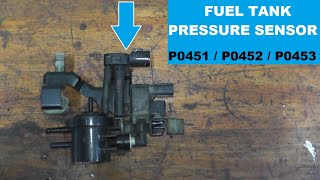
This code is almost always caused by a failed Fuel Tank Pressure (FTP) sensor. On the H2, you can replace this sensor in about 30 minutes without dropping the fuel tank by accessing it through the driver's side rear wheel well. Expect to pay $40-$100 for the part. The OEM part is ACDelco 16238399, which has been superseded by 19540725.
- P0452 on your Hummer H2 almost certainly points to a bad Fuel Tank Pressure (FTP) sensor.
- Don't let a shop charge you for dropping the fuel tank. The sensor can be replaced in under an hour by removing the driver's side rear wheel well liner.
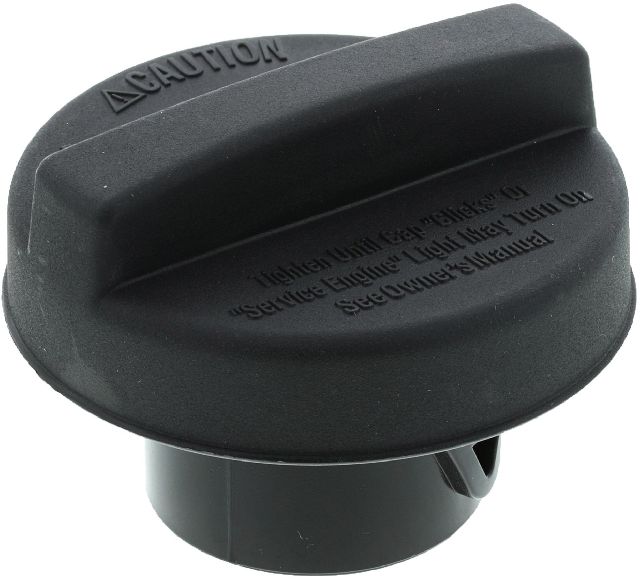
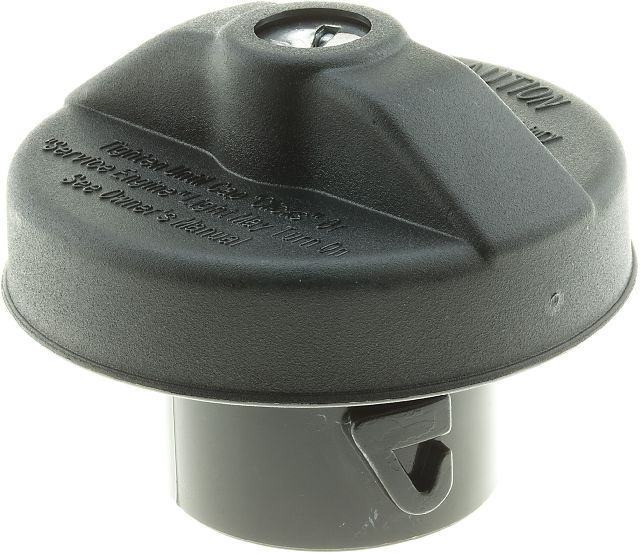
- Before buying parts, check that your gas cap is tight. It's a long shot, but it's a free and easy first step.
- A DIY replacement of the FTP sensor is very manageable for a beginner and can save you hundreds of dollars in labor costs.
- Use the OEM ACDelco part (16238399 or its successor 19540725) for best results, as aftermarket electronics can be less reliable.
What's Unique About the 2004-2009 Hummer H2
The Hummer H2 is a part of the GM family, so the P0452 code follows standard GM diagnostic logic. The most significant platform-specific detail is the service procedure for the Fuel Tank Pressure (FTP) sensor. While many vehicles require dropping the entire fuel tank to access this sensor, on the 2004-2009 H2, the sensor can be accessed by simply removing the driver's side rear wheel well liner, making it a surprisingly easy DIY fix. This procedure is widely corroborated in owner forums.
Symptoms You May Notice
- Check Engine Light is on
- Possible faint fuel smell, though less common than with large leak codes
- Failure to pass an emissions/smog test
- In some related GM vehicles, this code may appear alongside a malfunctioning fuel gauge, as the sensor and fuel level sender share a wiring harness.
- Replacing the EVAP vent solenoid or purge solenoid. While these parts are common failure items in the EVAP system, they typically set different codes (like P0446, P0449, or P0496) and are not the direct cause of a P0452 sensor circuit code.
Most Likely Causes
- Faulty Fuel Tank Pressure (FTP) Sensor 🔴 High Probability The sensor is exposed to constant pressure changes and fuel vapors, and like any electronic component, it can fail over time. This is the most common point of failure for this specific code on the H2 and related GM trucks.
How to confirm: Using a scan tool, observe the FTP sensor voltage. With the gas cap off, it should read around 2.5V. If it's stuck low (e.g., under 0.5V, often near 0.1V), the sensor has likely failed internally. You can also back-probe the sensor connector to verify the 5V reference and ground signals from the PCM.
Typical fix: Replace the Fuel Tank Pressure sensor. 🎬 Watch: How to test and replace the FTP sensor
Est. part cost: $40-$100 - Damaged Wiring or Poor Connection 🟡 Medium Probability The sensor wiring is located on top of the fuel tank near the wheel well, exposing it to road debris, moisture, and potential corrosion or chafing. The signal wire can break near the sensor connector.
How to confirm: Visually inspect the wiring harness and connector leading to the FTP sensor for any breaks, corrosion, or loose pins. Use a multimeter to check for continuity, a 5V reference, and ground at the connector. A broken signal wire was the culprit for one owner on a similar GM truck platform. 🎬 See a diagnostic walkthrough on a similar GM truck
Typical fix: Repair the damaged section of the wiring harness or clean/replace the connector. A simple butt splice may be all that is needed if a wire is broken.
Est. part cost: $5-$50 - Loose or Faulty Gas Cap ⚪ Low Probability While a bad gas cap typically causes a large leak code (P0455), it's a simple and free check. An improperly sealing cap can cause the system to fail its pressure test. However, for a 'low input' circuit code like P0452, this is an unlikely cause.
How to confirm: Ensure the gas cap is tight and clicks several times. Inspect the cap's seal for cracks or damage. If in doubt, a new gas cap is inexpensive.
Typical fix: Tighten or replace the gas cap.
Est. part cost: $15-$30
Rare But Worth Checking
- Faulty Powertrain Control Module (PCM): This is extremely rare. The PCM should only be considered after all other possibilities, including the sensor and wiring, have been exhaustively tested and ruled out.
Diagnosis Steps
- Retrieve the code with an OBD-II scanner to confirm P0452 is present.
- Check the gas cap. Ensure it is tight and the seal is in good condition. Clear the code and drive to see if it returns.
- If the code returns, gain access to the Fuel Tank Pressure (FTP) sensor by removing the driver's side rear wheel well liner. Some owners report being able to do this without even removing the wheel.
- Visually inspect the sensor's connector and wiring for any obvious damage, corrosion, or loose connections. Pay close attention to the wires right at the connector for breaks.
- With a scan tool, monitor the live data for the FTP sensor voltage. A normal reading with the gas cap off is around 2.5-2.7 volts. A reading below 1 volt (especially near 0.1V) strongly suggests a faulty sensor or a wiring issue.
- If you have a multimeter, disconnect the sensor and test the harness. You should have a 5-volt reference wire, a ground wire, and a signal wire. If 5V and ground are present, the wiring from the PCM is likely okay.
- If the wiring checks out and the voltage reading is stuck low, the FTP sensor is faulty and should be replaced.
Parts You'll Likely Need
- Fuel Tank Pressure (FTP) Sensor
(OEM #16238399 (superseded by 19540725))— This sensor is the most common failure point for a P0452 code, as it directly measures the pressure value that the code reports as faulty.
Trusted brands: ACDelco (OEM), Bosch, NTK, Dorman
OEM price range: $50-$100
Aftermarket price range: $40-$75
Platform-Specific Known Issues
- A significant advantage for H2 owners is the ability to replace the FTP sensor without dropping the fuel tank. By removing the driver's side rear wheel well liner, the sensor on top of the fuel pump module becomes accessible. This turns a potentially expensive, multi-hour job into a quick DIY repair that can be done in 15-30 minutes.
Mechanic-Grade Diagnostic Values
- FTP Sensor Signal Voltage (KOEO, Gas Cap Off) — expected: ~1.5V - 2.7V (Represents atmospheric pressure). Failure: Voltage is less than 0.1V for more than 5 seconds.
- FTP Sensor 5V Reference Circuit (KOEO, Connector Unplugged) — expected: ~5.0 Volts. Failure: Voltage is significantly lower than 5.0V, indicating an open/short in the reference wire or a PCM issue.
- FTP Sensor Ground Circuit (KOEO, Connector Unplugged) — expected: Near 0 Ohms to chassis ground. Failure: High or infinite resistance (OL), indicating a broken ground wire.
- FTP Signal Wire Short-to-Ground Test — expected: Infinite resistance (OL) between the signal pin at the connector and chassis ground.. Failure: Low resistance (near 0 Ohms), indicating the signal wire is shorted to ground.
Scan Tool Commands That Help
- GM Tech2 / Professional Scan Tool: EVAP System Test — This is a bidirectional command that seals the EVAP system (commands vent solenoid closed) and then commands the purge solenoid to open, drawing a vacuum. It allows a technician to monitor the FTP sensor's voltage response to verify if it's reading the change in pressure correctly. It's used to confirm sensor functionality after wiring checks are complete.
- GM Tech2 / Professional Scan Tool: EVAP Purge/Seal — This function allows for individual control of the EVAP solenoids. A technician can command the system to seal and then manually apply vacuum or pressure with an external tool (like a smoke machine) to see if the FTP sensor reading changes accordingly on the scan tool's live data screen. This isolates the sensor from the rest of the EVAP system components for testing.
Wiring & Ground Locations
- FTP Sensor Connector — On top of the fuel pump module, accessible through the driver's side rear wheel well.. This is the primary connection point to test. The three wires are typically: Pin A (Gray): 5-volt reference from PCM. Pin B (Dark Green/White or similar): Signal wire to PCM. Pin C (Black): Low reference/ground. Verifying voltage and ground at this connector is a key diagnostic step.
- G401 — At the left rear frame body mount.. This is a primary chassis ground point for several rear-body components, including the fuel pump module which contains the FTP sensor. A corroded or loose G401 can cause an intermittent or faulty ground for the sensor, leading to a P0452 code even if the sensor itself is good.
- Fuel Tank Filler Ground — At the left rear frame body mount, often near G401.. This ground is for static electricity dissipation but is part of the overall fuel system grounding scheme. While less likely to cause a sensor circuit code, ensuring it's clean and tight is good practice when troubleshooting any fuel tank-related electrical issue.
Real Owner Repair Stories
- GM-Trucks.com Forum User (2018 GMC Sierra (Similar GMT platform)) — P0452 - Fuel tank pressure sensor low voltage.
❌ Tried (didn't work) Initial plan was to drop the tank or remove the bed based on common repair procedures.
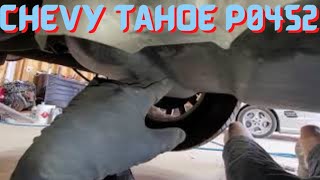
✅ What actually fixed it The owner was able to reach the sensor by lying on their back and going up between the frame and fuel tank. The sensor itself tested good. The actual cause was a broken signal wire in the harness, very close to the FTP sensor connector. A simple butt splice repair on the broken wire resolved the P0452 code without replacing any parts. - YouTube video on a similar Chevy Tahoe (Chevrolet Tahoe (Similar GMT platform)) — P0452 and P0456 codes.
❌ Tried (didn't work) Replacing the sensor did not fix the issue for some owners.
✅ What actually fixed it The problem was found to be a bad ground connection within the wiring harness. The fix was to cut the black ground wire going to the FTP sensor, attach a new jumper wire, and connect it directly to a clean chassis ground point. This provided a solid ground for the sensor and resolved the code.
"I Checked Everything" — The Actual Cause
- A P0452 is a circuit code, not a leak code, so a smoke test is not the primary diagnostic step and is expected to pass. If a technician performs a smoke test and finds no leaks, it does not rule out the cause of P0452. The problem lies within the electrical circuit (sensor, wiring, or PCM). The next step should always be to test the circuit's voltage and ground, not to continue searching for a physical leak.
OEM Part Supersession History
16238399→19540725— Standard part number update by GM/ACDelco for inventory and potential minor design revisions.
Heads up: There are no known incompatibilities; 19540725 is the direct, correct replacement for 16238399 for the specified model years.
Model Year Variations Within This Range
- 2008-2009: In 2008, the H2 received a major powertrain update to the 6.2L V8 and 6L80E transmission. While many chassis-mounted EVAP components remained the same, some sources suggest the FTP sensor may be different for the 2008-2009 models compared to the 2003-2007 models. It is critical to verify the part number by VIN for these later years, as the fuel pump module it mounts to may have changed.
Diagnostic Flowchart
Other Known Issues on This Vehicle
Issues unrelated to this code that are worth knowing about as an owner of this generation:
- Rear Air Suspension Failure 🔴 High — Very common. Airbags develop dry rot and leak, and the compressor burns out from overuse. Many owners convert to a coil spring suspension.
- 4L65-E Transmission Weakness (2003-2007) 🔴 High — Common under heavy use. Failures include harsh 1-2 shifts (accumulator piston), slipping, or complete loss of gears. The 6L80-E in 2008-2009 models is more durable.
- Cracked Upper Dashboard 🟠 Medium — Widespread issue, particularly on 2008-2009 models, due to sun exposure. The plastic becomes brittle and cracks, causing rattles. Replacement parts are rare.
- HVAC Blend Door Actuator Failure 🟠 Medium — A very common complaint across all model years, resulting in incorrect air temperature or airflow direction from vents.
- Instrument Cluster Failure 🟡 Low — Common for gauges (especially speedometer/tachometer) to become erratic or fail, and backlighting to go out. Requires sending the cluster for a rebuild.
- Steering Wheel Position Sensor Failure 🟡 Low — A frequently reported failure that triggers the 'Service Stability System' message and disables traction control.
Used vs. New Parts: Buying Guide for This Vehicle
When a used part is the smart pick: For this repair, obtaining a used part from a junkyard is NOT recommended. The FTP sensor is an electronic component prone to failure from age and exposure to fuel vapors. The risk of getting a part that has failed or is near the end of its service life is very high.
What to inspect on the donor part:
- Not applicable as used parts are not advised.
OEM-only on this vehicle (don't cheap out):
- Fuel Tank Pressure (FTP) Sensor
Aftermarket brands forum-validated for this vehicle:
- ACDelco (OEM)
Brands owners have reported issues with on this vehicle:
- While brands like Dorman or other store brands are available and may be cheaper, forum discussions for GM trucks of this era frequently advise against using aftermarket electronic sensors for the EVAP system. Reliability can be questionable, sometimes leading to the code returning prematurely. Sticking with the ACDelco OEM part is the safest bet for a one-time repair.
Real Owner Stories
Aggregated from forums and TSBs cited above. Mileages and costs reflect what owners reported in those sources.
2006 Hummer H2
Symptoms: Check Engine Light with code P0452 appeared after changing the gas cap.
What fixed it: Replaced the fuel tank pressure (FTP) sensor located on top of the fuel pump assembly. The owner noted it was a $20 part and a 15-minute job accessed by removing the rear inner fender liner, without needing to drop the fuel tank.
Source hint: HummerForums.com - 'P0452 code Fuel pressure sensor replacement tip-'
Hummer H2 (2004-2009)
Symptoms: Check Engine Light with code P0452.
What fixed it: Replaced the fuel tank pressure sensor, describing it as a 'super easy fix' that took 15 minutes by accessing it through the wheel well.
Source hint: HummerForums.com - 'Replacing fuel tank pressure sensor' (2014)
Related GM Truck
Symptoms: Check Engine Light with code P0452.
What fixed it: Found and repaired a broken signal wire at the FTP sensor connector by splicing the wire.
Source hint: GM-Trucks.com - 'Fuel Tank Pressure Sensor (P0452) - Troubleshooting & Recalls' (2017)
Related OBD-II Codes
Frequently Asked Questions
Do I have to drop the fuel tank to replace the FTP sensor for a P0452 code on my Hummer H2?
What voltage should the Fuel Tank Pressure sensor show on a scan tool when diagnosing P0452?
Could a loose gas cap cause the P0452 code on my H2?
Where should I check for wiring damage that could cause a P0452 code?
My fuel gauge is also acting strange along with the P0452 code. Are these issues related?
Is a P0452 diagnostic guide for a Chevrolet Tahoe or GMC Yukon useful for my Hummer H2?
Helpful Videos

We Have This Part in Stock


The information in this article is provided for general reference and educational purposes only. Vehicle specifications, procedures, and part compatibility can vary by production date, trim level, and region. Always consult your vehicle's factory service manual and verify part numbers before purchasing or performing repairs. Safety-critical components such as airbags, seat belts, and braking systems should be installed by a qualified professional.
- Hummer H2:
- 🎬 Helpful Videos
- 🛍️ Shop This Part
- What's Unique About the 2004-2009 Hummer H2
- Symptoms You May Notice
- Most Likely Causes
- Rare But Worth Checking
- Diagnosis Steps
- Parts You'll Likely Need
- Platform-Specific Known Issues
- Mechanic-Grade Diagnostic Values
- Scan Tool Commands That Help
- Wiring & Ground Locations
- Real Owner Repair Stories
- "I Checked Everything" — The Actual Cause
- OEM Part Supersession History
- Model Year Variations Within This Range
- Diagnostic Flowchart
- Other Known Issues on This Vehicle
- Used vs. New Parts: Buying Guide for This Vehicle
- Real Owner Stories
- 2006 Hummer H2
- Hummer H2 (2004-2009)
- Related GM Truck
- Related OBD-II Codes
- Frequently Asked Questions
- 🎟️ Get 5% Off