

P0449 on 2011-2016 Kia Sportage: EVAP Vent Valve Circuit Causes and Fixes
For the 2011-2016 Kia Sportage, code P0449 almost always points to a failed EVAP Canister Close Valve (also called a vent valve/solenoid). This is a common failure item, and the repair is straightforward for a DIYer, with the part costing between $40 and $90. Before replacing the valve, it is critical to inspect the associated vent hoses for blockages from spider webs or other debris, a known issue on Kia platforms.
- P0449 on a 2011-2016 Sportage is an electrical circuit code for the EVAP vent valve, not a leak code.
- The most likely cause is a failed Canister Close Valve (part # 31453-3K500), located under the rear of the car.
- Before replacing the valve, always inspect the attached rubber hoses and air filter box for blockages, especially spider webs, which is a known issue on Kia vehicles.
- Do not waste money replacing the gas cap or the purge valve in the engine bay for this specific code.
- This repair is considered DIY-friendly and typically requires basic hand tools.
What's Unique About the 2011-2016 Kia Sportage

While the vent valve itself is a common failure point on many cars, Kia has issued Technical Service Bulletins (TSBs) for similar models like the Sorento (TSB #PS162R1), warning that spider webs and other debris can clog the fresh air intake hose connected to the valve assembly. This can restrict airflow and sometimes trigger circuit codes like P0449. Before replacing the valve, it's a known Kia-specific issue to check the vent hoses for blockages. For other models like the Rio and Soul, Kia also issued TSBs for a faulty 'air drain case' near the filler neck that can cause this code, reinforcing that blockages in the vent path are a common cause across the brand.
Symptoms You May Notice
- Check Engine Light is on
- Difficulty refueling (fuel pump nozzle clicks off prematurely)
- Slight decrease in fuel economy (uncommon)
- Fuel odor (rare)
- Replacing the gas cap. A faulty gas cap typically causes an EVAP leak code (like P0455 or P0456), not a circuit malfunction code like P0449.
- Replacing the purge valve. The purge valve is a different component located in the engine bay and has its own specific trouble codes (e.g., P0441). P0449 points specifically to the vent valve/circuit at the rear of the vehicle.
Most Likely Causes

- Failed EVAP Canister Close Valve (Vent Valve) 🔴 High Probability The solenoid is exposed to the elements under the rear of the vehicle, making it susceptible to corrosion and electrical failure over time. It is a known high-failure item across the Hyundai/Kia lineup.
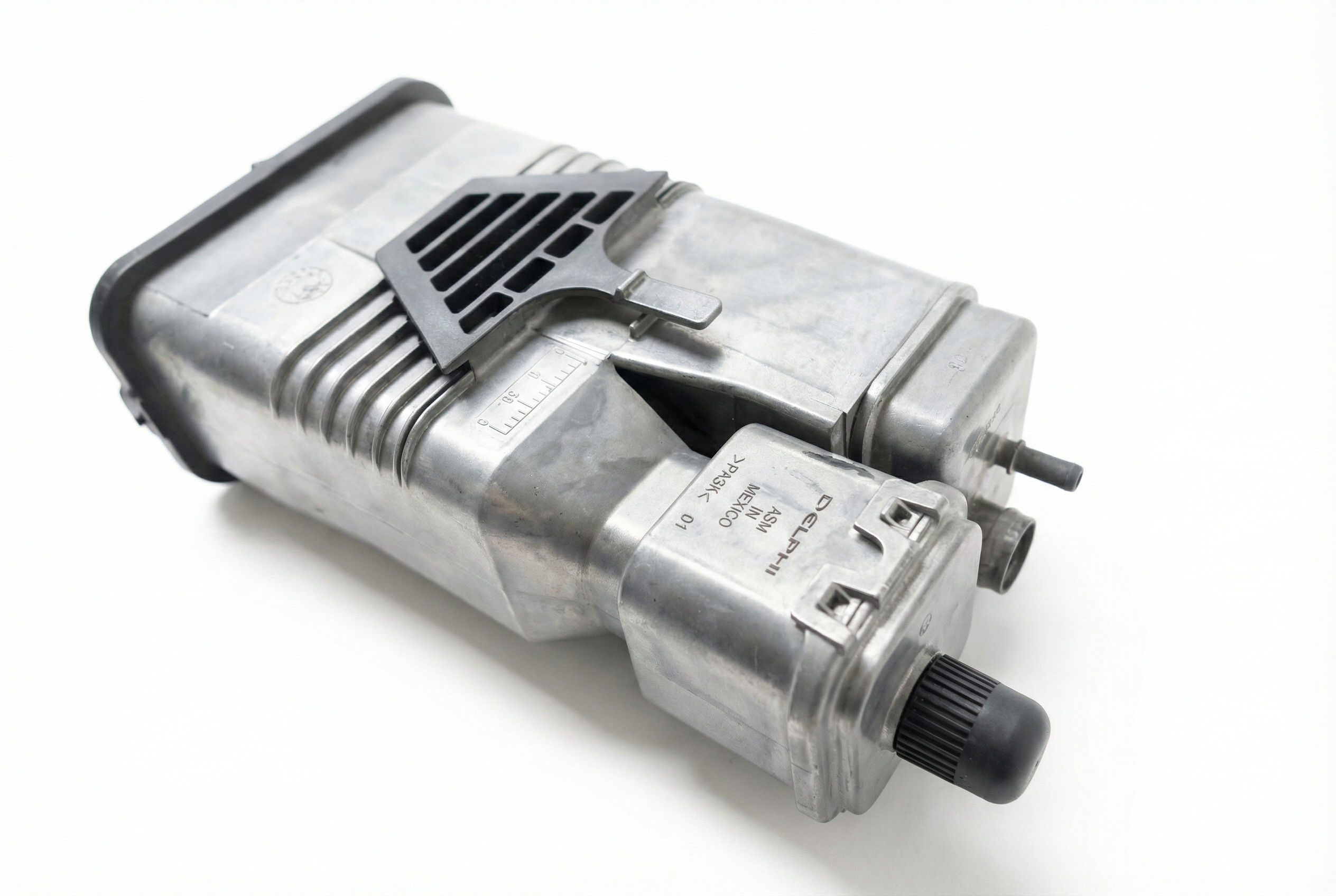
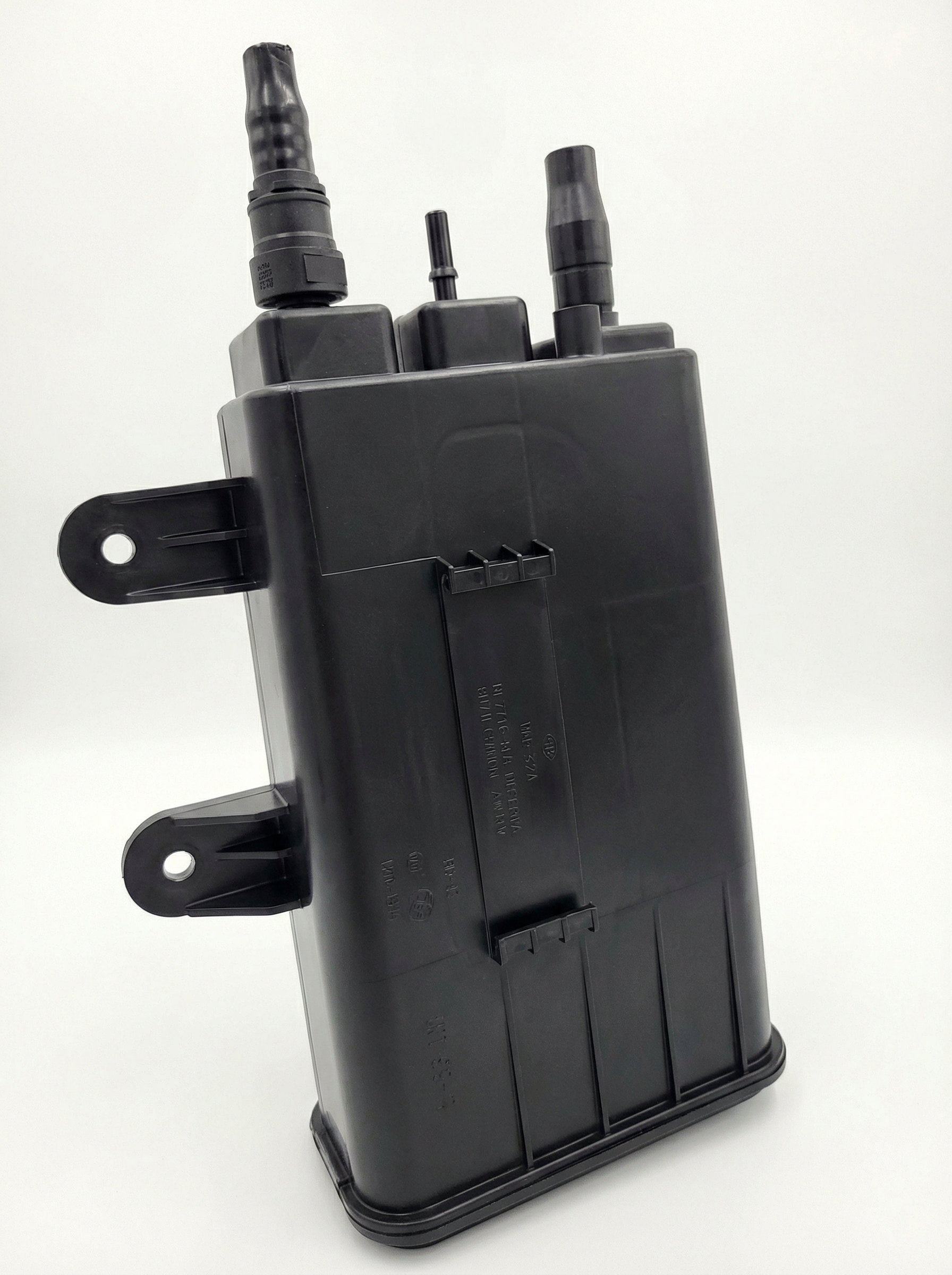
How to confirm: Locate the valve on or near the charcoal canister at the rear of the vehicle. Use a scan tool to command the valve on and off; a healthy valve should make an audible click. Alternatively, use a multimeter to check for resistance across the valve's two pins (an open circuit or 'OL' reading indicates failure). You can also apply 12V directly to the pins to see if it actuates. A YouTube video on a 2016 Sportage shows the valve is held by a single, often rusty, bolt and two hose clamps.
Typical fix: Replace the canister close valve assembly.
Est. part cost: $40-$90 - Blocked EVAP Vent Hose or Air Filter 🟡 Medium Probability Kia has noted in TSBs for similar platforms (Sorento, Rio, Soul) that spiders can build nests inside the vent hose assembly, causing a blockage that can trigger this code. Dust and debris can also clog the fresh air filter box (sometimes called the 'air drain case') connected to the vent valve inlet hose.
How to confirm: Disconnect the vent hose from the canister close valve and inspect it visually. Also, inspect the air inlet filter box. Attempt to blow low-pressure air through the hose and filter to check for obstructions. TSBs suggest using a pipe cleaner to clear nests, warning that compressed air may not be effective.
Typical fix: Clean or replace the vent hose and/or the air drain case/filter.
Est. part cost: $0-$30 - Damaged Wiring or Connector ⚪ Low Probability The wiring harness is located under the vehicle and is exposed to road debris, moisture, and corrosion, which can lead to breaks, shorts, or corroded pins in the connector.
How to confirm: Visually inspect the wiring harness leading to the canister close valve for any signs of chafing, breaks, or corrosion. Unplug the connector and check for bent or corroded pins. Use a multimeter to check for 12V power and ground at the connector with the key on. A persistent code after valve replacement points towards an intermittent wiring issue. 🎬 Watch: How to test and repair EVAP vent solenoid wiring
Typical fix: Repair the damaged section of wire or replace the connector pigtail.
Est. part cost: $5-$25
Rare But Worth Checking
- Faulty Powertrain Control Module (PCM): This is extremely rare. The PCM should only be considered after all other possibilities, including the valve, wiring, and hoses, have been thoroughly tested and ruled out.
Diagnosis Steps

- Read the code with an OBD-II scanner to confirm P0449 is the only code present.
- Locate the EVAP charcoal canister and the attached Canister Close Valve (CCV) at the rear of the vehicle, near the fuel tank and spare tire area. On the Sportage, it is typically mounted to a bracket near the canister.
- Visually inspect the electrical connector and wiring going to the CCV for any obvious damage, corrosion, or loose connections.
- Disconnect the vent hose from the CCV and inspect it and the attached air filter box for any blockages like dirt, debris, or spider webs, a known issue on Kias.
- With the key in the 'On' position, use a multimeter to verify that one pin on the connector has 12V power and the other has ground (or is ground-switched by the PCM).
- If power and ground are good, test the valve itself. Use a scan tool to command the valve to close and listen for a click. If no scan tool is available, apply 12V and ground directly to the valve's pins to see if it clicks.
- If the valve does not click, it has failed and needs to be replaced.
- If the valve clicks but the code returns, the problem is likely an intermittent wiring issue or a blockage in the vent system that was missed.
- After repairs, clear the code and perform a drive cycle to ensure the fix was successful.
Parts You'll Likely Need

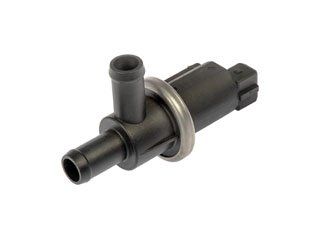
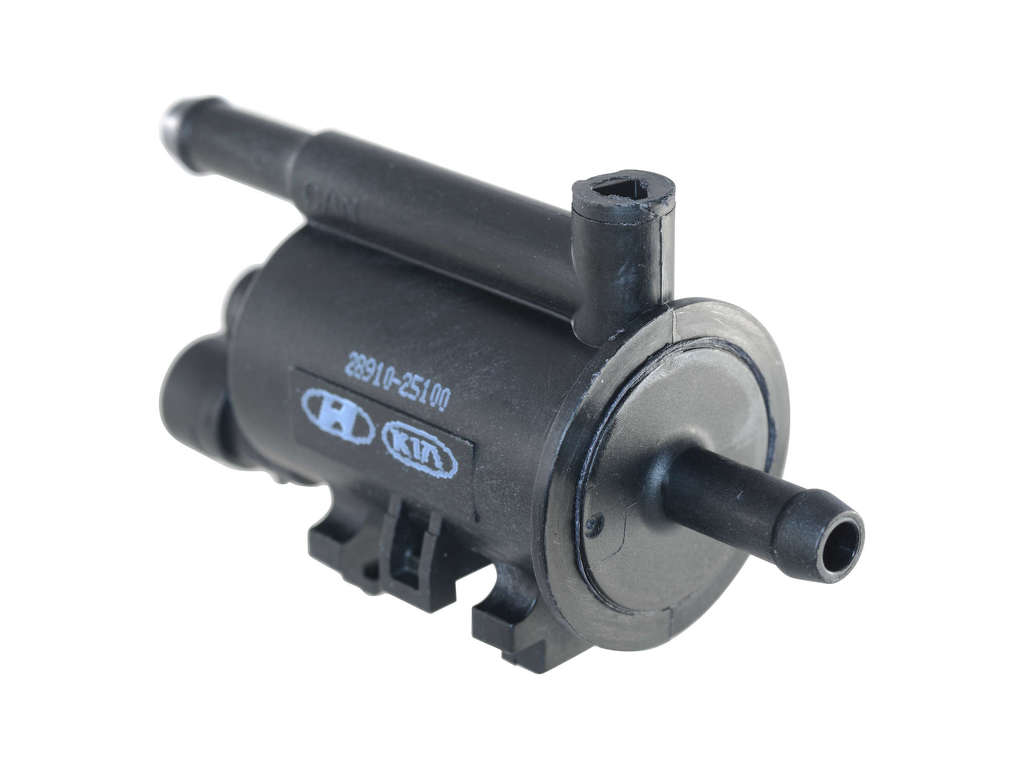
- Canister Close Valve (Vent Valve Solenoid)
(OEM #31453-3K500)— This is the component whose electrical circuit is monitored by the P0449 code. The internal solenoid is the most common failure point.
Trusted brands: Kia / Hyundai MOBIS (OEM), Standard Motor Products (CVS148), Dorman (911-811), Beck/Arnley (046-0103)
OEM price range: $60-$90
Aftermarket price range: $40-$70
Technical Service Bulletins (TSBs) & Recalls
- TSB #PS162R1 (Sorento) - Warns that spider webs can build up in the EVAP vent lines, causing a restriction that triggers code P0449 or P2422. This is highly relevant to the Sportage.
- TSB #PS532 (Sportage) - Covers newer Sportage models (2017+) for P0449, also advising technicians to check for flow restrictions like spider nests if the valve and circuit test fine.
- Kia Service Bulletin #038 - Addresses P0449 on Rio, Soul, and Forte models, identifying a faulty 'air drain case' (the vent's air filter box) as the primary cause, not the valve itself.
Platform-Specific Known Issues
- As noted in TSBs for other Kia models, the vent hose design can attract spiders, leading to nests that block the hose and may contribute to setting this code. This should be the first inspection before buying parts.
- A YouTube video creator for a 2016 Sportage noted that finding the part listed specifically for the Sportage can be difficult, but confirmed it is a common part shared with other Kia/Hyundai models, which is corroborated by part supplier data.
Mechanic-Grade Diagnostic Values
- Canister Close Valve (CCV) Solenoid Coil Resistance — expected: 20-40 Ohms (general spec). Failure: An infinite resistance reading (Open Loop, 'OL') indicates a broken internal coil. A reading significantly outside the expected range also suggests failure.
- CCV Connector Voltage (Key On, Engine Off, Connector Plugged In) — expected: ~12 Volts (Battery Voltage) on BOTH pins of the connector.. Failure: If you measure ~12V on the power feed pin but 0V on the PCM control side pin, it indicates an open circuit inside the solenoid's coil. This is a definitive test for a bad solenoid when wiring is known-good.
Scan Tool Commands That Help
- Kia GDS (Global Diagnostic System) or equivalent: Forced Actuation / Output Test for EVAP Canister Close Valve — This bidirectional command allows a technician to manually command the CCV to open and close while listening for an audible click. It is the most direct way to confirm if the valve is electrically functional, helping to isolate the fault to the valve itself versus a wiring or PCM driver issue.
Wiring & Ground Locations

- CCV Connector — On the Canister Close Valve itself, located under the rear of the vehicle near the charcoal canister.. This 2-pin connector is the primary test point. One pin receives battery voltage (power), and the other is the control wire that the PCM switches to ground to activate the solenoid. All electrical tests for the valve circuit (voltage, resistance) are performed here.
- Main Chassis Ground — While not specific to the CCV, a common chassis ground point on Kias is a bolt with multiple wires attached, located near the interior fuse panel (kick panel area).. Although a less likely cause, a poor main ground for the PCM or related circuits can cause a variety of erratic electrical faults, including circuit codes like P0449. This should be checked if direct testing at the CCV is inconclusive.
Real Owner Repair Stories
- iATN (International Automotive Technicians Network) Post (Kia (model not specified, but behavior is relevant)) — Check Engine Light with code P0449.
❌ Tried (didn't work) Replacing the canister vent valve once. The code returned after three weeks.
✅ What actually fixed it A second diagnosis found water inside the new vent valve and also inside the fuel tank air filter. Replacing the valve again and clearing the water from the system resolved the issue permanently. This points to a root cause of water intrusion into the EVAP system, which can destroy the solenoid. - YouTube video by user 'i've got a' (2016 Kia Sportage AWD) — P0449 EVAP code.
❌ Tried (didn't work) A previous attempt was made to replace a different component in the engine bay (likely the purge valve).
✅ What actually fixed it The user located and replaced the correct component, the Canister Vent Valve Solenoid, at the rear of the vehicle near the gas tank. The user noted it was difficult to find the part listed for a Sportage specifically, but a common Kia/Hyundai part worked. The fix involved removing one rusty bolt and two hose clamps.
OEM Part Supersession History
31453-3K500→31453-3K700— Part revision or manufacturer change.
Heads up: Some parts vendors show this supersession. However, other OEM parts distributors show the reverse, with 31453-3K700 being replaced by 31453-3K500. This indicates potential confusion in catalogs. Always verify the correct part number for your specific vehicle using the VIN before ordering.31453-3K600→31453-3K600FFF— Part revision.
Heads up: Part number 31453-3K600 is also listed for the 2010-2015 Sportage by some vendors, adding another layer of potential part variation within the generation. VIN verification is critical.
Diagnostic Flowchart
Other Known Issues on This Vehicle
Issues unrelated to this code that are worth knowing about as an owner of this generation:
- Theta II Engine Failure 🔴 High — Widespread across 2011-2019 models with 2.0L and 2.4L GDI/MPI engines. Failures can occur at various mileages, often due to premature connecting rod bearing wear from manufacturing debris. (Ref: Multiple recalls (e.g., NHTSA 17V-224) and a class-action lawsuit settlement led to extended lifetime warranties for the engine short block for qualifying vehicles.)
- Engine Oil Leaks 🟡 Low — Some 2011-2012 models are prone to oil leaks from the oil pan gasket or the oil pressure sensor. (Ref: NHTSA recall 11V-530 for 2011-2012 models addresses potential oil pan leaks.)
- Brake Light Switch Failure 🟠 Medium — Common on early models (2011). A faulty switch can prevent brake lights from illuminating and may also affect cruise control and push-button start functionality. (Ref: NHTSA recall 13V-114 addresses this issue for 2011 Sportage models.)
- Engine Compartment Fire Risk 🔴 High — Affects various model years. Can be caused by short circuits in the Hydraulic Electronic Control Unit (HECU) or issues with the engine oil pump assembly. (Ref: Multiple recalls have been issued, including for HECU short circuits (NHTSA 21V-533) and engine compartment fires while driving (NHTSA 20V-750).)
- AWD Coupler/Rear Differential Seal Leaks 🟠 Medium — On all-wheel-drive models, the seals on the AWD coupling unit and rear differential can fail prematurely, leading to fluid leaks and potential damage to the AWD system.
Used vs. New Parts: Buying Guide for This Vehicle
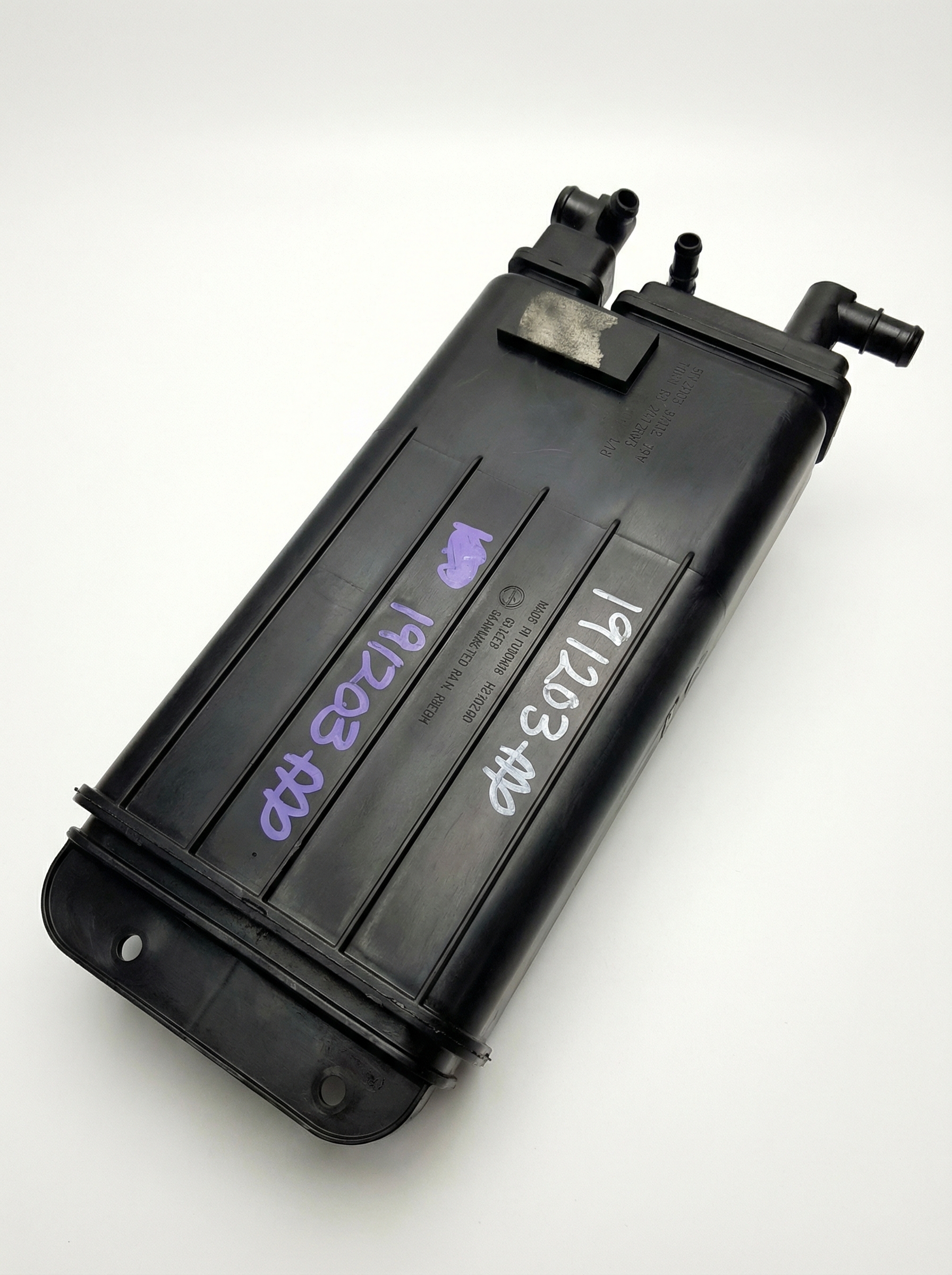
When a used part is the smart pick: A used Canister Close Valve is generally not recommended. It is a relatively low-cost electronic and mechanical part that is exposed to harsh under-vehicle conditions (water, salt, debris). The failure rate is high, and the remaining lifespan of a used part from a junkyard is a significant gamble for the amount of labor involved.
Donor-vehicle mileage cap: roughly under 50000 miles for the part to have meaningful remaining life.
What to inspect on the donor part:
- Check for a donor vehicle from a dry, non-salt-belt region to minimize corrosion.
- Inspect the electrical connector pins for any signs of green or white corrosion.
- Examine the plastic housing for cracks or physical damage.
- If possible, test the resistance across the two pins with a multimeter; it should fall within the 20-40 Ohm range.
Aftermarket brands forum-validated for this vehicle:
- Standard Motor Products (SMP)
- Dorman
- Beck/Arnley
Brands owners have reported issues with on this vehicle:
- No-name, ultra-low-cost parts from online marketplaces can have high defect rates and may not last. Sticking to reputable aftermarket brands or OEM is safer.
Real Owner Stories
Aggregated from forums and TSBs cited above. Mileages and costs reflect what owners reported in those sources.
Kia Sportage (year not specified)
Symptoms: The check engine light came on suddenly while driving, and a scan revealed code P0449.
What fixed it: Replaced the original EVAP canister close valve.
Source hint: DRIVE2 owner report
Related OBD-II Codes
Frequently Asked Questions
I heard spiders can cause this P0449 code on Kias. Is that true for my 2011-2016 Sportage?
Where is the EVAP canister close valve located on my Sportage?
I replaced the vent valve, but the P0449 code came back. What else could it be?
The auto parts store is having trouble finding the vent valve for my 2016 Sportage. Is it a special part?
Besides the check engine light, what other symptoms might I notice with a P0449 code?
Is this EVAP system problem related to the major Theta II engine failures on the Sportage?
Helpful Videos


Used OEM Parts in Stock
New Aftermarket Parts Available


The information in this article is provided for general reference and educational purposes only. Vehicle specifications, procedures, and part compatibility can vary by production date, trim level, and region. Always consult your vehicle's factory service manual and verify part numbers before purchasing or performing repairs. Safety-critical components such as airbags, seat belts, and braking systems should be installed by a qualified professional.
- Kia Sportage:
- 🎬 Helpful Videos
- 🛍️ Shop This Part
- What's Unique About the 2011-2016 Kia Sportage
- Symptoms You May Notice
- Most Likely Causes
- Rare But Worth Checking
- Diagnosis Steps
- Parts You'll Likely Need
- Technical Service Bulletins (TSBs) & Recalls
- Platform-Specific Known Issues
- Mechanic-Grade Diagnostic Values
- Scan Tool Commands That Help
- Wiring & Ground Locations
- Real Owner Repair Stories
- OEM Part Supersession History
- Diagnostic Flowchart
- Other Known Issues on This Vehicle
- Used vs. New Parts: Buying Guide for This Vehicle
- Real Owner Stories
- Kia Sportage (year not specified)
- Related OBD-II Codes
- Frequently Asked Questions
- 🎟️ Get 5% Off