

OBD-II Code P2422: EVAP Vent Valve Stuck Closed
What P2422 means, why it triggers, and how to fix it
- Inspect the EVAP vent hose for spider webs or dirt before buying parts, as clearing this physical blockage resolves the code for free on many vehicles.
- Expect to fail your state emissions test immediately, as P2422 prevents the EVAP readiness monitor from completing its self-test.
- Do not confuse the EVAP vent valve near the gas tank with the purge valve in the engine bay; replacing the wrong part is a common DIY mistake.
- Stop 'topping off' your gas tank after the pump clicks off, as this forces liquid fuel into the charcoal canister and causes a $300-$1,000 replacement.
- Use a bi-directional scan tool to command the vent valve open and closed; if you hear a click but the code persists, the hose or canister is physically blocked.
What Does P2422 Mean?

Your car's Powertrain Control Module (PCM) detected the evaporative emissions (EVAP) vent valve is stuck closed. The EVAP system captures gasoline fumes from the fuel tank and directs them to the engine to be burned. The vent valve normally stays open to allow fresh air in, closing only during self-tests. Code P2422 triggers when the PCM commands the valve open, but the Fuel Tank Pressure (FTP) sensor detects the system remains sealed.
Technical definition: The official SAE/OBD-II definition is "Evaporative Emission System Vent Valve Stuck Closed." The powertrain control module (PCM) commanded the vent valve to open, but the Fuel Tank Pressure (FTP) sensor detected a pressure or vacuum condition indicating the valve remained physically shut.
Can I Drive With P2422?
Yes, But With Caution. You can continue to drive with a P2422 code, as it does not cause immediate engine performance or safety issues. However, you will fail an emissions test. Prolonged driving risks damage to the fuel tank or EVAP system components due to pressure buildup. Address the issue within a few weeks to prevent long-term stress on fuel system components and severe refueling difficulties.
Common Causes

- Blockage in EVAP Vent Hose or Filter Box (Very Common) — Insects, particularly spiders, build nests inside EVAP vent hoses and filter boxes, creating complete blockages. Dirt and road debris also clog these lines, frequently affecting Hondas and Subarus with low-mounted vent outlets. 🎬 Watch: Honda P2422 diagnosis and vent valve replacement guide.
- Faulty EVAP Vent Valve / Solenoid (Common) — The electromechanical vent valve fails internally from corrosion, wear, or debris. The electronic solenoid operating it also burns out, short circuits, or develops an open circuit in its coil windings.
- Clogged Charcoal Canister (Common) — Habitually overfilling the gas tank saturates the charcoal canister with raw fuel. The charcoal pellets break down, creating dust and debris that permanently block the vent valve or internal passages.
- Wiring or Connector Issues (Less Common) — Wires leading to the under-vehicle vent valve solenoid fray, break, short to ground, or corrode. Bent or corroded pins at the plug prevent the valve from receiving the PCM's open command.
- Faulty Fuel Tank Pressure (FTP) Sensor (Rare) — The FTP sensor reports fuel tank pressure and vacuum to the PCM. A faulty sensor sends incorrect data, tricking the computer into believing the vent valve is stuck closed.
- Faulty Powertrain Control Module (PCM) or Software (Very Rare) — The PCM experiences a software glitch requiring a reflash or an internal failure of the vent valve driver circuit. Consider this only after proving all other components and wiring function correctly.
Symptoms

- Difficulty Filling Gas Tank — The gas pump nozzle repeatedly clicks off before the tank is full. The blocked vent prevents air from escaping the tank as fuel enters, creating back pressure that shuts off the pump.
- Whooshing Sound from Gas Cap — Unscrewing the gas cap releases a noticeable whoosh of air rushing in or out. This indicates a pressure imbalance built up in the tank because the system cannot vent.
- Fuel Smell — A strong gasoline odor emanates from the rear of the vehicle as trapped vapors build pressure and escape through other EVAP seals.
- Check Engine Light is On (also visible on scanner) — The light illuminates immediately after the computer confirms the fault during an EVAP system self-test.
Diagnostic Flowchart

Tap your situation to follow the diagnostic path that matches what you're seeing on this code.
Common Fixes & Costs
- Clean Blocked EVAP Vent Hose — Parts: $0-$20, Labor: $50-$150, ~0.8 hr book time (DIY)
- Replace EVAP Vent Valve/Solenoid
— Parts: $40-$150, Labor: $150-$300, ~1.2 hr book time
(Intermediate)
: OEM 17310-TBA-A01 (Alt: Dorman 911-762, Standard Motor Products CVS82)
: OEM 42035-AG02B (Alt: Dorman 911-650, WVE 2M1256)
: OEM 23481271 (Alt: ACDelco 214-2149, Dorman 911-061) - Replace Charcoal Canister Assembly
— Parts: $250-$800, Labor: $150-$350, ~1.5 hr book time
(Professional)
: OEM 17011-SWA-A00 (Alt: Spectra Premium C587)
: OEM 84613912 (Alt: Dorman 911-299) - Repair Damaged Wiring or Connectors — Parts: $10-$30, Labor: $125-$300, ~1.8 hr book time (Intermediate)
- PCM Reprogramming or Replacement — Parts: $0-$1000, Labor: $150-$350, ~1.5 hr book time (Professional)
DIY vs Professional
- Clean Blocked EVAP Vent Hose — Beginner:
Tools: Jack, jack stands, flashlight, pliers, compressed air or a flexible brush. - Replace EVAP Vent Valve/Solenoid — Beginner:
Tools: Jack, jack stands, socket set, pliers, multimeter, safety glasses. - Replace Charcoal Canister Assembly — Beginner:
Tools: Jack, jack stands, socket set, hose clamp pliers, torque wrench. - Repair Damaged Wiring or Connectors — Beginner:
Tools: Multimeter, wire strippers, crimpers, heat shrink tubing, soldering iron.
Used vs. New Parts: Buying Guide
When a used part is worth it: For an inexpensive electronic part like an EVAP vent valve, buying used rarely makes sense. The labor to replace it a second time outweighs the part savings.
Donor-vehicle mileage cap: roughly under 50000 miles for the part to have meaningful remaining life.
Donor quality checklist:
- Verify the part number exactly, as many valves look similar but are not interchangeable.
- Avoid parts from rust-belt vehicles, as corrosion is a primary failure mode for the solenoid.
- Ensure the electrical connector pins are straight and free of corrosion.
Decision logic:
- If The part is an EVAP vent valve/solenoid → Buy new. The cost difference between a used part and a new aftermarket part is often less than $50.
- If The part is a complete charcoal canister assembly and the budget is very tight → A used canister from a low-mileage, non-accident vehicle is a possibility, but carries risk of being clogged or having a faulty integrated valve.
- If The vehicle is a Honda or Subaru with a known vent clogging issue → Buy the new, updated part/kit specified in the TSB to prevent a repeat failure. Do not use an old-design used part.
Warranty tradeoff: Used parts typically have a 30-90 day warranty at best. New aftermarket parts carry a 1-year to limited lifetime warranty. New OEM parts carry a 1-year/12,000-mile warranty.
Worst-case if a used part fails: $200-$400 if a used valve or canister fails shortly after installation, requiring repeat labor costs plus the price of another part.
What Happens If You Wait — Timeline
- 0-1 month: Check Engine Light is on. You will fail an emissions test. Refueling becomes difficult, with the pump clicking off frequently. You hear a 'whoosh' when opening the gas cap. (MPG impact: 0-2%% · Added cost: $0)
- 1-6 months: Constant pressure cycling puts stress on the plastic fuel tank and EVAP line fittings. The charcoal canister cannot purge with fresh air and starts saturating with fuel vapor. Refueling is consistently frustrating. (MPG impact: 1-3%% · Added cost: $20-60 in wasted fuel.)
- 6-18 months: The charcoal canister becomes fully saturated and degrades, sending charcoal granules into other EVAP lines. The risk of the plastic fuel tank developing a stress crack from constant pressure increases significantly. (MPG impact: 2-5%% · Added cost: $300-$800 (charcoal canister replacement now likely needed in addition to the original fix).)
- 18+ months: The fuel tank deforms or cracks under pressure, creating a dangerous fuel leak and requiring a full tank replacement. The entire EVAP system is compromised with charcoal debris, requiring replacement of multiple lines and valves. (MPG impact: 3-7%% · Added cost: $1000-$2500+ (cost to replace a damaged fuel tank and a contaminated charcoal canister).)
Cost of Not Fixing It
- 0-3 months: Failed emissions test and significant difficulty refueling. A constant 'whoosh' of pressure when opening the gas cap. (Added cost: Negligible, other than the cost of a failed emissions test.)
- 3-12 months: Increased stress on the fuel tank and EVAP lines from constant pressure/vacuum cycles, potentially cracking or deforming the plastic tank. (Added cost: $800-$2000 if the fuel tank is damaged and requires replacement.)
- 12+ months: Saturation and degradation of the charcoal canister due to inability to purge vapors, requiring canister replacement. (Added cost: $300-$1000 to replace a saturated charcoal canister assembly.)
Diagnosis Steps
- Verify Code and Check Freeze Frame Data
Use an OBD-II scanner to confirm P2422 is active. Review freeze frame data for sensor readings at the exact moment the code set to identify triggering conditions.
Tools: OBD-II Scan Tool (Beginner) - Visually Inspect Vent Hoses and Canister
Safely raise the vehicle and locate the EVAP charcoal canister and vent valve near the fuel tank. Look for obvious blockages in the vent hose outlet like spider webs or mud, and check for cracked hoses or corroded connectors.
Tools: Jack and jack stands, flashlight (Beginner) - Clear the Vent Hose
Disconnect the vent hose from the canister and blow through it. If blocked, use low-pressure compressed air or a flexible brush to clear it completely.
Tools: Pliers, compressed air or small brush (Intermediate) - Test the Vent Valve Solenoid with a Scan Tool
Use a bi-directional scan tool to command the vent valve open and closed. Listen for an audible click from the valve and monitor Fuel Tank Pressure (FTP) sensor data for pressure changes.
Tools: Bi-directional scan tool (Intermediate) - Manually Test the Vent Valve Solenoid (Pro Tip)
Remove the valve and apply 12V power and ground directly to the solenoid terminals using jumper wires. A healthy valve produces a distinct click; silence means the solenoid is dead.
Tools: 12V power source, jumper wires (Intermediate) - Check for Power at the Connector
Disconnect the vent valve connector. Turn the key to 'ON' (engine off) and use a multimeter to verify battery voltage (~12V) on the power wire.
Tools: Multimeter (Intermediate) - Test Vent Valve Coil Resistance
With the valve unplugged, measure resistance between its two pins using a multimeter set to Ohms. Readings of infinity (open) or near zero (shorted) require valve replacement; normal is typically 15-50 ohms.
Tools: Multimeter (Advanced) - Inspect the Fuel Tank Pressure (FTP) Sensor
Remove the gas cap to equalize pressure. The FTP sensor reading on a scan tool must sit near 2.5V - 2.8V. Significantly different voltages indicate a biased sensor tricking the PCM.
Tools: Scan tool (Advanced) - Perform a Smoke Test for Blockages
Connect a smoke machine to the EVAP service port and command the vent valve open. Smoke must flow freely out of the vent hose outlet; restricted flow confirms a blockage.
Tools: EVAP smoke machine, bi-directional scan tool (Advanced)
When This Code Triggers (Freeze-Frame Conditions)
- Fuel Level: 15-85% (The EVAP monitor will not run if the tank is too full or too empty.)
- Engine Coolant Temp: 40-95°F (at startup) (The test requires a 'cold soak,' where the engine and ambient air temperatures are similar.)
- Vehicle Speed: 40-65 mph (A period of steady-state highway or city driving is required for the monitor to run.)
- Engine Load: 20-60% (The test runs under normal, part-throttle driving, not during heavy acceleration or deceleration.)
Related Codes
- P0446 — Indicates a fault in the vent control circuit (open, short, bad wiring), while P2422 points to the valve being physically stuck closed. If the valve gets power but doesn't click, P2422 is the culprit. If it gets no power, P0446 is the issue.
- P0449 — Similar to P0446, this code indicates a malfunction in the vent valve circuit. Both point to an electrical problem rather than a mechanical blockage like P2422.
- P0442 — Indicates a small leak in the EVAP system. P2422 means the system is blocked from venting. A loose gas cap causes P0442, but never causes P2422.
- P0497 — Indicates 'Low Purge Flow,' relating to the purge valve in the engine bay. P2422 relates to the vent valve by the gas tank. P0497 means vapors aren't drawn into the engine; P2422 means fresh air can't enter the canister.
Climate & Environmental Factors
- Dusty/Rural/Wooded Areas: These environments are the primary source for the most common cause of P2422: blockages from spiders, insects, and dirt. Vehicles operated here have a significantly higher chance of experiencing a clogged vent hose.
- Humid/Wet Climates: High humidity and frequent rain increase water intrusion into the charcoal canister, especially if the vent inlet sits low to the ground. This accelerates corrosion on the vent valve solenoid and electrical connector.
- Cold Weather: Extreme cold causes moisture inside the vent valve or lines to freeze, creating an ice blockage that triggers a P2422 code. Mechanical components also stick more frequently in freezing temperatures.
How to Talk to a Mechanic About This Code
Say this: "I have an OBD-II code P2422, which is 'EVAP Vent Valve Stuck Closed'. I'm also having trouble filling my gas tank. I'd like to schedule a diagnostic appointment. Please start by inspecting the vent hose for blockages before testing the valve itself, as I know that's a common cause."
This signals to the shop that you are an informed consumer. It directs them to check the most common and cheapest fix (a blocked hose) first, potentially saving you money on diagnostic time and preventing them from immediately suggesting an expensive part replacement.
Avoid saying:
- 'My check engine light is on.'
- 'My car is acting weird when I get gas.'
- 'Just fix whatever is wrong with it.'
Questions to ask before authorizing the repair:
- Did you find a blockage in the vent hose or filter box?
- How did you test the vent valve? Did you use a scan tool to command it open and closed, or a power probe?
- If you are recommending a new charcoal canister, can you explain why? Is it saturated with fuel or is there evidence of charcoal pellets blocking the lines?
- What is the warranty on the recommended parts and labor?
Where to Take It: Dealer vs Independent vs Chain
- Dealer:
Best for: Vehicles under an emissions or powertrain warranty., Vehicles with known manufacturer-specific issues covered by a TSB (Technical Service Bulletin), like certain Honda, VW, or Hyundai models., Complex cases where a PCM software update or replacement is suspected.
Downsides: Typically the highest labor rates., More inclined to replace an entire assembly (like a canister) rather than attempting a smaller repair or cleaning. (Typical cost: +50% vs. baseline) - Independent Shop:
Best fit for most situations. P2422 is a very common code, and a reputable independent shop has the experience to diagnose it efficiently without immediately resorting to the most expensive fix.
Best for: Most out-of-warranty vehicles., Diagnosing and fixing common causes like a clogged hose or a straightforward vent valve replacement., Cost-conscious owners looking for a reliable repair.
Downsides: Shop quality and experience with EVAP systems varies widely. Look for ASE-certified technicians and good reviews., Lacks access to the latest manufacturer TSBs or software updates. (Typical cost: +0% vs. baseline) - Chain Shop:
Use with caution. Acceptable for a simple part replacement if you are certain of the diagnosis, but AVOID for initial diagnosis of an EVAP problem, which requires nuanced troubleshooting.
Best for: Simple, clear-cut repairs where the diagnosis is already certain (e.g., you have already confirmed the vent valve is bad and just need it installed).
Downsides: Technician skill is inconsistent., High pressure to meet sales targets leads to upselling unnecessary services or parts., Less likely to perform in-depth diagnosis; often just replaces the part named in the code. (Typical cost: -10% vs. baseline)
When to Walk Away From the Repair
If the estimated repair cost exceeds 40-50% of the car's private-party value (use Kelley Blue Book or Edmunds), you should seriously consider selling or trading in the vehicle.
- Car worth $3000, fix is $1200: Walk away. The repair cost is 40% of the car's value. It's not worth investing that much into an older vehicle.
- Car worth $15000, fix is $500: Fix it. The repair cost is a small fraction of the vehicle's value and is a worthwhile investment.
- Car worth $4000, fix is $200: Fix it. This represents a simple, low-cost repair (like cleaning a hose) that is well below the threshold.
What Scan Tool You Need for This Code
Minimum: A scanner with live data streaming (to monitor Fuel Tank Pressure) and bi-directional control to command the EVAP vent valve open and closed.
A basic $20 code reader only shows you the P2422 code. It cannot help you determine if the cause is a physical blockage, a wiring problem, or a failed valve. To properly diagnose it, you must command the valve and watch the system's pressure sensor react.
Budget: BlueDriver Pro (~$100) — Reads the code, shows freeze frame data, and provides live data graphing of the Fuel Tank Pressure sensor. However, it lacks bi-directional control, so you cannot command the vent valve to open or close with the tool.
Mid-range: Foxwell NT510 Elite (~$180) — Provides full bi-directional control for a specific vehicle make. This allows you to command the vent valve to cycle on and off from the scanner, which is the most effective way to test its function without removing it from the vehicle.
Professional: Autel MaxiCOM MK808 / MK900BT (~$500-700) — Offers full OEM-level bidirectional controls for all vehicle systems on a wide range of makes and models. It runs automated EVAP system tests, commands all related components, and provides advanced data graphing, making diagnosis faster and more definitive.
Rent vs buy: For a one-time diagnosis, auto parts stores like AutoZone offer a tool loaner program where you borrow a scanner for free with a refundable deposit. If you plan to do your own car repairs regularly, buying a mid-range scanner with bi-directional capabilities is a worthwhile investment.
How to Clear the Code After You Fix It
- Use an OBD-II scan tool to clear the diagnostic trouble codes.
- Ensure the fuel tank is between 15% and 85% full.
- Perform the vehicle-specific EVAP drive cycle to set the readiness monitor.
Drive cycle (~20 minutes): A generic EVAP drive cycle involves: 1) A cold start after the vehicle has sat for 8+ hours. 2) Idling for 2-3 minutes. 3) Driving at a steady speed (45-65 mph) for 10-15 minutes without sharp turns or large throttle changes. 4) Allowing the vehicle to cool down again. Repeat if necessary.
Readiness monitors affected: Evaporative (EVAP) System
Before emissions retest: drive at least 100 miles to fully set monitors.
Watch out for:
- Disconnecting the battery clears the Check Engine Light but resets all readiness monitors to 'Not Ready', guaranteeing an emissions test failure.
- The code returns as a 'Permanent Code' on 2010+ vehicles if the root cause is not fixed, even if cleared with a scanner, until a successful drive cycle completes.
Will This Fail Emissions / State Inspection?
Yes — this code typically fails an OBD-II emissions inspection.
- California: A P2422 code is an automatic smog check failure. All readiness monitors must be 'Ready'. After repair, a full drive cycle must be completed before re-testing.
- New York: An illuminated Check Engine Light from code P2422 causes an automatic failure of the NYS emissions inspection. The EVAP readiness monitor must also be set to 'Ready'.
- Texas: In applicable counties requiring emissions testing, a P2422 code causes the vehicle to fail the OBD-II portion of the inspection. Texas allows one readiness monitor to be 'Not Ready', but an active code is an automatic fail.
Most Commonly Affected Vehicles
- Honda Accord, CR-V, Element, Fit, Ridgeline, Pilot (2005-2022) — Extremely prone to spider webs and dust clogging the EVAP canister vent hose. Honda issued TSBs A15-010 and 22-040 recommending installation of a new canister filter box kit to prevent reoccurrence.
- Subaru All models (Outback, Forester, Impreza, etc.) (2005-2016) — Many Subaru models are highly susceptible to spiders building nests in the EVAP vent lines, causing a blockage that triggers this code.
- Chevrolet / GM Silverado, Tahoe, Suburban, Equinox (2004-2018) — The vent solenoid mounts remotely from the canister and fails frequently. GM released an updated assembly with a relocated hose and filter box design to move the fresh air inlet to a higher location.
- Volkswagen Jetta, Atlas, Atlas Cross Sport, Tiguan (2009-2022) — The vent valve integrates into the Leak Detection Pump (LDP) and is not sold separately. For the 2021-2022 Atlas, P2422 almost always requires replacing the entire LDP assembly.
- Hyundai Sonata, Santa Fe (2006-2020) — For certain 2020 Sonata models with the 2.5L GDI engine, Hyundai issued Service Campaign 962 to update the ECM software, revising the detection logic for P2422 to prevent false positives.
- Kia Sedona, Sorento (2005-2017) — On models like the Sedona, the valve locates under the driver's side floorboard area rather than near the tank, making it easier to access during replacement.
- Ford F-150, Fusion, Focus, Escape (2009-2020) — The cause is typically a standard failure of the canister vent solenoid due to age or debris. On some models, the vent solenoid resistance specification is 48-65 ohms.
- Nissan Altima, Rogue, Sentra (2008-2019) — This code points to a faulty EVAP canister vent control valve stuck due to internal corrosion or debris. The part mounts directly on the charcoal canister.
Manufacturer-Specific Notes
- Honda: Honda has a documented issue with spiders and dust clogging the EVAP canister vent box. TSB 22-040 and TSB A15-010 recommend inspecting for dirt and installing a redesigned canister filter box kit to prevent future intrusions.
- General Motors (GM): The vent solenoid mounts remotely from the canister and is a common failure point. GM released an updated part that relocates the air inlet filter to a higher, protected location.
- Hyundai: For 2020 Sonatas with the 2.5L GDI engine, Hyundai issued Service Campaign 962. This ECM software update revises the detection logic for the P2422 code, reducing false positives.
- Volkswagen: The vent valve integrates into the Leak Detection Pump (LDP) assembly and cannot be replaced individually. A P2422 code on these vehicles requires replacing the entire LDP module.
Real Owner Stories
2008 Honda Accord with P2422
Check Engine Light came on. Owner found TSB 08-087 online indicating a common issue with spider webs clogging the EVAP canister vent hose or drain box.
What they tried:
- Located the EVAP drain box above the driver's side rear subframe.
- Removed the drain box cover and vent hose.
- Used compressed air and a small brush to clean spider webs out of the hose and box.
Outcome: Cleaning the blockage was the correct fix. The TSB also recommends installing a spring (P/N 17745-TA0-A01) into the drain box to help prevent future nests. This resolved the code without replacing any expensive parts.
Lesson: For a P2422 on a Honda, always start by inspecting the vent hose and drain box for blockages. It's the most common cause and a nearly free fix.
2008 Honda CR-V with P2422 after another shop's repair
Check Engine Light on with code P2422. The owner noted that the EVAP vent valve had already been replaced by a different mechanic, but the code remained.
What they tried:
- The first mechanic replaced the vent valve, assuming it had failed. This did not fix the problem.
- A second mechanic diagnosed the issue further and found the Fuel Tank Pressure (FTP) sensor was faulty. Dirt had contaminated the sensor's check valve, causing it to send bad data to the computer.
Outcome: Replacing the faulty Fuel Tank Pressure sensor (located on the EVAP canister) resolved the P2422 code. The original vent valve was likely not the problem.
Lesson: Don't assume the named part in the code is the root cause. A faulty sensor tricks the computer into setting a code for a different, functional part. Diagnose the system, don't just fix the code.
2021 VW Atlas with P2422
Check Engine Light came on, and the owner experienced significant difficulty when refueling; the gas pump nozzle clicked off repeatedly.
What they tried:
- A diagnostic scan confirmed code P2422.
- Based on vehicle-specific forums, the owner learned the vent valve integrates into the Leak Detection Pump (LDP) on this model and is a common failure point.
Outcome: The fix was to replace the entire Leak Detection Pump assembly (VW Part No. 7L0-906-243-L), located behind the rear passenger-side wheel well liner. This is the standard repair for this specific code on the VW Atlas platform.
Lesson: Always check for vehicle-specific quirks. On many modern cars, components that are separate on other vehicles integrate into a single, more expensive module that must be replaced as a unit.
How to Prevent This Code From Triggering
- Avoid 'Topping Off' the Gas Tank (Every fill-up) — Continuing to pump fuel after the nozzle clicks off forces liquid gasoline into the charcoal canister. This saturates the charcoal, causing it to break down and send debris into the vent valve, leading to clogs.
- Periodically Inspect and Clean the Vent Outlet (Once a year, especially before winter) — The vent hose outlet is a prime location for spiders and insects to build nests. A quick visual inspection and cleaning with a small brush or compressed air prevents the single most common cause of P2422.
- Install Manufacturer-Recommended Filter Kits (Once, if applicable to your vehicle) — For vehicles like Hondas and GM trucks, manufacturers released updated parts. Honda's TSBs include a new filter box, and GM's kits relocate the vent to a cleaner, higher location, preventing debris intrusion.
- Use Insect Repellent on a Screen Near the Vent (Every 3-6 months) — Spiders are attracted to hydrocarbons in fuel vapor. Placing a small mesh screen with a light coating of permethrin-based insect repellent near the vent outlet deters nest-building. Do not spray directly into the EVAP hose.
Frequently Asked Questions
Can a loose gas cap cause code P2422?
No. A loose gas cap causes an EVAP system leak code, like P0442 or P0455. Code P2422 specifically indicates the vent valve is stuck closed, which is a blockage, not a leak.
What is a common misdiagnosis for P2422?
A frequent mistake is replacing the purge valve in the engine bay instead of the vent valve near the fuel tank. Another pitfall is replacing the vent valve without checking the attached rubber hoses for spider webs or dirt blockages. Always verify the hose is clear before buying parts.
Can I just clean the vent valve instead of replacing it?
Sometimes. If the valve is stuck due to dirt, cleaning it with an electronics-safe cleaner while manually actuating it with a 12V source dislodges debris. However, if the internal coil is electrically failed or mechanically broken, replacement is mandatory.
Why does my gas pump keep clicking off?
P2422 indicates the EVAP system cannot vent. Incoming fuel displaces air in the tank, which normally escapes through the EVAP canister and vent. A stuck-shut vent causes rapid pressure buildup that triggers the gas pump's automatic shut-off mechanism.
Is the EVAP vent valve the same as the purge valve?
No. The vent valve is located near the fuel tank and normally stays open to let fresh air into the system. The purge valve is in the engine bay and normally stays closed, opening only to draw trapped fuel vapors into the engine.
Will P2422 clear itself?
No. The code sets after the onboard diagnostic system fails a specific test. Until you repair the underlying mechanical or electrical fault, the test continues to fail and the Check Engine Light remains on.
Will I fail my emissions test with a P2422 code?
Yes. An active Check Engine Light is an automatic failure for emissions inspections in almost all regions. Furthermore, the EVAP system monitor will not reach a 'Ready' state, which also guarantees a failure.
Can overfilling my gas tank cause P2422?
Yes. Habitually 'topping off' your fuel tank after the pump shuts off forces liquid fuel into the charcoal canister. This saturates the charcoal pellets, causing them to break down and create debris that permanently clogs the vent valve.
Key Takeaways
- Inspect the EVAP vent hose for spider webs or dirt before buying parts, as clearing this physical blockage resolves the code for free on many vehicles.
- Expect to fail your state emissions test immediately, as P2422 prevents the EVAP readiness monitor from completing its self-test.
- Do not confuse the EVAP vent valve near the gas tank with the purge valve in the engine bay; replacing the wrong part is a common DIY mistake.
- Stop 'topping off' your gas tank after the pump clicks off, as this forces liquid fuel into the charcoal canister and causes a $300-$1,000 replacement.
- Use a bi-directional scan tool to command the vent valve open and closed; if you hear a click but the code persists, the hose or canister is physically blocked.
Helpful Videos
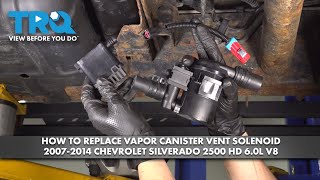
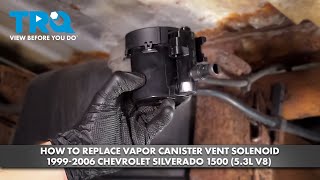
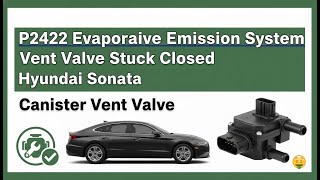
![Honda P2422 [Canister Vent Solenoid/valve] Stuck Closed Diagnosis and Repair](https://img.youtube.com/vi/Q34wILAH22s/mqdefault.jpg)


The information in this article is provided for general reference and educational purposes only. Vehicle specifications, procedures, and part compatibility can vary by production date, trim level, and region. Always consult your vehicle's factory service manual and verify part numbers before purchasing or performing repairs. Safety-critical components such as airbags, seat belts, and braking systems should be installed by a qualified professional.
- 🎬 Helpful Videos
- What Does P2422 Mean?
- Can I Drive With P2422?
- Common Causes
- Symptoms
- Diagnostic Flowchart
- Common Fixes & Costs
- DIY vs Professional
- Used vs. New Parts: Buying Guide
- What Happens If You Wait — Timeline
- Cost of Not Fixing It
- Diagnosis Steps
- When This Code Triggers (Freeze-Frame Conditions)
- Related Codes
- Climate & Environmental Factors
- How to Talk to a Mechanic About This Code
- Where to Take It: Dealer vs Independent vs Chain
- When to Walk Away From the Repair
- What Scan Tool You Need for This Code
- How to Clear the Code After You Fix It
- Will This Fail Emissions / State Inspection?
- Most Commonly Affected Vehicles
- Manufacturer-Specific Notes
- Real Owner Stories
- 2008 Honda Accord with P2422
- 2008 Honda CR-V with P2422 after another shop's repair
- 2021 VW Atlas with P2422
- How to Prevent This Code From Triggering
- Frequently Asked Questions
- Can a loose gas cap cause code P2422?
- What is a common misdiagnosis for P2422?
- Can I just clean the vent valve instead of replacing it?
- Why does my gas pump keep clicking off?
- Is the EVAP vent valve the same as the purge valve?
- Will P2422 clear itself?
- Will I fail my emissions test with a P2422 code?
- Can overfilling my gas tank cause P2422?
- Key Takeaways
- 🎟️ Get 5% Off