

P0446 on 2003-2008 Pontiac Vibe: EVAP Vent Control Circuit Causes and Fixes
On a 2003-2008 Pontiac Vibe, code P0446 is almost always caused by a failed vent valve, which is integrated into the charcoal canister assembly. The internal solenoid plunger is known to rust and stick. Replacing the entire canister is the most common and recommended fix, with parts costing between $200 and $450. This issue is identical on its platform-mate, the 2003-2008 Toyota Matrix.
- P0446 on a Pontiac Vibe points to a problem with the EVAP vent control circuit, not a system leak.
- The most likely cause by far is a failed vent solenoid due to a rusted and stuck internal plunger, which is part of the larger, more expensive vapor canister assembly on this vehicle.
- Do not replace the gas cap or the engine bay purge valve for this specific code; they are not the cause.
- Diagnosis involves checking for an audible click from the valve and testing for power at the canister's electrical connector. If power is present but the valve is inoperative, the canister assembly needs to be replaced.
- This repair is accessible for DIYers with basic tools, located under the rear of the vehicle, and ordering the equivalent Toyota part (77740-02070) can save money.
What's Unique About the 2003-2008 Pontiac Vibe
The Pontiac Vibe is mechanically a twin to the Toyota Matrix, sharing the Toyota MC platform and Toyota-sourced engines. Therefore, its engine and emissions systems follow Toyota's design and logic, not General Motors'. For the P0446 code, this is significant because on this platform, the vent valve (often called a Vacuum Switching Valve or VSV by Toyota) is commonly integrated directly into the charcoal canister assembly. This means that instead of replacing a small, inexpensive solenoid, the entire canister unit often needs to be replaced, making the repair more costly than on many other vehicles where the valve is a separate component.
Symptoms You May Notice
- Check Engine Light is on
- Difficulty filling the fuel tank (gas pump nozzle clicks off repeatedly and prematurely).
- Faint fuel odor near the rear of the vehicle
- A 'whoosh' sound of pressure releasing when opening the gas cap, even long after driving.
- Replacing the gas cap. A bad gas cap typically causes leak-related codes like P0442 or P0455, not a circuit malfunction code like P0446.
- Replacing the purge valve/solenoid in the engine bay. While part of the EVAP system, the purge valve has its own set of diagnostic codes (like P0441) and is not the cause of P0446.
Most Likely Causes
- Failed EVAP Vapor Canister Assembly 🔴 High Probability The vent valve/solenoid is integrated into the canister. The solenoid's internal metal plunger is known to corrode and stick due to moisture and its exposed location under the car, causing the circuit malfunction code. The entire assembly is exposed to the elements under the rear of the car, in front of the driver's side rear wheel.
How to confirm: Locate the canister (near the rear axle) and its electrical connector. Use a scan tool to command the vent valve to close; if there is no audible click, the next step is to test the circuit. With the ignition on, use a multimeter to test for 12V power at the connector. If power is present, you can apply a 9V or 12V source directly to the valve's terminals to see if it actuates. If power is present at the harness but the valve doesn't click when directly powered, the solenoid inside the canister has failed.
Typical fix: Replace the entire vapor canister assembly. While some owners have successfully disassembled the valve portion to clean the rusted plunger, this is not an official repair and can be difficult.
Est. part cost: $200-$450 - Clogged or Blocked Vent Hose 🟡 Medium Probability The fresh air inlet hose for the EVAP system can be blocked by dirt, debris, or famously, spider webs, preventing the system from venting properly. This can trigger a performance-related P0446 code. GM issued a TSB for other vehicles (02-06-04-037H) to relocate the vent filter to a less exposed area to prevent this.
How to confirm: Disconnect the vent hose from the canister and inspect it for any blockages. Attempt to blow air through it. The hose often leads to a small filter box that can also become clogged.
Typical fix: Clean the hose and its filter box (if equipped) with compressed air. If a spider nest is found, it must be completely removed.
Est. part cost: $0 - Damaged Wiring or Connector ⚪ Low Probability The wiring to the canister is located underneath the vehicle and can be susceptible to corrosion, road debris, or rodent damage, leading to an open or short in the circuit.
How to confirm: Visually inspect the wiring harness and connector leading to the vapor canister for any breaks, corrosion, or loose pins. Use a multimeter to check for continuity from the PCM to the solenoid connector and verify power and ground signals.
Typical fix: Repair the damaged section of wire or replace the connector pigtail.
Est. part cost: $10-$30
Rare But Worth Checking
- Faulty Powertrain Control Module (PCM): This is extremely rare. The PCM should only be considered after all other possibilities, including the canister, wiring, and hoses, have been exhaustively tested and ruled out. One forum user reported a dealer replacing a PCM due to a short, but this is not a common resolution.
- Faulty Fuel Tank Pressure (FTP) Sensor: While less common for a P0446-only code, a faulty FTP sensor can provide incorrect readings to the PCM, leading to a misdiagnosis of the vent circuit. NHTSA ODI #743096 notes a case on a different Pontiac model where a technician found the pressure sensor out of specs and replaced it to resolve a P0446. This may sometimes be accompanied by other EVAP codes.
Diagnosis Steps
- Verify the Check Engine Light is on and code P0446 is present using an OBD-II scanner. Note any other pending or active codes.
- Visually inspect the vapor canister, located under the vehicle near the rear axle, typically in front of the driver's side rear tire. Check for any obvious cracks or damage.
- Inspect the electrical connector and wiring going to the canister for corrosion, breaks, or damage.
- Inspect the rubber and plastic EVAP hoses connected to the canister for cracks, blockages, or disconnections. Pay special attention to the fresh air inlet hose for spider webs or debris.
- If you have a capable scan tool, use its bidirectional controls to command the vent solenoid ON and OFF. Listen for an audible click from the canister area. No click suggests a faulty solenoid or wiring issue.
- If the solenoid does not click, disconnect the connector. Turn the ignition to the 'ON' position (engine off). Use a multimeter to check for 12-volt power on one pin and a ground signal from the PCM on the other when the valve is commanded closed.
- If power and ground are present but the valve does not operate (or if you confirm it's stuck by applying direct power), the vapor canister assembly is faulty and needs to be replaced.
- If power or ground is missing, trace the wiring back towards the PCM to find the open or short in the circuit. Check the relevant fuses as well.
Parts You'll Likely Need
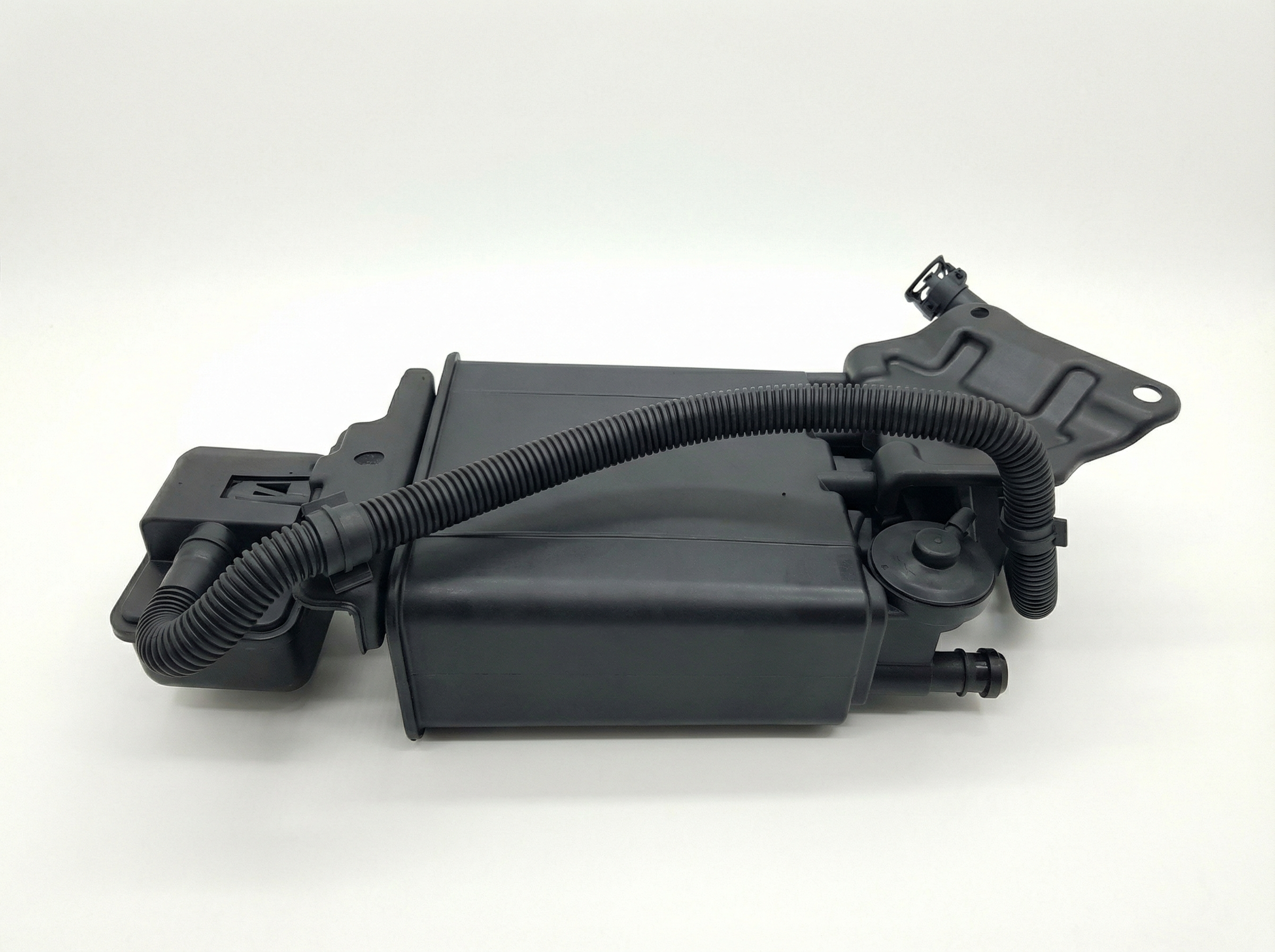
- Vapor Canister Assembly
(OEM #88973481 (GM), 77740-02070 (Toyota))— This is the most common failure for code P0446 on this vehicle because the non-serviceable vent valve is integrated into the canister housing. The Toyota part number is often cheaper for the identical component.
Trusted brands: ACDelco (GM Genuine), Toyota OEM, Dorman (911-602 is a related valve, but for this application, the entire canister is usually sold as one unit), Standard Motor Products
OEM price range: $350-$550
Aftermarket price range: $200-$350
Related Codes That Often Appear With This One
- P0441 — If the vent valve is stuck in a position that also causes incorrect purge flow during a system test, a P0441 code may appear alongside P0446.
- P0440 — A general EVAP system malfunction code that can appear with other, more specific codes like P0441 and P0446, indicating a broader issue detected by the PCM.
Technical Service Bulletins (TSBs) & Recalls
- While no specific TSB for the Pontiac Vibe for P0446 was found, GM TSB 02-06-04-037H addresses the same code on Silverado/Sierra trucks caused by dirt/dust in the vent hose. It details installing a new vent valve assembly with a remote filter box to prevent debris intrusion, a principle that also applies to the Vibe's issue with blockages.
Platform-Specific Known Issues
- A known issue on the Vibe/Matrix platform is the internal rusting and sticking of the vent solenoid plunger, which is sealed inside the canister. Some owners have successfully disassembled the valve portion of the canister to clean it, but this is not an official repair procedure and replacement is the standard fix. One owner documented this unofficial repair on GenVibe, inspired by a guide for a Sienna, where they removed the stuck plunger with a screw, cleaned off the rust, and reassembled it, successfully fixing the code.
- The GM part (88973481) and Toyota part (77740-02070) are for the same component, as the vehicles were built in the same NUMMI factory. Owners often find the Toyota-branded part is less expensive.
Mechanic-Grade Diagnostic Values
- EVAP Vent Valve/Solenoid Coil Resistance — expected: 20-40 Ohms. Failure: Infinite Ohms (open circuit) or near 0 Ohms (short circuit) indicates a failed solenoid coil.
- Voltage at EVAP Canister Connector — expected: Approximately 12V (battery voltage) at the power pin with ignition ON, engine OFF. A 5V reference is also present for the pressure sensor on later models.. Failure: No voltage suggests a wiring issue, blown fuse, or problem with the EFI main relay.
Scan Tool Commands That Help
- Toyota Techstream: Active Test -> 'Activate the VSV for Evap Control' — This command allows a technician to manually cycle the vent valve (and purge valve) to listen for the characteristic 'click' of operation. It's a primary step to confirm if the solenoid is receiving the command and is mechanically capable of actuating.
- GM Tech 2 / Professional Scan Tool: EVAP Purge/Seal — This function commands the entire EVAP system to seal (closing both the vent and purge valves) and allows the technician to monitor the Fuel Tank Pressure (FTP) sensor. For P0446, a technician can command the vent valve open and watch for a corresponding change in pressure, which verifies if the vent path is clear or restricted.
Wiring & Ground Locations
- EVAP Canister Wiring Harness — On a 2005 Vibe, a wiring harness runs under the spare tire well, near the left rear strut tower, leading to the EVAP canister.. A user on a GenVibe forum discovered this harness was sliced in half, likely from road debris or improper routing, causing an open circuit to the canister assembly (including the vent valve) and triggering EVAP codes. This is a critical inspection point if electrical tests at the canister connector fail.
Documented NHTSA Reports
- An owner reported a fuel leak from the gas tank area accompanied by a P0446 code (NHTSA ODI #11182132).
- NHTSA ODI #11124447 describes a distinct gas smell and a P0446 code caused by a leak in the fuel line above the fuel pump on top of the gas tank.
Real Owner Repair Stories
- GenVibe forum user 'adamh' (2005 Pontiac Vibe (Base, manual FWD)) — Check Engine Light with code P0453 (EVAP Pressure Sensor High Input), but diagnosis is relevant to the entire canister electrical system.
❌ Tried (didn't work) Testing the purge valve in the engine bay (it clicked with 9V)., Verifying 12V power to the purge valve., Manually powering the leak detection pump on the canister (it ran)., Searching for a separate vent valve, not realizing it was integrated.
✅ What actually fixed it The user found the wiring harness leading to the EVAP canister was completely severed. It was located under the spare wheel well, near the left rear strut. Repairing the damaged wires by soldering and heat-shrinking them resolved the codes. This highlights that a complete electrical failure from wiring damage can mimic a failed component.
OEM Part Supersession History
77740-02070 (Toyota)→77740-02071 (Toyota)— Standard part revision.
Heads up: The parts are interchangeable.88973482, 88973484, 88973485 (GM)→88973481 (GM)— Part number consolidation and revision by GM.
Heads up: 88973481 is the current replacement for the earlier numbers for the 2005-2008 model years.
Model Year Variations Within This Range
- 2003-2004: These models used a cable-actuated throttle body. The core EVAP system logic is similar, but electrical diagnostics may differ slightly from later models.
- 2005-2008: These models switched to a Drive-by-Wire (DBW) electronic throttle body. The ECU is different, and EVAP test conditions and diagnostics may be more integrated with electronic throttle control data.
- 2005-2008: On some later models within this range (specifically 2005+), the canister assembly includes an integrated leak detection pump and a more complex multi-pin connector (up to 8 or 10 pins), compared to the simpler two-wire vent valve on some other vehicles. This makes testing individual components without a pinout diagram more difficult.
Diagnostic Flowchart
Real Owner Stories
Aggregated from forums and TSBs cited above. Mileages and costs reflect what owners reported in those sources.
2003 Pontiac Vibe
Symptoms: Solid service engine light, failed inspection for 'Vent Solenoid Failure' and 'Evaporator Vent Ctrl Malfunction'. Dealership blamed an aftermarket AEM cold air intake.
What fixed it: Diagnosed as a common EVAP system problem unrelated to the aftermarket intake.
Cost: $300
Source hint: genvibe.com
2003 Pontiac Vibe AWD
Symptoms: CEL P0446 Check Engine Light. Found the vent valve plunger stuck with rust.
What fixed it: Successfully disassembled the valve portion of the canister, removed the stuck plunger with a screw, cleaned off the rust, and reassembled it. The fix held for over 2,000 miles.
Source hint: genvibe.com thread titled '2003 Vibe AWD: CEL P0446 Check Engine Light! SOLVED!'
2003-2008 Pontiac Vibe
Symptoms: P0446 code triggered because the vent valve was stuck open from rust.
What fixed it: Replaced only the VSV (vent valve) which was sourced from a Toyota dealer.
Cost: $48
Source hint: genvibe.com thread titled 'Help - EVAP canister replacement'
2004 Pontiac Vibe
Symptoms: P0446 code present.
What fixed it: Quoted for a full canister assembly replacement by a mechanic, who then suggested going to a dealer due to the high cost and complexity.
Cost: $1000
Source hint: reddit.com/r/mechanics
Related OBD-II Codes
Frequently Asked Questions
Is there a specific TSB for the P0446 code on my 2003-2008 Pontiac Vibe?
Are the Pontiac Vibe and Toyota Matrix EVAP canisters the exact same part?
Why does the gas pump nozzle keep clicking off when I try to fill my Vibe?
Can I buy just the vent valve for my Vibe, or do I have to replace the whole vapor canister?
Is it possible to clean the rusted vent solenoid plunger instead of replacing the canister?
My mechanic quoted me $1,000 to fix the P0446 code on my 2004 Vibe. Is this normal?
Helpful Videos

Used OEM Parts in Stock
New Aftermarket Parts Available


The information in this article is provided for general reference and educational purposes only. Vehicle specifications, procedures, and part compatibility can vary by production date, trim level, and region. Always consult your vehicle's factory service manual and verify part numbers before purchasing or performing repairs. Safety-critical components such as airbags, seat belts, and braking systems should be installed by a qualified professional.
- Pontiac Vibe:
- 🎬 Helpful Videos
- 🛍️ Shop This Part
- What's Unique About the 2003-2008 Pontiac Vibe
- Symptoms You May Notice
- Most Likely Causes
- Rare But Worth Checking
- Diagnosis Steps
- Parts You'll Likely Need
- Related Codes That Often Appear With This One
- Technical Service Bulletins (TSBs) & Recalls
- Platform-Specific Known Issues
- Mechanic-Grade Diagnostic Values
- Scan Tool Commands That Help
- Wiring & Ground Locations
- Documented NHTSA Reports
- Real Owner Repair Stories
- OEM Part Supersession History
- Model Year Variations Within This Range
- Diagnostic Flowchart
- Real Owner Stories
- 2003 Pontiac Vibe
- 2003 Pontiac Vibe AWD
- 2003-2008 Pontiac Vibe
- 2004 Pontiac Vibe
- Related OBD-II Codes
- Frequently Asked Questions
- 🎟️ Get 5% Off