

P0446 on 2006-2010 Hyundai Sonata: EVAP Vent Circuit Causes and Fixes
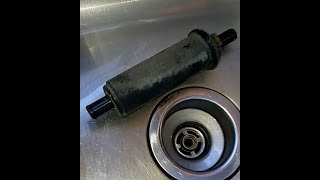
On a 2006-2010 Hyundai Sonata, code P0446 is most often caused by a failed Canister Close Valve (CCV) located near the charcoal canister at the rear of the car. Replacing this valve is the most common fix, costing around $40-$75 for the part. A clogged 'fuel tank air filter' (the vent hose/filter assembly) is another common and often-overlooked cause.
- P0446 on a 2006-2010 Sonata almost always points to a problem at the rear of the car, not in the engine bay.
- The most likely culprit is the Canister Close Valve (CCV), part number 31453-3K500.
- A key symptom is the gas pump repeatedly clicking off when you try to refuel.
- Before buying parts, test the valve with a 12V source to see if it clicks and inspect the hoses for black charcoal dust.
- The repair is DIY-friendly, requiring removal of the driver's side rear wheel and fender liner to access the components.
What's Unique About the 2006-2010 Hyundai Sonata
On the fifth-generation (NF) Sonata, this code points quite reliably to the canister close valve (CCV) assembly. Unlike some vehicles where wiring or other sensors are common culprits, Sonata owners frequently find the valve itself is the point of failure. The valve can either fail electrically or become clogged by charcoal particles from an aging EVAP canister, leading to a restriction. Additionally, a maintenance item called the "fuel tank air filter" in the owner's manual, which is the EVAP vent hose's filter, has a 30,000-mile replacement interval and is often neglected, leading to a complete blockage that triggers this code.
Symptoms You May Notice
- Check Engine Light is on.
- Difficulty filling the gas tank (fuel pump nozzle shuts off repeatedly before the tank is full). This happens because the vent path is blocked, causing pressure to build in the filler neck, which tricks the pump into thinking the tank is full.
- A faint smell of gasoline, particularly around the rear of the vehicle.
- No noticeable change in engine performance or drivability.
- Replacing the gas cap. While a faulty gas cap can cause other EVAP codes (like P0455 or P0457), it is not a typical cause for P0446, which specifically points to a vent circuit restriction or malfunction, not a system leak.
- Replacing the Purge Control Solenoid Valve (PCSV). This valve is located in the engine bay and typically sets different codes (like P0441) when it fails.
Most Likely Causes
- Faulty Canister Close Valve (CCV) 🔴 High Probability The solenoid in the valve is a common failure item due to age and exposure to the elements under the car. It can fail electrically (internal coil breaks) or mechanically (plunger gets stuck).
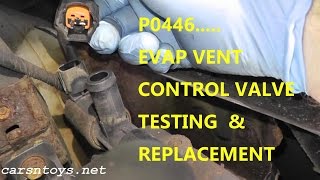
How to confirm: Locate the valve on or near the charcoal canister (behind the driver's side rear wheel). Disconnect the electrical connector. With the ignition key in the 'ON' position, use a multimeter to confirm battery voltage (around 12V) at one of the harness terminals. To test the valve itself, apply 12V power directly to its two pins; a healthy valve will make an audible 'click'. If it doesn't click, it has failed electrically. If it clicks but the code persists, it may be mechanically stuck or clogged.
Typical fix: Replace the Canister Close Valve. It is held in place by a nut or bolts and has one electrical connector and one or two hose connections.
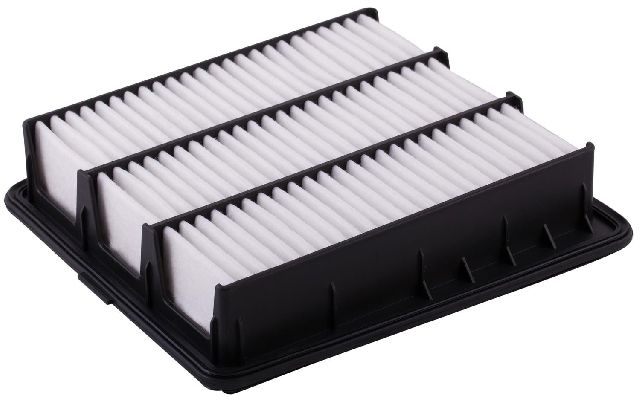
Est. part cost: $40-$75 - Blocked EVAP Vent Hose / Fuel Tank Air Filter 🔴 High Probability The owner's manual specifies a 30,000-mile replacement interval for the 'fuel tank air filter,' which is the filter on the EVAP system's fresh air inlet hose. This is often overlooked, and the filter can become completely clogged with dirt and road debris, causing a restriction that triggers P0446. The hose can also be blocked by spider webs or mud dauber nests.
How to confirm: Visually inspect the rubber hose leading from the CCV to its fresh air inlet point. Check the filter box at the end of the hose for blockages. One owner with 114,000 miles found this filter completely obstructed, causing the code and refueling issues. Remove the hose and attempt to blow compressed air through it. If it's blocked, you've found the problem.
Typical fix: Replace the fuel tank air filter and/or clear the blockage from the hose. If the filter is the original, it's best to replace it.
Est. part cost: $10-$30 - Clogged or Failed Charcoal Canister 🟡 Medium Probability Over time, the activated charcoal pellets inside the canister can break down due to age and vibration. These fine particles can then travel into the vent lines and clog the Canister Close Valve, causing the restriction that triggers P0446.
How to confirm: When removing the Canister Close Valve, inspect its ports and the attached hoses for black charcoal granules. If granules are present, the canister has failed internally and is the root cause.
Typical fix: Replace the charcoal canister assembly. If this is the cause, you must also replace the Canister Close Valve, as it is likely contaminated with debris. Some owners have reported temporary success by removing the canister and flushing the loose charcoal dust out with water, though replacement is the correct long-term repair.
Est. part cost: $200-$300 - Damaged Wiring or Connector ⚪ Low Probability The wiring for the CCV is located under the car and is exposed to road salt and moisture, which can lead to corrosion or breaks in the wires over time. The connector itself can also become corroded.
How to confirm: With the key on, use a multimeter to check for 12V power at the CCV electrical connector. Visually inspect the connector pins for green or white corrosion and trace the wiring harness for any visible breaks, chafing, or poor previous repairs.
Typical fix: Repair the broken wire or clean/replace the corroded connector.
Est. part cost: $5-$25
Diagnosis Steps
- Read the code with an OBD-II scanner to confirm P0446 is the primary code.
- Attempt to fill the fuel tank. If the pump clicks off repeatedly, it strongly suggests a blocked vent path, pointing towards a stuck-closed CCV or a clogged vent hose/filter or canister.
- Raise the rear of the vehicle and remove the driver's side rear wheel and the plastic fender liner to access the EVAP components.
- Locate the Canister Close Valve (CCV), charcoal canister, and the vent hose (often called the 'fuel tank air filter'). Visually inspect all components for cracks, damage, or loose connections.
- Inspect the vent hose and its filter first. Disconnect it and check for blockages from dirt, debris, or insects. This is a scheduled maintenance item and a common failure point.
- Inspect the CCV electrical connector for corrosion. With the ignition on, use a multimeter to verify battery voltage (12V) is present at the harness.
- Disconnect the CCV and test its solenoid by applying 12 volts and a ground directly to its terminals. Listen for a distinct click. No click means the valve is electrically dead.
- If the valve clicks, remove it and inspect its ports for black charcoal particles. If found, the charcoal canister has failed and both parts need replacement.
- If no particles are found, try to blow through the valve. It should be normally open. If you cannot blow through it, it is stuck closed mechanically.
- If the valve and vent hose test good, the issue may be a clogged charcoal canister or, in rare cases, a wiring issue between the valve and the ECM that requires more advanced tracing.
Parts You'll Likely Need
- Canister Close Valve (CCV)
(OEM #31453-3K500 (replaces 31453-3K700))— This solenoid valve is the most common failure point for code P0446 on this vehicle, either failing electrically or getting stuck mechanically.
Trusted brands: Hyundai (OEM), Dorman (911-808, 911-811), Standard Motor Products (CVS148), Beck/Arnley (0460103)
OEM price range: $60-$85
Aftermarket price range: $35-$60 - Charcoal Canister Assembly
(OEM #31420-3K600)— This is the second most likely cause. If the internal charcoal media breaks down, it clogs the CCV and vent lines, requiring replacement of the canister and the valve. This part fits both 2.4L and 3.3L Sonata models. 🎬 Watch: How to replace a failed charcoal canister assembly.
Trusted brands: Hyundai (OEM)
OEM price range: $200-$275
Aftermarket price range: $150-$220 - Fuel Tank Air Filter / Vent Hose Assembly
(OEM #Varies, may be part of a hose assembly.)— This is a frequently-neglected maintenance item with a 30,000-mile service interval that can become completely clogged with dirt, causing P0446 and refueling problems.
Trusted brands: Hyundai (OEM)
OEM price range: $15-$40
Aftermarket price range: $10-$25
Technical Service Bulletins (TSBs) & Recalls
- No specific Hyundai Technical Service Bulletins (TSBs) for the 2006-2010 Sonata with code P0446 were found during research. However, a TSB for GM trucks with similar issues notes that driving in dusty environments can clog the vent system, recommending an updated part. This corroborates the 'Fuel Tank Air Filter' being a likely culprit on the Sonata.
Platform-Specific Known Issues
- Neglected 'Fuel Tank Air Filter': The owner's manual for the 2009 Sonata lists a 'fuel tank air filter' with a 30,000-mile replacement interval. This part is the filter for the EVAP canister's fresh air vent. It is often overlooked during routine maintenance and can become completely clogged with road debris, leading to a P0446 code and significant difficulty when refueling. One owner reported this exact issue at 114,000 miles after the filter had never been changed.
Mechanic-Grade Diagnostic Values
- Canister Close Valve (CCV) harness voltage — expected: ~12V (Battery Voltage) at one terminal with ignition key on, engine off.. Failure: 0V indicates a wiring or fuse issue upstream of the connector. The fuse is typically 15A.
Scan Tool Commands That Help
- Hyundai GDS / Advanced OBD-II Scanner: EVAP Vent Valve Actuation / On-Off Test — This bidirectional command is used to manually cycle the Canister Close Valve solenoid. A technician can command the valve closed and open while listening for an audible 'click' to confirm the solenoid is functioning electrically, without having to remove the part or apply external voltage.
Wiring & Ground Locations
- Canister Close Valve (CCV) Connector — On the CCV itself, located behind the driver's side rear wheel well liner, attached to or near the charcoal canister.. This is the primary electrical connection to test for power. One of the two terminals (specifically terminal #2 in one documented case) should have 12V with the key on. Corrosion or damage here is a direct cause of a circuit malfunction code.
Real Owner Repair Stories
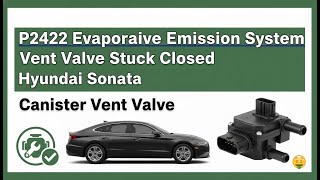
- YouTube - World Mechanics (2006 Hyundai Sonata (stated to be same for 2006-2010 2.4L and 3.3L)) — Check Engine Light with code P2422 (EVAP System Vent Valve Stuck Closed), which is a highly related fault to P0446.
❌ Tried (didn't work) The video proceeds directly to diagnosis and replacement, not detailing prior failed attempts.
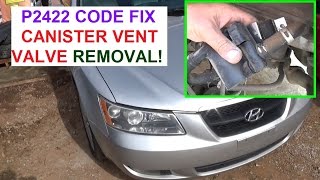
✅ What actually fixed it The Canister Close Valve was faulty and was replaced. The video provides a complete step-by-step guide of removing the driver's rear wheel and fender liner to access and replace the valve, then clearing the code.
"I Checked Everything" — The Actual Cause
- For code P0446, a passed smoke test (i.e., no leaks found) is an expected result and actually helps diagnosis. This code indicates a vent circuit malfunction or restriction, not a system leak like P0455 (gross leak) or P0456 (small leak). If the smoke test is clean, it confirms the system is sealed and points the diagnosis strongly toward a Canister Close Valve that is stuck closed, a clogged vent filter, or a blocked vent hose, preventing the system from venting when commanded.
OEM Part Supersession History
31453-3K700→31453-3K500— Standard part revision or manufacturer change.
Heads up: The new part number (31453-3K500) is the correct and direct replacement for the original.Dorman 911-808→N/A— N/A
Heads up: The Dorman 911-808 part is often confused with the CCV, but it is the Purge Control Valve located in the engine bay. The correct Dorman part for the rear Canister Close Valve (CCV) for a P0446 code is Dorman 911-811.
Model Year Variations Within This Range
- 2006-2010: No significant variations have been found regarding the cause or repair of code P0446 within this generation. The location of the Canister Close Valve and the diagnostic procedure are consistent across the 2.4L and 3.3L engines for the entire model range, including the 2009 facelift.
Diagnostic Flowchart
Real Owner Stories
Aggregated from forums and TSBs cited above. Mileages and costs reflect what owners reported in those sources.
2009 Hyundai Sonata — 114000 miles
Symptoms: P0446 code and significant difficulty when refueling.
What fixed it: Replaced the 'fuel tank air filter' which was completely clogged with road debris because it had never been changed.
Source hint: Vehicle Specific Issues section (Owner report)
2010 Hyundai Sonata
Symptoms: Check engine light with code P0449, which the author notes Hyundai uses interchangeably with P0446 and P2422 for vacuum build-up issues.
What fixed it: Clearing a spider web/nest from the canister vent hose/pipe by shooting compressed air into the vent hose under the car.
Source hint: Google Groups (HyundaiTech)
2009 Hyundai Sonata
Symptoms: Check engine light with code P0449 and hard to fill the tank with gas.
What fixed it: Diagnosed and replaced a clogged fuel tank air filter.
Source hint: YouTube - 'pinehollowauto'
Related OBD-II Codes
Frequently Asked Questions
Why does the gas pump keep shutting off when I try to fill my 2006-2010 Sonata?
Where is the Canister Close Valve located on my Sonata?
What is the 'fuel tank air filter' and how often should it be replaced?
Are there any Technical Service Bulletins (TSBs) for the P0446 code on the 2006-2010 Sonata?
Can a spider web really cause a P0446 code on my Sonata?
Does the Kia Optima share this same P0446 issue?
Helpful Videos
We Have This Part in Stock




The information in this article is provided for general reference and educational purposes only. Vehicle specifications, procedures, and part compatibility can vary by production date, trim level, and region. Always consult your vehicle's factory service manual and verify part numbers before purchasing or performing repairs. Safety-critical components such as airbags, seat belts, and braking systems should be installed by a qualified professional.
- Hyundai Sonata:
- 🎬 Helpful Videos
- 🛍️ Shop This Part
- What's Unique About the 2006-2010 Hyundai Sonata
- Symptoms You May Notice
- Most Likely Causes
- Diagnosis Steps
- Parts You'll Likely Need
- Technical Service Bulletins (TSBs) & Recalls
- Platform-Specific Known Issues
- Mechanic-Grade Diagnostic Values
- Scan Tool Commands That Help
- Wiring & Ground Locations
- Real Owner Repair Stories
- "I Checked Everything" — The Actual Cause
- OEM Part Supersession History
- Model Year Variations Within This Range
- Diagnostic Flowchart
- Real Owner Stories
- 2009 Hyundai Sonata — 114000 miles
- 2010 Hyundai Sonata
- 2009 Hyundai Sonata
- Related OBD-II Codes
- Frequently Asked Questions
- 🎟️ Get 5% Off