

P0443 on 2000-2005 Mercury Sable: EVAP Purge Valve Circuit Fixes
This code points to an electrical problem with the EVAP purge valve circuit. Most often, the fix is replacing the purge valve solenoid itself, which is a relatively inexpensive part ($30-$70). However, be sure to check the wiring, connector, and fuse before replacing parts, as circuit faults are common.
- P0443 is an electrical circuit code, not a gas cap or EVAP leak code.
- The most likely fix is replacing the EVAP purge valve, located in the engine bay.
- Always check the fuse and inspect the wiring to the valve before buying parts.
- In rare cases on this specific vehicle, a faulty PCM can cause this code, so a complete diagnosis is important.
What's Unique About the 2000-2005 Mercury Sable
For the 2000-2005 Sable and its Ford Taurus twin, P0443 is a straightforward code that almost always points to the purge valve solenoid or its wiring. However, this platform has a documented, though rare, history of the PCM itself failing, causing this code. Technicians have reported cases where after confirming the valve and wiring are good, replacing the PCM was the ultimate solution. Therefore, a thorough diagnosis is key to avoid replacing unnecessary parts.
Symptoms You May Notice
- Check Engine Light is on (the most common symptom).
- Slightly rough idle, especially if the valve is stuck open.
- Minor decrease in fuel economy.
- Potential difficulty starting immediately after refueling.
- A faint fuel odor in some cases.
- Replacing the gas cap. A loose or faulty gas cap will typically trigger EVAP leak codes like P0455 or P0457, not a circuit code like P0443.
- Replacing the charcoal canister. The canister is a passive component and is not part of the electrical circuit monitored by the P0443 code.
Most Likely Causes
- Faulty EVAP Purge Valve/Solenoid 🔴 High Probability The solenoid is an electro-mechanical part with a coil winding that can fail (open or short circuit) over time due to heat cycles and vibration. It is the most frequently replaced component for this code.
How to confirm: With the engine off, unplug the connector. Use a multimeter to measure the resistance across the two pins on the valve. A reading of infinite resistance (OL) indicates an open coil, while a reading of zero indicates a short. A typical reading for a good valve is between 15-35 ohms. You can also apply 12V directly to the pins to see if it clicks open and shut.
Typical fix: Replace the EVAP canister purge valve.
Est. part cost: $30-$70 - Damaged Wiring or Connector 🟡 Medium Probability Wires in the engine bay are exposed to heat, oil, and vibration, which can cause them to become brittle, chafe, or break over time. A common issue on Ford platforms is the wiring harness rubbing against an AC line or other bracketry, eventually wearing through the insulation. The connector itself can also corrode or have pins loosen.
How to confirm: Visually inspect the wiring harness leading to the purge valve for any signs of cracking, chafing against other components, or melting. Check the electrical connector for corrosion, moisture, or pushed-out pins. Use a multimeter to check for battery voltage on the power wire (typically Red, Circuit 381) with the key on.
Typical fix: Repair the broken or shorted wire. Clean or replace the electrical connector. The pigtail connector is often available as a separate part (e.g., Motorcraft WPT-1051).
Est. part cost: $5-$35 - Blown Fuse ⚪ Low Probability
How to confirm: Locate the fuse box and identify the fuse that powers the EVAP system components. On these models, this can be shared with other engine components. Visually inspect the fuse to see if it is blown. Use a test light or multimeter to confirm continuity.
Typical fix: Replace the blown fuse. If the fuse blows again immediately, it indicates a short circuit in the system that must be found.
Est. part cost: $1-$5
Rare But Worth Checking
- Faulty Powertrain Control Module (PCM): This is the last thing to check. On this platform, a failed driver circuit inside the PCM can mimic a bad purge valve or wiring. If you have confirmed the valve is good, and that power and ground signals are not correct *at the PCM connector itself*, the PCM is the likely culprit. An ALLDATA case study on a 2000 Sable confirmed this exact failure mode leading to a PCM replacement.
Diagnosis Steps
- Read the Code: Confirm P0443 is the only code present. If other codes exist, address them first.
- Visual Inspection: Locate the purge valve. On the 3.0L Duratec V6, it is often near the throttle body. On the 3.0L Vulcan V6, it is typically mounted on the firewall. Inspect the connector for damage and check the wiring harness for any obvious signs of chafing, melting, or breaks, paying close attention to where it might rub against AC lines or engine brackets.
- Check the Fuse: Consult your owner's manual to find the fuse for the EVAP system (often labeled under 'Engine Controls' or similar) and verify it is not blown.
- Test for Power: Turn the ignition to the 'On' position (engine off). Unplug the purge valve connector. Use a multimeter to check for battery voltage at the power wire (typically Red, Circuit 381). If there is no voltage, there is a break in the power supply wire or a blown fuse.
- Test the Valve Solenoid: Measure the resistance between the two pins on the purge valve itself. A typical reading should be between 15-35 ohms. If it's open (OL) or shorted (0 ohms), the valve is bad and needs replacement.
- Test the Control Circuit: If power and the valve are good, the problem is on the ground-side control wire (typically Gray/Yellow, Circuit 101). A scan tool that can perform functional tests is ideal here. Command the purge valve 'On' (or to 100% duty cycle). The PCM should provide a ground on this wire. You can check this by connecting a test light between the power wire and the control wire; it should light up or pulse when the valve is commanded on.
- Check at the PCM: If the ground signal is not present at the connector, the final step is to check for the signal directly at the PCM connector pin (Pin 56 for this circuit on some Ford models). If the signal is present at the PCM but not at the valve, the wire between them is broken. If the signal is not present at the PCM, the PCM itself is likely faulty.
Parts You'll Likely Need
- Vapor Canister Purge Valve / Solenoid
(OEM #F7DZ-9F945-AB (supercedes F7DZ-9F945-AA for 2000 models), 7U5Z-9C915-D (for 2004-2005 models))— This is the most common failure point for the P0443 code. The internal solenoid coil fails electrically, causing an open or short circuit.
Trusted brands: Motorcraft, Dorman, Standard Motor Products (SMP)
OEM price range: $50-$90
Aftermarket price range: $30-$70 - Purge Valve Connector Pigtail
(OEM #Motorcraft WPT-1051)— If the connector is corroded, melted, or the locking tab is broken, replacing the pigtail is the proper repair.
Trusted brands: Motorcraft, Dorman
OEM price range: $20-$35
Aftermarket price range: $10-$20
Related Codes That Often Appear With This One
- P0444 — P0444 indicates 'Purge Control Valve Circuit Open', which is a more specific version of the general P0443 fault, often pointing to a broken wire or dead solenoid.
- P0445 — P0445 indicates 'Purge Control Valve Circuit Shorted', another specific fault pointing to a short to ground or power in the wiring.
Platform-Specific Known Issues
- Wiring Harness Chafe Points: Owners and technicians on various Ford platforms of this era report the main engine wiring harness can rub against metal components like A/C lines or chassis brackets. Over time, this can wear through the protective loom and wire insulation, causing a short or open circuit. A careful inspection of the entire harness route from the purge valve to the PCM is recommended if the valve and connector test good.
Mechanic-Grade Diagnostic Values
- EVAP Purge Valve Solenoid Resistance — expected: 15 - 35 Ohms. Failure: A reading of 0 Ohms (short circuit) or infinite/OL (open circuit).
- Voltage at Purge Valve Connector (Power Wire) — expected: Battery Voltage (approx. 12V) with Key On, Engine Off.. Failure: 0V indicates a blown fuse or an open in the power wire (Circuit 381, typically Red).
- Voltage at Purge Valve Connector (Control Wire) — expected: A pulsing ground signal when commanded ON by a scan tool.. Failure: No ground signal when commanded indicates an open in the control wire (Circuit 101, Gray/Yellow) or a faulty PCM driver.
Scan Tool Commands That Help
- Ford IDS / Professional Scan Tool: EVAP Purge Solenoid ON/OFF or Duty Cycle Control — This is a critical bidirectional test used after confirming power to the valve. By commanding the valve 'ON' (to 100% duty cycle), you can check if the PCM is providing the necessary ground signal on the control wire. If the ground appears at the PCM but not the valve, the wire is broken. If the PCM fails to provide a ground at all, the PCM itself is suspect.
Wiring & Ground Locations
- Purge Valve Power Wire — At the 2-pin connector on the EVAP purge valve.. This wire, typically Red and designated as Circuit 381, must have battery voltage with the key on. No voltage here points the diagnosis toward the fuse box or a break in the power supply harness.
- Purge Valve Control Wire — At the 2-pin connector on the EVAP purge valve, leading back to the PCM.. This wire, typically Gray with a Yellow stripe (GY/YE) and designated as Circuit 101, is the ground path controlled by the PCM. A break in this wire or a failure of the PCM's internal driver for this circuit is a common cause of P0443 when the valve itself is good.
- PCM Connector Pin 56 — At the main connector block for the Powertrain Control Module (PCM).. On some Ford models of this era, Pin 56 corresponds to the EVAP purge valve control circuit. Testing for the ground signal directly at this pin is the final step to confirm if the PCM driver is functioning. If the ground signal is present here but not at the valve, the wire is confirmed to be broken.
Real Owner Repair Stories
- ALLDATA Tech-Assist Case Study (2000 Mercury Sable, V6-3.0L DOHC, 96,267 miles) — Malfunction Indicator Light (MIL) was on, but the vehicle seemed to run normally.
❌ Tried (didn't work) Replaced the EVAP vent valve., Replaced the EVAP purge solenoid.
✅ What actually fixed it The technician found 12 volts on both wires to the purge solenoid. After testing the control circuit as advised, it was determined there was no ground signal being sent from the PCM. The defective Powertrain Control Module (PCM) was replaced, which resolved the P0443 code.
"I Checked Everything" — The Actual Cause
- P0443 is a 'Circuit Malfunction' code, not a leak code (like P0455 or P0457). Therefore, a smoke test is not the correct diagnostic procedure and is expected to pass. Technicians who perform a smoke test for P0443 and find no leaks may be confused, but the fault lies entirely within the electrical system: the purge solenoid's coil, the wiring to it, or the PCM's control driver. The key is to ignore leak testing and focus on electrical tests like resistance and voltage checks.
When the Usual Fixes Don't Work
- While replacing the purge valve solenoid is the most common fix, a significant number of cases are not resolved by this. A professional case study on a 2000 Sable with 96k miles showed that even after replacing both the purge solenoid and the vent valve, the P0443 code immediately returned. The ultimate cause was a failed driver circuit within the PCM. This serves as strong counter-evidence to the 'parts-swapping' approach and emphasizes that for a 'Circuit Malfunction' code, electrical diagnosis must be completed before assuming the primary component is at fault.
OEM Part Supersession History
F7DZ-9F945-AA→F7DZ-9F945-AB— Standard part revision by the manufacturer.
Heads up: These parts are generally interchangeable for the early models in this generation.F7DZ-9F945-AB→7U5Z-9C915-D— Design change for later model years within the generation.
Heads up: The F7DZ-9F945-AB is listed for earlier models (approx. 2000-2003) while 7U5Z-9C915-D is specified for 2004-2005 models. The physical fitment or connector may differ, so it is critical to order based on the specific model year.
Model Year Variations Within This Range
- 2000-2003 vs 2004-2005: The OEM part number for the EVAP Purge Valve/Solenoid changes. Earlier models typically use part number F7DZ-9F945-AB, while later models (approx. 2004-2005) use 7U5Z-9C915-D. While they perform the same function, the mounting or connector could be different, making them non-interchangeable.
Diagnostic Flowchart
Used vs. New Parts: Buying Guide for This Vehicle
When a used part is the smart pick: A used EVAP purge valve from a junkyard is a reasonable choice for this repair. It is a simple, external, electro-mechanical part that is easy to access and replace. Failure is not strictly tied to high mileage, so a part from a lower-mileage donor vehicle can be a cost-effective solution.
Donor-vehicle mileage cap: roughly under 120000 miles for the part to have meaningful remaining life.
What to inspect on the donor part:
- Check the electrical connector pins for any signs of green or white corrosion.
- Ensure the plastic housing is not cracked or showing signs of extreme heat stress.
- If possible, bring a multimeter to the junkyard and test the resistance across the two pins. It should fall within the 15-35 Ohm range.
- Inspect the vacuum ports for blockages or debris.
OEM-only on this vehicle (don't cheap out):
- Powertrain Control Module (PCM) - If the PCM is diagnosed as the fault, a used unit must be professionally reprogrammed (flashed) to the vehicle's VIN and specific configuration. For this reason, purchasing a pre-programmed unit from a reputable rebuilder or a new OEM unit is strongly recommended over a simple junkyard part.
Aftermarket brands forum-validated for this vehicle:
- Motorcraft (OEM)
- Standard Motor Products (SMP) - Often cited by technicians as a reliable alternative to OEM.
- Dorman - Widely available and generally considered acceptable for this part, with many owners reporting success.
Brands owners have reported issues with on this vehicle:
- No-name, unbranded parts from online marketplaces should be avoided, as quality control can be inconsistent, potentially leading to a quick repeat failure.
Real Owner Stories
Aggregated from forums and TSBs cited above. Mileages and costs reflect what owners reported in those sources.
2000 Mercury Sable, V6-3.0L DOHC — 96267 miles
Symptoms: The check engine light was on, but the vehicle seemed to run normally.
What fixed it: After replacing the vent valve and evaporative solenoid did not fix the issue, the technician replaced the defective PCM, which resolved the code.
Source hint: ALLDATA report: 'Mercury Sable with DTC P0443–Evaporative Emissions Problem'
1998 Sable
Symptoms: Check engine light was on with no other symptoms.
What fixed it: The PCM was bad and had to be replaced. The dealership needed to program the PATS anti-theft system after the new PCM was installed.
Source hint: Reddit r/Ford
1998 Ford Taurus
Symptoms: The check engine light returned even after replacing the canister purge solenoid.
What fixed it: The issue was not the part itself but a fault in the electrical circuit, which required further diagnosis to locate the wiring problem.
Source hint: Ford Forums thread titled ''98 Taurus, P0443, Changed Canister purge solenoid but still have a problem.'
Documented NHTSA Reports
Mercury Milan (Cross-Manufacturer Reference)
Symptoms: An owner reported a series of diagnostic trouble codes appearing simultaneously, including P0403, P0161, P0155, P0141, P0135, P0102, P0020, P0010, P0179, P1489, and P0443.
Context: This report highlights how P0443 can sometimes appear as part of a larger electrical or circuit failure affecting multiple engine sensors (NHTSA ODI #10730483).
Related OBD-II Codes
Frequently Asked Questions
Where is the EVAP purge valve located on my 2000-2005 Mercury Sable?
I'm testing the purge valve on my Sable. What resistance reading should I expect with a multimeter?
I replaced the purge valve, but the P0443 code came back. What's the most likely next step for my Sable?
Is it common for the wiring harness to be the problem for a P0443 code on these cars?
I need to check for power at the purge valve connector. What color wire should I test?
I've heard the computer (PCM) can fail and cause a P0443. Is this a real possibility on my Sable?
My Sable is basically a Ford Taurus. Does the Taurus have the same P0443 problem?
Used OEM Parts in Stock
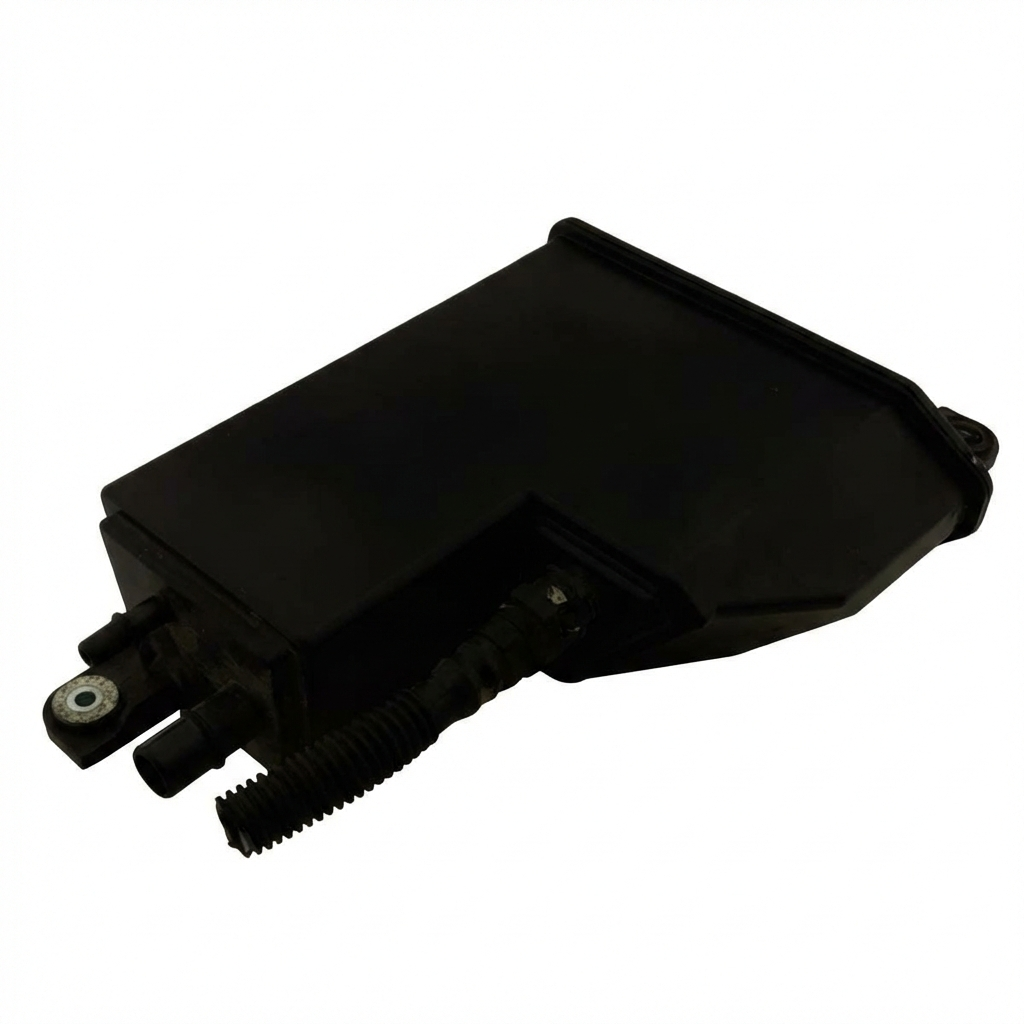
New Aftermarket Parts Available


The information in this article is provided for general reference and educational purposes only. Vehicle specifications, procedures, and part compatibility can vary by production date, trim level, and region. Always consult your vehicle's factory service manual and verify part numbers before purchasing or performing repairs. Safety-critical components such as airbags, seat belts, and braking systems should be installed by a qualified professional.
- Mercury Sable:
- 🛍️ Shop This Part
- What's Unique About the 2000-2005 Mercury Sable
- Symptoms You May Notice
- Most Likely Causes
- Rare But Worth Checking
- Diagnosis Steps
- Parts You'll Likely Need
- Related Codes That Often Appear With This One
- Platform-Specific Known Issues
- Mechanic-Grade Diagnostic Values
- Scan Tool Commands That Help
- Wiring & Ground Locations
- Real Owner Repair Stories
- "I Checked Everything" — The Actual Cause
- When the Usual Fixes Don't Work
- OEM Part Supersession History
- Model Year Variations Within This Range
- Diagnostic Flowchart
- Used vs. New Parts: Buying Guide for This Vehicle
- Real Owner Stories
- 2000 Mercury Sable, V6-3.0L DOHC — 96267 miles
- 1998 Sable
- 1998 Ford Taurus
- Documented NHTSA Reports
- Mercury Milan (Cross-Manufacturer Reference)
- Related OBD-II Codes
- Frequently Asked Questions
- 🎟️ Get 5% Off