

Ultimate P0444 Guide: EVAP Purge Control Valve Circuit Open
The Most Complete Resource for Diagnosing and Fixing P0444
- P0444 specifically indicates an 'open circuit', meaning a physical break in the wiring, a blown 10A-15A EVAP fuse, or a dead purge valve solenoid coil.
- Replacing the $30-$150 purge valve fixes P0444 most of the time, but you must verify 12V power at the connector first to rule out wiring faults.
- Driving with an active P0444 code is safe and does not damage the engine, but guarantees an automatic failure on any state OBD-II emissions test.
- Diagnose P0444 by testing the purge valve's internal resistance; a reading of 'OL' (Open Loop) on a multimeter confirms the valve is dead and requires replacement.
What Does P0444 Mean?

Your car's main computer, the Powertrain Control Module (PCM), has detected a complete break in the electrical circuit for the EVAP purge valve. The EVAP system traps harmful gasoline fumes from your fuel tank in a charcoal canister and feeds them into the engine to be burned. The purge valve acts as the gate for this process. An 'open circuit' code means the electrical signal from the PCM is not reaching the valve, exactly like a light switch that has been completely disconnected from a light bulb.
🎬 Watch: A complete troubleshooting guide for P0444 open circuit codes.Technical definition: Evaporative Emission System Purge Control Valve Circuit Open. This diagnostic trouble code (DTC) is set when the Powertrain Control Module (PCM) detects a loss of electrical continuity in the circuit controlling the EVAP purge valve or solenoid. The PCM continuously monitors the circuit and expects to see a specific voltage; when this voltage is absent, it concludes the circuit is open and triggers code P0444.
Can I Drive With P0444?
Yes, But With Caution. Yes, you can safely drive with a P0444 code. It does not cause immediate engine damage or affect drivability. However, ignoring it guarantees an automatic emissions test failure. Prolonged driving with a non-functioning EVAP system sometimes contributes to a slightly rough idle, but poses no direct risk to expensive components like the catalytic converter.
Common Causes

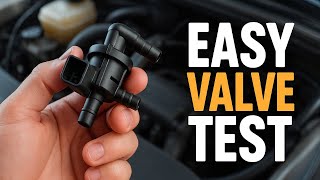
- Faulty EVAP Purge Control Valve/Solenoid (Very Common) — This is the most frequent culprit. The solenoid is a coil of wire that actuates the valve; this coil breaks internally from age or heat, creating an open circuit. This is a purely electrical failure, distinct from the valve being mechanically stuck. 🎬 See how to test your purge valve with this DIY guide.
- Damaged Wiring or Corroded Connector (Common) — The wiring harness to the purge valve is exposed to engine bay heat and vibration. Wires become brittle and break, or rodents chew through them. Connector pins are highly susceptible to moisture corrosion, which interrupts the electrical signal.
- Blown Fuse for the EVAP System (Less Common) — The purge valve circuit is protected by a 7.5A to 15A fuse. If this fuse blows due to a short or overload, it cuts all power to the valve, resulting in an open circuit code.
- Open Circuit in Ground Path (Less Common) — The circuit requires a solid ground to complete the loop. A broken or corroded ground wire associated with the EVAP system or the PCM causes an open circuit condition, even if the power side is intact.
- Saturated Charcoal Canister (Less Common) — Overfilling the gas tank forces liquid fuel into the charcoal canister. This liquid travels to the purge valve, shorting out the solenoid coil and causing it to fail.
- Faulty Powertrain Control Module (PCM) (Rare) — In rare instances, the internal driver circuit within the PCM that controls the purge valve fails. Consider this only after definitively ruling out the valve, wiring, and fuse.
- Loose or Faulty Gas Cap (Rare) — While a loose gas cap typically causes large leak codes (P0455), erratic pressure readings occasionally trick the PCM into flagging a circuit fault incorrectly.
- Software Calibration Issue (Very Rare) — Outdated PCM firmware sometimes misinterprets normal voltage fluctuations as a fault. A manufacturer re-flash resolves cases where no physical fault exists.
Symptoms

- Check Engine Light is On — This is the most common and often the only symptom. The P0444 code illuminates the Malfunction Indicator Lamp (MIL).
- Failed Emissions Test — A vehicle with an active P0444 code automatically fails any OBD-II emissions inspection, as the EVAP system is a critical emissions control component.
- Difficulty Starting After Refueling — If the purge valve fails in a partially open state while also having an electrical fault, it creates a vacuum leak and allows excess fuel vapors into the intake manifold, causing a rough start after you fill the tank.
- Slight Fuel Smell — You notice a faint smell of raw gasoline around the vehicle, as fuel vapors are not being properly contained and burned by the engine.
- Rough Idle or Stalling — The engine idles unevenly, hesitates, or stalls. This happens if the PCM's attempts to operate the non-responsive valve disrupt the expected air-fuel mixture.
- Slight Decrease in Fuel Economy — Because fuel vapors escape into the atmosphere instead of being used for combustion, you observe a small, often negligible, drop in your overall gas mileage.
Diagnostic Flowchart
Tap your situation to follow the diagnostic path that matches what you're seeing on this code.
Common Fixes & Costs
- Replace EVAP Purge Control Valve/Solenoid — Parts: $30-$150, Labor: $50-$150, ~0.8 hr book time (DIY)
- Repair Damaged Wiring or Replace Connector Pigtail — Parts: $10-$30, Labor: $100-$250, ~1.5 hr book time (Intermediate)
- Replace Blown Fuse — Parts: $1-$5, Labor: $0-$50, ~0.2 hr book time (DIY)
- Replace Charcoal Canister Assembly — Parts: $200-$600+, Labor: $100-$300, ~1.5 hr book time (Professional)
- Replace Powertrain Control Module (PCM) — Parts: $600-$1200+, Labor: $200-$400, ~2 hr book time (Professional)
Used vs. New Parts: Buying Guide
When a used part is worth it: A used purge valve is not recommended as it is an electro-mechanical part with a finite lifespan. Consider it only for an older, high-mileage vehicle on a tight budget, sourced from a reputable recycler.
Donor-vehicle mileage cap: roughly under 60000 miles for the part to have meaningful remaining life.
Donor quality checklist:
- Verify the donor vehicle had low mileage and was not scrapped for engine or emissions issues.
- Avoid parts from regions with heavy road salt use, as connectors will be prone to corrosion.
- Match the part number exactly; visual matches are not sufficient.
Decision logic:
- If Part is under $100 new from an OEM or reputable aftermarket brand (Denso, Bosch, Standard Motor Products). → Always buy new. The small savings on a used part are not worth the risk of premature failure.
- If Vehicle is over 150,000 miles and the new OEM part is unusually expensive (e.g., integrated into a larger assembly). → A low-mileage used part is a reasonable gamble, but accept that it may not last as long as a new part.
- If The part is a cheap, unbranded aftermarket version. → Avoid. These are known for high failure rates, sometimes being dead-on-arrival.
Warranty tradeoff: Used parts typically offer a 30-90 day warranty at best. Aftermarket new parts often come with a 1-year to limited lifetime warranty. New OEM parts carry a 1-2 year warranty.
Worst-case if a used part fails: $100-$250 if a used or cheap part fails shortly after installation, requiring repeat labor costs plus the price of another part.
What Happens If You Wait — Timeline
- 0-1 month: Check Engine Light is on. Code P0444 is stored. No other symptoms are noticeable. The vehicle automatically fails an OBD-II emissions test. (MPG impact: 0-2%% · Added cost: $0)
- 1-6 months: A slight decrease in fuel economy becomes apparent, and a faint fuel odor is present around the car, especially after parking in a garage. (MPG impact: 1-3%% · Added cost: $20-$60 in wasted fuel.)
- 6-18 months: The primary consequence remains environmental impact and failed emissions tests. A very slight rough idle develops on some models. There is no risk of cascading mechanical damage. (MPG impact: 1-3%% · Added cost: $0)
- 18+ months: The long-term risk does not escalate to major component failure. The main costs are ongoing pollution, reduced fuel efficiency, and the legal inability to register the vehicle. (MPG impact: 1-3%% · Added cost: Cost of potential fines or inability to register the vehicle, plus the eventual repair cost of $150-$400.)
Cost of Not Fixing It
- Short-Term (0-6 months): Guaranteed failure of an emissions/smog test. A slight decrease in fuel economy (1-3%) is noticeable. (Added cost: Negligible, other than the cost of wasted fuel.)
- Medium-Term (6-18 months): Continued release of harmful hydrocarbon vapors into the atmosphere. A persistent fuel odor develops around the vehicle. (Added cost: $0)
- Long-Term (18+ months): No significant risk of direct mechanical damage to components like the catalytic converter. The primary costs are environmental and the inability to legally register the vehicle. (Added cost: Cost of potential fines or inability to register vehicle.)
Diagnosis Steps

- Check the Gas Cap
Before touching any tools, tighten your gas cap until it clicks at least once and inspect the seal for cracks. This simple check resolves many EVAP-related issues.
Tools: None (Beginner) - Visually Inspect the Purge Valve and Wiring
Locate the EVAP purge valve near the engine's intake manifold. Use a flashlight to check the valve body, electrical connector, and wires for melted plastic, corrosion, frayed wires, or rodent damage.
Tools: Flashlight (Beginner) - Check the EVAP System Fuse
Consult your owner's manual to find the EVAP system or purge solenoid fuse. Pull the fuse and inspect the internal metal strip. A blown fuse indicates an underlying electrical short.
Tools: Fuse puller or needle-nose pliers (Beginner) - Test for Power at the Connector
Disconnect the purge valve electrical connector. Turn the ignition to 'ON' (engine off). Use a multimeter set to DC volts to check for power on the connector pins. One pin must read battery voltage (~12.6V). A 0V reading indicates a blown fuse or broken power wire.
Tools: Multimeter (Intermediate) - Test the Purge Valve's Internal Resistance
Set your multimeter to Ohms (Ω). Touch the probes to the two electrical pins on the purge valve. A healthy valve shows 15-40 ohms of resistance (check your service manual for exact specs). A reading of 'OL' (Open Loop) confirms the internal coil is broken and the valve is dead.
Tools: Multimeter (Intermediate) - Test the Purge Valve with Direct Power (Bench Test)
Carefully apply 12V and a ground directly to the pins of the removed purge valve using a power probe or fused jumper wires. A functioning valve produces a distinct 'click'. No click means the valve is internally dead.
Tools: Power probe or fused jumper wires, vehicle battery (Advanced) - [ADVANCED] Analyze Live Scan Tool Data
Connect an advanced scan tool and monitor 'EVAP Purge Command (%)' and 'EVAP System Pressure'. Command the purge valve to open to 50% with the engine running. If the command PID changes but the pressure does not decrease, it confirms a non-responsive valve or blockage.
Tools: Advanced OBD-II Scan Tool with Live Data and Active Test capability (Advanced) - [PRO TIP] Test the PCM Driver Control (Ground Signal)
Reconnect the valve and backprobe the ground control wire at the connector using a multimeter or oscilloscope. With the engine running, you should see a pulse-width modulated (PWM) signal. If power is present but this signal is missing, the PCM's driver circuit is likely faulty.
Tools: Multimeter, backprobe pins, advanced scan tool, oscilloscope (recommended) (Advanced) - [PRO TIP] Perform an EVAP System Smoke Test
If circuit tests are inconclusive, inject pressurized smoke into the EVAP service port. While not a direct test for an open circuit, it reveals large, non-obvious leaks that cause erratic system behavior and misdiagnosis.
Tools: EVAP smoke machine (Advanced)
When This Code Triggers (Freeze-Frame Conditions)
- Engine Coolant Temp: 40-90°F (Cold start; engine temp close to ambient air temp.)
- Fuel Tank Level: 15-85% (The test will not run on a full or nearly empty tank.)
- Vehicle Speed: 40-65 mph (Steady-state cruise for several minutes.)
- Ambient Air Temp: 40-95°F (EVAP monitor often won't run in very cold or very hot weather.)
Related Codes
- P0443 — P0443 indicates a general 'Circuit Malfunction', while P0444 specifically means 'Circuit Open'. P0444 points directly to a break in continuity. P0443 is broader and includes shorts to ground or performance issues.
- P0445 — The opposite of P0444. P0445 means 'Circuit Shorted', where electricity finds a path to ground too soon. A multimeter test for P0444 shows infinite resistance ('OL'), whereas P0445 shows very low or zero resistance.
- P0446 — Refers to the EVAP system's *vent* control circuit, not the purge circuit. The purge valve is in the engine bay; the vent valve is near the fuel tank. Diagnosis requires locating the correct component.
- P0441 — Indicates 'Incorrect Purge Flow', a performance code. An open circuit (P0444) causes no flow, triggering P0441. However, P0441 is also set by a mechanically stuck valve or hose blockage.
Climate & Environmental Factors
- Road Salt / High Humidity: Regions using road salt or experiencing high humidity see increased P0444 rates. Salt and moisture accelerate corrosion on the purge valve's electrical connector pins and degrade wiring insulation.
- Extreme Engine Bay Heat: High operating temperatures make the plastic body of the purge valve and its wiring insulation brittle. Combined with engine vibration, this breaks internal coil windings or cracks wires.
- Rodent Damage: Rodents seeking shelter in engine bays frequently chew on the soy-based wire insulation used in modern cars, easily severing the small wires leading to the purge valve.
How to Talk to a Mechanic About This Code
Say this: "I have a check engine light and my scanner shows a P0444 code, which is an EVAP Purge Control Valve Circuit Open. I'd like to book a diagnostic appointment to confirm the cause. Can you please perform a circuit test, including checking for power at the connector and testing the valve's resistance?"
This signals you understand P0444 is an electrical code, not a leak. It directs the technician to perform a logical diagnosis instead of just swapping the most common part, saving you money on unnecessary labor.
Avoid saying:
- 'My check engine light is on, can you just fix it?'
- 'My car smells like gas, I think I have a leak.'
- 'I have an EVAP code, just replace the purge valve.'
Questions to ask before authorizing the repair:
- What were the results of the circuit test? Was there 12-volt power at the connector?
- What was the resistance measurement (in ohms) of the purge valve itself? Did it show as an open loop?
- Did you check the EVAP system fuse?
- If you are recommending a new purge valve, can you confirm the wiring and connector are in good condition?
- What is the warranty on the recommended parts and labor?
Where to Take It: Dealer vs Independent vs Chain
- Dealer:
Best for: Vehicles under warranty or covered by a manufacturer's special coverage program (like GM's N232395300)., Complex models where the purge valve is integrated into the charcoal canister (e.g., some Toyotas)., Suspected PCM failures that require manufacturer-specific programming.
Downsides: Typically the highest labor rate., May recommend replacing a larger assembly when a smaller component repair is possible. (Typical cost: +50% vs. baseline) - Independent Shop:
Best fit for most situations. P0444 is a very common code that any competent independent shop diagnoses and repairs effectively and affordably.
Best for: Most out-of-warranty vehicles., Straightforward diagnosis and replacement of the purge valve, wiring, or fuse., Cost-effective diagnosis of a common code.
Downsides: Shop quality and diagnostic skill can vary; look for ASE certifications and good reviews., May not have access to the latest manufacturer-specific software updates. (Typical cost: +0% vs. baseline) - Chain Shop:
Use with caution. Acceptable for a simple purge valve replacement if the price is right, but AVOID for any in-depth electrical diagnosis.
Best for: Checking the gas cap or reading the code for free., Possibly replacing a blown fuse.
Downsides: Technician skill varies widely., May lack the advanced diagnostic tools or experience for proper circuit testing, leading to a misdiagnosis or part-swapping., High pressure to upsell additional services. (Typical cost: -10% vs. baseline)
When to Walk Away From the Repair
If the estimated repair cost for the P0444 and any other needed repairs exceeds 40-50% of the car's private-party value, pause and evaluate your options.
- Car worth $3000, fix is $350: Fix it. This repair is a small fraction of the car's value and is necessary to pass emissions.
- Car worth $4000, fix is $800: Fix it, but only if the car is otherwise in good condition. This represents a more complex repair (e.g., integrated canister on a Toyota).
- Car worth $2500, fix is $1500: Walk away. This implies the P0444 is part of a much larger list of needed repairs. The total cost is too high for the car's value.
What Scan Tool You Need for This Code
Minimum: A code reader that can read and clear codes is the bare minimum. However, for proper diagnosis, a tool that can show live data (EVAP Purge Command %) is highly recommended.
A basic $20 scanner only tells you the P0444 code exists. It cannot help determine if the problem is the valve, the wiring, or the PCM. You need live data to avoid guessing.
Budget: BlueDriver Pro (~$120) — Reads and clears codes, provides freeze-frame data, and graphs live data like 'Purge Command %', which helps verify if the PCM is trying to control the valve. It also offers a database of potential fixes.
Mid-range: Foxwell NT510 Elite / NT530 (~$160) — Includes full bi-directional control (active tests). This allows you to manually command the purge valve to open and close directly from the scanner, providing definitive proof of whether the valve itself is working.
Professional: Autel MaxiCOM MK808S / MK808BT (~$350-500) — Offers robust bi-directional control for EVAP system components, all-system diagnostics, and advanced data logging. This level of tool is essential for diagnosing intermittent wiring faults or potential PCM driver issues.
Rent vs buy: Most AutoZone locations offer a Loan-A-Tool program where you pay a deposit for a tool (including some OBD-II scanners) and get a full refund upon return within 90 days. This is a great option for a one-time fix. However, some states (like California) have restrictions on scanner rentals. If you plan to do your own maintenance regularly, buying a scanner like the BlueDriver is a worthwhile investment.
How to Clear the Code After You Fix It
- Use an OBD-II scan tool to clear the P0444 code.
- Ensure the fuel tank is between 1/4 and 3/4 full.
- Perform the vehicle-specific EVAP drive cycle to run the readiness monitor.
Drive cycle (~45 minutes): A general drive cycle involves: a cold soak (vehicle off 8+ hours), start and idle for 2-3 minutes, drive 10-15 minutes at a steady highway speed (45-65 mph), then perform some stop-and-go city driving. Repeat over several days if necessary.
Readiness monitors affected: EVAP System Monitor, Catalyst Monitor, Oxygen (O2) Sensor Monitor
Before emissions retest: drive at least 100 miles to fully set monitors.
Watch out for:
- Clearing the code with a scanner resets all readiness monitors, not just EVAP.
- The code will return immediately if the root electrical fault was not fixed.
- Failing to meet drive cycle conditions (fuel level, temperature, steady speed) will prevent the EVAP monitor from becoming 'Ready'.
Will This Fail Emissions / State Inspection?
Yes — this code typically fails an OBD-II emissions inspection.
- California: An active P0444 code is an automatic failure. CARB regulations are strict; after repair, the EVAP readiness monitor must be set to 'Ready' before a retest passes.
- New York: The NYS DMV vehicle inspection includes an OBD-II scan. A P0444 code and the associated Check Engine Light result in an immediate failure.
- Texas: In the 17 counties requiring emissions testing, a vehicle with P0444 fails the OBD portion of the inspection. A drive cycle must be completed post-repair to set readiness monitors.
Most Commonly Affected Vehicles
- Ford F-150, Focus, Fusion, Escape (2004-2014) — Very prone to purge valve failures causing a P0444 code, accompanied by a rough idle and significant difficulty starting the engine immediately after refueling.
- Chevrolet / GM Silverado, Cruze, Malibu, Equinox (2007-2016) — Failures of the purge solenoid (engine bay) are common. P0444 specifically points to the purge solenoid circuit, but wiring harness issues are also frequent.
- Toyota Camry, Corolla, RAV4 (2007-2017) — The P0444 code is often traced to a failure of the entire charcoal canister assembly, which integrates the valve, making the repair significantly more expensive.
- Honda Civic, Accord, CR-V (2006-2015) — The EVAP purge control valve is a very frequent failure item, often presenting no symptoms besides the check engine light.
- Hyundai / Kia Elantra, Sonata, Tucson, Optima (2008-2022) — This code is extremely common. While often caused by a bad purge valve, always check the gas cap first. Owners frequently report a fuel smell in the cabin.
- BMW 3-Series (E46, E90), 5-Series (E39, E60), X3, X5 (1999-2013) — Referred to as the 'Fuel Tank Breather Valve'. Failure is a common cause for P0444, especially on models with M54 and S65 engines.
- Volkswagen / Audi Jetta, Golf, Passat, A4 (1999-2015) — Commonly caused by a faulty purge valve, known as the 'N80 Valve'. Technicians recommend checking the connector and wiring carefully for heat brittleness.
- Mercedes-Benz C-Class, E-Class, ML-Class (2005-2015) — P0444 frequently points to a straightforward purge valve failure or a related wiring issue in the engine harness.
Manufacturer-Specific Notes
- Toyota/Lexus: On many 2007-2017 models, the purge valve is integrated into the much larger charcoal canister assembly, turning a sub-$200 repair into a $600-$1000+ job.
- General Motors (Chevrolet, GMC): GM issued Special Coverage Programs (e.g., N232395300, N222369620) for faulty EVAP purge valves on numerous 2019-2020 models, extending coverage to 15 years or 150,000 miles. Check with a dealer before paying for repairs.
- Ford: A failed purge valve causes a unique symptom: the engine is very difficult to start immediately after refueling due to the valve sticking open and flooding the intake with vapor.
- BMW: BMW calls the purge valve the 'Fuel Tank Breather Valve'. On popular models like the E46 and E90, it is located in an accessible spot and is a common DIY replacement.
Real Owner Stories
2019 Kia Stinger GT1 - The Simple DIY Fix
Check Engine Light with code P0444 appeared after installing an aftermarket engine chip and new spark plugs. The code would clear but return immediately after restarting the car.
What they tried:
- Re-checked all wiring harnesses to ensure they were seated properly.
- Checked the gas cap.
- Checked all fuses.
Outcome: The owner discovered the purge valve's electrical connector was simply disconnected, likely knocked loose during the spark plug change. Reconnecting it solved the problem instantly.
Lesson: If a code appears immediately after working in the engine bay, the most likely cause is a disconnected sensor or connector. Always re-trace your steps before buying parts.
2008 Hyundai Elantra - The Misdiagnosis Story
Car was having significant trouble starting after refueling and threw an EVAP code (P0441 - Incorrect Purge Flow).
What they tried:
- Based on the symptoms, the owner replaced the EVAP purge control valve. This fixed the hard-starting issue after fill-ups.
Outcome: Although the primary symptom was fixed, the Check Engine Light returned, but this time with code P0444 (Circuit Open). The new part had fixed the mechanical 'stuck open' problem but was either electrically faulty or the wrong part, creating a new electrical fault code.
Lesson: A new part fixing one symptom but creating a new code often points to a defective or incompatible aftermarket part. Ensure the replacement part's electrical specifications match the OEM design.
2006 Mercedes-Benz S500 - The Unusual Root Cause
A persistent P0444 code was present, but all standard tests passed. The purge valve clicked when activated with a scan tool, wiring had continuity, and there were no vacuum leaks.
What they tried:
- Verified the purge valve was functioning with a bi-directional scan tool.
- Inspected all related hoses and the charcoal canister for blockages.
- Considered an ECU software update or a faulty ECU.
Outcome: As a final attempt before more expensive repairs, the owner swapped the purge valve with one from another identical vehicle. Surprisingly, this fixed the issue, and the old valve worked fine in the other car. The likely cause was an aging valve whose internal resistance had drifted just outside the narrow tolerance expected by the ECU, triggering the code despite still being functional.
Lesson: Even if a component seems to work, its electrical properties (like resistance) can change with age and fall out of the precise range the PCM expects, leading to a fault code. This is especially true on sensitive European models.
Nissan 350Z with GReddy Exhaust - The Modified Car Problem
After relocating the EVAP canister to fit an aftermarket exhaust, the owner started getting a P0444 code and noticed a significant drop in fuel economy and a fuel smell in the garage.
What they tried:
- The owner initially suspected a complex issue related to the turbo installation or engine tune.
Outcome: Upon inspection, a hose connected to the relocated EVAP canister was found to be kinked. Replacing the kinked hose resolved the fuel smell and the P0444 code.
Lesson: When a code appears after modifying a system (like the exhaust), first inspect the parts that were moved or changed. A simple physical issue like a kinked hose is more likely than a complex electronic failure.
How to Prevent This Code From Triggering
- Avoid overfilling the fuel tank. (Every fill-up.) — Consistently topping off the tank forces liquid gasoline into the charcoal canister. This liquid is drawn into the purge valve, destroying its sensitive internal solenoid windings.
- Use high-quality, Top Tier gasoline. (Consistently.) — Lower quality fuels contain contaminants that degrade the seals and internal components of the EVAP system over time.
- Periodically inspect and clean wiring connectors. (Every 30,000 miles or during other engine maintenance.) — Disconnecting the purge valve connector, checking for corrosion, and applying dielectric grease prevents moisture intrusion and ensures a solid electrical connection.
- Take measures to deter rodents if parking outdoors. (As needed, based on environment.) — Rodents frequently sever wiring harnesses. Using peppermint oil, ultrasonic devices, or rodent-repellent tape prevents them from chewing through the purge valve circuit wires.
- Ensure gas cap is tightened properly. (Every fill-up.) — A loose gas cap forces the EVAP system to work under abnormal conditions, increasing stress on components like the purge valve over the long term.
Frequently Asked Questions
Can a loose gas cap really cause a P0444 code?
While a loose gas cap is the classic cause for an EVAP *leak* code (like P0440), it rarely causes a *circuit* code like P0444. However, it is free to check and should always be your first step.
What's the difference between a purge valve and a vent valve?
The purge valve (engine bay) controls the flow of stored fuel vapors from the charcoal canister to the engine intake. The vent valve (near fuel tank) allows fresh air into the canister to help with purging and seal the system for testing.
What are the most common misdiagnoses for P0444?
The most common mistake is replacing the purge valve without testing the circuit first. The actual problem is often a broken wire, a corroded connector, or a blown fuse.
I replaced the purge valve, but the P0444 code came back. What now?
If the code returns immediately, the valve was not the problem. You must re-check for 12V power at the connector, test the control wire for a PCM signal, and inspect the wiring harness for a hidden break.
Will I fail my emissions test with a P0444 code?
Yes, absolutely. A P0444 code indicates a fault in a primary emissions control system and results in an automatic failure of any OBD-II based emissions test.
What is the difference between a purge valve and a purge solenoid?
The terms are used interchangeably. The 'solenoid' is the electrical coil that receives a signal from the PCM, actuating the mechanical 'valve' to open and close. The complete component is a purge solenoid valve.
Can I clear the P0444 code myself?
Yes, you can clear the code using an OBD-II scanner. However, if the underlying electrical fault has not been repaired, the code returns as soon as the PCM runs its EVAP self-test.
What happens if I ignore a P0444 code?
Your car continues to run, but releases harmful fuel vapors into the atmosphere and fails emissions inspections. You may also notice a slight drop in fuel economy.
Key Takeaways
- P0444 specifically indicates an 'open circuit', meaning a physical break in the wiring, a blown 10A-15A EVAP fuse, or a dead purge valve solenoid coil.
- Replacing the $30-$150 purge valve fixes P0444 most of the time, but you must verify 12V power at the connector first to rule out wiring faults.
- Driving with an active P0444 code is safe and does not damage the engine, but guarantees an automatic failure on any state OBD-II emissions test.
- Diagnose P0444 by testing the purge valve's internal resistance; a reading of 'OL' (Open Loop) on a multimeter confirms the valve is dead and requires replacement.
Helpful Videos


The information in this article is provided for general reference and educational purposes only. Vehicle specifications, procedures, and part compatibility can vary by production date, trim level, and region. Always consult your vehicle's factory service manual and verify part numbers before purchasing or performing repairs. Safety-critical components such as airbags, seat belts, and braking systems should be installed by a qualified professional.
- 🎬 Helpful Videos
- What Does P0444 Mean?
- Can I Drive With P0444?
- Common Causes
- Symptoms
- Diagnostic Flowchart
- Common Fixes & Costs
- Used vs. New Parts: Buying Guide
- What Happens If You Wait — Timeline
- Cost of Not Fixing It
- Diagnosis Steps
- When This Code Triggers (Freeze-Frame Conditions)
- Related Codes
- Climate & Environmental Factors
- How to Talk to a Mechanic About This Code
- Where to Take It: Dealer vs Independent vs Chain
- When to Walk Away From the Repair
- What Scan Tool You Need for This Code
- How to Clear the Code After You Fix It
- Will This Fail Emissions / State Inspection?
- Most Commonly Affected Vehicles
- Manufacturer-Specific Notes
- Real Owner Stories
- 2019 Kia Stinger GT1 - The Simple DIY Fix
- 2008 Hyundai Elantra - The Misdiagnosis Story
- 2006 Mercedes-Benz S500 - The Unusual Root Cause
- Nissan 350Z with GReddy Exhaust - The Modified Car Problem
- How to Prevent This Code From Triggering
- Frequently Asked Questions
- Can a loose gas cap really cause a P0444 code?
- What's the difference between a purge valve and a vent valve?
- What are the most common misdiagnoses for P0444?
- I replaced the purge valve, but the P0444 code came back. What now?
- Will I fail my emissions test with a P0444 code?
- What is the difference between a purge valve and a purge solenoid?
- Can I clear the P0444 code myself?
- What happens if I ignore a P0444 code?
- Key Takeaways
- 🎟️ Get 5% Off