

P0443 on 2008-2017 Buick Enclave 3.6L: EVAP Purge Valve Circuit Fixes
For a 2008-2017 Buick Enclave, code P0443 almost always points to a faulty EVAP Purge Solenoid Valve. It's an easy DIY fix, with the part costing between $25 and $60. The valve is located right on top of the engine, making replacement a 15-minute job. Before replacing, it is wise to check the 'Emission 1' 15A fuse, as a known wiring harness issue can cause it to blow.
- P0443 on a 2008-2017 Enclave is an electrical circuit code for the EVAP purge valve.
- The most likely cause by far is a failed purge solenoid valve, which is a cheap and very easy part to replace yourself.
- Before replacing the valve, check the 15A 'EMISSIONS 1' fuse in the underhood fuse box, as a known wiring issue can cause it to blow.
- The valve is located directly on top of the engine, making the job take less than 30 minutes with basic tools (typically a 10mm socket).
- Do not mistake this for a gas cap issue; a bad cap causes different codes (like P0442 or P0455).
- If you also have a P0496 code, it's almost guaranteed the purge valve is the problem.
What's Unique About the 2008-2017 Buick Enclave
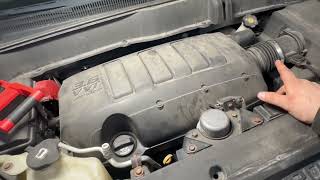
The first-generation Buick Enclave and its GM Lambda platform siblings (Chevy Traverse, GMC Acadia, and Saturn Outlook) are well-known for issues with the EVAP purge solenoid valve. The part is so prone to failure that it's one of the most common repairs for this platform. Fortunately, on the 2008-2017 models, the valve is located directly on top of the engine's intake manifold, making it exceptionally easy to access and replace 🎬 Watch: A quick walkthrough on replacing the purge valve compared to many other vehicles. Additionally, these vehicles are subject to a specific wiring problem documented in a Technical Service Bulletin (TSB), where the engine harness chafes against an A/C line, causing a short that blows the fuse for the EVAP system.
Symptoms You May Notice
- Check Engine Light is on
- Slightly rough idle
- Difficulty starting the engine, or a prolonged crank, immediately after refueling.
- Slight decrease in fuel economy
- Audible clicking or buzzing from the purge valve when it should be off.
- Replacing the gas cap. A bad gas cap typically causes EVAP leak codes like P0442 or P0455, not a circuit code like P0443.
- Performing a smoke test. A smoke test is used to find physical leaks in the EVAP system. P0443 is an electrical circuit code, so a smoke test will not identify the root cause.
Most Likely Causes
- Faulty EVAP Purge Solenoid Valve 🔴 High Probability This specific part is a very common failure item on the 3.6L V6 engine used in the Enclave and other GM models of this era. The internal electronic coil can fail, or the valve's diaphragm can tear or get stuck open, leading to both circuit and performance codes.
How to confirm: With the engine running at idle (especially when cold), disconnect the EVAP line from the purge valve. If you can feel any vacuum suction on the valve's port, it is stuck open and has failed. You can also test the solenoid's resistance with a multimeter (a good reading is typically 15-35 Ohms); an open circuit (infinite resistance) or short (zero resistance) indicates failure. Applying 12V directly to the pins should produce an audible click.
Typical fix: Replace the EVAP purge solenoid valve. It is held by one 10mm bolt on top of the engine.
Est. part cost: $25-$60 - Blown Fuse 🟡 Medium Probability A known issue, referenced in GM TSB PIT5336, involves the engine wiring harness rubbing against an A/C hose coupling at the back of the engine. This chafing can cause a short circuit and blow the 15A fuse for the emissions system, often labeled 'EMISSIONS 1' in the underhood fuse block.
How to confirm: Check the fuse box under the hood for a blown 15A fuse, often labeled 'EMISSIONS 1' or similar (consult the owner's manual for the exact location). If the fuse is blown, inspect the wiring harness near the back of the engine, specifically where it passes the A/C lines, for chafing or damage before replacing the fuse.
Typical fix: Replace the blown fuse and repair the damaged section of the wiring harness by insulating or re-routing it to prevent future contact.
Est. part cost: $1-$5 - Damaged Wiring or Connector ⚪ Low Probability
How to confirm: Visually inspect the wiring harness and two-pin connector leading to the purge solenoid for any signs of cracking, corrosion, or rodent damage. Use a multimeter to check for 12-volt power at the power supply wire (often pink or orange) on the connector with the key on. The other wire is the ground-side control from the PCM.
Typical fix: Repair or replace the damaged section of wire. Clean or replace the electrical connector if it is corroded or damaged.
Est. part cost: $5-$25
Rare But Worth Checking
- Faulty Powertrain Control Module (PCM): This is extremely rare. The PCM should only be considered after all other possibilities, including the valve, fuse, and wiring, have been thoroughly tested and ruled out. A scan tool with bidirectional controls can help verify if the PCM is capable of commanding the circuit.
Diagnosis Steps
- Read the code with an OBD-II scanner to confirm P0443 is present.
- Check the 'EMISSIONS 1' 15A fuse in the engine bay fuse box. If it's blown, inspect the wiring harness for damage (per TSB PIT5336) before replacing it.
- Remove the plastic engine cover. It pulls straight off after removing the oil filler cap.
- Locate the EVAP purge solenoid valve on top of the intake manifold. It will have one electrical connector and two EVAP lines attached.
- Start the engine. Disconnect the vapor line coming from the charcoal canister and place your finger over the port on the valve. If you feel suction at idle, the valve is stuck open and needs to be replaced.
- If no suction is felt, turn the engine off. Disconnect the electrical connector and inspect it for corrosion or damage.
- Use a multimeter to test for battery voltage (approx. 12V) at the power supply pin of the connector with the key in the 'ON' position.
- If power is present, you can test the solenoid's internal resistance with a multimeter. A reading between 15-35 ohms is typical. 🎬 Watch: Professional diagnostic steps for the P0443 circuit code An open or shorted reading confirms a bad solenoid.
- If wiring and the fuse are good, and the valve is not stuck open but the code persists, the solenoid's coil has likely failed electrically. Replace the purge solenoid valve.
Parts You'll Likely Need
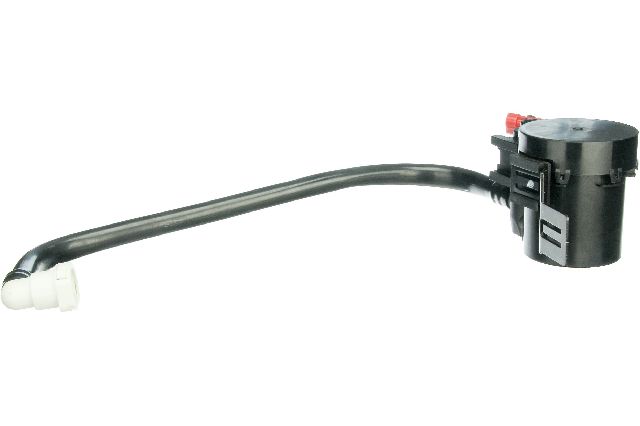
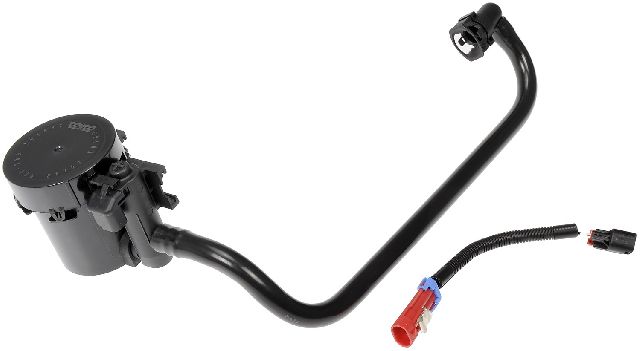
- Vapor Canister Purge Solenoid Valve
(OEM #12597567, 12610560, 12690512)— This is the most common failure point for code P0443 on this vehicle. The part number has been superseded several times. 12597567 is a common original number, while 12610560 and 12690512 are newer revisions.
Trusted brands: ACDelco (GM Original Equipment), Dorman (e.g., 911-082), Standard Motor Products
OEM price range: $40-$60
Aftermarket price range: $25-$45
Related Codes That Often Appear With This One
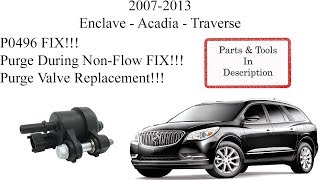
- P0496 — P0496 (EVAP Flow During Non-Purge Condition) is often caused by the same faulty purge valve sticking open. If you see both codes, it's almost certain the purge valve is the culprit. 🎬 See how to fix P0496 and P0443 together
- P0442 or P0455 — While less common, if the purge valve fails in a way that creates a leak path (e.g., cracked housing), it could potentially trigger small or large leak codes in addition to the circuit code.
Technical Service Bulletins (TSBs) & Recalls
- TSB #PIT5336: This bulletin specifically addresses the engine harness chafing on an A/C hose coupling at the rear of the engine, which can cause an open in the 'Emission 1' fuse circuit and trigger P0443 along with other codes.
Platform-Specific Known Issues
- Wiring Harness Chafing: Per GM TSB PIT5336, the engine wiring harness is known to rub against an A/C hose coupling on the back side of the engine. This can wear through the insulation, short the circuit, and blow the 'EMISSIONS 1' fuse, causing P0443 and potentially other O2 sensor codes. A visual and physical inspection of this specific area is critical if the fuse is found to be blown.
Mechanic-Grade Diagnostic Values
- EVAP Purge Solenoid Coil Resistance — expected: 15-35 Ω (Ohms). Failure: A reading of 0 Ω indicates a shorted coil. An infinite (OL) reading indicates an open coil.
- EVAP Purge Solenoid Connector Voltage (Key On, Engine Off) — expected: ~12V (Battery Voltage) on the power supply pin (often pink or orange wire).. Failure: 0V on the power pin indicates a blown fuse (e.g., 'Emission 1') or an open in the power supply wire from the fuse block.
- PCM Ground Control Circuit (Engine Running) — expected: Using a scan tool to command the purge valve, the PCM will pulse the ground circuit. A test light connected to battery positive and probed into the control wire pin should flicker or illuminate.. Failure: No activity on the ground control wire when commanded indicates a wiring issue back to the PCM or a faulty PCM driver.
Scan Tool Commands That Help
- GM GDS2 / Tech2 (or equivalent professional scanner): EVAP Purge/Seal or Activate the VSV for Evap Control — This bidirectional control is used to manually command the purge solenoid on and off. A technician can listen for an audible click from the valve and feel for suction on the vapor line to confirm if the valve is physically responding to the PCM's command, which helps isolate a bad valve from a wiring problem.
- GM GDS2 / Tech2 (or equivalent professional scanner): EVAP System Test — This is an automated test that commands the entire EVAP system through its functions to verify the repair and ensure the monitor will run and pass, which is necessary to turn off the Check Engine Light.
Wiring & Ground Locations
- EVAP Purge Solenoid Connector — On top of the engine intake manifold, connected directly to the purge solenoid valve.. This is the primary connection to test for power, ground command, and resistance. The terminals can corrode or the locking tab can break, leading to a poor connection and a P0443 code. Replacement pigtails with 16-gauge wire are available.
- Engine Block Grounds — Key ground points for the 3.6L V6 include one near the alternator, one on the back of the cylinder head (often above the thermostat housing), and the main block-to-battery ground.. While not specific to the purge circuit, a loose or corroded main engine ground can cause unstable voltage and sensor readings for the entire engine management system, potentially leading to various electrical codes, including P0443. They should be checked if multiple, seemingly unrelated electrical faults are present.
- Harness Chafing Point (TSB PIT5336) — The engine wiring harness at the rear of the engine, where it can rub against an A/C hose coupling.. This is a specific, documented failure point for this vehicle. The chafing can short the power wire for the 'Emission 1' fuse, which powers the purge solenoid, causing a P0443 code. This spot must be inspected if that fuse is blown.
Real Owner Repair Stories
- YouTube channel 'Automotive Insight' (2015 Buick Enclave 3.6L V6) — Check Engine Light with code P0496 (EVAP Flow During Non-Purge).
❌ Tried (didn't work) The diagnosis went straight to the likely cause.
✅ What actually fixed it The mechanic confirmed the purge valve was stuck partially open by observing the fuel tank pressure sensor data on a scan tool and then verifying vacuum at the valve port at idle. Replacing the EVAP purge solenoid valve on top of the engine and clearing the codes resolved the issue. The EVAP system monitor test passed afterward.
OEM Part Supersession History
12597567 (and earlier numbers like 12606684)→12610560— Standard part evolution, likely for improved durability or material changes.12610560→12690512— Continued design revision by GM.12690512→12737252 (and others)— Latest revision from GM. Aftermarket equivalents often cross-reference multiple OEM numbers.
Model Year Variations Within This Range
- 2008 vs 2009-2017: The 2008 model year used the port-injected 3.6L LY7 V6, while 2009 and later models used the direct-injected 3.6L LLT (and later LFX) V6. However, for the P0443 code, the EVAP purge solenoid location, function, and diagnostic procedure are virtually identical across the entire 2008-2017 generation.
Diagnostic Flowchart
Used vs. New Parts: Buying Guide for This Vehicle
When a used part is the smart pick: For this specific repair, a used part from a junkyard is NOT recommended. The EVAP purge solenoid is an inexpensive electronic component with a high failure rate. The risk of purchasing a used part that is already failing or has limited life remaining is very high, making it poor value for the effort involved.
OEM-only on this vehicle (don't cheap out):
- The EVAP purge solenoid is NOT an OEM-only part. Quality aftermarket alternatives are widely available and perform well.
Aftermarket brands forum-validated for this vehicle:
- ACDelco (Original Equipment)
- Dorman (specifically part number 911-082 is frequently cited)
- Standard Motor Products (SMP)
- TRQ
Real Owner Stories
Aggregated from forums and TSBs cited above. Mileages and costs reflect what owners reported in those sources.
2016 Buick Enclave 3.6L — 79745 miles
Symptoms: Check Engine Light with code P0443 for the EVAP purge valve solenoid control.
What fixed it: The EVAP canister purge solenoid was removed and replaced.
Source hint: JRM Automotive LLC Service Records
Buick Enclave 3.6L
Symptoms: Long crank after fueling up; scan tool showed negative tank pressure, indicating the purge valve was stuck open and pulling a vacuum on the fuel tank when it shouldn't be.
What fixed it: Replaced the purge valve.
Source hint: YouTube comment on 'Alex The Car Doctor'
2019 Buick Enclave 3.6L
Symptoms: Check Engine Light with P0443. The owner noted a potential symptom is that the car 'might be hard to start after gassing up.'
What fixed it: Implied replacement of the purge valve.
Source hint: Reddit r/MechanicAdvice
Related OBD-II Codes
Frequently Asked Questions
I heard there's a TSB about a wiring issue causing P0443 on my Enclave. What should I look for?
My 2014 Enclave is very hard to start right after I get gas. Is this related to the P0443 code?
What is the most common part that fails and causes P0443 on the 3.6L Enclave?
How can I quickly test the purge valve on my Enclave myself?
My 'EMISSIONS 1' fuse keeps blowing. What's the likely cause on my 2011 Enclave?
I have a GMC Acadia with the 3.6L engine. Does this P0443 information apply to my vehicle too?
Helpful Videos
Used OEM Parts in Stock

New Aftermarket Parts Available


The information in this article is provided for general reference and educational purposes only. Vehicle specifications, procedures, and part compatibility can vary by production date, trim level, and region. Always consult your vehicle's factory service manual and verify part numbers before purchasing or performing repairs. Safety-critical components such as airbags, seat belts, and braking systems should be installed by a qualified professional.
- Buick Enclave:
- 🎬 Helpful Videos
- 🛍️ Shop This Part
- What's Unique About the 2008-2017 Buick Enclave
- Symptoms You May Notice
- Most Likely Causes
- Rare But Worth Checking
- Diagnosis Steps
- Parts You'll Likely Need
- Related Codes That Often Appear With This One
- Technical Service Bulletins (TSBs) & Recalls
- Platform-Specific Known Issues
- Mechanic-Grade Diagnostic Values
- Scan Tool Commands That Help
- Wiring & Ground Locations
- Real Owner Repair Stories
- OEM Part Supersession History
- Model Year Variations Within This Range
- Diagnostic Flowchart
- Used vs. New Parts: Buying Guide for This Vehicle
- Real Owner Stories
- 2016 Buick Enclave 3.6L — 79745 miles
- Buick Enclave 3.6L
- 2019 Buick Enclave 3.6L
- Related OBD-II Codes
- Frequently Asked Questions
- 🎟️ Get 5% Off