

P0442 on 2004-2006 Scion xA: Causes and Fixes for a Small EVAP Leak
For a 2004-2006 Scion xA, code P0442 most often means you have a loose or faulty gas cap. If tightening or replacing the cap (~$25) doesn't fix it, check for a rusted fuel filler neck sealing surface. The next likely culprits are a cracked EVAP hose or a bad, rusty Vacuum Switching Valve (VSV) on the charcoal canister, which can sometimes be repaired without replacing the whole unit.
- Always start with the simplest and cheapest fix: check that your gas cap is tight. If the light comes back, a new OEM gas cap is the next best step.
- If the gas cap isn't the issue, the leak is most likely a cracked rubber hose or a faulty valve on the charcoal canister located at the rear of the car.
- A smoke test is the fastest and most accurate way to find the exact location of a small EVAP leak if it's not obvious from a visual inspection.
- Be aware of the vapor canister part number change during the 2005 model year if you need to replace it.
- This code will not leave you stranded, but it will cause you to fail an emissions test.
What's Unique About the 2004-2006 Scion xA
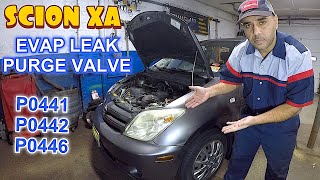
The Scion xA, being a Toyota-platform vehicle, has a generally reliable EVAP system, but it is prone to specific failures over time. A common issue on these cars isn't just a loose gas cap, but corrosion and failure of the Vacuum Switching Valve (VSV) located on the charcoal canister itself, especially in areas with road salt. Owners often find that after replacing the gas cap, the true source of the leak is a cracked hose or a faulty valve near the rear of the car. 🎬 Watch this detailed diagnostic and repair walkthrough for the Scion xA. The first-generation Scion xB and Toyota Echo share these components and failure patterns.
Symptoms You May Notice
- Check Engine Light is on
- A faint smell of fuel (in rare cases)
- Difficulty filling the gas tank (if the vent is clogged)
- Slightly rough idle if the purge valve is stuck open
- Replacing the oxygen sensor
- Replacing the mass airflow sensor
- Replacing the purge valve when the issue is the canister vent valve (VSV) or gas cap.
Most Likely Causes
- Loose or Faulty Gas Cap 🔴 High Probability This is the most common cause for a P0442 on any vehicle, including the Scion xA. The rubber seal on the cap can dry out and crack over time, or the cap may simply not have been tightened correctly after refueling. Using a non-OEM cap is a frequent cause of a persistent code, as aftermarket caps may not seal to Toyota's specific pressure standards.
How to confirm: First, ensure the cap is tightened until it clicks several times. Clear the code and drive for a few days. If the light returns, inspect the cap's seal for cracks or damage. Replacing it with a new OEM cap is a cheap and effective diagnostic step. Many owners recommend only using a genuine Toyota/Scion cap to ensure a proper fix.
Typical fix: Tighten or replace the gas cap with an OEM part.
Est. part cost: $20-$35 for OEM - Rusted Fuel Filler Neck 🟡 Medium Probability In areas where road salt is used, the metal lip of the fuel filler neck where the gas cap O-ring seals can become rusted and pitted. This rough surface prevents even a brand-new OEM gas cap from creating a perfect seal, leading to a persistent P0442 code.
How to confirm: Remove the gas cap and visually inspect the metal filler neck opening. Feel the sealing surface for roughness, rust flakes, or pitting. If it's not smooth, it's likely the source of the leak.
Typical fix: Use a wire brush or fine-grit sandpaper to carefully clean the rust off the filler neck lip until it is smooth. Apply a very thin layer of dielectric grease to the cleaned surface to help the cap seal and prevent future rust.
Est. part cost: $0-$10 for a wire brush and grease - Faulty Charcoal Canister Vent Valve / VSV 🟡 Medium Probability The vent valve (often called a VSV, or Vacuum Switching Valve, on Toyotas) is located on the charcoal canister at the rear of the car. It is highly susceptible to internal rust from moisture, especially in the salt belt. The rust prevents the valve's plunger from seating correctly, creating a small leak. The mounting bolts are also known to rust and break upon removal.
How to confirm: A smoke test will often reveal smoke exiting the VSV body. A detailed DIY on ScionLife.com shows how to remove the VSV, pry it open, clean the internal rust from the valve seat with sandpaper, apply a thin layer of silicone sealant, and reassemble. The valve can also be bench-tested by applying 12v power; it should block airflow when energized and allow it when de-energized.
Typical fix: Repairing the valve by cleaning it is a viable option. Otherwise, replace the entire charcoal canister assembly, as the valve is not typically sold separately.
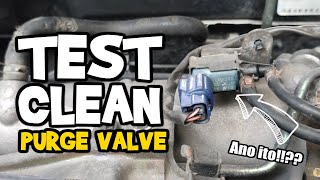
Est. part cost: $250-$410 for the full canister assembly - Cracked or Disconnected EVAP Hoses 🟡 Medium Probability The rubber and plastic hoses in the EVAP system become brittle with age and heat, leading to small cracks. A common point of failure is a vacuum hose near the air filter box that can get disconnected or cracked during service. One owner on ScionLife fixed their code by simply adding hose clamps to loose-fitting hoses 🎬 See how to check your purge valve and EVAP lines for leaks. in the engine bay.
How to confirm: Visually inspect all accessible EVAP hoses in the engine bay and running towards the rear of the vehicle for any obvious cracks, rot, or loose connections. Pay special attention to the connections at the purge valve in the engine bay and the various ports on the charcoal canister. A smoke test is the most effective way to find a leak that isn't visually apparent.
Typical fix: Replace the damaged section of hose or secure loose connections with clamps.
Est. part cost: $5-$20 for a section of hose and clamps - Leaking Charcoal Canister ⚪ Low Probability While less common than valve failure, the plastic body of the canister itself can develop hairline cracks from age, impact from road debris, or from freeze-thaw cycles if water gets into the system. Some owners warn against aftermarket brands like Dorman, citing premature failure of the replacement part.
How to confirm: A smoke test is the definitive way to confirm a leak from the canister body itself. Visually inspect it for any cracks or physical damage.
Typical fix: Replace the entire charcoal canister assembly.
Est. part cost: $280-$410
Rare But Worth Checking
- Faulty Purge Valve: The purge valve (solenoid) is located in the engine bay and is normally closed. While it can fail and cause a leak, it's less common for a small leak code like P0442 and may be accompanied by other codes like P0441 (Incorrect Purge Flow).
- Cracked Fuel Filler Neck Pipe: The metal or rubber pipe that leads from the gas cap down to the fuel tank can rust through or crack, causing a leak. This is less common than a bad seal at the cap but can happen on older vehicles in corrosive climates.
Diagnosis Steps
- Read the code with an OBD-II scanner to confirm P0442 is present. Note any other codes, especially P0441 or P0446, as they can help pinpoint the location.
- Inspect the gas cap. Remove it, check the seal for cracks, and reinstall it, ensuring it clicks multiple times.
- Inspect the fuel filler neck opening for rust or pitting on the sealing surface. Clean with a wire brush if corrosion is present.
- Clear the codes and drive for several days to see if the light returns. If it does, proceed to the next step.
- Replace the gas cap with a genuine OEM part. This is a low-cost, high-probability fix, and aftermarket caps are a known cause of problems.
- Perform a thorough visual inspection of all EVAP hoses in the engine bay and under the car, leading to the charcoal canister. Look for any cracks, loose fittings, or disconnections. Check if adding hose clamps to existing connections helps.
- If no visual faults are found, a professional smoke test is the most effective next step. This involves injecting smoke into the EVAP system to see where it escapes, pinpointing the leak.
- During the smoke test, pay close attention to the charcoal canister and its associated VSV, as this is a common failure point on the Scion xA/xB.
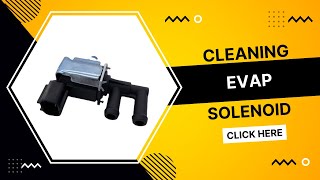
- Test the purge valve (engine bay) and vent valve/VSV (on canister) for proper operation. The VSV can be bench-tested by applying 12V and checking if it holds air. 🎬 Watch: How to clean and test an EVAP solenoid yourself.
- Once the leak is found, repair or replace the faulty component.
Parts You'll Likely Need
- Fuel Tank Cap Assembly
(OEM #77300-53010 (replaces 77300-50010))— This is the most frequent cause of a P0442 code. The seal wears out or an improper aftermarket cap is used. Always recommended to use OEM.
Trusted brands: Toyota/Scion Genuine Part
OEM price range: $25-$35
Aftermarket price range: $15-$25 - Vapor Canister Assembly
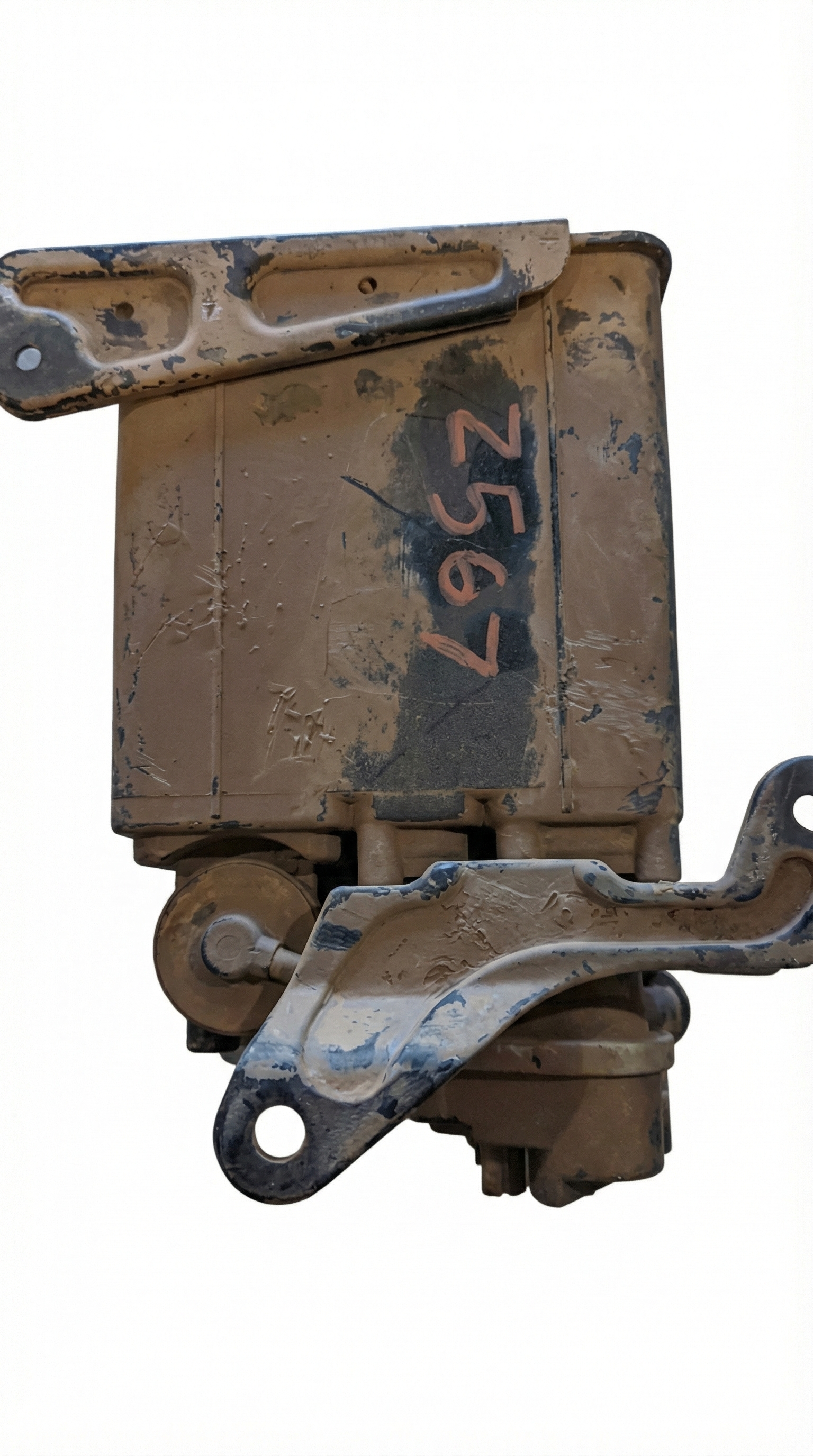
(OEM #77740-52070 (for 2004 & early 2005) or 77740-52100 (for late 2005 & 2006))— The VSV on the canister fails due to internal rust, or the canister body itself cracks. It's a common failure point after the gas cap has been ruled out. Note the mid-year part split in 2005.
Trusted brands: Toyota/Scion Genuine Part
OEM price range: $280-$410
Aftermarket price range: $150-$250 - EVAP Purge Valve / Solenoid
(OEM #90910-12259 (supersedes 90910-12272))— Located in the engine bay, this valve controls the flow of vapors to the engine. It can stick open or closed, but is a less common cause for P0442 alone and more often associated with P0441. A broken electrical connector is also a known failure point.
Trusted brands: Toyota/Scion Genuine Part, Standard Motor Products
OEM price range: $70-$90
Aftermarket price range: $30-$60
Related Codes That Often Appear With This One
- P0441 — Indicates incorrect purge flow, often pointing to a faulty purge valve or a blockage in the system. If the same component (like a stuck purge valve) is causing a leak and a flow issue, these codes can appear together.
- P0446 — Indicates a fault in the vent control circuit or valve, pointing directly to the VSV on the charcoal canister. Seeing P0442 and P0446 together strongly suggests the problem is at the canister assembly at the rear of the car.
Platform-Specific Known Issues
- There is a critical part number split for the vapor canister in the 2005 model year. Early 2005 models use the same part as 2004 (77740-52070), while late 2005 models use the same part as 2006 (77740-52100). Visual confirmation or checking with a VIN is necessary before ordering.
- The canister-mounted VSV is prone to internal rusting, causing a leak. It is possible to disassemble and clean the valve as a low-cost repair alternative to replacing the entire canister assembly.
- The metal mounting bolts for the VSV and canister are known to seize with rust and may break during removal, requiring drilling out or alternative fastening methods like zip ties.
Mechanic-Grade Diagnostic Values
- Purge Valve / VSV Solenoid Coil Resistance — expected: 15 - 30 Ohms at room temperature. Failure: A reading far outside this range (e.g., open circuit/infinite resistance or a dead short/zero resistance) indicates a bad solenoid coil.
- Vapor Pressure Sensor Voltage — expected: Signal voltage between 0.5V and 4.5V, with a 5V reference from the ECM.. Failure: Voltage outside this range, or a voltage that doesn't change as system pressure changes, indicates a faulty sensor. Low voltage corresponds to low pressure in the tank.
Scan Tool Commands That Help
- Toyota Techstream: Evaporative System Check (Utility) — This is a bidirectional test that allows a technician to command the EVAP system components (purge valve, vent valve) to operate and monitor the system's ability to hold a vacuum. It's used to confirm a leak exists or to verify a repair without waiting for the vehicle's own monitor to run, which can take several days.
- Professional Scan Tool (e.g., Snap-on, Autel): EVAP System Test / Cold Soak Bypass — Similar to Techstream, many professional scan tools have a function to force the EVAP monitor to run. This is crucial for verifying a fix, as the Toyota system may otherwise wait up to 5 hours after the engine is off to perform its self-test.
Wiring & Ground Locations
- Purge Valve Connector — In the engine bay, typically on or near the air filter housing, connected to the purge valve/solenoid.. The wires at this connector can become brittle and break, or the connector housing itself can fail, causing an open circuit. This can lead to codes P0441, P0442, and P0446. The Toyota housing part number is 90980-11156.
- Canister Vent Valve (VSV) Connector — Under the rear of the vehicle, attached to the charcoal canister assembly.. This 2-wire connector provides power to the vent valve. Corrosion in this area is common, so ensuring the connector and its terminals are clean and making good contact is a key diagnostic step when P0442 is accompanied by P0446.
- Engine Room J/B and R/B — The main fuse and relay boxes are located on the left side of the engine compartment.. The EFI MAIN relay and EFI No. 1 fuse, located in these boxes, provide power to the EVAP system components. A fault in this circuit, though rare, could disable the system.
Real Owner Repair Stories
- ScionLife.com forum user (2004 Scion xA Manual) — Persistent P0442 Check Engine Light that returns two days after clearing.
❌ Tried (didn't work) Replacing the gas cap, Visually inspecting hoses
✅ What actually fixed it The user was advised to test the two Vacuum Switching Valves (VSV), one in the engine bay (purge valve) and one on the charcoal canister (vent valve), as these are common failure points beyond the gas cap. - YouTube channel JdcautoLV (2005 Scion xA) — Check Engine Light with codes P0441, P0442, and P0446. A previous shop quoted over $1,000 for a new canister and purge valve.
❌ Tried (didn't work) The owner had already replaced the gas cap.
✅ What actually fixed it The technician found a broken wire at the purge valve connector in the engine bay and a separate cracked vacuum hose. Repairing the wire with a new connector pigtail (Toyota P/N 90980-11156) and replacing the cracked hose fixed all codes. - ScionLife.com forum user (DIY Guide) (Scion xB (shares same EVAP components)) — P0442 code, common in salt belt regions.
❌ Tried (didn't work) Assuming it was just a loose gas cap.
✅ What actually fixed it The user performed a DIY repair on the canister-mounted vent valve (VSV). They removed the VSV, pried the metal casing open, cleaned internal rust off the valve plunger and seat with sandpaper, re-sealed it, and reinstalled it. This fixed the leak without needing to buy a new $300+ canister assembly.
"I Checked Everything" — The Actual Cause
- In a case on a sister platform (2005 Scion xB), an owner reported having a persistent P0442 even after a smoke test showed no leaks. The ultimate cause was not specified in the thread, but it highlights that intermittent electronic faults (like a failing VSV that only leaks when energized/de-energized) or issues with the fuel tank pressure sensor can sometimes fool a static smoke test.
OEM Part Supersession History
77740-52070→N/A, this part is for early production models.— This is the vapor canister for 2004 and early 2005 models.
Heads up: Not interchangeable with the late 2005/2006 part (77740-52100). Vehicle production date or visual confirmation is required to order the correct part for a 2005 model.77740-52100→N/A, this part is for late production models.— This is the vapor canister for late 2005 and 2006 models.
Heads up: Not interchangeable with the 2004/early 2005 part (77740-52070).90910-12272→90910-12259— Standard part update by the manufacturer for the engine bay purge valve/solenoid.
Model Year Variations Within This Range
- 2005: There was a mid-year change for the vapor canister assembly. Early 2005 models use part number 77740-52070 (same as 2004), while late 2005 models use 77740-52100 (same as 2006). There is no clear production date cutoff, so visual inspection or checking with a dealer using the VIN is the only way to be certain which part is needed.
- 2006: The 2006 model received a minor facelift with revised grille and taillamps. The base audio system was also updated to include an auxiliary input for music players. These changes did not affect the EVAP system diagnosis for P0442.
Diagnostic Flowchart
Real Owner Stories
Aggregated from forums and TSBs cited above. Mileages and costs reflect what owners reported in those sources.
2004-2006 Scion xA
Symptoms: P0442 code caused by internal rust in the canister-mounted VSV, a common failure in the salt belt.
What fixed it: Disassembled the VSV, pried it open, cleaned the internal rust from the valve seat with sandpaper, applied a thin layer of silicone sealant, and reassembled it.
Source hint: ScionLife.com: A highly detailed thread titled 'DIY: Fix for P0442' (posted by user Crab_Spirits, 2011)
2004-2006 Scion xA
Symptoms: EVAP codes triggered by loose-fitting vacuum hoses in the engine bay.
What fixed it: Secured the loose-fitting vacuum hoses in the engine bay using hose clamps.
Cost: $3-$3
Source hint: ScionLife.com: In a thread titled 'Scion Xa Charcoal Canister Problems' (2014)
2004-2006 Scion xA
Symptoms: Premature failure of an aftermarket Dorman-brand charcoal canister solenoid in just under 3 years.
What fixed it: Replaced the failed aftermarket canister, warning others to use OEM or a brand with a better warranty.
Source hint: ScionLife.com: A user in the thread 'Replaced the fuel Evaporative Canister..' (2019)
2004-2006 Scion xB
Symptoms: Persistent P0442 code on the sister xB platform.
What fixed it: Diagnosed and addressed common EVAP failure points including the gas cap, hoses, and charcoal canister.
Source hint: Car Talk Community: A 2019 thread 'Scion XB P0442'
Related OBD-II Codes
Frequently Asked Questions
I need to replace the charcoal canister on my 2005 Scion xA. Which part number do I need?
Can I just clean the VSV on my Scion xA instead of buying a whole new charcoal canister?
I'm trying to remove the charcoal canister on my xA, but the bolts are stuck. Is this normal?
Will an aftermarket gas cap fix the P0442 code on my Scion xA?
Should I buy a Dorman brand charcoal canister for my Scion xA?
I replaced the gas cap on my xA but the P0442 code came back. What should I check next?
Helpful Videos
Used OEM Parts in Stock
New Aftermarket Parts Available



The information in this article is provided for general reference and educational purposes only. Vehicle specifications, procedures, and part compatibility can vary by production date, trim level, and region. Always consult your vehicle's factory service manual and verify part numbers before purchasing or performing repairs. Safety-critical components such as airbags, seat belts, and braking systems should be installed by a qualified professional.
- Scion xA:
- 🎬 Helpful Videos
- 🛍️ Shop This Part
- What's Unique About the 2004-2006 Scion xA
- Symptoms You May Notice
- Most Likely Causes
- Rare But Worth Checking
- Diagnosis Steps
- Parts You'll Likely Need
- Related Codes That Often Appear With This One
- Platform-Specific Known Issues
- Mechanic-Grade Diagnostic Values
- Scan Tool Commands That Help
- Wiring & Ground Locations
- Real Owner Repair Stories
- "I Checked Everything" — The Actual Cause
- OEM Part Supersession History
- Model Year Variations Within This Range
- Diagnostic Flowchart
- Real Owner Stories
- 2004-2006 Scion xA
- 2004-2006 Scion xA
- 2004-2006 Scion xA
- 2004-2006 Scion xB
- Related OBD-II Codes
- Frequently Asked Questions
- 🎟️ Get 5% Off