

P0442 on 2004-2009 Mazda 3: EVAP Small Leak Causes and Fixes
On a 2004-2009 Mazda 3, code P0442 is most often caused by a faulty gas cap or a cracked fuel pump lock ring under the rear seat. After checking the gas cap, lift the rear seat and check for a fuel smell, a tell-tale sign of a cracked lock ring, before smoke testing or replacing other EVAP components.
- Always check the gas cap first; it's the easiest and a common fix.
- On a 2004-2009 Mazda 3, the second most likely cause is a cracked fuel pump lock ring under the rear seat. Check for a fuel smell in that area before buying parts.
- The purge valve (engine bay) and vent valve (under car) are the next most likely culprits.
- This code will not affect your car's safety or drivability, but it will cause you to fail an emissions test.
- If a visual inspection and component checks don't find the leak, a professional smoke test is the most efficient way to locate it.
What's Unique About the 2004-2009 Mazda 3

While a loose gas cap is a common cause for P0442 on any car, the first-generation Mazda 3 (2004-2009) is particularly known for a brittle plastic fuel pump lock ring. This ring, located on top of the fuel tank under the rear seat, is prone to developing small cracks over time, creating a fuel vapor leak that perfectly matches the criteria for a P0442 code. This is a very common failure point and should be a primary suspect after the gas cap has been ruled out. Many owners have confirmed this specific failure after replacing other parts unnecessarily.
Symptoms You May Notice
- Check Engine Light is on.
- A faint to strong fuel odor may be noticeable, particularly inside the car around the rear seat area if the fuel pump lock ring is cracked. This smell is a key indicator for this specific model.
- In rare cases, a rough idle or difficulty starting immediately after refueling if the purge valve is stuck open.
- A slight decrease in fuel economy is possible if the purge valve is leaking, but this is not a primary symptom.
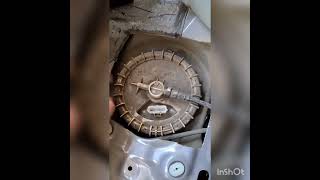
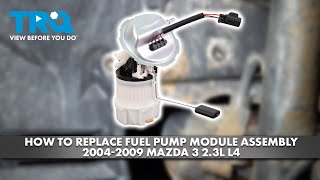
- Replacing the purge valve or vent valve without first checking for the common cracked fuel pump lock ring, leading to unnecessary expense and repeated repairs. The presence of a fuel smell under the rear seat is a strong indicator that points directly to the lock ring. 🎬 See this walkthrough for replacing the fuel pump module assembly.
Most Likely Causes


- Loose or Faulty Gas Cap 🔴 High Probability The gas cap seal is a simple rubber O-ring that degrades, hardens, and cracks over time, preventing a proper seal. Mazda issued a TSB (01-020/10) for this issue, recommending a modified part for persistent leaks.
How to confirm: Ensure the cap is tightened until it clicks multiple times. Remove the cap and inspect the rubber seal for any visible cracks, stiffness, or deformities. Also, check the fuel filler neck for rust or debris that could prevent a good seal.
Typical fix: Tighten the cap. If the seal is bad, replace the entire gas cap. It is highly recommended to use an OEM cap, as some aftermarket caps do not seal correctly and can cause the code to return.
Est. part cost: $10-$40 - Cracked Fuel Pump Lock Ring 🔴 High Probability The OEM plastic lock ring on top of the fuel tank becomes brittle with age and exposure to fuel vapors, developing hairline cracks. This is a well-documented and extremely common failure on this platform, often causing a P0442 before any other symptoms appear.
How to confirm: Lift the bottom cushion of the rear seat (it pulls up from the front). Remove the black metal access panel (typically held by four 10mm bolts). A strong smell of raw fuel is a definitive sign of a leak in this area. You may see fuel residue or feel a crack on the large black plastic ring that holds the fuel pump module in place.
Typical fix: The fuel pump lock ring and its corresponding gasket must be replaced. This can be done from inside the car without dropping the fuel tank. Some owners have even cut a larger access hole in the sheet metal to make removal easier. A metal 🎬 Watch: How to replace the lock ring by cutting an access hole. aftermarket replacement ring (like Dorman 579-013) is available and recommended over the OEM plastic part to prevent recurrence.
Est. part cost: $30-$60 - Faulty Purge Solenoid Valve 🟡 Medium Probability This valve, located in the engine bay, cycles frequently to draw fuel vapors into the engine. Over time, it can get stuck open or closed, or the internal seal can fail, creating a leak path.
How to confirm: The valve is located in the engine bay, typically mounted to the intake manifold. It can be tested by applying 12V to its terminals to see if it clicks open and closed. When de-energized, it should be closed and hold vacuum. You can test this with a hand-held vacuum pump.
Typical fix: Replacement of the purge solenoid valve.
Est. part cost: $30-$150 - Faulty Canister Vent Solenoid/Valve 🟡 Medium Probability Located under the rear of the car near the charcoal canister, this valve is exposed to road salt, water, and debris, which can cause it to corrode and fail to seal properly when commanded closed during an EVAP test.
How to confirm: The valve is located above the rear subframe, making access difficult. It is normally open. To test, a scan tool is used to command it closed while a smoke machine fills the system. Smoke exiting the vent valve indicates a failure. It can also be removed and bench-tested by applying 12V and checking if it seals against airflow.
Typical fix: Replacement of the canister vent solenoid. This is a difficult job due to its location, often requiring the rear subframe to be lowered for access.
Est. part cost: $50-$120
Rare But Worth Checking
- Cracked or Disconnected EVAP Hose: While less common than component failure, the rubber and plastic hoses of the EVAP system can become brittle and crack with age, especially the small elbows and connectors. A visual inspection and/or smoke test will reveal these leaks. A common failure point is the breather hose between the filler neck and the tank.
- Cracked Charcoal Canister: The charcoal canister itself, located near the rear axle, can be damaged by road debris or develop cracks, causing a leak. This is usually found during a smoke test when smoke is seen emitting from the body of the canister itself.
Diagnosis Steps
- Read the code with an OBD-II scanner to confirm P0442.
- Inspect the gas cap. Ensure it is tight and clicks. Remove it and check the rubber seal for cracks or damage. Replace with an OEM part if it appears worn or if in doubt.
- Clear the code and drive for a few days to see if it returns. If it does, proceed to the next step.
- Lift the rear seat cushion and remove the fuel pump access panel. Note any strong fuel smell, which points directly to a cracked lock ring or seal. Visually inspect the black plastic ring for cracks or fuel residue.
- If no fuel smell is present under the seat, perform a visual inspection of the purge solenoid and its connected hoses in the engine bay for any obvious cracks or loose connections.
- Safely raise the vehicle and inspect the canister vent valve and all EVAP lines running from the tank to the engine for visible damage, rust, or loose connections.
- If no visual faults are found, the most effective next step is to have a smoke test performed. This involves injecting low-pressure, UV-dyed smoke into the EVAP system's service port. The smoke will escape from the leak's location, making it easy to pinpoint, whether it's a hose, valve, or the canister itself.
Parts You'll Likely Need

- Gas Cap
(OEM #BNYF-42-250)— This is the simplest and a very common point of failure for the EVAP system. The seal wears out over time. Always try an OEM cap first.
Trusted brands: Mazda OE, Stant, Gates
OEM price range: $25-$40
Aftermarket price range: $10-$25 - Fuel Pump Lock Ring and Seal
(OEM #BN8F-42-167 (Ring), BN8F-42-166 (Seal))— A very common failure specific to the 2004-2009 Mazda 3. The plastic ring cracks, causing a small vapor leak from the top of the fuel tank.
Trusted brands: Mazda OE (Plastic), Dorman 579-013 (Metal Upgrade)
OEM price range: $30-$60
Aftermarket price range: $20-$40 - Vapor Canister Purge Solenoid Valve
(OEM #Z504-18-741A (Verify with VIN))— A common failure that can get stuck open or closed, causing a constant leak path. Located in the engine bay for relatively easy access.
Trusted brands: Mazda OE, Bosch, Dorman
OEM price range: $100-$150
Aftermarket price range: $30-$100
Related Codes That Often Appear With This One
- P0455 — This code indicates a large EVAP leak. If a component like the fuel pump lock ring has a significant crack, or if the gas cap is left off entirely, it can trigger both the small leak (P0442) and large leak (P0455) codes.
- P0456 — This code indicates a very small EVAP leak. If the leak size is on the borderline, the ECU may set either P0442 or P0456, or sometimes both intermittently. The diagnostic and repair process is nearly identical.
Technical Service Bulletins (TSBs) & Recalls
- TSB 01-020/10: Addresses loose fuel filler caps causing EVAP codes P0442, P0455, and P0456, and recommends replacing with a modified part.
- TSB 01-002-18-3417: Provides a detailed diagnostic procedure for dealerships to locate EVAP system leaks for codes including P0442 on the 2004-2009 Mazda 3. This TSB guides technicians through a systematic check of the system.
- Bulletin #01-002-18-3417: A manufacturer service bulletin for related Mazda models notes that vehicles may have a MIL illumination with DTCs P0441, P0442, P0455, or P0456 stored in memory and provides a specific repair procedure to determine the leak location.
Platform-Specific Known Issues
- Cracked Fuel Pump Lock Ring: The fuel pump lock ring on the fuel tank is made of a plastic that becomes brittle and cracks over time, making it a primary suspect for code P0442 on this specific model. The first diagnostic step after checking the gas cap should be to lift the rear seat and smell for fuel. An aftermarket metal ring (Dorman 579-013) is a popular and durable upgrade.
- Difficult Canister Vent Solenoid Access: The canister vent solenoid is located above the rear subframe, making it difficult to access without lowering the subframe. This makes it a more labor-intensive repair compared to the purge valve or fuel pump lock ring.
Mechanic-Grade Diagnostic Values
- Purge Solenoid Valve Coil Resistance — expected: 30 - 38 Ohms at room temperature.. Failure: A reading outside this range indicates a faulty coil.
- Canister Vent Solenoid Coil Resistance — expected: 48 - 65 Ohms.. Failure: A reading outside this range suggests the solenoid coil is bad.
- Fuel Tank Pressure (FTP) Sensor Voltage (Key On, Engine Off, Gas Cap Off) — expected: Approximately 2.5V.. Failure: A reading stuck high (e.g., 5V) or low (e.g., <1.5V) with the cap off suggests a faulty sensor or wiring issue.
Scan Tool Commands That Help
- Mazda IDS / FORScan / Advanced Scan Tool: EVAP System Leak Test (or similar function) — This command initiates the vehicle's self-test procedure, commanding the vent valve closed and the purge valve on to create a vacuum. It monitors the FTP sensor to see if the vacuum holds, which can confirm an intermittent leak without a smoke machine.
- Advanced Scan Tool with Bidirectional Controls: Canister Vent (CV) Solenoid On/Off — During a smoke test, the CV solenoid (which is normally open) must be commanded closed to seal the system. This command allows the technician to close the valve electronically to check for leaks. If smoke still exits the vent, the valve itself is faulty.
Wiring & Ground Locations
- G11 — Below the driver's seat.. A poor ground connection at this point can affect various body-related electrical components, potentially including those related to the fuel pump module and sensor readings.
- G14 — Behind the rear seat.. This is a critical ground point for rear-body components. Since the fuel pump, fuel tank pressure sensor, and canister vent valve are all located at the rear of the vehicle, a corroded or loose G14 ground could cause erratic sensor readings or component failures.
- Fuel Pump Assembly Ground — The ground wire for the fuel pump assembly is part of the main connector on top of the unit, under the rear seat access panel.. While not a chassis ground point, a faulty pin or wire at this connector can interrupt the ground for the integrated Fuel Tank Pressure sensor, leading to incorrect readings and false P0442 codes.
Real Owner Repair Stories
- Mechanics Stack Exchange User (2008 Mazda 3, 2.3L Manual) — Check Engine Light with codes P0442 and P0455.
❌ Tried (didn't work) Tested purge valve (it worked correctly)., Replaced gas cap.
✅ What actually fixed it The user performed a smoke test and found no leaks. Suspecting the common lock ring issue, they dropped the fuel tank slightly and used an inspection mirror to confirm a crack in the fuel delivery module lock ring. Replacing the lock ring resolved the codes. - NHTSA ODI #11439442 — An owner reported that the fuel pump lock ring failed, causing codes P0442 and P0455 along with a strong smell of gasoline fumes around the rear of the car after driving and parking.
- NHTSA ODI #11187055 — An owner of a related Mazda model noted a recurring P0442 small leak code that prevented the vehicle from passing inspection, describing it as a common problem with Mazda cars.
"I Checked Everything" — The Actual Cause
- In some cases, a smoke test may pass with no visible leaks, yet the P0442 code persists. The root cause can be a faulty Fuel Tank Pressure (FTP) sensor. The sensor provides incorrect pressure readings to the ECU, tricking the computer into thinking there is a leak when the system is actually sealed. The fix is to test the sensor's voltage output directly rather than continuing to search for a non-existent physical leak.
OEM Part Supersession History
z50418740, z50418741→Z504-18-741A— Part revision and consolidation by Mazda.
Heads up: This part number (Z504-18-741A) is used across a wide range of Mazda vehicles from the era, including the RX-8 and Miata, but always verify fitment with the vehicle's VIN before purchasing.
Diagnostic Flowchart
Real Owner Stories
Aggregated from forums and TSBs cited above. Mileages and costs reflect what owners reported in those sources.
2004 Mazda 3 MTX
Symptoms: Triggered a CEL with a P0442 code and noticed a fuel smell under the rear seat.
What fixed it: Identified and replaced a cracked fuel pump retaining ring.
Source hint: Reddit r/mazda3 - '04 Mazda 3 MTX CEL (P0442)'
2012 Mazda 3 Skyactiv
Symptoms: Long struggle with P0442 where multiple smoke tests showed no leaks. Replaced the gas cap, purge valve, and vent solenoid to no avail.
What fixed it: Discovered the hidden cause was a cracked fuel pump retaining ring under the rear seat and replaced it.
Source hint: Reddit r/mazda3 - '2012 skyactiv 3 - p0442'
2005 Mazda 3
Symptoms: Small EVAP leak code P0442 accompanied by a confirmed fuel smell under the rear seat.
What fixed it: Cut an access hole in the floor pan to replace the cracked retaining ring without dropping the fuel tank, successfully clearing the code.
Source hint: YouTube - 'Mazda 3 2005 Small Evap Leak P0442 Repair - Retaining Ring Replacement by cutting Access Hole'
2008 Mazda 3
Symptoms: Diagnosing a P0442 code by initially checking the gas cap and testing the purge valve.
What fixed it: Discovered and replaced the cracked fuel delivery module lock ring.
Source hint: Mechanics Stack Exchange - 'mazda - P0442: Faulty EVAP System'
Related OBD-II Codes
Frequently Asked Questions
Why do I smell gas inside my 2004-2009 Mazda 3 when the P0442 code is triggered?
Is there a TSB for the gas cap on the Mazda 3 causing a P0442?
Do I have to drop the fuel tank to replace the cracked fuel pump lock ring?
What replacement part is recommended for the Mazda 3 fuel pump lock ring?
Why is the canister vent solenoid so difficult to replace on this platform?
Are there any official diagnostic procedures from Mazda for finding this EVAP leak?
Related OBD-II Codes
Frequently Asked Questions
Why do I smell gas inside my 2004-2009 Mazda 3 when the P0442 code is triggered?
Is there a TSB for the gas cap on the Mazda 3 causing a P0442?
Do I have to drop the fuel tank to replace the cracked fuel pump lock ring?
What replacement part is recommended for the Mazda 3 fuel pump lock ring?
Why is the canister vent solenoid so difficult to replace on this platform?
Are there any official diagnostic procedures from Mazda for finding this EVAP leak?
Helpful Videos
Used OEM Parts in Stock

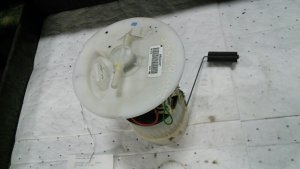

New Aftermarket Parts Available


The information in this article is provided for general reference and educational purposes only. Vehicle specifications, procedures, and part compatibility can vary by production date, trim level, and region. Always consult your vehicle's factory service manual and verify part numbers before purchasing or performing repairs. Safety-critical components such as airbags, seat belts, and braking systems should be installed by a qualified professional.
- Mazda 3:
- 🎬 Helpful Videos
- 🛍️ Shop This Part
- What's Unique About the 2004-2009 Mazda 3
- Symptoms You May Notice
- Most Likely Causes
- Rare But Worth Checking
- Diagnosis Steps
- Parts You'll Likely Need
- Related Codes That Often Appear With This One
- Technical Service Bulletins (TSBs) & Recalls
- Platform-Specific Known Issues
- Mechanic-Grade Diagnostic Values
- Scan Tool Commands That Help
- Wiring & Ground Locations
- Real Owner Repair Stories
- "I Checked Everything" — The Actual Cause
- OEM Part Supersession History
- Diagnostic Flowchart
- Real Owner Stories
- 2004 Mazda 3 MTX
- 2012 Mazda 3 Skyactiv
- 2005 Mazda 3
- 2008 Mazda 3
- Related OBD-II Codes
- Frequently Asked Questions
- Related OBD-II Codes
- Frequently Asked Questions
- 🎟️ Get 5% Off