

P0442 on 2000-2004 Kia Spectra 1.8L: EVAP Small Leak Causes and Fixes
For a 2000-2004 Kia Spectra, code P0442 is most often caused by a loose or worn-out gas cap. If a new gas cap doesn't fix it, the next most likely culprit is a faulty canister purge valve in the engine bay, which is a common failure point and an inexpensive DIY replacement. In salt-belt states, a rusted fuel filler neck is also a very common cause.
- Always start with the gas cap. Tighten it, inspect the seal, and replace it with an OEM part if it's old or damaged.
- If the gas cap isn't the problem, the canister purge valve in the engine bay is the next most likely and most accessible part to fail on a Spectra.
- The 2004 model year is a split generation; you must verify parts with your VIN to ensure you get the correct one.
- If simple fixes don't work, a professional smoke test is the fastest way to find the leak and avoid wasting money on unnecessary parts.
What's Unique About the 2000-2004 Kia Spectra
On the first-generation Kia Spectra, the P0442 code follows a predictable pattern. While the gas cap is always the first suspect, the canister purge valve located in the engine bay is a very common failure point and a logical next step for DIY diagnosis. Be aware that the 2004 model year was a transition period to a new generation, so it is critical to verify parts like the purge valve using your vehicle's VIN, as multiple designs exist. Additionally, vehicles operated in salt-belt states are highly susceptible to rust on the fuel filler neck and fuel tank straps, which can cause EVAP leaks.
Generation note: The 2000-2004 year range covers the first-generation Spectra (2000-2004, with a facelift in 2002) and the first year of the second-generation Spectra (which also began in 2004). This overlap, especially for the 2004 model year, means that EVAP system parts like the purge valve and canister may differ. Always verify the correct part for your specific vehicle, preferably with a VIN. The first generation is based on the Kia Sephia.
Symptoms You May Notice
- Check Engine Light is on.
- A faint smell of gasoline, especially when parked in an enclosed space like a garage.
- Possible rough idle or difficulty starting immediately after refueling (if the purge valve is stuck open).
- Difficulty filling the fuel tank, which may indicate a problem with the vent valve or canister.
- Replacing the oxygen (O2) sensors. O2 sensors are not part of the EVAP system and will not cause a P0442 code.
- Replacing the charcoal canister when only a valve or hose has failed. The canister itself is often durable; leaks are more common in the attached valves and hoses, or from cracks in the plastic housing.
Most Likely Causes
- Loose or Faulty Gas Cap 🔴 High Probability The rubber O-ring on the gas cap is a simple wear item that degrades over time from exposure to fuel vapors, causing it to crack and lose its seal. This is the most common cause of P0442.
How to confirm: Ensure the gas cap is tightened until it clicks at least once. Inspect the rubber seal on the cap for any cracks, stiffness, or visible damage. A dirty or corroded fuel filler neck sealing surface can also prevent a good seal.
Typical fix: Tighten the cap. If the seal is damaged or the cap is old, replace it. It is highly recommended to use an OEM (Original Equipment Manufacturer) part, as some aftermarket caps are known to cause sealing issues. Clean the filler neck sealing surface with a cloth.
Est. part cost: $15-$35 - Faulty Canister Purge Valve / Solenoid 🟡 Medium Probability The purge valve is a known common failure item on many Kia and Hyundai vehicles from this era. It can get stuck open or closed, causing either a constant vacuum leak or preventing vapor flow.
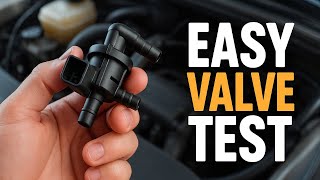
How to confirm: The valve is located in the engine bay, typically near the throttle body, connected by two hoses and an electrical connector. A simple test is to disconnect the vacuum hose from the intake side while the engine is running; if you feel suction from the valve's port, it is stuck open and faulty. 🎬 Watch: How to test the purge valve yourself.
Typical fix: Replace the canister purge valve. This is generally an easy DIY task requiring only pliers to move the hose clamps.
Est. part cost: $25-$75 - Cracked or Disconnected EVAP Hoses 🟡 Medium Probability
How to confirm: Visually inspect all accessible rubber and plastic EVAP lines, especially in the engine bay near the purge valve and under the car near the charcoal canister. Look for brittle, cracked, or disconnected sections. A professional smoke test is the most reliable way to find a small hose leak.
Typical fix: Replace the cracked section of hose. This can often be done with bulk vacuum hose of the correct diameter.
Est. part cost: $5-$20 - Rusted Fuel Filler Neck 🟡 Medium Probability In areas where road salt is used (the 'Salt Belt'), the metal pipe leading from the gas cap to the gas tank is highly prone to rusting through, creating pinhole leaks that trigger a P0442 code.
How to confirm: A visual inspection may reveal rust, but the leaks are often too small to see. A smoke test is the definitive method, as smoke will be seen escaping from the rusted area of the neck.
Typical fix: The fuel filler neck assembly must be replaced. This is a more involved repair but is a very common failure on these vehicles in northern climates. 🎬 Watch: How to replace a rusted fuel filler neck.
Est. part cost: $60-$150 - Faulty Canister Close Valve (Vent Valve) ⚪ Low Probability This valve is exposed to the elements under the car near the fuel tank, making it susceptible to corrosion and dirt. On some Spectras, it can be difficult to access.
How to confirm: A smoke test is the best way to confirm a leak at the vent valve. A technician can also command it open and closed with a scan tool to test its function. It can sometimes get stuck open or clogged with dust.
Typical fix: Replace the canister close valve. This repair is more involved than the purge valve, as the valve is located at the rear of the car near the charcoal canister.
Est. part cost: $40-$90
Rare But Worth Checking
- Cracked Charcoal Canister: The plastic body of the charcoal canister (located near the fuel tank) can be damaged by road debris or develop cracks around its mounting points due to corrosion, causing a leak. NHTSA ODI #10150202 describes a case where a dealer found the canister was not sealing, requiring replacement alongside the gas cap.
- Leaking Fuel Tank: While rare, the fuel tank itself can develop a leak. More commonly, the fuel tank straps can rust and break on 2004-2007 models, which was subject to a recall in salt-belt states. A broken strap could potentially lead to fuel line or tank damage.
Diagnosis Steps
- Inspect and Tighten Gas Cap: Remove the gas cap, inspect the rubber seal for cracks or damage, and clean the sealing surface on the filler neck. Reinstall the cap, ensuring it clicks several times. Clear the code and drive for a few days to see if it returns.
- Replace Gas Cap: If the seal looks worn or the cap is old, replace it with a new OEM-spec cap. This is an inexpensive and very common fix.
- Inspect Engine Bay Hoses: Visually check the vacuum hoses connected to and around the canister purge valve in the engine compartment. Look for obvious cracks, breaks, or loose connections.
- Test/Replace Purge Valve: Given its high failure rate, testing and likely replacing the canister purge valve is a logical next step. It is located in the engine bay and is typically easy to access and replace with simple tools.
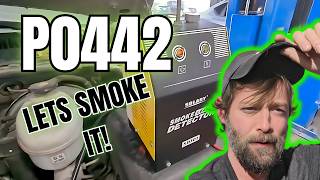
- Perform a Smoke Test: If the code persists, the most effective way to find the leak is with a smoke test. This test forces smoke into the EVAP system, and any leaks will be visible. This can pinpoint issues with cracked hoses, the canister close valve, the charcoal canister, or the fuel filler neck. This is the standard professional procedure. 🎬 See how to find small leaks with a smoke test.
- Inspect Rear Components & Filler Neck: Based on the smoke test results, inspect and replace the leaking component. Pay close attention to the fuel filler neck for rust in salt-belt states, and the canister close valve or a hose near the charcoal canister at the rear of the vehicle.
Parts You'll Likely Need
- Fuel Cap — This is the most frequent cause of a P0442 code. The seal wears out over time, preventing the system from holding pressure.
Trusted brands: Kia (OEM)
OEM price range: $25-$40
Aftermarket price range: $15-$25 - Vapor Canister Purge Valve
(OEM #28910-22040 (Verify by VIN))— This is a very common failure point on 2000-2004 Spectras, often getting stuck and causing a leak. It's located in the engine bay and is easy to replace. Note: Multiple part numbers exist for 2004 models (e.g., 0K2A518748, 0K2AA20350A), so VIN verification is essential. The 28910-22040 part is shared with many Hyundai/Kia models of the era.
Trusted brands: Kia (OEM), Standard Motor Products, Dorman
OEM price range: $60-$100
Aftermarket price range: $25-$50 - Fuel Filler Neck — Highly susceptible to rust-through in salt-belt states, causing a persistent P0442 that can't be fixed by replacing caps or valves.
Trusted brands: Kia (OEM), Spectra Premium, Dorman
OEM price range: $120-$200
Aftermarket price range: $60-$150
Related Codes That Often Appear With This One
- P0441 — This code for 'Incorrect Purge Flow' often points directly to a malfunctioning canister purge valve, which can also cause a leak code like P0442 if it's stuck partially open.
- P0455 — This indicates a 'Large EVAP Leak'. If a small leak (P0442) worsens, or if the gas cap is left very loose or off, the system may detect it as a large leak.
- P0456 — This indicates a 'Very Small EVAP Leak'. P0442 and P0456 are closely related, differing only in the size of the leak. The diagnostic process is identical, and a failing component might first cause a P0456 before the leak enlarges and triggers a P0442.
Technical Service Bulletins (TSBs) & Recalls
- NHTSA Recall 11V-257: Affects 2004-2007 models in salt-belt states for corroding fuel tank straps.
- Kia Service Campaign SC122: Voluntary campaign to apply additional anti-corrosion coating to the underbody of various Kia models, including the 2004 Spectra, in salt-belt states.
- Fuel Cap Recall: An owner reported in NHTSA ODI #10058467 that their vehicle received a recall notice specifically to have the fuel cap replaced to address EVAP leak issues.
Platform-Specific Known Issues
- Fuel Filler Neck Rust: In regions with road salt, the fuel filler neck is a primary suspect for a P0442 code after the gas cap has been ruled out. The rust creates small pinholes that are often invisible to the naked eye but are easily found with a smoke test.
- 2004 Model Year Part Confusion: The 2004 model year was a changeover year from the first to the second generation Spectra. EVAP system components, particularly the purge valve and charcoal canister, can differ between early and late 2004 models. Always confirm the correct part using the vehicle's VIN to avoid purchasing an incompatible component.
Mechanic-Grade Diagnostic Values
- Canister Purge Valve (Solenoid) Coil Resistance — expected: Approximately 14 to 38 Ohms. This is a general specification for similar era solenoids; a reading far outside this range (e.g., 0 Ohms or infinite) indicates a failure.. Failure: A reading of 0 Ohms indicates a short circuit, while an infinite reading (OL) indicates an open circuit. Either requires replacement.
- Canister Close Valve (Vent Solenoid) Coil Resistance — expected: Approximately 48 to 65 Ohms.. Failure: A reading significantly outside this range suggests the solenoid coil is faulty.
Scan Tool Commands That Help
- Kia GDS (or advanced bidirectional scanner): Actuation Test: Canister Close Valve (CCV) — The CCV is normally open. This command forces it closed, which is the first step to sealing the EVAP system to perform a smoke test or a vacuum decay test. If the system won't seal, commanding the CCV closed and listening for a click can help determine if the valve is responding.
- Kia GDS (or advanced bidirectional scanner): Actuation Test: Purge Control Solenoid Valve (PCSV) — The PCSV is normally closed. This command manually opens and closes the valve. A technician can check if vacuum from the intake manifold is allowed to pass only when the valve is commanded open. This definitively tests if the valve is stuck open or closed without removing it from the vehicle.
- Kia GDS (or advanced bidirectional scanner): EVAP Leakage Test — This function forces the vehicle to perform the entire EVAP system self-test on demand in the service bay. It's used to verify that a repair was successful without having to perform a full, complex drive cycle.
Wiring & Ground Locations
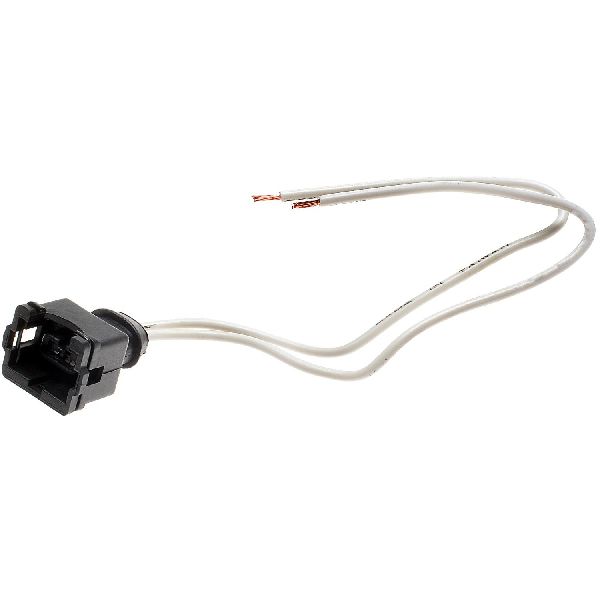
- Purge Valve (PCSV) Connector — In the engine bay, typically on or near the intake manifold.. The PCSV is a solenoid that receives power (12V with key on) on one pin and is ground-side switched by the ECU on the other pin to activate it. Checking for 12V power at the connector is a key step in diagnosing a non-responsive valve (related to code P0443) before replacing the part.
- ETWIS Module — Inside the cabin, typically under the dashboard.. While not a direct EVAP component, on a 2003 Spectra, a faulty ETWIS (Electronics Time & Warning System) module was found to be the cause of intermittent electrical issues as it controls multiple ground circuits. If EVAP faults are intermittent and accompanied by other strange electrical behavior, inspecting the wiring and grounds related to this module could be a valid, though rare, diagnostic path.
Real Owner Repair Stories
- Reddit user on r/Cartalk (2002 Kia Spectra) — Persistent P0442 code preventing the car from passing smog inspection.
❌ Tried (didn't work) Taken to a trusted mechanic who performed a smoke test 'several times' and found no leaks., Owner personally removed and tested all accessible EVAP hoses using an air compressor and water, finding no leaks., Replaced the gas cap with a new one.
✅ What actually fixed it The owner noted the problem started after they replaced a faulty EVAP Leak Detection Pump (LDP) with a used one from a junkyard. Their next step was to replace the canister purge valve. While the final resolution was not posted, the story strongly implies the issue was not a simple hose leak and was related to a faulty EVAP component (likely the used LDP or its seal) that passed a smoke test. - NHTSA ODI #10058467 — An owner reported that their check engine light illuminated three times, with the past two instances being related to a P0442 EVAP leak. The issue was attributed to the fuel cap.
- NHTSA ODI #10150202 — A dealer diagnosed a P0442 and P0455 code, stating there was a "flaw in material." The repair involved replacing both the gas cap and the charcoal canister, and ordering a new ECM.
"I Checked Everything" — The Actual Cause
- In cases where a smoke test shows no visible leaks, the fault can lie within the Leak Detection Pump (LDP) itself. The LDP contains a diaphragm and a switch that the ECU uses to monitor pressure changes. A smoke test will fill the system and may not reveal a leak if the LDP's internal diaphragm is torn or its switch is faulty, as this is a functional failure, not a static leak in a hose. An owner of a 2002 Spectra experienced this exact scenario, passing multiple smoke tests while the P0442 code persisted, with the problem's origin pointing to a recently replaced LDP.
OEM Part Supersession History
28910-22030→28910-22040— Standard part revision and consolidation for multiple Hyundai/Kia models.
Model Year Variations Within This Range
- 2000-2004: This specific 1.8L platform uses a Leak Detection Pump (LDP) based EVAP system and does NOT have a Fuel Tank Pressure Sensor (FTPS), which is a critical difference from many other vehicles that set a P0442 code.
- 2004: The 2004 model year is a transition period. The first-generation Spectra (1.8L) was phased out and the second-generation (2.0L) was introduced. These two models have different EVAP system designs and parts. It is essential to verify all parts, especially the purge valve, canister, and vent valve, using the vehicle's VIN for any 2004 Spectra.
Diagnostic Flowchart
Other Known Issues on This Vehicle
Issues unrelated to this code that are worth knowing about as an owner of this generation:
- Automatic Transmission Failure 🔴 High — Common, especially after 80,000-100,000 miles. Symptoms include slipping, harsh shifting, or failure to engage gears.
- Critical Timing Belt Service 🔴 High — The 1.8L is an interference engine. The timing belt must be replaced every 60,000 miles. Failure to do so will result in catastrophic engine damage if the belt breaks.
- Underbody and Component Rust 🟠 Medium — Very common in salt-belt states. Affects fuel tank straps, fuel/brake lines, floor pan, and suspension components. (Ref: NHTSA Recall 11V-257, Kia Service Campaign SC122)
- Ignition Coil Failure 🟡 Low — Relatively common failure due to age and heat, leading to misfires (P030x codes), rough idle, and poor performance.
- Manual Transmission Clutch Wear 🟡 Low — The clutch is a normal wear item, with replacement typically needed between 100,000 and 150,000 miles depending on driving style.
Used vs. New Parts: Buying Guide for This Vehicle
When a used part is the smart pick: For structural, non-electronic parts, used can be a good option. A fuel filler neck or charcoal canister from a donor vehicle in a dry, salt-free climate is likely to have significant life left and can offer great savings. Hoses can also be sourced used if they are still pliable and show no signs of cracking.
Donor-vehicle mileage cap: roughly under 80000 miles for the part to have meaningful remaining life.
What to inspect on the donor part:
- For filler necks, inspect for any surface rust, especially around welds and brackets. Avoid any parts with even minor pitting.
- For charcoal canisters, ensure the plastic housing has no cracks and that all hose nipples are intact and not brittle.
- For any used part, check that it comes from a vehicle of the exact same model and year range, paying close attention to the 2004 model year split.
OEM-only on this vehicle (don't cheap out):
- Gas Cap: This is the most critical part to buy OEM. Forum and mechanic consensus strongly suggests that many aftermarket gas caps do not seal correctly on Kia systems, leading to a persistent P0442 code even after 'fixing' the problem.
Aftermarket brands forum-validated for this vehicle:
- Dorman
- Standard Motor Products (SMP)
Brands owners have reported issues with on this vehicle:
- Unbranded, 'white-box' gas caps from online marketplaces or discount stores are frequently reported as being a cause of, not a solution to, EVAP codes.
Real Owner Stories
Aggregated from forums and TSBs cited above. Mileages and costs reflect what owners reported in those sources.
1998 Hyundai Elantra 1.8L (Platform Mate)
Symptoms: The MIL (Check Engine Light) is on with a persistent P0442 small EVAP leak code.
What fixed it: The diagnostic process for this platform-mate highlights that the code can be persistent even after replacing common parts, often requiring a professional smoke test to find the leak.
Source hint: iATN - P0442 Diagnostic Trouble Code Discussion
2003 Kia Spectra 1.8L — ~90000 miles
Symptoms: Automatic transmission slipping and harsh shifting.
What fixed it: While not a fix for P0442, owners of this platform frequently report transmission failure between 80,000 and 100,000 miles.
Source hint: Car Talk Community - 2003 Kia Spectra Transmission Question
2003 Kia Spectra
Symptoms: The check engine light illuminated multiple times due to a P0442 EVAP leak.
What fixed it: The owner reported that the issue was related to the fuel cap (NHTSA ODI #10058467).
2004 Kia Spectra
Symptoms: Check engine light on with codes P0442 and P0455.
What fixed it: The dealer identified a "flaw in material" and replaced both the gas cap and the charcoal canister (NHTSA ODI #10150202).
Related OBD-II Codes
Frequently Asked Questions
I live in the 'Salt Belt' and have a P0442 code on my 2004 Spectra. Is there a recall for this?
I'm buying a replacement purge valve for my 2004 Spectra. Why does the parts store ask for my VIN?
My 2003 Spectra has a P0442 code and is hard to start after I fill up at the gas station. What's wrong?
Can I use an aftermarket gas cap to fix the P0442 leak on my Kia?
Where is the purge valve located on the 1.8L Spectra engine?
Why is the fuel filler neck mentioned as a common failure point for the Spectra?
Helpful Videos
![How to Fix KIA P0442 Engine Code in 3 Minutes [2 DIY Methods / Only $4.67]](https://img.youtube.com/vi/g0DfzEcXoJA/mqdefault.jpg)
![How to Fix P0442 Engine Code in 3 Minutes [2 DIY Methods / Only $4.67]](https://img.youtube.com/vi/73AR8Tl6YZU/mqdefault.jpg)
We Have This Part in Stock


The information in this article is provided for general reference and educational purposes only. Vehicle specifications, procedures, and part compatibility can vary by production date, trim level, and region. Always consult your vehicle's factory service manual and verify part numbers before purchasing or performing repairs. Safety-critical components such as airbags, seat belts, and braking systems should be installed by a qualified professional.
- Kia Spectra:
- 🎬 Helpful Videos
- 🛍️ Shop This Part
- What's Unique About the 2000-2004 Kia Spectra
- Symptoms You May Notice
- Most Likely Causes
- Rare But Worth Checking
- Diagnosis Steps
- Parts You'll Likely Need
- Related Codes That Often Appear With This One
- Technical Service Bulletins (TSBs) & Recalls
- Platform-Specific Known Issues
- Mechanic-Grade Diagnostic Values
- Scan Tool Commands That Help
- Wiring & Ground Locations
- Real Owner Repair Stories
- "I Checked Everything" — The Actual Cause
- OEM Part Supersession History
- Model Year Variations Within This Range
- Diagnostic Flowchart
- Other Known Issues on This Vehicle
- Used vs. New Parts: Buying Guide for This Vehicle
- Real Owner Stories
- 1998 Hyundai Elantra 1.8L (Platform Mate)
- 2003 Kia Spectra 1.8L — ~90000 miles
- 2003 Kia Spectra
- 2004 Kia Spectra
- Related OBD-II Codes
- Frequently Asked Questions
- 🎟️ Get 5% Off