

P0442 on 2005-2010 Jeep Grand Cherokee: Causes and Fixes for a Small EVAP Leak
For a 2005-2010 Jeep Grand Cherokee, code P0442 almost always means you have a loose or bad gas cap. Before anything else, tighten or replace the gas cap (around $15-$30) and clear the code. If it returns, the next most common culprit on these Jeeps is a faulty Evaporative System Integrity Module (ESIM) switch. If neither of those fix it, a smoke test will be needed to find the leak, which could be a cracked hose or a bad purge valve.
- Always start with the simplest and most likely solution: check that your gas cap is tight.
- If tightening the cap doesn't work, the next step is to replace it with a new OEM Mopar cap. This solves the problem in a majority of cases.
- For 2007+ models, the ESIM switch is the next most likely culprit and is a cheap, easy part to replace.
- If the code persists after replacing the gas cap and ESIM, the leak is elsewhere in the system (hoses, purge valve, canister) and a smoke test is the most efficient way to find it.
What's Unique About the 2005-2010 Jeep Grand Cherokee
The 2005-2010 (WK) Grand Cherokee uses a fairly standard EVAP system, but it has a few well-known failure points. Early models used a Leak Detection Pump (LDP), but most models in this range, particularly from 2007 onwards, use an Evaporative System Integrity Module (ESIM). This ESIM switch is a very common failure point and a frequent cause of the P0442 code after the gas cap. Additionally, owners frequently report that brittle plastic lines and rubber hoses in the system crack over time, especially in harsher climates or from engine heat. The most common failure point, by a large margin, remains the gas cap seal, which degrades and fails to hold pressure.
Symptoms You May Notice
- Check Engine Light is on.
- A faint smell of fuel, though this is uncommon with a small leak.
- No noticeable change in drivability.
- Intermittent alerts; as noted in NHTSA ODI #10761885, the check engine light may occasionally come on with code P0442 but then go off after a day or two.
- Replacing the charcoal canister when the leak is actually a small, inexpensive hose connected to it or the ESIM switch attached to it.
- Immediately replacing the purge valve or other components without first checking the gas cap, which is the most likely cause.
- Replacing parts without performing a smoke test, which is the most reliable way to find the physical location of a small leak.
Most Likely Causes
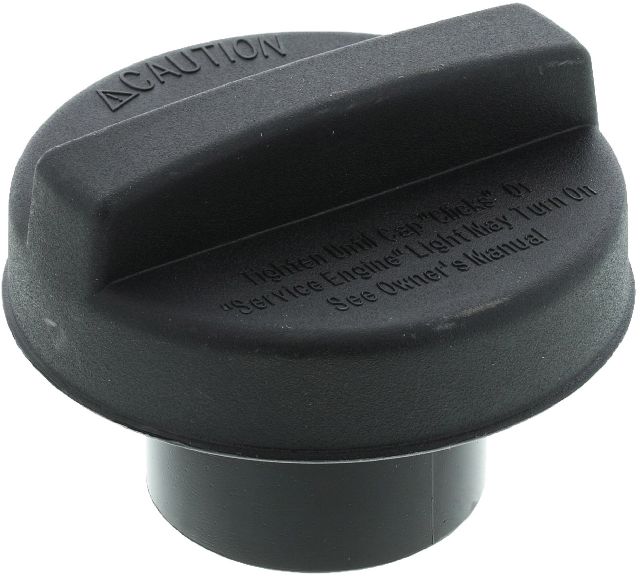
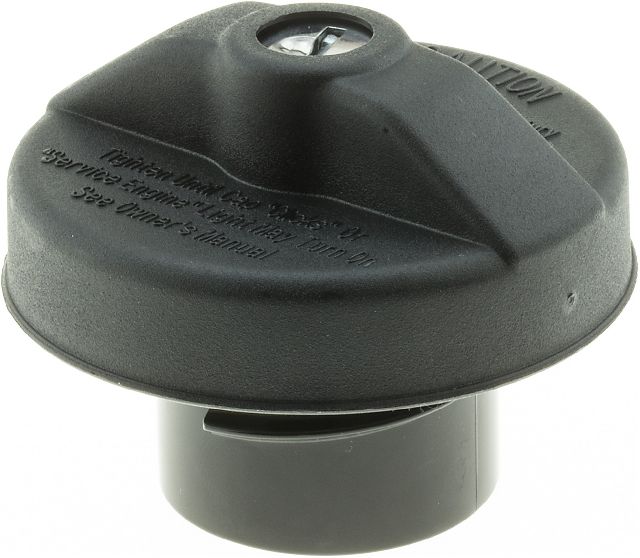
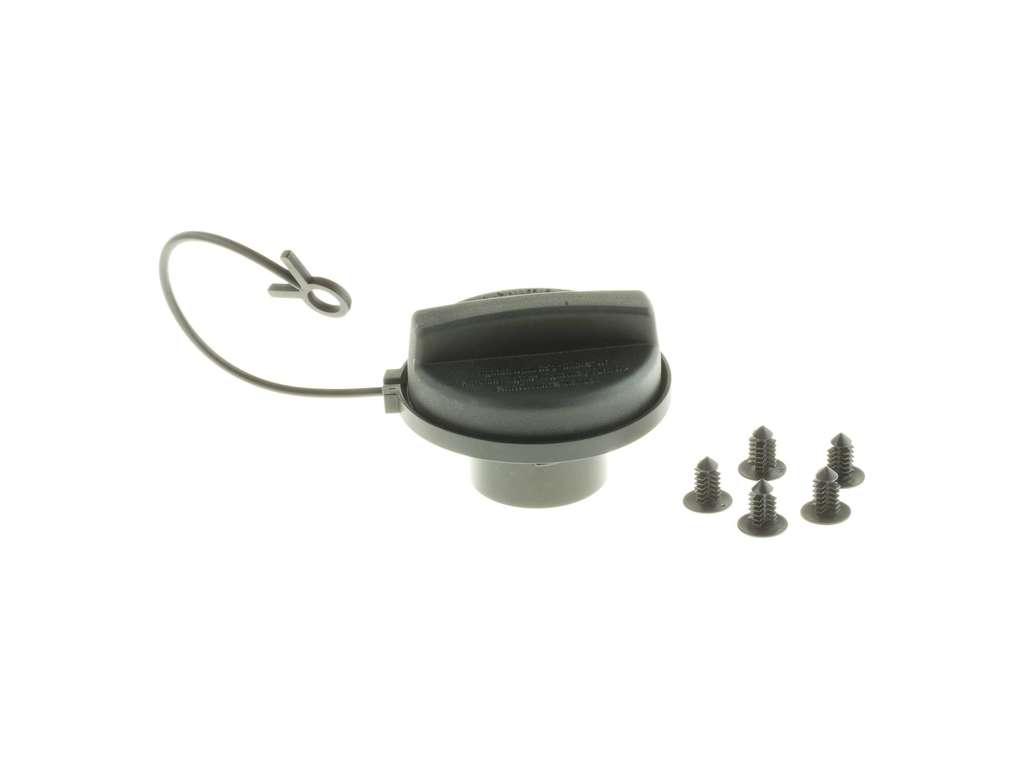
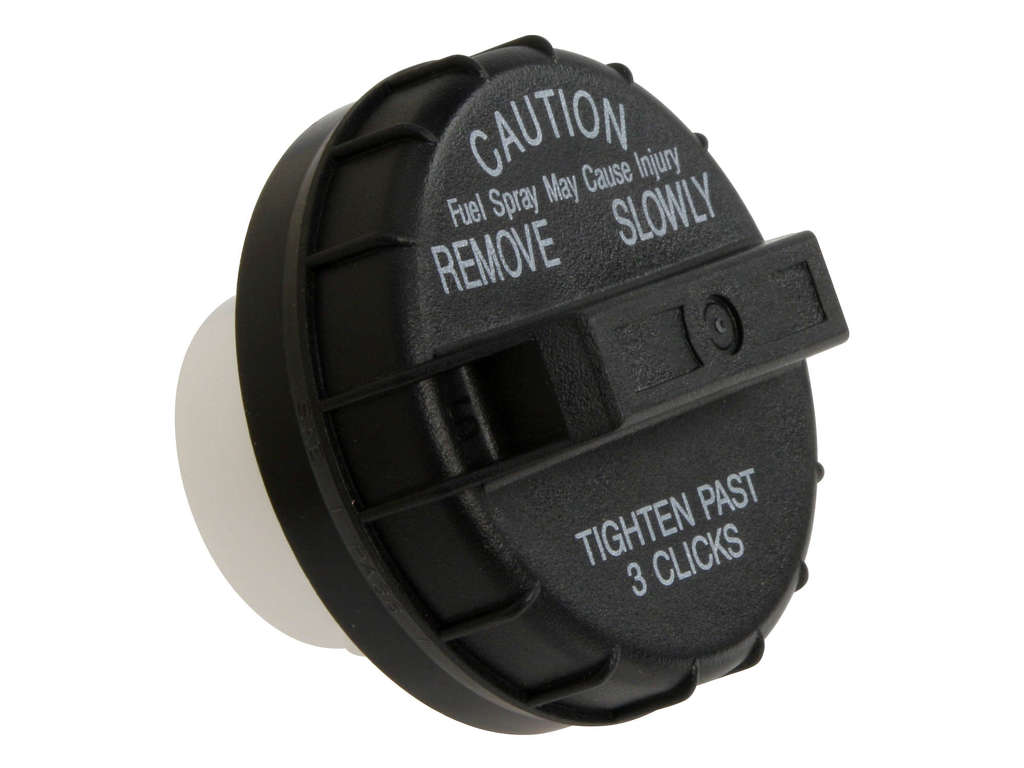
- Loose, Worn, or Incorrect Gas Cap 🔴 High Probability The rubber O-ring on the gas cap naturally degrades over time from exposure to fuel vapors, weather, and repeated use, causing it to crack and lose its sealing ability. Using a non-OEM cap can also cause sealing issues.
How to confirm: First, ensure the cap is tight (at least three clicks). If the light returns, visually inspect the rubber seal on the cap for cracks, stiffness, or damage. An OEM replacement is highly recommended as aftermarket caps can cause persistent issues.
Typical fix: Replace the gas cap with a genuine Mopar part.
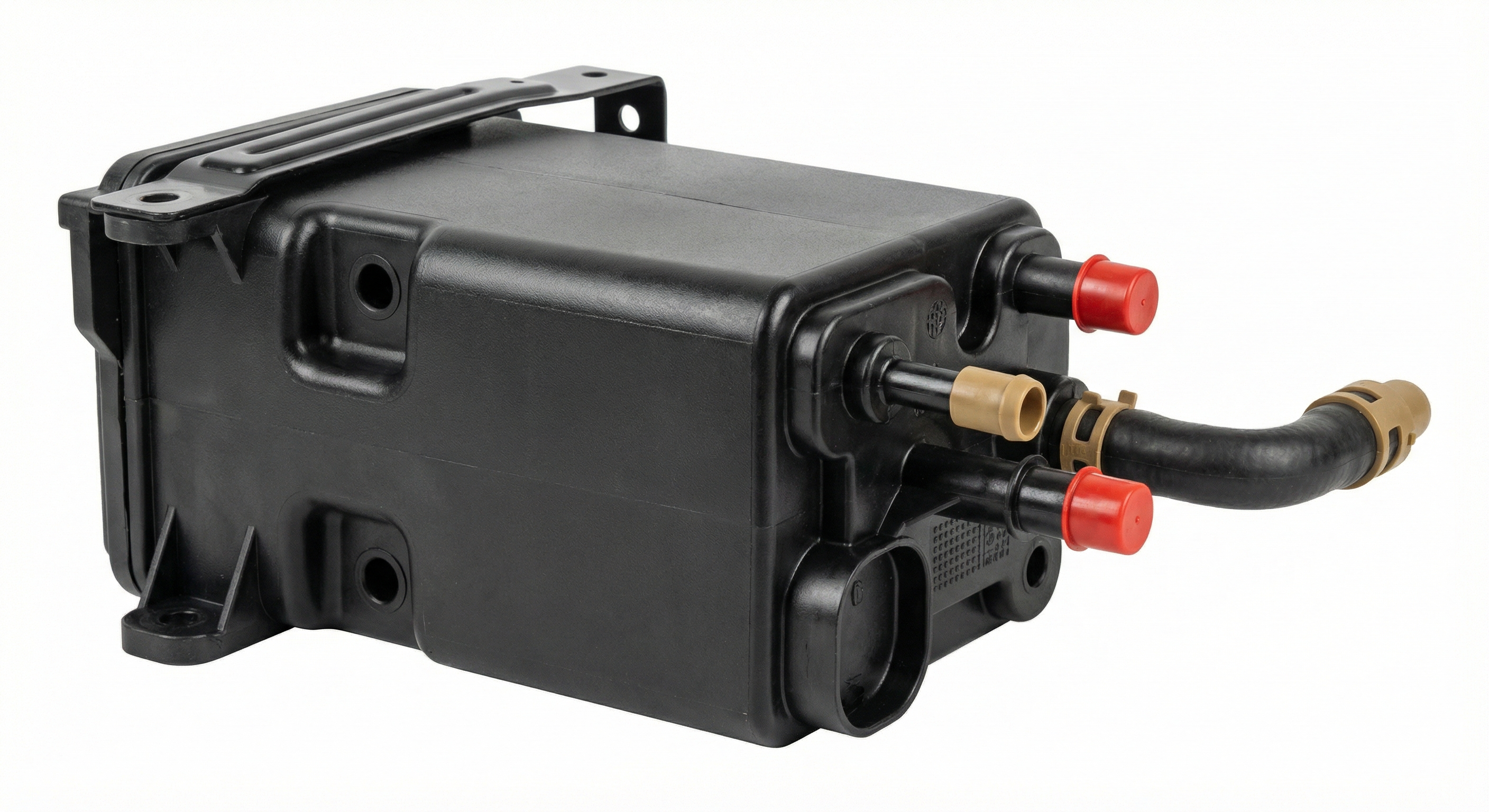
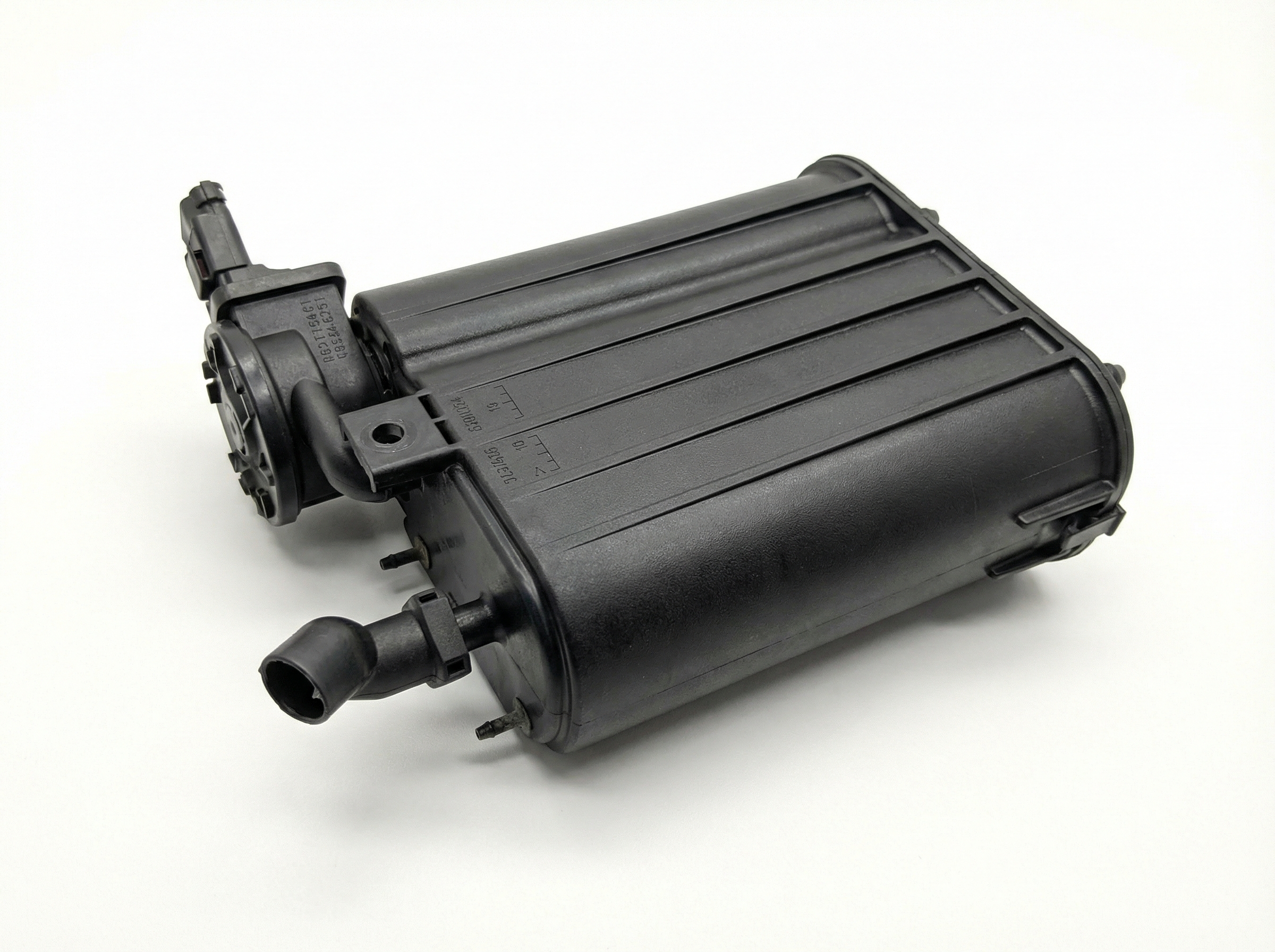
Est. part cost: $15-$35 - Faulty Evaporative System Integrity Module (ESIM) 🔴 High Probability For models from roughly 2007-2010, the LDP was replaced with an ESIM. This switch, mounted on the charcoal canister, is a known high-failure item. The internal diaphragm can leak or the switch can fail electronically, triggering a P0442 or P0456 code.
How to confirm: The ESIM is located on the side of the charcoal canister, near the rear axle. It's a small, round, white or black plastic component. Replacement is often done based on probability after the gas cap fails to solve the issue, as testing is difficult without a specific scan tool. A smoke test will show smoke exiting the ESIM if it has failed.
Typical fix: Replace the ESIM switch. It twists into the canister (often a quarter-turn).
Est. part cost: $25-$75 - Cracked or Disconnected EVAP Hoses 🟡 Medium Probability The plastic and rubber hoses in the EVAP system become brittle with age and exposure to heat cycles, leading to cracks. Common failure spots are the rubber elbows and the lines running near the engine and along the frame rail to the charcoal canister.
How to confirm: Visually inspect all accessible EVAP lines running from the engine bay to the charcoal canister (located near the fuel tank). Look for obvious cracks, breaks, or loose connections. A smoke test is the definitive way to find a leak that isn't visually apparent.
Typical fix: Replace the cracked section of hose or the entire hose assembly.
Est. part cost: $10-$50 - Faulty EVAP Purge Valve/Solenoid ⚪ Low Probability The purge valve, typically located in the engine bay, can get stuck open or closed, or develop a small internal leak. While not as common as a gas cap or ESIM on this platform, it's a frequent point of failure in many vehicles.
How to confirm: With the engine off, try to blow through the valve; it should be closed and not allow air to pass. You can also use a scan tool to command it open and closed while checking for flow. A smoke test will also reveal a leaking purge valve if it's not sealing properly.
Typical fix: Replace the purge valve.
Est. part cost: $25-$70 - Faulty EVAP Leak Detection Pump (LDP) ⚪ Low Probability Chrysler/Jeep vehicles of this era, particularly early WK models (2005-2006), often use an LDP. The pump itself or the seals around it can fail, creating a leak. Sometimes the pump fails to operate correctly, which can also trigger a fault.
How to confirm: This is difficult to confirm without a capable scan tool to run the EVAP system test or a smoke machine to check for leaks around the pump assembly. The LDP is usually located near the charcoal canister.
Typical fix: Replace the leak detection pump and/or its seals.
Est. part cost: $50-$120
Rare But Worth Checking
- Cracked Charcoal Canister: The plastic housing of the canister can be damaged by road debris or become brittle and crack with age. This is less common but will create a persistent leak that requires a smoke test to find.
- Damaged Fuel Filler Neck: Rust or damage to the metal filler neck where the gas cap seals can prevent a good seal, even with a new cap. This is especially common in areas that use road salt. Inspect this area for corrosion or deformity when you replace the cap. Cleaning the rust off with a wire brush can sometimes solve the issue.
Diagnosis Steps
- Read the Code: Confirm the code is P0442 using an OBD-II scanner.
- Check the Gas Cap: Remove and reinstall the gas cap, ensuring it clicks at least three times. Clear the code and drive for a few days. If the light stays off, the problem is solved.
- Inspect and Replace Gas Cap: If the light returns, buy a new OEM Mopar gas cap. Inspect the old cap's rubber seal for any cracks or hardening and the filler neck for rust.
- Inspect and Replace ESIM (2007+ models): If a new gas cap doesn't fix it, the next likely culprit is the ESIM switch on the charcoal canister. It's relatively inexpensive and easy to replace (quarter-turn release). Many owners replace this before performing a smoke test.
- Visual Inspection: Carefully inspect all visible EVAP hoses under the hood and around the fuel tank/charcoal canister area. Look for any cracks, disconnections, or signs of rot. Pay attention to rubber elbows.
- Perform a Smoke Test: If no obvious issues are found, the most effective next step is a smoke test. This involves feeding low-pressure smoke into the EVAP system's service port (often a green cap in the engine bay). Smoke will escape from the source of the leak, making it easy to pinpoint.
- Test Components: During the smoke test, pay close attention to the purge valve, charcoal canister, ESIM/LDP, and all hose connections.
- Repair and Verify: Once the leak is found and repaired, clear the code. The vehicle will need to complete a full drive cycle to run its internal EVAP monitor and confirm the fix is complete.
Parts You'll Likely Need
- Gas Cap
(OEM #52124512AA (superseded by 52030433AB))— This is the most common cause of a P0442 code due to the natural degradation of the rubber seal.
Trusted brands: Mopar, Stant
OEM price range: $20-$35
Aftermarket price range: $10-$20 - Evaporative System Integrity Module (ESIM)
(OEM #4861962AD (replaces 4861962AA, AB, AC))— A very common failure point on 2007-2010 models. The switch fails internally, creating a small leak condition.
Trusted brands: Mopar
OEM price range: $30-$75
Aftermarket price range: $25-$50 - EVAP Purge Valve / Solenoid
(OEM #Varies by engine (e.g., 4669978 for some models))— Can get stuck partially open, creating a small leak. It's a common failure point after the gas cap and ESIM have been ruled out.
Trusted brands: Mopar, Bosch, Dorman
OEM price range: $40-$70
Aftermarket price range: $25-$50 - EVAP Leak Detection Pump — On early WK models (pre-2007), the LDP or its associated seals can fail, causing a leak that is often difficult to find without a smoke test.
Trusted brands: Mopar, Bosch
OEM price range: $80-$120
Aftermarket price range: $50-$90
Related Codes That Often Appear With This One
- P0455 — Indicates a large EVAP leak. If both codes are present, it suggests a significant leak, but the diagnostic process is the same. Start with the gas cap and visual inspection.
- P0456 — Indicates a very small EVAP leak. This code is very similar to P0442 and points to the same set of potential causes, often starting with the gas cap. On WK Jeeps, a P0456 is very frequently caused by a failing ESIM module.
Platform-Specific Known Issues
- ESIM Failure is Extremely Common: On 2007 and newer WK Grand Cherokees, the Evaporative System Integrity Module (ESIM) is the second most likely cause for P0442 after the gas cap. It's a known failure point that many owners and mechanics will replace as a primary diagnostic step if a new gas cap doesn't solve the code. Part number is typically 4861962AD.
- Fuel Filler Neck Rust: In regions with snow and road salt, the metal fuel filler neck can rust where the gas cap seals. This creates a rough surface that prevents even a new gas cap from sealing properly. Owners report success after cleaning the rust off with a wire brush or sandpaper. In severe cases, the entire filler neck may need replacement.
- Brittle Hoses Near Purge Solenoid: The EVAP hoses in the engine bay, particularly the ones connected to the purge solenoid, are prone to cracking from engine heat. A visual inspection and a smoke test are the best ways to identify these small cracks.
- Inaccurate Diagnostic Codes: According to NHTSA ODI #10357094, some owners have complained that OBD error codes for emission systems like P0441 and P0442 can be inaccurate, leading to unneeded repairs and costly replacement of sensors or computers.
Mechanic-Grade Diagnostic Values
- EVAP Purge Solenoid Coil Resistance — expected: 14 - 18 Ohms. Failure: A reading outside this range (open circuit or short) indicates a failed solenoid coil.
- EVAP Purge Solenoid Control Wire Voltage — expected: One wire should have battery voltage with key-on. The other wire (control side) is a pulsed ground from the PCM during operation.. Failure: No voltage on the power side points to a wiring or fuse issue. If the control side is always grounded or never grounded when commanded, it could be a wiring or PCM driver issue.
- Mode $06, Test ID (TID) $3C — expected: Value should be below the maximum threshold set by the manufacturer. This value represents the pressure decay measured during the 0.020-inch leak test.. Failure: A value exceeding the maximum threshold indicates a test failure and confirms the leak condition that set the P0442 code.
Scan Tool Commands That Help
- Chrysler WiTech or equivalent professional scanner: Forced EVAP Monitor Test / EVAP Leak Detection Test — This is a crucial step after a repair or when trying to diagnose an intermittent issue without waiting for a full drive cycle. The tool commands the PCM to seal the EVAP system and run its internal leak test on demand, providing a pass/fail result in minutes. This verifies if a fix was successful or if a leak is still present.
Wiring & Ground Locations
- G302 — Located behind the driver's side kick panel, near the floor.. This is a major body ground point. While not directly for the EVAP system, a corroded or loose G302 can cause a host of intermittent and bizarre electrical issues, including affecting the Powertrain Control Module (PCM). An unstable PCM ground can lead to incorrect sensor readings or faulty driver operations, potentially triggering a false EVAP code.
- EVAP Purge Solenoid Connector — In the engine bay, attached to the intake manifold or nearby bracket. Follow the vacuum line from the EVAP service port.. This is the connection point for testing the solenoid's resistance and voltage. The wires are often a Dark Blue/Brown (control) and a Red (power) wire. Checking for voltage and ground pulse here confirms if the PCM and wiring are functioning correctly.
- ESIM/LDP Connector — At the charcoal canister, typically near the rear axle/fuel tank.. Corrosion at this connector is common due to its exposed location. A bad connection can prevent the PCM from correctly reading the switch status (for ESIM) or operating the pump (for LDP), leading to a failed system test and a P0442 code.
Real Owner Repair Stories
- JeepForum user post (2008 Jeep Grand Cherokee Laredo) — Persistent P0442 and P0456 codes.
❌ Tried (didn't work) Replaced gas cap with OEM part, Replaced EVAP purge solenoid
✅ What actually fixed it The owner smoke tested the system and found no leaks. On a hunch, they replaced the ESIM on the charcoal canister. The code returned. They exchanged the new ESIM for another new one, suspecting a faulty new part. The second new ESIM fixed the problem permanently. The first replacement part was dead on arrival. - JeepGarage.org forum thread (2006 Jeep Grand Cherokee 5.7L) — P0442 code that would not clear after multiple smoke tests.
❌ Tried (didn't work) Replaced gas cap, Smoke tested by two different shops, both found no leaks, Replaced purge valve
✅ What actually fixed it After passing multiple smoke tests, the owner did a detailed visual inspection of the entire fuel filler neck assembly. They found a hairline crack on the plastic upper portion of the filler neck, well above where the gas cap seals. The crack was nearly invisible and did not leak smoke noticeably but was opening just enough to cause the code. Replacing the entire fuel filler neck assembly resolved the code. - NHTSA ODI #10520663 — An owner reported spending over $3,500 on repairs for codes including P0442, P0455, and P0351. Despite fixing the EVAP purge solenoid, the vehicle continued to experience stalling issues.
"I Checked Everything" — The Actual Cause
- A common scenario for the 2007+ WK is passing a smoke test but still having a P0442/P0456 code. The cause is often an electrically failed but non-leaking Evaporative System Integrity Module (ESIM). The internal switch fails to operate correctly when the PCM runs its self-test, causing the test to fail even though no physical smoke leak exists. The fix is to replace the ESIM.
- On 2005-2006 models with a Leak Detection Pump (LDP), the pump itself can become weak. It may not leak smoke externally, but it fails to generate the required pressure during the EVAP self-test. The PCM interprets this inability to build pressure as a leak, setting a P0442 code. The fix is to replace the LDP assembly.
OEM Part Supersession History
4861962AA, 4861962AB, 4861962AC→4861962AD— Component revision and improvement by the manufacturer.
Heads up: While aftermarket versions (e.g., from Dorman) exist, owner and technician forums frequently report high rates of DOA (Dead on Arrival) or premature failure. It is highly recommended to use the genuine Mopar part to avoid repeat repairs.52124512AA→52030433AB— Updated design for better sealing and longevity.
Model Year Variations Within This Range
- 2005-2006: These early WK models primarily use a Leak Detection Pump (LDP) system. Diagnosis often focuses on the pump's operation and its associated seals.
- 2007-2010: These later WK models use the Evaporative System Integrity Module (ESIM) system. The ESIM itself is a very common failure point, often prioritized for replacement after the gas cap.
Diagnostic Flowchart
Real Owner Stories
Aggregated from forums and TSBs cited above. Mileages and costs reflect what owners reported in those sources.
2002 Jeep Grand Cherokee
Symptoms: Experienced persistent P0442 and P0455 codes and tried replacing parts blindly without success.
What fixed it: Performed a smoke test to accurately pinpoint the leak after the 'parts cannon' approach failed.
Source hint: JeepForum.com thread titled '2002 grand cherokee p0442 p0455'
2018 Jeep Grand Cherokee
Symptoms: Triggered a P0456 code (a small EVAP leak code similar to P0442) and was quoted $495 by the dealer for diagnosis and repair.
What fixed it: Replaced the ESIM module themselves, which operates on the same principle as the 2007-2010 WK models.
Cost: $25-$30
Source hint: Reddit r/GrandCherokee thread 'How to replace an ESIM module (P0456 code) on a...'
Newer Jeep Models
Symptoms: Triggering small EVAP leak codes like P0456 and P0442.
What fixed it: Replaced the Evaporative System Integrity Module (ESIM), confirming it as a highly common replacement part for small leak codes compared to the older LDP systems.
Source hint: Reddit r/MechanicAdvice thread 'ESIM vs Fuel Vapor Leak Detection Pump'
Related OBD-II Codes
Frequently Asked Questions
Does my 2005-2010 Grand Cherokee have a Leak Detection Pump (LDP) or an ESIM?
Can I use an aftermarket gas cap to fix the P0442 code on my WK Grand Cherokee?
I replaced the gas cap on my 2005 Grand Cherokee but the code came back. What else around the cap could cause this?
What is the part number for the ESIM on the 2007+ Grand Cherokee?
I have a 2008 Jeep Commander with a P0442. Are the diagnostic steps the same as the Grand Cherokee?
Where are the EVAP hoses most likely to crack on this specific Jeep?
Used OEM Parts in Stock
New Aftermarket Parts Available


The information in this article is provided for general reference and educational purposes only. Vehicle specifications, procedures, and part compatibility can vary by production date, trim level, and region. Always consult your vehicle's factory service manual and verify part numbers before purchasing or performing repairs. Safety-critical components such as airbags, seat belts, and braking systems should be installed by a qualified professional.
- Jeep Grand Cherokee:
- 🛍️ Shop This Part
- What's Unique About the 2005-2010 Jeep Grand Cherokee
- Symptoms You May Notice
- Most Likely Causes
- Rare But Worth Checking
- Diagnosis Steps
- Parts You'll Likely Need
- Related Codes That Often Appear With This One
- Platform-Specific Known Issues
- Mechanic-Grade Diagnostic Values
- Scan Tool Commands That Help
- Wiring & Ground Locations
- Real Owner Repair Stories
- "I Checked Everything" — The Actual Cause
- OEM Part Supersession History
- Model Year Variations Within This Range
- Diagnostic Flowchart
- Real Owner Stories
- 2002 Jeep Grand Cherokee
- 2018 Jeep Grand Cherokee
- Newer Jeep Models
- Related OBD-II Codes
- Frequently Asked Questions
- 🎟️ Get 5% Off