

P0442 on 2001-2007 GMC Sierra 2500 HD: EVAP Small Leak Causes and Fixes
For a 2001-2007 GMC Sierra 2500 HD, code P0442 is most often caused by a loose gas cap or a failed EVAP vent solenoid near the fuel tank. Always check the gas cap first. If that's not the issue, the vent solenoid is the next likely culprit, costing about $30-$75 for the part. Using the updated relocation kit (ACDelco 214-2149) is the permanent fix for the solenoid.
- Always check the gas cap first; make sure it's tight and the seal is intact. This is the most common and cheapest fix.
- If the gas cap isn't the problem, the EVAP vent solenoid near the fuel tank is the next most likely culprit on these trucks.
- Due to a known design issue, it is highly recommended to use the TSB-specified service kit that relocates the vent solenoid's filter to a cleaner location.
- A smoke test is the fastest and most reliable way for a professional to find the exact source of a leak if it is not obvious.
- The vehicle is safe to drive with this code, but you will not be able to pass an emissions test until it is repaired.
What's Unique About the 2001-2007 GMC Sierra 2500 HD
On this generation of Sierra (the GMT800 platform), the EVAP system's vent solenoid is a well-documented weak point. Its original location near the spare tire makes it highly susceptible to ingesting dust, dirt, and moisture, which causes the valve to fail and trigger a leak code. This issue was so common that General Motors issued a Technical Service Bulletin (TSB 02-06-04-037H) with a redesigned part and a kit to relocate the solenoid's air filter to a cleaner location, often above the transmission bell housing, away from the rear axle. Manufacturer Bulletin #23-NA-073 further reinforces this, noting that dust intrusion into the evaporative canister is a primary cause for DTCs P0442, P0446, P0455, or P0449.
Generation note: The 2001-2007 year range primarily covers the GMT800 platform. However, the 2007 model year was a split. The 'Classic' body style is a GMT800, while the new body style is the next-generation GMT900. The common EVAP issues described here are most relevant to the GMT800 models.
Symptoms You May Notice
- Check Engine Light is on
- Vehicle will not pass an emissions test
- A faint smell of gasoline, particularly around the rear of the truck.
- Difficulty starting the engine immediately after refueling (this points strongly to a stuck-open purge valve).
- Replacing the charcoal canister. The canister itself is a passive component and rarely fails; the problem is almost always a component attached to it, like the vent solenoid. Do not replace the canister unless it is physically cracked or has failed a leak test.
- Replacing the gas cap with a cheap aftermarket version. Many owners report that non-OEM caps fail to provide a proper seal, leading to the code returning. Sticking with an ACDelco cap is recommended.
Most Likely Causes
- Loose or Faulty Gas Cap 🔴 High Probability The gas cap is a frequently handled sealing component. Its rubber O-ring can crack, harden, or get dirty, preventing a proper seal. Many owners report that only an OEM ACDelco cap provides a lasting, reliable seal.
How to confirm: Inspect the gas cap for tightness. Remove it and check the rubber O-ring seal for cracks, brittleness, or damage. Ensure you hear it click several times when tightening.
Typical fix: Tighten the cap. If the seal is bad, replace the gas cap, preferably with an OEM ACDelco part like GT281.
Est. part cost: $15-$30 - Failed EVAP Vent Solenoid 🔴 High Probability The original part's location near the spare tire exposes it to road debris, dust, and water, leading to clogs and failure. This is a widely known issue covered by a GM Technical Service Bulletin (TSB 02-06-04-037H).
How to confirm: A mechanic can command the valve closed with a scan tool during a smoke test; if smoke exits the vent valve, it has failed. Often, this failure will also be accompanied by code P0449 (electrical fault) or P0446 (restriction), making it the prime suspect.
Typical fix: Replace the EVAP vent solenoid. It is highly recommended to use the updated service kit (ACDelco 214-2149) which includes a new solenoid and a hose to relocate the air filter to a cleaner location above the transmission.
Est. part cost: $40-$80 - Failed EVAP Purge Valve/Solenoid 🟡 Medium Probability Located on the engine's intake manifold, this valve cycles frequently and can get stuck partially open due to wear or contamination from charcoal canister debris.
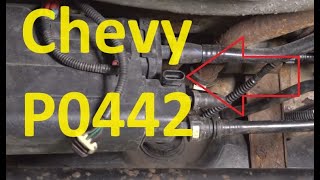
How to confirm: The valve, located on the engine's intake manifold, can be tested with a hand-held vacuum pump to see if it holds vacuum when de-energized. A scan tool can also command it open and closed to check for a response. A key symptom of a stuck-open purge valve is difficulty starting the truck right after refueling. 🎬 Watch: A mechanic's guide to diagnosing common P0442 causes.
Typical fix: Replace the purge valve. A common OEM part number is ACDelco 214-1105 (also listed as CP470).
Est. part cost: $25-$60 - Cracked or Disconnected EVAP Hoses ⚪ Low Probability Over time, the rubber and plastic lines can become brittle and crack, especially at connection points and elbows. On GMT800s, the hose leading to the vent solenoid can sometimes get kinked or stretched, causing a split.
How to confirm: Perform a thorough visual inspection of all EVAP lines running from the fuel tank to the charcoal canister and up to the engine. A smoke test is the most effective way to find a small crack in a hose.
Typical fix: Replace the damaged section of hose or the entire line assembly.
Est. part cost: $10-$50
Rare But Worth Checking
- Rusted Fuel Filler Neck: In areas with road salt, the metal filler neck where the gas cap seals can rust and become pitted. This prevents even a new gas cap from sealing properly, causing a persistent leak. Some owners have successfully fixed this by using a wire brush or sandpaper to clean the sealing surface until it is smooth again.
- Cracked Fuel Tank Assembly: NHTSA ODI #10513455 describes a case where a smoke test revealed a crack in the fuel tank assembly specifically where the filler neck hose meets the fuel tank. Similarly, GM Service Bulletin 05-06-04-014A (cited in NHTSA ODI #10444004) provides diagnostic aids for P0442 where fuel may leak from a crack in the gas tank filler neck.
- Fractured Inlet Check Valve (ICV): As reported in NHTSA ODI #10502663, a fractured inlet check valve can result in gasoline leaks and trigger the P0442 code shortly after the check engine light illuminates.
- Faulty Fuel Tank Pressure (FTP) Sensor: Rarely, the sensor that monitors EVAP system pressure can fail and send incorrect readings to the computer, falsely triggering a P0442 code when no leak exists. This should only be considered after a smoke test confirms the system has no physical leaks.
- Hole Rubbed in Purge Solenoid Body: On some models, particularly the V6, wiring harnesses or other components can vibrate against the plastic body of the purge solenoid, eventually rubbing a small hole in it and causing a leak.
Diagnosis Steps
- Check the Gas Cap: Ensure it is tight and clicks several times. Remove the cap and inspect the rubber seal for any cracks or signs of wear. If in doubt, an OEM ACDelco cap is an inexpensive first replacement.
- Clear the Code and Drive: After checking the cap, clear the code with a scanner and drive the vehicle for a few days to see if the Check Engine Light returns.
- Visual Inspection: If the light returns, visually inspect all accessible EVAP hoses and lines between the engine, charcoal canister (near the tank), and fuel tank. Look for obvious cracks, damage, or loose connections. Pay special attention to the hoses around the vent solenoid near the spare tire.
- Test the Purge Valve: Locate the purge valve on the engine intake. With the engine off, it should be closed. You can test it with a vacuum pump to ensure it's not leaking. If the truck has trouble starting after getting gas, this part is highly suspect.
- Professional Smoke Test: If the leak isn't obvious, the most effective method is a smoke test. A mechanic will inject pressurized smoke into the EVAP system. Smoke will escape from the location of the leak, making it easy to pinpoint. During this test, they will use a scan tool to command the vent valve closed to properly seal the system for the test.
Parts You'll Likely Need
- EVAP Vent Solenoid Valve Kit
(OEM #ACDelco 214-2149 (replaces 19152349, 214-2082))— This is the most common failure point on this platform due to its vulnerability to dust and debris. The kit includes an updated solenoid and a filter relocation hose as recommended by GM's TSB 02-06-04-037H.
Trusted brands: ACDelco
OEM price range: $40-$80
Aftermarket price range: $30-$60 - Gas Cap
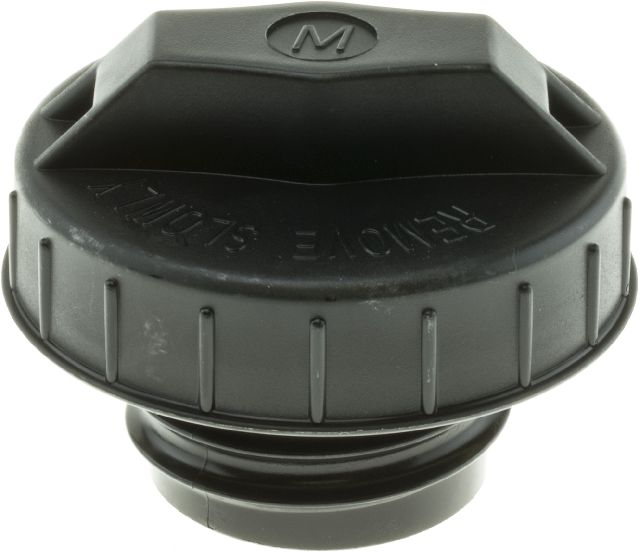
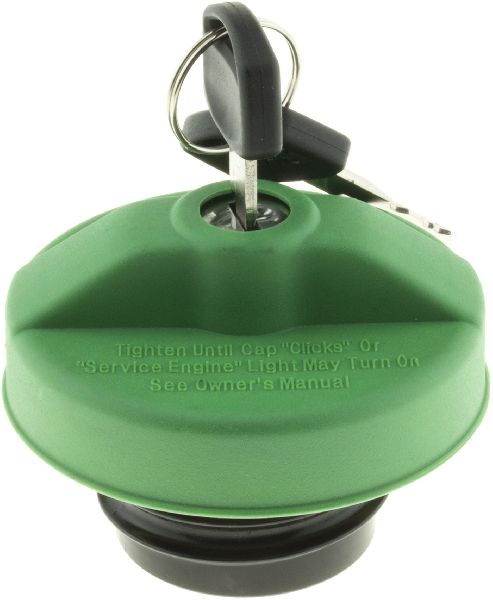
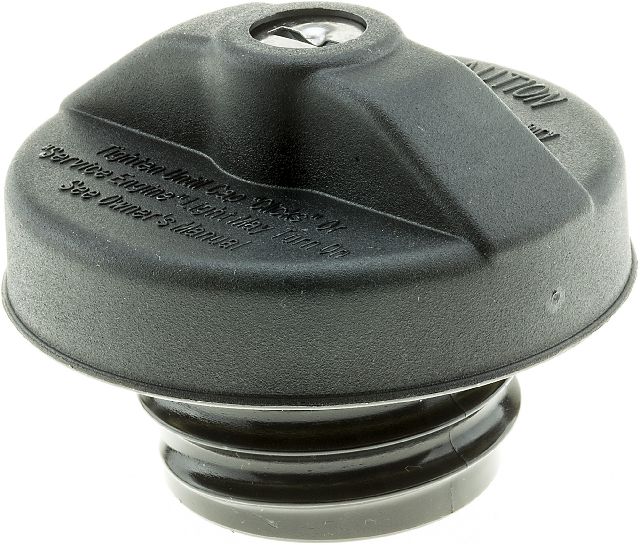
(OEM #ACDelco GT281)— A worn or loose gas cap is the simplest and most common cause of a P0442 code. Using an OEM cap is highly recommended for a reliable seal.
Trusted brands: ACDelco
OEM price range: $20-$30
Aftermarket price range: $15-$25 - EVAP Purge Valve
(OEM #ACDelco 214-1105 (or CP470))— This valve, located on the engine, can stick open and is another frequent cause of a small EVAP leak. A failure here often causes hard starting after refueling.
Trusted brands: ACDelco, Delphi
OEM price range: $35-$60
Aftermarket price range: $25-$50
Related Codes That Often Appear With This One
- P0455 — Indicates a large EVAP leak. A component that is failing may initially cause a small leak (P0442) and then a large leak as it worsens. Seeing both can point to a vent solenoid stuck wide open.
- P0449 — This code specifically points to an electrical fault in the EVAP vent solenoid circuit. Seeing P0449 and P0442 together makes the vent solenoid or its wiring the almost certain cause.
- P0446 — This indicates a restriction or blockage in the vent system, often caused by the same dust and debris that makes the vent solenoid fail and leak. The TSB for the vent solenoid relocation addresses this code directly.
Technical Service Bulletins (TSBs) & Recalls
- 02-06-04-037H: Addresses Check Engine Light with DTCs P0442, P0446, P0449, or P0455 due to a restricted/blocked EVAP vent path from dirt. Recommends replacing the vent valve and relocating the filter using a service kit (P/N 19207762 for early models, later superseded).
- Bulletin #23-NA-073: Provides repair information for DTCs P0442, P0446, P0455, or P0449 specifically caused by dust intrusion into the evaporative canister.
Platform-Specific Known Issues
- A known design flaw places the EVAP vent solenoid's air intake in a location prone to collecting dirt, especially on trucks used in dusty environments. This leads to premature failure of the solenoid, causing codes P0442, P0446, and P0449. The official fix involves a filter relocation kit.
Mechanic-Grade Diagnostic Values
- EVAP Canister Purge Valve Solenoid Resistance — expected: 20 to 38 Ohms. Failure: A reading significantly outside this range, or infinite (open circuit), indicates a faulty solenoid coil.
- EVAP Canister Vent Solenoid Resistance — expected: 12 to 65 Ohms (varies by specific part, a common value is ~20 Ohms). Failure: A reading outside the expected range for the specific part, most commonly an open circuit (infinite resistance).
- Fuel Tank Pressure (FTP) Sensor Voltage (Key On, Engine Off, Gas Cap Off) — expected: ~1.45V - 1.50V (at atmospheric pressure). Failure: A reading of 0V or 5V, or a voltage that is stuck and does not change when pressure/vacuum is applied, points to a faulty sensor or wiring issue.
- EVAP Vent Solenoid Power Supply Voltage — expected: 10-12 Volts DC (with key in RUN position). Failure: No voltage at the power wire (Pink or Orange, depending on year) indicates a wiring or fuse issue upstream.
- FTP Sensor 5V Reference Circuit — expected: 4.8-5.2 Volts (at sensor connector with key on). Failure: Voltage outside this range indicates a problem with the ECM or a short/open in the wiring harness.
Scan Tool Commands That Help
- Tech2 / High-End Scan Tool: EVAP Service Bay Test / Purge/Seal — This is a comprehensive, automated test that the ECM runs to check the entire EVAP system. It commands the vent valve closed, the purge valve open, and monitors the FTP sensor to verify the system can hold vacuum and detect leaks. It's the primary diagnostic function for verifying a repair or trying to trigger the fault under controlled conditions.
- Tech2 / High-End Scan Tool: Vent Valve Control (On/Off or Open/Close) — This bidirectional command is essential for performing a smoke test. The vent valve is normally open, so it must be commanded closed to seal the system and allow it to be filled with smoke. If smoke exits the vent valve while it's commanded closed, the valve is confirmed to be faulty.
- Tech2 / High-End Scan Tool: Purge Valve Control (% or Open/Close) — Used to test the function of the purge valve on the intake manifold. A technician can command it open while watching FTP sensor data to confirm it's pulling a vacuum on the tank. It can also be used to check if the valve is sticking by commanding it closed and ensuring no vacuum is being pulled.
Wiring & Ground Locations
- EVAP Vent Solenoid Connector — At the EVAP vent solenoid, typically located near the spare tire/charcoal canister.. The connector and its wiring are exposed to the elements. The power wire (Pink for 1999-2002, Orange for 2003-2006) should have 12V with the key on. The other wire is the ground control from the ECM. A break in either wire will cause a circuit code (P0449) and prevent the solenoid from closing, leading to a leak code like P0442.
- EVAP Purge Solenoid Connector — On top of the intake manifold.. This 2-wire connector provides power and ground control to the purge valve. Checking for 12V power and a pulsing ground signal from the ECM with a scan tool can verify electrical integrity.
- G1xx Grounds — Ground points with a '1' prefix (e.g., G103, G108, G110) are located in the engine compartment or on the front of the frame.. The EVAP system components rely on clean ground connections. A corroded or loose primary ground on the frame or near the engine can cause intermittent and hard-to-diagnose electrical faults for the solenoids and sensors.
- Fuel Tank Pressure (FTP) Sensor Connector — On top of the fuel tank, part of the fuel pump module assembly.. This 3-wire connector provides the sensor with a 5V reference (Gray wire), a low reference/ground (Black wire), and sends the signal back to the ECM (Green wire). A break or corrosion in these wires, which run along the frame, can cause false codes.
Real Owner Repair Stories
- Reddit user on r/cruze (similar GM EVAP system) (Chevrolet Cruze (demonstrates a common GM issue)) — Recurring P0442 code every 3 days.
❌ Tried (didn't work) Replaced gas cap, Replaced canister purge valve (on engine)
✅ What actually fixed it A smoke test revealed a significant leak coming from above the charcoal canister. The final diagnosis pointed to the vent valve/solenoid located on or near the canister, which was allowing smoke to escape when it should have been sealed. - YouTube user repairing a Chevy Silverado (Chevy Silverado (GMT800 platform)) — Persistent P0442 code.
❌ Tried (didn't work) Replaced gas cap due to a bad seal.
✅ What actually fixed it After the gas cap didn't fix the issue, the owner replaced the EVAP purge valve on the engine intake manifold, which resolved the code. This is often the next logical step if the gas cap and vent solenoid are known to be good.
Documented NHTSA Reports
- An owner reported in NHTSA ODI #11203697 that their vehicle had the check engine light illuminate three times with a P0442 code while having less than 1,000 miles on the odometer.
"I Checked Everything" — The Actual Cause
- A smoke test can pass, showing no external leaks, yet the P0442 code can persist. This scenario often points to an intermittently failing or internally leaking component rather than a cracked hose. A common culprit is the EVAP purge valve on the engine. It may hold closed during a static test but leak internally or fail to close completely during engine operation, creating a small leak path that the smoke test didn't reveal. Testing the purge valve with a hand-held vacuum pump or watching its behavior with a scan tool is necessary in these cases.
OEM Part Supersession History
GM 19152349, ACDelco 214-2082→ACDelco 214-2149— The original vent solenoid design was prone to failure from debris. The updated part numbers, particularly the kits, often include a hose to relocate the air filter to a cleaner, higher location to prevent repeat failures as outlined in TSB 02-06-04-037H.
Heads up: While the base solenoid may fit a wide range of years, using the complete relocation kit (214-2149 or 214-2082) is the recommended permanent repair for trucks experiencing repeat failures due to dust/dirt ingestion.
Model Year Variations Within This Range
- 2001-2006: The power wire for the EVAP vent solenoid changed color. On 2001-2002 models, it is typically Pink (PNK). For 2003-2006 models, it is Orange (ORG). This is critical for accurate electrical diagnosis at the connector.
- 2007: 2007 was a split year. The 'Classic' (GMT800) models use the system described here. The 'New Body Style' (GMT900) trucks have a redesigned EVAP system with different component locations, part numbers, and ground point designators, though the operational principles are similar.
Diagnostic Flowchart
Real Owner Stories
Aggregated from forums and TSBs cited above. Mileages and costs reflect what owners reported in those sources.
2006 Chevrolet Silverado SS
Symptoms: Check Engine Light illuminated with P0442 and P0455 codes, accompanied by difficulty refueling the truck.
What fixed it: Installed the ACDelco vent valve relocation kit (214-2082) after replacing the gas cap failed to solve the problem.
Source hint: Chevy Talk Forum
2006 GMT800 model
Symptoms: Received a P0442 code immediately after driving on a rough road with frost heaves.
What fixed it: Determined that a brittle EVAP component was jarred loose or broken by the physical shock of the rough road.
Source hint: GMTNation Forum
Chevrolet Tahoe / GMC Yukon
Symptoms: Experienced an EVAP leak code (P0455) caused by a failed purge solenoid.
What fixed it: Replaced the purge solenoid, which had failed because it was contaminated with charcoal pellets from a deteriorating EVAP canister.
Source hint: Tahoe Yukon Forum
Related OBD-II Codes
Frequently Asked Questions
Does TSB 02-06-04-037H apply to my 2001-2007 GMC Sierra 2500 HD for code P0442?
Why is my Sierra 2500 HD hard to start right after I put gas in it?
What is the best replacement gas cap to fix a P0442 on a GMT800 truck?
Where is the EVAP vent solenoid located on my truck, and why does it keep failing?
Can driving my Sierra on rough, bumpy roads cause a P0442 code?
How do I test the EVAP purge valve on my Sierra's intake manifold?
Helpful Videos
Used OEM Parts in Stock


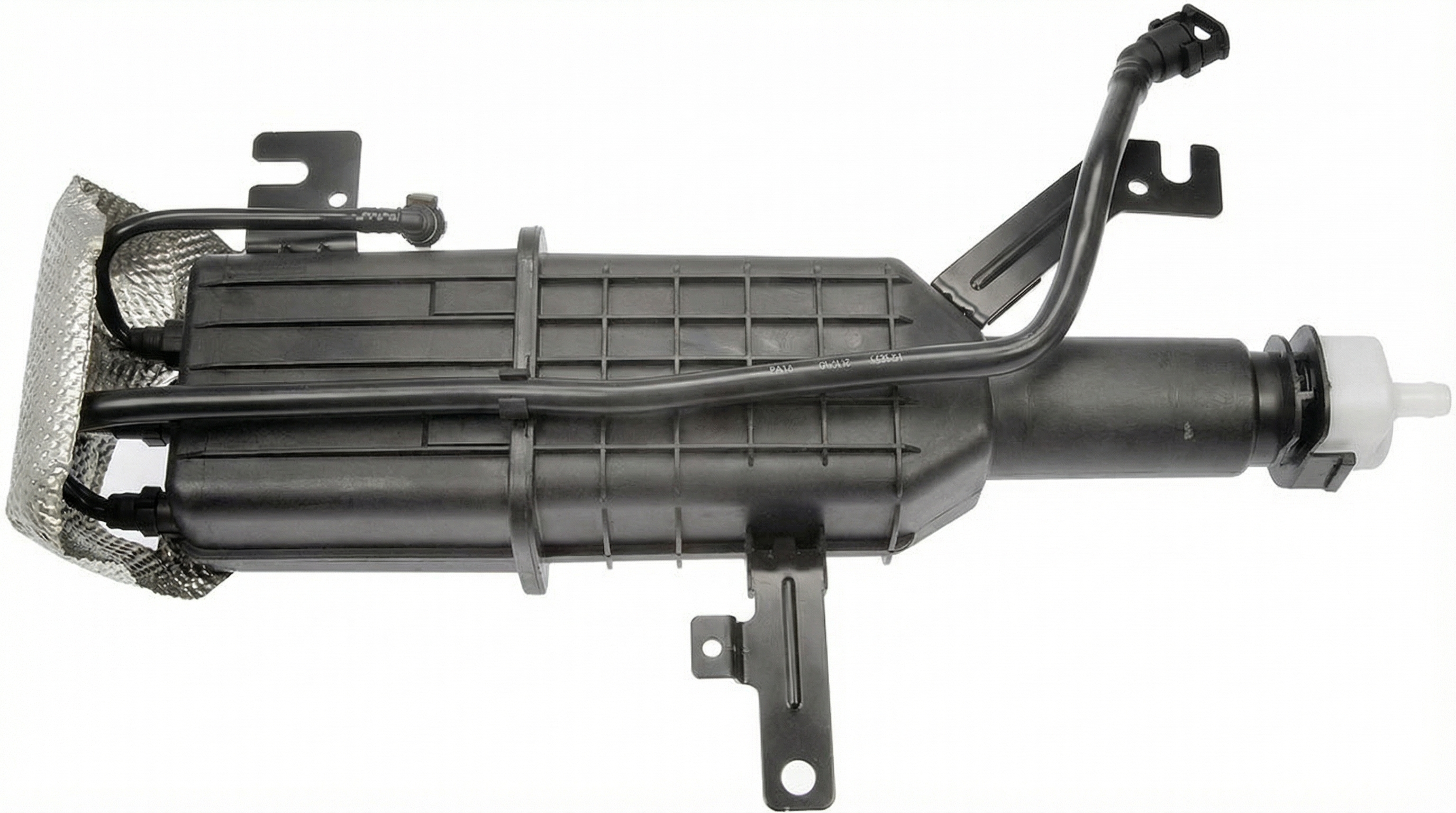
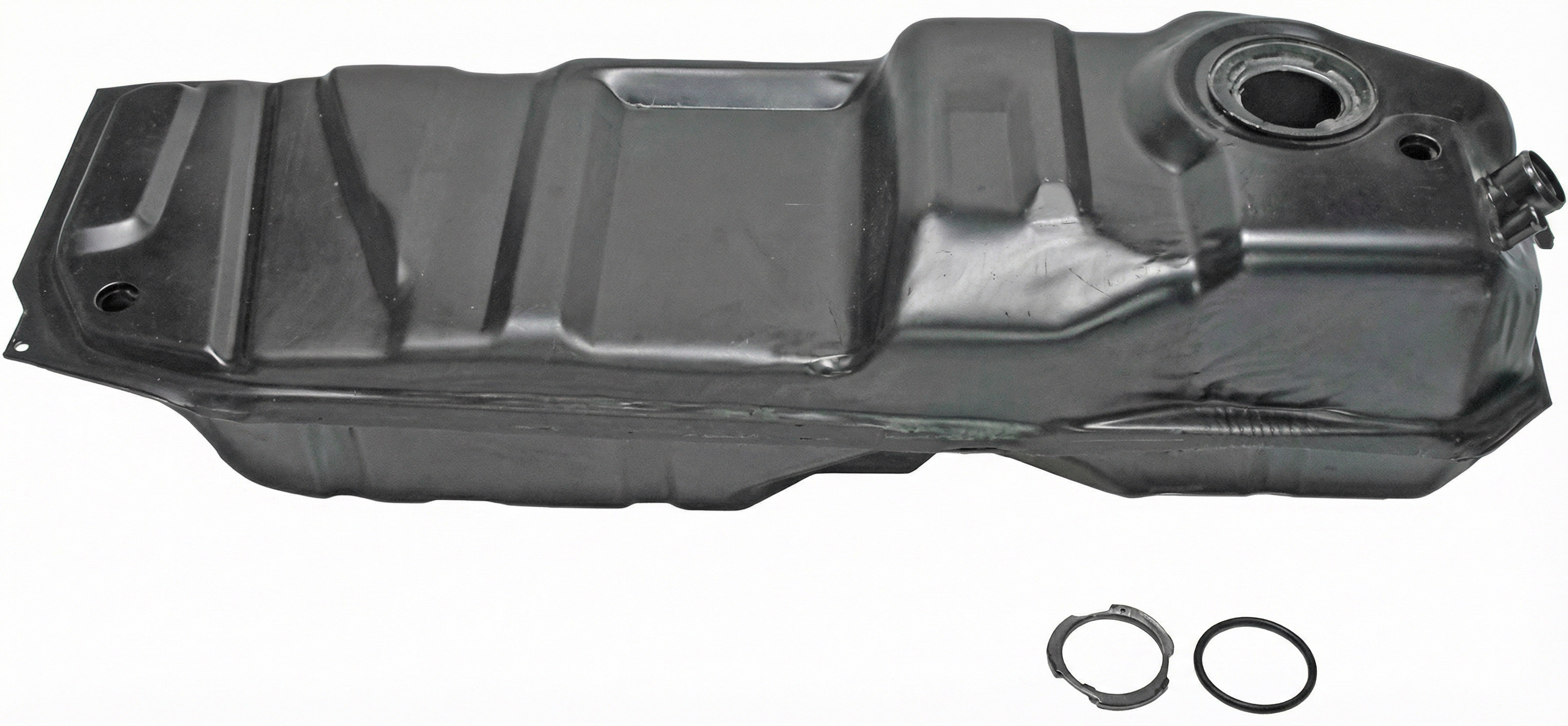
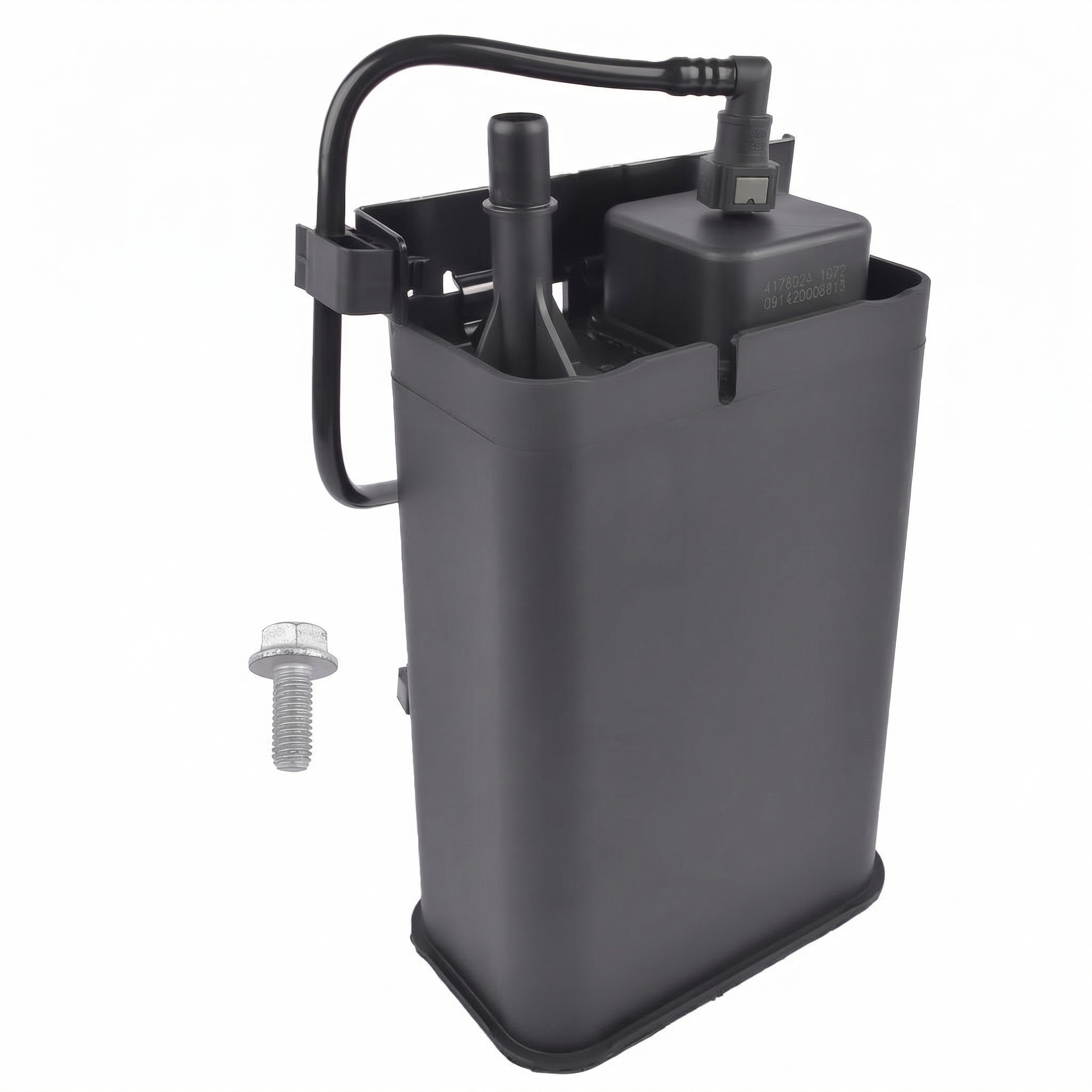

New Aftermarket Parts Available


The information in this article is provided for general reference and educational purposes only. Vehicle specifications, procedures, and part compatibility can vary by production date, trim level, and region. Always consult your vehicle's factory service manual and verify part numbers before purchasing or performing repairs. Safety-critical components such as airbags, seat belts, and braking systems should be installed by a qualified professional.
- GMC Sierra 2500 HD:
- 🎬 Helpful Videos
- 🛍️ Shop This Part
- What's Unique About the 2001-2007 GMC Sierra 2500 HD
- Symptoms You May Notice
- Most Likely Causes
- Rare But Worth Checking
- Diagnosis Steps
- Parts You'll Likely Need
- Related Codes That Often Appear With This One
- Technical Service Bulletins (TSBs) & Recalls
- Platform-Specific Known Issues
- Mechanic-Grade Diagnostic Values
- Scan Tool Commands That Help
- Wiring & Ground Locations
- Real Owner Repair Stories
- Documented NHTSA Reports
- "I Checked Everything" — The Actual Cause
- OEM Part Supersession History
- Model Year Variations Within This Range
- Diagnostic Flowchart
- Real Owner Stories
- 2006 Chevrolet Silverado SS
- 2006 GMT800 model
- Chevrolet Tahoe / GMC Yukon
- Related OBD-II Codes
- Frequently Asked Questions
- 🎟️ Get 5% Off