

P0442 on 2000-2006 BMW X5: EVAP Small Leak Causes and Fixes
For a 2000-2006 (E53) BMW X5, the P0442 code is most often caused by a worn-out gas cap seal or a failing Leak Detection Pump (DMTL pump). Start by replacing the gas cap, which is an inexpensive first step (~$25-$40). If that doesn't work, the DMTL pump, located in the driver's side rear wheel well, is the next likely culprit and a very common failure point on this vehicle.
- Always start by checking and/or replacing the gas cap. It's the cheapest, easiest, and most common fix for P0442 on the E53 X5.
- If a new gas cap doesn't solve the issue, the Leak Detection Pump (LDP/DMTL) in the driver's side rear wheel well is the next most likely part to have failed.
- Do not replace expensive parts like O2 sensors or catalytic converters for this code; it is strictly related to the fuel vapor recovery system.
- The most accurate way to find the leak if it's not the gas cap is to have a professional perform a smoke test on the EVAP system.
What's Unique About the 2000-2006 BMW X5

The first-generation BMW X5 (E53) uses a specific component called a Leak Detection Pump (LDP), also known as a DMTL (Diagnostic Module Tank Leakage) pump, to pressurize the EVAP system for its self-test. This pump, located in the driver's side rear wheel well, is a known failure point on this era of BMWs and is a frequent cause of the P0442 code, second only to the simple gas cap. While many cars use vacuum-based systems, this pump-driven pressure test is characteristic of BMWs from this period and is shared with platform mates like the E46 3-Series and E39 5-Series.
Symptoms You May Notice
- Check Engine Light is on
- A 'Check Gas Cap' message may appear on the instrument cluster, sometimes intermittently for a few days, before the permanent Check Engine Light is triggered.
- A faint fuel smell may be present, especially around the rear of the vehicle or after refueling.
- Difficulty starting immediately after refueling (in rare cases, if the purge valve is stuck open)
- Replacing the oxygen sensors. O2 sensors are not related to the EVAP system.
- Replacing the catalytic converter. This is a costly repair for exhaust codes (like P0420/P0430), not EVAP leak codes.
- Immediately assuming a major leak without checking the gas cap first. Always start with the simplest and most common cause.
Most Likely Causes


- Loose or Worn Gas Cap 🔴 High Probability The rubber O-ring seal on the gas cap becomes hard, brittle, and cracked over time, preventing a proper seal. This is the most common and easiest-to-fix cause. 🎬 Watch: A quick walkthrough for diagnosing and repairing P0442 codes. This is a well-documented issue in owner forums.
How to confirm: First, ensure the cap is tightened until it clicks multiple times. Inspect the rubber seal for any visible cracks, hardening, or deformities. If the seal is not pliable and soft, it's likely bad. A faint smell of gasoline on or around the cap is also a strong indicator of a leak.
Typical fix: Replace the gas cap with a new OEM or high-quality aftermarket part. After replacement, clear the codes and drive for a few days to see if the light returns. Some owners have reported temporary success by flipping the old gasket over, but replacement is the correct long-term fix.
Est. part cost: $25-$50 - Faulty Leak Detection Pump (LDP/DMTL) 🟡 Medium Probability This pump contains moving parts and seals that can fail over time. It is located in the driver's side rear wheel well, exposed to road debris and moisture, making it a common failure item on the E53 X5. The part is a known weak point across many BMW models of this era.
How to confirm: Diagnosis typically requires a smoke test to see if the pump itself is leaking, or a high-end scan tool to command the pump to run and verify its operation. When the DME initiates a system test (often after the car has been sitting), you may be able to hear the pump making a faint buzzing or clicking noise from the rear driver's side wheel well. The absence of this sound could indicate a failed pump.
Typical fix: Replace the LDP/DMTL pump and its associated filter. This involves removing the driver's side rear wheel and wheel well liner for access. The OEM part is made by Bosch.
Est. part cost: $100-$200 - Faulty EVAP Purge Valve (Fuel Tank Breather Valve) ⚪ Low Probability This solenoid valve, located in the engine bay, can get stuck open or closed, causing a leak or blocking vapor flow. While less common than the gas cap or DMTL pump for a P0442, it is a known failure point.
How to confirm: Remove the valve and try to blow through it. When unpowered, it should be closed and not allow air to pass. A simple test involves applying 12V to the terminals to see if the solenoid clicks open and closed. A professional can use a scan tool to command it open and closed while observing system pressure.
Typical fix: Replace the purge valve. Access can be tight as it's located under the engine covers near the intake manifold.
Est. part cost: $50-$100 - Cracked or Disconnected EVAP Hoses ⚪ Low Probability After 15-20+ years, the plastic and rubber hoses that make up the EVAP system become brittle from heat and age and can develop small cracks, especially at connection points and on the lines running to/from the charcoal canister.
How to confirm: A smoke test is the most effective way to find a cracked hose. A technician injects pressurized smoke into the EVAP system and looks for where it escapes. Visual inspection may reveal obvious cracks, but small leaks are often invisible without smoke.
Typical fix: Replace the specific section of cracked hose. In some cases, a small crack can be repaired, but replacement is recommended for a long-term fix.
Est. part cost: $20-$80
Rare But Worth Checking
- Cracked Charcoal Canister: The canister itself, located near the DMTL pump, can develop hairline cracks from age or impact from road debris. This is usually found during a smoke test.
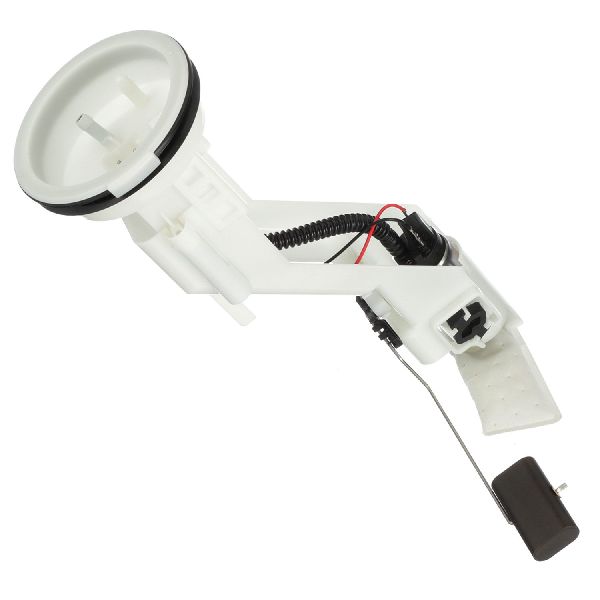
- Leaking Fuel Pump Sealing Ring: The large lock ring that secures the fuel pump/level sender assembly to the top of the fuel tank can leak if not tightened properly or if the gasket is old. A strong fuel smell inside the cabin, especially with the rear seat cushions lifted, is a major clue. The access panels are located under the rear passenger seats.
- Internal Fuel Tank Leak: In very rare cases, the fuel tank itself can develop a microscopic crack or a leak at a seam. This can cause a persistent P0442 and a noticeable fuel smell. In one documented case on a similar platform (E70 X5), the dealer identified an internal leak and had to replace the entire fuel tank under warranty.
Diagnosis Steps

- Check the Gas Cap: Remove and inspect the gas cap's rubber seal for cracks or damage. Reinstall it and turn until it clicks multiple times. Clear the code and drive for a few days. If the light stays off, the problem is solved.
- Replace the Gas Cap: If the seal looks worn, the 'Check Gas Cap' light appeared, or the Check Engine light returns, replace the gas cap. It's an inexpensive and very common point of failure.
- Visual Inspection: Visually inspect the EVAP hoses in the engine bay and around the charcoal canister/LDP area (driver's side rear wheel well) for any obvious cracks, disconnections, or damage.
- Perform a Smoke Test: This is the 🎬 See how to use a smoke machine to find leaks. most definitive diagnostic step. A smoke machine is connected to the EVAP system (usually at the purge valve service port). The system is filled with a harmless, visible smoke under low pressure. Any leaks will be revealed by smoke escaping from the faulty component (hose, LDP, canister, fuel pump seal, etc.).
- Test Components with a Scan Tool: If a smoke machine isn't available, a BMW-compatible scan tool can be used to actuate the LDP and purge valve to check for electrical functionality. This can help identify a dead pump but won't find physical leaks.
- Isolate and Repair: Based on the results of the smoke test or component test, replace the identified faulty part.
Parts You'll Likely Need

- Fuel Filler Cap
(OEM #16117222391)— This is the most common cause of a P0442 code due to the rubber seal wearing out over time. This part number supersedes previous versions 16116756772, 16116765046, and others.
Trusted brands: Genuine BMW, Blau, Rein
OEM price range: $35-$50
Aftermarket price range: $20-$35 - Leak Detection Pump (DMTL)
(OEM #16137193479)— This is the second most common failure point on the E53 X5 for this code. The pump is located in the rear driver's side wheel well and fails from age and exposure. This part number supersedes 16136764191 and 16136752551.
Trusted brands: Bosch (OEM Manufacturer), Genuine BMW
OEM price range: $150-$200
Aftermarket price range: $90-$140 - Fuel Tank Breather Valve (Purge Valve)
(OEM #13907572234)— This valve in the engine bay can stick open or closed, causing a leak to be detected by the system.
Trusted brands: Bosch, Febi, Genuine BMW
OEM price range: $70-$100
Aftermarket price range: $40-$70
Related Codes That Often Appear With This One
- P0456 — P0456 indicates a 'very small leak,' while P0442 indicates a 'small leak.' They point to the same type of problem, just a different leak size as measured by the DME. You might see one code appear first, which then changes to the other as the leak worsens. They are not indicative of different failed parts, but rather different rates of pressure decay during the EVAP self-test.
- P0455 — This code indicates a 'large leak.' If a component fails completely (e.g., a hose pops off or the gas cap is left off), you will get a P0455 instead of or in addition to P0442.
Platform-Specific Known Issues
- Fuel Pump / Sender Unit Sealing Ring Leak: The E53 X5 has two access ports under the rear seat bench to access the fuel pump and fuel level sender. Each is sealed to the tank with a large rubber gasket and a metal lock ring. Over time, or if disturbed during a fuel pump replacement, this gasket can fail to seal properly, causing a P0442 leak and a very strong fuel odor inside the car. A forum user on Xoutpost suggested giving the lock ring 'a quick tap' to ensure it's tight as part of the diagnostic process.
Mechanic-Grade Diagnostic Values
- DMTL Pump Reference Leak Measurement — expected: The DME activates the pump, passing air through a 0.5mm orifice. It measures the stabilized motor current (amperage) and stores this value as the electrical equivalent of a 0.020” leak.. Failure: During the system test, if the pump's current draw matches the stored reference amperage, a small leak (P0442) is flagged. If the current is significantly lower, a large leak is flagged. If it's higher, the system is considered sealed.
- Fuel System Pressure Hold Test — expected: After pressurizing the system to 3.5 bar (50 psi), let it sit for 15 minutes. Pressure should not drop more than 0.5 bar.. Failure: A pressure drop greater than 0.5 bar indicates a leak in the system or a faulty fuel pump check valve.
Hidden / Shadow Codes Worth Checking
- 2A17: DMTL Module Fault. This indicates a general failure of the DMTL pump module itself, such as an inability to start the test routine or an internal electrical fault. (see via BMW-specific scan tools like ISTA or INPA.)
- 2A15 / 2A16: DMTL System Leak Detected (small/minor leak). These are the BMW-specific equivalents of the generic P0442/P0456 codes, indicating the rate of pressure loss measured during the test. (see via BMW-specific scan tools like ISTA or INPA.)
- P1447: DMTL Pump Malfunction. While more common on the E90 generation, this code can sometimes appear on later E53 models, pointing directly to a pump failure. (see via Standard OBD-II scanner, often seen with aftermarket tools like Torque Pro.)
Scan Tool Commands That Help
- ISTA (Integrated Service Technical Application): Component Triggering > DME > Motor of diagnostic module (DMTL) — This command directly activates the DMTL pump motor. It's used to verify if the pump is receiving power and is mechanically functional. You should hear the pump buzz from the rear driver's side wheel well.
- ISTA (Integrated Service Technical Application): Component Triggering > DME > Changeover valve of diagnostic module (DMTL) — This command tests the internal solenoid valve within the DMTL pump assembly. This valve switches the pump's airflow from the reference orifice (for self-test) to the EVAP system. A clicking sound should be audible.
- ISTA (Integrated Service Technical Application): Service Functions > Drive > Fuel tank leakage diagnostic module DMTL (Test Plan) — This is the comprehensive, automated test routine. The DME runs the entire leak detection sequence, including the reference measurement and system pressurization. It takes up to 15 minutes and will return a pass/fail result, often identifying the leak size (major, minor, or none).
Wiring & Ground Locations
- DMTL Pump Ground Wire — In the wiring harness connecting to the DMTL pump, located in the driver's side rear wheel well.. According to wiring diagrams, the ground wire is typically Brown (BR). A poor ground connection at the chassis or corrosion in the connector can cause intermittent pump operation or complete failure, leading to EVAP codes without the pump itself being faulty.
- DMTL Pump Connector — On the DMTL pump itself, accessed by removing the driver's side rear wheel and fender liner.. This 4-pin connector provides power and ground to the pump motor and the internal changeover valve. Technicians can backprobe this connector to check for voltage when the pump is commanded on by a scan tool. A common failure point is corrosion from its exposed location.
Real Owner Repair Stories
- Xoutpost.com user 'syncrocrick' (2003 BMW X5 E53 4.4i) — P0440 and P0442 codes appeared immediately after clearing.
❌ Tried (didn't work) Replaced with new OEM gas cap., Replaced EVAP purge valve., Performed a smoke test but could not see any visible smoke.
✅ What actually fixed it The user found a disconnected hose on the charcoal canister. After reconnecting it and securing it with tape, the code was resolved long enough to pass an emissions test, confirming the location of the leak. - Bimmerfest user on an F15 X5 (similar principle) (BMW X5 (F15 generation), over 100k miles) — Persistent P0442 code.
❌ Tried (didn't work) Replacing the gas cap was the first assumed option but did not fix it.
✅ What actually fixed it A smoke test performed by an independent mechanic revealed a small crack in a plastic/rubber EVAP hose located in the rear passenger-side upper wheel well. The mechanic temporarily taped it up, which resolved the code, proving the hose was the definitive cause.
"I Checked Everything" — The Actual Cause
- In a documented case on Xoutpost, a user performed a smoke test for P0440/P0442 and saw no smoke, leading them to believe the system was sealed. The actual cause was later found to be a disconnected hose on the charcoal canister that was not easily visible and did not produce obvious smoke during the initial test.
- A faulty DMTL pump itself can pass a smoke test. The test checks for physical leaks in hoses and seals, but it cannot diagnose an internal failure of the pump's motor, its internal changeover valve, or its electronics. If a smoke test is clean, the next step is to use a scan tool to command the pump to run and perform its self-test.
OEM Part Supersession History
16136752551, 16136764191→16137193479— Standard design revision and consolidation of part numbers by BMW over time.
Heads up: The latest part number, 16137193479, is a direct replacement for the earlier versions on the E53 X5. There are no known incompatibilities when using the newest OEM or equivalent Bosch part.
Model Year Variations Within This Range
- 2000-2006: While the E53 generation spans these years, there were no significant changes to the fundamental design of the DMTL-based EVAP system. The causes, diagnostic procedures, and primary replacement parts (gas cap, DMTL pump, purge valve) remain consistent across both pre-facelift (2000-2003) and facelift/LCI (2004-2006) models.
Diagnostic Flowchart
Real Owner Stories
Aggregated from forums and TSBs cited above. Mileages and costs reflect what owners reported in those sources.
BMW E53 X5
Symptoms: Triggered a P0442 code. Inspected the gas cap and found the rubber seal was worn.
What fixed it: Replaced the gas cap with a new one, which solved the problem before needing a costly smoke test.
Source hint: Xoutpost.com: P0442 Small Evap Leak Repair
2003 BMW X5 4.4i
Symptoms: Experiencing both P0440 and P0442 codes simultaneously.
What fixed it: Unplugged the purge valve to see if a new code (P0443) triggered to verify the electronics were okay, then proceeded to find a place to connect a smoke machine for further testing.
Source hint: Xoutpost.com: P0440 & P0442 code - I could use some help/advices
BMW X3
Symptoms: P0442 code triggered. The old gas cap had a weak spring and lacked lubrication.
What fixed it: Replaced the gas cap with an updated part.
Source hint: YouTube: BMW code P0442 Evap leak small How to fix by briansmobile1
BMW E53 X5
Symptoms: P0442 leak code accompanied by a very strong fuel odor inside the car cabin.
What fixed it: Gave the metal lock ring on the fuel pump access port (under the rear seat bench) a quick tap to ensure it was tight and sealing properly.
Source hint: Xoutpost forum user (cited in Vehicle Specific Issues)
Related OBD-II Codes
Frequently Asked Questions
Why does my 2000-2006 BMW X5 show a 'Check Gas Cap' message before the Check Engine Light comes on for P0442?
Where is the Leak Detection Pump (LDP/DMTL) located on the E53 X5?
I smell a strong fuel odor inside my X5 cabin along with the P0442 code. What could cause this?
Can I just flip the gas cap gasket over to fix a P0442 on my BMW X5?
How can I test the EVAP Purge Valve on my X5?
What brand is the OEM Leak Detection Pump for the 2000-2006 BMW X5?
Helpful Videos
![How to Fix P0442 Engine Code in 7 Minutes [6 DIY Methods / Under $3.67]](https://img.youtube.com/vi/KISPTedKJmQ/mqdefault.jpg)
Used OEM Parts in Stock

New Aftermarket Parts Available


The information in this article is provided for general reference and educational purposes only. Vehicle specifications, procedures, and part compatibility can vary by production date, trim level, and region. Always consult your vehicle's factory service manual and verify part numbers before purchasing or performing repairs. Safety-critical components such as airbags, seat belts, and braking systems should be installed by a qualified professional.
- BMW X5:
- 🎬 Helpful Videos
- 🛍️ Shop This Part
- What's Unique About the 2000-2006 BMW X5
- Symptoms You May Notice
- Most Likely Causes
- Rare But Worth Checking
- Diagnosis Steps
- Parts You'll Likely Need
- Related Codes That Often Appear With This One
- Platform-Specific Known Issues
- Mechanic-Grade Diagnostic Values
- Hidden / Shadow Codes Worth Checking
- Scan Tool Commands That Help
- Wiring & Ground Locations
- Real Owner Repair Stories
- "I Checked Everything" — The Actual Cause
- OEM Part Supersession History
- Model Year Variations Within This Range
- Diagnostic Flowchart
- Real Owner Stories
- BMW E53 X5
- 2003 BMW X5 4.4i
- BMW X3
- BMW E53 X5
- Related OBD-II Codes
- Frequently Asked Questions
- 🎟️ Get 5% Off