

P0441 on 2004-2015 Nissan Armada: EVAP Incorrect Purge Flow Causes and Fixes
For a 2004-2015 Nissan Armada, code P0441 is most often caused by a faulty EVAP canister purge volume control solenoid valve. This part is relatively inexpensive and easy to replace, making it a common first step in diagnosis. The issue is also common on its platform mates, the Nissan Titan and Infiniti QX56.
- The P0441 code on your Armada means the EVAP system has an incorrect amount of vapor flow.
- Don't panic; you can continue to drive the vehicle without causing major damage.
- The most likely cause is a faulty purge solenoid valve located in the engine bay, which is a common and relatively inexpensive DIY fix.
What's Unique About the 2004-2015 Nissan Armada

The first-generation Nissan Armada (TA60), along with its platform-mates the Nissan Titan and Infiniti QX56, has a well-documented history of EVAP system issues. The most frequent culprit for P0441 is the purge volume control solenoid, which can fail by sticking open or, more commonly, sticking partially closed. Owners often find this is a straightforward DIY replacement located in the engine bay. While other EVAP components can fail, starting with an inspection and test of this specific solenoid often leads to a quick resolution. The failure is so common that numerous owner forums and videos document the exact replacement procedure.
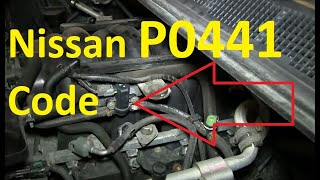
🎬 Watch: A complete guide to fixing the P0441 codeSymptoms You May Notice
- Check Engine Light is on
- Possible faint fuel smell, though less common
- Slightly rough idle in some cases
- Potential for a slight decrease in fuel economy
- Vehicle may fail an emissions test
- Replacing the gas cap. While a loose or faulty gas cap can cause other EVAP codes (like P0455 for a large leak), it is not a primary cause for the specific 'Incorrect Purge Flow' P0441 code. The P0441 code is a functional check of flow, not a system leak test.
Most Likely Causes

- Faulty EVAP Canister Purge Volume Control Solenoid Valve 🔴 High Probability This component is a very common failure point on many Nissan models of this era, including the Armada, Titan, and QX56. It is a normally-closed valve that, over time, can fail to open fully or get stuck, directly causing the 'Incorrect Purge Flow' condition detected by the ECU.
How to confirm: Locate the valve in the engine bay, typically mounted near the intake manifold. A definitive test involves a hand-held vacuum pump and a 12V power source. With the engine off, apply vacuum to the port leading to the intake manifold; it should hold vacuum. Then, apply 12V power to the solenoid's electrical pins. A common failure mode is that the valve will click, but will not fully open and release the vacuum. If it fails to hold vacuum at rest, or fails to release vacuum completely when energized, it is faulty.
Typical fix: Replace the purge volume control solenoid valve. Ensure the connecting hoses are not brittle or cracked during replacement.
Est. part cost: $30-$80 - Cracked or Disconnected EVAP Hoses 🟡 Medium Probability The rubber and plastic hoses in the engine bay and underneath the vehicle are exposed to heat and the elements, leading to cracks and brittleness over time. A leak in the purge line between the canister and the purge valve can cause this code.
How to confirm: Visually inspect all accessible EVAP hoses for cracks, especially at connection points and bends. A smoke test is the most effective way to find leaks that aren't easily visible. Pay close attention to the lines connecting to the purge valve and the charcoal canister.
Typical fix: Replace the damaged section of hose or secure a loose connection.
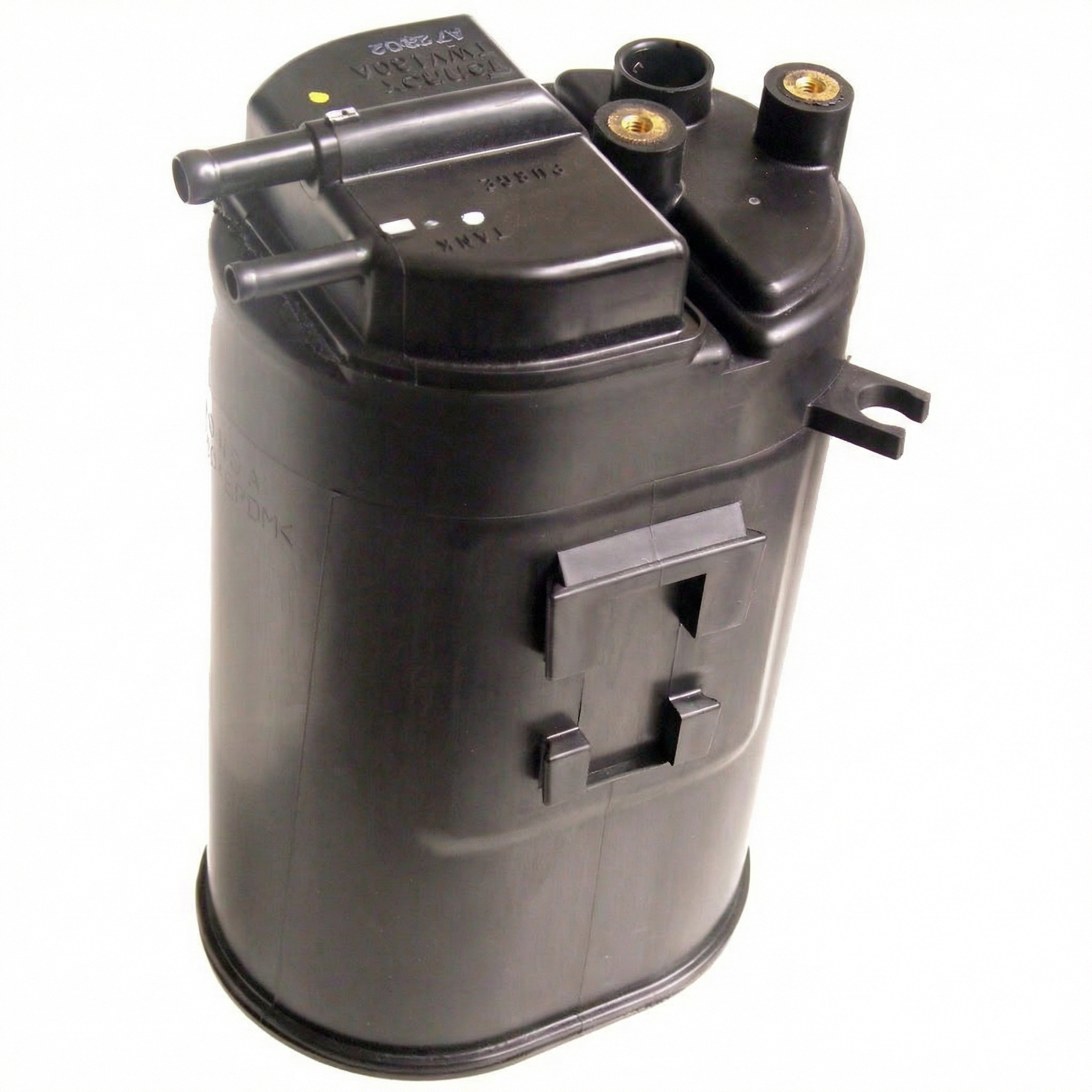
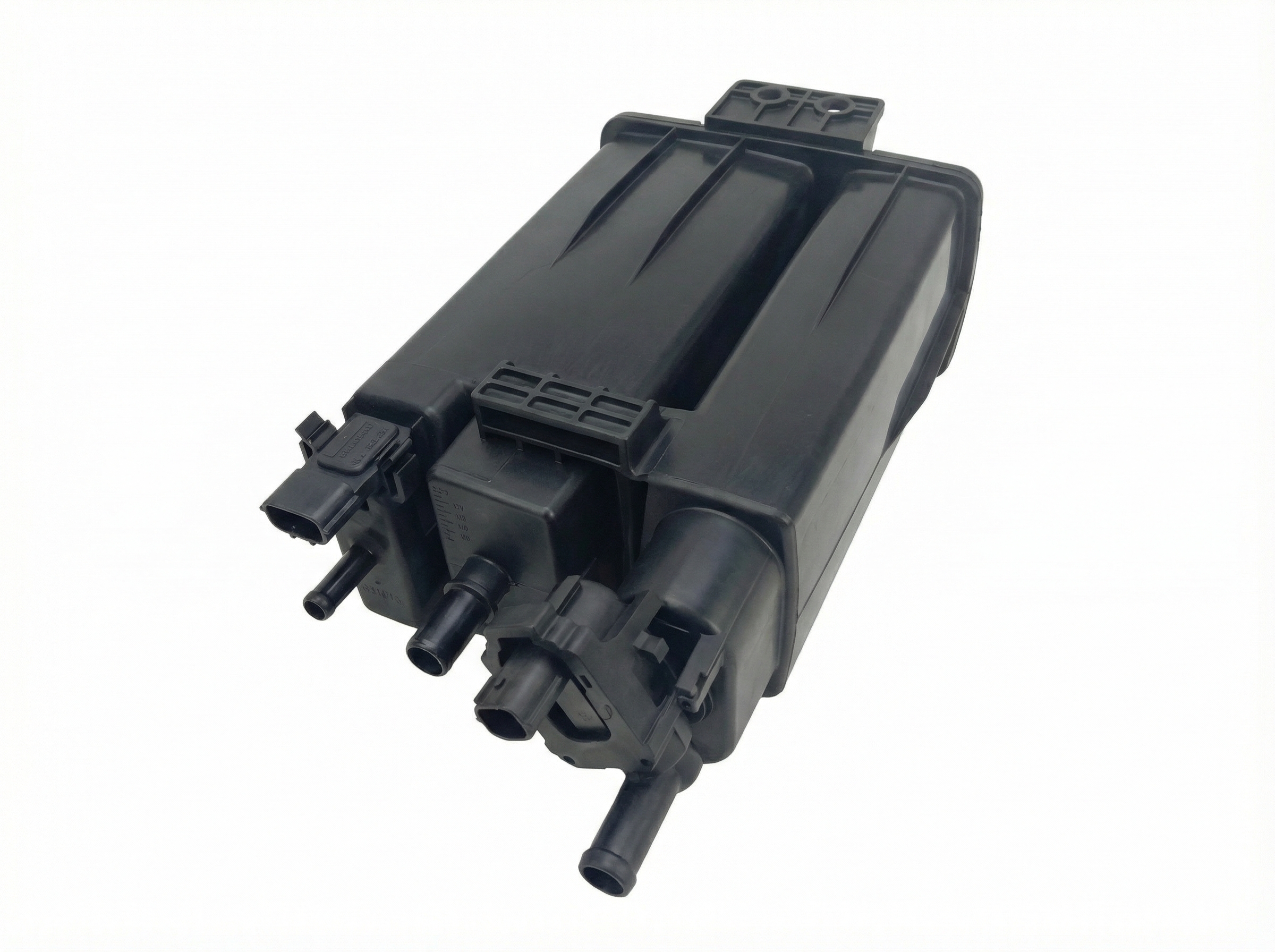
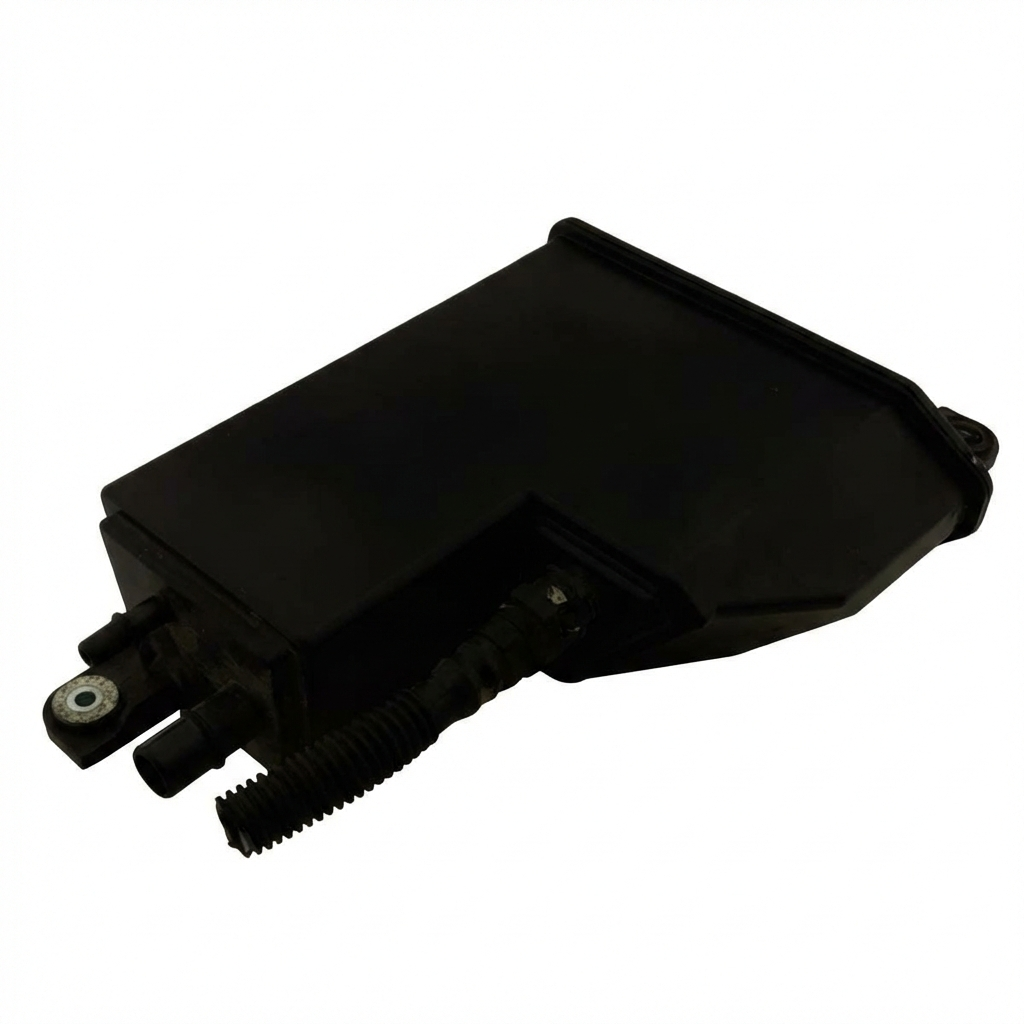
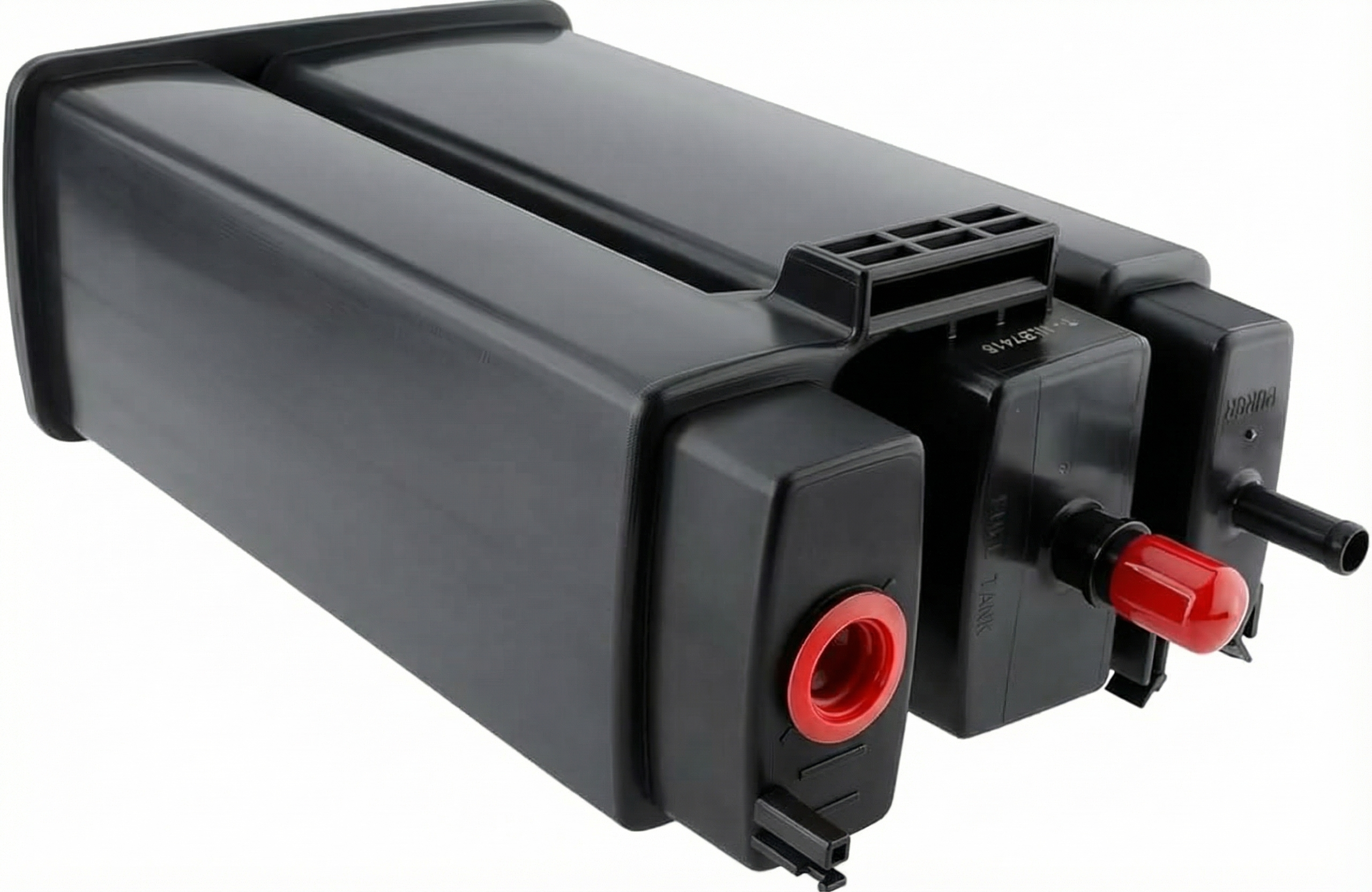
Est. part cost: $5-$30 - Faulty or Clogged EVAP Canister ⚪ Low Probability The charcoal canister can become saturated with fuel if the gas tank is consistently overfilled. More critically, a failing canister can break down internally, sending charcoal pellets into the EVAP lines, which can clog the purge valve and lines themselves.
How to confirm: When removing the old purge valve or its hoses, check for small, black charcoal pellets. If pellets are found, the canister has failed and must be replaced. The lines must also be blown out with compressed air to prevent the new purge valve from becoming clogged.
Typical fix: Replace the charcoal canister and blow out all related lines to remove debris before installing a new purge valve.
Est. part cost: $150-$250
Rare But Worth Checking
- Faulty EVAP Vent Control Valve: This valve, located near the charcoal canister under the vehicle, can get stuck or fail. While it more commonly causes other EVAP codes like P0448 or P0455, a malfunctioning vent valve can sometimes disrupt the pressure dynamics during a purge cycle, indirectly contributing to a P0441 code.
- Faulty Fuel Tank Pressure Sensor: If the sensor that monitors EVAP system pressure provides incorrect readings to the computer, it can mistakenly trigger a P0441 code. This is less common and usually accompanied by other pressure-related codes (e.g., P0453).
Diagnosis Steps

- Verify the code with an OBD-II scanner.
- Inspect the gas cap to ensure it is tight, although it's an unlikely cause for this specific code.
- Visually inspect all EVAP hoses and lines between the engine and the charcoal canister for obvious cracks, disconnections, or damage.
- Locate the EVAP canister purge volume control solenoid valve on the engine. Test its function using a vacuum pump and a 12V power source. It should be closed (hold vacuum) with no power. When power is applied, it should click AND fully release the vacuum. A click without a full release indicates failure.
- When disconnecting the old purge valve, check the hoses for black charcoal pellets. If found, the charcoal canister must also be replaced and the lines cleaned.
- If the purge valve is good, perform a smoke test on the EVAP system to check for hard-to-see leaks in hoses or the charcoal canister.
- Inspect the EVAP canister (located near the fuel tank) for any signs of physical damage, cracks, or fuel saturation.
- Check the EVAP vent control valve (also near the canister) for proper operation. It is normally open and should close when voltage is applied.
Parts You'll Likely Need

- EVAP Canister Purge Volume Control Solenoid Valve
(OEM #14935-JF00A)— This is the most common failure point for a P0441 code on this vehicle. It's a relatively simple solenoid that frequently sticks or fails to open completely after years of service.
Trusted brands: Hitachi (OEM supplier), Bosch, Dorman, Standard Motor Products (SMP)
OEM price range: $60-$100
Aftermarket price range: $30-$60
Technical Service Bulletins (TSBs) & Recalls
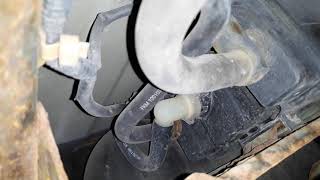
- No specific Technical Service Bulletin (TSB) for P0441 on the 2004-2015 Armada was identified during research. However, TSBs NTB19-037a and ITB19-003 exist for the platform regarding EVAP canister contamination from water and debris, which can be a root cause of various EVAP system faults. Diagnosis should follow standard workshop procedures. 🎬 See how to diagnose a gross EVAP leak on this platform
Platform-Specific Known Issues
- Charcoal Canister Disintegration: A known issue is the internal failure of the charcoal canister, which releases activated charcoal pellets into the EVAP lines. This debris can travel to the purge control valve, causing it to clog and fail. If replacing a failed purge valve, it is critical to inspect the lines for this debris to avoid repeat failure of the new part.
- Vent Valve Debris Contamination: Nissan issued Technical Service Bulletins for the Titan and Armada platform regarding a design issue where water and road debris can enter the EVAP system, clogging the canister and vent valve. This is a primary cause of fueling issues (gas pump clicking off) and can contribute to various EVAP codes, including P0441, by disrupting system pressures.
Mechanic-Grade Diagnostic Values
- EVAP Canister Purge Volume Control Solenoid Resistance — expected: 15 to 30 Ohms is a typical range for many solenoids.. Failure: A reading far outside this range, or an open circuit (infinite resistance), indicates a failed internal coil.
- EVAP Canister Purge Volume Control Solenoid Connector Voltage — expected: Approximately 12V (battery voltage) with the ignition key in the ON position.. Failure: No voltage suggests a wiring issue, blown fuse, or problem with the IPDM E/R (Intelligent Power Distribution Module Engine Room).
- EVAP Canister Vent Control Valve Resistance — expected: A typical range is between 20 and 50 Ohms.. Failure: An open circuit or a reading significantly outside the expected range points to a bad solenoid coil in the vent valve.
Scan Tool Commands That Help
- Nissan CONSULT or advanced bidirectional scanner: EVAP System Test / Purge Volume Control Valve Activation — This command allows a technician to manually open and close the purge valve while monitoring system pressure or vacuum. It's used to confirm if the valve is physically responding to the ECM's command, helping to isolate a bad valve from a wiring or command issue.
- Nissan CONSULT or advanced bidirectional scanner: Vent Valve Activation — This allows for manual closing of the normally-open vent valve. It is essential for sealing the system to perform a smoke test or a vacuum decay test to check for leaks.
Wiring & Ground Locations
- Engine Room Harness Ground Points — Multiple ground points are located on the engine block, cylinder heads, and inner fenders within the engine bay.. A poor ground connection for the Engine Control Harness can cause erratic behavior in sensors and solenoids controlled by the ECM, including the EVAP purge solenoid. Service manuals show detailed ground distribution diagrams essential for tracing these circuits.
- Purge Volume Control Solenoid Connector — On the EVAP purge solenoid itself, located near the intake manifold in the engine bay.. This 2-pin connector provides power and the control signal from the ECM. One pin should have 12V with the key on, and the other is the ground-side control from the ECM. Testing for voltage here is a critical step to differentiate between a bad valve and a wiring/ECM issue.
Real Owner Repair Stories
- YouTube channel 'Do It Yourself Dad' (2004 Nissan Armada) — Check Engine Light with code P0441.
❌ Tried (didn't work) The owner went straight to testing the most likely component.
✅ What actually fixed it The EVAP canister purge volume control solenoid valve was faulty. The owner demonstrated testing it with a hand-held vacuum pump. The valve would hold vacuum initially (correctly closed), but when 12V power was applied, it would click but fail to fully release the vacuum, indicating it was stuck partially closed. Replacing this valve solved the P0441 code.
OEM Part Supersession History
14935-AM60A, 14935-AM60B→14935-JF00A (and subsequent revisions like JF00B, JF00C, etc.)— Standard part evolution and consolidation across multiple Nissan/Infiniti platforms.
Heads up: The newer JF00x series valves are generally backward-compatible with vehicles that used the older AM60x series. Always verify fitment with the vehicle's VIN, but they are physically and electrically interchangeable for this application.
Diagnostic Flowchart
Real Owner Stories
Aggregated from forums and TSBs cited above. Mileages and costs reflect what owners reported in those sources.
2004 Nissan Pathfinder Armada
Symptoms: Check Engine Light with code P0441.
What fixed it: Replaced the EVAP purge valve. The owner diagnosed the old valve by applying vacuum and then power, noting it would not fully release the vacuum when power was applied.
Source hint: YouTube - 'P0441 SOLVED!!!' by Do It Yourself Dad
2004-2015 Nissan Armada / Titan
Symptoms: Check engine light on.
What fixed it: Replaced the purge volume control solenoid. Owners noted this is a quick 15-30 minute DIY fix that resolves the check engine light.
Source hint: ClubArmada.com / TitanTalk.com
Related OBD-II Codes
Frequently Asked Questions
Is the EVAP Canister Purge Volume Control Solenoid Valve a common failure on the 2004-2015 Nissan Armada?
How can I test the purge valve on my Armada to see if it's causing the P0441 code?
I'm replacing the purge valve on my Armada. Do I need to check the hoses for anything specific?
Are there any Technical Service Bulletins (TSBs) for the Nissan Armada related to this EVAP issue?
My gas pump keeps clicking off when I try to refuel my Armada, and I have a P0441 code. Are these related?
Does this P0441 issue affect other Nissan or Infiniti models besides the Armada?
Helpful Videos
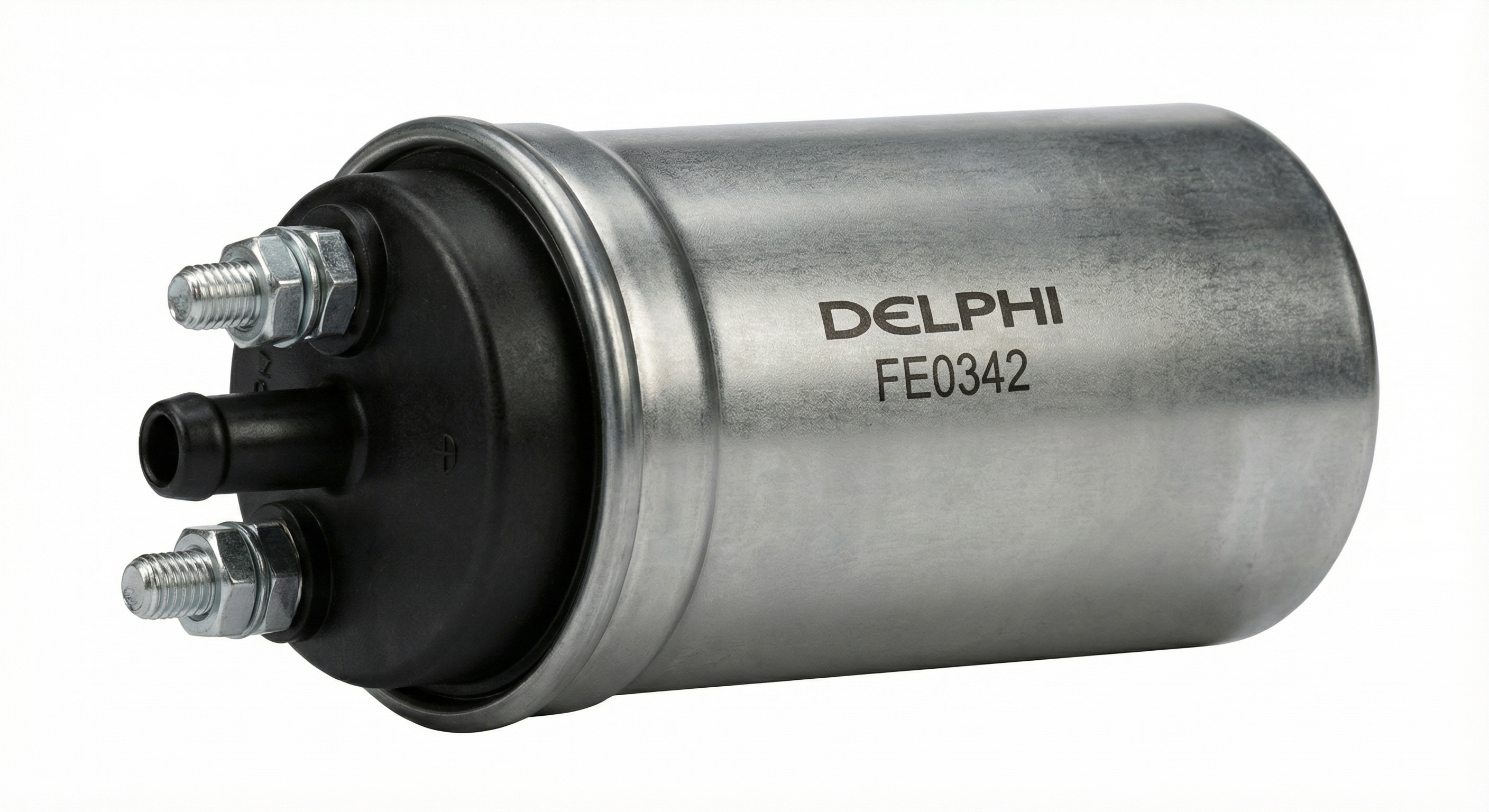
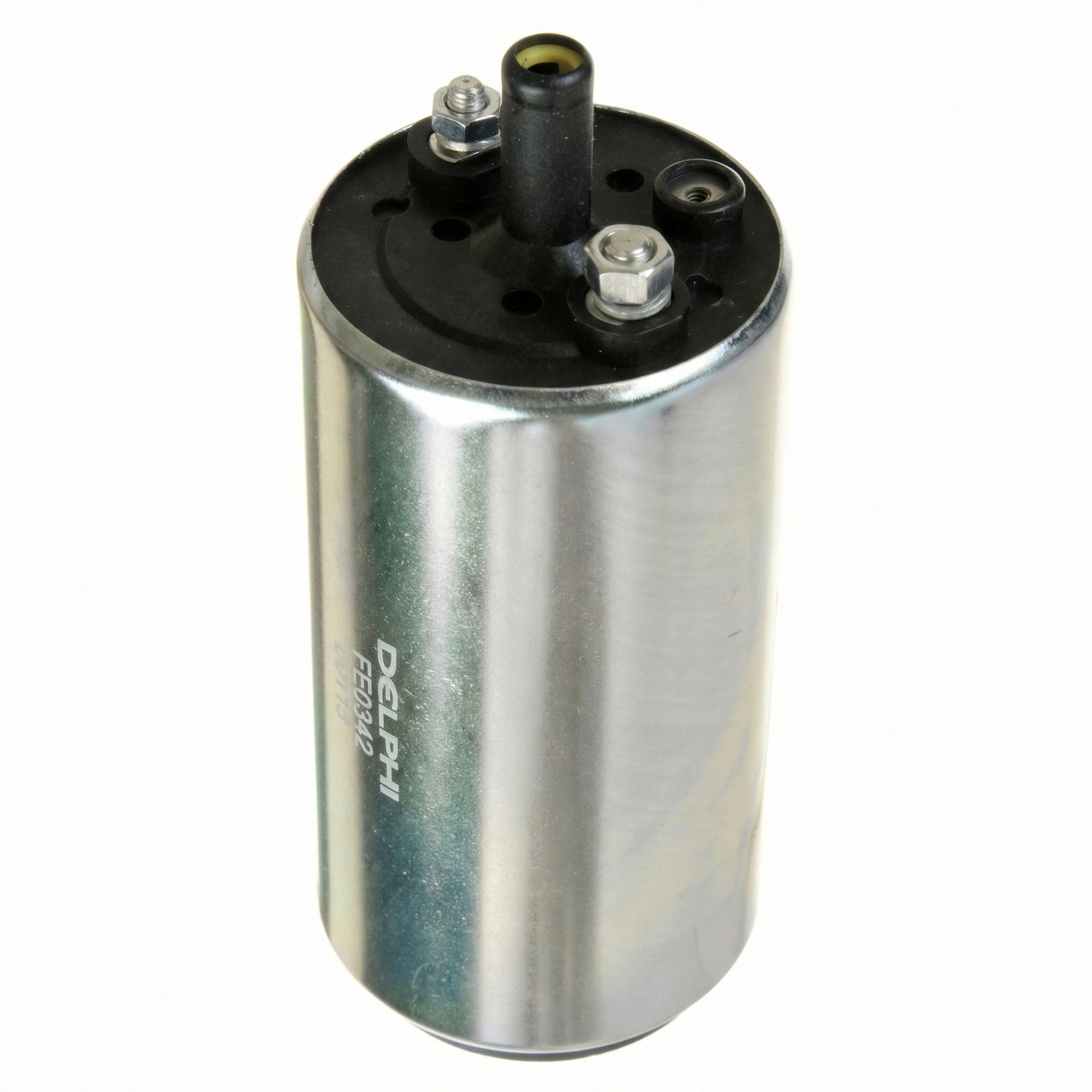
We Have This Part in Stock

The information in this article is provided for general reference and educational purposes only. Vehicle specifications, procedures, and part compatibility can vary by production date, trim level, and region. Always consult your vehicle's factory service manual and verify part numbers before purchasing or performing repairs. Safety-critical components such as airbags, seat belts, and braking systems should be installed by a qualified professional.
- Nissan Armada:
- 🎬 Helpful Videos
- 🛍️ Shop This Part
- What's Unique About the 2004-2015 Nissan Armada
- Symptoms You May Notice
- Most Likely Causes
- Rare But Worth Checking
- Diagnosis Steps
- Parts You'll Likely Need
- Technical Service Bulletins (TSBs) & Recalls
- Platform-Specific Known Issues
- Mechanic-Grade Diagnostic Values
- Scan Tool Commands That Help
- Wiring & Ground Locations
- Real Owner Repair Stories
- OEM Part Supersession History
- Diagnostic Flowchart
- Real Owner Stories
- 2004 Nissan Pathfinder Armada
- 2004-2015 Nissan Armada / Titan
- Related OBD-II Codes
- Frequently Asked Questions
- 🎟️ Get 5% Off