

P0441 on 2001-2010 Chrysler PT Cruiser: EVAP Incorrect Purge Flow Causes and Fixes
On a 2001-2010 PT Cruiser, code P0441 is most often caused by a faulty EVAP purge solenoid or a cracked vacuum line in the engine bay. The purge solenoid is a relatively inexpensive part (~$25-$60) and is a common DIY fix, though its location varies between turbo and non-turbo models, with the non-turbo version being significantly harder to access.
- For P0441 on a PT Cruiser, the problem is almost always the purge solenoid or a cracked vacuum hose near it.
- Before buying parts, identify if you have a turbo or non-turbo engine, as this drastically changes the difficulty of replacing the purge solenoid.
- Always check the simple things first: make sure the gas cap is tight and inspect the visible vacuum lines for obvious cracks.
- If you find black, sand-like particles in the EVAP lines, your charcoal canister has failed and needs to be replaced along with cleaning the lines.
What's Unique About the 2001-2010 Chrysler PT Cruiser
The PT Cruiser was produced for a single generation, but the key difference regarding this code is the engine. The location of the most common failure part, the EVAP purge solenoid, is different on the standard 2.4L engine versus the 2.4L Turbo. On non-turbo models, the solenoid is notoriously difficult to access, tucked under the brake booster and behind the fuse box, often requiring removal of the battery for access. On turbo models, it is more conveniently located on top of the engine near the intake manifold. This accessibility difference is the main platform-specific quirk owners should be aware of before starting a repair. Additionally, early models (approx. 2001-2003) used a Leak Detection Pump (LDP) while later models (approx. 2004-2010) used a Natural Vacuum Leak Detection (NVLD) system to monitor the EVAP system, which can alter diagnostic strategies slightly.
Symptoms You May Notice
- Check Engine Light is on
- Slight fuel odor, especially around the rear of the vehicle or after stopping.
- Rough idle or stalling, particularly after refueling (if purge valve is stuck open).
- Difficulty starting immediately after getting gas.
- A 'whooshing' sound when removing the gas cap may be absent if the system is not sealing correctly.
- Replacing the gas cap when the actual problem is a cracked hose or bad purge solenoid. While the cap is a good first check, it's not the most common cause for this specific code on the PT Cruiser.
- Replacing the rear charcoal canister or NVLD pump when the fault is in the engine bay (purge solenoid or vacuum lines). Diagnosis should start in the engine bay as the purge solenoid and its lines are the most frequent culprits.
Most Likely Causes
- Faulty EVAP Purge Solenoid/Valve 🔴 High Probability This is the most common mechanical failure point for this code on the PT Cruiser. The valve can get stuck open, stuck closed, or fail electrically due to age and heat cycles.
How to confirm: With the engine off, disconnect the vacuum lines from the solenoid. It should be normally closed; try blowing through it. If air passes, it's stuck open and bad. You can use a hand vacuum pump to confirm it holds vacuum. Applying 12V power should make it 'click' and open, allowing air to pass.
Typical fix: Replace the purge solenoid. Note the location difference: on non-turbo engines, it's under the brake booster, and removing the battery and its tray provides better access. 🎬 Watch: A step-by-step guide to replacing the solenoid on this model. On turbo engines, it's easily accessible on top of the engine.
Est. part cost: $25-$60 - Cracked, Disconnected, or Clogged EVAP Vacuum Hoses 🔴 High Probability The small plastic and rubber vacuum lines in the engine bay, especially the corrugated plastic ones, become brittle and crack over time due to heat and age. This causes vacuum leaks that disrupt the purge flow.
How to confirm: Visually inspect all vacuum lines connected to the intake manifold and the purge solenoid. Pay close attention to the corrugated plastic lines and rubber elbows for any visible cracks or loose connections. A smoke test is the most effective way to find small, hard-to-see leaks.
Typical fix: Replace the damaged section of the vacuum hose. It's often best to replace the entire line assembly if it appears brittle. Some owners use generic vacuum hose of the correct diameter as a cost-effective fix.
Est. part cost: $10-$40 - Loose or Faulty Gas Cap ⚪ Low Probability While more commonly associated with large leak codes (like P0440 or P0455), a gas cap that doesn't seal properly can disrupt the EVAP system's ability to manage pressure, sometimes contributing to a P0441. Some owners have reported that replacing a worn, non-clicking cap resolved the code.
How to confirm: Ensure the gas cap is tightened until it clicks multiple times. Inspect the rubber seal on the cap for cracks, stiffness, or damage. If it looks worn, it's a cheap and easy part to replace as a first step.
Typical fix: Replace the gas cap with a new, OEM-equivalent part. Aftermarket caps can sometimes cause sealing issues, so an OEM cap is often recommended.
Est. part cost: $10-$25 - Clogged or Failing Charcoal Canister ⚪ Low Probability Consistently overfilling the fuel tank (topping off after the pump clicks off) can force liquid fuel into the charcoal canister, saturating the charcoal pellets and causing it to clog or fail.
How to confirm: Symptoms include difficulty filling the fuel tank, a persistent fuel smell, or finding black charcoal pellets in the EVAP lines when inspecting the purge solenoid. You can test for a clog by disconnecting the lines and gently blowing air through it to see if it's restricted.
Typical fix: Replace the charcoal canister, which is typically located near the fuel tank, under the rear of the vehicle. If charcoal pellets are found in the lines, the lines and purge solenoid must be cleaned out or replaced as well.
Est. part cost: $70-$150
Rare But Worth Checking
- Faulty NVLD Pump/Switch: The Natural Vacuum Leak Detection (NVLD) assembly is the sensor that the computer relies on to confirm purge flow. If the switch inside the pump fails, it can falsely report an incorrect flow, triggering P0441. This part is also known as a Leak Detection Pump (LDP) on earlier models. It is located near the charcoal canister.
- Wiring Issue to Purge Solenoid: A break or short in the wiring harness leading to the purge solenoid can prevent it from activating, which the PCM will interpret as an incorrect purge flow. This can be caused by corrosion in the connector or physical damage to the wires.
Diagnosis Steps
- Check the gas cap. Ensure it is tight and the seal is in good condition. Replace if it appears worn or doesn't click.
- Scan for other codes. Note any other EVAP codes that may point towards a leak (P0455/P0456) or sensor issue.
- Visually inspect all accessible EVAP hoses in the engine bay, especially those around the purge solenoid and intake manifold, for cracks, kinks, or disconnections. Flex the hoses to reveal hidden cracks.
- Locate and test the purge solenoid. On non-turbo models, this will require removing the airbox and possibly the battery for access. Check if it holds vacuum when off and if it opens when 12V is applied. If it allows air to pass when unpowered, it is stuck open and needs replacement.
- If the solenoid and hoses appear fine, the next step is to check for blockages. Disconnect the line leading from the charcoal canister to the purge solenoid and check for obstructions, including black charcoal pellets, which indicate a failed canister.
- If no obvious cause is found, a smoke test is the most reliable way 🎬 Watch: A helpful overview of common P0441 causes and fixes. to find hairline cracks in hoses or leaks in the canister or NVLD pump.
- If no leaks are found, the NVLD pump/switch itself may be faulty and require testing. This component is located near the charcoal canister under the rear of the vehicle.
Parts You'll Likely Need
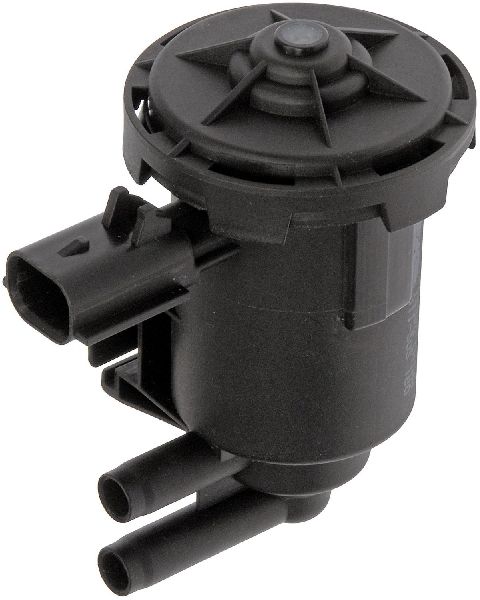
- EVAP Vapor Canister Purge Solenoid
(OEM #4669569)— This is the most frequent failure point for P0441. It gets stuck open or closed, directly causing incorrect purge flow.
Trusted brands: Mopar, Standard Motor Products (CP428), Dorman (911-202)
OEM price range: $40-$85
Aftermarket price range: $25-$60 - EVAP Vacuum Hose/Line — Engine bay heat causes the small vacuum lines to become brittle and crack, creating a vacuum leak that triggers the code.
Trusted brands: Mopar, Generic vacuum hose
OEM price range: $20-$50
Aftermarket price range: $5-$20 - Leak Detection Pump (NVLD)
(OEM #4891525AB)— This component contains the switch that monitors the EVAP system pressure. If it fails, it can no longer correctly report purge flow to the PCM.
Trusted brands: Mopar, Standard Motor Products (LDP09), Dorman (310-500)
OEM price range: $60-$100
Aftermarket price range: $40-$70
Related Codes That Often Appear With This One
- P0440 — P0440 indicates a general EVAP system malfunction. If a component like the purge solenoid or a hose fails, it can trigger both the general malfunction code and the specific incorrect flow code.
- P0455 / P0456 — These codes indicate a large or small EVAP leak, respectively. A cracked hose or bad seal that causes P0441 can also be detected as a system leak by the PCM's self-tests.
Platform-Specific Known Issues
- The purge solenoid on non-turbo models is located in a very tight space under the brake booster, making replacement significantly more difficult than on turbo models. Owners often find it necessary to remove the battery and battery tray to gain adequate access.
- A YouTube video by 'Reparacion de carros' titled 'Fault codes P0440 and P0441 (EVAP valve) | PT Cruiser |
Mechanic-Grade Diagnostic Values
- EVAP Purge Solenoid Connector Voltage — expected: ~12V (Battery Voltage) on the power supply pin with key on, engine off.. Failure: No voltage indicates an open circuit or blown fuse upstream of the solenoid.
- EVAP Purge Solenoid Coil Resistance — expected: Approximately 13-16 Ohms. (Note: This is a general value for Chrysler solenoids of this era; always verify with a known good part if possible).. Failure: A reading of infinite resistance (OL) indicates an open coil. A reading near zero ohms indicates a shorted coil.
- Mode $06, Test ID $41, Component ID $01 — expected: A 'Pass' or value within the specified MIN/MAX range shown on the scan tool.. Failure: A 'Fail' status for this monitor test is what directly triggers the P0441 DTC in the PCM.
Scan Tool Commands That Help
- Chrysler DRB III / WiTech: EVAP System Test / Purge Vapor Test — This is a bidirectional function that forces the entire EVAP monitor to run, allowing a technician to verify a fix without a long drive cycle. It can also be used to command the purge solenoid open/closed while monitoring system pressure to confirm solenoid functionality directly.
- Chrysler DRB III / WiTech: Actuate Purge Solenoid — To test the purge solenoid in isolation. A technician can command it to open and should hear an audible click and see a change in vacuum/pressure on a connected gauge, confirming the solenoid is mechanically and electrically responding to the PCM's command.
Wiring & Ground Locations
- Purge Solenoid Connector — On the EVAP purge solenoid itself, located under the brake booster (non-turbo) or on top of the engine (turbo).. This 2-pin connector provides power and control. One pin (often Dark Green/White) is 12V+ from the ASD relay. The other (e.g., Brown/Dark Blue) is the ground-side control from the PCM. Corrosion or a loose pin here will prevent the solenoid from activating.
- G102 — A primary engine ground located on the left front strut tower or on the cylinder head.. A poor engine ground at G102 can cause erratic behavior in multiple sensors and actuators controlled by the PCM, including the purge solenoid driver circuit, leading to incorrect operation.
- G104 / G105 — Ground points located on the front of the right and left front fenders, respectively.. These grounds serve various components in the engine bay. While not a direct cause, poor grounding in these locations can introduce electrical noise that may affect PCM calculations or sensor readings related to the EVAP system.
Real Owner Repair Stories
- PTCruiserLinks.com forum user (2004 PT Cruiser (Non-Turbo)) — Persistent P0441 Check Engine Light.
❌ Tried (didn't work) Replaced the EVAP purge solenoid., Replaced the gas cap., Visually inspected all easily accessible vacuum lines in the engine bay.
✅ What actually fixed it A small, hard-to-see crack was found in a plastic EVAP line located directly underneath the battery tray. The crack was not visible until the battery and its tray were completely removed for inspection. Replacing this section of hose resolved the code. - YouTube video comment section (2005 PT Cruiser Turbo) — P0441 code returned shortly after replacing the purge solenoid.
❌ Tried (didn't work) Replacing the purge solenoid (the fix only lasted a few days).
✅ What actually fixed it The owner discovered black charcoal pellets inside the EVAP lines when replacing the solenoid for a second time. This indicated the charcoal canister was failing and contaminating the system. The final fix was to replace the charcoal canister, replace the purge solenoid again, and thoroughly blow out all connected EVAP lines with compressed air to clear the debris.
"I Checked Everything" — The Actual Cause
- In some cases, a smoke test may not reveal a fault if the issue is with the NVLD/LDP pump's internal switch. The system may hold pressure perfectly, but if the switch that reports the pressure change to the PCM is faulty, the PCM will incorrectly assume there is a flow problem and set P0441. The fix is to replace the NVLD/LDP assembly near the fuel tank.
OEM Part Supersession History
4891525AB→4891525AC, 4891525AD— Component revision and improvement by the manufacturer.
Heads up: These part numbers are for the NVLD assembly used on later model PT Cruisers (approx. 2004+). They are not compatible with the LDP system on earlier models.4669569→4669569AC, 4669569AD— Minor revisions to the part over its production life.
Heads up: While the core part number 4669569 is widely used, ensure the specific part matches the engine (Turbo vs. Non-Turbo) as brackets may differ. The electrical function is generally the same.
Model Year Variations Within This Range
- approx. 2001-2003: These early models typically use a Leak Detection Pump (LDP) system for EVAP testing. While P0441 diagnosis is similar (focusing on the purge solenoid and lines), the component that monitors the system is the LDP, which is a different part with a different diagnostic procedure than the later NVLD system.
- approx. 2004-2010: These later models use a Natural Vacuum Leak Detection (NVLD) system. The PCM uses the NVLD's internal switch to detect the pressure change when the purge solenoid is opened. A failure of the NVLD assembly can cause P0441.
Diagnostic Flowchart
Other Known Issues on This Vehicle
Issues unrelated to this code that are worth knowing about as an owner of this generation:
- Premature Front Control Arm Bushing Failure 🟠 Medium — Very common, often failing before 60,000 miles. Symptoms include squeaking or knocking sounds from the front suspension over bumps and uneven tire wear. (Ref: While no specific recall exists, numerous owner complaints and TSBs regarding front suspension noise are documented.)
- Interference Engine Timing Belt Replacement 🔴 High — This is a critical maintenance item. The 2.4L engine is an interference design, meaning a failed timing belt will cause catastrophic engine damage. The recommended replacement interval is around 100,000 miles, but many recommend doing it sooner (e.g., 90,000 miles) for safety. The job is labor-intensive and costly, often over $1,000.
- Automatic Transmission Solenoid Pack Failure 🟠 Medium — The solenoid pack on the 41TE (A604) automatic transmission is a known failure point. Symptoms include harsh shifting, getting stuck in one gear (limp mode), or transmission-related fault codes like P0700.
- Cooling Fan Assembly / Relay Failure 🔴 High — The cooling fan relay or the entire fan assembly can fail, leading to engine overheating, especially in traffic or at low speeds. This is a common issue owners report.
- Camshaft Position Sensor Failure 🟡 Low — A faulty camshaft position sensor is a common cause of intermittent starting problems or stalling, especially when the engine is cold. It's a relatively simple and inexpensive part to replace.
Used vs. New Parts: Buying Guide for This Vehicle
When a used part is the smart pick: A used EVAP purge solenoid or NVLD/LDP assembly from a junkyard can be a cost-effective option, as they are relatively simple components. Given the low cost of new aftermarket parts, the savings may be minimal unless you are already at the salvage yard.
Donor-vehicle mileage cap: roughly under 100000 miles for the part to have meaningful remaining life.
What to inspect on the donor part:
- For a purge solenoid, attempt to blow through it; it should be closed (no air passes).
- Inspect the plastic housing of any part for cracks or heat damage.
- Check electrical connector pins for corrosion (green or white powder).
- For a charcoal canister, shake it to ensure it doesn't rattle excessively, which could indicate broken internal pellets.
OEM-only on this vehicle (don't cheap out):
- Gas Cap - While not strictly required, many owners report that only an OEM (Mopar) gas cap will seal correctly and prevent recurring EVAP codes.
Aftermarket brands forum-validated for this vehicle:
- Standard Motor Products (SMP)
- Dorman
Brands owners have reported issues with on this vehicle:
- No-name, ultra-cheap online marketplace brands have a higher reported failure rate.
Real Owner Stories
Aggregated from forums and TSBs cited above. Mileages and costs reflect what owners reported in those sources.
2003 Chrysler PT Cruiser 2.4L
Symptoms: Check engine light with code P0441; the owner was advised to check the purge solenoid on the passenger side of the intake.
What fixed it: Testing the purge solenoid confirmed it should be closed unless commanded open; replacement of the stuck solenoid is the standard fix.
Source hint: ScannerDanner Forum: Corroborated that a stuck purge solenoid on the passenger side of the intake is the most likely cause for P0441 on a 2003 PT Cruiser.
2003 Chrysler PT Cruiser
Symptoms: Engine light on with P0441 code relating to issues between the canister and the intake.
What fixed it: Inspection of the small vacuum lines as a primary diagnostic step to identify leaks or disruptions in purge flow.
Source hint: 2CarPros: Confirmed that P0441 relates to issues between the canister and intake and recommended inspecting small vacuum lines.
Related OBD-II Codes
Frequently Asked Questions
Where is the purge solenoid located on my non-turbo PT Cruiser?
Is the purge solenoid easier to reach on the PT Cruiser Turbo?
Can overfilling my gas tank cause the P0441 code?
How can I tell if my purge solenoid is physically stuck open?
What should I look for when inspecting the vacuum lines on an older PT Cruiser?
Will a bad gas cap always cause a P0441 code?
Helpful Videos

![How to Fix P0441 Engine Code in 6 Minutes [4 DIY Methods / Only $3.50]](https://img.youtube.com/vi/NJYZiDhYhP8/mqdefault.jpg)
We Have This Part in Stock


The information in this article is provided for general reference and educational purposes only. Vehicle specifications, procedures, and part compatibility can vary by production date, trim level, and region. Always consult your vehicle's factory service manual and verify part numbers before purchasing or performing repairs. Safety-critical components such as airbags, seat belts, and braking systems should be installed by a qualified professional.
- Chrysler PT Cruiser:
- 🎬 Helpful Videos
- 🛍️ Shop This Part
- What's Unique About the 2001-2010 Chrysler PT Cruiser
- Symptoms You May Notice
- Most Likely Causes
- Rare But Worth Checking
- Diagnosis Steps
- Parts You'll Likely Need
- Related Codes That Often Appear With This One
- Platform-Specific Known Issues
- Mechanic-Grade Diagnostic Values
- Scan Tool Commands That Help
- Wiring & Ground Locations
- Real Owner Repair Stories
- "I Checked Everything" — The Actual Cause
- OEM Part Supersession History
- Model Year Variations Within This Range
- Diagnostic Flowchart
- Other Known Issues on This Vehicle
- Used vs. New Parts: Buying Guide for This Vehicle
- Real Owner Stories
- 2003 Chrysler PT Cruiser 2.4L
- 2003 Chrysler PT Cruiser
- Related OBD-II Codes
- Frequently Asked Questions
- 🎟️ Get 5% Off