

P0440 on 1996-2004 Nissan Pathfinder: EVAP System Malfunction Causes and Fixes
For a 1996-2004 Nissan Pathfinder, the P0440 code is most often caused by a loose or faulty gas cap, or a cracked/corroded EVAP canister or vent control valve located under the rear of the vehicle. Start by checking the gas cap, then inspect the EVAP components under the rear of the vehicle for rust and cracks, which is a very common failure point for this specific R50 platform.
- P0440 indicates a general malfunction in the EVAP system, not a specific leak size.
- Always start your diagnosis by checking that the gas cap is tight and its seal is in good condition. Use an OEM cap for replacement.
- On the 1996-2004 Pathfinder, the most likely culprits after the gas cap are the EVAP canister and vent control valve located under the rear of the vehicle.
- A visual inspection may reveal cracks in the canister or rust on the valve. For hard-to-find leaks, a smoke test is the best diagnostic tool.
- The vehicle is safe to drive with this code, but it will not pass an emissions test until the leak is fixed.
What's Unique About the 1996-2004 Nissan Pathfinder
On the R50 generation Pathfinder (and its platform-mate, the Infiniti QX4), a primary point of failure is the EVAP canister and the associated vent control valve. These components are located under the rear of the vehicle, just behind the driver's side rear wheel, where they are exposed to road salt, moisture, and debris. Over time, the metal mounting bracket and bolts for the canister rust severely, often breaking upon removal. The plastic canister itself is notorious for developing hairline cracks, especially around the screw holes where the vent valve mounts, leading to leaks that trigger the P0440 code. While a loose gas cap is always the first suspect for any EVAP code, these specific component failures are extremely well-documented by owners of this Pathfinder generation.
🎬 Watch: Overview of common charcoal canister failure points on the R50.Symptoms You May Notice
- Check Engine Light is on.
- A faint smell of fuel, especially around the rear of the vehicle or after refueling.
- The vehicle will automatically fail a state emissions inspection.
- Hearing a whoosh of pressure releasing when opening the gas cap can sometimes be a sign of a malfunctioning vent valve, although a lack of this sound doesn't rule out a problem.
- Replacing the oxygen sensors. O2 sensors are not related to the EVAP system.
- Replacing the purge valve in the engine bay when the leak is actually at the rear of the vehicle in the canister or vent valve, which is a much more common failure point on this platform.
Most Likely Causes
- Loose, Worn, or Incorrect Gas Cap 🔴 High Probability This is the most common cause for any EVAP code on any vehicle. The cap's seal can degrade over time or may not be tightened correctly after refueling. It is highly recommended to use a genuine OEM Nissan cap, as many owners report that aftermarket caps fail to seal properly and continue to cause codes.
How to confirm: Ensure the gas cap is tightened until it clicks multiple times. Inspect the rubber O-ring on the cap for cracks, stiffness, or damage. Also, check the fuel filler neck for rust or debris that could prevent a proper seal. Lightly sanding rust and applying a thin layer of grease can help, but a severely pitted neck may need replacement.
Typical fix: Tighten or replace the gas cap. Using a genuine OEM Nissan cap is strongly advised.
Est. part cost: $20-$40 - Cracked EVAP Charcoal Canister 🟡 Medium Probability The canister is located under the rear of the vehicle, where it is exposed to road debris and moisture. Owners have reported finding hairline cracks, particularly around the mounting points for the vent control valve, which are sufficient to cause a leak. This is a very common failure on the R50 Pathfinder.
How to confirm: Visually inspect the entire charcoal canister for any cracks, especially around screw holes and seams. A smoke test is the most effective way to confirm a leak from the canister body.
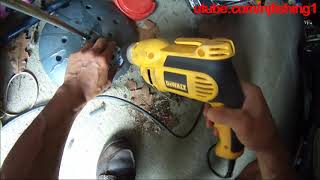
Typical fix: The charcoal canister must be replaced. This often involves dealing with three heavily rusted 10mm mounting bolts that are likely to break, requiring drilling or replacement of the mounting bracket. 🎬 Watch: Step-by-step guide to replacing the charcoal canister and bracket. Soaking the bolts in penetrating fluid beforehand is highly recommended.
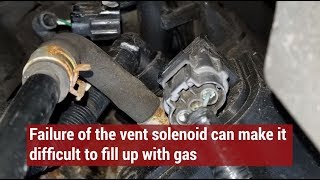
Est. part cost: $350-$500 - Faulty EVAP Canister Vent Control Valve 🟡 Medium Probability Like the canister, this valve is mounted in an exposed location under the vehicle, making it susceptible to rust, corrosion, and dirt ingress. The solenoid can fail, get stuck open, or get clogged with charcoal debris from a deteriorating canister.
How to confirm: The valve can be tested by applying 12V power to see if the solenoid clicks; it is normally open and should close when energized. You can also try to blow through it; air should pass freely when de-energized and stop when 12V is applied. A smoke test will show smoke exiting the valve if it is stuck open.
Typical fix: Replace the EVAP canister vent control valve. It is often replaced along with the canister if both are heavily corroded. The part may have been updated by Nissan to a new design, indicating a known issue with the original.
Est. part cost: $60-$150 - Cracked or Disconnected EVAP Hoses ⚪ Low Probability Over two decades, the rubber and plastic hoses that make up the EVAP system can become brittle, dry-rotted, and crack, creating a leak. This can happen anywhere from the tank to the canister or from the canister to the engine bay.
How to confirm: Visually inspect all accessible EVAP lines running from the fuel tank to the canister and up to the engine bay. A smoke test is the definitive method for finding small hose leaks.
Typical fix: Replace the damaged section of hose.
Est. part cost: $10-$50
Rare But Worth Checking
- Faulty EVAP Canister Purge Volume Control Solenoid Valve: This valve is located in the engine bay and controls the flow of vapors from the canister to the engine. It is less likely to fail than the rear-mounted components but can get stuck or clogged with charcoal particles from a failed canister.
- Leaking Fuel Filler Neck: Rust and corrosion can perforate the metal tube that leads from the gas cap to the fuel tank, creating a significant leak. This is more common in areas with heavy road salt usage and can be confirmed with a smoke test.
- Faulty Fuel Tank Pressure Sensor: The sensor that monitors pressure within the EVAP system can fail and send incorrect data to the ECM, falsely triggering the code. Its location can vary, but it's often part of the fuel pump assembly.
- Deteriorated Charcoal from Canister Clogging Lines: If the charcoal canister fails internally, bits of charcoal can travel through the EVAP lines, clogging the purge valve or vent valve, causing them to malfunction. If you replace a canister, it's wise to blow out the lines with compressed air to clear any debris.
Diagnosis Steps
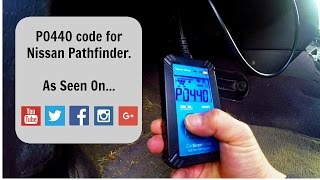
- Retrieve the trouble code with an OBD-II scanner to confirm P0440 is present.
- Inspect the gas cap. Remove it, check the seal for cracks or stiffness, and reinstall it, ensuring it clicks at least once. Clear the code and drive for a few days to see if it returns. Consider replacing with an OEM cap as a cheap first step.
- If the code returns, perform a thorough visual inspection of the EVAP canister, vent control valve, and all connected hoses under the rear of the vehicle (behind the driver's side rear wheel). Look for obvious cracks in the plastic canister, heavy rust on the bracket and valve, or loose connections.
- Inspect the fuel filler neck for heavy rust or pitting that could compromise the gas cap seal.
- If no visual faults are found, the most effective next step is to perform a smoke test. This involves introducing low-pressure smoke into the EVAP system (usually via a service port or by adapting a hose) and looking for where the smoke escapes. 🎬 See how to perform a DIY smoke test for leaks. This will pinpoint the exact location of the leak, whether it's a cracked canister, bad hose, or faulty valve.
- Test the vent control valve and purge control valve solenoids. This can be done with a capable scan tool that can command them to open and close, or by manually applying 12V power and listening for a click and testing airflow.
Parts You'll Likely Need
- Fuel Cap
(OEM #17251-79960 (check specific VIN))— This is the most frequent and cheapest first step for any EVAP code due to a worn seal or improper tightening. Aftermarket caps are known to cause issues.
Trusted brands: Nissan (OEM)
OEM price range: $25-$40
Aftermarket price range: $15-$25 - EVAP Canister Vent Control Valve
(OEM #14935-54U06 (for VG33E, check specific VIN))— This valve is exposed to the elements under the vehicle and is a common failure point due to corrosion or a stuck solenoid.
Trusted brands: Bosch, Dorman (911-503, 911-511 - check application), Hitachi
OEM price range: $90-$150
Aftermarket price range: $60-$100 - EVAP Charcoal Canister
(OEM #14950-1S72B (or 14950-1S718) for VG33E models; 14950-3H000 (or 14950-3H00B) for VQ35DE models. Always verify with VIN.)— The plastic canister body is prone to cracking from age and exposure, and the mounting bracket rusts severely. This is a very common failure on the R50 platform.
Trusted brands: Nissan (OEM), Dorman (911-480 for VG33E)
OEM price range: $400-$550
Aftermarket price range: $350-$450
Related Codes That Often Appear With This One
- P1448: On some models, this code for the EVAP Canister Vent Control Valve can appear alongside P0440, pointing directly to a failure in that component. If both codes are present, the service manual advises diagnosing P1448 first.
Technical Service Bulletins (TSBs) & Recalls
- NTB00-085: An older TSB that addresses P0440 on 1997-2000 Pathfinders. It outlines a diagnostic procedure and mentions potential failures of the EVAP vent control valve, purge volume control valve, and pressure sensor, confirming these have been known issues for a long time.
- NTB17-082b / NTB17-082E: While this TSB is for newer models and code P0456 (very small leak), it highlights a known Nissan issue with the O-ring on the EVAP vent control valve failing, which is relevant context for diagnosing EVAP leaks on older models as well.
Platform-Specific Known Issues
- Owners have documented finding hairline cracks in the plastic body of the EVAP canister, particularly on 2001 models, which directly causes the P0440 code.
- The three 10mm mounting bolts for the EVAP canister are prone to severe rust, often breaking during removal and requiring replacement or drilling. A common DIY solution involves breaking them and using new hardware like wing nuts for easier future service.
- The Infiniti QX4, a badge-engineered version of the Pathfinder, suffers from the exact same EVAP system failures, including the cracked canister and rusted components.
Mechanic-Grade Diagnostic Values
- EVAP Canister Vent Control Valve Solenoid Resistance — expected: 20 - 30 Ohms. Failure: A reading outside of this range indicates a damaged solenoid winding.
- EVAP Canister Vent Control Valve Functional Test — expected: Valve is normally open. When 12V is applied, the solenoid should click and the valve should close, preventing air from passing through.. Failure: No click when power is applied, or air still passes through when the valve should be closed.
Scan Tool Commands That Help
- Nissan CONSULT-II (or equivalent bidirectional scanner): EVAP System Test / Vent Valve Control — This function allows a technician to command the EVAP vent valve and purge valve to open or close without manually applying voltage. It is used to verify solenoid and circuit function from the ECM and to seal the system for a smoke or pressure test.
Wiring & Ground Locations
- E72 (Braided Ground Strap) — A short braided strap running from the passenger-side exhaust-manifold heat shield to the firewall flange, visible above the right valve cover.. This ground strap stabilizes sensor grounds and O2 sensor references. While not directly part of the EVAP circuit, a frayed, corroded, or missing strap can introduce electrical noise and cause erratic behavior in various engine management sensors, potentially complicating diagnosis. Ensuring all chassis and engine grounds are clean and secure is a critical, often overlooked, step in diagnosing any electronic fault.
- EVAP Canister Vent Control Valve Connector — At the EVAP canister assembly, located under the vehicle behind the driver's side rear wheel.. This is the primary electrical connection for the vent valve. Due to its exposed location, this connector and its wiring are highly susceptible to corrosion, moisture intrusion, and physical damage, which can cause an open or shorted circuit, leading to codes like P0440 or P1448.
Real Owner Repair Stories
- NPORA Forums (Nissan Pathfinder Off Road Association) (R50 Pathfinder (year not specified, but within the generation)) — Check Engine Light with code P1447 (similar to P0440, related to EVAP canister vent valve function).
❌ Tried (didn't work) Initial diagnosis pointed to a complex EVAP system fault with dealer quotes ranging from $800-$1200.
✅ What actually fixed it The owner performed a DIY replacement of the EVAP canister and vent valve. The key finding was that the old canister had failed internally, sending charcoal pellets throughout the EVAP lines. The fix required not only replacing the rear components but also disconnecting the purge valve and lines in the engine bay to blow them out with compressed air to clear the charcoal debris. - NHTSA ODI #10212046 — An owner reported a fuel smell near the left rear side of the vehicle near the fuel cap area along with a P0440 check engine code. The report mentions inquiring about a campaign regarding a faulty fuel fill tube.
"I Checked Everything" — The Actual Cause
- A common scenario for the R50 Pathfinder is for a smoke test to show no leaks, yet the P0440 code persists. This often points to an intermittent or functional failure of the EVAP Canister Vent Control Valve. The valve's seal may hold pressure during a static smoke test but fail to operate correctly under the specific vacuum/pressure conditions of the ECM's self-test. The solenoid may also be mechanically sticky, passing a simple 12V click test but failing to close completely or quickly enough during the real-world test cycle. In these cases, replacing the vent valve is the solution despite a 'clean' smoke test.
OEM Part Supersession History
14935-54U00, 14935-54U05, 14935-54U06→14935-54U1A— Part revision and consolidation by Nissan for the EVAP Canister Purge Valve (located in the engine bay on VG33E models).
Heads up: These parts are for the engine bay purge valve, not the rear vent valve, but are often confused. The rear vent valve has a different set of part numbers.14935-JF00A, 14935-JF00B, 14935-JF00C, etc.→14935-JF02C— Part revision for the common EVAP Canister Vent Control Valve used on many Nissan models. While these numbers apply to later vehicles, they show a pattern of Nissan frequently updating this part. R50 owners should always verify the specific part number for their VIN, as an updated design may be available.
Model Year Variations Within This Range
- 1996-2000 (VG33E) vs 2001-2004 (VQ35DE): The engines are fundamentally different (SOHC vs DOHC), which affects the entire engine management system. While the general P0440 cause (rear-mounted canister/valve failure) is common to both, part numbers for all EVAP components, including the canister, purge valve, and vent valve, are different. For example, the VQ35DE uses a different purge valve solenoid (P/N 14933-0Z80A) than the VG33E. Swapping parts between these engine types is not possible.
Diagnostic Flowchart
Used vs. New Parts: Buying Guide for This Vehicle
When a used part is the smart pick: For this specific repair, sourcing a used EVAP canister *mounting bracket* from a dry, rust-free climate (e.g., Arizona, California) is a very smart choice. The original brackets are prone to severe rust-through, and a clean used bracket is often better than trying to salvage a rusted original. A used canister assembly can be considered if it comes from a low-mileage vehicle in a rust-free area and can be visually inspected for cracks.
Donor-vehicle mileage cap: roughly under 100000 miles for the part to have meaningful remaining life.
What to inspect on the donor part:
- For a canister bracket: Zero to minimal surface rust. Bolts should be clean and threads intact.
- For a canister assembly: No visible cracks in the plastic body, especially around hose ports and mounting points.
- Hose nipples should be intact and not brittle.
- The donor vehicle should be from a salt-free region.
- Shake the canister; there should be no sound of loose charcoal pellets inside.
OEM-only on this vehicle (don't cheap out):
- Gas Cap: Strongly recommended to use a genuine Nissan OEM gas cap. Many forum users and mechanics report that aftermarket caps fail to seal correctly on this platform, leading to a persistent P0440 code.
Aftermarket brands forum-validated for this vehicle:
- Dorman: Dorman offers direct replacements for both the EVAP canister (e.g., 911-480) and the vent control valve (e.g., 911-503, 911-511). These are widely used and generally considered a reliable, cost-effective alternative to OEM.
- Bosch/Hitachi: These are often OEM suppliers, and their branded vent control valves are considered high-quality replacements.
Brands owners have reported issues with on this vehicle:
- No-name/unbranded 'white box' parts from online marketplaces. For critical sealing components like the vent valve and gas cap, sticking to a reputable brand or OEM is crucial to avoid repeat repairs.
Real Owner Stories
Aggregated from forums and TSBs cited above. Mileages and costs reflect what owners reported in those sources.
2001 Nissan Pathfinder
Symptoms: Check Engine Light with code P0440.
What fixed it: The owner discovered hairline cracks on the plastic body of the EVAP canister, specifically where the vent control valve mounts. Replacing the canister resolved the issue. The rusted mounting bolts broke during removal, as is common.
Source hint: YouTube - P0440 troubleshoot for 2001 Nissan Pathfinder - canister hairline cracks
Nissan Pathfinder R50
Symptoms: Check Engine Light with an EVAP code.
What fixed it: The owner replaced the EVAP canister. The three 10mm mounting bolts were so severely rusted that they had to be broken off and extracted. A common DIY solution mentioned is to use new hardware like wing nuts for easier future service.
Source hint: vehicle_specific_issues
Nissan Pathfinder
Symptoms: Check Engine Light with OBD codes P0440 and P1448.
What fixed it: The owner was advised by other forum members that the symptoms pointed towards a common failure of the EVAP canister vent control valve.
Source hint: NPORA Forums - Obd Codes 0440 And 1448
Infiniti QX4
Symptoms: EVAP system codes and severe rust on underbody components.
What fixed it: The owner performed a full EVAP charcoal canister replacement, a process which is identical to the Pathfinder and involves dealing with the same severely rusted mounting hardware.
Source hint: YouTube - 1996-2004 Nissan R50 Pathfinder|Infiniti QX4 Evap Charcoal Canister Replacement!
Related OBD-II Codes
Frequently Asked Questions
I replaced my gas cap with an aftermarket one, but the P0440 code came back. Why?
Where is the EVAP charcoal canister located on my 1996-2004 Pathfinder?
I'm trying to replace the EVAP canister, but the bolts are completely rusted and broke off. Is this normal?
Does the Infiniti QX4 have the same P0440 problems?
What is the most reliable way to find the source of the EVAP leak?
Is there a Technical Service Bulletin (TSB) for P0440 on my older Pathfinder?
Helpful Videos
We Have This Part in Stock


The information in this article is provided for general reference and educational purposes only. Vehicle specifications, procedures, and part compatibility can vary by production date, trim level, and region. Always consult your vehicle's factory service manual and verify part numbers before purchasing or performing repairs. Safety-critical components such as airbags, seat belts, and braking systems should be installed by a qualified professional.
- Nissan Pathfinder:
- 🎬 Helpful Videos
- 🛍️ Shop This Part
- What's Unique About the 1996-2004 Nissan Pathfinder
- Symptoms You May Notice
- Most Likely Causes
- Rare But Worth Checking
- Diagnosis Steps
- Parts You'll Likely Need
- Related Codes That Often Appear With This One
- Technical Service Bulletins (TSBs) & Recalls
- Platform-Specific Known Issues
- Mechanic-Grade Diagnostic Values
- Scan Tool Commands That Help
- Wiring & Ground Locations
- Real Owner Repair Stories
- "I Checked Everything" — The Actual Cause
- OEM Part Supersession History
- Model Year Variations Within This Range
- Diagnostic Flowchart
- Used vs. New Parts: Buying Guide for This Vehicle
- Real Owner Stories
- 2001 Nissan Pathfinder
- Nissan Pathfinder R50
- Nissan Pathfinder
- Infiniti QX4
- Related OBD-II Codes
- Frequently Asked Questions
- 🎟️ Get 5% Off