

P0440 on 1999-2007 GMC Sierra 1500: EVAP System Malfunction Causes and Fixes
For a 1999-2007 GMC Sierra, code P0440 most often means you have a loose gas cap or a failed EVAP vent solenoid. Always check the gas cap first—it's a $15 fix. If that's not it, the vent solenoid is the next likely culprit. Due to its exposure to road debris, GM released a TSB recommending replacement with a relocation kit to prevent future failures. This part costs between $40 and $100.
- P0440 on your Sierra means there's a general fault in the emissions vapor system.
- Always start with the simplest fix: check that your gas cap is tight and its seal is intact. A new cap is a cheap first step.
- The second most likely cause is a bad EVAP vent solenoid located under the truck near the spare tire. It's a common failure item due to corrosion.
- Be aware that on some early models, replacing the vent solenoid is a major job requiring the truck bed to be lifted.
- If the gas cap and vent solenoid are good, the issue could be the purge solenoid on the engine or a cracked hose, which is best found with a smoke test.
What's Unique About the 1999-2007 GMC Sierra 1500
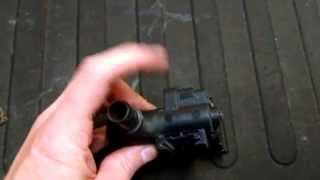
On this generation of GMC Sierra (GMT800), the EVAP components, particularly the vent solenoid, are notoriously exposed to road grime, moisture, and corrosion. This leads to a high failure rate for the vent solenoid, which often gets stuck open or closed. The problem is so common that GM issued a Technical Service Bulletin (TSB #02-06-04-037H) recommending the installation of a relocation kit to move the solenoid's air filter to a cleaner location. Furthermore, on some earlier models within this range (approx. 1999-2003), the vent solenoid is located on top of the fuel tank, 🎬 Watch: See the hard-to-reach vent valve location on early models making a simple part replacement a much bigger job that involves lifting the truck bed or dropping the tank for access.
Generation note: This range covers the GMT800 generation (1999-2006 and 2007 "Classic") and the start of the GMT900 generation (2007). The most significant difference is the location of the EVAP vent solenoid. On some early GMT800 models (typically pre-2004), it is mounted on top of the fuel tank, requiring significant labor to access. On later GMT800s and subsequent GMT900s, it is typically more accessible on a frame rail near the charcoal canister.
Symptoms You May Notice
- Check Engine Light is on
- A faint smell of fuel around the vehicle, especially near the gas cap or rear of the truck.
- Inability to pass an emissions inspection.
- A 'whoosh' sound of escaping air when opening the gas cap (if the vent is clogged).
- Difficulty filling the gas tank (the pump nozzle clicks off repeatedly), which can be a sign of a clogged vent system.
- Replacing the purge valve when the vent valve is the actual problem. The vent valve is more exposed to the elements and is a more common failure point on these trucks, as documented by GM's own service bulletins.
- Replacing the entire charcoal canister when only the attached vent solenoid has failed. The canister itself is just a plastic box with charcoal and rarely fails unless physically cracked.
Most Likely Causes
- Loose or Faulty Gas Cap 🔴 High Probability Gas cap seals wear out over time, and it's common for them to be left loose after refueling. It's the number one suspect for any EVAP code.
How to confirm: Ensure the gas cap is tightened until it clicks several times. Inspect the rubber O-ring on the cap for cracks, brittleness, or damage. If it looks worn, it's best to replace it. An incorrect aftermarket cap can also cause issues.
Typical fix: Tighten or replace the gas cap.
Est. part cost: $15-$40 - Faulty EVAP Vent Solenoid 🔴 High Probability The solenoid's location under the truck exposes it to dirt, water, and road salt, causing the valve to stick or the electronics to fail. Dust intrusion is a known issue addressed by GM TSB #02-06-04-037H.
How to confirm: Locate the solenoid (near the charcoal canister) and inspect it for damage or corrosion. You can test it by applying 12V power to its terminals; you should hear a distinct click as the valve operates. A bidirectional scan tool can also command it to open and close, which is the most reliable test.
Typical fix: Replace the EVAP vent solenoid. It is highly recommended to use the relocation kit (e.g., ACDelco 214-2324 or Dorman 911-239) which moves the filter to a cleaner area to prevent repeat failures.
Est. part cost: $40-$115 - Faulty EVAP Purge Solenoid/Valve 🟡 Medium Probability This valve cycles frequently during engine operation and can wear out or get stuck open or closed over time. It is less likely to fail than the vent solenoid on this platform.
How to confirm: The purge solenoid is located on the engine's intake manifold. With the engine running at idle, disconnect the vapor line and feel for vacuum; there should be none. A stuck-open valve will create a vacuum leak. You can also test it with a hand-held vacuum pump to see if it holds vacuum when de-energized.
Typical fix: Replace the purge solenoid.
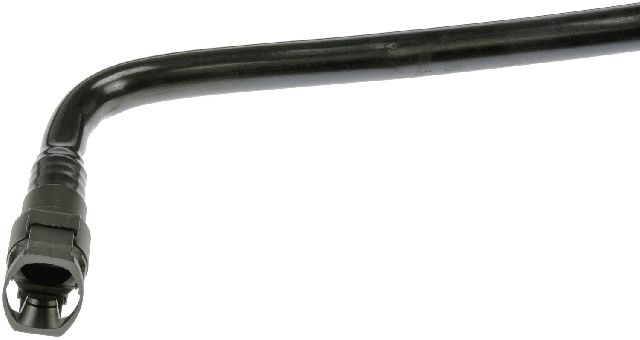
Est. part cost: $30-$150 - Cracked or Disconnected EVAP Hoses 🟡 Medium Probability The plastic and rubber hoses become brittle with age and heat cycles, leading to cracks and leaks. The lines running along the frame rail are particularly vulnerable to rust and debris.
How to confirm: Visually inspect all accessible EVAP lines between the fuel tank, charcoal canister, and engine. The most effective method is to have a mechanic perform a smoke test, which forces smoke through the system to reveal the exact location of any leaks.
Typical fix: Replace the cracked section of hose or the entire line assembly.
Est. part cost: $10-$75
Rare But Worth Checking
- Cracked Charcoal Canister: The canister body can be cracked by road debris, causing a significant leak. Inspect it for any visible damage. GM TSBs advise against replacing it unless a smoke test confirms it is the source of the leak.
- Faulty Fuel Tank Pressure (FTP) Sensor: A bad sensor can incorrectly report a leak to the computer. This is less common than a physical leak and usually requires more advanced diagnostics, such as checking the sensor's voltage reading with a scan tool while inducing pressure/vacuum in the tank.
- Rusted Fuel Filler Neck: In areas with heavy road salt use, the metal fuel filler neck can rust through where it connects to the rubber hose or where the gas cap seals, creating a leak. This can be a difficult leak to spot and may require a smoke test or careful visual inspection. Some owners have successfully repaired small holes with fuel-resistant epoxy.
- Cracked Fuel Tank: While rare, some GM platforms of this era have experienced fuel leaks from cracks in the gas tank. Manufacturer service bulletin 05-06-04-014A provides diagnostic aids for P0440, P0455, and P0442 specifically regarding fuel leaking from cracks in the tank, as noted in NHTSA ODI #10444004 and NHTSA ODI #10307176.
Diagnosis Steps
- Check the Gas Cap: Remove and inspect the gas cap. Ensure the seal is not cracked or brittle. Reinstall it and tighten until it clicks at least three times. Clear the code and drive for a few days to see if it returns.
- Visual Inspection: Get under the truck and visually inspect the EVAP system components. Look for any obvious cracks in the charcoal canister, and check that all rubber and plastic hoses are connected and free of visible cracks or damage, especially along the frame rail.
- Inspect the EVAP Vent Solenoid: Locate the vent solenoid, usually near the charcoal canister by the spare tire. Check its electrical connector for corrosion and ensure it's securely plugged in. Listen for a 'click' from the solenoid area when the ignition is first turned on, or use a scan tool to command it on and off.
- Inspect the EVAP Purge Solenoid: Locate the purge solenoid on the intake manifold in the engine bay. Check its connections and listen for a ticking sound when the engine is running (it may not click at idle). A stuck-open valve will cause a vacuum leak that may be audible.
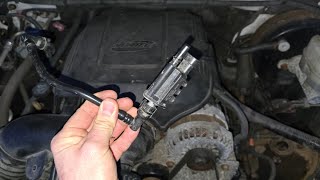
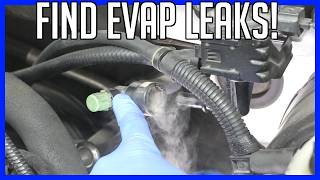
- Perform a Smoke Test: If the simple checks do not reveal the problem, the most effective next step is a smoke test. This involves injecting pressurized smoke into the EVAP service port (often a green cap in the engine bay). 🎬 Watch: How to perform a smoke test to find leaks Smoke will escape from any leaks, making them easy to spot. This is the best way to find hairline cracks in hoses or a rusted fuel filler neck.
- Test Components: If no leaks are found, the solenoids or pressure sensor may be faulty. They can be tested individually with a multimeter and a power source or diagnosed with a professional scan tool that can command them to operate and display live data from the FTP sensor.
Parts You'll Likely Need
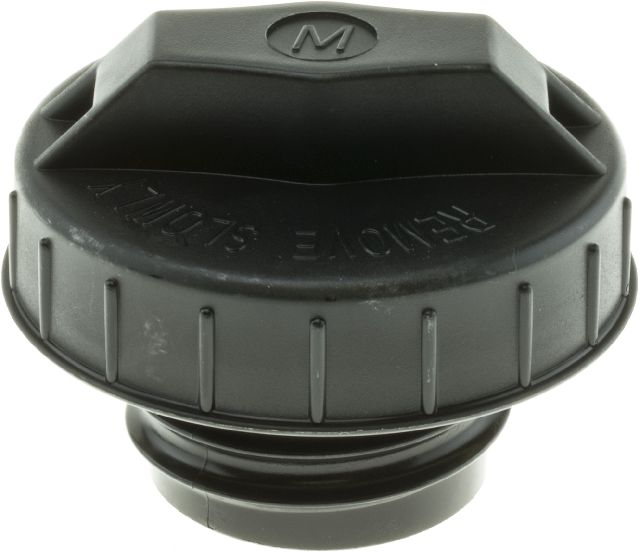
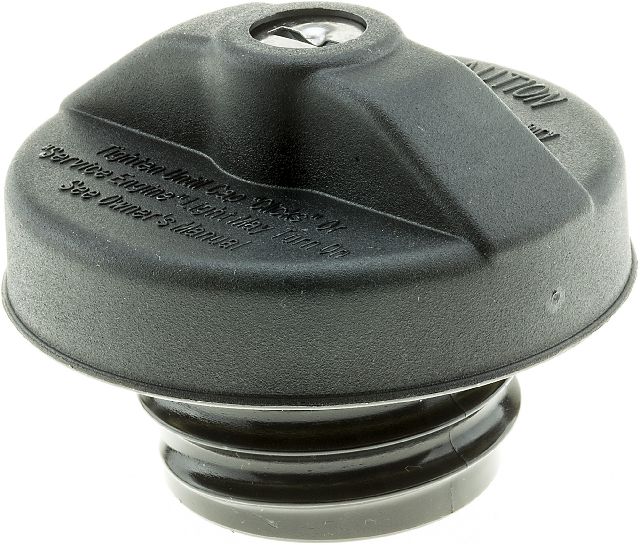
- Gas Cap
(OEM #GT281 (ACDelco))— This is the most common cause, and the seal wears out over time. It's the cheapest and easiest first step in diagnosis.
Trusted brands: ACDelco, Stant
OEM price range: $25-$40
Aftermarket price range: $15-$25 - EVAP Canister Vent Solenoid
(OEM #ACDelco 214-2149 (Solenoid only) or 214-2324 / 19258957 (Relocation Kit))— Highly prone to failure on this platform due to its exposed location under the truck, leading to corrosion and contamination. GM's TSB recommends using the relocation kit for a permanent fix.
Trusted brands: ACDelco, Dorman (P/N 911-239 for kit), Delphi
OEM price range: $70-$115
Aftermarket price range: $40-$80 - EVAP Purge Solenoid / Valve
(OEM #ACDelco 214-1680)— A common failure item that gets stuck open or closed, causing a leak or flow issue in the EVAP system. Less common than the vent solenoid on this platform.
OEM price range: $30-$150
Related Codes That Often Appear With This One
- P0442 — This code indicates a small EVAP leak. If a component is beginning to fail, it might first trigger a small leak code before becoming a general malfunction (P0440) or a large leak (P0455).
- P0455 — This code indicates a large EVAP leak. A completely failed gas cap seal or a stuck-open vent valve can often trigger both P0440 and P0455.
- P0446 or P0449 — These codes point specifically to a fault in the EVAP vent valve circuit (P0449) or a restriction in the vent path (P0446). If you see one of these alongside P0440, it's a very strong indicator that the vent solenoid or its wiring is the root cause.
Technical Service Bulletins (TSBs) & Recalls
- 02-06-04-037H: This is the most critical TSB for this issue. Although it directly addresses code P0446, the root cause—dirt and dust intrusion into the EVAP vent solenoid—is a primary driver for P0440 as well. The bulletin advises against replacing the entire charcoal canister unless it has failed a leak test. The official fix is to replace the vent valve and install a filter relocation kit (P/N 19152349 for 2004-2007 models) to move the air intake to a cleaner location, often near the transmission bell housing.
- 05-06-04-014A: This bulletin provides diagnostic aids for trouble codes P0440, P0455, and P0442, specifically noting that fuel may leak from cracks in the gas tank on certain GM models from the early 2000s, as referenced in NHTSA ODI #10444004 and NHTSA ODI #10307176.
Platform-Specific Known Issues
- On some 1999-2003 models, the EVAP vent solenoid is located on top of the fuel tank, which requires either lifting the truck bed or dropping the fuel tank to replace. This significantly increases labor time and difficulty.
- The vent solenoid filter relocation kit (e.g., ACDelco 214-2324 or Dorman 911-239) is considered an essential upgrade when replacing the vent solenoid to prevent the same failure from recurring due to dust and water ingestion.
- In the Rust Belt, the steel fuel filler neck is a very common point of failure, rusting through and causing a persistent EVAP leak that can be hard to diagnose without a smoke test.
- Water intrusion can also be a factor in EVAP system failures. NHTSA ODI #10983794 describes a situation where a seal failure allowed water intrusion, leading to a persistent P0440 engine code.
Mechanic-Grade Diagnostic Values
- EVAP Vent Solenoid Coil Resistance — expected: 10 to 30 Ohms. Failure: Infinite resistance (open circuit) or near-zero resistance (short circuit).
- Voltage at EVAP Vent Solenoid Connector (Key On, Engine Off) — expected: Approximately 12V on the power wire (often Pink/Green or Red).. Failure: 0V on the power wire indicates a blown fuse (e.g., 'MISC IGN' or 'ECM 1' fuse in underhood block) or an open in the power feed wire from the fuse block.
- Fuel Tank Pressure (FTP) Sensor Voltage (Key On, Engine Off, Gas Cap Off) — expected: Approximately 1.5 Volts (representing atmospheric pressure).. Failure: Voltage significantly higher or lower (e.g., 0V or 5V) indicates a faulty sensor or wiring issue. A reading that doesn't change when a vacuum or pressure is applied during testing also indicates a failure.
Scan Tool Commands That Help
- Tech 2 / GDS2: EVAP Service Bay Test — This is a dealer-level function used to force the vehicle's computer to run the entire EVAP monitor test sequence while in the service bay. It's extremely useful for verifying a repair without having to perform a lengthy, specific drive cycle. The test commands the vent and purge solenoids and monitors the FTP sensor to confirm the system can seal and hold pressure.
- Tech 2 / GDS2 or high-end bidirectional scanner: Vent Solenoid On/Off Command — Used to directly test the function of the EVAP vent solenoid. When commanded 'Closed' (energized), you should hear a click from the solenoid. This command is used during a smoke test; with the vent closed, the system should be sealed, and no smoke should escape from the vent valve assembly. If smoke appears, the solenoid is not closing properly.
- Tech 2 / GDS2 or high-end bidirectional scanner: Purge Solenoid Duty Cycle Control — Allows the technician to command the purge solenoid to open at varying percentages. With the engine running, commanding the purge valve open should cause a slight change in engine RPM and short-term fuel trim values as the unmetered fuel vapors enter the intake. If there is no change, the valve is not opening or the line is blocked.
Wiring & Ground Locations
- Vent Solenoid Connector — At the EVAP vent solenoid, typically located on or near the charcoal canister by the spare tire.. The two wires at this connector (typically a pink or red 12V+ feed and a white or dark green ground-side control wire from the PCM) are highly susceptible to corrosion and breakage from road debris and moisture, leading to P0440, P0446, or P0449 codes. A broken wire here is a very common fix.
- G103 / G104 / G105 — Main engine and chassis grounds. G103/G104 are typically on the back of the driver's side cylinder head. Another critical ground is on the upper driver's side of the engine block, near the front. A key frame ground is located on the driver's side frame rail, below the driver's door.. The PCM and EVAP system components rely on clean, solid ground connections. A corroded or loose engine or frame ground can cause erratic voltage, leading the PCM to misinterpret sensor data or fail to properly actuate the solenoids, which can indirectly trigger a P0440 code.
- Purge Solenoid Connector — On the EVAP purge solenoid, located on the driver's side of the intake manifold.. While less exposed than the vent solenoid, the wiring here can become brittle from engine heat. A poor connection can prevent the purge valve from operating correctly, disrupting the EVAP test and potentially causing a P0440.
Real Owner Repair Stories
- BobIsTheOilGuy forum user (1999 Isuzu Hombre (Chevy S-10 equivalent, similar EVAP system)) — Check Engine Light with code P0440.
❌ Tried (didn't work) Initial diagnosis pointed towards common EVAP components.
✅ What actually fixed it The owner discovered a broken wire right at the connector for the vapor canister vent valve/solenoid, preventing it from getting power. Repairing the broken wire resolved the code. - YouTube user 'Evap Canister Vent Solenoid Valve (P0446) - GMC Sierra' (2001 GMC Sierra) — Check Engine Light with code P0446 (Vent circuit fault), which is often related to P0440.
❌ Tried (didn't work) The owner noted that on his specific early model, the part was not easily accessible from underneath the truck.
✅ What actually fixed it The EVAP vent solenoid was located on top of the gas tank. The owner had to unbolt and lift the truck bed to gain access and replace the faulty solenoid. This highlights the significant labor difference for this repair on pre-2004 models. - YouTube user 'fixing a LEAKING “fuel filler neck” (gmc truck) sierra' (1997 GMC Sierra (similar design to early models in the specified range)) — Fuel leak when filling the tank, likely accompanied by an EVAP code like P0440 due to the leak.
❌ Tried (didn't work) A simple gas cap replacement would not have fixed this issue.
✅ What actually fixed it The metal fuel filler neck had rusted through where the rubber vent hose connects. The owner removed the filler neck, cleaned the rusted area, and repaired the hole using marine-grade JB Weld epoxy, then repainted the neck to prevent future rust. This permanently sealed the leak. - NHTSA ODI #10307176 — An owner reported a persistent P0440, P0455, and P0442 code sequence.
❌ Tried (didn't work) Standard component replacements did not resolve the issue.
✅ What actually fixed it A technician identified a crack in the gas tank, a condition described in GM service bulletin 05-06-04-014A, which was causing fuel to leak from the crack.
"I Checked Everything" — The Actual Cause
- In some cases, a smoke test may not reveal a leak if the issue is intermittent or related to component function rather than a static leak. A common scenario is a vent solenoid that is not fully closing when commanded by the PCM during the EVAP test, but seals well enough under the low pressure of a smoke machine. The 'EVAP Service Bay Test' on a Tech 2 scanner is more effective at catching this, as it runs the system through its actual self-test sequence and monitors pressure changes over time.
OEM Part Supersession History
25932571 (or similar for early models)→ACDelco 214-2149 (Solenoid only) or Service Kit P/N 19152349 (for 2004-2007) / 19207762 (for 1999-2003)— The original vent valve design was highly susceptible to contamination from road dust and debris, causing it to stick. The updated service kits (per TSB #02-06-04-037H) relocate the air filter to a cleaner location, such as high on the frame rail or above the transmission, to prevent repeat failures.
Heads up: The updated solenoid in the service kits may use a different electrical connector than the original vehicle harness. An adapter harness, GM Part Number 19257603, is often required to connect the new solenoid to the old wiring. Failure to use this adapter will result in an immediate circuit code (P0449).
Model Year Variations Within This Range
- 1999-2003: The EVAP vent solenoid is often located on top of the fuel tank, making replacement a high-labor job requiring lifting the bed or dropping the tank. The TSB service kit for these years is P/N 19207762.
- 2004-2007 (Classic): The EVAP vent solenoid is typically mounted on a bracket attached to the charcoal canister, which is located on the frame rail near the spare tire. This location is much more accessible for service. The TSB service kit for these years is P/N 19152349.
Diagnostic Flowchart
Related OBD-II Codes
Frequently Asked Questions
Does GM TSB #02-06-04-037H apply to my P0440 code?
Why is the EVAP vent solenoid so difficult to replace on my 1999-2003 Sierra?
What parts should I use to permanently fix the EVAP vent solenoid on my 1999-2007 GMC Sierra?
My Sierra lives in the Rust Belt and has a persistent P0440 code. What should I check?
I cleaned and tightened the gas cap on my Sierra, but the P0440 code came back. What is the next step?
Can a bad purge valve cause a P0440 on this platform?
Can a loose fuel cap be the only cause of a P0440 code?
Helpful Videos
Used OEM Parts in Stock



New Aftermarket Parts Available


The information in this article is provided for general reference and educational purposes only. Vehicle specifications, procedures, and part compatibility can vary by production date, trim level, and region. Always consult your vehicle's factory service manual and verify part numbers before purchasing or performing repairs. Safety-critical components such as airbags, seat belts, and braking systems should be installed by a qualified professional.
- GMC Sierra 1500:
- 🎬 Helpful Videos
- 🛍️ Shop This Part
- What's Unique About the 1999-2007 GMC Sierra 1500
- Symptoms You May Notice
- Most Likely Causes
- Rare But Worth Checking
- Diagnosis Steps
- Parts You'll Likely Need
- Related Codes That Often Appear With This One
- Technical Service Bulletins (TSBs) & Recalls
- Platform-Specific Known Issues
- Mechanic-Grade Diagnostic Values
- Scan Tool Commands That Help
- Wiring & Ground Locations
- Real Owner Repair Stories
- "I Checked Everything" — The Actual Cause
- OEM Part Supersession History
- Model Year Variations Within This Range
- Diagnostic Flowchart
- Related OBD-II Codes
- Frequently Asked Questions
- 🎟️ Get 5% Off