

P0440 on 2011-2024 Dodge Durango: EVAP System Malfunction Causes and Fixes
For a 2011-2024 Dodge Durango, code P0440 is most often caused by a faulty EVAP Leak Detection Pump (also called an ESIM) located in the driver's side rear wheel well. Replacing this pump and its O-ring is the most likely fix, costing around $30-$60 for the part. Before replacing, also check for a loose gas cap and cracked plastic EVAP hoses under the engine cover, which are also common culprits.
- P0440 on a 2011-2024 Durango means there's a general leak in the EVAP emissions system.
- The most likely culprit is a bad EVAP Leak Detection Pump (ESIM) located in the driver's side rear wheel well.
- Before buying parts, always check that the gas cap is tight and inspect the small plastic EVAP hoses under the engine cover for cracks.
- This is a DIY-friendly repair for many owners, with the most common parts costing under $60.
- Fixing this code is necessary to pass an emissions test and may re-enable your remote start feature.
What's Unique About the 2011-2024 Dodge Durango

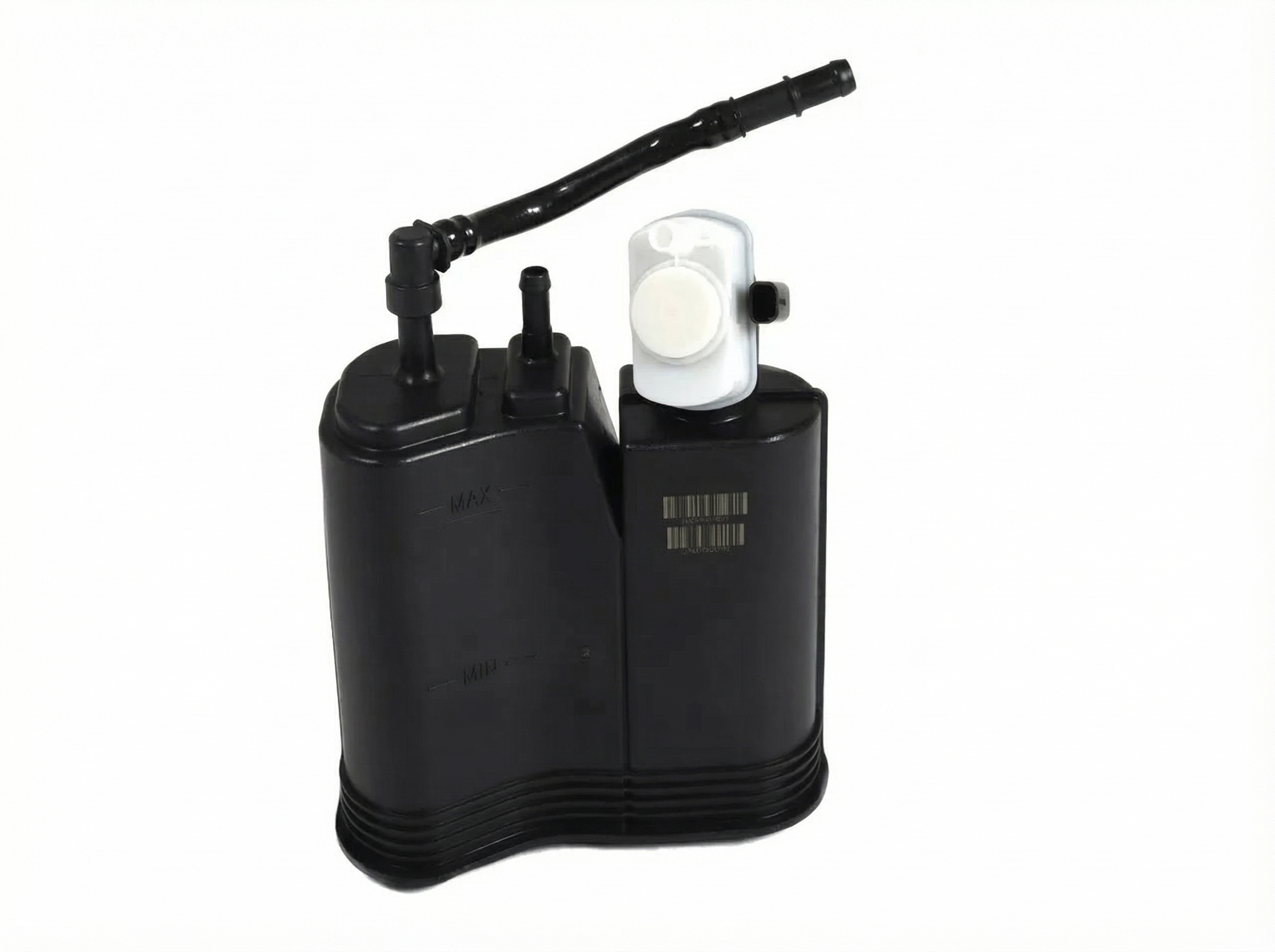
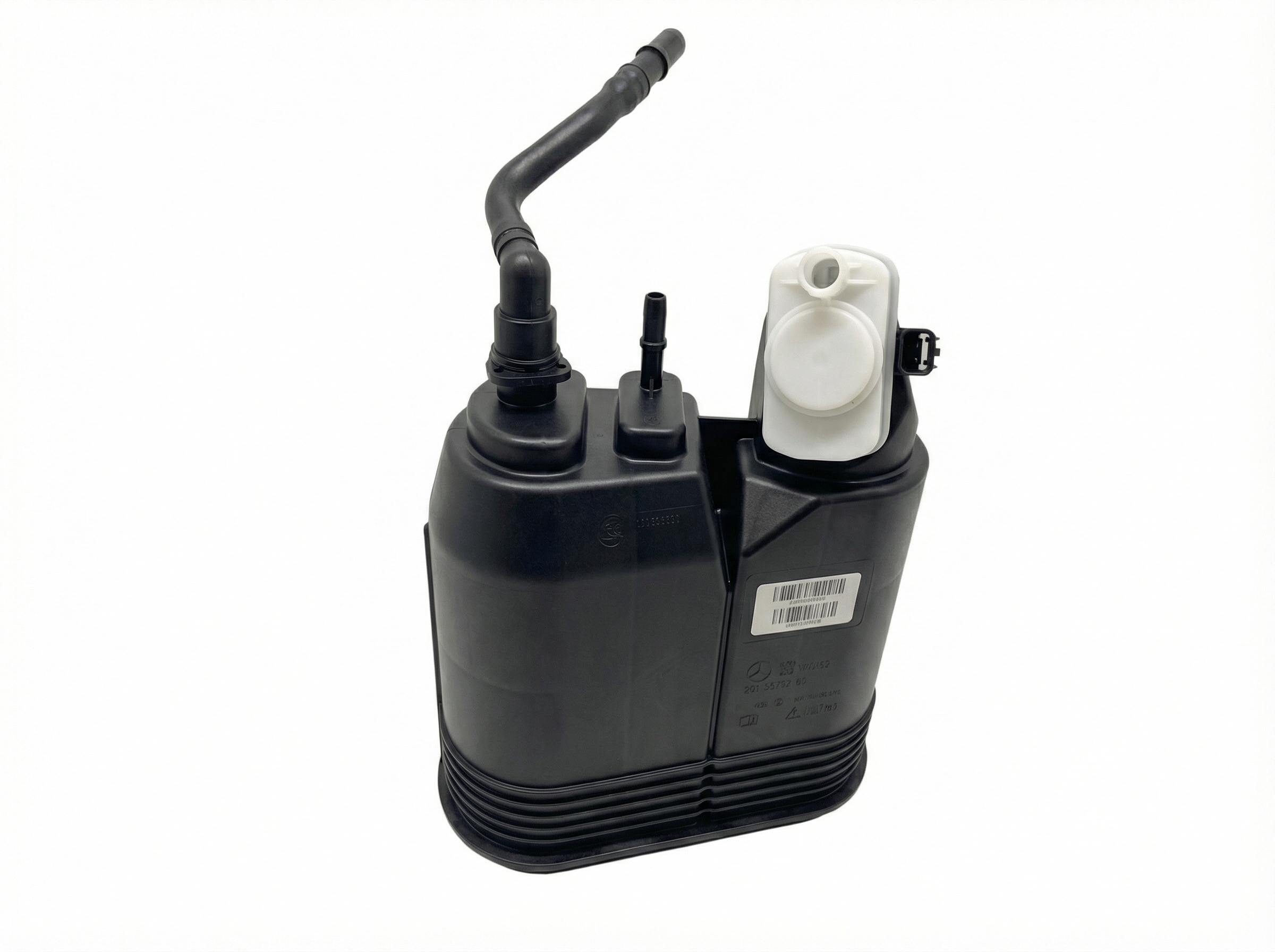
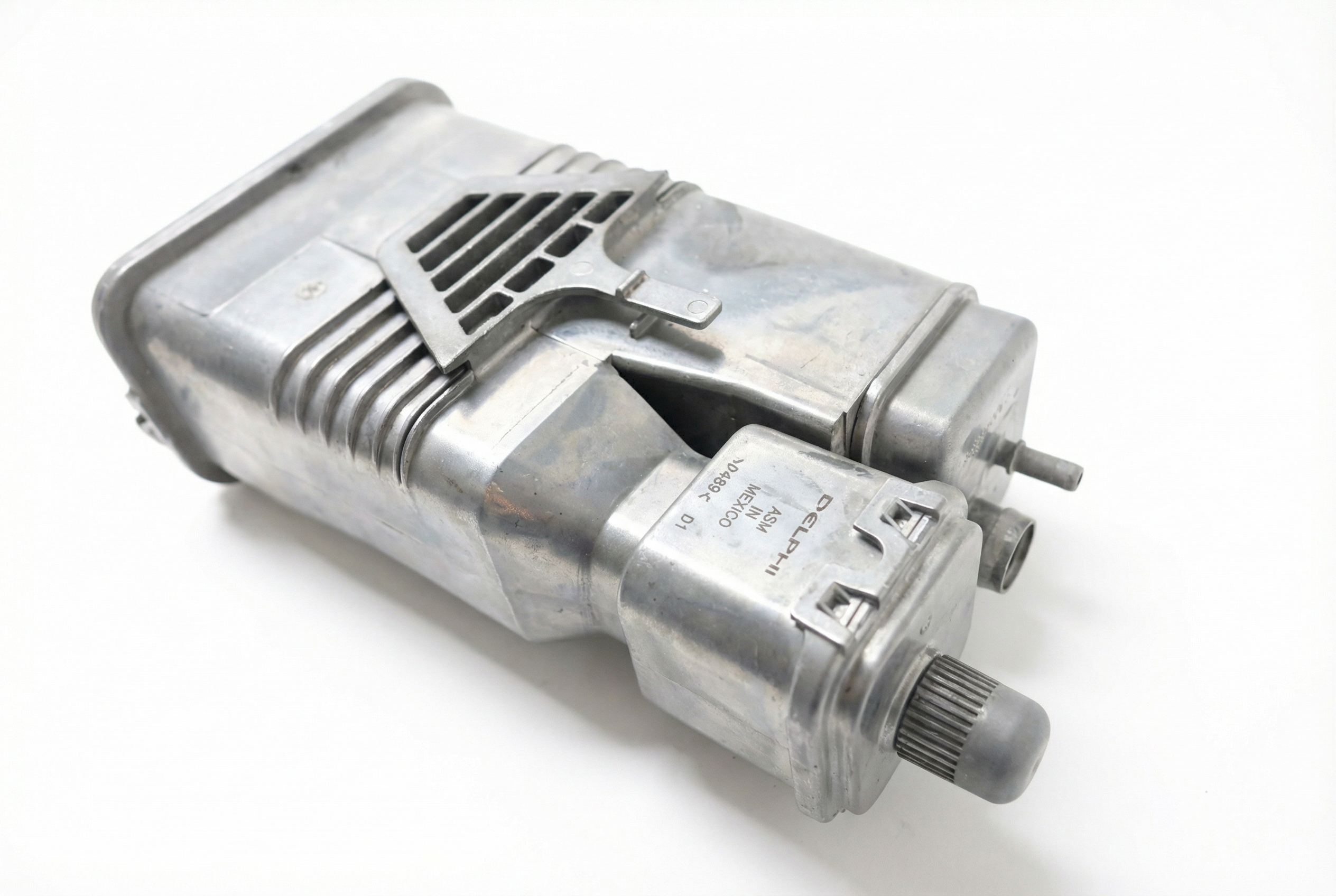
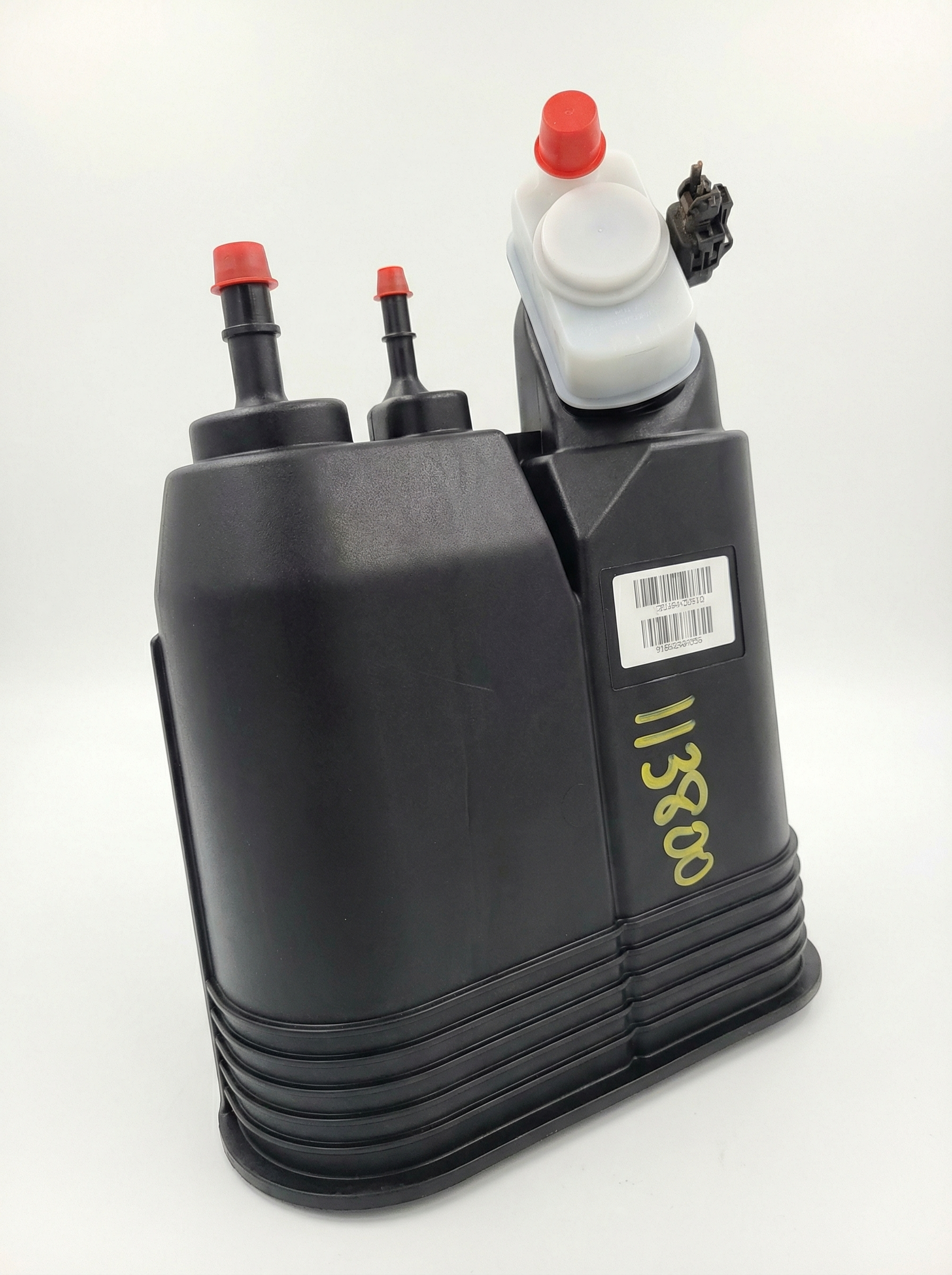
The third-generation Dodge Durango (2011-2024) and its platform-mate, the Jeep Grand Cherokee (WK2), use an Evaporative System Integrity Monitor (ESIM), also called a leak detection pump, to test the EVAP system. This component, located on the charcoal canister in the rear driver's side wheel well, is a very frequent failure point and a common cause for code P0440 on this platform. While a loose gas cap is always a possibility, many owners find the issue lies with this specific pump or its seal. The part has gone through several revisions, indicating the manufacturer has made changes to improve its reliability.
Symptoms You May Notice

- Check Engine Light is on
- A faint smell of fuel.
- Remote start will not function.
- Difficulty refueling (gas pump clicks off before the tank is full) if the canister is saturated
- Vehicle hesitation or a drop in power, as noted in NHTSA ODI #10212134 where P0440 appeared alongside manifold pressure and transmission codes.
- Replacing the charcoal canister when only the attached leak detection pump (ESIM) is faulty. The pump is available separately and is much cheaper and easier to replace.
- Replacing the leak detection pump (ESIM) when the actual fault is a cracked, brittle plastic EVAP hose under the engine cover. It is recommended to inspect the under-hood hoses before replacing the pump at the rear of the vehicle.
Most Likely Causes
- Faulty EVAP Leak Detection Pump (ESIM) or O-ring 🔴 High Probability This specific component is a known high-failure item on many Dodge/Chrysler/Jeep products of this era, including the Durango and Grand Cherokee. Mechanics and owners frequently report replacing it to solve EVAP codes P0440 and P0456. The internal mechanism, which uses a weighted switch, can fail, or the O-ring that seals it to the charcoal canister can degrade.
How to confirm: The part is located behind the driver's side rear wheel well liner. Visually inspect it for cracks. The internal switch can be tested with a scan tool or by applying vacuum to see if it closes the circuit. However, given the low part cost and high failure rate, many owners opt to replace it as a primary diagnostic step.
Typical fix: Replace the EVAP Leak Detection Pump and its O-ring.
Est. part cost: $30-$60 - Loose or Faulty Gas Cap 🟡 Medium Probability This is a common issue on all vehicles. The cap's seal can wear out, crack, or it may not have been tightened correctly after refueling, preventing the system from sealing. Aftermarket gas caps are also a frequent source of issues if not designed to OEM specifications.
How to confirm: Ensure the gas cap is tightened until it clicks multiple times. Remove the cap and inspect the rubber seal for cracks, stiffness, or damage. If it looks worn, it's a cheap part to replace as a first step.
Typical fix: Tighten or replace the gas cap.
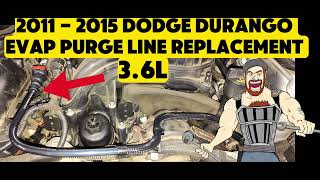
Est. part cost: $15-$30 - Cracked EVAP Purge Hose 🟡 Medium Probability A specific plastic EVAP hose located under the engine cover is known to become brittle from engine heat and crack, causing a vacuum leak. This is a very common failure point, especially on the 3.6L V6 engine. 🎬 Watch: How to replace the brittle under-hood purge line.
How to confirm: Remove the engine cover and carefully inspect the small plastic lines running to and from the EVAP purge solenoid. The cracks are often found near the connection points where the hose is handled. The plastic may break apart when touched.
Typical fix: Replace the cracked hose assembly. Some owners have successfully repaired it by splicing in a section of rubber fuel-grade hose as a cheaper alternative to buying the full OEM assembly.
Est. part cost: $25-$50 - Faulty EVAP Purge Valve/Solenoid ⚪ Low Probability While less frequent, a failed solenoid can trigger a general EVAP failure. NHTSA ODI #10100538 describes a case where a technician replaced the purge solenoid to address a P0440 code.
How to confirm: The purge valve is located in the engine bay. A failed valve is often stuck open or closed. A stuck-open valve can sometimes be diagnosed by applying vacuum to see if it holds.
Typical fix: Replace the purge valve.
Est. part cost: $25-$75
Rare But Worth Checking
- Cracked Charcoal Canister: The canister body itself can develop a crack, especially from road debris or impact. This is less common than the attached pump failing but should be considered if a smoke test reveals a leak from the canister body itself.
- Leaking Fuel Filler Neck: Rust or damage to the metal tube leading from the gas cap to the tank can cause a leak that will trigger EVAP codes. This is more common in areas with heavy road salt usage. A visual inspection for rust around the gas cap opening is a good first step.
Diagnosis Steps

- Check the Gas Cap: Ensure it is tight and clicks. Remove it and inspect the seal for any cracks or deformities. If in doubt, it's an inexpensive part to replace.
- Inspect Under the Hood: Remove the plastic engine cover. Carefully examine the small, hard plastic EVAP lines near the purge solenoid for any visible cracks or breaks. Pay close attention to the connection points. The plastic can become very brittle and may crumble when handled.
- Inspect the Leak Detection Pump (ESIM): Safely jack up the rear of the vehicle and remove the driver's side rear wheel. Remove the plastic wheel well liner by taking out a few plastic clips and a 10mm bolt. The charcoal canister and the attached ESIM will be visible. Check for any obvious damage to the pump or its wiring.
- Consider Replacing the ESIM: Given its high failure rate on this vehicle, if the gas cap and under-hood hoses are fine, replacing the ESIM and its O-ring is a very probable fix. The part is removed with a quarter-turn counter-clockwise. 🎬 See this walkthrough for replacing the ESIM and O-ring.
- Perform a Smoke Test: If the issue persists, the most effective way to find the leak is with a smoke test. A mechanic will introduce pressurized smoke into the EVAP system. Smoke will exit from any crack or leak, pinpointing the exact location of the fault. This is the definitive way to find less obvious leaks in hoses, the canister, or the fuel filler neck.
Parts You'll Likely Need

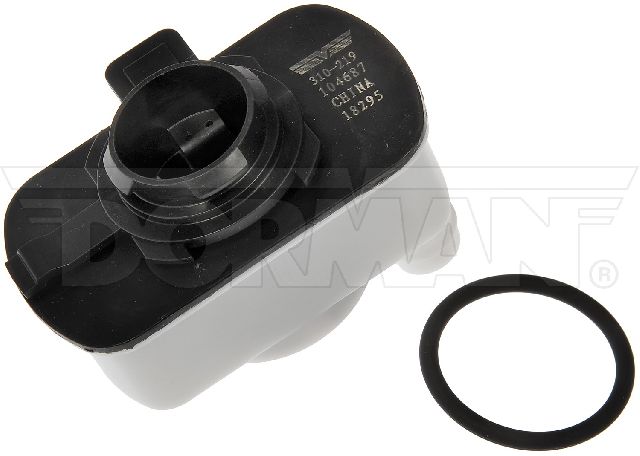
- EVAP Leak Detection Pump (ESIM)
(OEM #0486195AD)— This is the most common failure point for the P0440 code on the 2011-2024 Durango. Note that this part has had several revisions; newer versions may have different suffixes 🎬 Watch: Solving P0440 and P0456 codes on newer Durango models. like AC or AD.
Trusted brands: Mopar, Dorman (p/n 310-219), Standard Motor Products
OEM price range: $50-$80
Aftermarket price range: $30-$60 - Gas Cap — A worn or loose gas cap is a simple and common cause for all EVAP codes.
Trusted brands: Mopar, Stant
OEM price range: $20-$35
Aftermarket price range: $15-$25 - EVAP Purge Hose Assembly
(OEM #68250915AD)— The under-hood plastic line is known to crack and is a common, inexpensive fix.
Trusted brands: Mopar, Dorman
OEM price range: $30-$50
Aftermarket price range: $20-$40
Related Codes That Often Appear With This One
- P0456 — P0456 indicates a 'very small leak'. It's very common to see it alongside or instead of P0440, as they both point to a breach in the EVAP system's integrity. A failing ESIM pump is a common cause for both codes.
- P0455 — P0455 indicates a 'large leak'. If the component failure is significant (like a very cracked hose or a completely failed ESIM), the system may log both a general malfunction (P0440) and a large leak code.
- P0441 — P0441 indicates 'Incorrect Purge Flow'. This code can appear with P0440 if the system detects that the purge valve is not functioning correctly, which could be the root cause of the system malfunction.
Technical Service Bulletins (TSBs) & Recalls
- 18-033-13: For 2013 5.7L models, a PCM software update was released to address false P0456 codes. While not directly for P0440, it indicates the system's sensitivity and the potential for software-related fixes for some EVAP issues.
- NHTSA ODI #11455058: An owner reported that their check engine light came on with code P0440 and noted looking for a relevant recall for their vehicle's evaporative emission system.
Platform-Specific Known Issues
- ESIM Installation Orientation: The ESIM pump is gravity-fed and contains weighted valves. It must be installed in the correct orientation (typically with the electrical connector facing toward the 3 o'clock position) to function properly. Installing it incorrectly can cause the code to persist even with a new part.
- Brittle Under-Hood Hoses: The plastic EVAP lines under the engine cover are highly susceptible to becoming brittle and cracking due to constant heat cycles. This is a very common point of failure and should be inspected carefully before assuming a more complex part has failed.
Mechanic-Grade Diagnostic Values
- EVAP Purge Solenoid Coil Resistance — expected: 14-30 Ohms. Failure: A reading far outside this range, or an open circuit (infinite resistance), indicates a failed solenoid coil.
- ESIM Switch Function Test (Bench Test) — expected: With ground applied to one pin and a test light/meter on the other, the circuit should be open. When you blow into the atmospheric port, the internal weight should shift, close the switch, and complete the ground circuit.. Failure: If blowing into the port does not cause the switch to close the circuit (i.e., the test light does not illuminate), the internal switch is faulty.
Scan Tool Commands That Help
- wiTECH (Dealer Tool) or equivalent professional scanner: EVAP System Test — This is a guided, automated test that the PCM runs to check the entire EVAP system. It will command the purge and vent valves and monitor pressure to determine if a leak is present. It's a more comprehensive check than just looking at codes and can be initiated after a repair to verify the fix.
- Professional Bidirectional Scanner: Purge Valve Control / Vent Valve Control — This allows a technician to manually command the purge solenoid open/closed or the vent solenoid open/closed. It is used to isolate a faulty component. For example, you can command the vent valve closed and the purge valve off; if the fuel tank pressure then drops (goes into vacuum), it proves the purge valve is mechanically stuck open.
Wiring & Ground Locations
- G901A — Left rear of the engine compartment.. This is a primary ground point for several components in the rear of the vehicle. The EVAP System Monitor Switch (ESIM) relies on a good ground to function. A corroded or loose G901A could cause intermittent or failed operation of the ESIM, potentially triggering a P0440 code even if the pump itself is good.
- ESIM Connector — On the ESIM pump, located in the driver's side rear wheel well, attached to the charcoal canister.. The PCM supplies a ground to one pin of the ESIM. The ESIM contains a weighted switch that, depending on system pressure, completes the circuit to the other pin, sending a ground signal back to the PCM. Testing involves checking for the supplied ground and then seeing if the switch correctly sends the ground back when pressure is applied.
Real Owner Repair Stories
- NEPA Prepper on YouTube (2014 Dodge Durango) — Check engine light with EVAP small leak code.
❌ Tried (didn't work) Replaced the purge valve., Replaced the purge valve hose., Replaced the entire vapor canister assembly with a new one that came with a simple O-ring.
✅ What actually fixed it The new vapor canister came with a simple, round O-ring for the ESIM pump, which did not seal correctly. The owner took the original, specially shaped gasket from the old canister and installed it with the new canister. This proper seal fixed the leak and the code disappeared. - Gearmo Auto on YouTube (2019 Dodge Durango 5.7L with 56,000 miles) — Check engine light with codes P0440 and P0456.
❌ Tried (didn't work) The technician did not perform a smoke test, confident in the diagnosis.
✅ What actually fixed it Based on extensive experience with Dodge products, the technician immediately replaced the EVAP Leak Detection Pump (ESIM) and its O-ring. After clearing the codes and a drive cycle, the monitors ran, the light stayed off, and the vehicle passed a smog test. - NHTSA ODI #11350522 — An owner reported that at 69,000 miles, the check engine light came on and code P0440 was thrown twice. The owner replaced the purge valve at their own cost to attempt a fix.
"I Checked Everything" — The Actual Cause
- A very common scenario for the P0440 and related P0456 code on this platform is for the vehicle to pass a smoke test (no leaks found) but still have the code return. In a majority of these cases, the root cause is an internally failed Evaporative System Integrity Monitor (ESIM) pump. The pump's internal weighted switch fails and can no longer correctly report the system's status to the computer, even though the system is not actually leaking.
OEM Part Supersession History
4861959AA, 4861959AB→0486195AD (current as of searches)— Component revision to improve reliability. The ESIM pump is a known high-failure part across many Chrysler/Dodge/Jeep models.
Heads up: The various revisions (AA, AB, AC, AD) are generally interchangeable, but it is always recommended to use the latest available version (e.g., 'AD') for the most updated design.
Model Year Variations Within This Range
- 2013: For 2013 models with the 5.7L engine, Chrysler issued a Technical Service Bulletin (TSB 18-033-13) for a powertrain control module (PCM) software update. This update was specifically to address false P0456 (EVAP System Small Leak) codes. This suggests the logic for detecting leaks was overly sensitive on early software versions and could be corrected with a flash update at the dealer.
Diagnostic Flowchart
Used vs. New Parts: Buying Guide for This Vehicle
When a used part is the smart pick: For this specific repair, buying used parts is generally not recommended. The primary failure items (ESIM pump, plastic hoses, gas cap seal) are wear-and-tear or age-related components. A used part from a junkyard is likely to have the same brittleness or wear as the part being replaced and may fail shortly after installation.
Donor-vehicle mileage cap: roughly under 30000 miles for the part to have meaningful remaining life.
What to inspect on the donor part:
- If sourcing a larger component like a charcoal canister, ensure the donor vehicle has very low mileage.
- Inspect for any physical cracks or damage from collision.
- Check that all hose connection nipples are intact and not broken.
OEM-only on this vehicle (don't cheap out):
- Gas Cap: While aftermarket caps exist, many owners report persistent EVAP codes until an OEM Mopar gas cap is installed. The tolerances for the seal are critical.
- ESIM Gasket/O-ring: As noted in repair stories, the specific shape of the OEM gasket is crucial for a proper seal. Using a generic O-ring, even if new, is a common cause of failure.
Aftermarket brands forum-validated for this vehicle:
- Standard Motor Products (SMP)
- Dorman (for ESIM pump and plastic hoses)
Brands owners have reported issues with on this vehicle:
- Unbranded, 'white box' parts from online marketplaces, especially for the ESIM pump and gas cap, as their internal mechanisms and seals may not meet the precise requirements of the EVAP system test.
Real Owner Stories
Aggregated from forums and TSBs cited above. Mileages and costs reflect what owners reported in those sources.
2019 Dodge Durango 5.7L — 56000 miles
Symptoms: The check engine light was on, and a scanner showed codes P0440 and P0456.
What fixed it: Replaced the EVAP leak detection pump (ESIM) and its O-ring, located in the left rear fender.
Cost: $30
Source hint: YouTube comment from 'Gearmo Auto' on '2019 - 2024 DODGE DURANGO EVAP CODES P0440 / P0456 SOLVED - YouTube'
2021 Jeep Grand Cherokee
Symptoms: Owner reported a P0440 code.
What fixed it: The P0440 code was resolved by replacing the ESIM pump.
Source hint: Reddit r/GrandCherokee thread titled 'p0440'
Dodge Durango
Symptoms: Owner was experiencing both P0440 and P0456 EVAP leak codes.
What fixed it: Forum discussion pointed to replacing the ESIM pump as the solution.
Source hint: dodgedurango.net thread titled 'P0440 and P0456 EVAP Leak'
Dodge Durango — NHTSA ODI #10100538
Symptoms: A check engine light problem with code P0440, described as a general evaporation system failure.
What fixed it: The dealership replaced the purge solenoid to address the fault.
Source hint: NHTSA ODI #10100538
Related OBD-II Codes
Frequently Asked Questions
My remote start stopped working on my 2017 Durango. Is this related to the P0440 check engine light?
What is the most common part that fails on a Durango to cause a P0440 code?
I replaced the leak detection pump (ESIM) on my Durango, but the code came back. What did I do wrong?
Are the plastic EVAP hoses under the engine cover a known issue on the Durango?
Is there a TSB or software update from Dodge that addresses EVAP codes on my Durango?
My Durango is hard to refuel; the gas pump keeps clicking off early. Is this connected to the P0440 code?
Helpful Videos
Used OEM Parts in Stock
New Aftermarket Parts Available

The information in this article is provided for general reference and educational purposes only. Vehicle specifications, procedures, and part compatibility can vary by production date, trim level, and region. Always consult your vehicle's factory service manual and verify part numbers before purchasing or performing repairs. Safety-critical components such as airbags, seat belts, and braking systems should be installed by a qualified professional.
- Dodge Durango:
- 🎬 Helpful Videos
- 🛍️ Shop This Part
- What's Unique About the 2011-2024 Dodge Durango
- Symptoms You May Notice
- Most Likely Causes
- Rare But Worth Checking
- Diagnosis Steps
- Parts You'll Likely Need
- Related Codes That Often Appear With This One
- Technical Service Bulletins (TSBs) & Recalls
- Platform-Specific Known Issues
- Mechanic-Grade Diagnostic Values
- Scan Tool Commands That Help
- Wiring & Ground Locations
- Real Owner Repair Stories
- "I Checked Everything" — The Actual Cause
- OEM Part Supersession History
- Model Year Variations Within This Range
- Diagnostic Flowchart
- Used vs. New Parts: Buying Guide for This Vehicle
- Real Owner Stories
- 2019 Dodge Durango 5.7L — 56000 miles
- 2021 Jeep Grand Cherokee
- Dodge Durango
- Dodge Durango — NHTSA ODI #10100538
- Related OBD-II Codes
- Frequently Asked Questions
- 🎟️ Get 5% Off