

P0366 on 2010-2015 Kia Optima 2.4L GDI: Exhaust Cam Sensor Causes and Fixes
This code almost always points to a faulty exhaust camshaft position sensor ('Sensor B') or its wiring. On the 2.4L GDI engine, this sensor is on the rear of the engine near the firewall. A replacement sensor is affordable, but always check the wiring and connector for damage or oil contamination from a leaky valve cover gasket first, as this is a very common cause.
- P0366 specifically refers to the EXHAUST camshaft position sensor ('Sensor B'), which is on the back of the engine near the firewall.
- Before buying a new sensor, always inspect the wiring and connector for heat damage, corrosion, or oil contamination from a leaky valve cover. This is a common and inexpensive point of failure.
- Do not confuse the exhaust sensor with the more easily accessible intake sensor on the front of the engine.
- Check your vehicle's VIN for the major engine recall (SC147) and the KSDS software update (SC200). A resulting lifetime engine warranty may apply to your vehicle.
What's Unique About the 2010-2015 Kia Optima
The 2.4L GDI 'Theta II' engine in 2011-2015 Optimas is known for significant engine-related recalls and a class-action lawsuit due to potential bearing failure from manufacturing debris restricting oil flow. While P0366 is typically an electronic sensor fault, owners must be aware of this underlying engine history. A related software update, the Knock Sensor Detection System (KSDS), was issued to monitor for early signs of engine failure and will put the car in 'Limp Home Mode' if it detects bearing wear. This code is usually a straightforward sensor issue, but the engine's reputation warrants checking for any related recalls or warranty extensions immediately.
Generation note: The specified year range covers two Optima generations. The 2010 model is the end of the second generation (MG) and has a 2.4L non-GDI engine. The 2011-2015 models are the third generation (TF) and feature the 2.4L GDI engine. This guide focuses on the 2.4L GDI engine, but the camshaft sensor location and function are similar for both.
Symptoms You May Notice
- Check Engine Light is on
- Engine is hard to start or fails to start
- Rough or uneven idle
- Hesitation or lack of power during acceleration
- Decreased fuel economy
- Engine stalling
- Engine may run in a 'Limp Home Mode' with reduced power
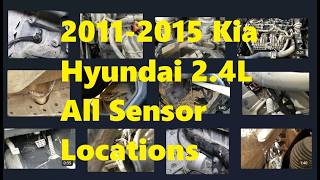
- Replacing the Intake Camshaft Position Sensor ('Sensor A') instead of the Exhaust ('Sensor B'). The intake sensor is on the front of the engine and is easier to access, leading to this common mistake. 🎬 Watch: See the exact locations for Intake A and Exhaust B sensors.
- Replacing the sensor without first inspecting the wiring harness and connector. A simple cleaning of oil from the connector or a minor wire repair could solve the problem for much less money.
Most Likely Causes
- Faulty Exhaust Camshaft Position Sensor 🔴 High Probability Sensors can fail over time from heat cycles and vibration. It's a common failure point on many modern engines, including the Theta II.
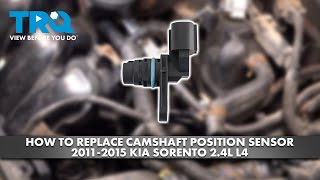
How to confirm: After verifying the wiring is intact, replacing the sensor is the most direct way to confirm. You can also test the sensor's output signal with a multimeter or oscilloscope, though replacement is often simpler for a DIYer. 🎬 See this step-by-step walkthrough for replacing the camshaft sensor.
Typical fix: Replace the exhaust camshaft position sensor. It is located on the rear (firewall side) of the cylinder head.
Est. part cost: $25-$75 - Damaged Wiring or Connector 🟡 Medium Probability The sensor's wiring is close to the hot exhaust manifold, which can cause wires to become brittle or melt over time. Oil from a leaky valve cover can also seep into the connector and disrupt the signal, a very common issue on this platform.
How to confirm: Visually inspect the wiring harness leading to the sensor for any signs of melting, chafing, or breaks. Unplug the connector and check for corrosion, moisture, or oil inside the pins.
Typical fix: Repair the damaged section of wire or clean the connector terminals with electrical contact cleaner. If the connector itself is damaged, it will need to be replaced.
Est. part cost: $5-$30
Rare But Worth Checking
- Stretched Timing Chain or Timing Issue: While less common for just a P0366 code, a stretched timing chain can cause the cam/crank correlation to be off. This would usually be accompanied by other codes like P0017 (Cam/Crank Correlation) and potentially engine rattling noises.
- Failing Powertrain Control Module (PCM): In very rare cases, the fault may lie within the engine computer itself. This should only be considered after all other possibilities (sensor, wiring, timing) have been exhaustively ruled out. One owner on a forum mentioned this as a concern after replacing the sensor didn't fix the issue.
- Low or Dirty Engine Oil: Since the camshaft position is adjusted using oil pressure via the Oil Control Valve (OCV), low or sludgy oil can cause the camshaft to not respond as the PCM commands, potentially triggering a performance-related code like P0366. This is especially critical on the Theta II engine given its oiling-related issues.
- Damaged Reluctor Ring/Tone Ring: The sensor reads notches on a reluctor ring (or tone ring) on the camshaft. If this ring is damaged, cracked, or has debris on it, the sensor cannot get a clean reading, which can trigger a P0366 code. This is an uncommon, internal engine problem.
Diagnosis Steps
- Read the code with an OBD-II scanner to confirm P0366 is present.
- Visually inspect the wiring harness and electrical connector for the exhaust camshaft position sensor, located on the rear of the engine. Look for melted plastic, frayed wires, or corrosion.
- Check for oil contamination in the connector from a potential valve cover gasket leak. This is a very common point of failure. If oil is present, clean it thoroughly with electrical contact cleaner.
- Check engine oil level and condition. Low or dirty oil can affect the VVT system and trigger performance codes.
- If the wiring looks good and the oil is clean, the most likely cause is the sensor itself. You can test it with a multimeter, but replacement is often the most straightforward diagnostic step.
- After replacement, clear the code and test drive. Some vehicles may require a 'cam sensor relearn' procedure, though this is not commonly reported for this model.
- If the code returns, and you've replaced the sensor and verified the wiring, you may have a more complex timing or PCM issue that requires professional diagnosis.
Parts You'll Likely Need
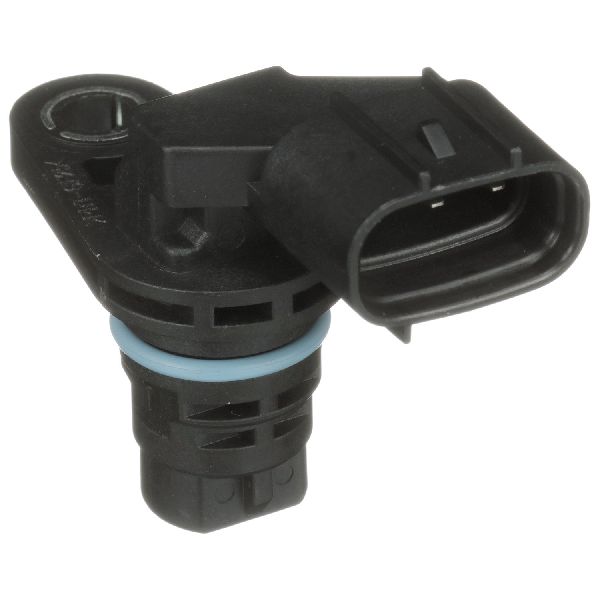
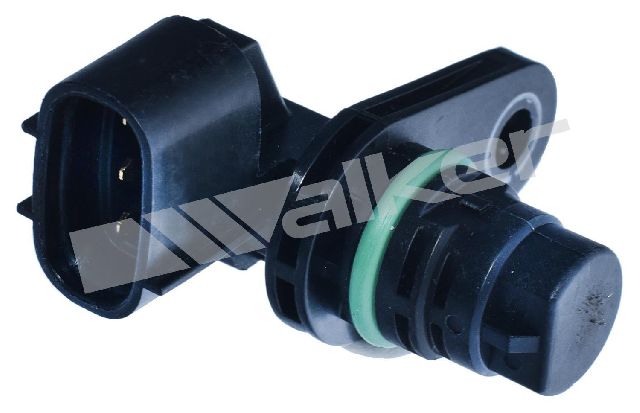
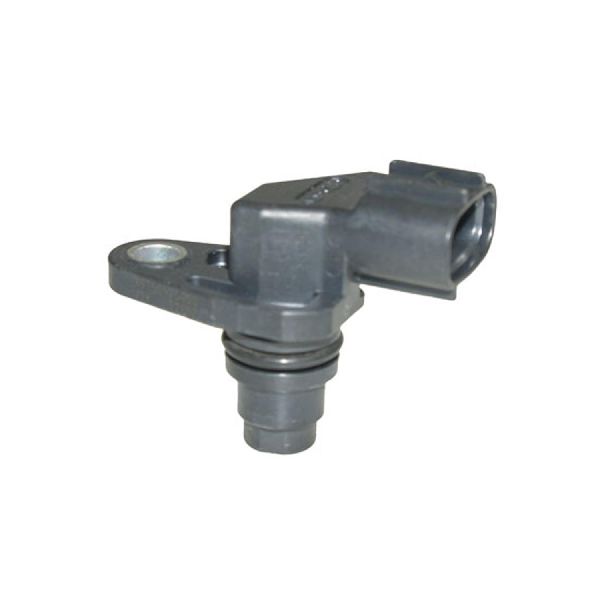
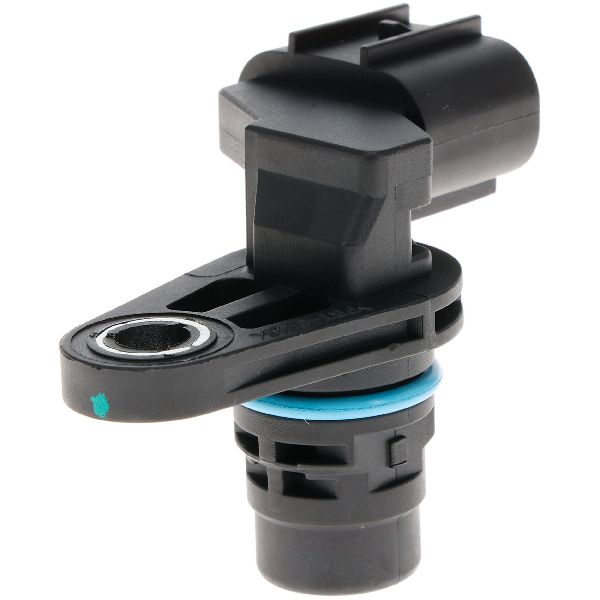
- Exhaust Camshaft Position Sensor
(OEM #39350-25010)— This sensor is the most common failure point for code P0366. It provides a critical signal for engine timing.
Trusted brands: Kia (Genuine OEM), Hyundai (Genuine OEM), Bosch, Delphi, NGK/NTK
OEM price range: $60-$90
Aftermarket price range: $25-$50
Related Codes That Often Appear With This One
- P0365 — This code indicates a complete malfunction in the same sensor circuit ('Circuit Malfunction'), while P0366 indicates a range/performance issue. They often point to the same root cause, like a bad sensor or wiring problem.
- P0017 — This code indicates a 'Crankshaft Position - Camshaft Position Correlation' error for Bank 1 Sensor B. If the timing chain has stretched or a VVT phaser is failing, you may see this code along with P0366, pointing towards a mechanical timing problem rather than just a sensor failure.
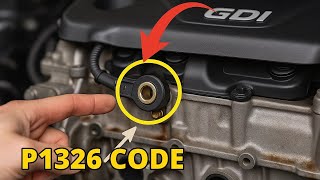
- P1326 — This code is specific to the Knock Sensor Detection System (KSDS). If the KSDS detects vibrations consistent with rod bearing wear, it will trigger this code and put the engine in limp mode. While not directly a cam sensor issue, it's a critical code to be aware of on this engine. 🎬 Watch: Understanding the P1326 code and Theta II bearing failure.
Technical Service Bulletins (TSBs) & Recalls
- SC147 / NHTSA Campaign 17V224000: Engine Recall for premature bearing wear in 2011-2014 Optima models with 2.4L GDI engines due to manufacturing debris.
- Campaign SC200 / TSB ENG203: Software update to install the Knock Sensor Detection System (KSDS) to monitor for engine bearing failure.
- Customer Satisfaction Program CS1604 / TSB CHA060: Extended warranty (10 years/unlimited miles) and replacement program for the flexible steering coupler in the MDPS system for 2011-2014 models, which causes a clicking noise in the steering.
Platform-Specific Known Issues
- The 2.4L GDI Theta II engine was subject to recall SC147 (and others) for premature connecting rod bearing wear, which could lead to engine seizure. This was due to metal debris from manufacturing restricting oil flow. A class-action lawsuit resulted in a lifetime warranty for the engine short block for affected vehicles that received the KSDS update.
- Kia provided a Knock Sensor Detection System (KSDS) software update (Campaign SC200) to help detect bearing wear early. If detected, the MIL will flash, code P1326 will be stored, and the vehicle will enter a reduced-power limp mode.
Mechanic-Grade Diagnostic Values
- Camshaft Position Sensor Power Supply Wire Voltage — expected: ~5.0V DC (Key On, Engine Off). Failure: Voltage is significantly lower than 5V or is 0V, indicating a wiring or PCM issue.
- Camshaft Position Sensor Signal Wire Voltage (Static Test) — expected: ~4.8V to 5.0V DC (Key On, Engine Off, sensor connected). Failure: Voltage is 0V or does not change when a metal object is passed in front of the sensor tip, indicating a faulty sensor.
- Camshaft Position Sensor Ground Wire Resistance — expected: Near 0 Ohms (or showing continuity) to chassis ground.. Failure: High resistance (Ohms) or an open circuit (OL) indicates a bad ground connection, which can cause erratic sensor readings.
- Camshaft Position Sensor Waveform (Oscilloscope) — expected: A clean square wave pattern that switches between approximately 0V and 5V as the engine is running.. Failure: A missing, erratic, or 'stuck' waveform (e.g., a flat line at a specific voltage) confirms a sensor or circuit failure.
Scan Tool Commands That Help
- Advanced OBD-II Scanner (e.g., Autel, Snap-on) or Kia GDS: Camshaft Position Sensor Relearn / CASE Relearn — After replacing the camshaft position sensor, some vehicles require this procedure for the PCM to learn the new sensor's electronic signature. If the engine runs poorly or won't start after replacement, this relearn may be necessary.
Wiring & Ground Locations
- Exhaust CMP Sensor Connector — On the rear (firewall side) of the cylinder head, plugged into the exhaust camshaft position sensor.. This is the primary point of failure for wiring issues. Pin 1 (Gray wire) is the 5V power supply from the PCM. Pin 2 (Green wire) is the signal wire. Pin 3 (White wire) is the ground.
- Engine Ground Strap (US Build) — Connects the engine block/cylinder head to the chassis/firewall. Part number 91860-4C010 is listed for US-built 2.4L models.. A loose, corroded, or broken main engine ground can cause unstable reference voltages and grounds for all engine sensors, leading to erratic codes like P0366.
- Engine Ground Strap (Korea Build) — Connects the engine block/cylinder head to the chassis/firewall. Part number 91860-2T011 is listed for Korea-built 2.4L models.. Same as the US-built strap, a poor connection here can cause widespread electrical issues that mimic sensor failure.
OEM Part Supersession History
39350-25000→39350-25010— Standard part revision and update by the manufacturer.
Heads up: The new part number (39350-25010) is a direct replacement for the old one and is fully compatible. Both intake and exhaust sensors are the same part number.
Model Year Variations Within This Range
- 2010 vs 2011-2015: The 2010 model year uses a 2.4L MPI (Multi-Port Injection) Theta II engine, while 2011-2015 models use the 2.4L GDI (Gasoline Direct Injection) Theta II engine. While the P0366 code applies to both, the GDI engine is the one primarily associated with the major engine bearing recalls and KSDS update. The camshaft position sensors themselves are physically similar or identical.
- 2011-2013: A facelift occurred for the 2014 model year, but it did not significantly alter the 2.4L GDI engine or the causes of code P0366. However, part numbers for components like engine ground straps can differ based on the vehicle's assembly plant (US vs. Korea).
Diagnostic Flowchart
Other Known Issues on This Vehicle
Issues unrelated to this code that are worth knowing about as an owner of this generation:
- Catastrophic Engine Failure (Rod Bearing Wear) 🔴 High — Very widespread across 2011-2015 models with the 2.4L GDI engine, often occurring under 100,000 miles. Led to multiple recalls and a class-action lawsuit. (Ref: Recall SC147 / NHTSA 17V224000; TSB ENG203 (KSDS Update); Lifetime Engine Warranty Extension)
- Deteriorating Flexible Steering Coupler 🟠 Medium — Extremely common on 2011-2014 models. Causes a distinct clicking or clunking noise when turning the steering wheel. (Ref: TSB CHA060 / Customer Satisfaction Program CS1604)
- Panoramic Sunroof Rattle/Creaking 🟡 Low — Common complaint on models equipped with the panoramic sunroof. Noises come from the crossmember or guide rails. (Ref: TSB BOD185 (2012-2015 models), TSB SA270 (2016+ but relevant), TSB BOD125)
- Excessive Oil Consumption 🟠 Medium — Frequently reported by owners, sometimes related to the larger engine issues but can also occur independently. Requires frequent oil level checks to prevent engine damage.
- Malfunctioning Door Latches 🟡 Low — A common annoyance where doors may not open from the inside or outside, or may not latch properly.
Used vs. New Parts: Buying Guide for This Vehicle
When a used part is the smart pick: For this repair, a used part is generally not recommended. The camshaft position sensor is an electronic component with a finite lifespan, and the cost of a new, reliable aftermarket or OEM part is low enough that the risk of a used sensor failing shortly after installation outweighs the small cost savings.
Donor-vehicle mileage cap: roughly under 50000 miles for the part to have meaningful remaining life.
What to inspect on the donor part:
- If buying used is the only option, source it from a vehicle with the lowest possible mileage.
- Ensure the donor vehicle was not involved in a front-end collision.
- Inspect the sensor's plastic housing for any cracks or signs of heat damage.
- Check the connector pins for any corrosion or oil contamination.
OEM-only on this vehicle (don't cheap out):
- Camshaft Position Sensor
Aftermarket brands forum-validated for this vehicle:
- Bosch
- Delphi
- NGK/NTK
Brands owners have reported issues with on this vehicle:
- No-name, unbranded sensors from online marketplaces are frequently reported by mechanics to be dead-on-arrival or fail prematurely, causing the code to return.
Real Owner Stories
Aggregated from forums and TSBs cited above. Mileages and costs reflect what owners reported in those sources.
2012 Kia Optima 2.4L GDI
Symptoms: The P0366 code remained active even after a mechanic had already replaced the camshaft position sensor.
What fixed it: Replacing the sensor did not resolve the code, leading to the conclusion that the problem was likely a more complex wiring or ECM issue.
Source hint: Reddit r/MechanicAdvice
Related OBD-II Codes
Frequently Asked Questions
My 2013 Optima 2.4L has a P0366 code. Is this related to the major engine recall I heard about?
I found oil inside the exhaust camshaft sensor connector. Is this a common problem on the 2010-2015 Optima?
What is the KSDS update mentioned in TSB ENG203 and how does it relate to my engine?
My steering wheel makes a clicking noise when I turn. Is this connected to the P0366 engine code?
Can my engine oil level affect the P0366 code?
I have a 2014 Hyundai Sonata with the 2.4L engine and a P0366 code. Is the information for the Optima applicable?
Helpful Videos
We Have This Part in Stock


The information in this article is provided for general reference and educational purposes only. Vehicle specifications, procedures, and part compatibility can vary by production date, trim level, and region. Always consult your vehicle's factory service manual and verify part numbers before purchasing or performing repairs. Safety-critical components such as airbags, seat belts, and braking systems should be installed by a qualified professional.
- Kia Optima:
- 🎬 Helpful Videos
- 🛍️ Shop This Part
- What's Unique About the 2010-2015 Kia Optima
- Symptoms You May Notice
- Most Likely Causes
- Rare But Worth Checking
- Diagnosis Steps
- Parts You'll Likely Need
- Related Codes That Often Appear With This One
- Technical Service Bulletins (TSBs) & Recalls
- Platform-Specific Known Issues
- Mechanic-Grade Diagnostic Values
- Scan Tool Commands That Help
- Wiring & Ground Locations
- OEM Part Supersession History
- Model Year Variations Within This Range
- Diagnostic Flowchart
- Other Known Issues on This Vehicle
- Used vs. New Parts: Buying Guide for This Vehicle
- Real Owner Stories
- 2012 Kia Optima 2.4L GDI
- Related OBD-II Codes
- Frequently Asked Questions
- 🎟️ Get 5% Off