

P0356 on 2007-2014 Ford Edge 3.5L: Ignition Coil 'F' (Cylinder 6) Failure Causes and Fixes
P0356 on a Ford Edge 3.5L V6 indicates a fault with the ignition coil on cylinder #6. This is most often a failed ignition coil. Crucially, on the transverse 3.5L V6, cylinder #6 is located on the front bank (near the radiator), making it one of the easiest to access and replace, simplifying diagnosis and repair.
- P0356 specifically points to an electrical fault in the ignition coil circuit for cylinder #6.
- On the 2007-2014 Ford Edge, cylinder #6 is located on the front bank (near the radiator), making it relatively easy to access.
- The most common cause is a failed ignition coil. A simple diagnostic test is to swap the coil with an adjacent one and see if the code follows.
- Always replace the spark plug for that cylinder when replacing the ignition coil.
- Driving with this code can damage your expensive catalytic converter, so it should be addressed promptly.
What's Unique About the 2007-2014 Ford Edge

The key challenge for this code on the 2007-2014 Ford Edge is often misunderstood. While replacing coils on the rear bank (cylinders 1-2-3) requires removing the intake manifold, P0356 refers to cylinder #6. On the transverse-mounted 3.5L V6, the front bank (Bank 2) houses cylinders 4, 5, and 6. Cylinder #6 is on the driver's side of the front bank, making it easily accessible without major disassembly. This simplifies diagnosis significantly compared to a rear-bank coil failure.
Generation note: This guide covers the first generation Ford Edge (2007-2010) and its facelift (2011-2014). The 3.5L V6 engine and ignition system design are consistent across this entire year range, so the causes and repair procedures are the same. The related 3.7L V6 found in Sport models has an identical cylinder layout and firing order.
Symptoms You May Notice

- Check Engine Light is on (may be flashing)
- Engine misfire (feels like a stumble or shake)
- Rough idle
- Loss of engine power and poor acceleration
- Reduced fuel economy
- Engine may stall
- Replacing only the spark plug without testing or replacing the coil. While the plug should be replaced, the coil is the most common point of failure for a P035x code.
- Assuming a fuel injector issue. While a bad injector can cause a misfire (P0306), the P0356 code specifically points to an electrical fault in the ignition coil's primary or secondary circuit, making it an ignition system problem.
- Mistaking the cylinder location. An incorrect assumption that cylinder #6 is on the difficult-to-access rear bank can lead to unnecessary labor estimates or hesitation to perform the simple coil swap diagnostic test.
Most Likely Causes

- Faulty Ignition Coil on Cylinder #6 🔴 High Probability Ignition coils are a common wear item that fail from heat and vibration over time. Multiple coil failures can occur at once, as noted by owners who have seen codes like P0353, P0355, and P0356 appear together. For early models (2007-2008), TSB 13-4-17 was issued for coil failures that could damage the PCM.
How to confirm: The most definitive test is to swap the ignition coil from cylinder #6 with an adjacent, easy-to-access coil (e.g., cylinder #5). Clear the codes, run the engine, and re-scan. If the trouble code changes to P0355, the coil is confirmed to be faulty. Since cylinder #6 is on the easily accessible front bank, this is a quick and highly recommended diagnostic step. 🎬 Watch: How to diagnose and fix the P0356 code
Typical fix: Replace the ignition coil on cylinder #6. It is highly recommended to replace the spark plug at the same time. While not required, some owners choose to replace all three front coils and plugs preventatively.
Est. part cost: $30-$80 for one coil - Worn or Fouled Spark Plug 🟡 Medium Probability A worn spark plug with an excessive gap requires higher voltage to fire, which strains the ignition coil and can lead to its premature failure. Spark plugs are a routine maintenance item that, if neglected, can directly cause this code.
How to confirm: After removing the coil, remove and visually inspect the spark plug. Look for a worn-down electrode, heavy carbon deposits, oil fouling, or cracks in the white porcelain insulator. Given the low cost, it's best practice to replace it when replacing the coil, regardless of appearance. 🎬 See this walkthrough for changing spark plugs and coils
Typical fix: Replace the spark plug in cylinder #6. It is best practice to replace all six spark plugs if they are near or past their 100,000-mile service interval. 🎬 Watch: Step-by-step guide for replacing spark plugs on Ford V6s
Est. part cost: $8-$20 for one plug - Damaged Wiring or Connector ⚪ Low Probability The plastic locking tab on the coil connector can become brittle from engine heat cycles and break, leading to a loose connection and intermittent misfires. Wires in the harness can also chafe or corrode over time. Manufacturer Bulletin #TSB18-2047 notes that an open circuit in the coil-on-plug connector for cylinder 6 can occur due to interference with engine components like the intake air expansion resonator.
How to confirm: Visually inspect the wiring harness and the connector for cylinder #6. Check for broken plastic clips, corroded pins inside the connector, or any frayed/damaged wires. Wiggle the connector with the engine running to see if it induces a misfire. Use a multimeter to check for battery voltage on the power wire and a pulsing ground signal from the PCM on the other wire.
Typical fix: Repair the damaged section of wire or replace the connector pigtail. The Motorcraft connector pigtail is part number WPT-118.
Est. part cost: $15-$40 for a connector pigtail
Rare But Worth Checking
- Faulty Powertrain Control Module (PCM): This is rare, but a known issue documented in Ford TSB 13-4-17 for 2007-2008 models. The TSB instructs technicians to inspect all coils for physical damage (cracks, heat damage) and if found, to replace the PCM along with all six coils and plugs. A failed coil can short and damage the driver circuit within the PCM, causing the P0356 code to persist even with a new coil and plug. A YouTube repair video on a 2012 Edge showed this exact scenario, where a bad computer was the ultimate cause of multiple P035x codes.
Diagnosis Steps

- Confirm the code P0356 is present using an OBD-II scanner. Note any other codes, especially P0306 or other P035x codes.
- Confirm the cylinder layout. On the transverse 3.5L V6 in the Edge, the cylinders against the firewall (Bank 1) are 1, 2, and 3. The cylinders at the front by the radiator (Bank 2) are 4, 5, and 6. Therefore, P0356 points to the front-most cylinder on the driver's side, which is easily accessible.
- Disconnect the electrical connector from the ignition coil on cylinder #6. Inspect the connector and coil for any visible damage, corrosion, or oil contamination.
- Swap the ignition coil from cylinder #6 with the coil from cylinder #5 (middle, front bank). This is the most crucial diagnostic step.
- Clear the trouble codes with the scanner and start the engine. Let it idle and rev it slightly for a minute.
- Re-scan for codes. If the code has changed to P0355 (Ignition Coil 'E' Malfunction), the ignition coil is confirmed to be faulty and must be replaced.
- If the code P0356 returns, the problem is not the coil. The issue lies in the spark plug or the wiring/PCM circuit for that cylinder.
- Remove the coil again and then remove the spark plug from cylinder #6. Inspect the plug for wear, fouling, or damage. Replace it as a matter of good practice.
- If the code still returns with a new coil and plug, check the wiring. Use a multimeter to verify battery voltage (~12V) on one pin of the connector (with key on) and use a noid light or multimeter to check for a pulsing ground signal from the PCM on the other pin while cranking the engine.
- If power is present but the PCM signal is missing, and the wiring is intact, this points to a faulty PCM driver, which is a rare but possible failure.
Parts You'll Likely Need

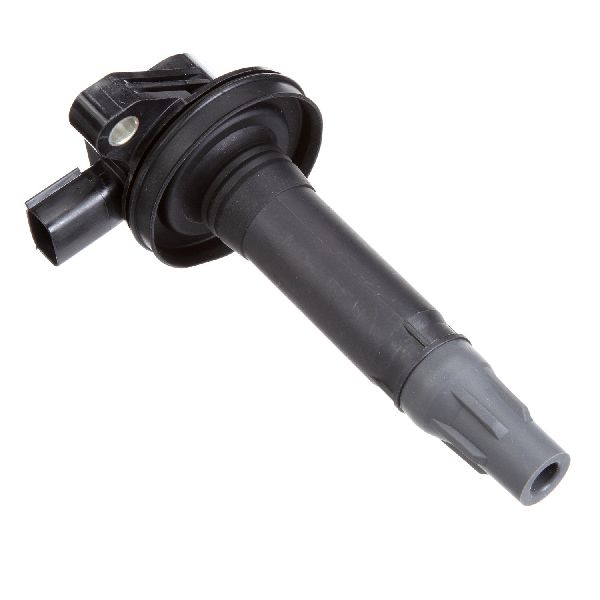
- Ignition Coil
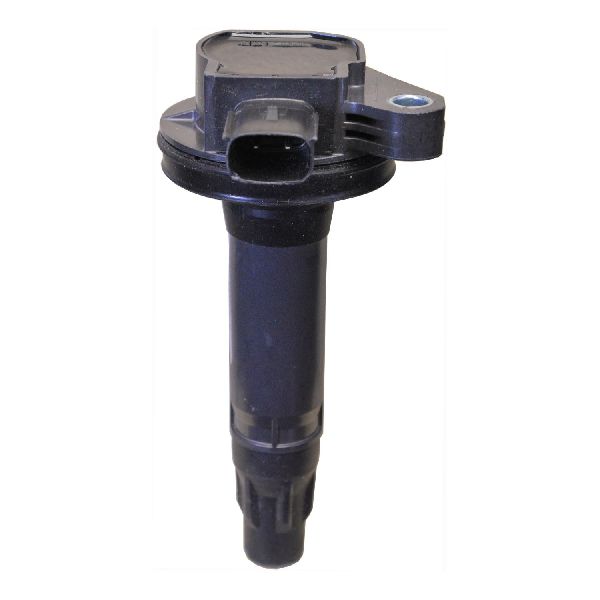
(OEM #7T4Z-12029-E (Motorcraft DG520))— This is the most common failure part for a P035x code. The internal windings of the coil fail, preventing it from producing a spark.
Trusted brands: Motorcraft, Denso, NGK, Standard Motor Products
OEM price range: $60-$90
Aftermarket price range: $30-$60 - Spark Plug
(OEM #SP-534 (Motorcraft))— It is best practice to replace the spark plug when replacing an ignition coil, as a worn plug can cause the new coil to fail prematurely. Since cylinder #6 is easily accessible, this is a simple and cheap preventative measure.
Trusted brands: Motorcraft, NGK, Autolite
OEM price range: $10-$15
Aftermarket price range: $8-$12
Related Codes That Often Appear With This One
- P0306 — P0306 means "Cylinder 6 Misfire Detected." P0356 is the specific cause (the coil circuit failure) that leads to the misfire effect (P0306). It is very common to see both codes together, as the coil circuit malfunction prevents a proper spark, causing the cylinder to misfire.
- P0351, P0352, P0353, P0354, P0355 — It is not uncommon for multiple ignition coils to fail around the same time, or for a PCM failure to affect multiple coil driver circuits. Seeing several P035x codes together may point towards a systemic issue like a failing PCM or widespread coil degradation.
- P0206 — This code means "Cylinder 6 Injector Circuit Malfunction." When the PCM detects a definitive electrical failure in the ignition coil circuit (P0356), it will often intentionally disable the fuel injector for that cylinder to protect the catalytic converter from raw fuel. Seeing this code alongside P0356 is a strong indicator that the PCM is commanding the shutdown.
Technical Service Bulletins (TSBs) & Recalls
- TSB 13-4-17: Malfunction Indicator Lamp (MIL) on with DTCs P0351 through P0356. Affects 2007-2008 Edge models built on or before 3/1/2008. Addresses potential for damaged coils causing related PCM failure.
- TSB 14-0059: Supersedes TSB 13-4-17 and revises the repair procedure to only replace the specific coil and plug on the affected cylinder, not all six and the PCM unless further diagnosis points to it.
- Bulletin #TSB18-2047: Notes that an illuminated MIL with DTC P0355 and/or P0356 may be due to an open circuit in the coil-on-plug connectors for cylinders 5 and/or 6.
Platform-Specific Known Issues
- TSB 13-4-17 was issued for 2007-2008 Ford Edge models with the 3.5L engine for P035x codes. It notes that if physical damage to the coils is found, the PCM should be replaced along with all six coils and plugs. This TSB was reportedly superseded by TSB 14-0059, which revised the repair procedure to only replace the specific coil and plug on the affected cylinder, not all six and the PCM unless further diagnosis points to the PCM.
- The cylinder numbering on the transverse 3.5L V6 is frequently confused. Bank 1 (firewall side) is cylinders 1-2-3, and Bank 2 (radiator side) is cylinders 4-5-6. P0356 correctly identifies the easily accessible front driver's side cylinder.
Mechanic-Grade Diagnostic Values
- Ignition Coil Primary Resistance — expected: 0.3 to 1.0 Ohms. Failure: A reading of infinity (OL) indicates an open circuit; a reading of zero indicates a short. Any reading outside the specified range suggests a faulty coil.
- Ignition Coil Secondary Resistance — expected: 6,500 to 11,500 Ohms (6.5kΩ - 11.5kΩ). Failure: A reading of infinity (OL) indicates an open secondary winding. Readings significantly outside this range point to a failing coil.
- Voltage at Coil Connector (Power Pin) — expected: Battery Voltage (~12.6V) with Key On, Engine Off.. Failure: Low or no voltage indicates a problem with the power supply circuit, which could be a blown fuse, faulty relay, or broken wire.
- Signal at Coil Connector (PCM Driver Pin) — expected: A pulsing ground signal when the engine is cranking or running. This can be observed as a flashing noid light or a square wave on an oscilloscope.. Failure: No pulse indicates a break in the signal wire or a failed PCM driver. A constant ground indicates a shorted driver or wire.
- Ignition Primary Waveform (Advanced) — expected: A healthy waveform on an oscilloscope shows a sharp 300V-400V inductive kick when the coil fires, followed by a clean spark line lasting 1.5 to 2.0 milliseconds.. Failure: A weak or absent voltage spike indicates a problem with the coil's primary or secondary circuit.
Scan Tool Commands That Help
- Ford IDS (Integrated Diagnostic System) or equivalent professional scanner: Power Balance Test — This bidirectional test is used to confirm a misfire on a specific cylinder. The tool commands the PCM to shut off fuel to each cylinder one by one. A healthy cylinder will cause a noticeable drop in engine RPM when disabled. If disabling cylinder #6 causes no change in RPM, it confirms that cylinder was not contributing, validating the misfire.
Wiring & Ground Locations
- Main Engine Ground — On some Edge models, the main battery negative to engine block ground connection is located under the battery tray, bolted to the side of the engine block.. A poor main engine ground can cause a host of electrical issues, including weak spark and erratic behavior from ignition components. While not the first thing to check, it's a crucial point to verify if multiple electrical issues are present.
- Ignition Coil Connector — Two-wire connector plugging into the top of the ignition coil for cylinder #6 (front bank, driver's side).. This is the primary point of failure for wiring issues. The pins can corrode, and the locking tab can break. The power wire should have battery voltage (Key On), and the other wire is the pulsing ground from the PCM. The replacement pigtail is Motorcraft WPT-118.
- Radio Interference Capacitor — On many Ford V6/V8 engines, this is a small, square plastic component with a wiring connector, bolted directly to one of the cylinder heads. It is connected to the power feed for the ignition coils.. This capacitor filters electrical noise from the ignition system. While a failure typically causes radio static that follows engine RPM, a shorted capacitor could theoretically disrupt power to the coils, potentially causing intermittent issues. It's an overlooked component that shares the coil's power circuit. NHTSA ODI #10444492 describes a scenario where the PCM and coils react to radio frequency interference from the spark plug area, potentially triggering codes P0351-P0356.
Real Owner Repair Stories
- Parts supplier technical warning (Solo PCMs) (2011-2014 Ford Edge 3.5L/3.7L) — Persistent P0351, P0352, P0353, P0354, P0355, and/or P0356 codes.
❌ Tried (didn't work) Replacing only the single failed ignition coil.
✅ What actually fixed it The supplier warns that a defective PCM will immediately damage new replacement ignition coils. Their required fix to honor warranty is to replace the PCM, all six ignition coils, and all six spark plugs at the same time to prevent a cascading failure loop. - Interstate Shutdown — An owner reported in NHTSA ODI #11429061 that their vehicle displayed codes P0351 through P0356 and shut down on the interstate, failing to restart.
OEM Part Supersession History
7T4Z-12029-E (Motorcraft DG520)→No major supersession noted, this part number remains current.
Heads up: Crucially, the Motorcraft DG520 coil for the naturally-aspirated 3.5L V6 does NOT fit the 3.5L EcoBoost (turbocharged) engine, even though some parts catalogs may incorrectly list them as compatible. The EcoBoost engine uses a different coil, such as the Motorcraft DG549.
Model Year Variations Within This Range
- 2007-2008: These model years are specifically called out in Ford TSB 13-4-17 for an issue where a failed ignition coil could cause catastrophic damage to the PCM. The original TSB recommended replacing the PCM, all six coils, and all six plugs if any coil showed physical damage. This was later revised by TSB 14-0059 to be less aggressive, but highlights a known weakness in early models.
Diagnostic Flowchart
Other Known Issues on This Vehicle
Issues unrelated to this code that are worth knowing about as an owner of this generation:
- Internal Water Pump Failure 🔴 High — Common after 80,000-100,000 miles. A major design flaw where the timing-chain-driven pump fails and leaks coolant into the engine oil, leading to catastrophic engine damage.
- Electronic Throttle Body (ETB) Failure 🔴 High — Widespread issue causing sudden 'limp mode' and loss of power. Can occur at various mileages. (Ref: Ford Customer Satisfaction Program 13N03 (expired))
- AWD Power Transfer Unit (PTU) Leak/Failure 🟠 Medium — Common on AWD models. The unit overheats, causing seals to fail and fluid to leak. Lack of a drain plug makes servicing difficult, often leading to failure from fluid breakdown.
- Door Ajar Switch Failure 🟡 Low — Very common. A switch inside the door latch assembly fails, causing the 'Door Ajar' light to stay on, draining the battery and preventing doors from locking.
- Brake Booster Diaphragm Tear 🟠 Medium — Affects 2007-2015 models, causing a hissing noise and a hard brake pedal. (Ref: Recall 23S12, Customer Satisfaction Program 13N02)
Used vs. New Parts: Buying Guide for This Vehicle
When a used part is the smart pick: For this repair, a used part is only a reasonable choice for a Powertrain Control Module (PCM). A used PCM from a reputable salvage yard can be significantly cheaper than a new one, but it MUST be professionally reprogrammed (flashed and programmed with vehicle-specific data) to work with your vehicle's keys and options.
Donor-vehicle mileage cap: roughly under 120000 miles for the part to have meaningful remaining life.
What to inspect on the donor part:
- For a used PCM, ensure the donor vehicle was not involved in a flood or fire.
- Verify the part number on the used PCM matches your original exactly.
- Ask the seller if they offer any short-term warranty against the part being dead on arrival.
OEM-only on this vehicle (don't cheap out):
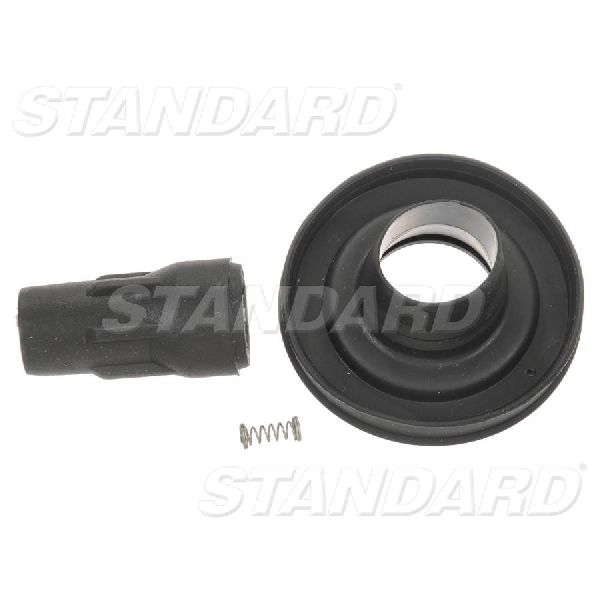
- Ignition Coil: While some aftermarket brands are reliable, many owners report premature failure with no-name online brands. Sticking with OEM Motorcraft is the safest bet to avoid repeat failures.
- Powertrain Control Module (PCM): While a used OEM unit is an option, avoid aftermarket or 'rebuilt' PCMs from unknown vendors, as quality can be highly inconsistent.
Aftermarket brands forum-validated for this vehicle:
- NGK
- Denso
- Standard Motor Products (SMP)
Brands owners have reported issues with on this vehicle:
- Unbranded, low-cost coil sets sold on marketplaces like Amazon or eBay are frequently cited in forums as failing quickly, sometimes within weeks or months.
Real Owner Stories
Aggregated from forums and TSBs cited above. Mileages and costs reflect what owners reported in those sources.
2012 Ford Edge 3.5L
Symptoms: Owner experienced multiple P035x codes that would not go away even after replacing the ignition coils.
What fixed it: The persistent codes were ultimately resolved by replacing a faulty Powertrain Control Module (PCM).
Source hint: YouTube repair video for a 2012 Edge
2007-2014 Ford Edge 3.5L
Symptoms: The vehicle stalled and then displayed multiple trouble codes at once: P0353, P0355, and P0356.
What fixed it: The context indicates this is a symptom of multiple simultaneous ignition coil failures, which would be resolved by replacing the coils on the affected cylinders (3, 5, and 6).
Source hint: fordedgeforum.com thread titled 'arg-still-skippingafter-coils-and-plugs/'
2007-2014 Ford Edge 3.5L
Symptoms: The Check Engine Light came on with codes P0356 and P0353 appearing together.
What fixed it: This indicates that multiple ignition coils failed at the same time. The fix is to replace the faulty ignition coils on cylinders #6 and #3.
Source hint: fordedgeforum.com thread titled 'Ignition Coil Malfunction 3.5L/'
Related OBD-II Codes
Frequently Asked Questions
Where is cylinder #6 located on my 2010 Ford Edge 3.5L engine?
I have a 2008 Ford Edge with code P0356. Is there a Technical Service Bulletin (TSB) for this issue?
I swapped the ignition coil from cylinder #6 to #5 and the code changed to P0355. What does this mean?
Is it possible to have multiple ignition coil codes like P0353, P0355, and P0356 at the same time?
I'm replacing the ignition coil for P0356. Do I also need to replace the spark plug?
The plastic clip on my ignition coil connector is broken. What is the part number for a replacement?
I replaced the coil and spark plug for P0356, but the code came back. What's the next step?
Helpful Videos
Used OEM Parts in Stock

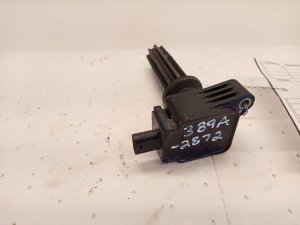
New Aftermarket Parts Available


The information in this article is provided for general reference and educational purposes only. Vehicle specifications, procedures, and part compatibility can vary by production date, trim level, and region. Always consult your vehicle's factory service manual and verify part numbers before purchasing or performing repairs. Safety-critical components such as airbags, seat belts, and braking systems should be installed by a qualified professional.
- Ford Edge:
- 🎬 Helpful Videos
- 🛍️ Shop This Part
- What's Unique About the 2007-2014 Ford Edge
- Symptoms You May Notice
- Most Likely Causes
- Rare But Worth Checking
- Diagnosis Steps
- Parts You'll Likely Need
- Related Codes That Often Appear With This One
- Technical Service Bulletins (TSBs) & Recalls
- Platform-Specific Known Issues
- Mechanic-Grade Diagnostic Values
- Scan Tool Commands That Help
- Wiring & Ground Locations
- Real Owner Repair Stories
- OEM Part Supersession History
- Model Year Variations Within This Range
- Diagnostic Flowchart
- Other Known Issues on This Vehicle
- Used vs. New Parts: Buying Guide for This Vehicle
- Real Owner Stories
- 2012 Ford Edge 3.5L
- 2007-2014 Ford Edge 3.5L
- 2007-2014 Ford Edge 3.5L
- Related OBD-II Codes
- Frequently Asked Questions
- 🎟️ Get 5% Off