

OBD-II Code P0355: Ignition Coil 'E' Circuit Malfunction
The Ultimate Guide to Diagnosing and Fixing P0355
- P0355 indicates a hard electrical fault in the cylinder #5 ignition coil circuit, not just a random engine misfire.
- Swap the ignition coil from cylinder #5 to cylinder #4; if the code changes to P0354, replace the $40-$120 coil to fix the issue.
- Stop driving immediately if the Check Engine Light flashes, as unburned fuel destroys a $1,200+ catalytic converter within miles.
- Inspect the wiring harness for chafing or moisture before replacing parts, especially on 2019-2022 GM trucks with known TSBs.
What Does P0355 Mean?

Your car's Powertrain Control Module (PCM) detects an electrical problem with the ignition coil for cylinder #5. The coil fails to create a strong spark, or the computer cannot read its return signal, causing a misfire. On many vehicles, particularly Fords, the PCM 🎬 Watch: How to fix a cylinder #5 misfire on Ford F-150s. intentionally shuts off the fuel injector to cylinder #5 to protect the catalytic converter from unburned fuel.
Technical definition: The official definition for P0355 is "Ignition Coil 'E' Primary/Secondary Circuit Malfunction." The PCM detects a fault in the primary (low-voltage, computer-controlled) or secondary (high-voltage, spark plug) ignition coil circuit for cylinder #5. The PCM sets this code when it fails to receive the expected Ignition Diagnostic Monitor (IDM) feedback pulse confirming the coil charged and fired correctly.
Can I Drive With P0355?
yes_but_not_recommended. Limit driving to less than 50 miles and only for essential trips to a repair shop. Driving with a misfire sends unburned fuel into the exhaust, which overheats and destroys your catalytic converter in a short time. If the Check Engine Light flashes, pull over and stop driving immediately to prevent a repair costing between $1,200 and $2,500.
Common Causes

- Failed Ignition Coil (Very Common) — The ignition coil for cylinder #5 fails internally due to age, heat cycles, or manufacturing defects. This is the most frequent cause of a P0355 code.
- Damaged Wiring, Connector, or Ground (Common) — The electrical wiring or connector for the #5 ignition coil is frayed, corroded, loose, or shorted. Engine vibrations, extreme heat, rodent damage, or a broken ground strap increase circuit resistance and trigger the fault.
- Worn or Faulty Spark Plug (Common) — The spark plug in cylinder #5 is old, fouled with carbon, or has an incorrect gap. A bad spark plug creates excessive electrical resistance, which overloads and eventually destroys the ignition coil.
- Moisture or Oil Intrusion (Common) — Water from engine washing or oil from a leaking valve cover gasket seeps into the spark plug tube. This fluid shorts out the coil and corrodes its electrical connector.
- Faulty Powertrain Control Module (PCM) Driver (Very Rare) — The internal transistor driver within the PCM that controls the #5 ignition coil fails. This requires professional diagnosis and should only be considered after exhaustively ruling out wiring faults.
- Weak Battery or Charging System Issue (Very Rare) — A failing battery or alternator causes low system voltage, leading to anomalous ignition system codes. The PCM requires a stable voltage between 11V and 16V to operate correctly.
Symptoms

- Check Engine Light is On or Flashing — A solid Check Engine Light is the primary alert. A flashing light signals a severe misfire dumping raw fuel into the exhaust. Stop driving immediately if you see a flashing light.
- Rough Idle and Engine Misfire — The engine shakes, vibrates, or sputters noticeably when stopped or at low speeds. You feel a distinct stumbling as the engine struggles to run on one less cylinder.
- Reduced Engine Power, Hesitation, and Stalling — The car feels sluggish, hesitates when you press the gas pedal, and struggles to accelerate. Severe misfires cause the engine to stall completely when coming to a stop.
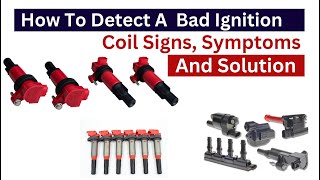
- Poor Fuel Economy — With cylinder #5 not contributing, engine efficiency plummets. You notice a sudden decrease in your average miles per gallon (MPG) 🎬 Watch: A quick guide to bad ignition coil signs and symptoms. by 15-25%.
- Smell of Gasoline from Exhaust — A strong smell of raw gasoline from the exhaust pipe indicates unburned fuel from cylinder #5 is entering the catalytic converter.
Diagnostic Flowchart

Tap your situation to follow the diagnostic path that matches what you're seeing on this code.
Common Fixes & Costs
- Replace Ignition Coil #5 — Parts: $40-$120, Labor: $50-$150, ~0.5 hr book time (DIY)
- Repair Wiring Harness or Connector — Parts: $20-$150, Labor: $100-$400, ~2.5 hr book time (Intermediate)
- Replace Spark Plug #5 — Parts: $10-$30, Labor: $50-$150, ~0.8 hr book time (DIY)
- Replace Valve Cover Gasket — Parts: $50-$150, Labor: $200-$500, ~3 hr book time (Intermediate)
- Replace Powertrain Control Module (PCM) — Parts: $600-$1000, Labor: $200-$300, ~1.5 hr book time (Professional)
DIY vs Professional
- Replace Ignition Coil / Spark Plug — Beginner:
Tools: Basic socket set, ratchet with extension, spark plug socket, torque wrench. - Repair Wiring Harness or Connector — Beginner:
Tools: Multimeter, wire strippers, crimpers or soldering iron, heat shrink tubing, replacement pigtail connector. - Replace Valve Cover Gasket — Beginner:
Tools: Extensive socket/wrench set, torque wrench, gasket scraper, RTV sealant. - Replace Powertrain Control Module (PCM) — Beginner:
Tools: Specialized OEM scan tools for programming and flashing.
Used vs. New Parts: Buying Guide
When a used part is worth it: Buying a used ignition coil is rarely recommended. The low cost of a new aftermarket part combined with its nature as a wear-and-tear item makes new the logical choice. A used coil has an unknown history and often fails shortly after installation.
Donor-vehicle mileage cap: roughly under 40000 miles for the part to have meaningful remaining life.
Donor quality checklist:
- Verify donor vehicle mileage is low.
- Inspect the part for cracks, melting, or corrosion on the electrical pins.
- Match the part number exactly, as similar-looking coils have different internal resistance.
Decision logic:
- If The cost of a new aftermarket ignition coil is under $100. → Always buy new. The savings from a used part are not worth the risk of premature failure and repeat labor.
- If Vehicle is older (>150K miles) and you are performing the labor yourself. → A used coil from a low-mileage wreck is a temporary, budget-conscious fix, but not a long-term solution.
- If The part is an electronic component with a known wear-out failure mode. → Favor new parts that come with a warranty.
Warranty tradeoff: Used parts from a salvage yard typically have a 30-90 day warranty covering only the part. New aftermarket parts carry a 1-year to limited lifetime warranty. New OEM parts offer a 1-2 year warranty.
Worst-case if a used part fails: $100-$250 if a used coil fails after installation, requiring repeat labor and the purchase of another part.
What Happens If You Wait — Timeline
- 0-1 month: Code P0355 is set, Check Engine Light is on. A noticeable rough idle and hesitation during acceleration occurs. Fuel is wasted. (MPG impact: 10-25%% · Added cost: $20-$60 in wasted fuel.)
- 1-3 months: The catalytic converter is constantly saturated with unburned fuel. Its internal temperature rises dramatically, degrading the precious metal coatings on the ceramic substrate. (MPG impact: 15-30%% · Added cost: $50-$150 in wasted fuel. Converter is now at high risk.)
- 3-6 months: The catalyst substrate melts and fuses from extreme heat, creating a partial blockage. A 'rotten egg' smell is noticeable from the exhaust. The converter is permanently damaged. (MPG impact: 20-40%% · Added cost: $1200-$2800 (Catalytic converter replacement is now required).)
- 6+ months: Catastrophic converter meltdown. The exhaust is severely restricted or fully clogged. Extreme engine backpressure causes stalling, no-start conditions, and damage to exhaust valves or head gaskets. (MPG impact: 40-60%+% · Added cost: $2000-$4500+ (Includes converter replacement and potential top-end engine repairs).)
Cost of Not Fixing It
- 0-1 month: Noticeable drop in fuel economy (15-25%), rough idle, and poor acceleration. Failed emissions test. (Added cost: Negligible, other than increased fuel costs.)
- 1-6 months: High risk of catalytic converter failure due to overheating from unburned fuel. Indicated by a rotten egg smell from the exhaust. (Added cost: $1200-$2800)
- 6+ months: Catastrophic catalytic converter failure (clogged or melted), causing severe engine backpressure, engine stalling, and damage to oxygen sensors. (Added cost: $1500-$4000+)
Diagnosis Steps

- Read Codes and Freeze Frame Data
Use an OBD-II scanner to confirm P0355 is present. Note any other codes, like P0305 (Cylinder 5 Misfire), which always accompanies P0355. Record the freeze frame data to see engine conditions (RPM, temperature) when the fault occurred.
Tools: OBD-II Scanner (Beginner) - Swap the Ignition Coil (The 'Money' Test)
Swap the ignition coil from cylinder #5 with one from an adjacent cylinder (e.g., cylinder #4). Clear the codes and drive the car. If the code changes to P0354, the coil is faulty. If P0355 returns, the problem lies in the wiring, spark plug, or PCM.
Tools: Socket/Ratchet Set (Beginner) - Perform a Detailed Visual Inspection
Locate ignition coil #5 using a service manual. Inspect the coil for cracks or melting. Examine the electrical connector for corrosion or pushed-out pins. Trace the wiring harness looking for chafing, melting, or rodent damage.
Tools: Flashlight, Service Manual (Beginner) - Inspect the Spark Plug
Remove the spark plug from cylinder #5. Check for excessive wear, carbon fouling, oil contamination, or a cracked porcelain insulator. Replace the plug if it shows signs of damage or incorrect gapping.
Tools: Spark Plug Socket, Ratchet, Torque Wrench (Intermediate) - Test the Coil Connector for Power and Ground
Disconnect the coil's electrical connector. With the ignition key 'On' (engine off), use a multimeter to check for battery voltage (12V) at the power supply pin. A 0V reading indicates a blown fuse or broken power wire. Verify a solid ground connection on the ground pin.
Tools: Multimeter, Vehicle-Specific Wiring Diagram (Intermediate) - Advanced Test: Check Signal Wire Continuity and for Shorts
Disconnect both the PCM and coil connectors. Use a multimeter (Ohms setting) to measure resistance between the signal wire pin at the coil and the corresponding pin at the PCM. The reading must be under 5.0 ohms. Next, measure resistance between the signal wire pin and a chassis ground; it must read 'OL' (open line).
Tools: Multimeter, Vehicle-Specific Wiring Diagram (Advanced) - Advanced Test: Measure Ignition Coil Resistance
With the coil disconnected, measure the resistance of its internal windings. Primary resistance (between positive and negative terminals) is typically 0.5 to 1.5 ohms. Secondary resistance (between primary positive and the spark plug boot) is typically 8,000 to 15,000 ohms. Compare readings to exact manufacturer specifications.
Tools: Multimeter, Service Manual (Advanced) - Professional Test: Analyze Waveform with an Oscilloscope
Back-probe the signal wire with a lab scope to view the primary ignition waveform. A healthy waveform shows a sharp voltage spike, a clean dwell period, and a clear firing line. A distorted waveform points directly to a wiring or PCM driver issue.
Tools: Oscilloscope (Lab Scope), Wiring Diagram (Professional)
When This Code Triggers (Freeze-Frame Conditions)
- Engine Coolant Temp: 180-210°F (Fully warmed up)
- RPM: 1500-3000 (Light acceleration or steady cruise)
- Engine Load: 30-60% (Under moderate load, such as climbing a slight incline or accelerating to merge.)
- Vehicle Speed: 45-65 mph (Highway or expressway driving)
Related Codes
- P0305 — Indicates "Cylinder 5 Misfire Detected." P0355 is the specific electrical fault causing the misfire, triggering P0305. Focus diagnosis on the P0355 circuit fault.
- P0350 — A generic code for "Ignition Coil Primary/Secondary Circuit Malfunction" that lacks a specific cylinder designation. P0355 is the targeted version pointing directly to cylinder 5.
- P0351-P0362 — Identical to P0355 but point to different cylinders (e.g., P0351 for cylinder 1). Swapping a bad coil from cylinder 5 to cylinder 1 changes the code from P0355 to P0351.
- P0205 — Indicates "Cylinder 5 Injector Circuit Malfunction." Ford PCMs disable the fuel injector when a coil fault is detected to protect the catalytic converter, triggering P0205 alongside P0355.
Climate & Environmental Factors
- High Humidity and Moisture: Moisture from rain or engine washing penetrates coil housings and electrical connectors. This causes corrosion, increased electrical resistance, and short circuits.
- Extreme Heat: Ignition coils endure high engine temperatures. Heat degrades the internal epoxy insulation and copper windings, causing internal shorts and reduced voltage output.
- Cold Weather and Road Salt: Extreme cold exacerbates existing issues in a weak coil, causing hard starting. Road salt accelerates corrosion of wiring and connector terminals if they lack proper weather sealing.
How to Talk to a Mechanic About This Code
Say this: "I have a P0355 code for the ignition coil 'E' circuit. I have already performed a coil swap test, and the fault code did not move to the other cylinder. I need a diagnostic focused on testing the wiring harness, connector, and signal to cylinder 5."
This signals you have already performed the basic diagnosis, preventing the shop from repeating that step. It directs them to perform the necessary electrical tests on the correct circuit, saving diagnostic time and preventing them from selling you an unneeded coil.
Avoid saying:
- 'Just fix whatever's wrong'
- 'My check engine light is on, can you look at it?' (too vague — invites upsell)
- 'I think it's the coil, just replace it'
Questions to ask before authorizing the repair:
- Did you perform a continuity test on the signal wire from the PCM to the coil connector?
- Was there correct voltage and a good ground at the coil connector with the key on?
- If the wiring needs repair, what is your warranty on the repair itself?
- Can you provide a printout of the freeze-frame data and any other stored codes?
Where to Take It: Dealer vs Independent vs Chain
- Dealer:
Best for: Vehicles still under powertrain warranty, Known manufacturer-specific issues covered by a TSB (e.g., GM harness chafing), If the final diagnosis points to a failed PCM requiring programming
Downsides: Higher labor rates, often 1.5-2x more than independent shops., More inclined to replace a whole harness assembly rather than repair a single wire. (Typical cost: +50% vs. baseline) - Independent Shop:
Best fit for most scenarios. An experienced independent technician handles a coil swap, spark plug replacement, and wiring diagnostics effectively and at a lower cost than a dealer.
Best for: Out-of-warranty vehicles where cost is a factor., Diagnosing and repairing common coil, plug, and wiring issues., Owners who want a direct line of communication with the technician.
Downsides: Diagnostic skill for complex electrical issues varies; vet shops by looking for ASE certifications in electrical work. (Typical cost: +0% vs. baseline) - Chain Shop:
Acceptable for a simple part swap, but AVOID for initial diagnosis or if the problem is in the wiring.
Best for: A straightforward ignition coil or spark plug replacement if you've already confirmed the part is bad.
Downsides: Technician skill varies dramatically., Lacks the advanced diagnostic tools or experience for wiring or PCM-level problems., High pressure to upsell services. (Typical cost: -10% vs. baseline)
When to Walk Away From the Repair
If the estimated repair cost exceeds 50% of the car's private-party value, seriously consider selling or trading it in rather than repairing it.
- Car worth $4000, fix is $450: Fix it. A wiring repair is well below the threshold.
- Car worth $3000, fix is $1500: Borderline. This represents a worst-case scenario (PCM replacement). Get a second opinion before authorizing, as the actual cost is likely lower.
- Car worth $2000, fix is $1500: Walk away. The repair cost is 75% of the car's value. It is not a sound financial decision.
What Scan Tool You Need for This Code
Minimum: A code reader that displays engine fault codes, clears them, and shows live data, specifically misfire counts per cylinder.
A $20 reader just shows the code 'P0355'. A scanner with live data lets you see if cylinder #5 is actively misfiring, confirming the problem in real-time. Freeze frame data is crucial to see what the engine was doing when the code set.
Budget: BlueDriver Pro or OBDLink MX+ (~$100) — These Bluetooth scanners pair with your phone and provide live data graphing (to watch for misfires), read freeze frame data, and read codes from other modules like ABS and SRS.
Mid-range: Autel MaxiCOM MK808S or Innova 5610 (~$250-400) — These tablet-style scanners offer full system diagnostics and bidirectional controls. For P0355, you access manufacturer-specific data and perform active tests on ignition system components.
Professional: Launch X431 series or Autel MaxiSYS series (~$500-1200) — Provides full bidirectional control, allowing a technician to command the PCM to perform specific tests. Some support oscilloscope functions, which is the definitive tool for diagnosing tricky wiring faults.
How to Clear the Code After You Fix It
- Reconnect battery (if disconnected for repair)
- Use an OBD-II scan tool to erase the P0355 fault code.
- Perform a complete OBD-II drive cycle to allow readiness monitors to run.
Drive cycle (~30 minutes): Cold start (sit for 8+ hours). Idle for 2-3 minutes with electrical loads on (A/C, defroster). Drive 15 minutes of mixed city/highway speeds (up to 55 mph). Hold a steady speed of 55 mph for 5-10 minutes. Decelerate without braking. Perform stop-and-go city driving for 5 minutes.
Readiness monitors affected: Catalyst Monitor, Evaporative System Monitor, Oxygen Sensor Monitor, Misfire Monitor
Before emissions retest: drive at least 100 miles to fully set monitors.
Watch out for:
- Clearing the code with a scanner resets all readiness monitors to 'Not Ready', causing an immediate emissions test failure.
- The code returns immediately if the root cause (bad coil, wiring fault) is not fixed.
- Failing to allow the vehicle to cool down sufficiently (cold soak) prevents certain monitors from running.
Will This Fail Emissions / State Inspection?
Yes — this code typically fails an OBD-II emissions inspection.
- California: An illuminated Check Engine Light is an automatic failure. After repair, perform a complete drive cycle to set all readiness monitors before a retest.
- New York: A vehicle with an active P0355 code automatically fails the emissions inspection. A drive cycle is required before re-inspection.
- Texas: In counties requiring emissions testing, an illuminated Check Engine Light results in an automatic failure. Drive 50-100 miles to reset readiness monitors before passing.
Most Commonly Affected Vehicles
- Ford F-150 (2004-2014) — Extremely common on 5.4L 3V Triton engines. The coil-on-plug design is susceptible to moisture intrusion. The wiring harness chafes against the fuel rail, causing a short in the #5 cylinder circuit.
- Chevrolet / GMC Silverado 1500 / Sierra 1500 (2019-2022) — TSB 21-NA-149 details the engine wiring harness chafing against sharp edges on the driver's side. This causes a short circuit triggering P0355. Inspect the harness before replacing parts.
- Dodge / Ram Ram 1500 / Charger (2017-2023) — Prone to intermittent P0355 codes caused by wiring issues. A software update for the PCM is sometimes required to fix overly sensitive fault detection logic.
- Hyundai Genesis Coupe (2010-2016) — The ECM continuously monitors the ignition coil circuit. If a fault is detected for more than 5 seconds, it sets the code. The cause is typically a failed coil or a poor connection.
- Nissan Qashqai / Navara (2005-2015) — P0355 is commonly caused by a failed ignition coil or a corroded connector/wiring harness due to age and environmental exposure.
- Volkswagen Various with VR6/V6 Engines (2005-2015) — Oil leaks from the valve cover gasket are a frequent underlying cause, contaminating the coil boot and connector for cylinder 5.
- Kia Optima / Sorento (2011-2020) — A P0355 code points to an issue with ignition coil 'E', its wiring, or the ECM. Common symptoms include rough idling and decreased engine performance.
- BMW Various with 6-Cylinder Engines (2006-2016) — On N52, N54, and N55 engines, 'E' corresponds to cylinder 5. Ignition coils and spark plugs are common failure points on higher-mileage vehicles.
Manufacturer-Specific Notes
- Ford: The PCM actively monitors the return pulse (IDM) from the ignition coil. If it misses this signal, it immediately sets P0355 and shuts off the fuel injector to prevent catalyst damage, often triggering a secondary P0205 code.
- Chevrolet/GM: On 2019-2022 GM trucks, P0355 is frequently caused by a wiring harness rubbing through its insulation. TSB 21-NA-149 details multiple chafe points. Inspect the harness before replacing any parts.
- Chrysler/Dodge/Jeep: Intermittent P035x codes trigger due to overly sensitive PCM software logic. A PCM software update from the dealer resolves the issue if no physical fault exists in the coil or wiring.
- Hyundai/Kia: The ECM checks ignition coil output signals every 10 seconds. It logs the P0355 code only if a short or open circuit is detected for more than 5 consecutive seconds.
Real Owner Stories
2001 Ford F-250 5.4L at 150K+ miles
Truck developed a rough idle and felt underpowered. A pending code for a cylinder #2 misfire was found. Owner swapped the #2 coil with the #5 coil to test.
Outcome: The owner replaced the ignition coil on cylinder #5. The P0355 code resolved, confirming the original coil from cylinder #2 was the sole cause.
Lesson: The 'coil swap' is the most effective first diagnostic step. If the code moves with the coil, you have 100% confirmation of the failed part before spending money.
2020 Chevrolet Silverado 1500 at 45K miles
Check Engine Light came on with code P0355. The truck ran rough under load. The owner was about to buy a new ignition coil.
Outcome: A section of the harness rubbed against a sharp metal edge on the ECM bracket, wearing through the insulation. The wire was repaired and re-secured. The P0355 code cleared and did not return.
Lesson: Always search for vehicle-specific TSBs before replacing parts. For 2019-2022 GM trucks, a chafed wiring harness is a more likely cause for P0355 than a failed coil.
2006 Ford F-150 4.6L with recurring P0355
Engine had a persistent misfire and P0355 code. The owner wanted to solve it themselves before going to a mechanic.
Outcome: Forum advice pointed to a break in the wiring harness between the PCM and the coil connector. The fix required advanced electrical diagnosis with a multimeter to locate the broken wire.
Lesson: If a new coil and spark plug don't fix a P035x code, stop replacing parts. The problem is in the circuit wiring or the PCM. Further diagnosis is required.
How to Prevent This Code From Triggering
- Replace spark plugs at the manufacturer's recommended interval. (Every 60,000 to 100,000 miles for iridium/platinum plugs.) — As spark plugs wear, the gap widens, increasing electrical resistance. This forces the ignition coil to produce a much higher voltage to create a spark, leading to overheating and premature coil failure.
- Apply dielectric grease to the inside of the ignition coil boot. (Whenever replacing a coil or spark plug.) — Dielectric grease is a non-conductive sealant preventing high voltage from leaking to the cylinder head. It seals out moisture and contaminants that cause corrosion and misfires.
- Fix engine oil leaks promptly, especially from the valve cover gasket. (Inspect for leaks during every oil change.) — Oil leaking from a bad valve cover gasket pools in the spark plug tubes, soaking the ignition coil boot and connector. This degrades the boot material and shorts out the electrical connections.
- Periodically inspect ignition wiring harnesses for damage. (Every 30,000 miles or during major service.) — Engine vibration and heat cause wiring harnesses to rub against sharp edges, wearing through the insulation and causing a short circuit. Catching this wear early prevents a P0355 code.
Frequently Asked Questions
What does the 'E' in 'Ignition Coil E' mean?
The letter 'E' corresponds to the fifth cylinder in the engine's firing order. P0351 is for coil 'A' (cylinder 1), making P0355 for coil 'E' (cylinder 5).
I replaced the coil and spark plug, but P0355 came back. What now?
The problem is in the wiring harness or the connector to the coil. Perform continuity and short-to-ground tests on the signal wire using a multimeter. If the wiring is perfect, the final possibility is a faulty PCM.
What is the difference between P0355 and P0305?
P0355 means the computer found an electrical fault in the ignition coil circuit for cylinder 5. P0305 means the computer detected a misfire in cylinder 5. A P0355 fault always causes a P0305, but a bad fuel injector or low engine compression also causes P0305.
Can I just replace one ignition coil?
Yes, you can replace just the one failed coil. However, if your vehicle has over 100,000 miles, replacing all coils as preventative maintenance saves future labor costs.
What happens if I ignore a P0355 code?
Ignoring this code forces you to drive with a continuous misfire. Unburned fuel dumps into the exhaust, overheating and destroying your catalytic converter. This turns a $100 repair into a $2,000 nightmare.
Will a P0355 code clear itself?
No, a P0355 code indicates a hard electrical fault that requires physical repair. The code remains stored in the PCM and the light returns until the underlying issue is fixed.
Can a weak battery cause a P0355 code?
A failing battery causes low system voltage, leading to erratic behavior from the PCM. This triggers anomalous fault codes, including P0355, because the PCM lacks the required operating voltage.
Key Takeaways
- P0355 indicates a hard electrical fault in the cylinder #5 ignition coil circuit, not just a random engine misfire.
- Swap the ignition coil from cylinder #5 to cylinder #4; if the code changes to P0354, replace the $40-$120 coil to fix the issue.
- Stop driving immediately if the Check Engine Light flashes, as unburned fuel destroys a $1,200+ catalytic converter within miles.
- Inspect the wiring harness for chafing or moisture before replacing parts, especially on 2019-2022 GM trucks with known TSBs.
Helpful Videos


The information in this article is provided for general reference and educational purposes only. Vehicle specifications, procedures, and part compatibility can vary by production date, trim level, and region. Always consult your vehicle's factory service manual and verify part numbers before purchasing or performing repairs. Safety-critical components such as airbags, seat belts, and braking systems should be installed by a qualified professional.
- 🎬 Helpful Videos
- What Does P0355 Mean?
- Can I Drive With P0355?
- Common Causes
- Symptoms
- Diagnostic Flowchart
- Common Fixes & Costs
- DIY vs Professional
- Used vs. New Parts: Buying Guide
- What Happens If You Wait — Timeline
- Cost of Not Fixing It
- Diagnosis Steps
- When This Code Triggers (Freeze-Frame Conditions)
- Related Codes
- Climate & Environmental Factors
- How to Talk to a Mechanic About This Code
- Where to Take It: Dealer vs Independent vs Chain
- When to Walk Away From the Repair
- What Scan Tool You Need for This Code
- How to Clear the Code After You Fix It
- Will This Fail Emissions / State Inspection?
- Most Commonly Affected Vehicles
- Manufacturer-Specific Notes
- Real Owner Stories
- 2001 Ford F-250 5.4L at 150K+ miles
- 2020 Chevrolet Silverado 1500 at 45K miles
- 2006 Ford F-150 4.6L with recurring P0355
- How to Prevent This Code From Triggering
- Frequently Asked Questions
- What does the 'E' in 'Ignition Coil E' mean?
- I replaced the coil and spark plug, but P0355 came back. What now?
- What is the difference between P0355 and P0305?
- Can I just replace one ignition coil?
- What happens if I ignore a P0355 code?
- Will a P0355 code clear itself?
- Can a weak battery cause a P0355 code?
- Key Takeaways
- 🎟️ Get 5% Off