

P0352 on 2010-2017 Toyota Camry 2.5L: Ignition Coil 'B' Circuit Causes and Fixes
P0352 on a 2.5L Camry almost always points to a failed ignition coil on cylinder 2. A new OEM-quality coil costs around $50-$90 and is a simple 15-minute DIY fix requiring only a 10mm socket. The 'swap test' is the definitive way to confirm the failure before buying parts.
- P0352 means a fault in the ignition coil circuit for cylinder #2.
- The most likely cause is a failed ignition coil, which is a simple DIY replacement.
- Use the 'swap test' to confirm a bad coil before buying parts: swap the coil from cylinder #2 with another cylinder and see if the code follows.
- Cylinder #2 is the second cylinder from the passenger side of the engine.
- If the Check Engine Light is flashing, avoid driving to prevent expensive damage to the catalytic converter.
What's Unique About the 2010-2017 Toyota Camry
The 2.5L 2AR-FE engine in the Toyota Camry is well-regarded for its reliability, and this code does not indicate a widespread design flaw. Like any modern engine, ignition coils are a common wear item that eventually fail with age and heat cycles. The engine uses a simple and accessible coil-on-plug design, where each cylinder has its own individual coil, making diagnosis and replacement exceptionally straightforward for a DIY mechanic. The failure is so common that many owners and technicians immediately suspect the coil for any P035x code.
Generation note: This range covers the end of the XV40 generation (2010-2011) and the full XV50 generation (2012-2017). Both generations used the 2.5L 2AR-FE engine with a nearly identical coil-on-plug ignition system, so the diagnosis and repair for code P0352 are the same across these years. However, a critical difference exists in the ignition coils themselves based on the vehicle's assembly plant (Japan vs. US), which requires VIN verification before purchasing parts.
Symptoms You May Notice
- Check Engine Light is on
- Flashing Check Engine Light (indicates a severe misfire)
- Rough or shaky idle
- Engine hesitation or stumbling during acceleration
- Noticeable loss of engine power
- Reduced fuel economy
- Traction control light may also illuminate simultaneously with the check engine light.
- Abnormal exhaust sound or smell.
- Replacing the spark plug without first testing the ignition coil. The coil is the more likely culprit and is easier to test via the swap method.
- Assuming the ECM is bad without thoroughly checking the wiring between the ECM and the ignition coil connector for continuity and shorts.
- Replacing only the single failed coil. While acceptable, many technicians recommend replacing all four coils, especially on higher mileage vehicles, as the others may be near the end of their service life.
- Ordering the wrong ignition coil. US-built and Japan-built Camrys use different, physically incompatible coils. The VIN must be checked before ordering.
Most Likely Causes
- Failed Ignition Coil on Cylinder #2 🔴 High Probability Ignition coils are wear-and-tear components that operate in a high-heat environment. Over time, the internal windings can break down or the housing can crack, leading to failure. This is the most common cause for a P0352 code.
How to confirm: The easiest method is the 'swap test.' Swap the ignition coil from cylinder #2 with an adjacent coil (like cylinder #3). Clear the codes and drive the car. If the code changes to P0353 (for cylinder #3), the coil is definitively bad. Another simple test is to unplug the coil's connector while the engine is idling; if the engine's shaking and sound do not change, that coil is the failed one. 🎬 Watch: A quick video guide on testing for a bad coil.
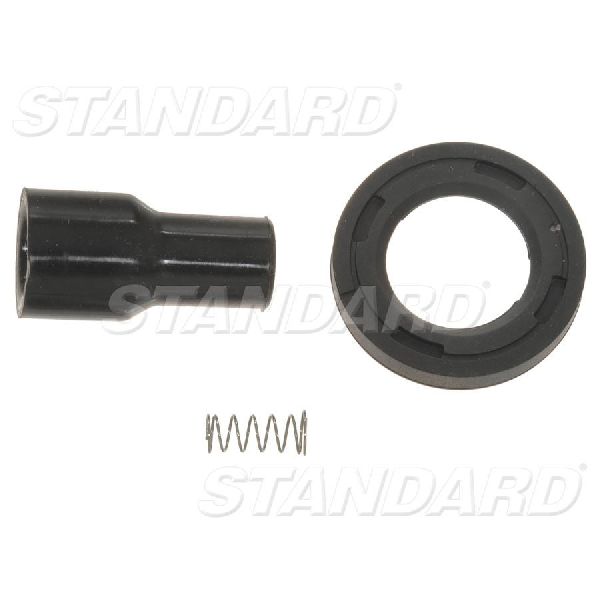
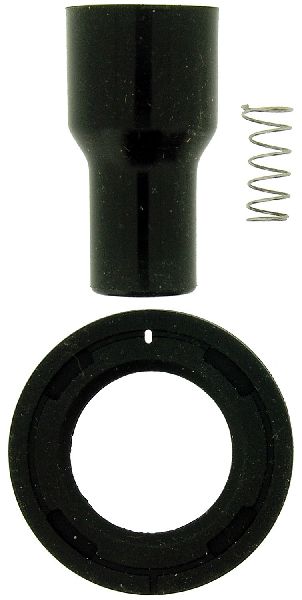
Typical fix: Replace the faulty ignition coil. It is held on by a single 10mm bolt. 🎬 See this step-by-step walkthrough for replacing your ignition coils. Applying a small amount of dielectric grease to the inside of the new coil's boot is recommended to protect against moisture and ensure a good seal.
Est. part cost: $45-$90 - Worn or Fouled Spark Plug in Cylinder #2 🟡 Medium Probability An old, worn, or oil-fouled spark plug can create excessive resistance, putting extra strain on the ignition coil and potentially causing it to fail or trigger a circuit code. Oil can also leak into the spark plug tube from a failing valve cover gasket, shorting out the coil and plug.
How to confirm: After ruling out the coil, remove the spark plug from cylinder #2. Inspect it for wear (eroded electrode), damage, or heavy deposits of carbon or oil. The center electrode should be intact and the insulator a light tan color.
Typical fix: Replace the spark plug. It is good practice to replace all four spark plugs at the same time if they are near the end of their service life (typically 100,000-120,000 miles for iridium plugs). 🎬 Watch: How to properly remove and replace your spark plugs.
Est. part cost: $10-$20 per plug - Damaged Wiring or Connector to Coil #2 ⚪ Low Probability The plastic locking tab on the connector can become brittle from engine heat and break, leading to a loose connection. Wires can also be damaged by vibration or improper servicing, causing an open or short in the circuit. A known weak point is the harness bend near the valve cover where wires can break internally.
How to confirm: Visually inspect the wiring harness and the electrical connector for cylinder #2's ignition coil. Look for any signs of cracking, melting, corrosion on the pins, or broken wires. Gently wiggle the connector with the engine running to see if it induces a misfire. Test for continuity from the connector pins back to the ECM.
Typical fix: Repair the damaged section of wire or replace the connector pigtail if the lock is broken or the terminals are corroded. The connector pigtail part number is often Toyota 90980-11885.
Est. part cost: $15-$30 for a new connector pigtail
Rare But Worth Checking
- Failed Engine Control Module (ECM): This is extremely rare. The internal driver circuit for the coil can fail, but this should only be considered after all other possibilities (coil, plug, wiring) have been exhaustively ruled out. Professional diagnosis is recommended before replacing the ECM.
Diagnosis Steps
- Read the trouble codes with an OBD-II scanner and confirm P0352 is present. Note any other codes, especially P0302.
- Locate Cylinder #2. On the 2AR-FE engine, the cylinders are numbered 1-2-3-4 from the passenger side (belt side) to the driver side. Cylinder #2 is the second one from the passenger side.
- Perform the 'swap test': Turn off the engine. Disconnect the electrical connector and remove the 10mm bolt from the coil on cylinder #2. Do the same for cylinder #3. Swap their positions. Reinstall the bolts and connectors.
- Clear the codes with the scanner. Start the engine and let it run for a minute, or take a short drive.
- Re-scan for codes. If the code is now P0353, the ignition coil you moved to cylinder #3 is faulty and needs to be replaced.
- If the code P0352 returns, the problem is not the coil. The next step is to inspect the wiring and connector for cylinder #2. Check for damage, corrosion, or a broken locking tab. Pay close attention to the harness where it bends near the valve cover, a known spot for internal wire breaks.
- If the wiring appears intact, turn off the engine and inspect the spark plug in cylinder #2. Check for oil in the spark plug tube, which would indicate a leaking valve cover gasket. Also inspect the plug itself for wear or fouling.
- If the plug is suspect, swap the spark plugs between cylinder #2 and #3 and see if the misfire code follows the plug (now showing P0303).
- If the problem still remains on cylinder #2 after testing the coil and plug, a more in-depth diagnosis of the wiring harness (checking for power, ground, and signal wire continuity back to the ECM) and the ECM itself is required.
Parts You'll Likely Need
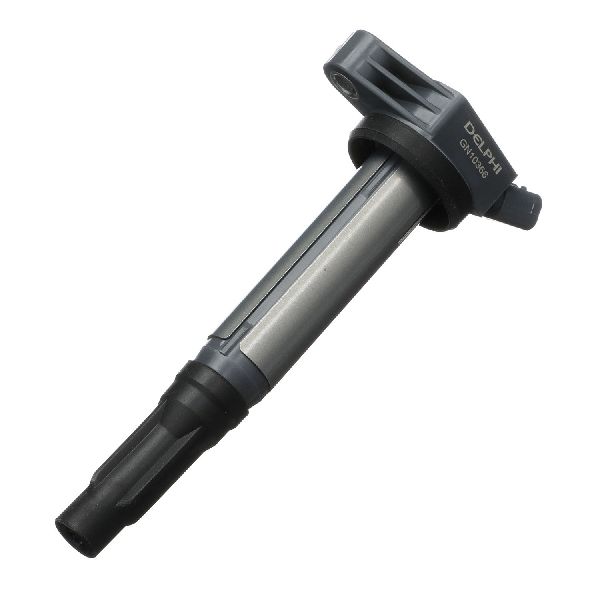
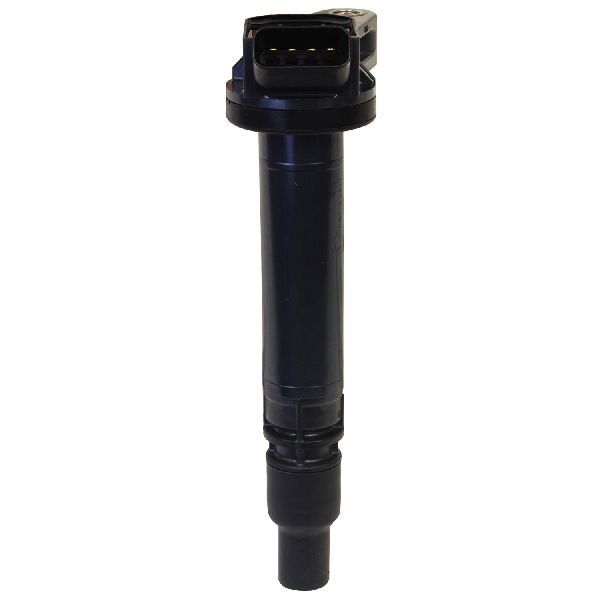
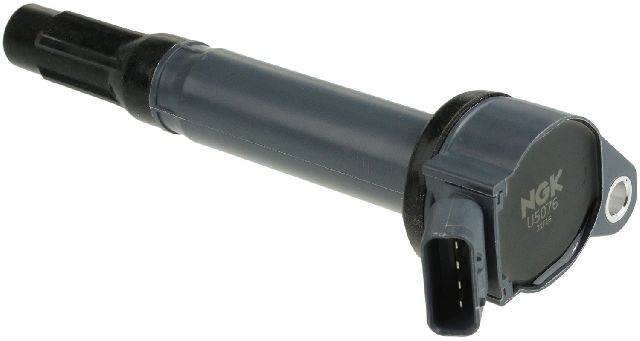
- Ignition Coil (Coil-on-Plug)
(OEM #90919-A2007 (Japan-built VIN starts with 'J') or 90919-02258 (US-built VIN starts with '4' or '5'))— This is the most common point of failure for a P0352 code. Part number depends on the vehicle's manufacturing plant and is critical for correct fitment.
Trusted brands: Denso (673-1310), NGK (48944), Hitachi
OEM price range: $70-$100
Aftermarket price range: $45-$75 - Iridium Spark Plug
(OEM #Denso SK16HR11 or NGK ILKAR7B11)— A worn spark plug can cause this code, and it's good practice to replace it if its age is unknown or if it shows signs of wear during inspection.
Trusted brands: Denso (SK16HR11), NGK (ILKAR7B11)
OEM price range: $15-$25
Aftermarket price range: $10-$18 - Ignition Coil Connector Pigtail
(OEM #90980-11885)— Needed if the original connector's locking tab is broken or the terminals are corroded, causing a poor connection.
Trusted brands: Dorman, Standard Motor Products
OEM price range: $20-$35
Aftermarket price range: $10-$25
Related Codes That Often Appear With This One
- P0302 — P0302 means 'Cylinder 2 Misfire Detected.' Since P0352 indicates a fault in the ignition circuit for cylinder 2, that cylinder will not fire correctly, which directly causes a P0302 misfire code to be logged.
- P0300 — If the issue is intermittent or affects multiple coils, a P0300 'Random/Multiple Cylinder Misfire' code may appear alongside the specific P035x code.
Technical Service Bulletins (TSBs) & Recalls
- T-SB-0041-1
Platform-Specific Known Issues
- source — A thread titled 'P0351, P0352, P0353, P0354, P0300, P0301, P0302, P0303, P0304 Codes' on ToyotaNation details a user's experience with multiple ignition circuit codes on a 2010 Camry. The resolution was replacing all four ignition coils and spark plugs, which is a common repair story for this platform.
- source — A user on r/Toyota with a 2ZR-FE engine (similar ignition system design) described intermittent P0351 and P0352 codes, especially under load. This highlights the potential for coils to fail intermittently before failing completely.
Mechanic-Grade Diagnostic Values
- Ignition Coil Connector - Pin 4 (Power) to Pin 3 (Ground) — expected: 12-14 Volts with ignition ON, engine OFF. Failure: 0V or low voltage indicates a problem with the EFI relay, fuse, or power wiring.
- Ignition Coil Connector - Pin 3 (Ground) to Chassis Ground — expected: 0-1 Ω (continuity). Failure: High resistance (OL) indicates a broken or corroded ground wire.
- IGT (Ignition Trigger) Signal Waveform — expected: Pulsing square wave signal from the ECM when viewed on an oscilloscope during cranking/idle.. Failure: A missing or erratic signal points to a wiring or ECM driver issue.
- IGF (Ignition Confirmation) Signal Waveform — expected: Pulsing square wave signal from the coil back to the ECM, immediately following the IGT signal.. Failure: A missing IGF signal, when an IGT signal is present, is the direct trigger for code P0352 and points to a bad coil or a break in the IGF wire.
Hidden / Shadow Codes Worth Checking
- Mode $06, Test ID $53: This is not a DTC, but a data monitor accessible with a professional scan tool. It provides raw misfire count data for each cylinder during the current and previous driving cycles, allowing a technician to see small or intermittent misfires before they are severe enough to set a P030x code. (see via Professional scan tool or an advanced OBD-II app that supports Mode $06 data display.)
Scan Tool Commands That Help
- Toyota Techstream: Active Test (within Engine and ECT) — While a specific 'Fire Coil' command isn't confirmed, the Active Test menu allows technicians to command various outputs ON or OFF to test their function. A technician could use this to check the integrity of related systems (like fuel pump, VSV) to rule out contributing factors without disassembly.
- Toyota Techstream: All Readiness (within Utility) — After a repair, a technician can use this utility to monitor the status of the onboard diagnostic tests. For P0352, idling the engine for 10 seconds allows the ECM to run the ignition monitor and confirm if the fault is gone or if it returns as 'ABNORMAL'.
Wiring & Ground Locations
- Ignition Coil #2 Connector — On top of the engine, second coil from the passenger side.. This is the primary connection point for testing. Pin 4 is 12V+ Power, Pin 3 is Ground, Pin 2 is the IGT (trigger) signal from the ECM, and Pin 1 is the IGF (confirmation) signal to the ECM.
- ECM Pins A12 and B27 — At the Engine Control Module (ECM), which is typically located in the engine bay.. For advanced diagnosis, a technician can test for continuity from the coil connector to the ECM. Pin 2 (IGT2) at the coil goes to Pin A12 at the ECM. Pin 1 (IGF) at the coil goes to Pin B27 at the ECM. This definitively proves if the wiring harness is intact.
- Engine Harness Bend — The section of the main engine wiring harness that bends near the valve cover.. This is a common point for internal wire fatigue and breakage due to engine vibration and heat cycles. A visual inspection might not be enough; a continuity test while wiggling the harness is often required to find an intermittent open in the IGT or IGF wire.
- Engine Ground Points — Key grounds are located on top of the valve covers, connecting the engine to the chassis frame near the strut towers, and on the side of the cylinder head.. A poor or corroded engine ground can cause a voltage drop across the entire ignition system, leading to weak spark, high resistance, and potentially triggering circuit codes like P0352.
Real Owner Repair Stories
- Commonly reported fix on forums and YouTube (2010-2017 Toyota Camry with 2.5L 2AR-FE, typically over 80,000 miles) — Rough idle, hesitation on acceleration, and a solid or flashing Check Engine Light with code P0352, often accompanied by P0302.
❌ Tried (didn't work) Clearing the code only for it to return immediately or within a short drive., Replacing the spark plug first, without testing the coil.
✅ What actually fixed it Performing the 'swap test' by moving the cylinder #2 coil to cylinder #3. The code then changed to P0353, confirming the coil was the faulty component. Replacing the single bad ignition coil with a new Denso or NGK unit resolved the issue permanently. - Cross-Manufacturer Reference: An owner of a Toyota vehicle with a similar ignition architecture reported an engine coil failure with error code P0352, noting that research indicated this is a common problem with these ignition systems (NHTSA ODI #10393827).
OEM Part Supersession History
90919-02252→90919-02258— Standard part revision and update by the manufacturer.
Heads up: This part is for US-built vehicles (VIN starting with '4' or '5'). It is physically longer and will not fit correctly in a Japan-built vehicle.90919-A2007→90919-A2013— Standard part revision and update by the manufacturer.
Heads up: This part is for Japan-built vehicles (VIN starting with 'J'). It is physically shorter than the US-spec coil.
Model Year Variations Within This Range
- 2010-2017: The ignition coil part number and physical size depend on the vehicle's country of origin. US-built Camrys (VIN starting with '4' or '5') use a longer coil (PN 90919-02258), while Japan-built Camrys (VIN starting with 'J') use a shorter coil (PN 90919-A2007 or its successor). Using the wrong coil will result in improper fitment and sealing in the spark plug tube.
Diagnostic Flowchart
Other Known Issues on This Vehicle
Issues unrelated to this code that are worth knowing about as an owner of this generation:
- VVT Gear Rattle at Cold Startup 🟠 Medium — Common on earlier models (2010-2012). A brief, 1-second rattle immediately after a cold start. (Ref: T-SB-0041-13)
- Torque Converter Shudder/Judder 🟠 Medium — Affects some 2012-2014 models with the U760E automatic transmission. Feels like driving over rumble strips at low speeds (25-50 mph). (Ref: T-SB-0075-12 (Software update for ECM))
- Melting or Sticky Dashboard 🟡 Low — Common on XV40 (up to 2011) and early XV50 (2012-2013) models, especially in hot climates. The dashboard surface becomes shiny, sticky, and soft. (Ref: Toyota Warranty Enhancement Program (ZLD))
- Exhaust Cam Gear Failure 🔴 High — Less common than VVT rattle, but can affect 2009-2011 models. May cause a rattle and set codes like P0015 or P0017. (Ref: T-SB-0012-11)
Used vs. New Parts: Buying Guide for This Vehicle
When a used part is the smart pick: For the ignition coil, a used OEM part from a low-mileage (under 80k miles) wrecked vehicle can be a cost-effective alternative to a new aftermarket part. It is not recommended for spark plugs, which are inexpensive wear items.
Donor-vehicle mileage cap: roughly under 80000 miles for the part to have meaningful remaining life.
What to inspect on the donor part:
- Verify the VIN of the donor car to ensure it's the correct part (Japan vs. US-built).
- Inspect the coil housing for any fine cracks, melting, or signs of arcing.
- Check the electrical connector pins for corrosion or damage.
- Ask for the donor vehicle's mileage; lower is always better.
OEM-only on this vehicle (don't cheap out):
- Engine Control Module (ECM) — Aftermarket or used ECMs often have programming and compatibility issues.
Aftermarket brands forum-validated for this vehicle:
- Denso (often the original OEM supplier)
- NGK
- Hitachi
Brands owners have reported issues with on this vehicle:
- Bosch (forum users report premature failure in Toyota applications)
- No-name or generic 'white box' parts from online marketplaces.
- Store brands like O'Reilly's Import Direct have been reported by some mechanics to have a shorter lifespan in Toyota applications.
Real Owner Stories
Aggregated from forums and TSBs cited above. Mileages and costs reflect what owners reported in those sources.
2010 Toyota Camry 2.5L 2AR-FE
Symptoms: Multiple ignition circuit codes (P0351-P0354) and misfire codes (P0300-P0304).
What fixed it: Replacing all four ignition coils and spark plugs.
Source hint: ToyotaNation Forum Discussion on P035x Codes titled 'P0351, P0352, P0353, P0354, P0300, P0301, P0302, P0303, P0304 Codes'
Toyota Camry with 2ZR-FE engine (similar ignition design)
Symptoms: Intermittent P0351 and P0352 codes, especially occurring when the engine was under load.
What fixed it: Replacing the ignition coils, as they were failing intermittently before total failure.
Source hint: Reddit User Experience with Intermittent P035x Codes on r/Toyota
Toyota Owner Report (NHTSA ODI #10393827)
Symptoms: Engine coil failure resulting in error code P0352.
What fixed it: The owner noted that research indicated this is a common problem with these ignition systems.
Source hint: NHTSA ODI #10393827
Related OBD-II Codes
Frequently Asked Questions
Where is Cylinder #2 located on my 2010-2017 Toyota Camry 2.5L engine?
Is there a specific brand of ignition coil recommended by other Camry owners for the P0352 code?
Could the rattle I hear during a cold start be related to my P0352 code?
What is the part number if I need to replace a broken connector on my Camry's ignition coil?
My traction control light came on at the same time as the Check Engine Light for P0352; is my traction control system failing?
Should I replace my spark plugs when fixing the P0352 code?
Helpful Videos
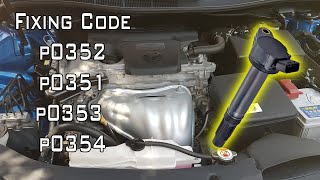
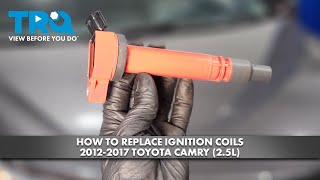

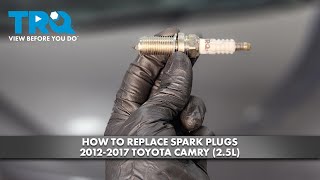
Used OEM Parts in Stock
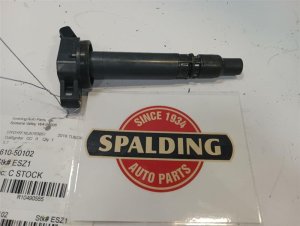


New Aftermarket Parts Available


The information in this article is provided for general reference and educational purposes only. Vehicle specifications, procedures, and part compatibility can vary by production date, trim level, and region. Always consult your vehicle's factory service manual and verify part numbers before purchasing or performing repairs. Safety-critical components such as airbags, seat belts, and braking systems should be installed by a qualified professional.
- Toyota Camry:
- 🎬 Helpful Videos
- 🛍️ Shop This Part
- What's Unique About the 2010-2017 Toyota Camry
- Symptoms You May Notice
- Most Likely Causes
- Rare But Worth Checking
- Diagnosis Steps
- Parts You'll Likely Need
- Related Codes That Often Appear With This One
- Technical Service Bulletins (TSBs) & Recalls
- Platform-Specific Known Issues
- Mechanic-Grade Diagnostic Values
- Hidden / Shadow Codes Worth Checking
- Scan Tool Commands That Help
- Wiring & Ground Locations
- Real Owner Repair Stories
- OEM Part Supersession History
- Model Year Variations Within This Range
- Diagnostic Flowchart
- Other Known Issues on This Vehicle
- Used vs. New Parts: Buying Guide for This Vehicle
- Real Owner Stories
- 2010 Toyota Camry 2.5L 2AR-FE
- Toyota Camry with 2ZR-FE engine (similar ignition design)
- Toyota Owner Report (NHTSA ODI #10393827)
- Related OBD-II Codes
- Frequently Asked Questions
- 🎟️ Get 5% Off