

P0345 on 2011-2013 Kia Sorento 3.3L V6: Camshaft Sensor Circuit Causes and Fixes
This code points to a fault with the Bank 2 intake camshaft position sensor. Most often, the fix is to replace the sensor itself, which is relatively inexpensive and accessible. Expect to pay $20-$110 for the part. However, it's crucial to first check oil levels and not rule out wiring issues.
- P0345 on this Sorento almost always points to a problem with the Bank 2 (front/radiator side) intake camshaft position sensor or its wiring.
- Before buying parts, check your engine oil level and condition, as low or dirty oil can cause various timing issues on this engine.
- A simple and effective diagnostic step is to swap the front intake sensor with the rear intake sensor to see if the code follows the sensor.
- If you hear a rattling noise from the engine on startup, you may have a more serious timing chain issue that requires professional diagnosis.
What's Unique About the 2011-2013 Kia Sorento
The Lambda II 3.3L V6 in the second-generation Sorento is generally a durable engine, but it is known to be sensitive to oil quality and maintenance schedules. While P0345 is most often a simple sensor failure, it's important to not immediately rule out underlying issues. Problems with the oil control valves (OCVs) or, at higher mileage, the timing chain tensioners can also cause various timing-related codes on this engine. A distinct rattling noise from the engine for 2-3 seconds on a cold startup is a classic symptom of a failing timing chain tensioner losing its hydraulic pressure overnight and should be taken seriously.
Symptoms You May Notice
- Check Engine Light is illuminated.
- Engine is difficult to start, cranks for a long time, or fails to start.
- Rough engine idle.
- Engine may stall unexpectedly, especially under load.
- Noticeable loss of power and poor acceleration.
- Decreased fuel economy.
- Engine misfires or hesitates.
- Replacing the Oil Control Valve (OCV) for a circuit code. OCVs are more likely to cause performance or correlation codes (like P0018 or P0022), not a circuit malfunction code like P0345.
- Replacing the timing chain without diagnosing a sensor or wiring issue first. A timing chain is a major repair and is less likely to be the cause of a simple circuit code unless accompanied by startup rattle or correlation codes like P0018.
Most Likely Causes
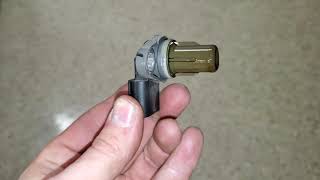
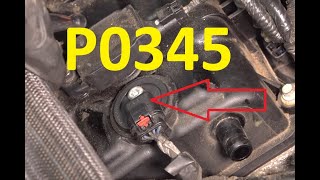
- Failed Bank 2 Intake Camshaft Position Sensor 🔴 High Probability Sensors are exposed to constant heat cycles and engine vibration, which can cause the internal electronics or Hall effect sensor to fail over time. Oil contamination can also block the sensor's reading. This is the most common reason for a P0345 code. 🎬 Watch: A breakdown of P0345 causes and potential fixes.
How to confirm: Swap the Bank 2 intake sensor with the Bank 1 intake sensor (they are the same part). Clear the codes and run the engine. If the code changes to P0340 (Camshaft Position Sensor 'A' Circuit Malfunction Bank 1), the sensor is faulty.
Typical fix: Replace the Bank 2 intake camshaft position sensor. Some vehicles may require a 'relearn' procedure after replacement, though this is less common and often just involves driving the vehicle.
Est. part cost: $20-$110 - Wiring Harness or Connector Fault 🟡 Medium Probability The wiring harness near the engine can become brittle from heat, leading to chafed or broken wires. The connector pins can also corrode or become loose, interrupting the signal. The plastic retaining clip on the connector can also break, leading to a poor connection.
How to confirm: Visually inspect the wiring and connector for any signs of damage, melting, or corrosion. Use a multimeter to test for continuity, proper voltage (power), and ground at the connector pigtail.
Typical fix: Repair the damaged section of wiring or replace the connector pigtail.
Est. part cost: $10-$30 - Low or Dirty Engine Oil ⚪ Low Probability The engine's variable valve timing (CVVT) system is hydraulically operated by engine oil. While low/dirty oil more commonly causes correlation codes (like P0018), it can create general timing system stress that may contribute to sensor circuit faults, especially if oil control valves (OCVs) get clogged. These engines are also known to consume oil between changes, making regular level checks critical.
How to confirm: Check the engine oil level and condition using the dipstick. If the oil is low or appears very dark and sludgy, it needs to be addressed.
Typical fix: Perform an engine oil and filter change using the manufacturer-specified oil type (typically 5W-20 or 5W-30) and a quality OEM filter.
Est. part cost: $40-$80
Rare But Worth Checking
- Stretched Timing Chain or Failed Tensioner: This is a significant mechanical failure and a known issue on the Lambda V6. It typically throws correlation codes like P0018, but it can contribute to sensor codes. A key symptom is a distinct rattling sound from the engine for a few seconds on a cold start, caused by the tensioner losing oil pressure.
- Failing Crankshaft Position Sensor: A faulty crankshaft sensor can provide conflicting data to the PCM, which may be misinterpreted as a camshaft sensor fault. This usually throws other codes as well, such as P0335.
- Failing Alternator: A failing alternator can introduce electrical noise or voltage irregularities into the vehicle's electrical system. This can interfere with sensitive sensor signals, like the camshaft position sensor, potentially triggering a circuit code. Symptoms include dimming lights, a battery warning light, or a whining noise from the engine bay.
- Faulty Powertrain Control Module (PCM): In very rare cases, the internal circuits of the PCM that process the camshaft sensor signal can fail. This should only be considered after all other possibilities, including sensors, wiring, and mechanical timing, have been exhaustively ruled out.
Diagnosis Steps
- Read all stored fault codes with an OBD-II scanner.
- Check the engine oil level and condition. Top off or change if necessary, using an OEM-spec filter.
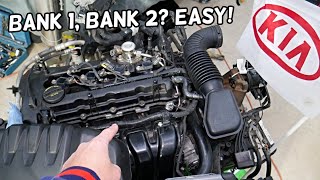
- Locate the Bank 2 (front, by radiator) intake camshaft position sensor. 🎬 See this guide to identifying Bank 1 and Bank 2. It is typically mounted on the valve cover or cylinder head.
- Inspect the sensor's electrical connector and nearby wiring for any signs of damage, melting, corrosion, or oil contamination.
- The most effective DIY diagnostic is to swap the Bank 2 intake sensor with the Bank 1 (rear, by firewall) intake sensor. They are identical parts. Clear the codes and run the engine to see if the fault code changes to P0340. If it does, the sensor you moved is bad and needs replacement.
- If the code does not change after swapping, the problem lies in the wiring or the PCM.
- Using a multimeter and wiring diagram, check for correct voltage (reference, signal, and ground) at the sensor connector. The 3-pin connector should have a power wire (approx. 12V), a ground wire, and a signal wire that pulses between 0V and 5V as the engine is cranked.
- Listen carefully for a 2-3 second rattle on cold startup. 🎬 Watch: Hear what a failing timing chain tensioner sounds like. If present, a timing chain tensioner issue is highly likely and requires professional diagnosis.
- If wiring and sensor are confirmed good, the issue may be a failing alternator, a more complex mechanical problem (timing chain), or a faulty PCM, which may require professional diagnosis.
Parts You'll Likely Need
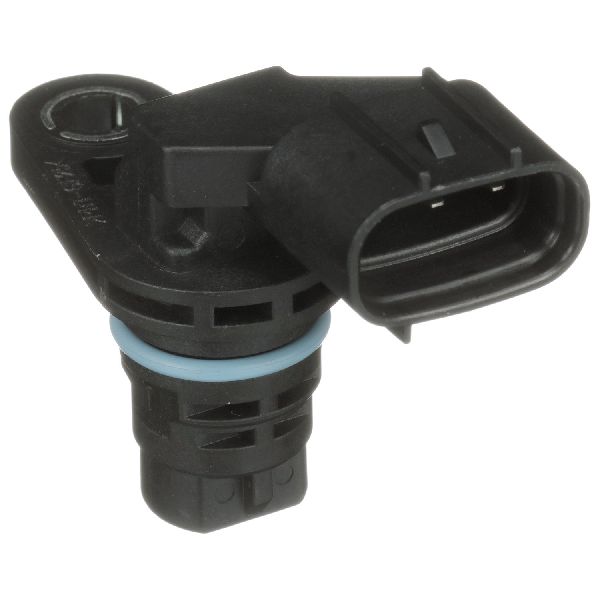
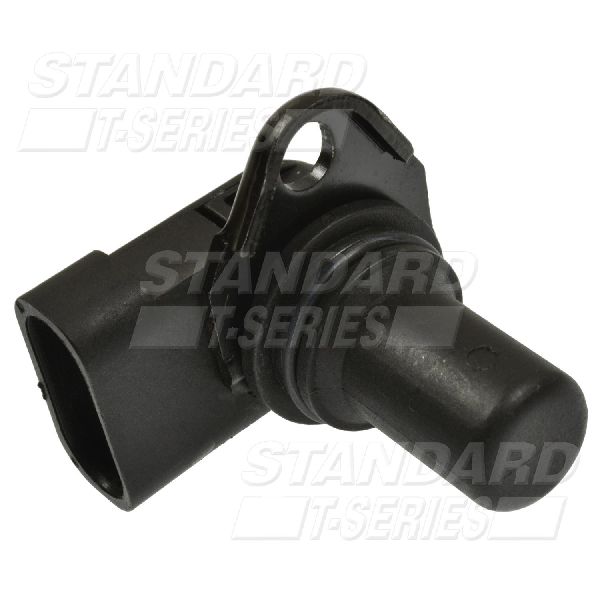
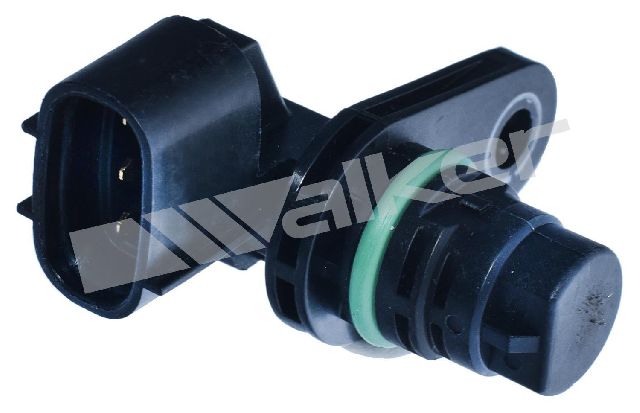
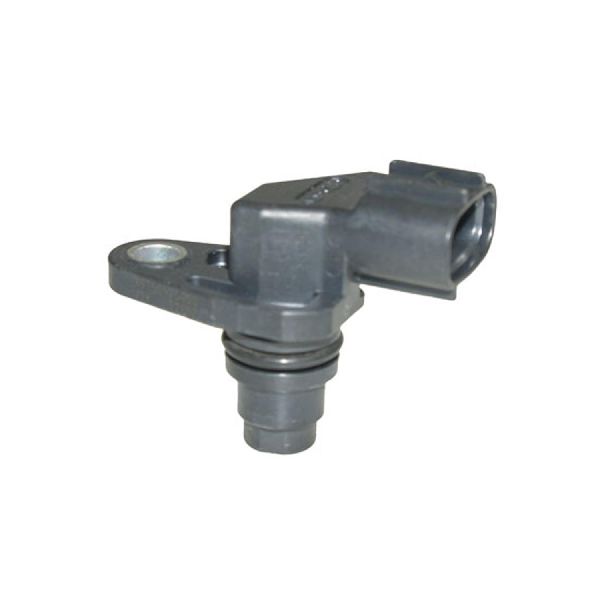
- Camshaft Position Sensor (Bank 2, Intake)
(OEM #39318-3L000)— This is the most common component to fail and directly cause the P0345 code. The Bank 1 and Bank 2 sensors are typically identical.
Trusted brands: Kia / Hyundai (OEM), Hitachi, Delphi, Standard Motor Products (SMP), NGK/NTK
OEM price range: $95-$160
Aftermarket price range: $20-$75
Related Codes That Often Appear With This One
- P0340 — This is the equivalent code for Bank 1 (firewall side). Seeing both may indicate a widespread wiring issue, a problem with the crankshaft sensor, or a failing alternator causing electrical noise.
- P0335 — This is a code for the crankshaft position sensor. If the PCM gets conflicting signals from the crank and cam sensors, it may flag one or both as it cannot determine which is correct.
- P0018 — This is a cam/crank correlation code for Bank 2. If you see P0345 and P0018 together, it strongly points towards a more serious mechanical timing issue, like a stretched chain, failing cam phaser, or a problem with the oil-driven CVVT system.
Technical Service Bulletins (TSBs) & Recalls
- NHTSA Recall SC147 / 17V224000: Addresses potential for premature engine bearing wear due to manufacturing issues, which could lead to engine seizure.
- NHTSA Recall SC124 / 15V710000: Pertains to a faulty brake-shift interlock mechanism that could allow the vehicle to roll away.
Mechanic-Grade Diagnostic Values
- Camshaft Position Sensor Connector Voltage Test (Key On, Engine Off or Cranking) — expected: The 3-pin connector should have: one pin with ~12V (battery voltage), one pin with near 0V (ground), and one signal pin that pulses between ~0V and ~5V when the engine is cranked.. Failure: No voltage on the power wire indicates a fuse or wiring issue. No pulsing on the signal wire (when power and ground are good) indicates a failed sensor.
- Camshaft Position Sensor Circuit Resistance — expected: While no OEM-specific value was found, typical 3-wire Hall effect sensor circuits should have very high resistance to ground on the signal and power lines when disconnected. A generic reference suggests the sensor itself may read between 200-900 ohms, but this is not specific to this Kia part.. Failure: Low resistance (a short) to ground on the signal or power wire indicates a wiring fault. A reading of OL (open circuit) on the ground wire points to a bad ground connection.
Scan Tool Commands That Help
- Kia GDS (Global Diagnostic System): DTC Analysis & Live Data (Data Analysis) — Use to confirm the P0345 code and monitor live data from the cam and crank sensors. While cranking, a technician can observe the signal waveforms from both Bank 1 and Bank 2 sensors to see if the Bank 2 signal is missing, erratic, or out of phase, which confirms the fault is active.
- Kia GDS (Global Diagnostic System): Actuation Test — While not directly for the sensor, the GDS can command the Oil Control Valves (OCVs) to actuate. This can help rule out a CVVT system issue that might be contributing to timing-related codes, although P0345 is primarily a circuit code.
Wiring & Ground Locations
- Bank 2 Intake Camshaft Position Sensor — On the top of the engine, mounted to the valve cover of the cylinder bank closer to the radiator. On the V6, there are four sensors total; the Bank 2 intake sensor is the second one from the front of the engine.. This is the precise location of the component that has the reported circuit malfunction.
- Sensor Connector — A 3-terminal female connector, often black and purple, that plugs directly into the camshaft position sensor.. This connector is a common failure point due to broken clips, corrosion on pins, or wires breaking at the back of the connector from heat and vibration.
- Engine Ground Strap — A primary ground cable runs from the engine block to the vehicle's chassis/frame to complete the electrical circuit for all engine-mounted components.. A loose, corroded, or broken main engine ground strap can cause widespread, intermittent electrical issues and erratic sensor readings, including the P0345 code. Verifying this ground is clean and tight is a crucial step when diagnosing any electrical fault.
OEM Part Supersession History
39318-3L000→N/A— This part number appears to be the consistent and current part for a wide range of model years, including those after the 2011-2013 range.
Model Year Variations Within This Range
- 2011-2013: The primary V6 engine in the 2011-2013 Sorento was the 3.5L Lambda II MPI. The 3.3L GDI V6 became the primary V6 option in the 2014 model year facelift. However, the diagnosis for P0345 on either Lambda II V6 is functionally identical, as the sensor type, location, and function are the same.
Diagnostic Flowchart
Other Known Issues on This Vehicle
Issues unrelated to this code that are worth knowing about as an owner of this generation:
- Timing Chain Tensioner Failure 🔴 High — Common, especially over 60,000 miles. Characterized by a 2-3 second rattle on cold startup. (Ref: No specific recall, but updated parts were issued. Repair is labor-intensive, costing over $1,000.)
- Excessive Oil Consumption 🟠 Medium — Frequently reported by owners, sometimes as high as 1 quart per 1,000 miles. Can be caused by carbon buildup on piston rings. (Ref: No specific recall for the 3.3L V6, though other Kia/Hyundai engines have been subject to class-action lawsuits for this issue.)
- Engine Failure / Bearing Wear 🔴 High — A serious but less common issue where machining errors could cause premature bearing wear, leading to engine seizure. Primarily associated with recall SC147. (Ref: NHTSA Recall SC147 / 17V224000 for potential bearing wear.)
- Alternator Failure 🟠 Medium — Alternators can fail, typically after 7-8 years, causing a variety of electrical issues, stalling, and starting problems.
- Brake-Shift Interlock Failure 🟡 Low — The mechanism can crack, allowing the vehicle to be shifted out of Park without depressing the brake pedal. (Ref: NHTSA Recall SC124 / 15V710000.)
Used vs. New Parts: Buying Guide for This Vehicle
When a used part is the smart pick: For this specific repair, buying a used camshaft position sensor from a junkyard is not recommended. It is a low-cost electronic component prone to failure from heat and vibration. The potential cost savings are minimal compared to the risk of the used part being faulty or having a short remaining lifespan.
Donor-vehicle mileage cap: roughly under 80000 miles for the part to have meaningful remaining life.
What to inspect on the donor part:
- If buying used is unavoidable, choose a part from the lowest-mileage vehicle possible.
- Inspect the plastic connector housing for cracks or brittleness.
- Ensure the mounting tab is intact.
- Avoid sensors that are caked in oil sludge, as this may indicate a history of poor engine maintenance.
OEM-only on this vehicle (don't cheap out):
- For this P0345 repair, no parts are strictly 'OEM-only'. However, using an OEM oil filter is highly recommended during oil changes, as aftermarket filters can sometimes cause oil pressure irregularities that affect the CVVT system.
Aftermarket brands forum-validated for this vehicle:
- Mando (an OE supplier to Kia/Hyundai)
- Hitachi
- Delphi
- NGK/NTK
- Standard Motor Products (SMP)
- Beck Arnley
Brands owners have reported issues with on this vehicle:
- Unbranded, 'white-box' sensors from online marketplaces should be avoided due to inconsistent quality control and high failure rates.
Real Owner Stories
Aggregated from forums and TSBs cited above. Mileages and costs reflect what owners reported in those sources.
2011-2013 Kia Sorento 3.3L V6
Symptoms: The engine produces a 2-3 second rattle specifically during a cold startup.
What fixed it: Replacement of the timing chain tensioners with updated parts.
Source hint: kia-forums.com discussions regarding 3.3L V6 cold start rattle
2014 Kia Sorento 3.3L V6 — ~125000 miles
Symptoms: Classic 2-3 second cold start rattle.
What fixed it: Timing Chain Kit Replacement.
Source hint: reddit.com/r/KiaSorento thread 'Kia Sorento Timing Chain Kit Replacement'
2011-2013 Kia Sorento 3.3L V6
Symptoms: P0018 and P0019 codes present along with timing-related symptoms.
What fixed it: The owner concluded it was a timing chain issue after checking the sensors and finding them functional.
Source hint: kia-forums.com thread regarding P0018 and P0019 codes
Related OBD-II Codes
Frequently Asked Questions
Where is the Bank 2 intake camshaft position sensor located on my 3.3L V6 Sorento?
My Sorento has a 2-3 second rattle when I start it cold; is this related to P0345?
Is there a recall for engine issues that might cause a P0345 on my 2011-2013 Sorento?
Can I test the sensor myself before buying a new one?
How much does it cost to fix the timing chain tensioner if that is the root cause?
Could my Sorento's oil consumption be causing this code?
Helpful Videos

We Have This Part in Stock


The information in this article is provided for general reference and educational purposes only. Vehicle specifications, procedures, and part compatibility can vary by production date, trim level, and region. Always consult your vehicle's factory service manual and verify part numbers before purchasing or performing repairs. Safety-critical components such as airbags, seat belts, and braking systems should be installed by a qualified professional.
- Kia Sorento:
- 🎬 Helpful Videos
- 🛍️ Shop This Part
- What's Unique About the 2011-2013 Kia Sorento
- Symptoms You May Notice
- Most Likely Causes
- Rare But Worth Checking
- Diagnosis Steps
- Parts You'll Likely Need
- Related Codes That Often Appear With This One
- Technical Service Bulletins (TSBs) & Recalls
- Mechanic-Grade Diagnostic Values
- Scan Tool Commands That Help
- Wiring & Ground Locations
- OEM Part Supersession History
- Model Year Variations Within This Range
- Diagnostic Flowchart
- Other Known Issues on This Vehicle
- Used vs. New Parts: Buying Guide for This Vehicle
- Real Owner Stories
- 2011-2013 Kia Sorento 3.3L V6
- 2014 Kia Sorento 3.3L V6 — ~125000 miles
- 2011-2013 Kia Sorento 3.3L V6
- Related OBD-II Codes
- Frequently Asked Questions
- 🎟️ Get 5% Off