

P0344 on 2015-2020 Ford F-150 2.7L EcoBoost: Intermittent Cam Sensor Causes & Fixes
P0344 indicates an intermittent signal from the passenger-side intake camshaft position sensor. The most likely causes are a damaged wiring harness, a failing sensor, or electrical noise from a faulty alternator. Before replacing the sensor, thoroughly inspect the wiring harness for chafing or damage, especially near the sensor connector and where harnesses pass near the steering shaft.
- P0344 specifically refers to an intermittent fault from the intake camshaft position sensor on the passenger side of the engine.
- Due to the 'intermittent' nature of the code, always inspect the wiring harness for damage before replacing the sensor.
- Consider testing the alternator for AC ripple voltage, as electrical noise is a known cause of this code on Ford vehicles.
- The sensor is located on the back of the passenger-side cylinder head and is relatively accessible for a DIY replacement.
- The correct Motorcraft replacement sensor is likely part number DU-102.
What's Unique About the 2015-2020 Ford F-150
The 2.7L EcoBoost engine uses four camshaft position sensors—an intake and an exhaust sensor for each cylinder bank. The P0344 code specifically points to the intake sensor on the passenger side. Because this is an 'intermittent' fault, it's frequently caused by wiring issues rather than a complete sensor failure. Ford has issued Technical Service Bulletins (TSBs) for other models, like TSB #SSM 50245, that link this code to wiring harness problems, specifically chafing on the 14290 harness near the steering shaft or brake pedal mount. This suggests a pattern of susceptibility to wiring faults in tight engine bays across the brand, a crucial check before replacing parts.
Generation note: The 2015-2020 year range covers the thirteenth generation of the Ford F-150. The 2.7L EcoBoost engine received a second generation starting in the 2018 model year, which included the addition of port fuel injection alongside direct injection to combat carbon buildup. However, the causes and diagnostic procedures for a P0344 code remain consistent across this entire year range, as the core sensor systems are the same.
Symptoms You May Notice
- Check Engine Light is on
- Engine hesitates or stumbles during acceleration
- Rough or unstable idle
- Engine is difficult to start or cranks but won't start
- Engine stalls unexpectedly, especially at low speeds
- Reduced engine power and poor acceleration
- Auto Start-Stop feature may be disabled
- Replacing the camshaft position sensor without first inspecting the wiring harness. The intermittent nature of P0344 makes a wiring issue very likely, and many owners replace the sensor only to have the code return.
- Replacing sensors repeatedly without testing the alternator for AC ripple voltage, which can be the true root cause of the signal interference.
- Confusing Bank 1 (passenger side) with Bank 2 (driver side), leading to the replacement of the wrong sensor.
Most Likely Causes
- Damaged Wiring or Loose Connector 🔴 High Probability The 'intermittent' nature of the code strongly points to a connection or wiring fault. Vibration and heat in the engine bay can cause wires to chafe or connectors to become loose. Ford TSBs for other models (SSM 50245 and SSM 50116) specifically call out the '14290 harness' chafing near the steering shaft as a cause for this and other codes, indicating a potential system-wide vulnerability.
How to confirm: Visually inspect the wiring harness leading to the Bank 1 (passenger side) intake camshaft sensor. Check for chafing, melting, corrosion in the connector, or loose pins. Wiggle the harness with the engine running to see if it triggers the symptoms. Pay close attention to any areas where the harness is routed near sharp metal edges or hot components.
Typical fix: Repair the damaged section of the wiring harness or replace the connector pigtail. Ensure the harness is properly secured away from heat sources or sharp edges.
Est. part cost: $15-$50 - Faulty Camshaft Position Sensor 🔴 High Probability The sensor itself is a common failure item due to constant exposure to heat cycles in the engine bay. Internal electronics can fail intermittently before failing completely. Forum users on F150Forum.com have reported fixing P0365 (the exhaust sensor equivalent) by simply replacing the sensor after verifying wiring was okay.
How to confirm: After confirming the wiring is good, the sensor is the next logical part to test. A common DIY method is to swap the intake sensor (Sensor 'A') with the exhaust sensor (Sensor 'B') on the same bank and see if the code changes to P0369 (Camshaft Position Sensor 'B' Circuit Intermittent Bank 1). If the code follows the sensor, the sensor is faulty.
Typical fix: Replace the Bank 1 (passenger side) intake camshaft position sensor.
Est. part cost: $25-$70 - Failing Alternator 🟡 Medium Probability A failing alternator can produce excessive electrical 'noise' (AC ripple) that interferes with the low-voltage signal from the camshaft position sensors. The PCM can misinterpret this noise as an intermittent fault. This is a known issue on many Ford vehicles and can cause multiple erratic sensor codes to appear simultaneously.
How to confirm: With a multimeter set to AC volts, test the battery terminals while the engine is running. A reading of more than 0.5V AC suggests the alternator's diodes are failing and creating electrical noise. Many auto parts stores can also perform an alternator test.
Typical fix: Replace the alternator.
Est. part cost: $250-$500
Rare But Worth Checking
- Weak Battery or Starting System Fault: A low battery or high resistance in the starting circuit can cause a significant voltage drop during cranking, which may be enough to trigger an intermittent sensor code. One owner on F150Forum.com noted their code appeared after the battery was very low.
- Mechanical Timing Issue: While less common for a purely intermittent electrical code, a stretched timing chain or failing phaser could potentially cause the camshaft position to be erratic enough to trigger a fault. This would usually be accompanied by other timing codes (like P0016) and rattling noises, especially on cold starts.
- Powertrain Control Module (PCM) Fault: In rare cases, the fault may lie within the PCM itself, such as a faulty driver circuit or software glitch. This should only be considered after all other possibilities (wiring, sensor, alternator) have been exhaustively ruled out.
Diagnosis Steps
- Scan for Codes: Use an OBD-II scanner to confirm P0344 is present and check for any other related codes. Note any other codes, as they can point to a systemic issue (e.g., codes for other sensors).
- Visual Inspection: Carefully inspect the wiring harness and connector for the Bank 1 (passenger side) intake camshaft position sensor. It's located on the rear of the passenger-side cylinder head. Look for obvious signs of damage, melting, corrosion, or chafing, especially where the harness might rub against the engine or firewall.
- Check for TSBs: Check for any Technical Service Bulletins (TSBs) that may apply to your specific vehicle's VIN for this code. Pay attention to TSBs like SSM 50245 which mention harness chafing.
- Test the Alternator: With the engine running, use a multimeter on its AC voltage setting to measure across the battery terminals. A reading above 0.5V AC indicates a faulty alternator that is creating electrical noise and likely causing the code.
- Test the Sensor (Swap Method): If wiring and alternator are good, test the sensor. You can swap the intake sensor (Sensor 'A', P0344) with the exhaust sensor (Sensor 'B') on the same bank. Clear the codes and drive. If the code changes to P0369 (for Sensor 'B'), the sensor you moved is bad.
- Check for Power and Ground: Using a multimeter and a wiring diagram, verify that the sensor connector has the correct voltage (typically 5V reference), a good ground, and that the signal wire is intact back to the PCM.
- Consider Mechanical Issues: If all electrical tests pass, listen for timing chain rattle on cold starts or other mechanical engine noises that might suggest a timing component issue.
- PCM Diagnosis: As a final step, if all else fails, the PCM may need to be tested by a qualified technician.
Parts You'll Likely Need
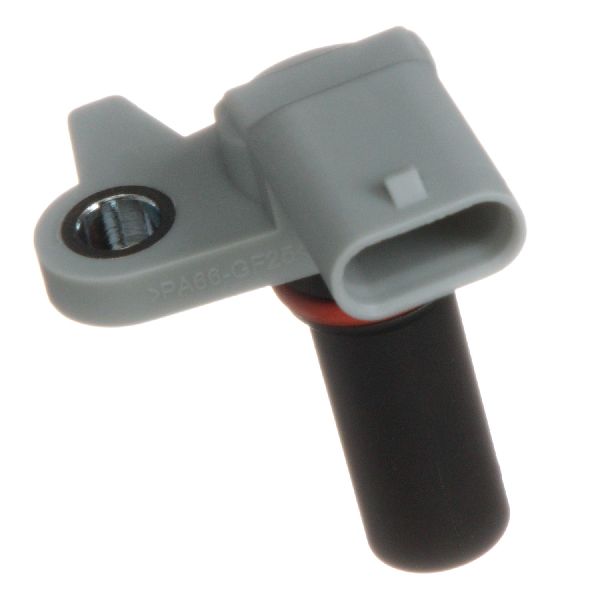
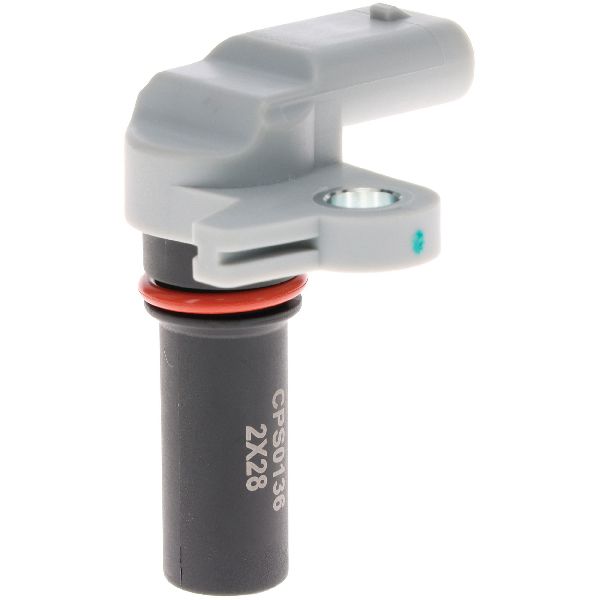
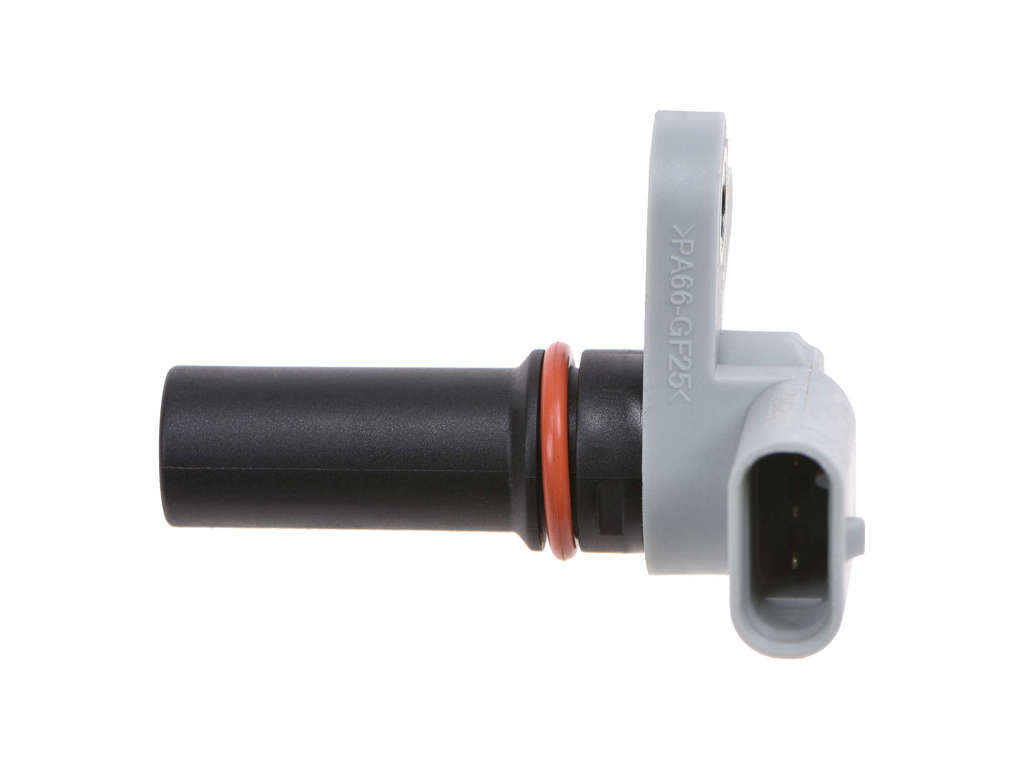
- Camshaft Position Sensor (Bank 1 Intake)
(OEM #DU-102 (also BL3Z6B288C))— This sensor is the primary component identified by the P0344 code and is a common failure point. Bank 1 is the passenger side, and Sensor 'A' is the intake cam.
Trusted brands: Motorcraft, NTK, Bosch, Standard Motor Products
OEM price range: $40-$70
Aftermarket price range: $25-$50 - Camshaft Position Sensor Connector Pigtail
(OEM #WPT-1492 (also HU2Z14S411BA))— If the wiring inspection reveals a damaged or corroded connector, replacing the pigtail is the standard repair.
Trusted brands: Motorcraft, Dorman
OEM price range: $40-$50
Related Codes That Often Appear With This One
- P0340 — P0340 is a general circuit malfunction for the same sensor. P0344 indicates the problem is intermittent, while P0340 may indicate a more constant fault. They often appear together as the PCM tries to classify the failure.
- P0345 / P0349 — These are the equivalent codes for the camshaft position sensor on Bank 2 (driver's side). If seen with P0344, it could point to a systemic issue like a failing alternator or a widespread wiring harness problem affecting both banks.
- P0365 / P0369 — These are codes for the exhaust camshaft position sensor ('B' sensor) on the same bank (Bank 1). Seeing these together could indicate a localized wiring issue affecting both sensors on that bank or a timing problem on that bank.
Technical Service Bulletins (TSBs) & Recalls
- SSM 50245
- SSM 50116
- TSB 23-2232
- TSB 19-2189
- TSB 24-2098
Platform-Specific Known Issues
- While no TSB is specific to the F-150 for this exact issue, Ford TSBs SSM 50245 and SSM 50116 for other models point to a recurring problem with the '14290 harness' chafing near the steering column or brake pedal mount, causing a variety of intermittent electrical codes, including P0344. This is a strong indicator for F-150 owners to inspect this area of the main harness thoroughly.
- A user on F150Forum.com with a 2015 2.7L experienced stalling and codes P0011 and P0016 after discovering the engine was extremely low on oil, highlighting the importance of maintaining correct oil levels to prevent timing-related faults.
- Another forum thread for a 2017 5.0L with P0340/P0344 showed the community immediately pointing towards wiring issues like open/short circuits or damaged shielding as more likely than sensor failure for an intermittent code.
Mechanic-Grade Diagnostic Values
- Camshaft Position Sensor Internal Resistance — expected: 200 - 900 Ohms (General). Failure: A reading outside this range, particularly an open circuit (infinite resistance) or a short (near zero ohms), indicates a faulty sensor.
- Sensor Connector Voltage (Power Pin to Ground) — expected: Approximately 5V with Key On, Engine Off (KOEO).. Failure: No voltage or significantly low voltage points to a wiring issue from the PCM or a problem with the PCM's reference voltage supply.
- Shared Circuit Voltage at Transmission Connector Pin 12 — expected: Approximately 12V with Key On, Engine Off (KOEO).. Failure: Significantly low voltage (e.g., under 1V) indicates a short to ground on the shared circuit. Unplugging sensors one by one should restore voltage when the faulty component is disconnected.
- Alternator AC Ripple Voltage — expected: Less than 0.5V AC at the battery terminals with the engine running.. Failure: A reading above 0.5V AC indicates failing alternator diodes are introducing electrical noise into the system, which can disrupt sensor signals.
Scan Tool Commands That Help
- Ford IDS / FORScan: Key On Engine Off (KOEO) Self-Test — To verify if the PCM can detect circuit faults. For example, if you disconnect a VCT solenoid and run the KOEO test, the PCM should log a corresponding circuit code (e.g., P0010). This confirms the PCM's diagnostic capabilities are working and helps isolate wiring issues.
- High-end OBD-II Scanner: Camshaft Position Sensor Relearn Procedure — Some Ford vehicles may require a relearn procedure after a sensor is replaced to ensure the PCM correctly interprets the new sensor's signal. If the engine runs poorly after a sensor replacement, this function may be necessary.
Wiring & Ground Locations
- Bank 1 Intake CMP Sensor — On the rear of the passenger-side cylinder head, typically the top sensor of the two on that side.. This is the specific sensor ('A' on Bank 1) that the P0344 code refers to.
- 14290 Harness — A section of the engine wiring harness that, on some Ford models, is routed above the steering shaft u-joint or near the upper brake pedal mount.. Ford TSBs #SSM 50245 and #SSM 50116 identify this harness as a common chafe point that can cause P0344 and other intermittent electrical codes.
- Transmission Main Connector, Pin 12 — The large, round twist-lock connector on the main body of the transmission.. This pin provides a shared power source for multiple components, including the camshaft position sensors. It serves as an excellent test point to diagnose if a shorted sensor is pulling down voltage for the entire circuit.
Real Owner Repair Stories
- YouTube channel 'Fix Them Things' (2016 Ford F-150) — Multiple codes including P0340, P0344, P0345, P0349, and several transmission codes (P0706, P0707). The gear selection indicator (P, R, N, D) was not illuminated on the dashboard.
❌ Tried (didn't work) The shop had already replaced the transmission leadframe (conductor plate) based on the transmission codes, which did not fix the problem.
✅ What actually fixed it The root cause was a shorted camshaft position sensor on the passenger side (Bank 1). The sensor was on a shared power circuit with the transmission components. The technician diagnosed it by measuring the voltage at Pin 12 of the transmission connector, which was only 0.15V instead of 12V. They unplugged each cam sensor one by one until the voltage returned to 12V, identifying the shorted sensor as the culprit.
"I Checked Everything" — The Actual Cause
- A common misdiagnosis pattern for P0344 when accompanied by other codes is to treat the problems as separate. A technician might follow the transmission codes (like P0706/P0707) and replace the transmission leadframe, a common fix for those issues in isolation. However, the actual cause can be a shorted engine sensor (like the camshaft sensor) that shares a power circuit with the transmission module, pulling down the voltage for both systems. The fix is not in the transmission but in finding the shorted sensor on the shared circuit.
When the Usual Fixes Don't Work
- While replacing the camshaft position sensor is a common fix, if you see P0344 appear alongside codes for the other bank (P0349) or other sensors simultaneously, the root cause is very unlikely to be multiple failed sensors. A 2016 F-150 owner reported P0344, P0349, and P0369 all at once. In such cases, the problem is almost certainly systemic, pointing to a widespread wiring harness issue or a shared power/ground fault, and replacing individual sensors will not solve the problem.
Model Year Variations Within This Range
- 2018-2020: The 2.7L EcoBoost was updated for the 2018 model year (Gen 2), adding port fuel injection to the existing direct injection system. While this changed the intake manifold and fuel system, the fundamental operation, location, and diagnosis for the camshaft position sensors and code P0344 remain the same as the 2015-2017 models.
Diagnostic Flowchart
Other Known Issues on This Vehicle
Issues unrelated to this code that are worth knowing about as an owner of this generation:
- Leaking Composite Oil Pan 🔴 High — Very common on 2015-2017 models with the original RTV-sealed plastic pan. Can occur at any mileage. Less common on 2018+ models but still possible. (Ref: TSB 23-2083 (supersedes 19-2205) for 2015-2017 models; TSB 19-2189 for 2018-2019 models.)
- Intake Valve Carbon Buildup 🟠 Medium — More prevalent on the first-generation (2015-2017) GDI-only engines. Symptoms like rough idle and power loss may appear after 60,000-70,000 miles. The issue is largely mitigated on 2018+ models due to the addition of port injection.
- Turbocharger Coolant Line Leaks 🟠 Medium — The OEM 'Jiffy-Tite' connectors on the turbo coolant lines are prone to leaking over time. This was a more significant issue on the 3.5L EcoBoost but also affects the 2.7L.
- Water Pump or Thermostat Failure 🟡 Low — Some owners report premature water pump failure, identified by a grinding or knocking noise from the engine bay that can be mistaken for an internal engine problem.
- Faulty Intake Valves (2021-2022 models) 🔴 High — Affects a specific batch of 2021-2022 models. The valves were made from a brittle material and could fracture, causing catastrophic engine failure. (Ref: Recall 22V470 (NHTSA) / Ford Recall 22S42)
Used vs. New Parts: Buying Guide for This Vehicle
When a used part is the smart pick: A used part is a reasonable choice for a connector pigtail or a larger section of the engine wiring harness, provided it comes from a low-mileage vehicle that was not involved in a front-end collision.
Donor-vehicle mileage cap: roughly under 80000 miles for the part to have meaningful remaining life.
What to inspect on the donor part:
- Check for flexible, not brittle, plastic on connectors.
- Inspect pins for any green or white corrosion.
- Ensure there are no signs of previous repairs, like electrical tape splices or non-factory wire colors.
- Verify the locking tabs on connectors are intact and functional.
OEM-only on this vehicle (don't cheap out):
- Powertrain Control Module (PCM)
- Camshaft Position Sensors (Recommended)
Aftermarket brands forum-validated for this vehicle:
- Motorcraft (OEM)
- NTK
- Bosch
- Standard Motor Products (SMP)
Brands owners have reported issues with on this vehicle:
- Unknown, no-name brands from online marketplaces should be avoided, as sensor accuracy is critical for engine timing.
Real Owner Stories
Aggregated from forums and TSBs cited above. Mileages and costs reflect what owners reported in those sources.
2015 Ford F-150 2.7L EcoBoost
Symptoms: Engine stalled and experienced a rough idle; codes P0011 and P0016 were present.
What fixed it: Discovered the engine was extremely low on oil; maintaining correct oil levels is required to prevent these timing-related faults.
Source hint: F150Forum.com thread '2015 2.7 stall rough idle cam codes'
2017 Ford F-150 5.0L
Symptoms: Intermittent P0340 and P0344 codes.
What fixed it: Inspection of wiring for open/short circuits or damaged shielding, as the community noted wiring issues are more likely than sensor failure for intermittent codes.
Source hint: F150Forum.com thread '2017 f150 5.0 code p0340 p0344'
2019 Ford Edge ST 2.7L EcoBoost
Symptoms: P0344 code with symptoms leading to sensor and wiring checks.
What fixed it: Sensor replacement or wiring repairs as reported by owners of the same 'Nano' engine family.
Source hint: FordEdgeForum.com topic '2015 edge sport code p0344'
Related OBD-II Codes
Frequently Asked Questions
Does SSM 50245 or SSM 50116 apply to my F-150's P0344 code?
Can I test if the Bank 1 intake sensor is bad without buying a new part?
Why would my alternator cause a camshaft sensor code like P0344?
Is there a specific harness I should check for chafing on my 2.7L EcoBoost?
Could low oil levels be related to the stalling and cam codes I'm seeing?
Will a P0344 code affect my F-150's Auto Start-Stop system?
Used OEM Parts in Stock
New Aftermarket Parts Available


The information in this article is provided for general reference and educational purposes only. Vehicle specifications, procedures, and part compatibility can vary by production date, trim level, and region. Always consult your vehicle's factory service manual and verify part numbers before purchasing or performing repairs. Safety-critical components such as airbags, seat belts, and braking systems should be installed by a qualified professional.
- Ford F-150:
- 🛍️ Shop This Part
- What's Unique About the 2015-2020 Ford F-150
- Symptoms You May Notice
- Most Likely Causes
- Rare But Worth Checking
- Diagnosis Steps
- Parts You'll Likely Need
- Related Codes That Often Appear With This One
- Technical Service Bulletins (TSBs) & Recalls
- Platform-Specific Known Issues
- Mechanic-Grade Diagnostic Values
- Scan Tool Commands That Help
- Wiring & Ground Locations
- Real Owner Repair Stories
- "I Checked Everything" — The Actual Cause
- When the Usual Fixes Don't Work
- Model Year Variations Within This Range
- Diagnostic Flowchart
- Other Known Issues on This Vehicle
- Used vs. New Parts: Buying Guide for This Vehicle
- Real Owner Stories
- 2015 Ford F-150 2.7L EcoBoost
- 2017 Ford F-150 5.0L
- 2019 Ford Edge ST 2.7L EcoBoost
- Related OBD-II Codes
- Frequently Asked Questions
- 🎟️ Get 5% Off