

P0341 on 2003-2011 Honda Element: Timing Chain, VTC Actuator Causes & Fixes
On a Honda Element with the K24A engine, P0341 is almost always caused by a stretched timing chain or a faulty VTC actuator, not the camshaft sensor itself. A tell-tale sign is a 2-second rattle on cold starts. Expect a significant repair cost, often over $1,000 at a shop, due to the labor involved in replacing the timing chain and related components.
- Do not replace the camshaft position sensor first. P0341 on the Honda Element almost always indicates a mechanical timing problem.
- Listen for a rattling noise from the engine on cold starts. This is a strong sign of a stretched timing chain.
- As a first, easy step, check the engine oil level and consider cleaning or replacing the VTC oil control solenoid.
- The correct, long-term fix is typically a full timing chain service, which is a complex and expensive job best left to a professional.
- After the repair, ensure a 'CKP Pattern Learn Procedure' is performed to prevent the code from returning.
What's Unique About the 2003-2011 Honda Element

The Honda K24A engine is a robust and reliable powerplant, but it is known for specific issues that directly lead to code P0341. Over many miles, the timing chain can stretch, and the Variable Timing Control (VTC) actuator on the intake cam can wear out or its internal locking pin can fail. Because the VTC system is hydraulically operated by engine oil, low or dirty oil can clog internal passages and accelerate this wear, leading to the phase deviation detected by the PCM. Therefore, unlike on some other vehicles where a P0341 might point to a simple sensor swap, on the Element, it's a strong indicator of a deeper mechanical issue 🎬 Watch: A professional diagnostic and repair guide for code P0341. within the timing system.
Symptoms You May Notice
- Check Engine Light is on
- Vehicle Stability Assist (VSA) light may also illuminate, as the engine's instability can be flagged by the VSA system.
- Engine is difficult to start or cranks for a long time before starting.
- Engine stalls unexpectedly, especially at idle or when coming to a stop.
- Rough or unstable idle.
- Audible rattling or slapping noise from the passenger side of the engine for about 2 seconds during a cold start. This is the classic sign of a failing VTC actuator or a loose timing chain.
- Noticeable loss of engine power and sluggish acceleration.
- Reduced fuel economy.
- Replacing the camshaft position sensor. This is the most common mistake. The code P0341 indicates a timing *phase* problem, which is mechanical, not a sensor circuit failure. Forum and YouTube comments are filled with stories of owners who replaced the sensor with no success before tackling the actual mechanical issue.
Most Likely Causes


- Stretched Timing Chain 🔴 High Probability The timing chain on the K24A engine is a known wear item. Over 100,000-150,000 miles, it can stretch beyond the tensioner's ability to compensate, causing cam/crank phase deviation. This is a very common failure reported across many forums for K24-powered vehicles. NHTSA ODI #11156997 describes a case where the timing chain started making noise at 80,000 miles, followed by the illumination of the check engine light with code P0341 on start-up.
How to confirm: Listen for a distinct rattling noise from the passenger side of the engine on cold starts. A mechanic can also remove the valve cover to inspect timing marks and visually check for excessive chain slack between the cam gears.
Typical fix: Replace the timing chain, timing chain tensioner, and all related guides and arms. This is a labor-intensive job.
Est. part cost: $150-$300 for a full kit - Faulty Variable Timing Control (VTC) Actuator 🔴 High Probability The VTC actuator (cam phaser) on the intake camshaft can become worn, clogged with sludge, or the internal lock pin can fail, causing it to rattle on startup. This prevents it from advancing or retarding the cam timing correctly, directly causing the P0341 code. Honda issued TSB 09-010 for this exact issue on related models. NHTSA ODI #10731833 notes a P0341 code occurring in combination with a loud rattle for a few seconds coming from the engine.
How to confirm: The most definitive symptom is a loud, 2-second rattle on a cold start. A mechanic can also use a high-level scan tool to command the VTC system while observing engine data or perform a physical inspection.
Typical fix: Replace the VTC actuator. 🎬 See this step-by-step walkthrough for replacing the VTC actuator. It is highly recommended to do this at the same time as a timing chain replacement to avoid duplicate labor costs.
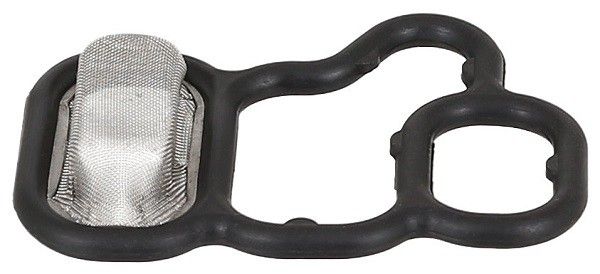
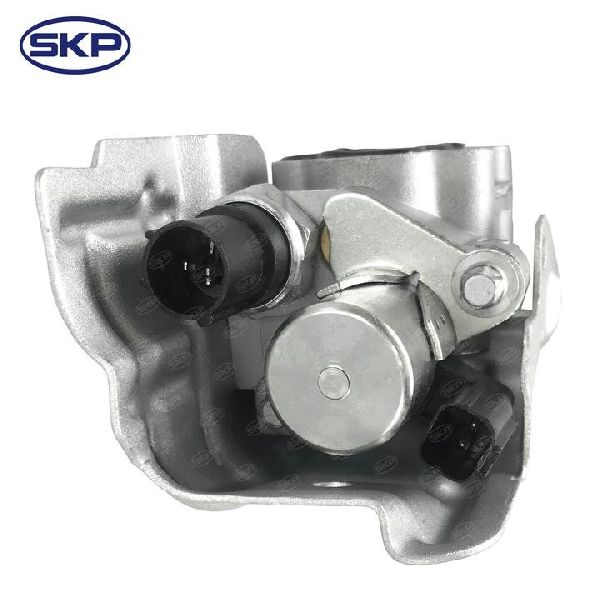
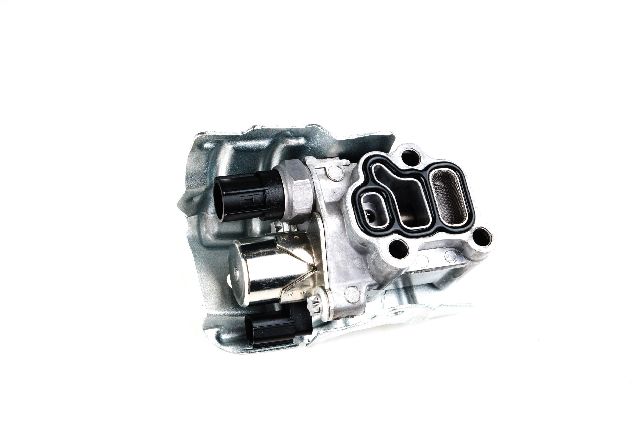
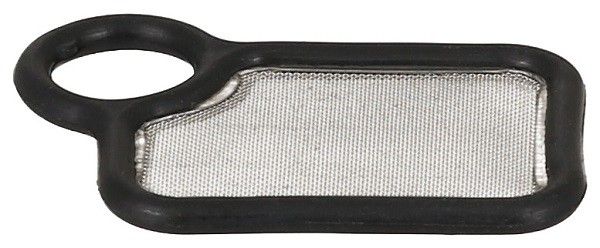
Est. part cost: $100-$250 - Malfunctioning VTC Oil Control Solenoid 🟡 Medium Probability This solenoid controls oil flow to the VTC actuator. Its internal filter screen can become clogged with oil sludge or metallic debris, starving the actuator of oil pressure. This is often a result of delayed oil changes.
How to confirm: Remove the solenoid (a single 10mm bolt on the side of the cylinder head) and inspect its screen for debris. The solenoid can also be tested by applying 12V to see if it actuates. A clogged screen is a very common finding.
Typical fix: Clean the solenoid screen thoroughly. If cleaning doesn't work or the solenoid is electrically faulty, it must be replaced.
Est. part cost: $50-$120 - Failed Timing Chain Tensioner ⚪ Low Probability The hydraulic tensioner can fail, lose hydraulic pressure, or its ratchet mechanism can wear out, failing to keep the chain properly tensioned and leading to slack.
How to confirm: This is typically inspected during a timing chain service. A failing tensioner contributes to the rattling noise and visible chain slack.
Typical fix: Replace the timing chain tensioner. It is always replaced as part of a complete timing chain service.
Est. part cost: $40-$80
Rare But Worth Checking
- Low or Dirty Engine Oil: The entire VTC system relies on clean oil at the correct pressure. While not a broken part, poor oil quality or low levels can cause the same symptoms and codes as a failed component. Always check the oil level and condition first, as this can be a simple fix or indicate a larger problem like oil consumption.
- Faulty Camshaft Position (CMP) Sensor: While the code name points to this sensor, it is rarely the actual cause on this engine. It's only worth considering after all mechanical timing components and the VTC system have been verified as good. Many owners mistakenly replace the sensor first, only to have the code return.
- Faulty ECM/Software Issues: In some instances, the issue may be electronic rather than mechanical. NHTSA ODI #10226399 reports a case where a P0341 failure was attributed to a faulty ECM, which required a dealer update to resolve.
Diagnosis Steps

- Check Engine Oil Level and Condition: Ensure the oil is full and clean. Low or sludgy oil can cause the VTC system to malfunction. This is the easiest and most important first step.
- Scan for Other Codes: Check for other codes like P1009 or misfire codes to help pinpoint the issue. NHTSA ODI #10915238 describes an intermittent check engine light with both P1009 and P0341 codes, which led to the car stalling while stationary and in motion.
- Listen for Engine Noise: Start the engine when it's cold (after sitting for at least 6 hours). A distinct rattling or chain-slapping sound from the passenger side of the engine for about 2 seconds is a classic sign of a failing VTC actuator or stretched timing chain.
- Inspect the VTC Oil Control Solenoid: Remove the solenoid (located on the front of the cylinder head). Check the filter screens for sludge or metallic debris. Clean or replace as necessary. This is a common, low-cost diagnostic step.
- Professional Inspection: If the simple checks don't resolve the issue, a mechanic will need to remove the valve cover to inspect the timing chain for excessive slack and verify the timing marks are aligned.
- VTC Actuator and Timing Chain Service: Based on the inspection, the likely repair will be the replacement of the timing chain, guides, tensioner, and the VTC actuator.
- Perform CKP Pattern Relearn: After replacing timing components, a 'CKP Pattern Learn Procedure' must be performed with a Honda-compatible scan tool (like HDS, Foxwell, or Autel) to sync the new components with the ECU. 🎬 Watch: How to perform the crank sensor relearn procedure. Failure to do this may cause the code to persist even after the repair.
Parts You'll Likely Need
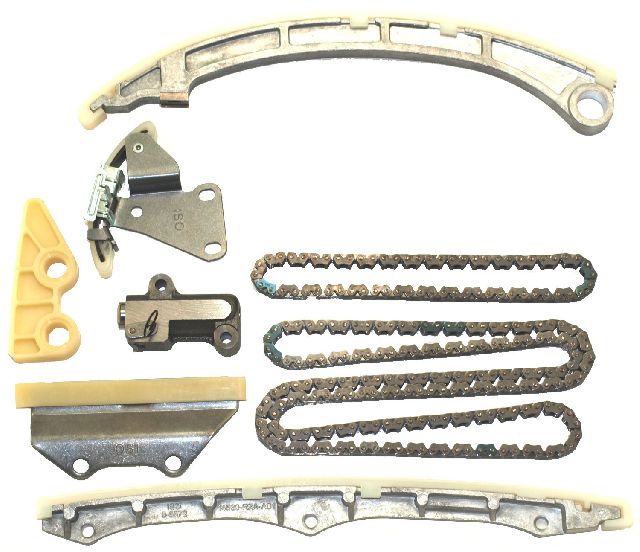
- Timing Chain Kit
(OEM #14401-R40-A01 (Chain only, supersedes 14401-PPA-004))— This is the most common root cause. A full kit should be purchased, including the chain, tensioner, arms, and guides. The 14401-R40-A01 is the updated, more durable OEM chain.
Trusted brands: Honda (OEM), Aisin, Cloyes
OEM price range: $250-$350
Aftermarket price range: $150-$250 - VTC Actuator (Cam Phaser)
(OEM #14310-RAA-A01)— Often fails along with or causes the timing issue. It's highly recommended to replace it during a timing chain job to avoid future failure and duplicate labor. Using an OEM part is strongly advised as aftermarket versions are known to fail prematurely.
Trusted brands: Honda (OEM), Hitachi
OEM price range: $150-$250
Aftermarket price range: $80-$150 - VTC Oil Control Solenoid
(OEM #15810-RAA-A03)— Can get clogged or fail, preventing proper VTC operation. It's a relatively easy part to replace or clean as a first diagnostic step.
Trusted brands: Honda (OEM), Denso
OEM price range: $80-$150
Aftermarket price range: $40-$90
Related Codes That Often Appear With This One
- P1009 — This is a Honda-specific code for 'VTC System Malfunction'. It often appears with P0341 because a faulty VTC actuator or clogged solenoid is a primary cause of the incorrect cam/crank phase.
- P0300, P0301, P0302, P0303, P0304 — These are codes for random or specific cylinder misfires. Incorrect camshaft timing disrupts the engine's air/fuel mixture and combustion cycle, leading to misfires.
Technical Service Bulletins (TSBs) & Recalls
- Honda TSB 09-010: This crucial TSB, updated several times, addresses a loud rattle from the engine for about 2 seconds at a cold start-up. It identifies the cause as a defective VTC actuator and provides a specific procedure for replacement. While the Element is not explicitly listed, the TSB covers the same K24 engine in the CR-V and Accord and describes a primary cause of P0341.
Platform-Specific Known Issues
- The K24A engine is widely known in the Honda community for timing chain stretch after 100,000 miles, making P0341 a common high-mileage code. The cold start rattle associated with the VTC actuator is so prevalent that Honda issued TSB 09-010 to address it on sibling models like the CR-V and Accord. Owners on forums like elementownersclub.com frequently advise new buyers to listen specifically for this startup rattle as a sign of an expensive upcoming repair.
Mechanic-Grade Diagnostic Values
- VTC Oil Control Solenoid Resistance — expected: 12 - 25 Ohms. Failure: A reading of infinite resistance (OL) indicates an open coil, while a reading significantly outside the expected range suggests a faulty solenoid.
- VTEC Oil Pressure Switch Resistance — expected: Less than 1.0 Ohm (normally closed switch). Failure: Any reading significantly above zero (e.g., 8 Ohms) can be misinterpreted by the ECU and cause issues, even on a new part.
- Camshaft Position (CMP) Sensor Signal Voltage — expected: Pulsing square wave, typically switching between 0V and 5V.. Failure: No signal, a flat line voltage, or an erratic/inconsistent pattern when viewing on an oscilloscope.
Hidden / Shadow Codes Worth Checking
- OBD STATUS for P0341: While not a hidden code number, the Honda Diagnostic System (HDS) provides a more detailed status for each DTC beyond a simple 'present' or 'not present'. It will show 'PASSED', 'FAILED', or 'NOT COMPLETED' for the diagnostic test associated with the code. Seeing a 'NOT COMPLETED' status can help a technician understand if the required driving conditions to validate the repair have been met. (see via Honda Diagnostic System (HDS) or equivalent high-end scan tool.)
Scan Tool Commands That Help
- Honda HDS, Autel, Foxwell, etc.: CKP Pattern Learn / Crank Pattern Relearn — This is mandatory after replacing the timing chain, VTC actuator, or crankshaft sensor. It forces the ECU to learn the new rotational pattern of the timing components. Failure to perform this step is a common reason for the P0341 code to return immediately after a mechanical repair.
- Honda HDS, XTOOL, etc.: VTC System Test / Actuation Test — This bidirectional command manually activates the VTC solenoid. A technician can observe live data for VTC angle to see if the camshaft physically moves as commanded. If the solenoid clicks but the cam angle doesn't change, it points to a mechanical problem like a stuck VTC actuator or oil pressure issue.
- Honda HDS: CKP Pattern Clear — This function specifically clears the learned crankshaft pattern from the ECU's memory. It should be used before performing the 'CKP Pattern Learn' procedure to ensure the old, incorrect data is fully erased.
Wiring & Ground Locations

- G101 — On the left rear of the engine, typically on the thermostat housing or the intake manifold support.. This is a primary ground point for the Engine Control Module (ECM) and its sensors, including the Camshaft Position Sensor. A poor connection here due to corrosion or looseness can cause erratic sensor readings and trigger a P0341 code, mimicking a sensor or component failure.
- CMP Sensor Connector — On the front of the cylinder head, near the VTC oil control solenoid.. The three pins on the CMP sensor can be tested here for power (approx. 12V), ground (near 0V), and the signal wire (pulsing 0-5V square wave). Testing at the connector helps isolate a wiring problem from a sensor problem.
Real Owner Repair Stories
- Reddit user on r/Kseries (2011 Honda Accord (K24 engine)) — P0341 and traction control light appeared immediately after replacing a noisy VTC actuator and a damaged timing chain tensioner.
❌ Tried (didn't work) Replacing the VTC actuator and tensioner.
✅ What actually fixed it The community consensus and solution was to perform a 'crank position relearn' using a Honda-compatible scan tool (a Foxwell NT530 was mentioned). The code indicates the cam and crank sensors aren't matching up, which requires a software relearn after mechanical parts are changed. - Honda-Tech forum user (Honda Accord (4-cylinder K-series)) — P0341 code returned 3 months and 3,000 miles after a full timing chain replacement.
❌ Tried (didn't work) Complete timing chain kit replacement.
✅ What actually fixed it Upon removing the valve cover, the owner found the timing had jumped by one tooth on both cam gears. The issue was unresolved in the thread, but the clear diagnosis was a mechanical failure of the new parts or improper installation (likely a faulty tensioner) that allowed the chain to skip, causing the P0341 to return. - Reddit user on r/HondaElement (2005 Honda Element) — Intermittent limp mode and VTEC-related codes.
❌ Tried (didn't work) Replacing VTEC assembly with an aftermarket part from Amazon., Changing oil and running engine cleaner., Replacing VTC solenoid and screen., Replacing the VTEC solenoid connector.
✅ What actually fixed it The owner discovered the VTEC oil pressure switch should be normally closed (near 0 ohms). The brand new aftermarket switch measured 8 ohms. This slight resistance was enough to confuse the computer. Replacing it with another new switch that tested at 0.2 ohms permanently fixed the problem. The key takeaway was 'New doesn't always mean good,' especially with aftermarket electronic parts. - NHTSA Report Case — An owner reported in NHTSA ODI #11360522 that the check engine and vehicle stability assist lights came on while the car was stationary. After scanning code P0341, the camshaft position sensor was replaced, which initially cleared the lights and the code.
OEM Part Supersession History
14401-PPA-004→14401-R40-A01— The original 176-link chain was prone to stretching over time. The 14401-R40-A01 is an updated, more durable design to mitigate premature wear.14310-RAA-A01 (VTC Actuator)→N/A— N/A
Heads up: Extreme caution is advised when using aftermarket VTC actuators. Numerous owner and mechanic reports indicate a very high rate of premature failure, with some failing immediately or within a few thousand miles. Using an OEM Honda or OEM-supplier (Hitachi) part is strongly recommended for this specific component to avoid repeat repairs.
Model Year Variations Within This Range
- 2003-2006: These models use the K24A4 engine, producing approximately 160 hp. They utilize a traditional throttle cable.
- 2007-2011: These models use the K24A8 engine, producing approximately 166 hp due to slightly more aggressive cams. They feature a Drive-By-Wire (DBW) electronic throttle. Despite these changes, the fundamental timing system architecture (chain, guides, tensioner, VTC actuator) and the causes of P0341 remain the same across both engine versions.
Diagnostic Flowchart
Real Owner Stories
Aggregated from forums and TSBs cited above. Mileages and costs reflect what owners reported in those sources.
2010 Honda Accord (K24 engine)
Symptoms: Experienced a P0341 code alongside a P1009 code.
What fixed it: Community diagnosed it as a mechanical VTC system and timing chain issue, advising the owner to replace the timing components rather than just swapping the camshaft sensor.
Source hint: Reddit r/MechanicAdvice: HONDA CODE P0341
2012 Acura TSX — 69000 miles
Symptoms: Triggered a P0341 code at 69k miles.
What fixed it: The dealer diagnosed a stretched timing chain and replaced it under the powertrain warranty.
Source hint: AcuraZine: P0341 Cam position, timing chain replacement
Honda CR-V
Symptoms: Dreaded P0341 code accompanied by sluggish acceleration and hard starting.
What fixed it: Identified the VTC solenoid filter screen as the culprit; replacing the gasket/cleaning the screen served as a cheap fix.
Source hint: Reddit r/crv: Dreaded P0341 $11 warning
Honda Element
Symptoms: Needed to clear a persistent code after completing a major engine overhaul and timing component replacement.
What fixed it: Performed the required CKP Pattern Learn Procedure using a scan tool to sync the new timing components with the ECU.
Source hint: Honda-Tech: CKP Pattern Clear/CKP Pattern Learn Procedure Help
Related OBD-II Codes
Frequently Asked Questions
Does Honda TSB 09-010 apply to my 2003-2011 Honda Element?
Why did my VSA (Vehicle Stability Assist) light come on at the same time as the P0341 code?
I have a P0341 code and a loud rattle on cold starts. What is the most likely cause on the K24A engine?
Can I just replace the camshaft position sensor to fix P0341 on my Element?
Do I need a special scan tool after replacing the timing chain on my Element?
What is the cheapest fix to try first for P0341 on the 2.4L K24A?
Helpful Videos
We Have This Part in Stock


The information in this article is provided for general reference and educational purposes only. Vehicle specifications, procedures, and part compatibility can vary by production date, trim level, and region. Always consult your vehicle's factory service manual and verify part numbers before purchasing or performing repairs. Safety-critical components such as airbags, seat belts, and braking systems should be installed by a qualified professional.
- Honda Element:
- 🎬 Helpful Videos
- 🛍️ Shop This Part
- What's Unique About the 2003-2011 Honda Element
- Symptoms You May Notice
- Most Likely Causes
- Rare But Worth Checking
- Diagnosis Steps
- Parts You'll Likely Need
- Related Codes That Often Appear With This One
- Technical Service Bulletins (TSBs) & Recalls
- Platform-Specific Known Issues
- Mechanic-Grade Diagnostic Values
- Hidden / Shadow Codes Worth Checking
- Scan Tool Commands That Help
- Wiring & Ground Locations
- Real Owner Repair Stories
- OEM Part Supersession History
- Model Year Variations Within This Range
- Diagnostic Flowchart
- Real Owner Stories
- 2010 Honda Accord (K24 engine)
- 2012 Acura TSX — 69000 miles
- Honda CR-V
- Honda Element
- Related OBD-II Codes
- Frequently Asked Questions
- 🎟️ Get 5% Off