

P0341 on 2012-2016 Honda CR-V 2.4L: Causes for Camshaft Position Sensor Performance Code
On a 2012-2016 Honda CR-V, code P0341 is almost always caused by a mechanical issue, not a bad sensor. The most likely culprits are a faulty VTC actuator (listen for a rattle on startup) or a stretched timing chain. Expect repair costs of $500-$2100 depending on the specific failure and if both components are replaced.
- Do not immediately replace the camshaft position sensor. P0341 on this CR-V is a strong indicator of a mechanical problem.
- Listen for a brief, loud rattle when starting the engine cold. This noise is a classic sign of a failing VTC actuator.
- Always check your engine oil level and condition first. Low or dirty oil can cause the VTC system to malfunction.
- The repair for the most common causes (VTC actuator or timing chain) is complex and best left to a professional unless you have significant experience with engine work.
- This issue affects both the 2012-2014 models and the updated 2015-2016 'Earth Dreams' models.
What's Unique About the 2012-2016 Honda CR-V

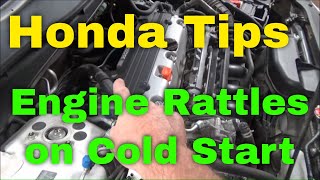
The 2.4L K-series engine in this CR-V generation is known for two primary issues that directly cause the P0341 code: a faulty Variable Timing Control (VTC) actuator and a stretched timing chain. The VTC actuator failure is so common that it's often accompanied by a distinct, loud rattle for a few seconds on a cold startup. 🎬 Watch: Hear what the classic VTC actuator rattle sounds like. This issue was widespread enough to lead to a class-action lawsuit against Honda. Many owners and even some shops mistakenly replace the camshaft sensor first, only to find the problem persists because the root cause is mechanical.
Generation note: The 2012-2016 CR-V is the 4th generation, but it had a major update. 2012-2014 models use the K24Z7 engine. 2015-2016 models use the newer K24W9 'Earth Dreams' direct-injection engine and a CVT. Both engines are known to suffer from VTC actuator and timing chain issues leading to P0341. The VTC actuator issue is particularly well-documented on the 2012-2014 models.
Symptoms You May Notice

- Check Engine Light is on
- Vehicle Stability Assist (VSA), power steering, and/or TPMS warning lights may also illuminate
- Loud rattling or grinding noise from the engine for 2-3 seconds on cold startup
- Engine hesitates or has a lack of power
- Engine enters 'limp mode', preventing revs above 3500-4000 RPM
- Rough idle
- Difficulty starting the engine, or extended cranking time
- Reduced fuel efficiency
- Replacing the camshaft position sensor without first investigating a stretched timing chain or faulty VTC actuator. The sensor is usually reporting the mechanical fault correctly.
- Assuming the absence of a startup rattle means the VTC actuator is good. While a strong indicator, it can fail without the classic sound.
Most Likely Causes

- Faulty Variable Valve Timing Control (VTC) Actuator 🔴 High Probability This is a well-documented weak point on Honda's K-series engines. The internal locking pin can wear, causing it to fail to hold the camshaft at the base timing position on startup. Honda has issued multiple Technical Service Bulletins (TSBs) and faced a class-action lawsuit over this part.
How to confirm: Listen for a distinct, loud rattle from the passenger side of the engine that lasts for about 2 seconds immediately after a cold start (after the vehicle has sat for 6+ hours). TSB 16-012 notes this may be intermittent and more likely to occur when the outside temperature is below 40° F, though many owners report it happening in all temperatures. The presence of this rattle strongly suggests a faulty VTC actuator.
Typical fix: Replace the VTC actuator. Honda released a revised part (14310-R5A-305) to supersede the original problematic one (14310-R44-A01). It is highly recommended to use the revised OEM part. The repair takes about 2-3 hours according to the TSB.
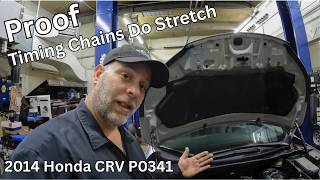
Est. part cost: $120-$250 for OEM - Stretched Timing Chain 🔴 High Probability Timing chains can stretch over time, especially if oil change intervals are extended or the engine is run low on oil, which these engines are known to consume. A faulty VTC actuator that is not repaired can also put extra stress on the chain, accelerating wear. Once stretched, the correlation between the camshaft and crankshaft becomes incorrect, triggering P0341.
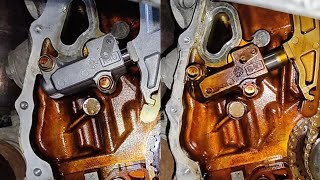
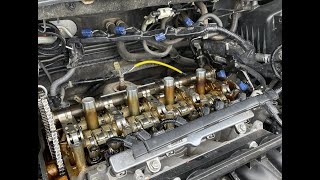
How to confirm: This requires a physical inspection. After removing the valve cover and the small timing chain tensioner inspection cover, you can measure how far the tensioner's piston has extended. Excessive extension indicates a stretched chain. 🎬 See how to inspect the tensioner for a stretched chain. With the valve cover off, you can also check for physical slack and verify if the timing marks on the cams and crank are misaligned.
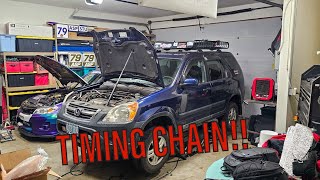
Typical fix: Replace the timing chain, tensioner, and all related guides. This is a labor-intensive job often costing over $900 in labor alone. It is often recommended to replace the VTC actuator at the same time if it hasn't been done recently.
Est. part cost: $250-$500 for a full OEM or high-quality aftermarket kit - Low or Dirty Engine Oil 🟡 Medium Probability The entire VTC system is operated by oil pressure. If the oil level is low or the oil is dirty/sludgy, the VTC actuator and tensioner cannot function correctly. Some K24 engines are known for oil consumption, making it easy to run low between changes, which can trigger this code.
How to confirm: Check the engine oil dipstick for proper level and inspect the oil's condition. If it is very dark, gritty, or below the minimum mark, this could be the cause or a major contributing factor.
Typical fix: Perform an oil and filter change with the correct viscosity oil (typically 0W-20). If the code returns, investigate the VTC actuator or timing chain.
Est. part cost: $40-$80 - Faulty VTC Oil Control Solenoid (Spool Valve) ⚪ Low Probability This solenoid controls the oil flow to the VTC actuator. Its filter screen can become clogged with sludge or debris from infrequent oil changes, preventing proper camshaft adjustment.
How to confirm: The solenoid can be removed (one bolt) and its screen inspected for debris. The solenoid's function can also be tested by applying 12V power to see if the internal piston actuates, or by using a capable scan tool to run a VTC test.
Typical fix: Clean the filter screen or replace the VTC oil control solenoid assembly. This is a relatively easy and inexpensive part to replace.
Est. part cost: $70-$180 for OEM
Rare But Worth Checking
- Faulty Camshaft Position (CMP) Sensor: While the code points directly to this sensor, it is rarely the actual point of failure on this vehicle. It is often replaced as a guess, which does not fix the underlying mechanical problem. Only replace it after confirming all mechanical timing components are functioning correctly.
- Damaged wiring to the CMP sensor: Check the harness and connector for any signs of damage, corrosion, or loose pins before replacing parts.
- Faulty ECM/PCM: In rare instances, a software or hardware issue with the engine computer can trigger this code. NHTSA ODI #10226399 describes a case where a P0341 failure was due to a faulty ECM, which was resolved after a dealer update.
Diagnosis Steps

- Check the engine oil level and condition. Top up or change the oil if it is low or dirty. This is a critical first step as low oil pressure is a common cause.
- On a cold engine (sat for 6+ hours), start it and listen carefully for a loud, metallic rattle from the passenger side of the engine that lasts for 2-3 seconds. If you hear this noise, the VTC actuator is the most likely cause.
- If no rattle is heard, inspect the VTC oil control solenoid. Remove it (one bolt) and check its filter screen for sludge or debris. Clean or replace as needed.
- If the above steps do not resolve the issue, the next step is to inspect the timing chain. This involves removing the valve cover and the tensioner inspection plate to check for chain slack and measure the tensioner extension. This is an advanced step.
- While the valve cover is off, verify the mechanical timing by aligning the crankshaft to Top Dead Center (TDC) and checking that the timing marks on the camshaft sprockets are aligned correctly.
- If all mechanical components are confirmed to be in good condition, test the camshaft position sensor and its wiring using a multimeter or oscilloscope.
- After any repair involving the timing chain or VTC actuator, clear the codes and perform a CKP Pattern Learn procedure with a Honda-compatible scan tool (HDS).
Parts You'll Likely Need
- VTC Actuator
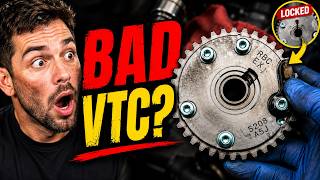
(OEM #14310-R5A-305 (Revised Part))— This is a primary failure point on the K24 engine. The original part 14310-R44-A01 is known to be defective. Always use the revised part for replacement. 🎬 Watch: Full diagnosis and VTC actuator replacement walkthrough.
Trusted brands: Honda (OEM)
OEM price range: $120-$250
Aftermarket price range: $80-$150 - Timing Chain Kit — A stretched timing chain is the other major cause of P0341. A complete kit including the chain, tensioner, and guides is required for the repair. Often done with the VTC actuator.
Trusted brands: Honda (OEM), Cloyes
OEM price range: $350-$500
Aftermarket price range: $250-$400
Related Codes That Often Appear With This One
- P1009 — This is a Honda-specific code for 'VTC System Malfunction', which often appears with P0341 as both relate to the variable timing system. NHTSA ODI #10915238 describes a vehicle where P1009 and P0341 appeared together, leading to intermittent stalling while stationary and in motion.
- P0300, P0301, P0302, P0303, P0304 — Misfire codes can be triggered because incorrect camshaft timing disrupts the engine's combustion cycle.
- P2647 — This code for 'Rocker Arm Oil Pressure Switch Circuit High Voltage' can sometimes appear alongside P0341, especially if low or dirty oil is a contributing factor affecting the entire VTEC/VTC system.
Technical Service Bulletins (TSBs) & Recalls
- TSB 16-012: Engine Rattles at Cold Start-Up (2013-2014 CR-V, 2012-2015 Crosstour). Confirms the VTC actuator is defective and is the cause of a loud, 2-second rattle at cold start.
- TSB 09-010: An earlier TSB for the same VTC rattle issue on other K24-equipped vehicles like the Accord, which uses the same problematic part.
Platform-Specific Known Issues
- Honda issued TSB 16-012 for the 2013-2014 CR-V and 2012-2015 Crosstour regarding a rattle at cold start-up caused by a defective VTC actuator. The bulletin provides a specific procedure to replace the actuator without full timing chain removal.
- A class-action lawsuit was filed against Honda for the defective VTC actuator, alleging the company knew about the defect but failed to issue a recall. The suit mentions repair costs of $500 for the actuator and up to $1,677 for an actuator and timing chain job.
- The K24 engines in this generation can be prone to oil consumption, which exacerbates wear on timing components if the oil level is not checked regularly. NHTSA ODI #10731833 notes a case where a vehicle was burning oil and subsequently developed a P0341 code accompanied by a loud engine rattle for a few seconds.
Mechanic-Grade Diagnostic Values
- PCM Code Trigger Condition — expected: Camshaft phase deviation less than 10 degrees from crankshaft at base timing.. Failure: The PCM detects a deviation of 10 degrees or more for at least 4 seconds while the VTC system is not active.
- CMP Sensor Connector Voltage (Key On, Engine Off) — expected: Power Wire to Ground: ~5V. Signal Wire to Ground: ~5V. Ground Wire to Positive Battery Terminal: ~12V.. Failure: Any reading outside of these ranges indicates a wiring or PCM issue, not necessarily a bad sensor.
- CMP Sensor Signal Test (Manual) — expected: When passing a piece of metal in front of the sensor tip, the signal wire voltage should drop from ~5V to 0V momentarily.. Failure: If the voltage does not drop, the sensor is likely faulty.
Scan Tool Commands That Help
- Honda Diagnostic System (HDS) or equivalent: CKP Pattern Clear / CKP Pattern Learn — This procedure is mandatory after replacing the timing chain, VTC actuator, or PCM. It synchronizes the PCM with the new mechanical timing pattern. Failure to perform this can cause the P0341 code to persist even after a correct repair.
- Advanced Scan Tool with Bidirectional Control: VTC System Test / VTC Solenoid Activation — This command manually activates the VTC oil control solenoid. A technician can observe live data or an oscilloscope to see if the camshaft angle changes as commanded. This directly tests the function of the solenoid and the VTC actuator's ability to move.
- Honda Diagnostic System (HDS): PCM Reset — Used to clear all learned values and trouble codes from the Powertrain Control Module after a repair is completed, before performing the CKP Pattern Learn.
Wiring & Ground Locations
- CMP Sensor 'A' (Intake) — On the passenger side of the cylinder head, closer to the front of the vehicle (radiator side).. This is the specific sensor the P0341 code refers to. Its 3-pin connector (Power, Ground, Signal) is the primary point for electrical testing.
- CMP Sensor Connector — Directly on the sensor body.. The connector and its wiring are common points of failure due to engine heat and vibration. Check for corrosion, backed-out pins, or damage to the harness pigtail. The center pin is typically the ground wire.
Real Owner Repair Stories
- NHTSA ODI #11156997 (2014 Honda CR-V) — An owner reported that their timing chain started making noise at 80,000 miles. The check engine light illuminated with code P0341 on startup, though the light would sometimes stay off for the rest of the day after being cleared.
- NHTSA ODI #11360522 (Honda Accord - similar K24 engine) — An owner reported that the Check Engine and Vehicle Stability Assist lights came on while the car was stationary. A scan revealed code P0341, and the issue was temporarily resolved by replacing the camshaft position sensor.
- Mechanic on YouTube (2013 Honda CR-V) — P0341, engine sounds like a diesel, RPM limited to 4,000.
❌ Tried (didn't work) The diagnosis immediately pointed away from the VTC actuator due to the constant diesel-like clatter, which is different from the brief startup rattle.
✅ What actually fixed it Replacement of the stretched timing chain and related components. The sound and code were resolved after the job. - YouTube user comment (Honda CR-V (year not specified, but K-series engine)) — P0341, likely caused by a sticking VTC oil control valve (solenoid).
❌ Tried (didn't work) Implied that replacing the entire solenoid was the standard but more expensive fix.
✅ What actually fixed it A DIY modification where an M5 or M6 flat washer was placed inside the VTC oil control solenoid to limit the travel of a sticky internal piston. This reportedly fixed the issue long-term. - Acura forum user (similar K-series engine) (Acura TSX with 227k miles) — P0341 code appeared immediately after a DIY timing chain replacement.
❌ Tried (didn't work) New timing chain, guides, and tensioner were installed.
✅ What actually fixed it The consensus diagnosis was that the timing was off by one tooth on a camshaft sprocket, which occurred during installation. The fix requires re-opening the timing cover and correctly aligning the chain and sprockets.
OEM Part Supersession History

14310-R44-A01→14310-R5A-305— The original VTC actuator design was prone to premature wear of the internal locking pin, causing the startup rattle and P0341 code. The revised part addresses this design flaw.
Model Year Variations Within This Range
- 2012-2016: The engine was updated for the 2015 model year from the K24Z7 (port injection) to the K24W9 'Earth Dreams' (direct injection). However, the fundamental cause of P0341 (stretched timing chain and faulty VTC actuator) remains a common problem for both engine versions within this generation.
Diagnostic Flowchart
Real Owner Stories
Aggregated from forums and TSBs cited above. Mileages and costs reflect what owners reported in those sources.
2014 Honda CR-V 2.4L
Symptoms: Experienced a recurring VTC actuator failure that eventually led to needing a full timing chain replacement.
What fixed it: Replaced the VTC actuator and the timing chain.
Cost: $1800-$1800
Source hint: Reddit: r/AskMechanics - Honda CRV 2014 - VTC Actuator, Timing Chain and a drive belt..... $2100
Honda CR-V 2.4L
Symptoms: Experienced repeated failures of the VTC actuator, with the loud cold-start rattle returning even after the part had already been replaced once.
What fixed it: Required a second replacement of the VTC actuator due to the chronic nature of the part's failure.
Source hint: CRVownersclub.com - 2.4L VTC Actuator 2nd Failure
Honda 2.4L
Symptoms: The VSA light, Check Engine Light, and code P0341 all illuminated at the exact same time immediately following a VTC actuator and oil valve seal replacement.
What fixed it: Addressed cam phasing alignment issues resulting from the recent VTC actuator installation.
Source hint: Honda-Tech - VSA + CEL + P0341 at once following VTC actuator and oil valve seal replacement
Honda CR-V 2.4L
Symptoms: Took the vehicle to the dealer for diagnosis and was quoted for the replacement of two VTC actuators.
What fixed it: Owner researched the engine and confirmed the 2.4L only has one VTC actuator, avoiding an unnecessary upsell from the dealership.
Source hint: Reddit: r/crv - VTC Actuator(s)?
Related OBD-II Codes
Frequently Asked Questions
Does TSB 16-012 apply to my Honda CR-V?
What is the revised part number for the VTC actuator on the 2.4L engine?
Why are my VSA, power steering, and TPMS lights on along with the Check Engine Light?
Can low oil cause the P0341 code on my K24 engine?
My mechanic quoted me for two VTC actuators on my CR-V. Is this correct?
Is there a class-action lawsuit regarding the VTC actuator?
Helpful Videos


The information in this article is provided for general reference and educational purposes only. Vehicle specifications, procedures, and part compatibility can vary by production date, trim level, and region. Always consult your vehicle's factory service manual and verify part numbers before purchasing or performing repairs. Safety-critical components such as airbags, seat belts, and braking systems should be installed by a qualified professional.
- Honda CR-V:
- 🎬 Helpful Videos
- What's Unique About the 2012-2016 Honda CR-V
- Symptoms You May Notice
- Most Likely Causes
- Rare But Worth Checking
- Diagnosis Steps
- Parts You'll Likely Need
- Related Codes That Often Appear With This One
- Technical Service Bulletins (TSBs) & Recalls
- Platform-Specific Known Issues
- Mechanic-Grade Diagnostic Values
- Scan Tool Commands That Help
- Wiring & Ground Locations
- Real Owner Repair Stories
- OEM Part Supersession History
- Model Year Variations Within This Range
- Diagnostic Flowchart
- Real Owner Stories
- 2014 Honda CR-V 2.4L
- Honda CR-V 2.4L
- Honda 2.4L
- Honda CR-V 2.4L
- Related OBD-II Codes
- Frequently Asked Questions
- 🎟️ Get 5% Off