

P0341 on 2013-2022 Buick Encore 1.4L: Camshaft Sensor Causes and Fixes
On a 2013-2022 Buick Encore with the 1.4L Turbo engine, code P0341 is almost always caused by a failed intake camshaft position sensor. It's an inexpensive part (around $25-$50) and a very simple 15-minute DIY replacement. Before replacing, always check the sensor's connector for oil from a leaking valve cover gasket.
- If your 2013-2022 Encore has code P0341, the most likely fix is replacing the intake camshaft position sensor.
- Before replacing the sensor, inspect its connector for oil from a leaky valve cover gasket, a very common issue on this engine.
- The repair is very DIY-friendly, requiring only basic tools and about 15 minutes.
- If you also have code P0016, the problem is more likely a serious mechanical timing issue (e.g., stretched chain) that requires professional diagnosis.
- The OEM part number for the sensor is 55566932, and it is the same for both the intake and exhaust positions.
What's Unique About the 2013-2022 Buick Encore
For the GM 1.4L (LUJ/LUV) turbo engine used in the Encore and its siblings, the Chevrolet Cruze, Sonic, and Trax, this code is exceptionally common. The intake camshaft position sensor itself is a frequent failure point, so much so that General Motors issued a Technical Service Bulletin (PIP5329C) for the nearly identical Cruze, advising technicians to replace the sensor as the primary fix. Additionally, this engine is known for valve cover gasket oil leaks, which are often a symptom of a failing PCV system. This leaking oil can seep into the sensor's electrical connector and disrupt the signal, making a visual inspection for oil critical.
Generation note: The 2013-2022 model years cover the entire first generation of the Buick Encore, which consistently used the 1.4L Turbo engine (LUV). The second-generation Buick Encore GX, introduced in 2020, is a different vehicle with different engines (1.2L or 1.3L Turbo) and this guide does not apply to it.
Symptoms You May Notice
- Check Engine Light illuminated
- Engine is hard to start or requires extended cranking
- Engine cranks but does not start
- Rough or uneven idle
- Engine stalling, especially at low speeds or when shifting into gear
- Hesitation or lack of power during acceleration
- Reduced fuel economy
- Engine running poorly, especially after the cooling fan turns on.
- Replacing the VVT (Variable Valve Timing) solenoids. While related to timing, faulty solenoids typically set their own codes (e.g., P0010, P0011, P0013, P0014).
- Replacing the crankshaft position sensor. This is a different sensor and will set its own specific codes (e.g., P0335).
- Immediately replacing the timing chain. A standalone P0341 code on this engine is almost always the sensor or wiring, not a major mechanical failure.
Most Likely Causes
- Faulty Intake Camshaft Position Sensor 🔴 High Probability This specific sensor is a well-documented, high-failure part on the 1.4L Turbo engine, likely due to heat exposure from the turbo and valve cover. It is acknowledged by GM's own service bulletins (PIP5329C for the related Chevy Cruze) as the primary cause.
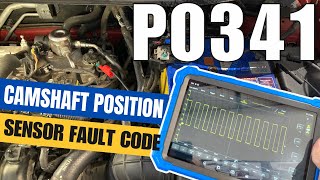
How to confirm: If P0341 is the only code present, the sensor itself is the most likely culprit. Given the low cost of the part, replacement is often the most direct diagnostic step 🎬 Watch: How to test and fix the P0341 fault code. after a visual inspection.
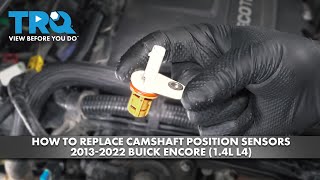
Typical fix: Replace the intake camshaft position sensor. It is located on the top of the valve cover, held in by a single 8mm or E-Torx bolt. 🎬 Watch: Step-by-step guide to replacing the camshaft position sensor. The intake and exhaust sensors are identical and interchangeable.
Est. part cost: $25-$60 - Wiring or Connector Issue 🟡 Medium Probability The valve cover gasket on the 1.4L engine is known to leak oil, often due to underlying PCV system issues creating excess crankcase pressure. This oil can saturate the nearby camshaft sensor connector, disrupting the electrical signal and triggering the P0341 code.
How to confirm: Visually inspect the intake camshaft sensor's electrical connector for oil contamination. Also check the wiring harness for signs of cracking, melting, or corrosion. The pigtail connector can become brittle from heat cycles.
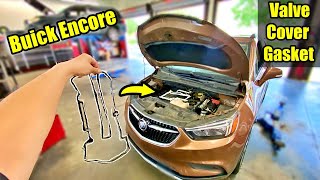
Typical fix: Clean the oil out of the connector with electrical contact cleaner and ensure a secure connection. If the valve cover gasket is leaking, it should be replaced to prevent a recurrence. If the connector itself is damaged, replace the pigtail. 🎬 See how to replace the valve cover and gasket.
Est. part cost: $5-$15 for cleaner, $40-$80 for a new valve cover gasket kit - Poor Ground Connection ⚪ Low Probability GM issued a Special Coverage adjustment (14311B) for a faulty negative battery cable on related vehicles, which can cause various electrical issues. A poor engine ground strap is also a known issue that can cause random sensor codes.
How to confirm: Inspect the main engine ground strap (often near the ignition coil, bolted to the valve cover) and the negative battery cable connections for tightness and corrosion. A loose or corroded ground can cause a wide range of erratic codes.
Typical fix: Clean the contact points with a wire brush and tighten the ground connections. Replace the negative battery cable if it is corroded internally.
Est. part cost: $0-$50
Rare But Worth Checking
- Stretched Timing Chain or Timing Issue: This is a more serious mechanical issue. It will usually be accompanied by other codes like P0016 (Crank/Cam Correlation) and may produce a rattling noise from the engine. A standalone P0341 rarely indicates a timing chain issue on this engine.
- Damaged Camshaft Reluctor Wheel: A GM TSB (PIP5806D) notes that for a persistent P0341 with crank/no-start symptoms, the reluctor wheel (trigger wheel) on the camshaft could be contacting the timing chain or may be bent. The fix involves inspection with a borescope and potentially installing a 0.5mm shim (P/N 12565102) behind the sensor to correct the air gap.
- Faulty Engine Control Module (ECM): This is extremely rare. The ECM should only be considered after all other possibilities, including sensor, wiring, grounds, and mechanical timing, have been exhaustively ruled out.
Diagnosis Steps
- Scan the vehicle with an OBD-II scanner to confirm P0341 is present and check for any other codes.
- If P0341 is the only code, the intake camshaft position sensor is the primary suspect.
- Locate the intake camshaft position sensor on top of the valve cover. On the 1.4L engine, it is on the driver's side (rear of the engine bay, near the air intake). It is a white plastic sensor.
- Inspect the sensor's electrical connector for oil contamination, corrosion, or damage. If oil is present, clean it thoroughly with electrical contact cleaner and address the source of the leak (likely the valve cover gasket).
- Inspect the engine ground strap (bolted to valve cover near ignition coil) and the negative battery cable for tightness and corrosion. Clean and tighten as needed.
- If the inspection reveals no obvious issues and P0341 is the only code, the most effective step is to replace the intake camshaft position sensor.
- After replacement, clear the codes with the scanner and perform a test drive to ensure the issue is resolved. Note that some GM vehicles may require a 'relearn' procedure, but this is not commonly reported as necessary for a simple sensor swap on this platform.
Parts You'll Likely Need
- Engine Camshaft Position Sensor
(OEM #55566932)— This is the most common failure part for code P0341 on this engine, as documented by owner experiences and manufacturer TSBs. The intake and exhaust sensors are the same part number and are interchangeable.
Trusted brands: ACDelco, Delphi, Standard Motor Products, Bosch
OEM price range: $40-$60
Aftermarket price range: $25-$45
Related Codes That Often Appear With This One
- P0366 — This is the corresponding code for the exhaust camshaft position sensor ('B'). If both sensors are failing due to age or a shared wiring/ground issue, this code may appear as well.
- P0300 — This indicates a random/multiple cylinder misfire. An erratic cam signal can disrupt ignition and fuel timing enough to cause misfires.
- P0016 — This code for Crankshaft/Camshaft Position Correlation indicates a mechanical timing problem. If you see P0341 along with P0016, the root cause is more likely a stretched timing chain or reluctor wheel issue rather than just a bad sensor.
Technical Service Bulletins (TSBs) & Recalls
- PIP5329C - (For related Chevy Cruze) Advises replacing the intake camshaft position sensor as the primary fix for DTC P0341.
- PIP5806D - For intermittent crank/no-start with P0341, advises inspecting the camshaft reluctor wheel for contact with the timing chain and potentially installing a sensor shim (P/N 12565102). The labor operation for this inspection is 3.1 hours.
- GM Special Coverage 14311B - Addresses a faulty negative battery cable that can cause various electrical issues.
Platform-Specific Known Issues
- A leaking valve cover gasket is a very common issue on the 1.4L Turbo engine and is a primary cause of oil contamination in the camshaft position sensor connector, leading to code P0341. This leak is often caused by a failed internal PCV diaphragm.
- A poor negative battery cable connection is a known issue covered by GM Special Coverage 14311B and can cause a variety of difficult-to-diagnose electrical codes, including sensor performance codes.
- For persistent crank/no-start issues with P0341, TSB PIP5806D points to a possible issue with the camshaft reluctor wheel requiring inspection and a potential shim.
Mechanic-Grade Diagnostic Values
- Camshaft Position Sensor Power Supply Pin to Ground — expected: ~5V with Key On, Engine Off (KOEO). Failure: 0V or significantly lower voltage points to a wiring issue or a problem with the ECM's 5V reference circuit.
- Camshaft Position Sensor Signal Pin to Ground (Sensor Disconnected) — expected: Should read ~5V with Key On, Engine Off (KOEO).. Failure: No voltage suggests a problem on the signal circuit back to the ECM.
- Camshaft Position Sensor Ground Pin to Chassis Ground — expected: Near 0 Ohms of resistance.. Failure: High resistance (OL - Open Line) indicates an open in the ground circuit, which is provided by the ECM.
- Camshaft Position Sensor Internal Resistance — expected: Typically between 500 to 1,500 Ohms, though this varies.. Failure: Readings outside the expected range, or infinite/zero resistance, suggest a failed sensor. However, some sources note this is not always a reliable test for Hall-effect sensors.
Scan Tool Commands That Help
- GDS2 / Professional Bidirectional Scanner: Crankshaft Position Variation Learn (CASE Relearn) — This procedure may be required after replacing a camshaft or crankshaft sensor to allow the ECM to learn the new sensor's characteristics and mechanical tolerances. While not always necessary for a simple cam sensor swap, failure to perform it can sometimes lead to persistent codes or rough running, especially if other timing-related work was done.
Wiring & Ground Locations
- Main Engine Ground Strap — On the 1.4L engine, a primary ground strap runs from the main wiring harness near the ignition coil to a bolt on the top of the valve cover.. A loose or corroded main engine ground is a known issue on this platform that can cause multiple, seemingly unrelated electrical faults and sensor codes, including P0341. The ECM and its sensors rely on this ground for a stable voltage reference.
- K20 Engine Control Module (ECM) Connector — The ECM is located in the engine bay. The camshaft position sensor wiring terminates at one of its connectors (typically X1 or X2).. When diagnosing persistent wiring issues, technicians need to test for continuity, shorts, and proper voltage/ground directly from the sensor connector back to the corresponding pins at the ECM connector.
Real Owner Repair Stories
- Reddit r/AskAMechanic (2013 Honda CR-V (Similar P0341 issue, different vehicle but relevant diagnostic path)) — Startup rattle, then Check Engine Light with P0341. Car starts fine, idles normally, but has slight issue with acceleration and sounds 'a bit off'.
❌ Tried (didn't work) Replaced timing chain tensioner.
✅ What actually fixed it The user suspected, and comments confirmed, that replacing the tensioner likely caused the timing chain to jump a tooth, misaligning the camshaft and triggering the P0341 code. The actual fix required re-timing the engine correctly. This illustrates that if P0341 appears immediately after engine work, mechanical timing is the primary suspect.
When the Usual Fixes Don't Work
- While replacing the sensor is the most common fix, if the code returns, the root cause is often more complex. A recurring P0341 after sensor replacement strongly points towards either oil contamination from a failed PCV/valve cover gasket that wasn't addressed, a poor ground connection, or a mechanical timing issue. Technicians should not repeatedly replace the sensor without widening the diagnostic scope to include these related systems.
OEM Part Supersession History
Not specified, multiple revisions exist.→55566932 / ACDelco 213-4689— Standard part evolution for reliability and manufacturing improvements.
Heads up: Part number 55566932 is the widely confirmed correct part for the 1.4L LUV engine in the 2013-2022 Encore. Both intake and exhaust sensors are the same part. Using other part numbers intended for different GM engines may result in fitment or performance issues.
Diagnostic Flowchart
Other Known Issues on This Vehicle
Issues unrelated to this code that are worth knowing about as an owner of this generation:
- PCV System Failure (Valve Cover & Intake Manifold) 🔴 High — Extremely common. A check valve in the intake manifold fails, causing the PCV diaphragm in the valve cover to rupture. Often occurs between 60,000-120,000 miles. (Ref: No specific recall, but it is a widely known pattern failure discussed in multiple TSBs related to resulting codes like P0171, P1101, and P0299.)
- Coolant Leaks (Water Pump, Water Outlet, Turbo Lines) 🔴 High — Very common. The plastic water outlet housing is prone to cracking, the water pump fails frequently, and coolant lines to/from the turbo can leak. Some water pumps were covered under a special coverage adjustment (140610) for up to 10 years/150,000 miles on related models. (Ref: Special Coverage Adjustment 140610 for water pumps on some 1.4L models.)
- Turbocharger Failure or Underboost (P0299) 🟠 Medium — Common, often secondary to PCV system failures which force oil past turbo seals. The wastegate actuator can also fail.
- Sticking Turbocharger Wastegate Solenoid (P0234) 🟠 Medium — Common, especially in cold climates. Moisture and oil can freeze in the solenoid, causing an overboost condition. (Ref: Multiple GM TSBs address this specific cold-weather issue.)
- Oil Leaks (Valve Cover Gasket, Oil Cooler) 🟠 Medium — The valve cover gasket frequently leaks, often exacerbated by failed PCV system pressure. Oil cooler housing gaskets also degrade and leak.
Used vs. New Parts: Buying Guide for This Vehicle
When a used part is the smart pick: For this repair, a used part is strongly discouraged. The camshaft position sensor is an inexpensive electronic component with a high failure rate on this engine due to heat and vibration. The risk of getting a used part that is already near the end of its service life is very high, potentially causing the same code to return shortly after installation. A used wiring pigtail connector could be a viable option if the original is broken and a new one is unavailable.
Donor-vehicle mileage cap: roughly under 10000 miles for the part to have meaningful remaining life.
What to inspect on the donor part:
- For a wiring pigtail: ensure the plastic is not brittle or cracked.
- Check for any signs of oil saturation, which indicates it was subject to a leak.
- Verify the locking tab is intact and functional.
OEM-only on this vehicle (don't cheap out):
- Engine Camshaft Position Sensor
- Valve Cover Assembly (due to integrated PCV)
Aftermarket brands forum-validated for this vehicle:
- ACDelco (OEM)
- Delphi (Often the OEM manufacturer)
- Bosch
- Standard Motor Products (SMP)
Brands owners have reported issues with on this vehicle:
- Unbranded, no-name parts from online marketplaces should be avoided. Forum discussions frequently mention that ultra-cheap sensors can be dead-on-arrival or fail within weeks, leading to repeated repairs. For the valve cover, some users report that cheaper aftermarket versions may use lower-quality plastic or PCV diaphragms that fail prematurely compared to the OEM design.
Real Owner Stories
Aggregated from forums and TSBs cited above. Mileages and costs reflect what owners reported in those sources.
2011-2016 Chevrolet Cruze 1.4L Turbo — ~90000 miles
Symptoms: The engine experienced PCV and valve cover leak issues which led to oil contamination in the sensor connector.
What fixed it: Replacing the intake camshaft position sensor and addressing the PCV/valve cover leak.
Source hint: CruzeTalk Forum - Extensive discussions on P0341
2013-2022 Buick Encore 1.4L Turbo
Symptoms: Intermittent crank/no-start with P0341 present.
What fixed it: Inspecting the camshaft reluctor wheel for contact with the timing chain and installing a sensor shim (P/N 12565102).
Source hint: PIP5806D
Related OBD-II Codes
Frequently Asked Questions
Is there a specific TSB for the P0341 code on the 1.4L Turbo engine?
Can a bad battery cable cause a P0341 code on my Buick Encore?
Why is my camshaft sensor connector covered in oil?
Are the intake and exhaust camshaft sensors different parts on the 1.4L Turbo?
Does the P0341 code require a 'relearn' procedure after I swap the sensor?
My Encore is hard to start and the cooling fan is running constantly; could this be P0341?
Helpful Videos
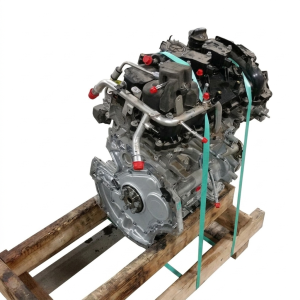
We Have This Part in Stock

The information in this article is provided for general reference and educational purposes only. Vehicle specifications, procedures, and part compatibility can vary by production date, trim level, and region. Always consult your vehicle's factory service manual and verify part numbers before purchasing or performing repairs. Safety-critical components such as airbags, seat belts, and braking systems should be installed by a qualified professional.
- Buick Encore:
- 🎬 Helpful Videos
- 🛍️ Shop This Part
- What's Unique About the 2013-2022 Buick Encore
- Symptoms You May Notice
- Most Likely Causes
- Rare But Worth Checking
- Diagnosis Steps
- Parts You'll Likely Need
- Related Codes That Often Appear With This One
- Technical Service Bulletins (TSBs) & Recalls
- Platform-Specific Known Issues
- Mechanic-Grade Diagnostic Values
- Scan Tool Commands That Help
- Wiring & Ground Locations
- Real Owner Repair Stories
- When the Usual Fixes Don't Work
- OEM Part Supersession History
- Diagnostic Flowchart
- Other Known Issues on This Vehicle
- Used vs. New Parts: Buying Guide for This Vehicle
- Real Owner Stories
- 2011-2016 Chevrolet Cruze 1.4L Turbo — ~90000 miles
- 2013-2022 Buick Encore 1.4L Turbo
- Related OBD-II Codes
- Frequently Asked Questions
- 🎟️ Get 5% Off