

P0340 on 2013-2018 Ram 1500 3.6L: Camshaft Sensor Circuit Causes & Fixes
P0340 on a Ram 1500 with the 3.6L Pentastar V6 indicates a problem with the Bank 1 (passenger side) camshaft position sensor circuit. While a faulty sensor is a common cause, this engine is also prone to valvetrain issues like failing rocker arms that can trigger this code. A simple diagnostic trick is to swap the Bank 1 and Bank 2 sensors; if the code changes to P0345, the sensor is bad. A sensor replacement is around $30-$70 for the part and is a straightforward DIY fix.
- P0340 on your Ram 1500 3.6L means there's a fault in the Bank 1 (passenger side) camshaft position sensor circuit.
- Before buying parts, inspect the sensor's wiring for damage and check your engine oil level.
- A simple diagnostic step is to swap the Bank 1 and Bank 2 sensors to see if the fault code follows the sensor.
- Be aware that on this specific engine, a ticking noise combined with a P0340 code often points to a more serious internal engine problem like a failed rocker arm, not just a bad sensor.
- The provided TSBs strongly suggest that this code can be more complex than a simple sensor replacement, so a thorough diagnosis is key. [⭐ MANUFACTURER TSB — highest authority]
What's Unique About the 2011-2018 Ram 1500

This guide covers the fourth-generation Ram 1500, but specifically for models from 2013-2018 equipped with the 3.6L Pentastar V6. While P0340 often points to a simple sensor failure on many vehicles, the Pentastar engine has a known history of valvetrain problems, such as failing rocker arms and lifters. These mechanical issues can affect camshaft timing and trigger a P0340 code, making diagnosis more complex than just a sensor swap. This is corroborated by manufacturer TSBs for this code that instruct technicians to contact specific engineers before replacing the sensor, hinting at these deeper potential issues. [⭐ MANUFACTURER TSB — highest authority, OWNER COMPLAINT]
Generation note: The 2011-2018 year range covers the fourth generation of the Ram 1500. However, the 3.6L Pentastar V6 engine was first introduced in the 2013 model year for this truck. Therefore, this guide is most relevant for 2013, 2014, 2015, 2016, 2017, and 2018 Ram 1500 models with the V6 engine. The underlying engine architecture and its issues are shared across many other Chrysler, Dodge, and Jeep vehicles.
Symptoms You May Notice
- Check Engine Light is on
- Engine is hard to start or will not start
- Engine stalling, sometimes at low speeds. [ OWNER COMPLAINT, 6]
- Rough idling
- Noticeable loss of engine power and acceleration.
- Decreased fuel economy
- Engine knocking or ticking sound.
- Transmission shifting problems.
- Replacing the Crankshaft Position Sensor instead of the Camshaft Position Sensor.
- Repeatedly replacing the camshaft position sensor with aftermarket parts without checking for underlying wiring or mechanical engine problems.
- Mistaking an oil cooler housing leak for a rear main seal leak. The oil cooler is a very common leak point and drips down the back of the engine, mimicking a rear main seal failure.
Most Likely Causes

- Faulty Camshaft Position Sensor (Bank 1) 🔴 High Probability Sensors are exposed to high heat and vibration in the engine bay and can fail over time. Oil contamination from a leaking valve cover gasket can also damage the sensor or its connector.
How to confirm: Swap the Bank 1 (passenger side) and Bank 2 (driver side) sensors. If the code changes to P0345 (Bank 2), the sensor is bad. If the code remains P0340, the problem is in the wiring or is mechanical. Bank 1 is the cylinder head on the passenger side of the vehicle.
Typical fix: Replace the faulty camshaft position sensor. It is highly recommended to use an OEM Mopar sensor (Part No. 5149141AF) as some aftermarket sensors are known to cause persistent issues.
Est. part cost: $50-$105 - Wiring Harness or Connector Damage 🟡 Medium Probability The wiring harness can become brittle from heat cycles or damaged by rubbing against other components, leading to shorts or open circuits. In one documented case, the harness melted from contact with the exhaust manifold.
How to confirm: Visually inspect the wiring and connector for the Bank 1 camshaft position sensor for any signs of melting, corrosion, or loose pins. Use a multimeter to test for proper voltage (5V reference), ground, and signal continuity back to the PCM.
Typical fix: Repair the damaged section of wiring or replace the connector pigtail.
Est. part cost: $15-$40 - Failing Rocker Arms / Lifters 🟡 Medium Probability The 3.6L Pentastar engine is known for issues with the valvetrain, particularly the rocker arms failing due to needle bearing degradation. A failed rocker arm can cause excessive camshaft movement or a misfire, disrupting the timing and triggering codes like P0340.
How to confirm: Listen for a distinct ticking or tapping noise from the top of the engine, often described as the 'Pentastar tick'. This diagnosis requires removing the valve cover for a visual inspection of the valvetrain components. This is often accompanied by misfire codes (e.g., P0301).
Typical fix: Replace the failed rocker arms and lifters. This is a labor-intensive job that often involves replacing all rockers and lifters on the affected cylinder head.
Est. part cost: $200-$500 - Low Engine Oil Level or Incorrect Oil Filter ⚪ Low Probability The Pentastar engine uses Variable Valve Timing (VVT), which is operated by oil pressure. Insufficient oil pressure can cause the camshaft phasers to not respond correctly, leading to timing-related codes. Using an incorrect or poor-quality oil filter can also lead to oil pressure issues.
How to confirm: Check the engine oil level using the dipstick. If the level is low, top it off and see if the code returns. A mechanical oil pressure test may be needed if the level is correct. Ensure a Mopar or equivalent quality oil filter is used.
Typical fix: Perform an oil and filter change, ensuring the correct oil viscosity (typically 5W-20 or 5W-30) and a high-quality filter are used. Address any oil leaks.
Est. part cost: $50-$100
Rare But Worth Checking
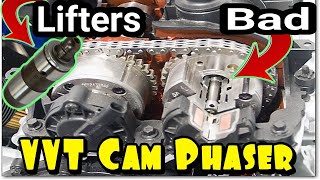
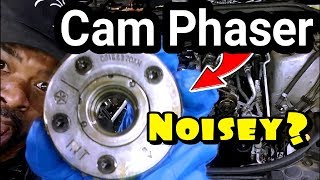
- Timing Chain or Cam Phaser Issue: A stretched timing chain or a faulty cam phaser can cause the camshaft's actual position to be out of sync with what the PCM expects, triggering P0340, often along with P0016 (Crank/Cam correlation). This is a significant mechanical repair.
- Failed Powertrain Control Module (PCM): While rare, the PCM itself can fail. This should only be considered after all other possibilities (sensor, wiring, mechanical issues) have been thoroughly ruled out.
Diagnosis Steps

- Read all stored fault codes with an OBD-II scanner. Note any other codes that are present, especially misfire (P030X) or timing correlation (P0016) codes.
- Check the engine oil level and condition. Low or dirty oil can affect the VVT system. Ensure the correct oil filter is installed.
- Locate the Bank 1 (passenger side) and Bank 2 (driver side) camshaft position sensors. On the 3.6L Pentastar, they are on the front of the cylinder heads, near the top.
- Carefully inspect the wiring and connector for the Bank 1 sensor. Look for any signs of damage, melting, corrosion, or oil contamination.
- If the wiring looks good, swap the Bank 1 and Bank 2 sensors. They are the same part (Mopar 5149141AF). Clear the codes and drive the vehicle.
- If the code returns as P0345 (for Bank 2), the sensor you moved is faulty and needs to be replaced.
- If the code returns as P0340, the problem is not the sensor. The issue is likely in the wiring circuit or a mechanical problem with the engine.
- Test the Bank 1 sensor connector for a 5-volt reference signal, a good ground, and a fluctuating signal wire with the engine running (this is best done with an oscilloscope).
- If wiring and sensor are confirmed good, listen for engine ticking noises. Further diagnosis will require removing the valve cover to inspect the valvetrain (rocker arms, lifters) and potentially the timing components, which may require a professional mechanic.
Parts You'll Likely Need

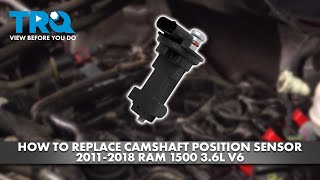
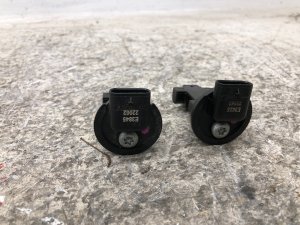
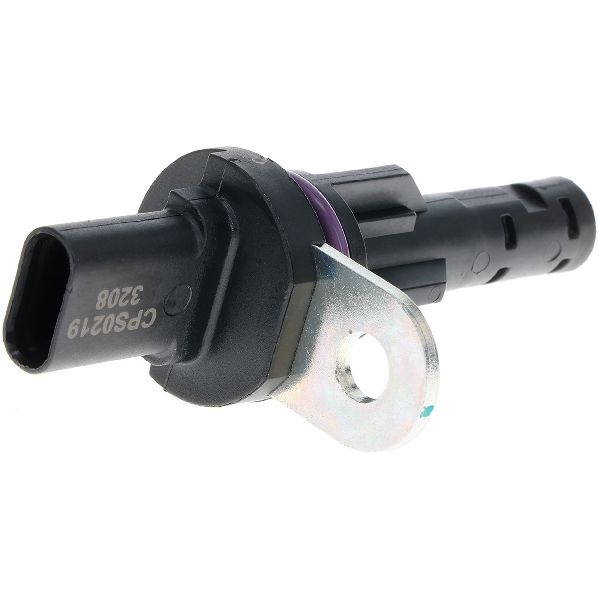
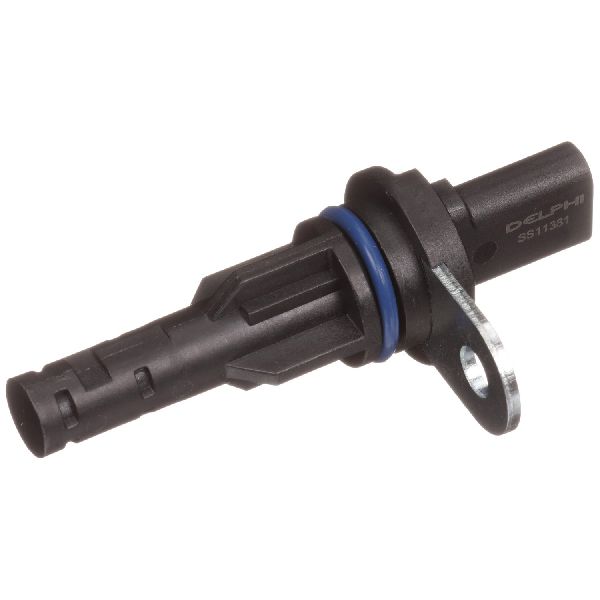
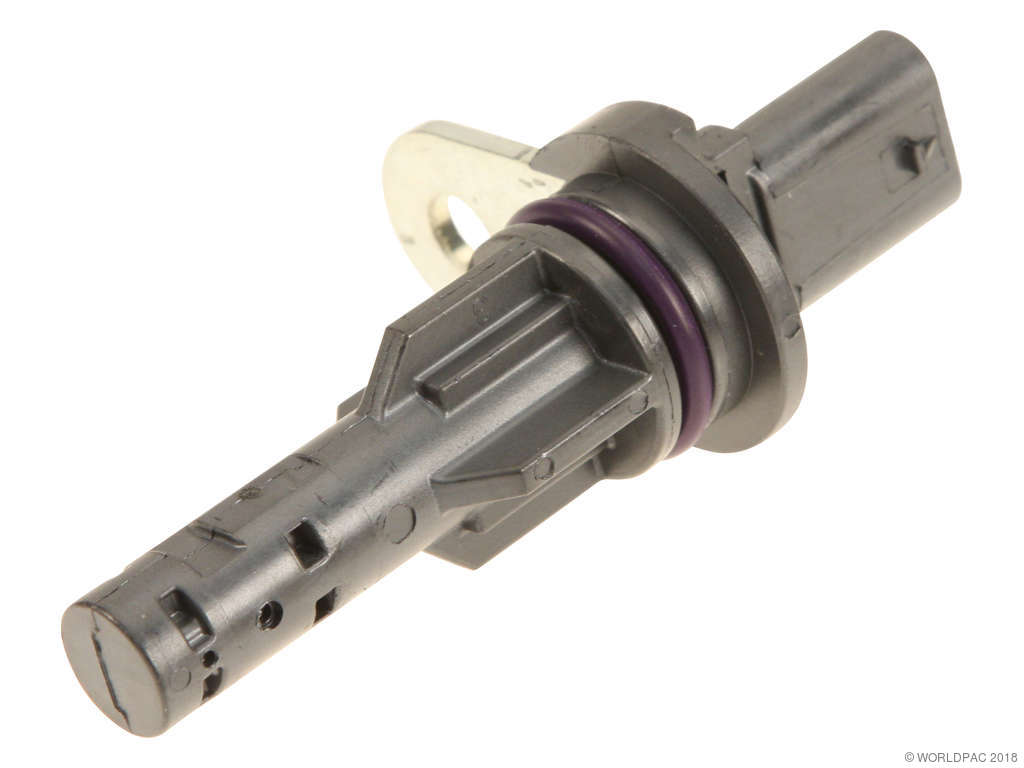
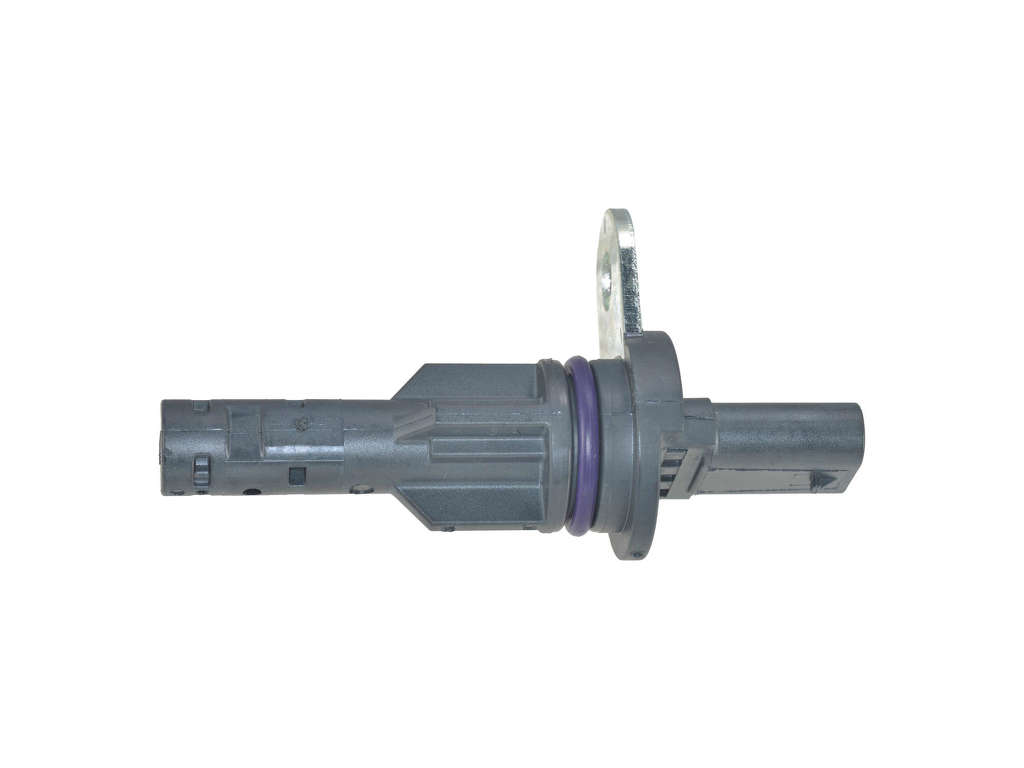
- Camshaft Position Sensor
(OEM #5149141AF)— This is the most direct and common component to fail within the P0340 circuit. Using the OEM Mopar part is strongly recommended.
Trusted brands: Mopar
OEM price range: $50-$105
Aftermarket price range: $30-$50
Related Codes That Often Appear With This One
- P0344 — This code indicates an intermittent signal from the same sensor circuit, often appearing alongside P0340 as the sensor or wiring begins to fail. [⭐ MANUFACTURER TSB — highest authority, 3]
- P0345 / P0349 — These are the equivalent codes for the Bank 2 (driver's side) camshaft position sensor. Seeing them with P0340 could point to a systemic issue like low oil pressure, a widespread wiring problem, or a major timing component failure.
- P0300 / P030X — Misfire codes (e.g., P0301 for Cylinder 1) often accompany P0340 when the root cause is mechanical, such as a failed rocker arm, which directly impacts a specific cylinder's valve operation.
- P1DD2 / U1424 — These manufacturer-specific codes were reported alongside P0340 in an NHTSA complaint. [ OWNER COMPLAINT] They relate to torque request signals between the engine and transmission computers and can be triggered by engine performance problems, such as those caused by a faulty cam sensor.
Technical Service Bulletins (TSBs) & Recalls
- TSB #68080819A: Advises contacting a factory representative when replacing a camshaft position sensor for a P0340 code. [⭐ MANUFACTURER TSB — highest authority]
- TSB #05149141A: Similar to the above, this TSB covers a range of camshaft sensor codes and advises contacting a factory engineer before replacement. [⭐ MANUFACTURER TSB — highest authority, 44]
- TSB #09-002-14: Details the diagnosis and repair for the left cylinder head failure on 2011-2013 Pentastar engines and is related to the extended warranty campaign (X56).
Platform-Specific Known Issues
- The 3.6L Pentastar V6 has a well-documented issue with premature failure of the rocker arms due to needle bearing issues. A failed rocker arm can cause a ticking noise and lead to timing-related codes like P0340.
- TSB #68080819A and #05149141A both advise technicians to contact a specific factory engineer before replacing the camshaft position sensor for code P0340, suggesting that a simple sensor swap is often not the correct fix and a deeper mechanical issue may be present. [⭐ MANUFACTURER TSB — highest authority, OWNER COMPLAINT]
- Early (2011-2013) Pentastar engines had a different cylinder head design on the driver's side that led to a higher rate of failure, though P0340 relates to the passenger side (Bank 1).
Mechanic-Grade Diagnostic Values
- Camshaft Position Sensor 5V Supply — expected: Approximately 5.0 volts DC with key on, engine off.. Failure: 0V indicates an open/short in the supply circuit. Significantly lower voltage can indicate a PCM fault or a short.
- Camshaft Position Sensor Ground Circuit Resistance — expected: Less than 3-5 ohms to a known good chassis ground.. Failure: High or infinite resistance (OL) indicates a broken ground wire or corroded connection.
- Camshaft Position Sensor Signal (Bench Test) — expected: The sensor signal voltage should switch between 5V and 0V when a magnet is passed near the sensor tip.. Failure: If the voltage does not switch, the sensor is faulty.
Scan Tool Commands That Help
- wiTECH: Cam/Crank Relearn — This procedure should be performed after replacing a CMP/CKP sensor, or after any repair involving the timing chain, phasers, or valvetrain to prevent misfire faults.
- wiTECH: Clear DTCs — After disconnecting certain components like the Active Grille Shutters (AGS), a specific DTC (U11E9) can be set which requires a dealer-level tool to clear properly. While not directly P0340, it shows the necessity of this tool for related service.
Wiring & Ground Locations

- Camshaft Position Sensor Connector (Bank 1) — On the front of the passenger side cylinder head.. This is the primary connection point for the sensor. The pins and wiring here are subject to heat and vibration. Pin 1 is the 5V supply, Pin 2 is the sensor ground, and Pin 3 is the signal wire.
- G102 — On the left side of the engine compartment.. This is a major engine ground point. While the sensor has a dedicated ground return to the PCM, a poor main engine ground can introduce electrical noise that affects sensitive sensor signals.
Real Owner Repair Stories
- Tacoma World user bregalad12 (2003 Toyota Tacoma 3.4L V6 (Note: Different vehicle, but identical code behavior and resolution path)) — P0340 code with intermittent, significant power loss. Engine acceleration was being governed.
❌ Tried (didn't work) Replaced camshaft position sensor (multiple times), Corrected timing belt that was off by one tooth, Replaced water pump and thermostat, Replaced the ECU (PCM)
✅ What actually fixed it A disconnect was found in the wiring harness between the ECU and the Camshaft Position Sensor. A 'camshaft sensor wiring circuit overlay' was performed by the dealer, which bypassed the break in the original harness and restored communication, clearing the code and restoring power. - DodgeForum.com user XclubcowX (2003 Ram 1500 Hemi (Note: Different engine, but identical code behavior and resolution path)) — P0340 code, engine died and would crank but not start.
❌ Tried (didn't work) Replaced camshaft position sensor (twice), Replaced PCM with a junkyard unit, Replaced crankshaft position sensor
✅ What actually fixed it The wiring harness for the camshaft position sensor had melted from touching the exhaust manifold. Although the user repaired the visible melted wires, the problem persisted, indicating a deeper, unresolved issue in the harness or a related component damaged by the short. The thread ends without a final confirmed fix, but highlights the critical nature of harness damage.
OEM Part Supersession History
5184296AD, 5184296AE, 5184296AF, 5184296AG→5184296AH— This is the part number for the engine rocker arms. The 'AH' revision is the latest design intended to address the premature failure of the needle bearings in earlier versions.
Diagnostic Flowchart
Other Known Issues on This Vehicle
Issues unrelated to this code that are worth knowing about as an owner of this generation:
- Cracked Oil Filter/Cooler Housing 🔴 High — Very common, typically occurs between 70,000-120,000 miles. The plastic housing cracks from heat cycles, causing significant oil and/or coolant leaks into the engine valley.
- Left Cylinder Head Failure (Early Models) 🔴 High — Affected a small percentage (around 0.5%) of 2011-2013 model year engines, causing misfires and a ticking noise. (Ref: TSB 09-002-14 / Warranty Extension X56 (10 years/150,000 miles))
- Rocker Arm / Lifter Failure ('Pentastar Tick') 🟠 Medium — Common across all years, often appearing after 50,000 miles. Caused by needle bearing failure in the rocker arms, leading to a distinct ticking sound and potential misfires. (Ref: A service bulletin was issued in 2014, but no extended warranty was offered for this specific problem.)
- Cooling System Problems (Water Pump/Thermostat) 🟠 Medium — Failures of the water pump and thermostat are reported, leading to overheating conditions. Not as widespread as the oil cooler leak but a known weak point.
Used vs. New Parts: Buying Guide for This Vehicle
When a used part is the smart pick: For this repair, using used parts is generally not recommended. The primary causes are either an electronic sensor prone to failure or internal mechanical wear parts. A used sensor carries a high risk of being near the end of its service life, and used rocker arms/lifters would be counterproductive as they are known wear items.
Donor-vehicle mileage cap: roughly under 40000 miles for the part to have meaningful remaining life.
What to inspect on the donor part:
- If considering a used sensor, only pull from a very low-mileage, collision-damaged vehicle.
- Never use rocker arms or lifters from a used engine, as their main failure mode is wear and fatigue.
OEM-only on this vehicle (don't cheap out):
- Camshaft Position Sensor: Forum users and mechanics strongly advise using only Mopar (OEM) sensors, as many aftermarket versions have been reported to be faulty out of the box or fail quickly, causing the code to return.
- Rocker Arms / Lifters: While some aftermarket brands exist, using OEM Mopar parts (specifically the latest 'AH' revision) is the safest bet to ensure longevity and correct the original design flaw.
Aftermarket brands forum-validated for this vehicle:
- Melling (for rocker arms)
Brands owners have reported issues with on this vehicle:
- Unspecified 'white box' or no-name camshaft position sensors from online marketplaces.
Real Owner Stories
Aggregated from forums and TSBs cited above. Mileages and costs reflect what owners reported in those sources.
2012 Jeep Wrangler JKU 3.6L Pentastar
Symptoms: Engine stalling and P0340 code.
What fixed it: Confirmed Bank 1 is the passenger side and replaced the sensor/inspected wiring.
Source hint: Jeep Wrangler Forum - P0340 Code Discussion
3rd Gen Ram 1500
Symptoms: Persistent P0340 code that was difficult to diagnose.
What fixed it: Repairing the sensor's wiring harness which had melted against the exhaust manifold.
Source hint: DodgeForum.com - P0340 Melted Wiring Harness Story
3.6L Pentastar V6 (Rebuilt)
Symptoms: Errors for all four camshaft sensor positions simultaneously.
What fixed it: Advanced troubleshooting of the shared 5V supply and ground circuits rather than replacing sensors.
Source hint: JK-Forum.com - All Cam Sensors Failing
Related OBD-II Codes
Frequently Asked Questions
Which side of my Ram 1500 3.6L engine is Bank 1 for the P0340 code?
Should I just replace the sensor if I have a P0340 code on my Ram?
Is there a specific brand of camshaft sensor I should use for the 3.6L Pentastar?
Can a ticking sound from my engine be related to the P0340 code?
Could my Ram's oil level affect the camshaft position sensor code?
How can I tell if the sensor is actually bad without buying a new one?
Helpful Videos
Used OEM Parts in Stock
New Aftermarket Parts Available


The information in this article is provided for general reference and educational purposes only. Vehicle specifications, procedures, and part compatibility can vary by production date, trim level, and region. Always consult your vehicle's factory service manual and verify part numbers before purchasing or performing repairs. Safety-critical components such as airbags, seat belts, and braking systems should be installed by a qualified professional.
- Ram 1500:
- 🎬 Helpful Videos
- 🛍️ Shop This Part
- What's Unique About the 2011-2018 Ram 1500
- Symptoms You May Notice
- Most Likely Causes
- Rare But Worth Checking
- Diagnosis Steps
- Parts You'll Likely Need
- Related Codes That Often Appear With This One
- Technical Service Bulletins (TSBs) & Recalls
- Platform-Specific Known Issues
- Mechanic-Grade Diagnostic Values
- Scan Tool Commands That Help
- Wiring & Ground Locations
- Real Owner Repair Stories
- OEM Part Supersession History
- Diagnostic Flowchart
- Other Known Issues on This Vehicle
- Used vs. New Parts: Buying Guide for This Vehicle
- Real Owner Stories
- 2012 Jeep Wrangler JKU 3.6L Pentastar
- 3rd Gen Ram 1500
- 3.6L Pentastar V6 (Rebuilt)
- Related OBD-II Codes
- Frequently Asked Questions
- 🎟️ Get 5% Off