

P0340 on 2013-2017 Lincoln MKZ Hybrid: Camshaft Sensor and Oil Moisture Causes
For the 2013-2017 Lincoln MKZ Hybrid, code P0340 is most often caused by excessive moisture in the engine oil from frequent short trips. The official fix, per Ford TSB SSM 48598, is to change the engine oil and filter and replace the camshaft position sensor.
- For the MKZ Hybrid, P0340 is very often caused by moisture in the oil from short trips. Always check your oil for a milky appearance first.
- The official fix from Ford for the moisture issue is to change the oil and filter AND replace the camshaft position sensor at the same time.
- If the oil looks clean, the camshaft position sensor itself has likely failed and needs replacement.
- Replacing the sensor is a simple DIY job located on top of the engine, requiring only basic tools.
What's Unique About the 2013-2017 Lincoln MKZ
For the Lincoln MKZ Hybrid and its platform-mates (Ford Fusion Hybrid and C-Max Hybrid), P0340 has a very specific and well-documented cause. The hybrid system's frequent use of the electric motor, especially on short trips or in vehicles driven less than 6,000 miles per year, prevents the gasoline engine from running long enough to burn off normal condensation in the oil. This leads to excessive moisture buildup, which can appear as a milky or creamy residue and interfere with the camshaft position sensor's operation, a unique issue detailed in Ford's Technical Service Bulletin (TSB) SSM 48598.
Symptoms You May Notice
- Check Engine Light is on
- Engine is difficult to start or has a long crank time
- Engine cranks but fails to start
- Engine stalling or running rough, especially at idle
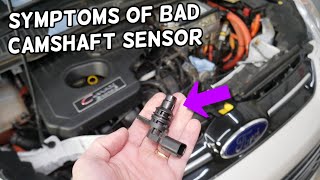
- Reduced engine power and poor acceleration 🎬 Watch: Common symptoms of a failing camshaft sensor on this platform
- Engine may go into limp mode
- Replacing only the camshaft position sensor without changing the contaminated oil. If moisture is the cause, the code will likely return. An NHTSA complaint (#11191466) documents this exact scenario, with the code returning 1,708 miles after only the sensor was replaced.
- Replacing the crankshaft position sensor. While related, P0340 specifically points to the camshaft sensor circuit.
- Assuming the sensor is bad when the issue is a poor connection at the pigtail connector.
Most Likely Causes
- Excessive Moisture in Engine Oil 🔴 High Probability This is a known issue for this hybrid platform, documented in TSB SSM 48598. Short-distance driving (less than 6,000 miles/year) prevents the engine from reaching a temperature high enough to evaporate condensation, leading to contaminated oil that interferes with the sensor.
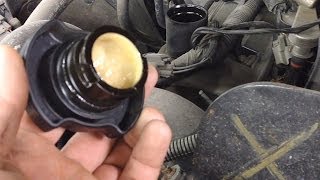
How to confirm: Check the underside of the oil filler cap and the dipstick for a milky, frothy, or creamy-brown residue. This is a strong indicator 🎬 See what moisture-contaminated oil looks like under the filler cap of moisture contamination.
Typical fix: Perform an engine oil and filter change AND replace the camshaft position sensor. The TSB explicitly recommends doing both to resolve the issue and advises customers to allow the engine to reach operating temperature more frequently.
Est. part cost: $75-$150 - Faulty Camshaft Position Sensor 🔴 High Probability Sensors can fail from internal electronic faults or heat cycles. An earlier TSB (G0000050 / NHTSA ID 10058223) noted that sensors on 2013-2015 models built on or before Feb 5, 2015, were prone to premature failure. Denso is noted by some mechanics as the OEM manufacturer for the sensor.
How to confirm: If the oil is clean, test the sensor's circuit. Use a multimeter to check for power, ground, and signal. An oscilloscope is the best tool to verify a clean, consistent square wave signal from the sensor while the engine is running.
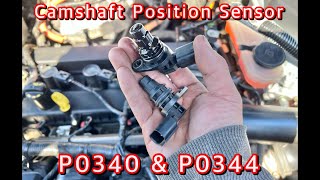
Typical fix: Replace the camshaft position sensor. It is located on top of the valve cover and is held in by a single 8mm bolt. 🎬 Watch this step-by-step walkthrough for replacing the sensor Ensure the old o-ring seal comes out with the sensor.
Est. part cost: $25-$90 - Wiring or Connector Issue ⚪ Low Probability The sensor connector is located on top of the engine, exposed to heat and vibration, which can make wires brittle or cause connections to become loose or corroded over time. Some owners report that simply unplugging and replugging the connector temporarily resolves the issue, indicating a poor connection.
How to confirm: Visually inspect the sensor's electrical connector and wiring pigtail for corrosion, pushed-out pins, or obvious damage. Wiggle the harness while the engine is running to see if it affects idle.
Typical fix: Repair the damaged section of wire or clean/replace the electrical connector pigtail.
Est. part cost: $10-$40
Rare But Worth Checking
- Timing Chain Problem: While uncommon, a stretched timing chain or a failing tensioner can cause camshaft timing to be out of sync with the crankshaft, triggering P0340. This is typically accompanied by a rattling noise from the engine and may be preceded by other timing correlation codes like P0016.
- Failed Powertrain Control Module (PCM): This is extremely rare. The PCM should only be considered a potential cause after all other possibilities, including sensors, wiring, and mechanical timing, have been thoroughly ruled out.
- Weak Battery or Cranking Voltage Drop: In some documented cases across Ford vehicles, a weak battery that causes excessive voltage drop during cranking can trigger a false P0340 code. A faulty alternator can also cause voltage stability issues that affect sensors. If the issue only occurs on cold starts, the battery should be tested.
Diagnosis Steps
- Scan for any other stored trouble codes. Note if P0344 is also present, as this is common.
- Inspect the engine oil. Remove the oil filler cap and check for a milky or frothy residue. Pull the dipstick to check oil level and condition.
- If oil is contaminated, the recommended procedure per TSB SSM 48598 is to replace the engine oil, filter, AND the camshaft position sensor.
- If oil appears clean, locate the camshaft position sensor on top of the valve cover, held by a single 8mm bolt.
- Inspect the sensor's electrical connector and wiring for any signs of damage, corrosion, or loose connections. Try unplugging and replugging it.
- Using a multimeter with the key on, engine off, back-probe the sensor connector. Check for reference voltage (approx. 5V), ground (less than 5 ohms to chassis ground), and the signal wire.
- If possible, use an oscilloscope to observe the sensor's output signal while the engine is running. Look for a clean square wave pattern that switches between approximately 0V and 5V without dropouts.
- If wiring and signal are confirmed to be faulty, replace the camshaft position sensor. Ensure the old o-ring is removed with the old sensor.
- After repairs, clear the codes and perform a test drive, ensuring the engine reaches full operating temperature to confirm the issue is resolved.
Parts You'll Likely Need
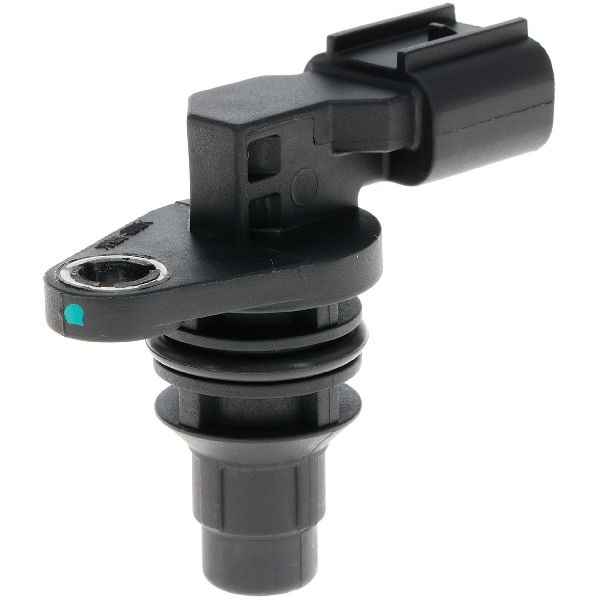
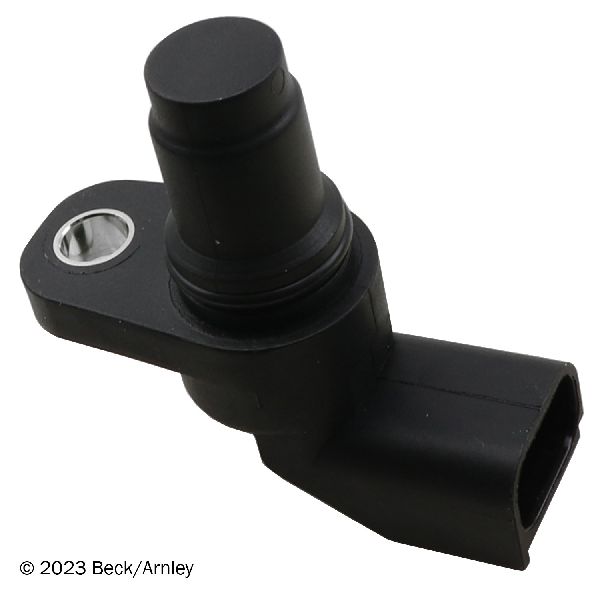
- Camshaft Position Sensor
(OEM #DU-110 (Motorcraft Service Part) or CJ5Z-6C269-A (Ford Engineering Part))— This is the primary component that fails or gets contaminated, as identified by Ford's TSBs. Note: Pass 1 cited DU-108, which appears incorrect for this application.
Trusted brands: Motorcraft, Denso (reported OEM), Bosch, NTK
OEM price range: $40-$90
Aftermarket price range: $25-$60 - Engine Oil and Filter
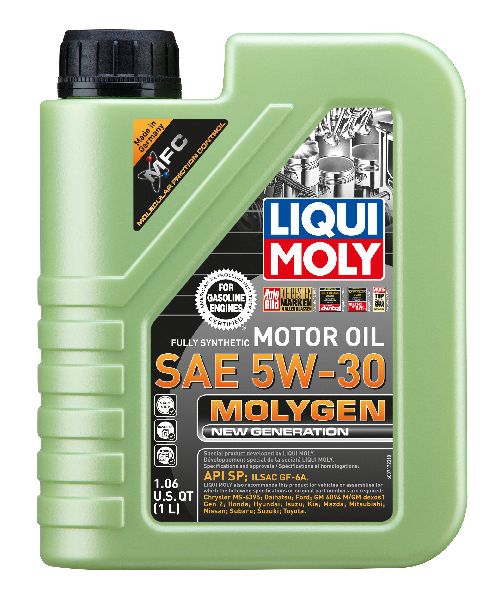
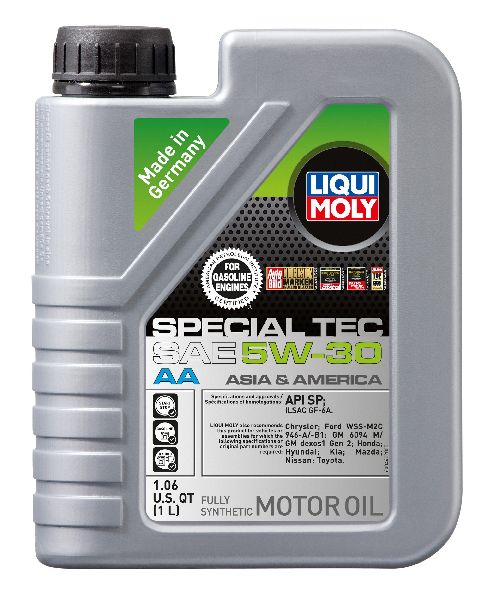
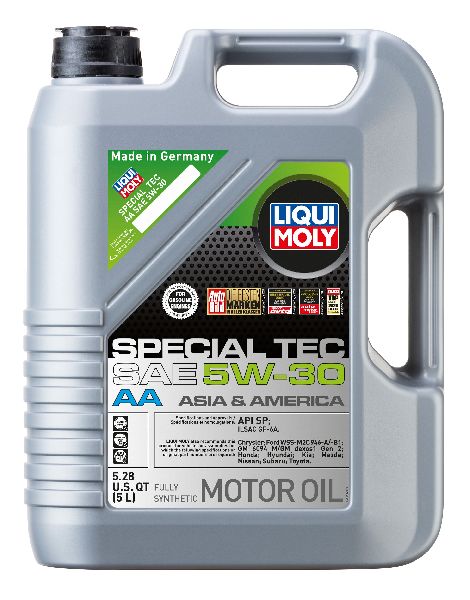
(OEM #Motorcraft FL-910-S (Filter), Motorcraft XO-0W20-QSP (SAE 0W-20 Oil))— Required if the root cause is moisture contamination, which is very common on this vehicle per TSB SSM 48598. Using the correct oil viscosity is critical for VCT system health.
Trusted brands: Motorcraft, Mobil 1, Castrol
OEM price range: $40-$70
Aftermarket price range: $30-$50
Related Codes That Often Appear With This One
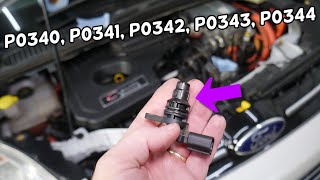
- P0344 — P0344 ('Camshaft Position Sensor 'A' Circuit Intermittent') is often seen with P0340. Both codes are mentioned in TSB SSM 48598 and point to the same root causes of oil moisture or a failing sensor.
- P1A0C — P1A0C ('Hybrid Powertrain Control Module - Engine Disabled') can appear with P0340. The hybrid control module may disable the gasoline engine if it cannot get a reliable camshaft position signal.
Technical Service Bulletins (TSBs) & Recalls
- SSM 48598: Addresses P0340/P0344 caused by moisture in engine oil on 2013-2020 MKZ Hybrids, Ford Fusion Hybrids, and C-Max models. Recommends replacing the CMP sensor and changing the oil.
- G0000050 (NHTSA ID 10058223): Addresses P0340/P0344 on 2013-2015 models due to faulty sensors built on or before 02/05/2015.
Platform-Specific Known Issues
- TSB SSM 48598: Ford identified that 2013-2020 MKZ Hybrids may exhibit DTC P0340 and/or P0344 due to excessive moisture buildup in the engine oil from short-distance driving. The official fix is to replace the camshaft position sensor and change the engine oil. The TSB also advises customers to allow the engine to reach full operating temperature more often.
- TSB G0000050 (NHTSA ID 10058223): This earlier bulletin for 2013-2015 models indicated that camshaft position sensors manufactured on or before February 5, 2015, were prone to premature failure and should be replaced if P0340 or P0344 appears.
Mechanic-Grade Diagnostic Values
- Camshaft Position Sensor (CMP) Power Supply Pin Voltage (KOEO) — expected: Approximately 5.0 volts (should be above 4.5V).. Failure: A reading below 4.5V or 0V points to an open or short in the reference voltage circuit from the PCM.
- Camshaft Position Sensor (CMP) Signal Voltage (Engine Cranking/Running) — expected: Using an oscilloscope, voltage should switch rapidly in a square wave pattern between approximately 0V and 5V.. Failure: Voltage that is stuck high (at 5V), stuck low (at 0V), or does not produce a clean, switching signal indicates a failed sensor or a circuit problem.
- Camshaft Position Sensor (CMP) Ground Pin Resistance — expected: Less than 5 ohms of resistance between the ground pin on the connector and a known good chassis ground or negative battery terminal.. Failure: High resistance (greater than 5 ohms) or an open circuit (OL) indicates a faulty ground connection.
- Variable Camshaft Timing (VCT) Solenoid Resistance — expected: Typically 6.9-7.9 ohms at 68°F (20°C).. Failure: A reading outside this range, or an open/short circuit, indicates a faulty solenoid. This is an edge-case test if CMP sensor and oil issues are ruled out.
Scan Tool Commands That Help
- Ford IDS / High-End Bidirectional Scanner: Pinpoint Test HK12 (VCT Solenoid Cycling) — This test, mentioned in TSBs for related timing codes (like P0011/P0022), cycles the VCT solenoids 10 times to dislodge small debris. While not the primary fix for P0340, it can be a useful diagnostic step if a mechanical timing issue related to VCT operation is suspected after addressing the CMP sensor and oil.
Wiring & Ground Locations
- G104 — Right side of the engine compartment, sometimes specified as on the right rear of the transmission.. This is a primary engine/powertrain ground point. A loose or corroded connection here can cause insufficient or noisy grounding for various sensors, including the CMP, potentially leading to erratic readings and fault codes.
- G105 — Right side of the engine compartment.. Another key ground point in the engine bay that provides a ground path for various electronic components. Verifying its integrity is part of a thorough electrical diagnosis.
- G100 / G101 / G102 — Left front of the engine compartment.. These are additional engine compartment grounds. While G104 is more commonly cited for powertrain issues, a comprehensive check would include ensuring all major engine grounds are clean and secure.
- C175B — This is a main connector at the Powertrain Control Module (PCM).. The CMP sensor wires for power, ground, and signal all terminate at the PCM. If tests at the sensor connector are inconclusive, checking for continuity and pin fitment at connector C175B can identify a wiring break or a problem at the PCM connection itself.
Real Owner Repair Stories
- Blue Oval Forums user (2016 Ford Fusion Hybrid (platform mate)) — P0022 code (related timing code) and stalling when coming to a stop.
❌ Tried (didn't work) Initial diagnosis pointed towards common causes.
✅ What actually fixed it The issue was resolved after replacing both the intake and exhaust VCT solenoids and the valve cover gasket. This highlights that if the primary P0340 causes (sensor, oil) don't fix the issue, the VCT system is the next logical area to investigate.
OEM Part Supersession History
CM5Z-6M280-A→CM5Z-6M280-C— This is a common supersession for the VCT solenoid. Updated parts often feature improved internal components or filter screens to better resist failure from oil debris.
Heads up: The new part (CM5Z-6M280-C) is a direct replacement for the old one and is fully compatible.
Model Year Variations Within This Range
- 2013-2015 (built on or before Feb 5, 2015): An early TSB (G0000050) specifically identified the original camshaft position sensors on these models as being prone to premature failure, separate from the oil moisture issue. Later models used an improved sensor.
- 2017: The Lincoln MKZ received a significant facelift for the 2017 model year, including a new grille and interior updates. However, the 2.0L hybrid powertrain, its sensors, and its susceptibility to the P0340 oil moisture issue remained unchanged.
Diagnostic Flowchart
Real Owner Stories
Aggregated from forums and TSBs cited above. Mileages and costs reflect what owners reported in those sources.
2014 Lincoln MKZ Hybrid 2.0L — 3728 miles
Symptoms: Car is still operational however the engine became noisy (engine) under normal operating conditions.
What fixed it: Dealer erased the code, did a 'general' inspection and off I went. Problem re-occurred 2-3 weeks later.
Source hint: CarComplaints.com
2014 Lincoln MKZ Hybrid 2.0L — 4474 miles
Symptoms: Engine operates loudly.
What fixed it: Camshaft position sensor replacement addressed the problem.
Source hint: CarComplaints.com
2014 Ford Fusion Hybrid
Symptoms: Milky, moisture-contaminated oil on the sensor and oil cap caused by a very short 1.5-mile commute.
What fixed it: Performed the TSB fix of an oil/filter change and sensor replacement.
Source hint: YouTube - fordtechmakuloco (2014 Ford Fusion Hybrid)
2015 Ford Fusion
Symptoms: Check engine light with code P0340 returned just 1,708 miles after a dealer replaced only the camshaft position sensor.
What fixed it: Demonstrated that changing the oil is a critical part of the TSB procedure, as replacing just the sensor failed to provide a permanent fix.
Source hint: NHTSA Complaint #11191466 (2015 Ford Fusion)
Related OBD-II Codes
Frequently Asked Questions
Does TSB SSM 48598 apply to my 2013-2017 Lincoln MKZ Hybrid?
Why does my MKZ Hybrid have milky residue under the oil cap with code P0340?
My 2014 MKZ Hybrid was built before February 2015. Is there a specific issue with the camshaft sensor?
Can I just replace the camshaft position sensor to fix P0340 on my MKZ Hybrid?
Where is the camshaft position sensor located on the 2.0L hybrid engine?
How can I prevent code P0340 from returning on my Lincoln MKZ Hybrid?
Helpful Videos
Used OEM Parts in Stock

New Aftermarket Parts Available


The information in this article is provided for general reference and educational purposes only. Vehicle specifications, procedures, and part compatibility can vary by production date, trim level, and region. Always consult your vehicle's factory service manual and verify part numbers before purchasing or performing repairs. Safety-critical components such as airbags, seat belts, and braking systems should be installed by a qualified professional.
- Lincoln MKZ:
- 🎬 Helpful Videos
- 🛍️ Shop This Part
- What's Unique About the 2013-2017 Lincoln MKZ
- Symptoms You May Notice
- Most Likely Causes
- Rare But Worth Checking
- Diagnosis Steps
- Parts You'll Likely Need
- Related Codes That Often Appear With This One
- Technical Service Bulletins (TSBs) & Recalls
- Platform-Specific Known Issues
- Mechanic-Grade Diagnostic Values
- Scan Tool Commands That Help
- Wiring & Ground Locations
- Real Owner Repair Stories
- OEM Part Supersession History
- Model Year Variations Within This Range
- Diagnostic Flowchart
- Real Owner Stories
- 2014 Lincoln MKZ Hybrid 2.0L — 3728 miles
- 2014 Lincoln MKZ Hybrid 2.0L — 4474 miles
- 2014 Ford Fusion Hybrid
- 2015 Ford Fusion
- Related OBD-II Codes
- Frequently Asked Questions
- 🎟️ Get 5% Off