

P0326 on 2010-2015 Hyundai Tucson: Knock Sensor Circuit Causes and Fixes
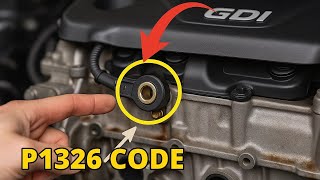
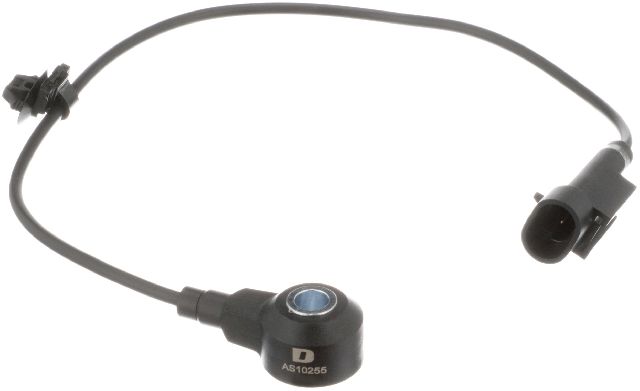
This code indicates a problem with the knock sensor circuit. On the 2010-2015 Tucson, the most common fix is replacing the knock sensor itself, which is located under the intake manifold. Expect to pay $40-$80 for an OEM sensor and 2-3 hours of labor due to the location. This code is particularly significant on this platform due to Hyundai's Knock Sensor Detection System (KSDS) software update, intended to detect early signs of engine failure.
- P0326 on a 2010-2015 Tucson almost always points to a faulty knock sensor or its wiring.
- The repair is labor-intensive for a DIYer because the intake manifold must be removed to access the sensor.
- Always use a high-quality OEM or reputable aftermarket (e.g., NTK, Delphi) sensor and torque it to the correct specification (11-15 ft-lbs).
- This code is closely linked to the KSDS software update, which Hyundai uses to detect serious internal engine failures common to the Theta II engine.
What's Unique About the 2010-2015 Hyundai Tucson
The 2010-2015 Tucson uses the Theta II engine, which was subject to recalls and a class-action lawsuit for connecting rod bearing failures. As part of a massive product improvement campaign (including Service Campaign 953 and 966), Hyundai implemented a Knock Sensor Detection System (KSDS) via a software update. This system uses enhanced software logic to monitor engine vibrations for the specific patterns of bearing wear that could lead to engine seizure. If these vibrations are detected, the system will trigger a flashing check engine light, an audible chime, and log code P1326, forcing the vehicle into a reduced-power "limp mode". 🎬 Watch: How to handle a blinking light and limp mode. While P0326 is a generic circuit fault, it can sometimes be triggered by the updated, more sensitive KSDS software or be an early indicator of the very issues the KSDS is designed to detect.
Symptoms You May Notice
- Check Engine Light is on
- Reduced engine power and poor acceleration
- Hesitation or stumbling under load
- Noticeable decrease in fuel economy
- Audible engine pinging or knocking (in some cases)
- Flashing Check Engine Light and vehicle entering 'limp mode' (if accompanied by P1326)
- Replacing spark plugs or ignition coils. While these can cause performance issues, they do not directly cause a P0326 circuit code.
- Ignoring the code after replacing the sensor. If the code returns, it may indicate a faulty aftermarket part, incorrect installation torque, or a wiring issue that was missed.
Most Likely Causes
- Faulty Knock Sensor 🔴 High Probability The sensor is a sensitive piezoelectric component that can fail with age, heat cycles, and vibration. It is the most frequent point of failure for this code on the Theta II engine. Aftermarket sensors are known to have a high failure rate, making OEM parts highly recommended.
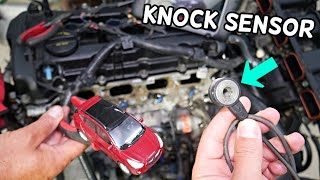
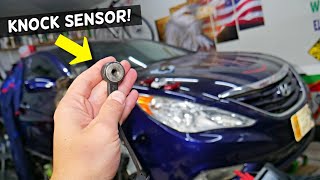
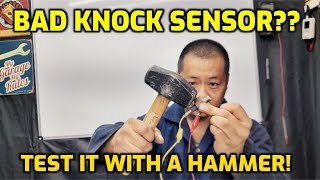
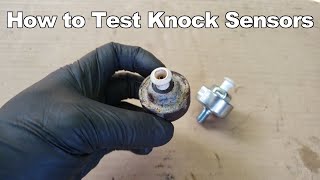
How to confirm: Due to the sensor's location under the intake manifold, direct testing is difficult. The most common diagnostic approach is to first rule out wiring issues and then replace the sensor as the likely culprit. A lab scope can confirm a lack of signal from the sensor when tapping on the engine block. 🎬 See how to perform a professional knock sensor test.
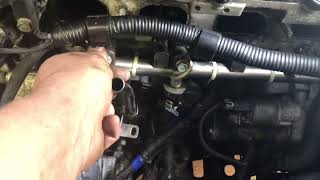
Typical fix: Replace the knock sensor. This requires removing the intake manifold. 🎬 Watch: Step-by-step guide to removing the manifold and sensor. It is highly recommended to replace the intake manifold gaskets at the same time. Ensure the new sensor is torqued to specification (approx. 15-20 Nm or 11-15 ft-lbs) on a perfectly clean engine block surface.
Est. part cost: $40-$80 - Wiring or Connector Damage 🟡 Medium Probability The wiring harness runs in a hot, tight space behind the engine. It can become brittle, corroded, or damaged, especially during unrelated repairs. The connector itself can also fail or develop a poor connection.
How to confirm: Visually inspect the wiring harness leading to the knock sensor for any signs of breaks, chafing, or corrosion at the connector. Use a multimeter to check for continuity and for shorts to ground between the ECM connector and the sensor connector.
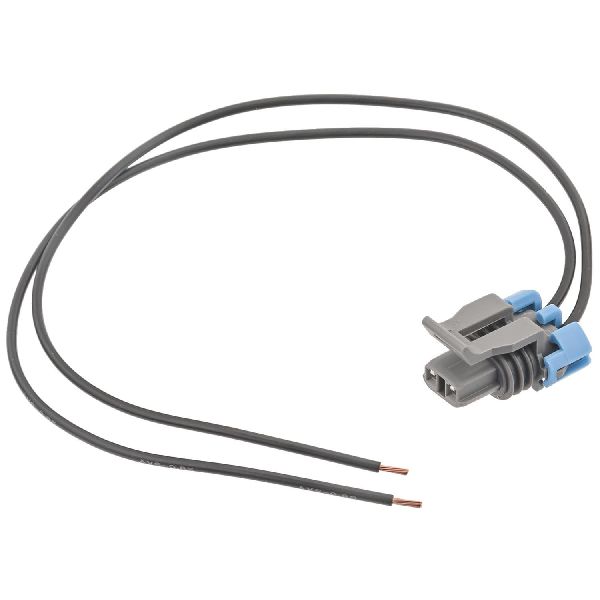
Typical fix: Repair the damaged section of the wire or replace the connector pigtail. In some cases, owners have relocated the sensor to a more accessible spot on the block, though this is not a manufacturer-approved repair.
Est. part cost: $10-$30 - ECM Software Logic ⚪ Low Probability Hyundai has issued multiple service campaigns (e.g., 953, 966) to update ECM software with the KSDS. Sometimes this more sensitive software can erroneously flag the knock sensor circuit. Ensuring the vehicle has the latest software is a key diagnostic step. A similar TSB (15-FL-003) was issued for other Hyundai models with P0326, reinforcing this pattern.
How to confirm: A Hyundai dealership or a qualified shop with a J2534 pass-thru device can check the vehicle's VIN against open campaigns and confirm the currently installed software version.
Typical fix: Update or re-flash the ECM to the latest software version available for the VIN. This is often done free of charge under a service campaign.
Est. part cost: $0-$150
Rare But Worth Checking
- Actual Engine Knock: The sensor may be working correctly and detecting a real mechanical issue. This could be from using low-octane fuel, excessive carbon buildup, or in a worst-case scenario for Theta II engines, internal connecting rod bearing wear. A P0326 can be a precursor to the more serious P1326 code. NHTSA ODI #11552325 describes an instance where the vehicle began loudly knocking and threw codes P0011 and P0326 before going limp and dying.
- Improper Sensor Installation: If the sensor was recently replaced, it must be torqued to the correct specification (typically 15-20 Nm or 11-15 ft-lbs) on a clean mounting surface. An over-tightened, under-tightened, or dirty connection will cause incorrect readings and can trigger a P0326 code, sometimes weeks after installation.
- Faulty Engine Control Module (ECM): It is very rare, but the internal circuitry of the ECM that processes the knock sensor signal can fail. This should only be considered after all other possibilities, including wiring and the sensor itself, have been exhaustively ruled out.
Diagnosis Steps
- Read the trouble codes with an OBD-II scanner.
- Check for any available Technical Service Bulletins (TSBs) or software updates for your vehicle's VIN. Specifically, check for campaigns 953 and 966 related to the KSDS update.
- Visually inspect the knock sensor wiring harness for obvious damage, corrosion, or loose connections. The harness is located on the back of the engine block, under the intake manifold.
- If wiring appears intact, test for continuity from the sensor connector to the ECM connector to rule out an open or short in the harness. Check the resistance between the two ECM pins for the knock sensor circuit; a reading between 120-280 kΩ is expected on some similar models.
- If wiring and software are confirmed good, the next step is to replace the knock sensor due to its high failure rate and difficult access.
- To replace the sensor, you must remove the upper intake manifold.
- While the manifold is off, it is critical to replace the intake manifold gaskets to prevent future vacuum leaks.
- Thoroughly clean the knock sensor's mounting surface on the engine block with a scraper and brake cleaner to ensure a flush fit.
- Install the new sensor and torque it to the manufacturer's specification, which is typically around 11-15 ft-lbs (15-20 Nm). Do not overtighten.
- Reassemble all components, clear the trouble codes, and perform a comprehensive test drive to confirm the fix.
Parts You'll Likely Need
- Knock Sensor
(OEM #39250-2G100)— This is the most common component to fail for this code. The original part number was 39250-2G000, which has been superseded by 39250-2G100.
Trusted brands: Hyundai (Genuine), Kia (Genuine), NTK, Delphi
OEM price range: $60-$90
Aftermarket price range: $25-$60 - Intake Manifold Gasket Set
(OEM #28411-2G000)— These are single-use gaskets that must be replaced anytime the intake manifold is removed to access the knock sensor.
Trusted brands: Hyundai (Genuine), Fel-Pro, Mahle
OEM price range: $20-$40
Aftermarket price range: $10-$25
Related Codes That Often Appear With This One
- P1326 — P1326 is a Hyundai-specific code for the Knock Sensor Detection System (KSDS). A fault in the primary knock sensor circuit (P0326) can sometimes trigger the P1326 warning and force the vehicle into limp mode, or P0326 may appear as an early warning of the mechanical failure that P1326 is designed to detect. NHTSA ODI #11710941 reports a case where P1326 and P0326 were recorded sequentially alongside severe oil consumption.
Technical Service Bulletins (TSBs) & Recalls
- source
- source_type: tsb | id_or_name: TSB 20-01-004H-1 / T3G
Platform-Specific Known Issues
Mechanic-Grade Diagnostic Values
- Knock Sensor Circuit Resistance — expected: 120 to 280 kΩ. Failure: A reading outside this range suggests a wiring or sensor issue. Note: A direct resistance check at the sensor itself is considered unreliable for this part; testing should be done from the ECM connector.
- Knock Sensor AC Voltage Signal (Tapping Test) — expected: A small, fluctuating AC millivolt signal should be visible on a lab scope when the engine block near the sensor is tapped with the key on, engine off.. Failure: A flat line (0V) or no response indicates a dead sensor or an open circuit.
Scan Tool Commands That Help
- Hyundai GDS / J2534 Pass-Thru: ECM Software Update / Re-flash — This is not a direct diagnostic command, but the primary dealer-level function used to resolve P0326 when it's caused by overly sensitive software logic. Check the vehicle's VIN for open campaigns (like 953/966) or TSBs related to the KSDS system before replacing parts.
Wiring & Ground Locations
- ECM Connector Pin (Signal) — At the main Engine Control Module (ECM) connector. The exact pin number varies by year and specific ECM.. For the 2.4L GDI (G4KJ), the knock sensor interface is often a Brown wire at Pin 62 of connector C300-A. Other diagrams show Pin 91. Verifying continuity and checking for shorts from this pin to the sensor connector is the definitive way to test the wiring harness.
- ECM Connector Pin (Ground) — At the main Engine Control Module (ECM) connector.. The sensor's ground reference is also provided by the ECM. On some diagrams, this is Pin 38 or Pin 70. A lot of diagnostic time can be saved by ensuring the ECM is receiving accurate data; NHTSA ODI #11611797 notes a service center diagnosis of P0326 specifically for an issue with the knock sensor readings.
- Main Engine Ground Strap — Typically a braided metal strap connecting the engine block or transmission case directly to the vehicle's chassis/frame.. A corroded or loose main engine ground can introduce electrical noise into multiple sensor circuits. This can cause the sensitive knock sensor to produce an erratic signal, triggering a false P0326 code.
Real Owner Repair Stories
- Reddit user @Fluffy9345 (Hyundai (model not specified, but Theta II engine family)) — Knock sensor code (P1326, which is related to P0326)
❌ Tried (didn't work) Initial diagnosis pointed towards replacing the sensor or potential engine failure.
✅ What actually fixed it The mechanic performed a complete inspection and found that the wire for the knock sensor had burnt out. Repairing the wiring resolved the code without needing to replace the sensor or engine. - Reddit user @quijotesko (2012 Hyundai Accent (different vehicle, but illustrates a common diagnostic trap)) — Recurring P0326 and P0420 codes.
❌ Tried (didn't work) Replacing the knock sensor., Replacing the catalytic converter with an aftermarket unit.
✅ What actually fixed it The user did not post a final resolution, but the diagnostic advice centered on the high probability that the cheap aftermarket catalytic converter had failed, causing legitimate performance issues that could contribute to the knock sensor code returning. This highlights how an unrelated, poor-quality repair can cause P0326 to reappear.
OEM Part Supersession History
39250-2G000→39250-2G100— Standard part revision and update by the manufacturer. The new part number is the correct and current replacement.
Model Year Variations Within This Range
- 2010-2015: The most significant variation is not a hardware change, but the rollout of the Knock Sensor Detection System (KSDS) software via Campaigns 953 and 966. Vehicles with this update have a much more sensitive system for detecting vibrations. A P0326 on an updated vehicle carries a higher suspicion of being related to the early stages of engine bearing wear, which the KSDS is designed to find.
Diagnostic Flowchart
Other Known Issues on This Vehicle
Issues unrelated to this code that are worth knowing about as an owner of this generation:
- Theta II Engine Failure / Seizure 🔴 High — Widespread across multiple model years, leading to class-action lawsuits and recalls. Can occur at various mileages, often starting after 60,000 miles. (Ref: Multiple recalls and warranty extensions (e.g., TSB 19-01-005H-1) were issued. Service Campaigns 953 and 966 were implemented to detect early signs of failure.)
- Excessive Oil Consumption 🔴 High — Very common for the 2.4L GDI engine. Owners report needing to add a quart of oil every 500-1,000 miles. Often caused by carbon buildup on piston rings. (Ref: No direct recall, but related to the overall engine health issues. Hyundai may perform an oil consumption test, but warranty coverage can be denied without meticulous service records.)
- Panoramic Sunroof Failure 🟠 Medium — Commonly reported issue where the sunroof gets stuck open, closes slowly, or fails to close completely. Repairs are notoriously expensive, often requiring full assembly replacement. (Ref: No recall, but numerous owner complaints. A reset procedure exists but often does not fix mechanical failures.)
- Brake Light Switch Failure 🟡 Low — A faulty brake light switch can cause multiple issues, including the inability to shift out of Park, ESC warning light illumination, and cruise control malfunction. (Ref: Recall 13V113000 was issued for this problem.)
- Transmission Shifting Issues 🟠 Medium — Owners have reported rough or delayed shifting. The issue is less widespread than engine problems but still a notable complaint.
Used vs. New Parts: Buying Guide for This Vehicle
When a used part is the smart pick: For this repair, using a used part is almost never a smart choice. The only exception might be large, non-wear hardware like the intake manifold itself if it were damaged during removal.
Donor-vehicle mileage cap: roughly under 30000 miles for the part to have meaningful remaining life.
What to inspect on the donor part:
- For a used intake manifold, check for cracks, warping on the mating surfaces, and ensure all threaded inserts are intact.
OEM-only on this vehicle (don't cheap out):
- Knock Sensor
Aftermarket brands forum-validated for this vehicle:
- NTK (NGK)
- Delphi
- Bosch
Brands owners have reported issues with on this vehicle:
- Unbranded, 'white-box' sensors from online marketplaces. Forum discussions are filled with stories of these parts failing quickly or being dead-on-arrival, forcing a repeat of the difficult installation labor.
Real Owner Stories
Aggregated from forums and TSBs cited above. Mileages and costs reflect what owners reported in those sources.
2013 Hyundai Tucson 2.4L — ~110000 miles
Symptoms: Repeated P0326 codes on a high-mileage Theta II engine.
What fixed it: The technician noted this pattern is a very common precursor to engine failure, which was ultimately resolved by engine replacement under Hyundai's extended warranty for connecting rod bearing failure.
Source hint: reddit.com/r/Hyundai
2011 Hyundai Tucson 2.4L
Symptoms: The P0326 code returned about two weeks after having the knock sensor replaced.
What fixed it: The source does not state the final fix, but highlights the high probability of the cause being a faulty aftermarket replacement part or an unresolved underlying wiring issue.
Source hint: Reddit r/MechanicAdvice
2014 Hyundai Tucson 2.4L
Symptoms: Vehicle was showing a P0326 trouble code.
What fixed it: An ECM software update from the dealership resolved the code. The owner also noted that previous attempts to fix the issue using non-OE sensors were unsuccessful.
Source hint: BobIsTheOilGuy.com
2012 Hyundai Tucson 2.4L
Symptoms: A P0326 code appeared shortly after having the engine replaced under the Theta II recall.
What fixed it: The source does not specify the fix for the code itself, but highlights the strong connection between the P0326 code and the broader engine issues covered by Hyundai's recalls and warranty extensions.
Source hint: Reddit (r/AskAMechanic)
Documented NHTSA Reports
NHTSA ODI #11710941
Symptoms: The check engine light, battery light, and oil light illuminated sequentially. Diagnostic trouble codes P1326 and P0326 were recorded.
What fixed it: Initial inspection indicated severe oil consumption despite a recent oil change less than 2,000 miles prior.
NHTSA ODI #11611797
Symptoms: An alert stating "a possible condition with your Engine Control System has been detected" appeared.
What fixed it: A service center diagnosed the issue as P0326 due to a problem with the knock sensor readings.
NHTSA ODI #11552325
Symptoms: The car went limp while driving and began loudly knocking before dying.
What fixed it: Diagnostic scans threw codes P0011 and P0326; the vehicle was rendered undrivable despite previously running perfectly with no warning lights.
Related OBD-II Codes
Frequently Asked Questions
I have a P0326 code on my Tucson. What are the specific Hyundai service campaigns I should check for?
I replaced the knock sensor on my 2012 Tucson, but the P0326 code came back. What's the likely cause?
Is it okay to use a cheaper aftermarket knock sensor for my Hyundai Tucson?
My mechanic says the knock sensor is in a difficult spot. What is involved in the replacement?
Should I be worried about engine failure if my Tucson has a P0326 code?
What is the correct torque specification when installing a new knock sensor on the Theta II engine?
My Check Engine Light is flashing and my Tucson is in 'limp mode'. Is this related to the P0326 code?
Helpful Videos
Used OEM Parts in Stock

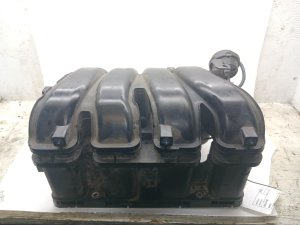

New Aftermarket Parts Available


The information in this article is provided for general reference and educational purposes only. Vehicle specifications, procedures, and part compatibility can vary by production date, trim level, and region. Always consult your vehicle's factory service manual and verify part numbers before purchasing or performing repairs. Safety-critical components such as airbags, seat belts, and braking systems should be installed by a qualified professional.
- Hyundai Tucson:
- 🎬 Helpful Videos
- 🛍️ Shop This Part
- What's Unique About the 2010-2015 Hyundai Tucson
- Symptoms You May Notice
- Most Likely Causes
- Rare But Worth Checking
- Diagnosis Steps
- Parts You'll Likely Need
- Related Codes That Often Appear With This One
- Technical Service Bulletins (TSBs) & Recalls
- Platform-Specific Known Issues
- Mechanic-Grade Diagnostic Values
- Scan Tool Commands That Help
- Wiring & Ground Locations
- Real Owner Repair Stories
- OEM Part Supersession History
- Model Year Variations Within This Range
- Diagnostic Flowchart
- Other Known Issues on This Vehicle
- Used vs. New Parts: Buying Guide for This Vehicle
- Real Owner Stories
- 2013 Hyundai Tucson 2.4L — ~110000 miles
- 2011 Hyundai Tucson 2.4L
- 2014 Hyundai Tucson 2.4L
- 2012 Hyundai Tucson 2.4L
- Documented NHTSA Reports
- NHTSA ODI #11710941
- NHTSA ODI #11611797
- NHTSA ODI #11552325
- Related OBD-II Codes
- Frequently Asked Questions
- 🎟️ Get 5% Off