

P0325 on 2013-2018 Ford C-Max Hybrid: Knock Sensor Circuit Malfunction Causes and Fixes
This code means the knock sensor circuit has failed. On the 2.0L Hybrid engine, this is most often a faulty knock sensor. Expect to pay $40-$90 for an OEM sensor and around 1.5-2.5 hours of labor for replacement due to its location under the intake manifold.
- P0325 on a Ford C-Max points to an electrical fault in the knock sensor circuit, not necessarily a mechanical engine problem.
- The most likely cause is a failed knock sensor, followed by damaged wiring.
- The sensor is located under the intake manifold, but it may be possible to replace it without removing the manifold, which is a key factor in the repair cost.
- Always use a torque wrench to tighten the new sensor to specification, as over-tightening can damage it or cause incorrect readings.
- Before replacing the sensor, always inspect the wiring harness and connector for damage, as this can be a cheaper and simpler fix.
- The Ford Fusion Hybrid and Lincoln MKZ Hybrid of the same era use the same powertrain and are known to experience the same P0325 issue.
What's Unique About the 2013-2018 Ford C-Max
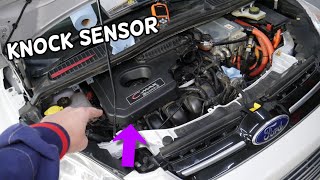
On the Ford C-Max with the 2.0L hybrid engine, the knock sensor is located on the back of the engine block, underneath the intake manifold. While this location is often difficult to access on many vehicles, some mechanics have reported that it is possible to replace the sensor on the C-Max without completely removing the intake manifold, which can significantly reduce labor time and cost. The issue is almost always electrical (the sensor or its wiring) rather than a mechanical engine problem causing actual knock. The C-Max has less room to work in the engine bay compared to its platform mate, the Ford Fusion, due to its front-end design.
Symptoms You May Notice
- Check Engine Light is on
- Reduced engine power and sluggish acceleration
- Decreased fuel economy
- Engine hesitates or runs rough
- Audible engine pinging or knocking noise (in some cases)
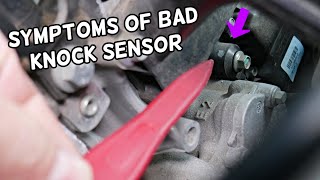
- Vehicle may enter a 'limp mode' where performance is severely restricted 🎬 Watch: Common symptoms of a failing knock sensor
- Replacing spark plugs or ignition coils, assuming the performance issue is a misfire without checking for codes.
- Assuming the engine has a serious mechanical knock without first diagnosing the P0325 circuit code.
- Replacing the knock sensor without cleaning the mounting surface or torquing it to specification, leading to a repeat code.
Most Likely Causes
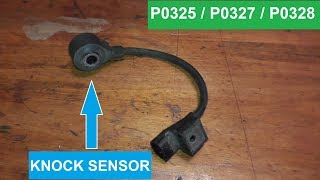
- Faulty Knock Sensor 🔴 High Probability The sensor is exposed to extreme heat and vibration, leading to internal failure of the piezoelectric element over time. Corrosion due to moisture ingress is also a common failure mode.
How to confirm: After confirming the wiring is intact, test the sensor's internal resistance with a multimeter; it should match the manufacturer's specification (many Ford sensors are in the 500-600 kOhm range, but vehicle-specific data should be confirmed). An out-of-spec, open (OL), or shorted reading indicates a bad sensor. An AC voltage test can also be performed by tapping the engine block near the sensor and watching for a small voltage spike.
Typical fix: Replace the knock sensor. It is critical to clean the mounting surface on the engine block before installation and torque the new sensor to the correct specification, as over-tightening can damage it or cause incorrect readings. A common torque spec for similar Ford applications is around 18 lb-ft (25 N.m), but always verify the spec for your specific vehicle.
Est. part cost: $20-$90 - Damaged Wiring or Connector 🟡 Medium Probability The wiring harness runs in a hot, tight space near the engine block, making it susceptible to heat damage, chafing, or corrosion over time. Rodent damage to the harness is also a surprisingly common cause.
How to confirm: Visually inspect the wiring harness leading to the knock sensor for any signs of melting, chafing, breaks, or rodent chew marks. Check the connector for corrosion, moisture, or a loose fit. Perform a continuity test on the wires between the sensor connector and the PCM to check for opens or shorts.
Typical fix: Repair the damaged section of wire or replace the connector pigtail. Secure the harness away from heat sources or sharp edges. In cases of extensive damage, a new engine wiring harness section may be required.
Est. part cost: $10-$50 for a pigtail, higher for harness sections
Rare But Worth Checking
- Powertrain Control Module (PCM) Fault: This is very rare. The PCM should only be considered after the sensor and wiring have been definitively ruled out as the cause.
- Actual Engine Knock: In some cases, the P0325 code can be triggered by severe, persistent engine knock that the PCM cannot correct, causing it to flag the sensor circuit as faulty. This could be due to carbon buildup, low-octane fuel, or other mechanical engine problems. This is less common than a sensor or wiring fault.
Diagnosis Steps
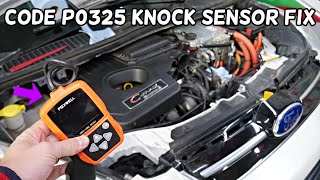
- Verify the P0325 code is present using an OBD-II scanner. Note any other codes present, as they may point to a root cause.
- Perform a thorough visual inspection of the knock sensor and its wiring harness. The sensor is on the back of the engine block, under the intake manifold. Look for any obvious damage, melting, rodent activity, or corrosion.
- Check that the connector is securely plugged into the sensor and is free of moisture or contamination. Clean with electrical contact cleaner if necessary.
- If wiring looks good, disconnect the sensor and measure its internal resistance using a multimeter. Compare the reading to Ford's specifications. An infinite (open) or zero reading indicates a failed sensor.
- If resistance is within spec, test the sensor's AC voltage output. With the meter connected, lightly tap the engine block near the sensor. You should see a small AC voltage reading, indicating the piezoelectric crystal is working. 🎬 See this guide on how to test and replace sensors
- If the sensor tests good, check for continuity and shorts in the wiring between the sensor connector and the PCM. Repair any faults found.
- If both the sensor and wiring are confirmed to be good, the issue may be with the PCM, but this is extremely unlikely.
Parts You'll Likely Need
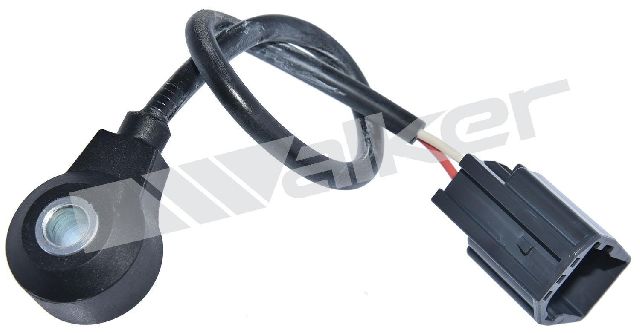
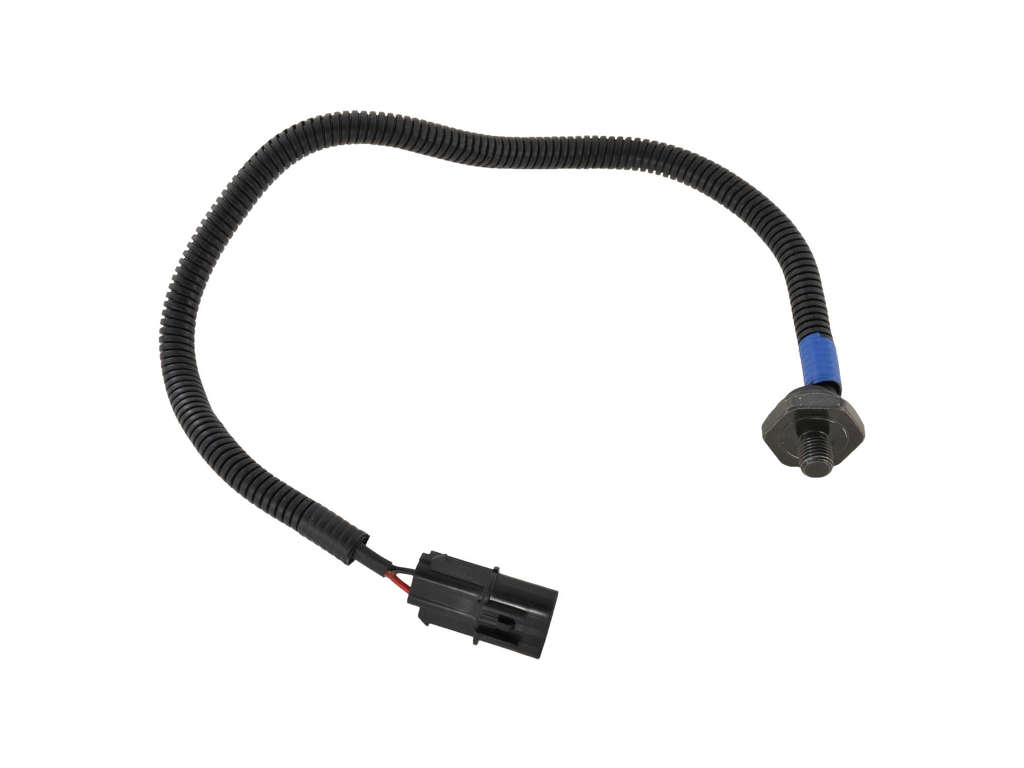
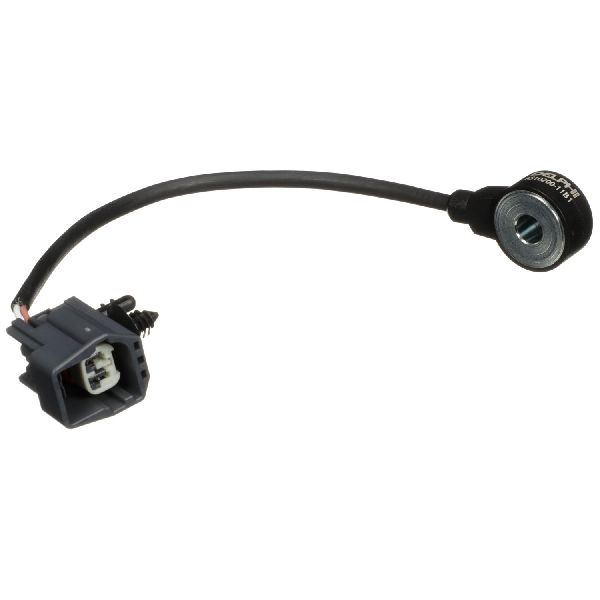
- Engine Knock Sensor
(OEM #1S7Z-12A699-BB)— This is the most common failure point for a P0325 circuit code. The part number has been superseded.
Trusted brands: Motorcraft, Delphi, NGK, Standard Motor Products, Carquest Premium
OEM price range: $40-$90
Aftermarket price range: $20-$60 - Knock Sensor Connector Pigtail — The connector itself can become brittle from heat cycles or corroded, causing a poor connection. Replacing the pigtail is often easier than repairing individual pins.
Trusted brands: Dorman, Motorcraft
OEM price range: $25-$50
Aftermarket price range: $10-$30
Technical Service Bulletins (TSBs) & Recalls
- TSB Bulletin #TSB 18-2367: While not for the C-Max, this TSB for the Ford Explorer notes that a P0325 code can be caused by a wire chafe condition near the knock sensor connector C109, highlighting the importance of checking the wiring.
- No specific TSBs for the 2013-2018 Ford C-Max directly addressing P0325 were found in public databases. However, general diagnostic principles for this code are well-established.
Real Owner Repair Stories
In a report involving another Ford model, NHTSA ODI #10712827 describes a situation where a vehicle experienced multiple instances of the check engine light staying on with P0325 present alongside throttle body related codes like P2104 and P2112.
Platform-Specific Known Issues
- The knock sensor on the 2.0L Hybrid engine is located in a tight spot under the intake manifold, making access challenging. The Ford C-Max has even less room to work 🎬 Watch: How to locate and replace the sensor in tight spaces than the Fusion with the same engine.
- A video from 'Electrical Car Repair LIVE' on YouTube specifically addresses the P0325 code on the C-Max, Fusion, and MKZ, confirming the common causes and location.
Mechanic-Grade Diagnostic Values
- Knock Sensor (KS) Signal Circuit Voltage — expected: Small AC voltage pulse when tapping engine block near sensor with engine running.. Failure: No AC voltage is generated, or voltage is present without stimulus, indicating a short or failed sensor.
- Knock Sensor (KS) to PCM Wiring — expected: The knock sensor signal wires are KS1+ and KS1-. These can be checked for continuity from the sensor connector to the PCM connector (C175b).. Failure: High resistance or an open (OL) reading on a multimeter indicates a broken wire. Low resistance to ground indicates a short.
Scan Tool Commands That Help
- Ford IDS / FORScan: Key On Engine Running (KOER) Self-Test — On some Ford systems, initiating a KOER test and then lightly tapping the engine block near the sensor can trigger a specific response or code (like the historical Code 25), confirming if the PCM is receiving any signal from the sensor. This helps differentiate a completely dead sensor/circuit from an intermittent one.
Wiring & Ground Locations
- PCM Connector C175b — The Powertrain Control Module (PCM) is located at the front of the left front wheelwell. C175b is one of the main connectors to it.. This is the termination point for the knock sensor wires. Pinpoint testing for continuity and shorts must be done between the sensor connector and the pins for KS1+ and KS1- on this connector.
- G104 — Rear of transmission.. A poor engine block ground can introduce electrical noise or cause incorrect readings on sensitive circuits like the knock sensor. This is a primary ground point to inspect and clean during diagnosis.
- G108 — Top of transmission.. Similar to G104, this is another critical engine/drivetrain ground point. Verifying it is clean and tight is a crucial step before condemning expensive parts like the sensor or PCM.
OEM Part Supersession History
1S7Z-12A699-BA→1S7Z-12A699-BB— Standard part revision, likely for improved durability, material, or manufacturing process.
Diagnostic Flowchart
Used vs. New Parts: Buying Guide for This Vehicle
When a used part is the smart pick: For this repair, a used part is almost never a smart choice. The knock sensor is a sensitive piezoelectric device exposed to thousands of heat cycles and constant vibration. Its failure is age and use-related. Given the significant labor required to access it under the intake manifold, the risk of a used part failing shortly after installation is too high.
What to inspect on the donor part:
- Not applicable. Do not use a salvaged knock sensor for this repair.
OEM-only on this vehicle (don't cheap out):
- Engine Knock Sensor
Aftermarket brands forum-validated for this vehicle:
- Motorcraft (OEM)
- NGK/NTK
- Delphi
Brands owners have reported issues with on this vehicle:
- Unknown, no-name brands from online marketplaces should be avoided due to the high labor cost of a potential repeat repair.
Related OBD-II Codes
Frequently Asked Questions
Where is the knock sensor located on my 2013-2018 C-Max Hybrid, and is it difficult to replace?
My C-Max has a P0325 code. Should I just replace the knock sensor right away?
Are there any official Ford TSBs for the P0325 code on the C-Max Hybrid?
Can I use a used or a cheap no-name knock sensor for this repair?
What is the correct torque specification for the knock sensor on my C-Max?
My C-Max shares its engine with the Fusion Hybrid. Does that car also have problems with the P0325 code?
Helpful Videos
Used OEM Parts in Stock

New Aftermarket Parts Available


The information in this article is provided for general reference and educational purposes only. Vehicle specifications, procedures, and part compatibility can vary by production date, trim level, and region. Always consult your vehicle's factory service manual and verify part numbers before purchasing or performing repairs. Safety-critical components such as airbags, seat belts, and braking systems should be installed by a qualified professional.
- Ford C-Max:
- 🎬 Helpful Videos
- 🛍️ Shop This Part
- What's Unique About the 2013-2018 Ford C-Max
- Symptoms You May Notice
- Most Likely Causes
- Rare But Worth Checking
- Diagnosis Steps
- Parts You'll Likely Need
- Technical Service Bulletins (TSBs) & Recalls
- Real Owner Repair Stories
- Platform-Specific Known Issues
- Mechanic-Grade Diagnostic Values
- Scan Tool Commands That Help
- Wiring & Ground Locations
- OEM Part Supersession History
- Diagnostic Flowchart
- Used vs. New Parts: Buying Guide for This Vehicle
- Related OBD-II Codes
- Frequently Asked Questions
- 🎟️ Get 5% Off