

P0316 on 2013-2020 Ford Fusion 2.0L EcoBoost: Startup Misfire and Critical Engine Warning
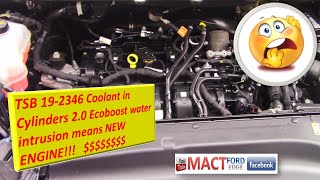
P0316 means a misfire was detected on startup. On 2017-2019 Fusions, this is a major warning sign of a known engine defect causing coolant to leak into the cylinders, requiring engine replacement. This is documented in Ford TSBs 19-2346 and 22-2229. For all years, if coolant levels are normal, the cause is likely worn spark plugs or a bad ignition coil, a much cheaper fix.
- For a 2013-2020 Fusion with a 2.0L EcoBoost, P0316 is a potentially critical code.
- Your first and most important check is the coolant level. If it's dropping without a visible leak, stop driving and seek professional diagnosis for engine coolant intrusion.
- Ford TSB 19-2346 confirms this issue for 2017-2019 models, often requiring a full engine replacement.
- If the coolant system is healthy, the cause is likely standard maintenance: worn spark plugs or a failing ignition coil.
- Do not replace ignition parts before ruling out the coolant issue, as you may be wasting money and risking catastrophic engine failure.
What's Unique About the 2013-2020 Ford Fusion
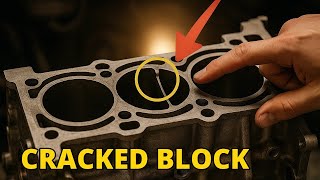
For most cars, P0316 suggests a simple tune-up. However, on the 2.0L EcoBoost engine in the Fusion, this code is a notorious and critical warning sign for a major engine design flaw. A series of Ford Technical Service Bulletins (TSBs), culminating in TSB 22-2229, confirm that this engine can develop cracks in the block, allowing coolant to seep into the cylinders. The flaw is a slit-like coolant passage between the cylinders in the 'open-deck' engine block design, which was revised in mid-2019 to a more robust drilled-hole design. This causes a misfire on startup and can lead to catastrophic engine failure if ignored. Therefore, the first diagnostic step for any owner seeing P0316 must be to check for coolant loss.
Symptoms You May Notice
- Check Engine Light is on (may be flashing)
- Rough, shaky idle immediately after starting the engine, which may smooth out after a few moments
- Noticeable loss of engine coolant with no visible external leaks
- White, sweet-smelling smoke from the exhaust pipe on startup
- Reduced engine power and poor acceleration
- Strong smell of gasoline from the exhaust
- Engine may sound different, with some owners mistaking the misfire for a transmission problem
- Replacing only spark plugs and ignition coils without first checking for coolant loss. This wastes money and time, as the new parts will quickly be fouled if coolant intrusion is the root cause. Many owners report this experience in forums before discovering the true engine issue.
Most Likely Causes
- Engine Coolant Intrusion (Cracked Engine Block) 🔴 High Probability A documented design flaw in the 'open-deck' 2.0L EcoBoost engine block features a thin coolant passage between cylinders that can crack. This allows coolant to leak into the combustion chamber. Ford TSB 19-2346 and the later TSB 22-2229 specifically address this for 2017-2019 models, listing P0316 as a key DTC. The issue is also the subject of multiple class-action lawsuits.
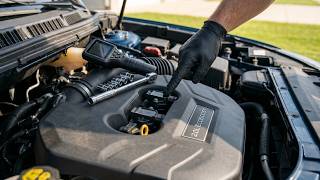
How to confirm: Check the coolant reservoir; if it's low without any visible leaks on the ground, this is a major red flag. The definitive professional test is a cooling system pressure test; the TSB specifies a pressure drop of more than 4 PSI over 5 hours indicates a leak. A borescope inspection of the cylinders 🎬 Watch: How to check for coolant intrusion using a borescope. (with spark plugs removed) will show coolant pooling on top of the pistons or unusually clean, steam-cleaned piston tops. NHTSA ODI #11520798 confirms this diagnostic path, where a technician pulled the coil and plug and found coolant in the cylinder alongside codes P0217, P0302, P0316, and P1285.
Typical fix: The only permanent fix is to replace the entire long block engine assembly with a redesigned part from Ford that uses drilled passages instead of a slot between cylinders. The updated long block part number is often cited as G2GZ-6006-A or a superseding number.
Est. part cost: $4000-$7000 - Worn Spark Plugs 🟡 Medium Probability Turbocharged engines like the EcoBoost are harder on spark plugs than naturally aspirated engines. While the official service interval is 100,000 miles, many owners and mechanics report misfires and recommend replacement every 40,000-60,000 miles to maintain performance. A worn plug may fail to ignite the mixture on a cold start, triggering P0316.
How to confirm: Remove the spark plugs and inspect them. Look for a worn-down electrode, excessive carbon buildup, or a white, ashy or greenish deposit. A white/green deposit is a strong indicator of coolant contamination, pointing back to the more severe cause.
Typical fix: Replace all four spark plugs. It is highly recommended to use the OEM-specified Motorcraft plugs, gapped correctly to 0.027-0.031 in.
Est. part cost: $40-$80 - Failing Ignition Coil 🟡 Medium Probability
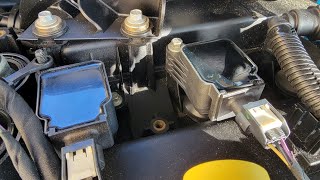
How to confirm: If you have a cylinder-specific code (e.g., P0302), swap the ignition coil from that cylinder with one from a known good cylinder (e.g., cylinder 3). Clear the codes and drive the vehicle. If the code changes to P0303, the ignition coil is faulty. 🎬 See this walkthrough on how to replace a faulty ignition coil.
Typical fix: Replace the faulty ignition coil. It is good practice to replace all four if they are original and high-mileage.
Est. part cost: $50-$90 per coil
Rare But Worth Checking
- Leaking Fuel Injector: A fuel injector can leak fuel into the cylinder after the engine is shut off, causing a rich misfire on the next startup. This can sometimes accompany the primary issues.
- Excessive Oil Consumption: Manufacturer Bulletin #SSM 54504 notes that P0316 may appear alongside misfire codes P0300-P0306 and codes P0524 or P06DD when there is excessive oil consumption (1 quart in less than 3,000 miles).
- Seasonal Fuel Blend Change: In rare cases, if P0316 appears alone without other misfire codes, it can be triggered by the transition from summer to winter blend gasoline, which has different volatility. The code may clear on its own after a few tanks of the new fuel.
- Faulty Powertrain Control Module (PCM): Extremely rare, but a failed ignition driver within the PCM can cause a persistent misfire on a specific cylinder even after replacing the spark plug and coil. This requires sending the PCM for specialized repair.
Diagnosis Steps
- Scan the PCM for all stored codes. Note the specific cylinder misfire code (P0301-P0304) that is present with P0316.
- CRITICAL STEP: Check the coolant level in the overflow reservoir. If it is low and there are no visible leaks under the car, assume you have the coolant intrusion issue until proven otherwise. NHTSA ODI #11559329 describes an owner who had to fill coolant every other day due to loss with no visible signs in the engine bay, accompanied by a rough start and P0316.
- If coolant is low, take the vehicle to a professional for a cooling system pressure test. Per TSB 19-2346, a pressure drop of more than 4 PSI in 5 hours is a positive indicator. Follow with a borescope inspection to visually confirm coolant in the cylinders.
- Perform a relative compression test. NHTSA ODI #11655969 reports a case where a scan tool verified a P0302 and P0316, and a relative compression test subsequently found cylinder #2 was 25% down.
- If the vehicle is a 2017-2019 model, check with a Ford dealer about coverage under TSB 22-2229, even if out of warranty. Note that a similar Customer Satisfaction Program (21N12) was issued for 1.5L engines and may provide a precedent for negotiation.
- If the coolant level is full and stable, proceed with standard misfire diagnosis.
- Remove the spark plug from the misfiring cylinder. Inspect for heavy fouling, damage, or white/green deposits that indicate coolant.
- Swap the ignition coil from the misfiring cylinder to a different cylinder. Clear the codes and run the engine to see if the misfire code 'follows' the coil to the new cylinder.
- If the misfire follows the coil, replace the coil. If it stays on the original cylinder, the problem is likely the spark plug, fuel injector, or an internal engine issue.
- If new plugs and coils do not resolve the issue and coolant levels are stable, further diagnosis of the fuel system or a compression test may be needed.
- After any internal engine repairs, PCM replacement, or crank sensor replacement, perform the 'Misfire Monitor Neutral Profile Correction' procedure using a high-level scan tool like Ford IDS to ensure the misfire detection system is properly calibrated.
Parts You'll Likely Need
- Engine Long Block Assembly
(OEM #G2GZ-6006-A (verify by VIN, may be superseded))— This is the only official Ford-recommended fix for the coolant intrusion issue, which is a primary cause of P0316 on these engines. The replacement part is a redesigned block. 🎬 Watch: A detailed look at the engine block crack and fix.
Trusted brands: Motorcraft (Ford)
OEM price range: $4000-$7000
Aftermarket price range: $3500-$6000 - Ignition Coil
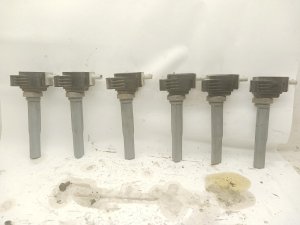
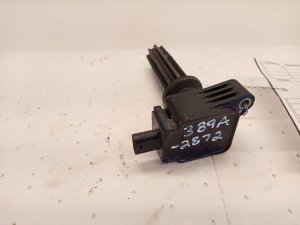
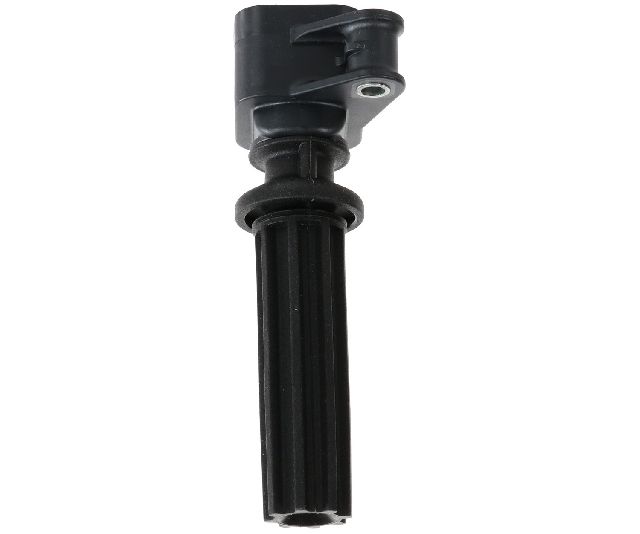
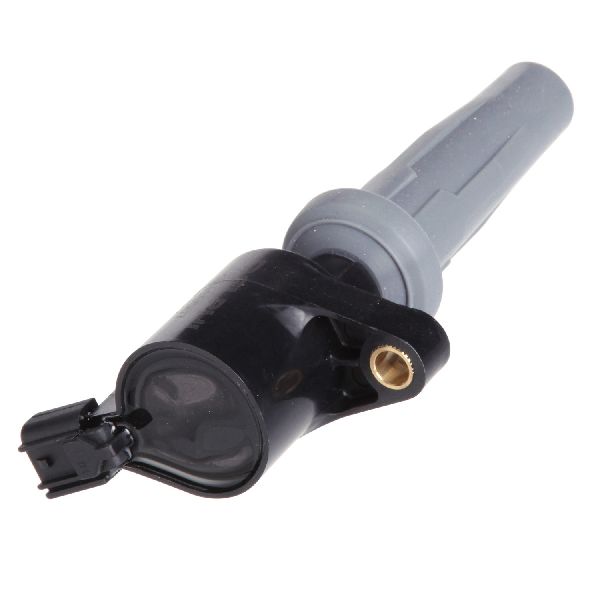
(OEM #DG562)— A common cause of misfires if the coolant intrusion issue has been ruled out.
Trusted brands: Motorcraft, NGK, Bosch, MSD
OEM price range: $60-$90
Aftermarket price range: $40-$70 - Spark Plug
(OEM #SP-537 or SP-594 (Verify by VIN))— Worn spark plugs are a frequent maintenance item that can cause startup misfires on EcoBoost engines.
Trusted brands: Motorcraft
OEM price range: $10-$15 per plug
Aftermarket price range: $8-$12 per plug
Related Codes That Often Appear With This One
- P0301, P0302, P0303, P0304 — These codes specify which cylinder is misfiring (1, 2, 3, or 4). P0316 tells you the misfire happened at startup, and these codes tell you where. Coolant intrusion often occurs between cylinders 2 and 3.
- P0300 — This indicates a random or multiple cylinder misfire, which can occur if coolant is affecting more than one cylinder.
- P0217, P1285, P1299 — These are engine overheat codes. They are specifically mentioned in Ford's TSBs for the coolant intrusion issue, as losing coolant will eventually lead to overheating.
Technical Service Bulletins (TSBs) & Recalls
- TSB 22-2229: Supersedes previous TSBs, including 19-2346, and provides the latest service procedure for the coolant intrusion issue on 2017-2019 2.0L models.
- TSB 19-2346: The key bulletin that first detailed the coolant intrusion problem, listing P0316 as a primary DTC and specifying long block replacement as the fix.
- Bulletin #SSM 54504: Addresses instances of P0316 and P0300-P0306 occurring with excessive oil consumption and potential oil pressure circuit codes (P0524, P06DD).
Platform-Specific Known Issues
- A design flaw in the 1.5L and 2.0L EcoBoost engine blocks may cause cracks to form between cylinders, allowing coolant to leak into the combustion chamber. This is documented in TSBs 19-2346 and 22-2229 for the 2.0L engine.
Mechanic-Grade Diagnostic Values
- Ignition Coil Primary Resistance — expected: 0.4 to 2.0 ohms. Failure: A reading outside this range indicates a faulty coil winding.
- Ignition Coil Secondary Resistance — expected: 6,000 to 15,000 ohms (6k-15k Ω). Failure: A reading outside this range indicates a faulty secondary winding.
- High-Pressure Fuel Rail Pressure (OEM System) — expected: Up to 150 bar / 2150 PSI. Failure: Significantly lower pressure under load can indicate a failing High-Pressure Fuel Pump (HPFP), which could cause misfires.
- Spark Plug Gap — expected: 0.027 - 0.031 inches. Failure: An incorrect gap can cause weak spark and lead to misfires, especially under boost.
Hidden / Shadow Codes Worth Checking
- Mode $06, Test ID $82: This is not a DTC, but a Mode $06 monitor for misfire counts on specific cylinders (e.g., Cylinder 2). A high count in this test data on a professional scan tool can confirm which cylinder is misfiring even before a P030x code is set. (see via A professional scan tool capable of displaying Mode $06 data.)
Scan Tool Commands That Help
- Ford IDS, FORScan, or high-level Snap-on/Autel scanner: Misfire Monitor Neutral Profile Correction — This procedure MUST be performed after any internal engine repairs, crankshaft sensor replacement, or PCM replacement. It relearns the crankshaft's rotational profile so the PCM can accurately detect misfires. Failure to perform this can lead to false misfire codes or a failure to detect real ones.
- Ford IDS or equivalent: Power Balance Test — This active test allows a technician to disable one cylinder at a time to see the corresponding drop in RPM. A cylinder that causes little or no RPM drop when disabled is the one that is misfiring.
Real Owner Repair Stories
- Reddit user on /r/fordfusion (2017 Ford Fusion SE 2.0L EcoBoost, 65k miles) — Check engine light, white smoke from exhaust on startup, strong coolant smell.
❌ Tried (didn't work) The dealership initially diagnosed a cylinder 1 misfire (P0301) and replaced a spark plug and an ignition coil. The check engine light returned within days with a cylinder 2 misfire (P0302).
✅ What actually fixed it The symptoms (white smoke, coolant smell, recurring misfire codes after tune-up parts) strongly pointed to the known coolant intrusion issue. The final fix, though not explicitly stated as completed in the post, is engine block replacement per the TSB. The story highlights the common misdiagnosis of treating it as a simple ignition problem first. - NHTSA ODI #11653487 — An owner reported coolant intrusion into cylinder 4 with codes P0304 and P0316. The official diagnosis recommended the replacement of the entire short block, noting it as a common problem on EcoBoost engines.
OEM Part Supersession History
Engine blocks used prior to mid-2019 with open-deck slot design→G2GZ-6006-A (and its subsequent revisions like K2GZ-6006-E, P2GZ-6006-A)— The original block design was prone to cracking between cylinders. The new design uses drilled coolant passages for increased structural integrity to prevent coolant intrusion.
Heads up: Installing an older design block will not solve the root problem. When replacing the engine, it is critical to ensure the long block is the updated design.
Model Year Variations Within This Range
- 2013-2016: These earlier models primarily used the MyFord Touch infotainment system. While the 2.0L engine is mechanically similar, the official TSB for coolant intrusion does not explicitly cover all of these years, though the issue is known to occur.
- 2017-2018: These models feature a mid-cycle refresh with updated styling and the introduction of the superior SYNC 3 infotainment system. These are the primary years listed in Ford's TSBs (19-2346, 22-2229) for the coolant intrusion issue.
- 2019-2020: The engine block was revised in mid-2019 to fix the coolant intrusion flaw. Therefore, a Fusion built late in the 2019 model year or in 2020 is significantly less likely to experience this specific failure. These models also feature the SYNC 3 system and Co-Pilot360 driver aids as standard.
Diagnostic Flowchart
Other Known Issues on This Vehicle
Issues unrelated to this code that are worth knowing about as an owner of this generation:
- Degrading Shifter Cable Bushing 🔴 High — Very common across 2013-2016 models, leading to multiple recalls. (Ref: Ford Recalls 18S20, 19S16, and NHTSA Campaign 22V-413. The bushing can detach, causing the vehicle to be in a different gear than indicated, potentially leading to a rollaway if 'Park' is selected but not engaged.)
- 6F35 Transmission Harsh Shifting / Failure 🟠 Medium — Widespread reports of shuddering, delayed engagement, and hard shifts, particularly on 2-3 and 4-5 upshifts. Subject of class-action lawsuits. (Ref: Multiple lawsuits filed (e.g., Jones et al. v. Ford Motor Company), but no general recall. TSBs often address symptoms with software updates rather than mechanical fixes.)
- Warped Front Brake Rotors 🟡 Low — Common complaint causing vibration or shuddering during braking. (Ref: No recall, but a frequently discussed issue. The common fix is replacing OEM rotors with higher-quality aftermarket vented rotors.)
- Failing EVAP Purge Valve 🟡 Low — A common failure part causing difficulty starting the car after refueling and an EVAP system leak code. (Ref: No recall, but a well-documented and relatively simple DIY repair.)
- Cracked Flex Plate 🔴 High — Less common than other issues, but a severe failure where the flex plate connecting the engine to the transmission cracks, causing a loud knocking/ticking sound.
- Failing Brake Vacuum Pump 🔴 High — Reported on EcoBoost models, the mechanical vacuum pump can fail, leading to an intermittently hard or stiff brake pedal, increasing stopping distance.
Used vs. New Parts: Buying Guide for This Vehicle
When a used part is the smart pick: For this specific failure (P0316 caused by coolant intrusion), purchasing a used engine is extremely high-risk and generally not recommended unless the donor vehicle can be proven to be a late-2019 or 2020 model with the revised engine block design. Used ignition coils or fuel injectors are not recommended as they are wear items with unknown history.
Donor-vehicle mileage cap: roughly under 60000 miles for the part to have meaningful remaining life.
What to inspect on the donor part:
- For a used engine, verify the VIN of the donor vehicle to confirm it was manufactured after mid-2019.
- Obtain a complete vehicle history report for the donor car to check for maintenance records and accident history.
- If possible, perform a compression test and a cylinder leak-down test on the used engine before purchase.
- Inspect the oil for any milky appearance (coolant contamination) and check for excessive sludge under the oil cap.
OEM-only on this vehicle (don't cheap out):
- Engine Long Block: The only guaranteed fix for coolant intrusion is a new, redesigned long block from Ford (Motorcraft). Aftermarket or rebuilt engines may use the old, flawed block design.
- Spark Plugs: EcoBoost engines are sensitive to spark plug heat range and design. Using the specified Motorcraft plugs is the safest choice to avoid performance issues.
Aftermarket brands forum-validated for this vehicle:
- Ignition Coils: MSD, ACCEL, and NGK are reputable brands that offer direct replacement or performance upgrade coils for the 2.0L EcoBoost.
Brands owners have reported issues with on this vehicle:
- Unbranded, no-name ignition coils and sensors from online marketplaces should be avoided, as their quality and longevity are often poor and can cause persistent issues.
Real Owner Stories
Aggregated from forums and TSBs cited above. Mileages and costs reflect what owners reported in those sources.
2016 Ford Fusion 2.0L EcoBoost
Symptoms: Diagnosed with coolant intrusion and receiving multiple misfire codes including P0316.
What fixed it: The source discusses the diagnosis of coolant intrusion, which typically requires a long block replacement per TSB guidelines.
Source hint: Reddit r/fordfusion: Coolant Intrusion and What to Do
2017-2019 Ford Escape 2.0L EcoBoost
Symptoms: Owner reported codes P0300, P0302, P0304, and P0316.
What fixed it: Dealer diagnosis of coolant intrusion and cylinder wall damage, requiring engine service per TSB 19-2346.
Source hint: Reddit r/MechanicAdvice: Ford Escape Cylinder Coolant Intrusion
2013-2020 Ford Fusion 1.5L EcoBoost
Symptoms: Misfires (including P0316), white smoke, and coolant loss.
What fixed it: Free engine replacement under Ford Customer Satisfaction Program 21N12.
Source hint: Ford Fusion Forum: Customer Satisfaction Program 21N12 - 1.5L Coolant Intrusion
Related OBD-II Codes
Frequently Asked Questions
Does TSB 22-2229 apply to my 2017-2019 Ford Fusion with the 2.0L EcoBoost?
Is there a specific test Ford recommends to confirm if P0316 is caused by a cracked block?
What is the recommended spark plug gap for the 2.0L EcoBoost to prevent startup misfires?
My 2016 Fusion has P0316 and white smoke; is this covered by the same 1.5L engine program?
What is the 'Misfire Monitor Neutral Profile Correction' mentioned in the diagnostic steps?
Can I just replace the head gasket to fix the coolant leak causing my P0316 code?
Helpful Videos
Used OEM Parts in Stock



New Aftermarket Parts Available


The information in this article is provided for general reference and educational purposes only. Vehicle specifications, procedures, and part compatibility can vary by production date, trim level, and region. Always consult your vehicle's factory service manual and verify part numbers before purchasing or performing repairs. Safety-critical components such as airbags, seat belts, and braking systems should be installed by a qualified professional.
- Ford Fusion:
- 🎬 Helpful Videos
- 🛍️ Shop This Part
- What's Unique About the 2013-2020 Ford Fusion
- Symptoms You May Notice
- Most Likely Causes
- Rare But Worth Checking
- Diagnosis Steps
- Parts You'll Likely Need
- Related Codes That Often Appear With This One
- Technical Service Bulletins (TSBs) & Recalls
- Platform-Specific Known Issues
- Mechanic-Grade Diagnostic Values
- Hidden / Shadow Codes Worth Checking
- Scan Tool Commands That Help
- Real Owner Repair Stories
- OEM Part Supersession History
- Model Year Variations Within This Range
- Diagnostic Flowchart
- Other Known Issues on This Vehicle
- Used vs. New Parts: Buying Guide for This Vehicle
- Real Owner Stories
- 2016 Ford Fusion 2.0L EcoBoost
- 2017-2019 Ford Escape 2.0L EcoBoost
- 2013-2020 Ford Fusion 1.5L EcoBoost
- Related OBD-II Codes
- Frequently Asked Questions
- 🎟️ Get 5% Off