

P0305 on 2004-2007 Toyota Highlander 3.3L V6: Cylinder 5 Misfire Causes and Fixes
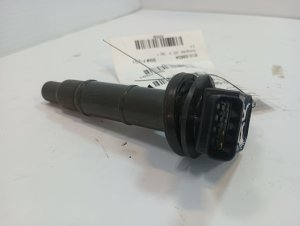
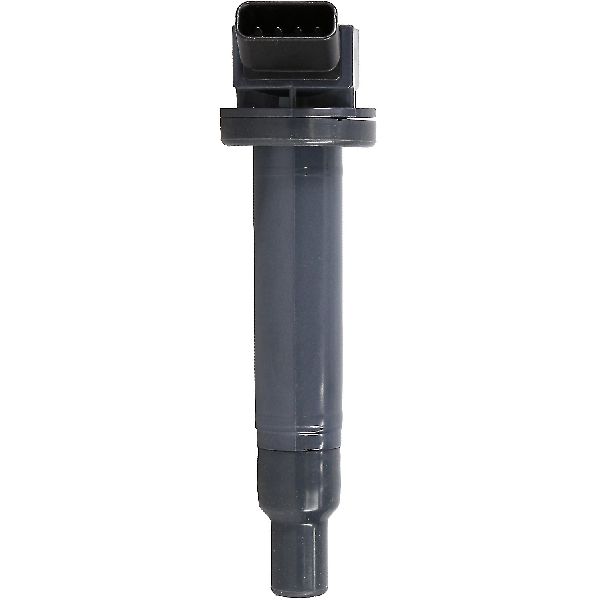
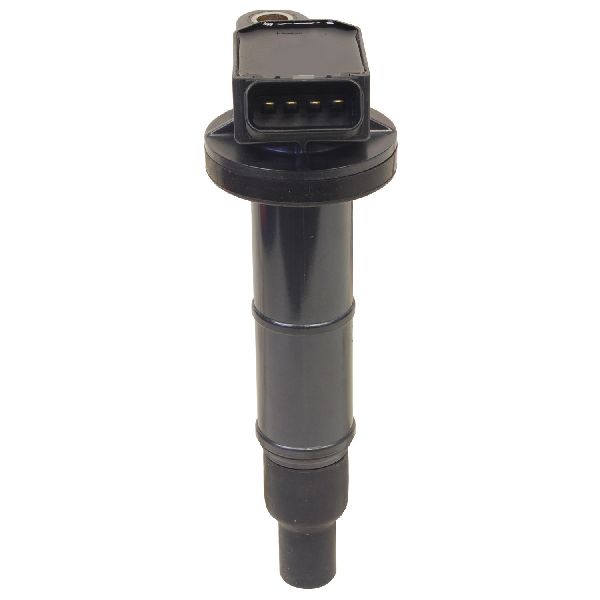
P0305 indicates a misfire in cylinder #5. On this Highlander, this is almost always a failed ignition coil. Cylinder 5 is on the rear bank against the firewall, making access difficult and labor-intensive as it requires removing the upper intake manifold. A single Denso coil costs about $75-$90, but it's highly recommended to replace all three rear coils and all six spark plugs at the same time to avoid repeating the costly labor.
- P0305 on a 2004-2007 Highlander 3.3L V6 means cylinder #5 is misfiring.
- The most common cause is a bad ignition coil, followed by a worn spark plug.
- Cylinder 5 is on the rear bank against the firewall, requiring removal of the intake manifold for access.
- Due to the high labor cost, it is strongly recommended to replace all three rear ignition coils, all six spark plugs, and the intake gaskets at the same time.
- Do not drive if the check engine light is flashing, as this can quickly destroy the catalytic converter.
What's Unique About the 2004-2007 Toyota Highlander

The key challenge with a P0305 on the 3.3L V6 Highlander is the physical location of cylinder 5. The cylinders are numbered 2-4-6 on the front bank (easy to access) and 1-3-5 on the rear bank against the firewall. Cylinder 5 is the rearmost cylinder on the driver's side, and accessing its ignition coil and spark plug requires removing the upper intake manifold (plenum). This turns a simple part swap into a multi-hour job, significantly increasing labor costs. The rear bank's tight packaging against the firewall also leads to significant heat soak, which can shorten the life of electronic components like ignition coils.
Symptoms You May Notice
- Rough or shaky idle
- Hesitation or stumbling during acceleration
- Noticeable loss of engine power
- Solid or flashing Check Engine Light
- Decreased fuel economy
- Possible fuel smell from the exhaust
- Vibration that feels like an unbalanced tire, especially at lower RPM
- Replacing only the cylinder 5 ignition coil without replacing the other two rear coils and all spark plugs. While this fixes the immediate code, another rear coil often fails soon after, requiring the expensive labor to be repeated.
- Assuming the catalytic converter is bad when it is actually being damaged by the unburned fuel from the persistent misfire.
Most Likely Causes

- Failed Ignition Coil 🔴 High Probability Ignition coils are a very common failure item on the 3MZ-FE engine. The rear bank coils, including cylinder 5, are subjected to more heat due to their location against the firewall, which can accelerate their degradation.
How to confirm: The most effective method is to swap the ignition coil from cylinder 5 with an easily accessible one from the front bank (e.g., cylinder 2, 4, or 6). Clear the codes and drive. If the code changes to P0302, P0304, or P0306, the coil is bad. If P0305 returns, the coil is not the issue. This test requires removing the intake manifold to access the rear coil.
Typical fix: Replace the ignition coil. Due to the difficult access, it is strongly recommended to replace all three rear ignition coils (cylinders 1, 3, 5) and all six spark plugs at the same time to avoid repeating the labor-intensive disassembly.
Est. part cost: $75-$90 for one OEM-quality coil (Denso) - Worn Spark Plug 🟡 Medium Probability Spark plugs are a normal wear item with a service life of around 100,000 miles. If the vehicle has high mileage and the plugs haven't been changed, their electrodes can wear down, increasing the gap and causing a weak or inconsistent spark.
How to confirm: After ruling out the ignition coil, inspect the spark plug from cylinder 5. Look for a worn electrode, wide gap, or heavy deposits of carbon or oil. This requires removing the intake manifold.
Typical fix: Replace the spark plug. It is best practice to replace all six spark plugs at once, especially since the intake manifold must be removed to access the rear three.
Est. part cost: $8-$25 per iridium spark plug - Clogged or Failed Fuel Injector ⚪ Low Probability Fuel injectors can become clogged with deposits over time, restricting fuel flow. While less common than ignition issues, it's a possibility on higher-mileage engines. Some owners report temporary success with high-quality fuel system cleaners, which points to clogging as a potential issue.
How to confirm: Listen for a clicking sound from the injector with a mechanic's stethoscope. A more advanced test involves checking its resistance with a multimeter (spec: 13.4-14.2 Ω) or swapping the injector with one from another cylinder to see if the misfire code follows.
Typical fix: Replace the faulty fuel injector. This also requires removing the intake manifold to access the rear fuel rail.
Est. part cost: $100-$200 for one OEM-quality injector
Rare But Worth Checking
- Vacuum Leak: A leak in the intake manifold gasket near the runner for cylinder 5 can lean out the air/fuel mixture and cause a misfire. These gaskets are one-time use and must be replaced whenever the plenum is removed. A disconnected or cracked PCV hose is also a known cause of misfires and lean codes on this engine.
- Low Engine Compression: This is a serious mechanical issue like a burnt valve, worn piston rings, or a head gasket leak. A forum user reported a P0305 that was ultimately diagnosed as a blown head gasket after other parts were replaced. If ignition and fuel systems check out, a compression test is the next step to rule this out.
- Poor Coil-to-Plug Connection: A rare but documented cause is a poor electrical connection between the ignition coil boot and the spark plug. A dealer found that the coil wasn't making proper contact, causing the spark to arc around the plug instead of through it, which was visible as a carbon track on the plug's ceramic.
Diagnosis Steps

- Read the code with an OBD-II scanner to confirm P0305. Note if the check engine light is solid or flashing.
- Identify cylinder 5. On the 3MZ-FE engine, the rear bank (against the firewall) contains cylinders 1, 3, and 5, from passenger side to driver side. The front bank is 2, 4, and 6.
- Prepare for intake manifold removal. This is required to access any components on the rear bank. Label all vacuum hoses and electrical connectors before disconnecting them.
- Once the manifold is removed, perform an ignition coil swap. Swap the cylinder 5 coil with the cylinder 4 coil from the front bank.
- Temporarily reinstall the intake manifold (without fully bolting down or using new gaskets for this test), clear the codes, and run the engine to see if the code changes.
- If code P0304 appears, the ignition coil is bad. Replace it. It is highly recommended to replace all three rear coils (1, 3, 5) and all six spark plugs at this point.
- If code P0305 returns, the coil is good. The problem is likely the spark plug, fuel injector, or a mechanical issue with cylinder 5.
- With the manifold still off, inspect and replace the spark plug for cylinder 5. Again, it is best practice to replace all six plugs.
- If the problem persists, the next logical step is to test or swap the fuel injector for cylinder 5.
- If all else fails, perform a cylinder compression test to check for mechanical engine problems.
Parts You'll Likely Need

- Ignition Coil
(OEM #90919-02244 (superseded by 90919-A2001, 90919-02260))— This is the most common cause of a P0305 misfire on this engine.
Trusted brands: Denso (OEM), NGK
OEM price range: $75-$90
Aftermarket price range: $40-$65 - Iridium Spark Plug
(OEM #90919-01230)— A required maintenance item that is replaced at the same time as the coils due to the labor involved. The OEM plugs are long-life iridium.
Trusted brands: Denso (SK20R11), NGK (IFR6A11)
OEM price range: $15-$25
Aftermarket price range: $8-$15 - Intake Manifold Gasket Set
(OEM #17176-20020 (Plenum Gasket), 17177-20020 (Manifold Gasket to Head, Right), 17178-20020 (Manifold Gasket to Head, Left))— These gaskets must be replaced whenever the intake manifold is removed to access the rear cylinders to prevent vacuum leaks.
Trusted brands: Toyota (OEM), Fel-Pro, Mahle
OEM price range: $45-$60 for the set
Aftermarket price range: $20-$35 for the set
Related Codes That Often Appear With This One
- P0300 — If the misfire becomes more frequent or other cylinders begin to misfire, a P0300 (Random/Multiple Misfire) code may appear.
- P0301, P0303 — If the root cause is something that affects the entire rear bank (like a vacuum leak on that side of the manifold or a clogged catalytic converter for that bank), you may see misfire codes for the other rear cylinders as well.
- P0171, P0174 — These codes indicate the engine is running too lean on Bank 1 and Bank 2, respectively. A significant vacuum leak, such as a disconnected PCV hose or a bad intake manifold gasket, can cause both lean conditions and misfires.
Technical Service Bulletins (TSBs) & Recalls
- T-SB-0148-19: While for a newer Highlander generation, it shows that misfire DTCs can sometimes be related to ECM logic and may require a software update in addition to parts replacement. This bulletin specifically lists P0305 (Cylinder 5 Misfire Detected) among the codes addressed by its repair procedures.
- TC004-06 (AWD Models): While not directly for P0305, this TSB addresses a potential transmission fluid leak from a transfer case seal on 2004-2006 AWD models, a common issue for the platform.
Platform-Specific Known Issues
- Some skilled DIYers have reported successfully changing the cylinder 5 coil without removing the entire intake manifold by reaching behind the engine with a 10mm wrench, though this is extremely difficult and not recommended for most.
- The plastic clips on the ignition coil electrical connectors become very brittle with age and heat cycles and frequently break upon removal. Be prepared to replace them if necessary.
Mechanic-Grade Diagnostic Values
- Fuel Injector Resistance — expected: 13.4 to 14.2 Ω at 20°C (68°F). Failure: Resistance outside of this range indicates a faulty injector.
- Fuel Pressure (Key On, Engine Off) — expected: 44 to 50 psi. Failure: Pressure below this range may indicate a weak fuel pump or clogged filter. Pressure above may indicate a faulty regulator.
- Engine Compression (Cranking) — expected: Standard: 218 psi (1.5 MPa). Minimum: 145 psi (1.0 MPa).. Failure: Pressure below minimum, or a difference between cylinders greater than 15 psi (100 kPa), indicates a mechanical engine problem.
- Crankshaft Position Sensor Resistance (Cold) — expected: 1630 to 2740 Ω. Failure: Resistance outside this range indicates a faulty sensor.
- Camshaft Position Sensor Resistance (Cold) — expected: 835 to 1400 Ω. Failure: Resistance outside this range indicates a faulty sensor.
- Ignition Timing at Idle (Terminals TC & CG connected) — expected: 8 to 12° BTDC. Failure: Timing outside this range can indicate issues with the crank/cam sensors or ECM.
Hidden / Shadow Codes Worth Checking
- Mode $06 Misfire Data: Advanced scan tools can access Mode $06 data, which contains raw test results from the vehicle's onboard monitors. For misfires, this includes specific misfire counts per cylinder for the current and last 10 driving cycles (Test ID $A2-$AD, Component ID $01-$06). (see via A professional scan tool with Mode $06 capability, or Toyota's Techstream software. This allows a technician to see which cylinder is misfiring, and how often, even before the count is high enough to trigger a P030x code and turn on the Check Engine Light.)
Scan Tool Commands That Help
- Toyota Techstream: Active Test: Control the Cylinder Fuel Cut — This bidirectional command allows the technician to individually disable the fuel injector for each cylinder. When the injector for a healthy cylinder is cut, the engine RPM will drop noticeably. If the injector for cylinder 5 is cut and there is no change in engine idle, it confirms that cylinder 5 was not contributing power, narrowing the problem down to that specific cylinder's fuel, spark, or compression.
- Toyota Techstream: Active Test: Check the Cylinder Compression — This is a relative compression test. The tool cranks the engine with fuel and spark disabled and measures the engine speed variation as each cylinder passes through its compression stroke. A cylinder with low compression will offer less resistance, resulting in a higher RPM reading for that cylinder compared to the others. It's a quick way to identify a potential mechanical issue without first using a manual compression gauge.
- Toyota Techstream: Data List: Misfire RPM / Misfire Load — When diagnosing an intermittent misfire, the freeze frame data shows the engine RPM and load at the exact moment the P0305 code was set. A technician can use the Techstream Data List to monitor these specific parameters while test-driving the vehicle to replicate the exact conditions that cause the misfire.
Wiring & Ground Locations
- Ignition Coil No. 5 Connector — On the rear bank (against the firewall), driver's side cylinder. Requires removal of the upper intake manifold to access.. This is the primary electrical connection for the failing component. The connector and its wiring are subjected to high heat, which can make the plastic brittle and cause the wiring insulation to degrade over time, leading to a poor connection or short.
- Fuel Injector No. 5 Connector — On the rear bank fuel rail, driver's side cylinder. Requires removal of the upper intake manifold to access.. If the ignition system is confirmed to be good, the next step is the fuel system. Checking for a consistent pulse signal (using a noid light) at this connector is a key diagnostic step.
- Engine Ground Points — There are multiple critical ground points in the engine bay. Key grounds for the ignition and fuel system are typically located on the cylinder heads and the engine block, connecting to the chassis.. A corroded or loose engine ground can cause a weak spark or erratic injector behavior across multiple cylinders, sometimes isolating to one bank, which could contribute to a misfire code.
Real Owner Repair Stories
- YouTube video by 'Toyota Lexus 3MZ-FE engine Misfire & Too Lean Condition' (2004 Highlander V6 3MZ-FE) — P0300, P0304, P0306, P0171, P0174 after replacing valve cover gaskets and spark plugs.
❌ Tried (didn't work) New spark plugs, New valve cover gaskets
✅ What actually fixed it The technician found a disconnected PCV hose that was left off during the valve cover gasket replacement. Reconnecting the hose resolved the multiple misfire and lean codes. - Forum discussions (paraphrased common narrative) (2004-2007 Highlander / Sienna / RX330 with 3MZ-FE) — Persistent P0305 after replacing coil and plug.
❌ Tried (didn't work) Replaced ignition coil on cylinder 5, Replaced spark plug on cylinder 5
✅ What actually fixed it The problem was ultimately traced to a faulty Engine Control Unit (ECU). The driver circuit for the cylinder 5 ignition coil within the ECU had failed. Replacing the ECU resolved the misfire. - NHTSA ODI #10448450 — An owner of a similar Toyota model reported feeling the car misfiring on the way to the dealer. The technician found multiple codes including P0304, P0305, and P0306, ultimately identifying a malfunctioning ignition coil as the primary cause.
OEM Part Supersession History
90919-02244→90919-02266, 90919-A2001, 90919-02260— Standard part evolution for improved reliability or manufacturing changes.
Heads up: The original part number 90919-02244 is widely cross-referenced and has been replaced by several newer numbers. All listed supersessions are considered compatible for this application.
Model Year Variations Within This Range
- 2004-2007: The 3.3L 3MZ-FE V6 engine was introduced for the 2004 model year, replacing the previous 3.0L 1MZ-FE. This change is the most significant variation for this generation. Within the 2004-2007 range, the core engine components related to a P0305 misfire (coils, plugs, injectors, ECU) remained consistent.
Diagnostic Flowchart
Other Known Issues on This Vehicle
Issues unrelated to this code that are worth knowing about as an owner of this generation:
- VVT-i Oil Line Rupture 🔴 High — A known issue on early 2GR-FE engines, but the preceding 3MZ-FE can also experience oil leaks from rubber oil lines. A failure can lead to rapid oil loss and catastrophic engine damage. (Ref: LSC (Limited Service Campaign) was issued for the later 2GR-FE engine, but owners of the 3MZ-FE should be vigilant about oil leaks.)
- Valve Cover Gasket Leaks 🟠 Medium — Very common as the engine ages. The gaskets become brittle and leak oil, often onto the exhaust manifolds, causing a burning smell. The rear (Bank 1) cover is labor-intensive to replace.
- Transmission Hesitation / Failure 🟠 Medium — Owners report issues with sluggish response, hesitation, and in some cases, premature failure. A TSB (TC004-06) was issued for a transfer case oil seal leak on AWD models. (Ref: TC004-06)
- Engine Oil Sludging 🟠 Medium — While a larger issue on the predecessor 1MZ-FE, the 3MZ-FE can still develop sludge if oil changes are neglected or low-quality oil is used. Toyota reduced the recommended oil change interval to 5,000 miles to mitigate this.
- EVAP System Faults (P0446, etc.) 🟡 Low — Fairly common issue, often related to a failed charcoal canister or a vacuum switching valve (VSV), leading to a check engine light for evaporative emissions codes.
Used vs. New Parts: Buying Guide for This Vehicle
When a used part is the smart pick: For this repair, using used parts is generally not recommended for the primary failure components (ignition coils, spark plugs). However, if a more complex component like the Engine Control Unit (ECU) is diagnosed as the fault, a used, tested ECU from a reputable salvage yard with a warranty can be a cost-effective alternative to a new unit.
Donor-vehicle mileage cap: roughly under 100000 miles for the part to have meaningful remaining life.
What to inspect on the donor part:
- For an ECU, ensure the part number matches exactly.
- Verify the donor vehicle was not involved in a flood or fire.
- Ask for a warranty (typically 30-90 days) on the electronic component.
- If buying a used engine assembly, look for signs of regular maintenance (clean oil, no sludge under oil cap) and get any available history.
OEM-only on this vehicle (don't cheap out):
- Engine Control Unit (ECU/ECM): While a used OEM unit can work, avoid aftermarket or 'repaired' ECUs from unknown sources due to high failure rates and potential for causing other issues.
Aftermarket brands forum-validated for this vehicle:
- Ignition Coils: Denso (is the OEM supplier), NGK.
- Spark Plugs: Denso (SK20R11), NGK (IFR6A11).
- Intake Gaskets: Fel-Pro, Mahle, Beck/Arnley.
Brands owners have reported issues with on this vehicle:
- Unnamed, no-brand ignition coils from online marketplaces. Owners frequently report premature failure, leading to repeated labor costs. Sticking with OEM (Denso) or a reputable equivalent like NGK is highly recommended for this job.
Real Owner Stories
Aggregated from forums and TSBs cited above. Mileages and costs reflect what owners reported in those sources.
2004-2007 Toyota Highlander 3MZ-FE 3.3L V6
Symptoms: The owner experienced a unique situation where the ignition coil was not making proper contact with the spark plug, which resulted in electrical arcing.
What fixed it: Ensuring the coil made proper contact with the spark plug to stop the arcing.
Source hint: YotaTech Forums - 'P0305 Fixed' (https://www.yotatech.com/forums/f2/p0305-fixed-113337/)
Toyota V6 (3MZ-FE equivalent)
Symptoms: Rough idle and a check engine light that persisted even after the owner tried replacing the ignition coils and spark plugs.
What fixed it: Replacing the fuel injectors.
Source hint: 4Runner Forum - 'P0305 rough idle / check engine light' (https://www.tundras.com/threads/p0305-rough-idle-check-engine-light-ive-tried-everything-please-help.116013/)
2004-2006 Toyota Sienna (3MZ-FE 3.3L V6)
Symptoms: Misfire code P0305 on the shared 3.3L V6 platform.
What fixed it: Replacement of the failed rear ignition coil, which required the removal of the intake manifold.
Source hint: ToyotaNation Forum / shared platform reports
Related OBD-II Codes
Frequently Asked Questions
Where is cylinder 5 located on my 2004-2007 Highlander 3.3L V6?
Do I really have to remove the intake manifold to fix a P0305 code?
Should I replace all the coils while the manifold is off?
Does TSB TC004-06 apply to my P0305 misfire issue?
What brand of ignition coil should I use for my Highlander?
Are there any parts I should be careful with during the repair?
Helpful Videos
Used OEM Parts in Stock



New Aftermarket Parts Available


The information in this article is provided for general reference and educational purposes only. Vehicle specifications, procedures, and part compatibility can vary by production date, trim level, and region. Always consult your vehicle's factory service manual and verify part numbers before purchasing or performing repairs. Safety-critical components such as airbags, seat belts, and braking systems should be installed by a qualified professional.
- Toyota Highlander:
- 🎬 Helpful Videos
- 🛍️ Shop This Part
- What's Unique About the 2004-2007 Toyota Highlander
- Symptoms You May Notice
- Most Likely Causes
- Rare But Worth Checking
- Diagnosis Steps
- Parts You'll Likely Need
- Related Codes That Often Appear With This One
- Technical Service Bulletins (TSBs) & Recalls
- Platform-Specific Known Issues
- Mechanic-Grade Diagnostic Values
- Hidden / Shadow Codes Worth Checking
- Scan Tool Commands That Help
- Wiring & Ground Locations
- Real Owner Repair Stories
- OEM Part Supersession History
- Model Year Variations Within This Range
- Diagnostic Flowchart
- Other Known Issues on This Vehicle
- Used vs. New Parts: Buying Guide for This Vehicle
- Real Owner Stories
- 2004-2007 Toyota Highlander 3MZ-FE 3.3L V6
- Toyota V6 (3MZ-FE equivalent)
- 2004-2006 Toyota Sienna (3MZ-FE 3.3L V6)
- Related OBD-II Codes
- Frequently Asked Questions
- 🎟️ Get 5% Off