

P0305 on 2008-2017 Honda Odyssey: Cylinder 5 Misfire Causes and Fixes
P0305 indicates a misfire in cylinder 5. The most common causes are a worn spark plug or a failed ignition coil. Start by swapping the ignition coil from cylinder 5 with another cylinder (like #6) to see if the code follows. If it does, you need a new coil; if not, replace the spark plug. On this engine, persistent misfires can be linked to issues with the VCM system fouling plugs or tight valve clearances needing adjustment.
- P0305 on a Honda Odyssey is a misfire on cylinder 5, located on the front of the engine.
- The most likely and easiest-to-fix causes are a bad ignition coil or a worn spark plug.
- Always diagnose a bad coil by swapping it with a neighboring cylinder before buying parts.
- This engine requires periodic valve adjustments; if the vehicle has over 100,000 miles and has a persistent misfire, this service is likely needed.
- Long-term issues with Honda's VCM system are a known cause of spark plug fouling that can lead to misfires.
What's Unique About the 2008-2017 Honda Odyssey
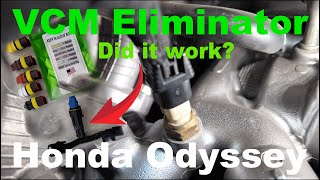
The Honda J35 engine is generally very reliable, but it has a well-documented issue with its Variable Cylinder Management (VCM) system. This system deactivates cylinders to save fuel, indicated by the 'ECO' light. Over time, this can lead to oil seeping past the piston rings on the deactivated cylinders, causing fouled spark plugs and misfires (P0301-P0304). This problem was so widespread it resulted in a class-action lawsuit and Honda issuing TSB 13-081, which extended the warranty for piston ring replacement. While P0305 is for a front-bank cylinder not typically deactivated by VCM, the engine-wide issue of oil consumption and the tendency for owners to experience multiple misfire codes make spark plug fouling a primary concern. Many owners install a 'VCM Muzzler' or 'VCM Tuner' to disable the system and prevent these long-term problems.
🎬 Watch: How to install a VCM Tuner to prevent misfires.Generation note: This range covers the end of the third generation (2008-2010, RL4) and the full fourth generation (2011-2017, RL5). Both generations use a J35 V6 engine and can experience similar causes for a P0305 code. The VCM system, a key factor in misfires on this platform, evolved but was present on V6 models in both generations. The class-action lawsuit and subsequent warranty extension (TSB 13-081) primarily covered 2011-2013 models, but later TSBs like 25-061 extended coverage to newer models up to 2017.
Symptoms You May Notice
- Check Engine Light is on (solid or flashing)
- Rough or shaky idle
- Engine hesitation or stumbling during acceleration
- Noticeable loss of power
- Reduced fuel economy
- Possible smell of gasoline from the exhaust
- Replacing the catalytic converter. A misfire can damage a catalytic converter, but the converter itself does not cause a single-cylinder misfire code like P0305.
- Assuming the VCM-related piston ring issue is the direct cause for a P0305. While VCM is a major problem, it primarily fouls plugs in cylinders 1-4. A P0305 is more likely a standard ignition failure, though it can be part of a larger pattern of misfires caused by the VCM environment.
Most Likely Causes
- Worn or Fouled Spark Plug 🔴 High Probability Spark plugs are a normal wear item and the most common cause of misfires. On the J35 engine, the VCM system's tendency to cause oil consumption can lead to oil-fouled spark plugs, sometimes affecting cylinders beyond the primary VCM group (1-4).
How to confirm: Remove the spark plug from cylinder 5 and inspect it. Look for heavy carbon buildup, oil deposits, or a worn-out electrode. Compare it to a plug from a cylinder that is not misfiring.
Typical fix: Replace all six spark plugs as a set. Use high-quality Iridium plugs from OEM suppliers like NGK (ILZKR7B11) or Denso (DXE22HCR11S). Many owners find that simply replacing the plugs and disabling the VCM system resolves recurring misfires.
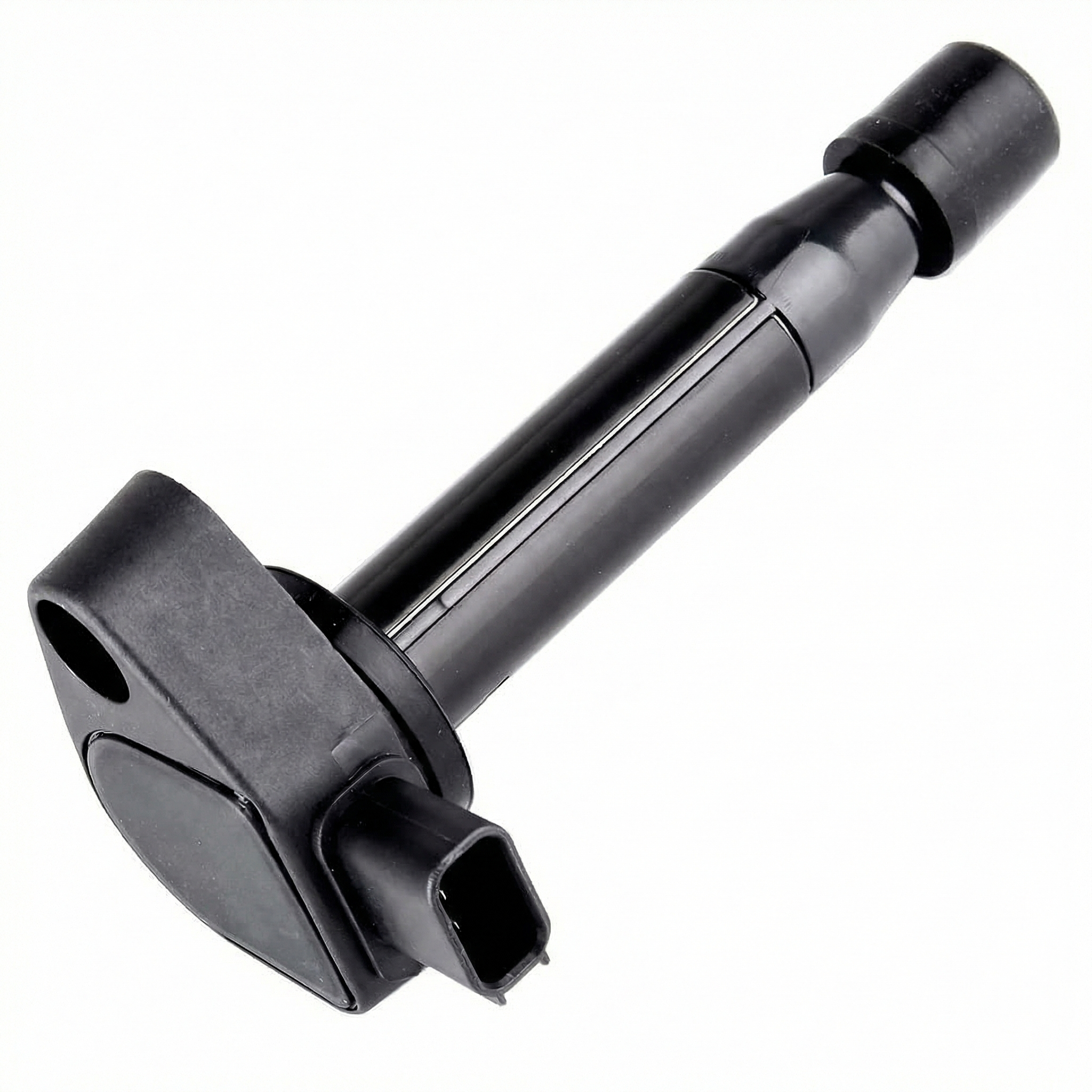
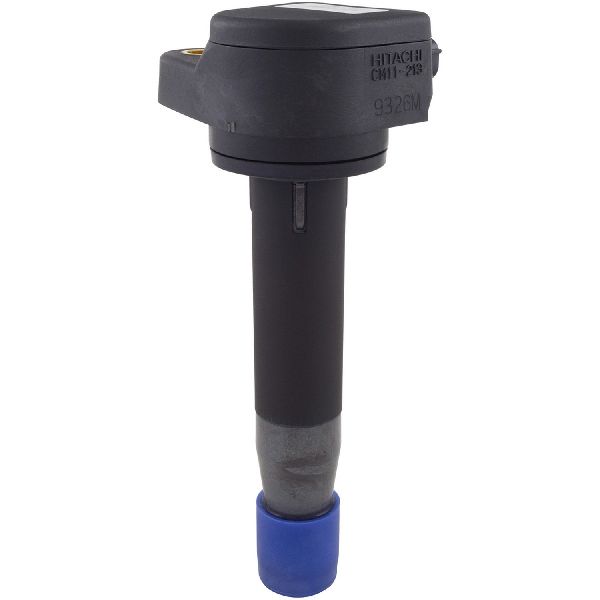
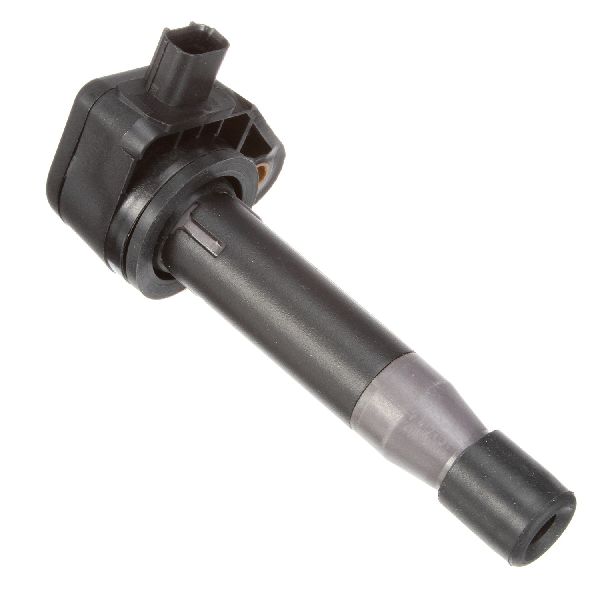
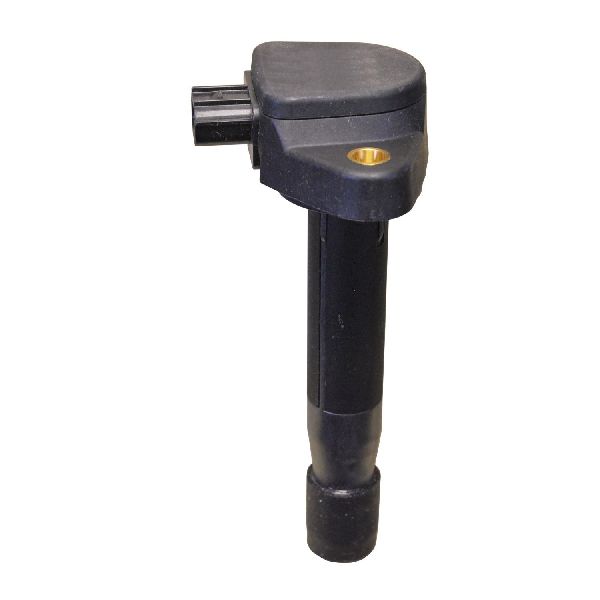
Est. part cost: $60-$120 - Failed Ignition Coil 🔴 High Probability Ignition coils are a common failure point on most modern vehicles as they age. The J35 uses a coil-on-plug design, making individual coil replacement straightforward and a frequent fix reported by owners.
How to confirm: Swap the ignition coil from cylinder 5 with the one from cylinder 6 (right next to it). Clear the codes and drive the vehicle. If the code changes to P0306 (Cylinder 6 Misfire), the coil is faulty.
Typical fix: Replace the faulty ignition coil. It is recommended to use an OEM or high-quality aftermarket brand like Denso, NGK, or Hitachi. The OEM part number 30520-R70-A01 has been superseded by 30520-R70-S01.
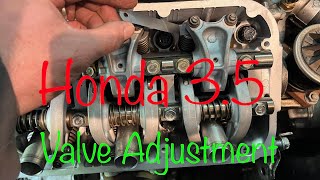
Est. part cost: $50-$100 - Needs Valve Adjustment 🟡 Medium Probability Honda J-series engines use mechanical valve lifters that require periodic adjustment, typically recommended around 100,000 miles. Over time, valve clearances tighten, especially on the exhaust side, which can prevent the valve from seating properly, leading to low compression and causing a misfire, particularly when the engine is warm.
How to confirm: This is confirmed by performing a valve adjustment procedure using feeler gauges when the engine is cold. If the clearances are out of specification (Intake: 0.20-0.24mm, Exhaust: 0.28-0.32mm), they must be adjusted.
Typical fix: Perform a valve adjustment. This is a more involved DIY job but is a standard maintenance procedure for this engine and a well-documented fix for persistent misfires after plugs and coils are ruled out.
Est. part cost: $10-$20 for gaskets - Clogged or Faulty Fuel Injector ⚪ Low Probability While less common than ignition issues, a fuel injector can become clogged with deposits or fail electronically, preventing the correct amount of fuel from reaching cylinder 5. NHTSA ODI #11722031 describes a fueling imbalance that caused extreme heat and diagnostic trouble codes including P0305.
How to confirm: Listen to the injector with a mechanic's stethoscope to ensure it's clicking. A more advanced method involves an injector balance test or swapping injectors between cylinders to see if the misfire moves, though this is more labor-intensive.
Typical fix: Replace the faulty fuel injector. This is often done after ruling out spark, coil, and valve clearance issues. 🎬 See this walkthrough for performing a Honda J35 valve adjustment.
Est. part cost: $70-$150
Rare But Worth Checking
- Low Engine Compression (Piston Rings): This indicates a serious internal engine problem. On this platform, it is often linked to the VCM issue where stuck or aligned piston rings cause oil consumption and loss of compression. A compression test is necessary for diagnosis. Honda's warranty extension (TSB 13-081) addressed this by replacing the piston rings on affected cylinders (typically 1-4).
- Damaged Wiring Harness: The wiring to the ignition coil or fuel injector for cylinder 5 could be damaged or have a poor connection, causing an intermittent misfire.
Diagnosis Steps
- Read the code with an OBD-II scanner and confirm it is P0305. Note if the Check Engine Light is flashing and if other P030x codes are present.
- Swap the ignition coil from cylinder 5 with cylinder 6. Clear the codes and drive the vehicle.
- Scan for codes again. If P0306 appears, the ignition coil is bad and needs to be replaced.
- If P0305 returns, the coil is likely good. Proceed to the next step.
- Remove and inspect the spark plug from cylinder 5. Look for signs of wear, oil fouling, or damage. Oil fouling is a strong indicator of VCM-related issues.
- If the spark plug is fouled or worn, replace all six spark plugs with new OEM-spec Iridium plugs (NGK or Denso). Consider installing a VCM disabling device to prevent future fouling.
- If the plugs and coils are confirmed to be good but the misfire persists, the next most likely cause is that the valves need adjustment, especially if the vehicle has over 100,000 miles and no record of this service.
- A fuel injector issue is possible but less common. Listen for a clicking sound from the injector with a stethoscope.
- If all else fails, a compression test should be performed to check for internal engine mechanical issues, such as worn piston rings or a burnt valve.
Parts You'll Likely Need
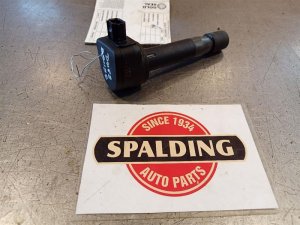
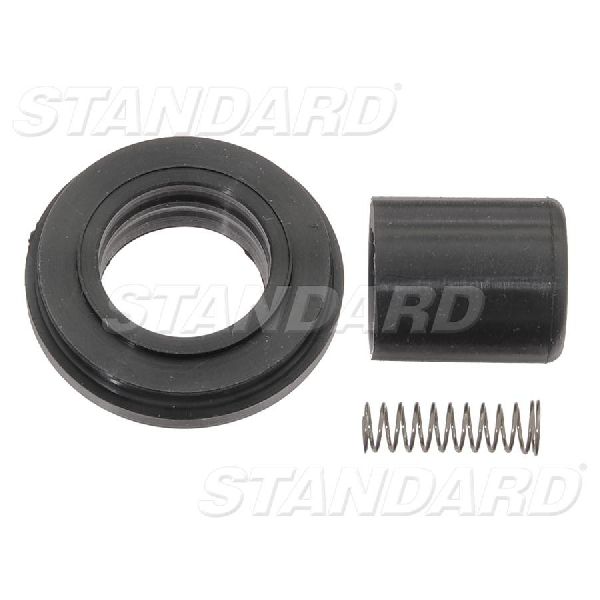
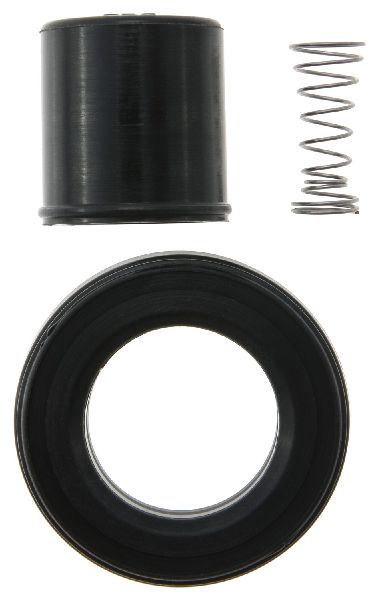
- Ignition Coil
(OEM #30520-R70-S01 (supersedes 30520-R70-A01))— A very common failure item that directly causes a misfire in a single cylinder. Easy to diagnose by swapping with an adjacent coil. 🎬 Watch: A professional mechanic's guide to diagnosing J35 engine misfires.
Trusted brands: Denso, NGK, Hitachi, Honda OEM
OEM price range: $80-$110
Aftermarket price range: $40-$70 - Spark Plug (Iridium)
(OEM #NGK: ILZKR7B11 / DENSO: DXE22HCR11S)— The most common wear item related to misfires. VCM issues on the J35 engine can accelerate spark plug fouling, making them a primary suspect. Honda often installed NGK on one bank and Denso on the other from the factory.
Trusted brands: NGK, Denso
OEM price range: $15-$25 per plug
Aftermarket price range: $10-$18 per plug - Valve Cover Gasket Set
(OEM #12030-R70-A00)— Required if performing a valve adjustment, which is a common maintenance item on the J35 engine to resolve persistent misfires after ignition parts have been replaced.
Related Codes That Often Appear With This One
- P0300 — Random Misfire. If the problem becomes more severe or affects multiple cylinders, a P0300 may appear alongside the specific cylinder code.
- P0301, P0302, P0303, P0304, P0306 — These codes indicate misfires in other cylinders. If seen with P0305, it strongly points to a systemic issue like a needed valve adjustment, widespread plug fouling from VCM issues, or a fuel delivery problem. The presence of P0301-P0304 codes specifically may make the vehicle eligible for the warranty extension repair under TSB 13-081.
Technical Service Bulletins (TSBs) & Recalls
- TSB 13-081: Warranty Extension: MIL Comes On With DTCs P0301 Through P0304: This key TSB from Honda acknowledges the VCM issue causing spark plug fouling due to piston rings aligning. It extended the powertrain warranty to 8 years/unlimited miles for this specific issue on 2011-2013 models. The fix involves inspecting and replacing piston rings and a potential PCM update.
- TSB 25-061 / 25-060: Warranty Extension: 2013-2017 Multi-Model VCM Misfire: A later TSB that extended the warranty for the VCM-related misfire issue to 10 years or 150,000 miles for certain 2013-2017 Odyssey and 2013-2015 Pilot models, showing Honda's continued response to the problem.
Platform-Specific Known Issues
- A class-action lawsuit was settled for 2008-2013 Honda vehicles with the J35 V6 engine regarding excessive oil consumption and spark plug fouling related to the VCM system. This led to Honda issuing TSB 13-081, which extended the warranty on piston rings for affected vehicles (cylinders 1-4). Later TSBs (like 25-061) extended this coverage to newer models.
- Many owners proactively install a 'VCM Muzzler' or 'VCM Tuner' device. This device plugs into the coolant temperature sensor and slightly modifies the reading sent to the ECM. This makes the computer believe the engine isn't fully warmed up, which prevents the VCM system from activating, thereby stopping the oil consumption and plug fouling at its source.
Mechanic-Grade Diagnostic Values
- Ignition Coil Primary Winding Resistance — expected: 0.49 - 0.57 Ohms. Failure: A reading outside this range indicates a faulty coil.
- Ignition Coil Secondary Winding Resistance — expected: 9.5 - 11.1 kOhms. Failure: A reading outside this range indicates a faulty coil.
- Fuel Injector Resistance (High-Impedance/Saturated) — expected: 12 - 17 Ohms (for many 1992-95 Honda models, J-series are similar). Failure: A reading significantly outside this range suggests a failed injector coil.
- Fuel Pressure (In-tank pump) — expected: 55-65 psi. Failure: Low pressure can cause lean conditions and misfires across all cylinders.
- Short-Term Fuel Trim (STFT) at idle — expected: Fluctuating between -10% and +10%. Failure: Consistently high positive values (e.g., >10%) can indicate a vacuum leak, while high negative values can indicate a rich condition.
- Long-Term Fuel Trim (LTFT) at idle — expected: Should be close to 0%, ideally within +/- 5-10%. Failure: A high value (positive or negative) indicates the ECU is making a long-term correction for a persistent lean or rich condition.
Hidden / Shadow Codes Worth Checking
- Mode $06, Test ID $A2-$A7 (Cyl 1-6): This is not a DTC, but a diagnostic monitor in the generic OBD-II data. It provides raw misfire counts for each cylinder for the current and last 10 driving cycles. This is extremely useful for identifying intermittent misfires or confirming the severity of a misfire before a code is set. (see via A scan tool capable of reading Mode $06 data. The specific Test ID (TID) and Component ID (CID) for misfires can vary, but are often labeled (e.g., TID $53).)
Scan Tool Commands That Help
- Honda HDS or advanced aftermarket scanner: Power Balance Test — This function allows a technician to individually disable one cylinder at a time and observe the corresponding drop in engine RPM. If disabling cylinder 5 causes little or no change in RPM, it confirms that cylinder is not contributing power, pinpointing the misfire location.
- Honda HDS or advanced aftermarket scanner: Injector Test — This bidirectional test can be used to command the fuel injector for cylinder 5 to open and close. A technician can listen for the injector's click with a stethoscope to confirm it is activating electronically, helping to rule out a wiring or PCM driver issue.
Wiring & Ground Locations
- G101 — On the front of the right cylinder head, often near the thermostat housing.. This is a primary engine and PCM ground point. Corrosion or a loose connection at G101 can cause a host of intermittent electronic issues, including erratic sensor readings and misfires that are difficult to diagnose. A bad ground can cause a weak spark or incorrect injector function.
- Cylinder 5 Ignition Coil Connector — On the front bank (near radiator), middle ignition coil. It is a 3-pin connector.. This is the direct connection to the coil. Technicians test for 12V power, ground, and the trigger signal from the PCM at this connector's pins to diagnose a no-spark condition that isn't caused by the coil itself.
- G201 — Bottom left side of the engine compartment.. This is another chassis ground point in the engine bay. While less critical than G101 for the PCM itself, ensuring all engine bay grounds are clean and tight is a best practice for resolving intermittent electrical faults that could lead to a misfire.
Real Owner Repair Stories
- Odyclub.com forum user (2009 Honda Pilot (shares J35 engine and platform)) — P0304, P0305, P0306 codes (misfires on cylinders 4, 5, and 6).
❌ Tried (didn't work) Checked timing belt twice, Verified MAP sensor readings and engine vacuum
✅ What actually fixed it A valve adjustment resolved the misfire codes on all three cylinders. - Honda-Tech forum user (Honda with J-series engine) — Random stalling, no-start, or dying at idle.
❌ Tried (didn't work) Cleaning the terminal and bolt repeatedly.
✅ What actually fixed it The G101 ground wire was frayed inside the loom, not at the terminal. Running a new, temporary ground wire from the ECU pin to the chassis confirmed the issue, and a permanent repair of the ground wire fixed the problem. - NHTSA ODI #10956890 — An owner reported that their vehicle experienced multiple misfires including codes P0304, P0305, P0306, and P0300. A technician replaced three spark plugs to make the vehicle drivable and informed the owner of service bulletins regarding the piston rings.
- NHTSA ODI #11394325 — An owner described experiencing reduced power and misfire codes P0304 and P0305. The vehicle was able to "limp home" at decreased speeds, and the problem temporarily went away after restarting the vehicle.
- NHTSA ODI #11614345 — A report indicates that P0303 and P0305 codes appeared repeatedly and would only be fixed temporarily before recurring, especially when driving long distances.
- NHTSA ODI #11705461 — During a diagnostic for slow cold starts, a dealer documented a stored P0305 trouble code indicating a cylinder 5 misfire, which the owner noted involved the same cylinder as a prior camshaft-related repair.
OEM Part Supersession History
30520-R70-A01→30520-R70-S01— Standard part revision by Honda for improved reliability or change in supplier.17045-TK8-A00→17045-TK8-A01— Part revision for the fuel pump assembly.
Heads up: This part is for 2011-2013 models. 2014-2017 models use a different part number (17045-TK8-A10 or A11). Using the wrong pump can lead to fitment or fuel pressure issues.
Model Year Variations Within This Range
- 2008-2010: These models use the earlier version of VCM (sometimes called VCM-1), which only switches between 6-cylinder and 3-cylinder operation.
- 2011-2017: These models use VCM-2, a more complex system that can operate in 6-cylinder, 4-cylinder, and 3-cylinder modes. This version was the primary subject of the class-action lawsuit related to fouled plugs and piston rings.
- 2011-2013 vs 2014-2017: There is a part number split for the in-tank fuel pump assembly between these years. 2011-2013 models use part number 17045-TK8-A01, while 2014-2017 models use 17045-TK8-A11.
Diagnostic Flowchart
Real Owner Stories
Aggregated from forums and TSBs cited above. Mileages and costs reflect what owners reported in those sources.
Honda Odyssey (J35 V6)
Symptoms: Experienced a misfire code and was quoted $7,000 by a mechanic for a complete piston ring replacement job.
What fixed it: Ignored the expensive piston ring quote, replaced the spark plugs, and installed a VCM disabling device, which successfully resolved the issue.
Source hint: Reddit r/HondaOdyssey: VCM / piston rings question
2008 Acura MDX (J-Series V6)
Symptoms: Experienced a cylinder 5 misfire (P0305) on a platform-mate vehicle sharing the same engine family.
What fixed it: Diagnosed the issue by swapping coils and plugs between cylinders, and performing a compression test to rule out internal mechanical failure.
Source hint: Acurazine: 2008 MDX cylinder 5 misfire
Honda Odyssey (J35 V6) — ~100000 miles
Symptoms: Persistent P030x misfire codes that continued even after replacing spark plugs and ignition coils.
What fixed it: Performed a DIY valve adjustment, as the mechanical valve clearances had tightened over time, restoring proper compression.
Source hint: Odyclub.com: VCM and Misfire Discussions
Related OBD-II Codes
Frequently Asked Questions
Does Honda have a warranty extension or TSB for misfires on my 2008-2017 Odyssey?
What is a 'VCM Muzzler' and will it help fix my P0305 code?
Which spark plugs should I use when replacing a fouled plug on my J35 engine?
I have over 100,000 miles on my Odyssey and already replaced the plugs and coils, but P0305 remains. What's next?
How can I test if the ignition coil on cylinder 5 is causing the P0305 code?
Why is cylinder 5 misfiring if the VCM system primarily affects cylinders 1-4?
Helpful Videos
Used OEM Parts in Stock
New Aftermarket Parts Available


The information in this article is provided for general reference and educational purposes only. Vehicle specifications, procedures, and part compatibility can vary by production date, trim level, and region. Always consult your vehicle's factory service manual and verify part numbers before purchasing or performing repairs. Safety-critical components such as airbags, seat belts, and braking systems should be installed by a qualified professional.
- Honda Odyssey:
- 🎬 Helpful Videos
- 🛍️ Shop This Part
- What's Unique About the 2008-2017 Honda Odyssey
- Symptoms You May Notice
- Most Likely Causes
- Rare But Worth Checking
- Diagnosis Steps
- Parts You'll Likely Need
- Related Codes That Often Appear With This One
- Technical Service Bulletins (TSBs) & Recalls
- Platform-Specific Known Issues
- Mechanic-Grade Diagnostic Values
- Hidden / Shadow Codes Worth Checking
- Scan Tool Commands That Help
- Wiring & Ground Locations
- Real Owner Repair Stories
- OEM Part Supersession History
- Model Year Variations Within This Range
- Diagnostic Flowchart
- Real Owner Stories
- Honda Odyssey (J35 V6)
- 2008 Acura MDX (J-Series V6)
- Honda Odyssey (J35 V6) — ~100000 miles
- Related OBD-II Codes
- Frequently Asked Questions
- 🎟️ Get 5% Off