

P0304 on 2016-2020 Kia Sorento 2.4L: Cylinder 4 Misfire Causes and Fixes
P0304 on a 2016-2020 Sorento with the 2.4L GDI engine is most often a failed ignition coil or a fouled spark plug on cylinder 4. However, it can also be an early sign of serious internal engine problems like carbon buildup or loss of compression, which are known issues for this engine. Always check for open recalls first, as a lifetime engine warranty may apply.
- P0304 indicates a misfire in cylinder 4, most commonly caused by a bad ignition coil or spark plug.
- Always diagnose by swapping the coil first, then the spark plug, to isolate the faulty component.
- On this specific engine, a P0304 code MUST be investigated further with a compression test due to the high rate of serious internal engine failures.
- Check with a Kia dealer using your VIN to see if any recalls (like SC147) or software updates (like PI1802) are open for your vehicle.
- Do not ignore a flashing Check Engine Light, as it can lead to rapid and expensive catalytic converter damage.
What's Unique About the 2016-2020 Kia Sorento

The Theta II 2.4L GDI engine in this generation of Sorento has a well-documented history of significant issues stemming from manufacturing defects. While a simple ignition component can cause a P0304 code, it must be taken seriously as it can be a symptom of larger problems like excessive oil consumption, severe intake valve carbon buildup, or catastrophic internal engine failure due to connecting rod bearing wear. Kia has issued numerous recalls and a class-action lawsuit resulted in a lifetime engine warranty for certain failures. A misfire code warrants a thorough diagnosis beyond just spark plugs and coils.
Symptoms You May Notice
- Rough or shaking idle
- Hesitation or stumbling during acceleration
- Noticeable loss of engine power
- Flashing Check Engine Light (indicates a severe misfire)
- Smell of unburned gasoline from the exhaust
- Increased fuel consumption
- Engine noise, such as knocking or tapping
- Replacing only the spark plug without testing the ignition coil first.
- Assuming the issue is minor without considering the engine's history of carbon buildup and internal failures.
- Replacing the catalytic converter for an efficiency code when an underlying misfire is the root cause of the converter failure.
Most Likely Causes

- Faulty Ignition Coil 🔴 High Probability Ignition coils are a common failure point on many modern engines. Heat and vibration cause the internal windings to break down over time.
How to confirm: Swap the ignition coil from cylinder 4 with another cylinder (e.g., cylinder 3). Clear the codes and drive the vehicle. If the code changes to P0303, the coil is bad. This is the most common and effective DIY diagnostic step.
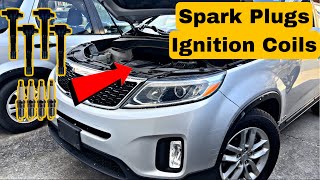
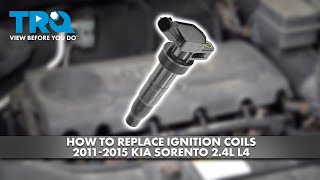
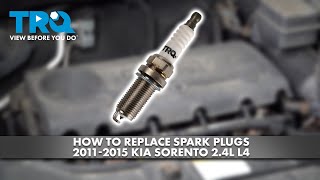
Typical fix: Replace the faulty ignition coil. It is often recommended to replace all four coils and spark plugs at the same time to prevent future misfires and ensure balanced performance. 🎬 See this walkthrough for replacing your spark plugs and coils.
Est. part cost: $25-$60 per coil - Worn or Fouled Spark Plug 🔴 High Probability These GDI engines are known for oil consumption and carbon buildup, which can foul spark plugs prematurely, long before their scheduled replacement interval.
How to confirm: After confirming the coil is good, remove the spark plug from cylinder 4. Inspect it for wear (worn electrode), carbon tracking (a black line down the ceramic), oil (wet and black), or fuel fouling (smells of gas). A plug fouled with oil is a strong indicator of excessive oil consumption on this engine.
Typical fix: Replace the spark plug in cylinder 4. It is best practice to replace all four spark plugs at the same time with the correct OEM-spec plugs.
Est. part cost: $10-$25 per plug - Intake Valve Carbon Buildup 🟡 Medium Probability As a Gasoline Direct Injection (GDI) engine, fuel is injected directly into the cylinder, bypassing the intake valves. Oil vapor from the PCV system bakes onto the hot valves, forming hard carbon deposits that restrict airflow and cause misfires, especially on cold starts.
How to confirm: This requires a borescope inspection of the intake ports and valves. A professional shop will need to do this by removing the intake manifold.
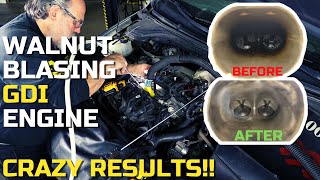
Typical fix: The intake manifold must be removed and the valves cleaned, typically through a process called walnut blasting. 🎬 Watch: How walnut blasting removes heavy carbon buildup from valves. This service can cost between $400-$800.
Est. part cost: $0 (service cost is labor) - Clogged or Faulty Fuel Injector ⚪ Low Probability
How to confirm: Listen for a consistent clicking sound from the injector. A more definitive test is to swap the fuel injector from cylinder 4 with another cylinder, but this is a more labor-intensive job than swapping a coil as it is part of the high-pressure fuel system. A professional scan tool can also perform an 'injector kill' test to see if disabling cylinder 4 makes no change to the idle, confirming it wasn't contributing.
Typical fix: Replace the faulty fuel injector. This is a GDI injector and may require special tools and procedures.
Est. part cost: $70-$150
Rare But Worth Checking
- Low Engine Compression: This is a critical check for the Theta II engine. Due to widespread issues with connecting rod bearings and piston rings, a misfire can be a symptom of a failing engine. A compression test that reveals low pressure in cylinder 4 often means the engine requires replacement, which may be covered under Kia's lifetime warranty extension if the KSDS update was performed. As noted in NHTSA ODI #11685959, an owner reported engine failure due to piston ring damage where a dealer confirmed the engine required full replacement after diagnosing codes P0301 and P0304.
Diagnosis Steps

- Check your vehicle's VIN on the NHTSA or Kia website for open recalls or warranty extensions (SC147, PI1802, Lifetime Warranty). This should be your first step.
- Read the code with an OBD-II scanner. Note if any other codes, like P0300 or P1326, are present.
- Check if the Check Engine Light is solid or flashing. A flashing light indicates a severe misfire requiring you to stop driving immediately.
- Swap the ignition coil from cylinder 4 to a different cylinder (e.g., cylinder 3). Clear the codes and run the engine to see if the misfire code moves to the new cylinder (P0303). If it does, the ignition coil is faulty.
- If the misfire remains on cylinder 4, inspect the spark plug from cylinder 4 for signs of oil, fuel, or heavy carbon fouling. A fouled plug is a clue to other issues.
- If ignition components are good, perform an engine compression test. This is a critical step for the Theta II engine. A healthy reading should be around 180-210 PSI. Low compression in cylinder 4 points to serious mechanical problems (piston rings, valves, head gasket).
- If compression is good, consider a fuel injector issue. Listen for its operation or have it professionally tested/swapped. A professional scan tool can be used to disable individual injectors to confirm which cylinder is not firing.
- If the car runs poorly on cold starts but improves when warm, suspect intake valve carbon buildup. This requires a professional borescope inspection to confirm.
Parts You'll Likely Need

- Ignition Coil
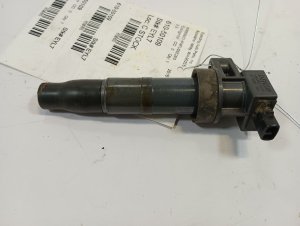
(OEM #27300-2GGA0)— This is one of the most common and easiest to replace causes for a single-cylinder misfire.
Trusted brands: Kia (Genuine), Bosch, Delphi, NGK
OEM price range: $50-$80
Aftermarket price range: $25-$60 - Spark Plug
(OEM #18849-09085)— Spark plugs are a routine maintenance item and can become fouled from oil consumption or carbon, both common on this engine. Using the correct OEM plug is critical.
Trusted brands: NGK (SILZKR7B8E), Kia (Genuine)
OEM price range: $20-$30
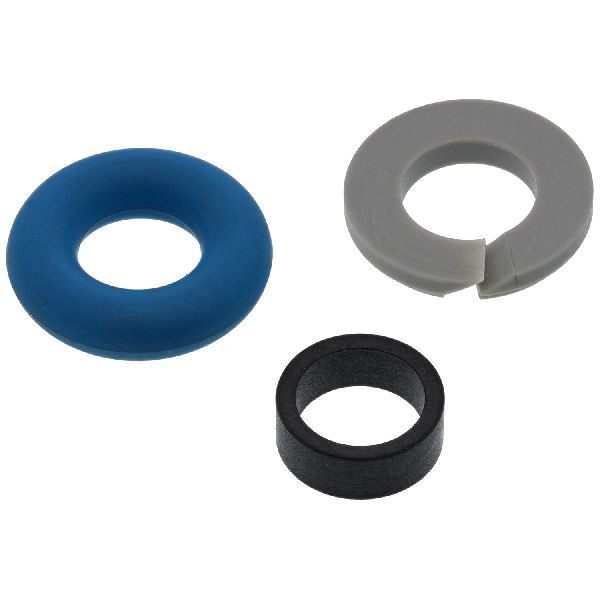
Aftermarket price range: $10-$20 - GDI Fuel Injector
(OEM #35310-2GGA1)— Less common than ignition parts, but a clogged or failed GDI injector can cause a persistent P0304. This part number (35310-2GGA1) appears to supersede the earlier 35310-2GGA0.
Trusted brands: Kia (Genuine), GB Remanufacturing
OEM price range: $100-$160
Aftermarket price range: $50-$90
Related Codes That Often Appear With This One
- P0300 — If the misfire is intermittent or if other cylinders are also beginning to misfire due to a common cause like carbon buildup or poor fuel quality, a P0300 (Random/Multiple Cylinder Misfire) code may appear alongside P0304.
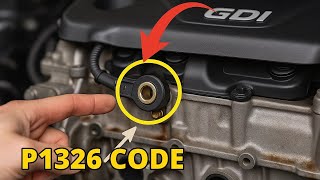
- P1326 — This code is specific to the Knock Sensor Detection System (KSDS) installed via campaign PI1802. It indicates the system has detected vibrations consistent with excessive connecting rod bearing wear and has placed the engine in 'Limp Home Mode' (RPM limited to ~1800-2000) to prevent catastrophic failure. 🎬 Watch: Understanding the P1326 code and engine bearing failure. If you see this code, the engine almost certainly needs to be replaced under warranty.
Technical Service Bulletins (TSBs) & Recalls
- SC147: Safety Recall for engine inspection and/or replacement due to potential connecting rod bearing wear from manufacturing debris.
- PI1802 (and revisions): Product Improvement Campaign to install Knock Sensor Detection System (KSDS) software to detect bearing wear and prevent catastrophic engine failure. This update is a prerequisite for the lifetime engine warranty.
- PI1802W/X: A follow-up TSB for dealers detailing the diagnostic and engine replacement procedure for vehicles that return with a P1326 code after the KSDS update.
Platform-Specific Known Issues
- Theta II Engine Failures: This engine is subject to multiple recalls and a class-action lawsuit for premature connecting rod bearing wear, which can lead to engine seizure. A misfire code can be an early warning sign of this developing failure. Check your VIN with a Kia dealer for open recalls like SC147 or product improvement campaigns like PI1802 (KSDS update). A lifetime warranty for this failure was part of the lawsuit settlement for vehicles that received the KSDS update.
- Severe Carbon Buildup: As a GDI engine, the intake valves are not cleaned by fuel spray, leading to significant carbon deposits that restrict airflow and cause misfires, especially when the engine is cold. This often requires professional cleaning (walnut blasting) every 60,000-80,000 miles.
- Excessive Oil Consumption: Many owners report high oil consumption, which can foul spark plugs and lead to misfires. This is often linked to issues with piston rings and can be a precursor to more serious engine damage.
Mechanic-Grade Diagnostic Values
- Ignition Coil Primary Resistance — expected: 0.4 - 2.0 Ohms (A typical aftermarket spec is 0.660 Ohms). Failure: A reading outside this range, or 'OL' for an open circuit.
- Ignition Coil Secondary Resistance — expected: 6,000 - 10,000 Ohms (A typical aftermarket spec is 6.1k Ohms). Failure: A reading significantly outside this range indicates a faulty coil.
- Fuel Injector Resistance — expected: 10.5 - 13.5 Ohms. Failure: A reading of 0 Ohms (short), 'OL' (open), or a value significantly different from the other injectors.
- Low-Pressure Fuel System Pressure — expected: ~70 PSI (480 kPa). Failure: Pressure significantly below this indicates a failing in-tank fuel pump or clogged filter.
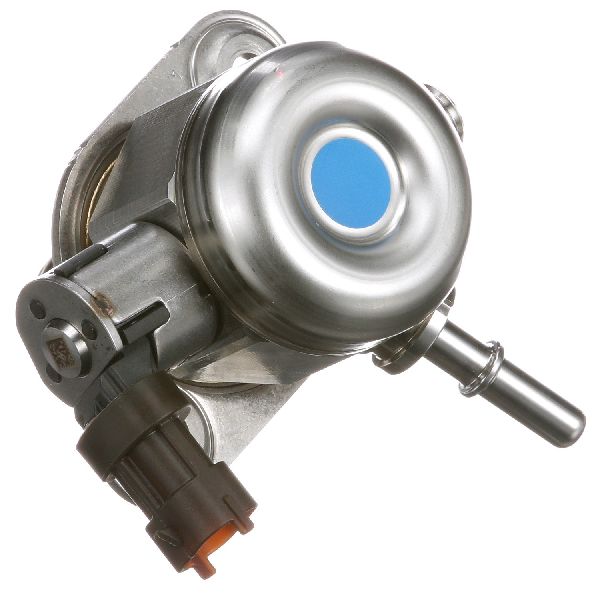
- High-Pressure Fuel System Pressure (at idle) — expected: 290 - 500 PSI. Failure: Pressure that is erratic or does not respond to engine load.
- High-Pressure Fuel System Pressure (under load) — expected: Up to ~2,900 PSI. Failure: Failure to build pressure under acceleration, or pressure exceeding 4,000 PSI which may trigger a high-pressure fault code.
- Engine Compression — expected: 180 - 210 PSI per cylinder, with minimal variation between cylinders.. Failure: Significantly lower pressure in cylinder 4 compared to others points to a mechanical engine problem.
Scan Tool Commands That Help
- Kia GDS (or equivalent professional scanner): Injector Disable / Cylinder Drop Test — After ruling out spark, this bidirectional command allows the technician to turn off fuel to cylinder 4 from the scan tool. If the engine's idle quality does not change, it confirms cylinder 4 was not contributing, pointing strongly to a fuel injector or compression issue for that cylinder.
- Kia GDS: Flight Record / Trigger Module — For intermittent misfires that are hard to reproduce. This function records live sensor data over a drive cycle, which can be downloaded and analyzed to find anomalies in sensor readings (like crank position) that occur at the exact moment the misfire is logged.
- Kia GDS: DTC Analysis / Misfire Data — To view the raw misfire counts for each cylinder in real-time. This can help confirm the misfire is isolated to cylinder 4 and see if other cylinders have low-level misfire counts that haven't yet triggered a code.
Wiring & Ground Locations
- 91860-C6010 — This is the part number for the main engine ground wiring assembly for the 2.4L engine.. A corroded or loose main engine ground can cause a host of electrical issues, including weak spark or erratic injector signals that can lead to misfires. Ensuring this harness and its connection points are clean and tight is a crucial electrical check.
- GC101 — A primary ground connection point referenced in wiring diagrams for the 2018 Sorento. Often located on the chassis near the engine bay or on the firewall.. Multiple sensors and control circuits may use this common ground point. Corrosion or a loose connection here can cause intermittent and hard-to-diagnose issues, including misfires.
- Cylinder 4 Injector Connector — On the fuel rail, at the fourth fuel injector position (typically the cylinder furthest from the belts/pulleys).. The connector itself can become brittle or the terminals can corrode, leading to a poor connection and an injector circuit fault. A wiring diagram for a 2018 Sorento indicates the two pins for an injector circuit are for high and low control (e.g., Pin 48/49 for injector #2). Checking for voltage pulse with a noid light at this connector is a key diagnostic step.
Real Owner Repair Stories
- YouTube channel 'Unknown Vlogs' (Kia Sorento with 2.4L GDI engine, year not specified but consistent with 2016-2020 generation.) — P0304 cylinder 4 misfire code present.
❌ Tried (didn't work) The technician did not report trying other fixes first, but noted the engine's reputation for oil consumption.
✅ What actually fixed it The spark plug in cylinder 4 was found to be severely fouled with oil. The technician noted this is extremely common on the 2.4L GDI engine due to excessive oil consumption. Replacing the fouled spark plug resolved the P0304 code. The key diagnostic step highlighted was using a scan tool to perform an injector-disable test, which confirmed cylinder 4 was the misfiring cylinder.
OEM Part Supersession History
35310-2GGA0→35310-2GGA1— Likely an internal revision for improved reliability, spray pattern, or manufacturing consistency.
Heads up: The parts are considered interchangeable, but it is highly recommended to replace all four injectors as a set with the same part number to ensure balanced fuel delivery. Mixing old and new revisions is not advised.
Model Year Variations Within This Range
- 2019-2020: The Sorento received a mid-cycle refresh for the 2019 model year. While this included updated styling and changes to other engine options (the 2.0L Turbo was dropped and the 3.3L V6 received a new 8-speed transmission), the 2.4L GDI engine and its 6-speed automatic transmission, which are relevant to this code, remained unchanged.
Diagnostic Flowchart
Other Known Issues on This Vehicle
Issues unrelated to this code that are worth knowing about as an owner of this generation:
- Peeling 'Snow White Pearl' Paint 🟠 Medium — Widespread on vehicles with 'Snow White Pearl' (SWP) paint. Peeling can start after just a few years, often around the windshield, hood, and roof. (Ref: No official recall, but numerous owner complaints and some reports of goodwill repairs from Kia after persistent customer complaints.)
- Failing/Sticking Door Latch Actuators 🟠 Medium — Common failure where doors fail to open from the outside handle. The issue was so prevalent on the previous generation that a warranty extension was issued (CS1603), and the problem persists on this generation. (Ref: Service Action SA195 was issued for some 2015 models for this issue.)
- Melting Headlight Connectors/Harness 🔴 High — Reported by owners of 2016 models in particular. The wiring harness connector can melt, causing exterior lights to fail suddenly.
- Electric Power Steering (EPS) Binding 🔴 High — Most noted on the 2016 model year, owners report the steering wheel can bind or feel 'stuck' for a moment during slight turns at highway speeds.
Used vs. New Parts: Buying Guide for This Vehicle
When a used part is the smart pick: For this specific vehicle and its known engine issues, using used parts for critical components like injectors or coils is not recommended. The only scenario where a used part might be considered is for a non-electronic, simple component like an engine cover or bracket from a low-mileage donor vehicle.
Donor-vehicle mileage cap: roughly under 40000 miles for the part to have meaningful remaining life.
What to inspect on the donor part:
- Verify the donor vehicle was not involved in a front-end collision.
- Check for signs of sludge or varnish under the oil cap of the donor vehicle, which indicates poor maintenance.
- Avoid parts from engines that show obvious signs of oil leaks or external damage.
OEM-only on this vehicle (don't cheap out):
- Fuel Injectors: Due to the precision required for GDI systems and the known issues with this engine, using new OEM (Kia/Hyundai) injectors is strongly advised to prevent performance imbalances.
- Ignition Coils: While high-quality aftermarket options exist, OEM coils are the safest bet for longevity and compatibility.
- PCV Valve: This is an inexpensive part that is critical to engine health; always buy a new OEM valve.
Aftermarket brands forum-validated for this vehicle:
- Ignition Coils: NGK, Delphi, Bosch
- Spark Plugs: NGK (often the OEM supplier)
Brands owners have reported issues with on this vehicle:
- Unbranded, no-name ignition coils and fuel injectors from online marketplaces. These often have high failure rates and do not meet the precise specifications required for a GDI engine, leading to recurring misfires.
Real Owner Stories
Aggregated from forums and TSBs cited above. Mileages and costs reflect what owners reported in those sources.
2016-2020 Kia Sorento 2.4L GDI
Symptoms: P0304 code appeared, followed by a P1326 code.
What fixed it: The vehicle was taken to the dealer and received a new engine under the extended warranty.
Source hint: Reddit (r/kia, r/MechanicAdvice)
2016-2020 Kia Sorento 2.4L GDI
Symptoms: Misfire codes (P030x) on the 2.4L engine.
What fixed it: A simple ignition coil or spark plug swap.
Source hint: kia-forums.com
2016-2020 Kia Sorento 2.4L GDI
Symptoms: Engine failed a noise test during a recall procedure.
What fixed it: New long-block engine replacement; a rental car was provided by Kia during the repair.
Source hint: BobIsTheOilGuy.com thread discussing recall SC147
2016-2020 Kia Sorento 2.4L GDI
Symptoms: Check engine light indicating a cylinder 4 misfire (P0304). The vehicle struggled to accelerate and slowed down while driving.
What fixed it: One owner reported replacing all spark plugs and the coil pack to no avail, as the car still struggled to accelerate even after the light went out (NHTSA ODI #11717128). Another owner noted the vehicle became difficult to drive as it took significant time to reach reasonable speeds (NHTSA ODI #11713531).
Source hint: NHTSA ODI Reports #11717128, #11713531
Documented NHTSA Reports
NHTSA ODI #11425691 describes a situation where a dealer concurred a new engine was necessary after finding multiple codes, including P0300, P0306, P0304, and P0302. This highlights that a P0304 misfire is often part of a broader mechanical failure on this platform.
Related OBD-II Codes
Frequently Asked Questions
Is my 2016-2020 Kia Sorento 2.4L GDI covered by a lifetime warranty for engine issues related to P0304?
What does it mean if my Check Engine Light is flashing while I have a P0304 code?
Could my P0304 misfire be related to a recall on the Theta II engine?
Why does my Sorento misfire mostly on cold starts but run better once warm?
What is the KSDS update (PI1802) and why is it mentioned for misfire codes?
How can I tell if my P0304 code is just a bad ignition coil or a major engine problem?
Helpful Videos
Used OEM Parts in Stock



New Aftermarket Parts Available


The information in this article is provided for general reference and educational purposes only. Vehicle specifications, procedures, and part compatibility can vary by production date, trim level, and region. Always consult your vehicle's factory service manual and verify part numbers before purchasing or performing repairs. Safety-critical components such as airbags, seat belts, and braking systems should be installed by a qualified professional.
- Kia Sorento:
- 🎬 Helpful Videos
- 🛍️ Shop This Part
- What's Unique About the 2016-2020 Kia Sorento
- Symptoms You May Notice
- Most Likely Causes
- Rare But Worth Checking
- Diagnosis Steps
- Parts You'll Likely Need
- Related Codes That Often Appear With This One
- Technical Service Bulletins (TSBs) & Recalls
- Platform-Specific Known Issues
- Mechanic-Grade Diagnostic Values
- Scan Tool Commands That Help
- Wiring & Ground Locations
- Real Owner Repair Stories
- OEM Part Supersession History
- Model Year Variations Within This Range
- Diagnostic Flowchart
- Other Known Issues on This Vehicle
- Used vs. New Parts: Buying Guide for This Vehicle
- Real Owner Stories
- 2016-2020 Kia Sorento 2.4L GDI
- 2016-2020 Kia Sorento 2.4L GDI
- 2016-2020 Kia Sorento 2.4L GDI
- 2016-2020 Kia Sorento 2.4L GDI
- Documented NHTSA Reports
- Related OBD-II Codes
- Frequently Asked Questions
- 🎟️ Get 5% Off