

P0303 on 2005-2008 Audi A4 2.0T: Cylinder 3 Misfire Causes and Fixes
P0303 on a B7 Audi A4 2.0T FSI almost always points to a failed ignition coil or a worn spark plug in cylinder 3. Swapping the coil from cylinder 3 to another cylinder is a quick, no-cost diagnostic step. A new coil costs around $25-$50. If ignition parts are good, carbon buildup on the intake valves is the next most likely culprit, especially if misfires occur on cold starts.
- P0303 on this Audi A4 is a misfire on cylinder 3, most commonly caused by a bad ignition coil.
- The easiest first step is to swap the cylinder 3 ignition coil with another cylinder's coil. If the code follows the coil, you've found the problem.
- If the Check Engine Light is flashing, stop driving immediately to prevent expensive damage to the catalytic converter.
- If new coils and spark plugs don't fix the issue, the next most likely causes are carbon buildup on the intake valves or a failed PCV valve.
- Always use high-quality replacement parts, especially for ignition coils, as Audi has released multiple revisions to improve reliability.
What's Unique About the 2005-2008 Audi A4

The 2.0T FSI engine in the B7 Audi A4 is a direct-injection engine, a technology that makes it prone to specific issues causing misfires. Ignition coils on these engines are a very common failure point, to the extent that Audi issued multiple part revisions to improve reliability. Additionally, because fuel is injected directly into the cylinder and not over the intake valves, oil vapors from the PCV system bake onto the hot valves. This forms hard carbon deposits that are inevitable and a frequent cause of misfires, especially on cold starts.
Symptoms You May Notice
- Rough or shaking idle
- Hesitation or stumbling during acceleration
- Noticeable loss of power
- Flashing Check Engine Light
- Reduced fuel economy
- Engine running rough, especially when cold
- EPC (Electronic Power Control) light may also illuminate
- Replacing only the spark plug without testing the ignition coil.
- Replacing fuel system components before confirming the ignition system is working correctly.
- Assuming a vacuum leak is from a hose when it is actually the PCV valve.
- Performing a carbon cleaning for a misfire that is actually caused by a bad fuel injector.
Most Likely Causes

- Failed Ignition Coil 🔴 High Probability Ignition coils on the 2.0T FSI engine are a well-documented, high-failure item due to heat and vibration in the engine bay. Audi has released several updated part numbers over the years to improve reliability. Many owners recommend replacing them as a set when one fails.
How to confirm: Swap the ignition coil from cylinder 3 with another cylinder (e.g., cylinder 2). Clear the codes and drive. If the code changes to P0302, the ignition coil is faulty. Visually inspect the coil for cracks or white/black soot marks on the boot.
Typical fix: Replace the faulty ignition coil. It is highly recommended to replace all four coils and spark plugs at the same time for preventative maintenance.
Est. part cost: $25-$50 per coil - Worn or Fouled Spark Plug 🔴 High Probability Spark plugs are a regular maintenance item. Oil leaks from the valve cover gasket or an overly rich condition can foul the plugs, causing a misfire. The center electrode can also wear down over time, increasing the gap and leading to a weak spark.
How to confirm: After confirming the ignition coil is good, remove the spark plug from cylinder 3. Inspect it for wear, carbon fouling, oil, or damage to the electrode. A plug that appears wet with fuel or covered in black soot indicates a lack of spark or other issue. You can also swap the plug with another cylinder to see if the misfire follows.
Typical fix: Replace the spark plug. It is best practice to replace all four spark plugs as a set with the correct type (e.g., NGK PFR7S8EG).
Est. part cost: $10-$25 per plug - Carbon Buildup on Intake Valves 🟡 Medium Probability The FSI engine is direct-injection, meaning fuel is sprayed directly into the cylinder, not over the intake valves. As a result, oil vapor from the PCV system bakes onto the hot valves, forming hard carbon deposits that restrict airflow. This disrupts the air-fuel mixture and causes misfires, particularly during cold starts.
How to confirm: This is difficult to confirm without a borescope to visually inspect the intake ports and valves. A strong indicator is having misfire codes primarily on cold starts that disappear as the engine warms up.
Typical fix: The intake manifold must be removed and the a must be manually cleaned. The most effective method is walnut shell blasting, though scraping with picks and brushes is also possible. This is typically recommended every 60k-80k miles.
Est. part cost: $20-$40 for gaskets, professional service is several hundred dollars. - Failed PCV Valve 🟡 Medium Probability The Positive Crankcase Ventilation (PCV) valve is another common failure point on the 2.0T engine. The diaphragm inside can tear, creating a large unmetered vacuum leak, leading to a lean air-fuel mixture and misfires across multiple cylinders.
How to confirm: A failed PCV often causes a loud whistling or sucking noise from the engine bay at idle. It can also cause lean codes (like P0171) or even oil leaks from failed seals due to incorrect crankcase pressure. Removing the oil cap while the engine is running will result in a very strong vacuum if the PCV has failed.
Typical fix: Replace the PCV valve assembly. There are several revisions of this part; it's best to get the latest version.
Est. part cost: $100-$160 - Clogged or Failed Fuel Injector ⚪ Low Probability While less common than ignition or carbon issues, the direct fuel injectors can become clogged or fail electronically, preventing the correct amount of fuel from reaching cylinder 3. This can sometimes cause misfires that are more prominent when the engine is hot.
How to confirm: After ruling out spark and air issues, the fuel injector is the next suspect. A mechanic can test the injector's resistance or perform a flow test. Swapping injectors between cylinders is possible but is a much more involved job than swapping coils. Using a fuel system cleaner like Liqui-Moly Jectron is a less invasive first step.
Typical fix: Replace the faulty fuel injector. It's often recommended to replace the injector seals at the same time. This requires special tools to install the seals correctly.
Est. part cost: $50-$150 per injector
Rare But Worth Checking
- Low Engine Compression: If all ignition and fuel components check out, a compression test is needed. A burnt exhaust valve or damaged piston/rings could cause a loss of compression in cylinder 3, leading to a persistent misfire that doesn't respond to other fixes. A leak-down test can further pinpoint the source of the compression loss.
- Worn High-Pressure Fuel Pump (HPFP) Cam Follower: The FSI engine uses a camshaft-driven high-pressure fuel pump. The follower between the cam and pump can wear out, leading to fuel pressure issues (like code P0087) and misfires. While this typically causes random misfires (P0300), it's a known FSI issue worth checking as a preventative measure every 20-30k miles. A complete failure can destroy the camshaft and HPFP.
- Damaged Wiring Harness: The wiring harness to the ignition coils can become brittle and cracked over time due to heat. Rodents have also been known to chew on the wires. Inspect the wiring and connectors for cylinder 3's coil and injector for any signs of damage.
Diagnosis Steps

- Read the fault codes with an OBD-II scanner. Note if P0303 is alone or with other codes like P0300 or P0171.
- Determine if the Check Engine Light is solid or flashing. A flashing light indicates a severe misfire; avoid driving if possible.
- Swap the ignition coil from cylinder 3 to a different cylinder (e.g., cylinder 1). Clear the codes and run the engine. If the code changes to P0301, the coil is bad.
- If the misfire remains on cylinder 3, inspect the spark plug for wear, fouling, or damage. Check the gap. Replace if necessary. It's best to replace all four.
- If ignition components are good, inspect the PCV system. Listen for hissing sounds near the oil filter housing or check for strong vacuum at the oil cap when running.
- Listen for vacuum leaks around the intake manifold and associated hoses.
- If the misfire persists, especially on cold starts, suspect carbon buildup on the intake valves. A borescope inspection can confirm this. 🎬 Watch: How to diagnose a cold start misfire.
- As a more advanced step, check the resistance of the fuel injector on cylinder 3 and compare it to others. Consider running a quality fuel system cleaner.
- If all else fails, perform a compression test on cylinder 3 to check for mechanical engine problems like a burnt valve or bad piston rings. Follow up with a leak-down test if compression is low.
Parts You'll Likely Need

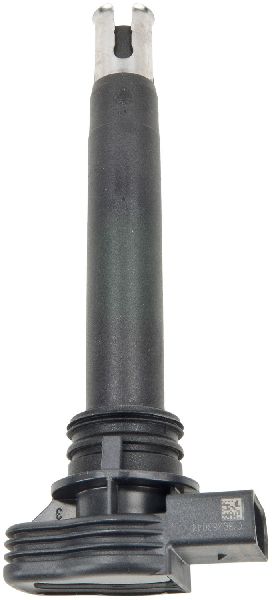
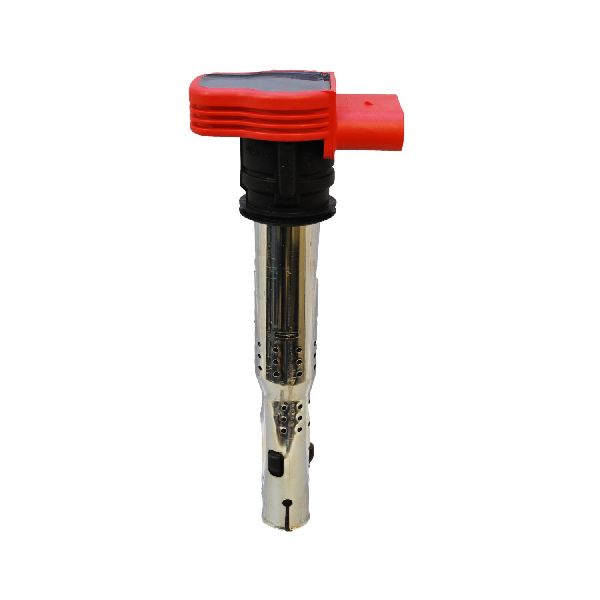
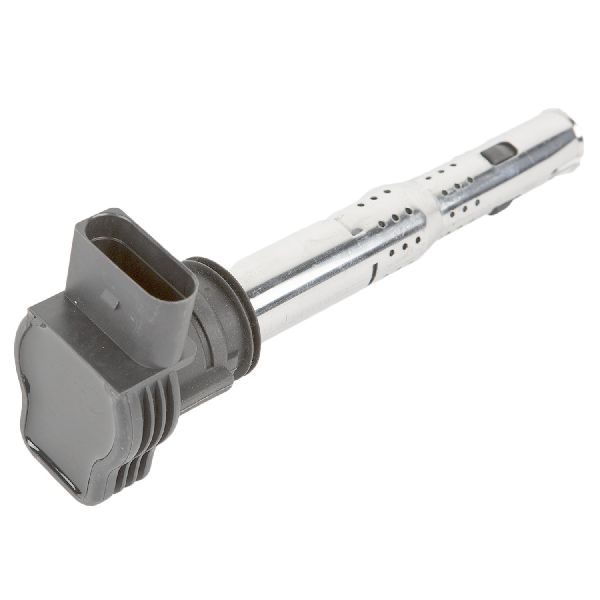
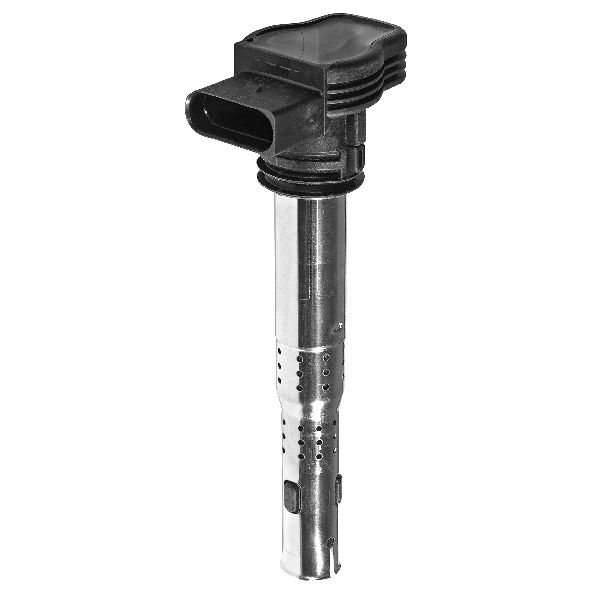
- Ignition Coil
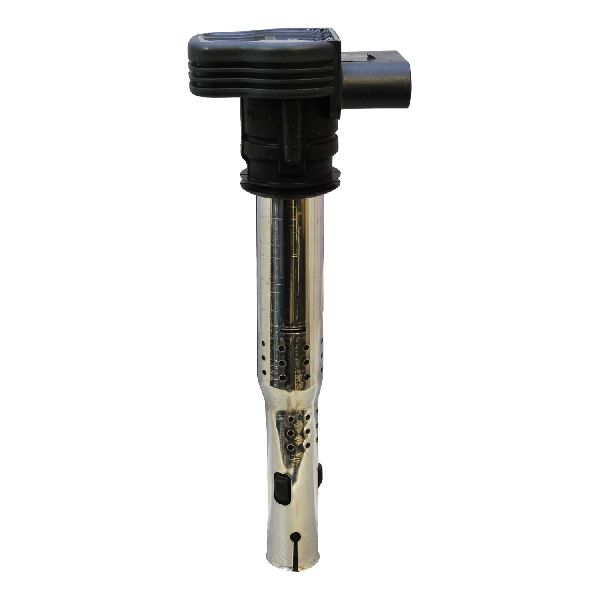
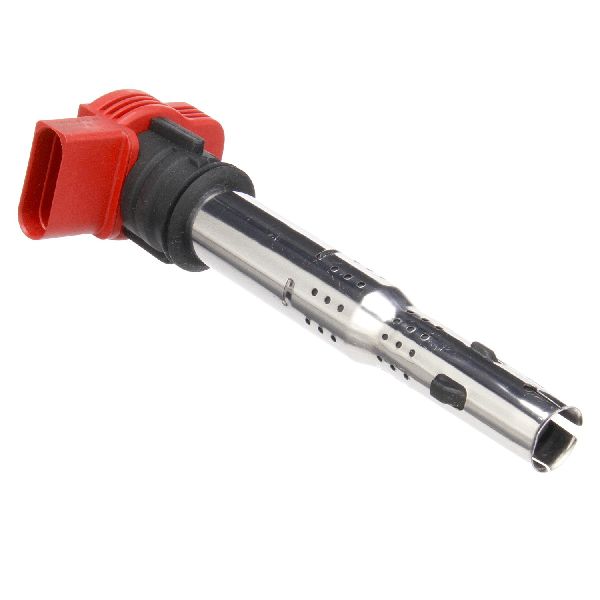
(OEM #07K905715G)— This is the most common cause of a single-cylinder misfire on the 2.0T FSI engine. The part number listed is a common, reliable revision (often red-topped) that replaced earlier, less reliable versions like 06H905115B.
Trusted brands: Bosch, NGK, Eldor - Spark Plug
(OEM #101905631H)— Spark plugs are a routine maintenance item and a frequent cause of misfires. The correct plug is critical for performance in this direct-injection engine.
Trusted brands: NGK (PFR7S8EG), Bosch (FR6KPP332S) - PCV Valve Assembly
(OEM #06F129101R)— The diaphragm in the PCV is a very common failure point, causing vacuum leaks that lead to misfires. Part number varies by build date, with 'R' being a common later revision.
Trusted brands: Genuine VW/Audi, Vaico
Related Codes That Often Appear With This One
- P0300 — If the cause (like a bad PCV valve or major vacuum leak) affects multiple cylinders, a P0300 (Random/Multiple Cylinder Misfire) may appear alongside P0303.
- P0301, P0302, P0304 — If other cylinder-specific misfire codes are present, it points towards a common problem like carbon buildup, a bad PCV valve, or low fuel pressure from a failing HPFP cam follower.
- P0171 — This code for "System Too Lean (Bank 1)" often accompanies misfire codes when the cause is a vacuum leak, such as a failed PCV valve.
- P0087 — This code for "Fuel Rail/System Pressure Too Low" is a strong indicator of a worn HPFP cam follower, which can also cause misfires.
Technical Service Bulletins (TSBs) & Recalls
- While no specific TSB number was found for just P0303, multiple sources confirm Audi/VW released numerous TSBs and warranty extensions related to high-failure parts on the 2.0T FSI engine, including ignition coils, the HPFP cam follower (related to P0087), and the PCV valve.
- Manufacturer TSB Bulletin #A0124212069038_5 notes that the MIL may illuminate with cylinder misfire codes P0300, P0301, P0302, P0303, P0304, P0305, and P0306.
- Similarly, TSB Bulletin #A0123912069038_5 provides diagnostic information for when the MIL is illuminated with DTCs ranging from P0300 through P0306.
Platform-Specific Known Issues
- Ignition Coil Revisions: Early versions of the ignition coils on this engine were prone to failure. Audi issued TSBs and warranty extensions, recommending replacement with updated parts. If the vehicle still has original black-top coils, they are highly suspect.
- Carbon Buildup: As a direct-injection engine, carbon cleaning of the intake valves is considered a long-term maintenance item, often needed every 60,000-80,000 miles to prevent misfires and performance loss.
- HPFP Cam Follower Wear: The cam follower for the high-pressure fuel pump is a known wear item and should be inspected periodically. Failure can lead to fuel starvation and damage to the camshaft.
Mechanic-Grade Diagnostic Values
- Fuel Injector Resistance — expected: Approximately 12 Ohms for high-impedance injectors used in this engine. Some sources cite a tighter range of 1.4-1.6 Ohms for specific OEM injectors.. Failure: A reading significantly higher (open circuit) or lower (short circuit) than the expected value indicates a failed injector coil.
- VCDS Misfire Counter — expected: 0 counts at idle and under load on a healthy engine.. Failure: Any number greater than 0 in the misfire counter for cylinder 3 (or any cylinder) in VCDS Measuring Blocks (Groups 015 and 016) confirms a misfire is being detected by the ECU in real-time.
- High-Pressure Fuel Pump (HPFP) Actual Pressure — expected: Around 50 bar (725 PSI) at idle, rising to over 110 bar (1595 PSI) under load.. Failure: If the actual pressure fails to meet the specified pressure requested by the ECU (viewable in VCDS), it can indicate a failing HPFP, a worn cam follower, or a leak. This will often be accompanied by code P0087.
Hidden / Shadow Codes Worth Checking
- Misfire Counter (VCDS): Not a formal 'code', but live data in VCDS Measuring Blocks (Groups 015, 016) shows the raw count of misfires per cylinder. This is the data the ECU uses to eventually trigger a P030x code. It can show intermittent misfires before they are frequent enough to set a Check Engine Light. (see via VCDS (VAG-COM) -> Engine (01) -> Measuring Blocks -> Groups 015 & 016.)
Scan Tool Commands That Help
- VCDS (VAG-COM): Output Test Sequence (OTS) — After checking spark and compression, you can use the Output Test function to individually fire each fuel injector. You can listen for a 'click' from the injector for cylinder 3 to confirm it's being activated electronically. This helps rule out a wiring or ECU driver issue.
- VCDS (VAG-COM): Advanced Measuring Values — To log misfire counts against engine RPM and load. This is crucial for diagnosing intermittent misfires that only occur under specific conditions (e.g., high boost, cold start), which can help differentiate a spark plug gap issue from a carbon buildup problem.
Wiring & Ground Locations
- Ground Point 18 — On the cylinder block.. This is a primary earth point for the ignition system. A corroded or loose connection here can cause weak spark and intermittent misfires that are hard to diagnose.
- Ground Point G43 — Behind the passenger side kick panel.. This ground point serves multiple critical components, including the instrument cluster and Data Link Connector (DLC). While not a direct cause, a poor ground here can cause erratic communication and faulty data reporting when trying to diagnose the misfire.
- Ignition Coil Connector (Cylinder 3) — The third push-down coil on the valve cover, connected to the main engine harness.. The wiring and plastic connector can become brittle from heat cycles. Inspect for cracked insulation or broken locking tabs, which can cause a poor connection and lead to a P0303 code.
Real Owner Repair Stories
- Ross-Tech Forums user (2011 Audi A4 2.0T (similar TFSI engine with same principles)) — Flashing CEL, EPC light, extreme vibration, P0303.
❌ Tried (didn't work) Swapped spark plugs, Replaced all new plugs and ignition coils, Replaced all 4 fuel injectors, Carbon cleaning of intake valves, Replaced intake manifold
✅ What actually fixed it A compression test revealed very low compression in cylinder 3. The final cause was a burnt valve, requiring cylinder head work. - AudiWorld Forums user 'Hayabusafalcon' (2006 Audi A4 2.0T Quattro with 214k miles) — Poor engine operation, rough/surging idle, repeat PCV valve failures.
❌ Tried (didn't work) Replacing the OEM PCV valve multiple times (six failures recorded).
✅ What actually fixed it The owner installed a 'PCV delete' or 'PCV revamp' kit, which replaces the failure-prone plastic OEM valve with a more robust machined aluminum block. This permanently resolved the recurring vacuum leak issues, smoothed the idle, and improved gas mileage.
"I Checked Everything" — The Actual Cause
- In some cases, a smoke test will not reveal a failed PCV valve diaphragm. The leak can be internal or only manifest under specific pressure/vacuum conditions not replicated by a standard smoke test. A key symptom is a strong vacuum when removing the oil cap with the engine running, which a smoke test would miss.
When the Usual Fixes Don't Work
- A persistent P0303 that does not move when swapping coils and plugs, and which remains after carbon cleaning, should immediately lead to a compression and leak-down test. As seen in a documented repair, a user replaced coils, plugs, injectors, and performed a carbon cleaning, but the misfire remained. The ultimate cause was a burnt exhaust valve, a mechanical failure that no ignition or fuel part replacement could fix.
OEM Part Supersession History
06H905115A / 06H905115B→07K905715F / 07K905715G (and others, often with red tops)— Early ignition coils for the 2.0T FSI had a very high failure rate. Revisions were made to improve durability and heat resistance.
Heads up: While most are physically interchangeable, it is highly recommended to replace all four coils with the same, latest revision part number to ensure consistent dwell times and spark energy.06F129101E / 06F129101G→06F129101P / 06F129101R— The diaphragm in the original PCV valve assembly was prone to tearing, causing major vacuum leaks. Later revisions used more durable materials.
Heads up: Early (pre-12/16/2005) and Late (post-12/16/2005) PCV valves are not interchangeable as the check valve location is different. Using the wrong one will cause the engine to run very poorly or not at all.
Model Year Variations Within This Range
- 2005-2005.5: Vehicles with a build date before December 16th, 2005, use the 'Early' style PCV valve (e.g., P/N ending in L). Vehicles built after this date use the 'Late' style (e.g., P/N ending in N or R). The parts are not interchangeable.
- 2005-2008: The BPG engine code was more common in earlier B7 models, while the BWT engine code was used in later models (around 2007-2008). While largely similar, there can be minor differences in components like compression ratio and torque curves, but the primary causes for P0303 remain the same across both.
Diagnostic Flowchart
Real Owner Stories
Aggregated from forums and TSBs cited above. Mileages and costs reflect what owners reported in those sources.
2006 Audi A4 2.0T
Symptoms: Misfire occurring primarily on cold starts.
What fixed it: Suspected to be a faulty fuel injector after replacing common parts like ignition coils and spark plugs failed to resolve the issue.
Source hint: AudiWorld Forums: Help! P0303!! Run outta ideas!!
2011 Audi A4
Symptoms: Persistent cylinder 3 misfire that would not go away with standard tune-up parts.
What fixed it: A compression test revealed a burnt valve after replacing coils, plugs, injectors, and cleaning carbon yielded no success.
Source hint: Ross-Tech Forums: 2011 Audi A4 #3 Cylinder Misfire Issues
B7 Audi A4 Quattro 2.0T
Symptoms: Multiple misfire codes across several cylinders (P0300, P0301, P0302, P0303).
What fixed it: Pending diagnosis of fuel injectors and carbon buildup after replacing spark plugs and ignition coils did not resolve the misfires.
Source hint: Reddit r/AskAMechanic: B7 Audi A4 Quattro 2.0T misfiring. P0300 p0301 p0302 p0303
Related OBD-II Codes
Frequently Asked Questions
Are the original ignition coils on my 2005-2008 A4 2.0T known to fail and cause a P0303?
Why does my A4 2.0T only misfire on cylinder 3 during cold starts?
I have a P0303 code and a loud whistling noise from the engine bay. What is causing this?
Should I check the HPFP cam follower if I have a P0303 code?
What spark plugs should I use when fixing a P0303 on my B7 A4?
Helpful Videos

Used OEM Parts in Stock


New Aftermarket Parts Available

The information in this article is provided for general reference and educational purposes only. Vehicle specifications, procedures, and part compatibility can vary by production date, trim level, and region. Always consult your vehicle's factory service manual and verify part numbers before purchasing or performing repairs. Safety-critical components such as airbags, seat belts, and braking systems should be installed by a qualified professional.
- Audi A4:
- 🎬 Helpful Videos
- 🛍️ Shop This Part
- What's Unique About the 2005-2008 Audi A4
- Symptoms You May Notice
- Most Likely Causes
- Rare But Worth Checking
- Diagnosis Steps
- Parts You'll Likely Need
- Related Codes That Often Appear With This One
- Technical Service Bulletins (TSBs) & Recalls
- Platform-Specific Known Issues
- Mechanic-Grade Diagnostic Values
- Hidden / Shadow Codes Worth Checking
- Scan Tool Commands That Help
- Wiring & Ground Locations
- Real Owner Repair Stories
- "I Checked Everything" — The Actual Cause
- When the Usual Fixes Don't Work
- OEM Part Supersession History
- Model Year Variations Within This Range
- Diagnostic Flowchart
- Real Owner Stories
- 2006 Audi A4 2.0T
- 2011 Audi A4
- B7 Audi A4 Quattro 2.0T
- Related OBD-II Codes
- Frequently Asked Questions
- 🎟️ Get 5% Off